

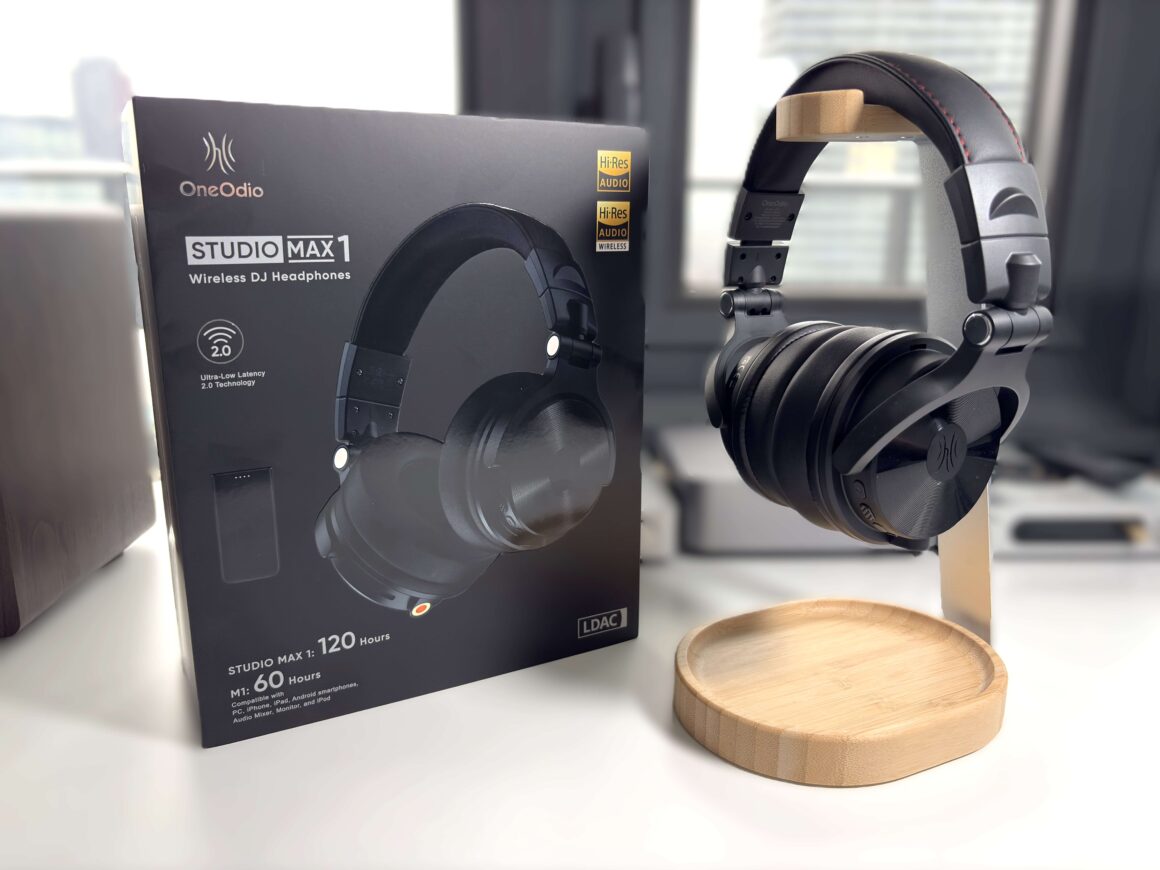
Disclosure: I’d like to thank OneOdio for providing me with the Studio Max 1 for this review. All thoughts and opinions are my own, and OneOdio had no say or input on the contents of this review.
The OneOdio Studio Max 1 are large, over-ear DJ-style headphones built for studio and live-performance use. They emphasize versatility over typical audiophile detail. With it you get Bluetooth 5.3 (with LDAC support), a built-in mic for calls, and dual wired inputs (3.5 mm and 6.35 mm). In the box, there is an ultra-low-latency USB-C transmitter (claimed to have as low as ~20 ms latency) and all the cables needed. Remarkably, the Max 1 promises up to 120 hours of playtime on a full charge, which few rivals match. Retailing for around $170 USD, the Studio Max 1 looks to deliver an exceptional feature set for the price.
One interesting thing I found during my testing is that these headphones will also appeal to certain audiophiles seeking a versatile feature-set and “good enough” sound, as well as regular consumers looking for alternatives to typical consumer headphones. How did I come to this conclusion? Well, let’s get into the review and find out.
Key Specifications
- Product Page: https://www.oneodio.com/products/oneodio-studio-max-1-dj
- MSRP: $ 169.99 USD
- Battery Life: Up to 120 hours Bluetooth mode, 50 hours in Low Latency (wireless) mode
- Battery Capacity: 1000mAh
- Type: Closed-back over-ear
- Driver Type: 50mm Dynamic Driver
- Weight: 240g
- Connections: Wireless, Bluetooth 5.3, 3.5mm wired connection, 6.35mm wired connection
- Codec support: SBC, AAC, LDAC
- Microphone: Yes
- Active Noise Cancellation (ANC): No
- Charging Method: USB-C
- Weather/Dust Resistance: No
In the Box

- OneOdio Studio Max 1 Wireless
- 6.25mm to 3.5mm coiled cable
- Very short 3.5mm to 3.5mm cable
- Wireless transmitter
- USB-C to USB-A cable
- Travel pouch
- Manual
Design & Comfort
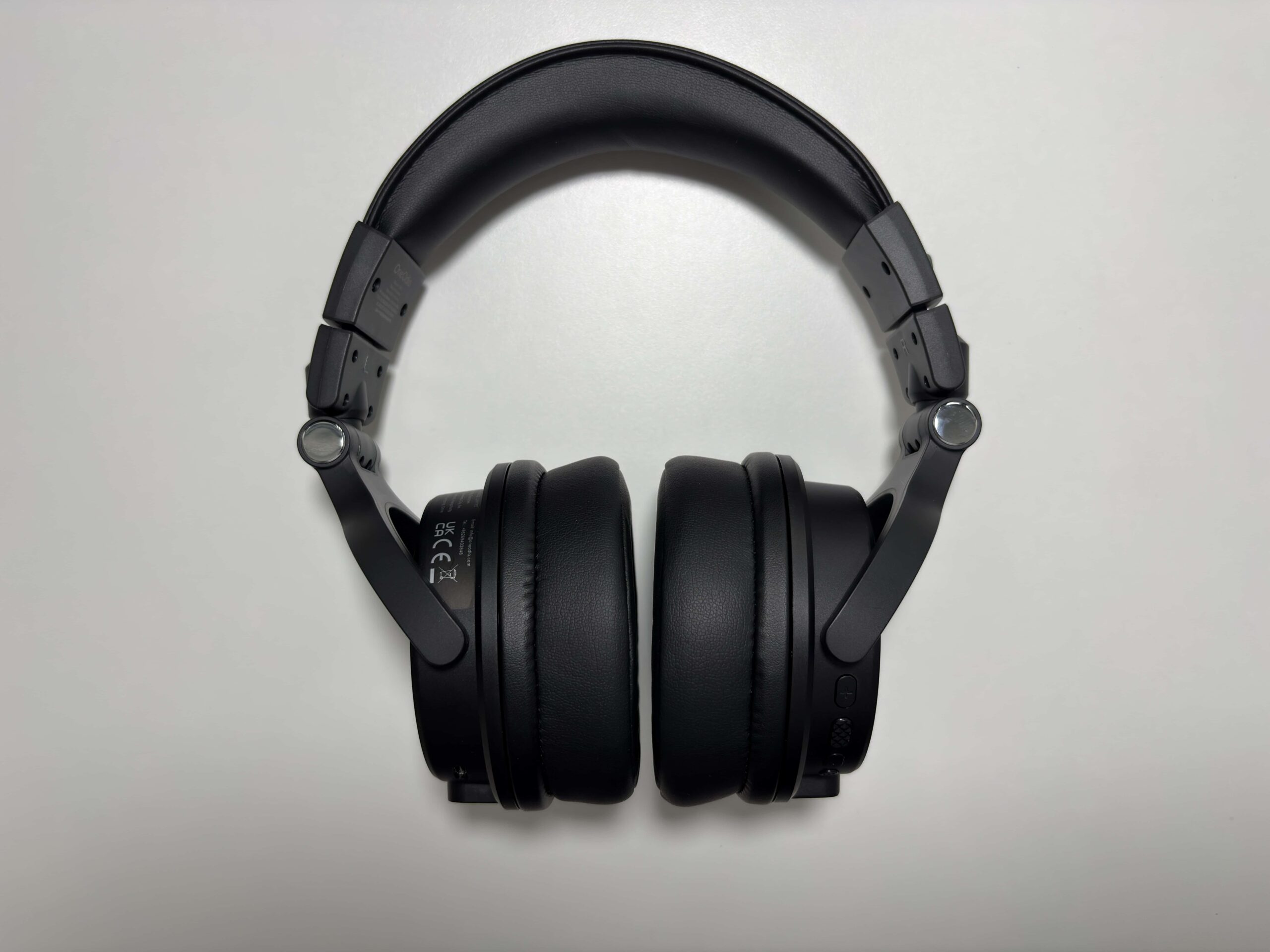
The OneOdio Studio Max 1 embraces the chunky aesthetic of classic DJ headphones. They weigh about 350 grams, but the heft is distributed over thick, padded cups and a wide headband, so overall they feel very light despite their size. The build is mostly hard plastic (except for metal headband sliders) and finished in matte black. The rotating earcup design offers remarkable flexibility: 90° inward folding, 180° horizontal rotation, and nearly 360° of tilt capability. This allows single-ear monitoring essential for DJs, though the generous rotation range required sacrifices in compactness. Memory foam padding covered in protein leather provides comfortable cushioning, with distinctive red stitching adding visual personality inside the cups.
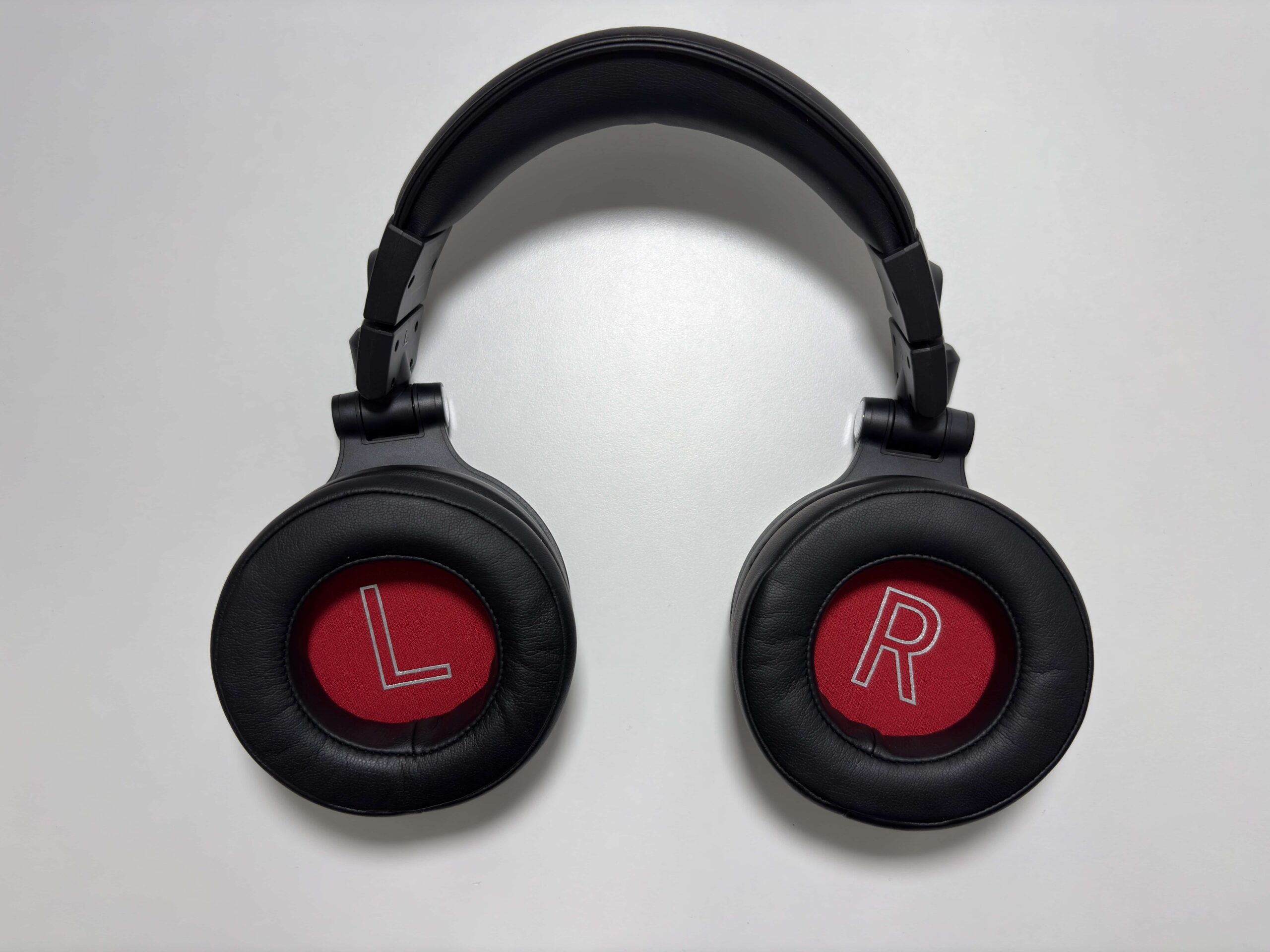
Comfort-wise, the Studio Max 1 performs very well. The headband clamp is snug enough to stay secure during movement but isn’t painfully tight, and the top padding is soft and distributes weight evenly and avoids pressure points. The plush faux-leather earpads (with memory-foam centers) cushion the ears nicely. Even after hours of wear, they remain comfortable and not overly warm, and I noticed little to no sweat buildup over longer listening sessions. The earcups are round rather than oval, so the edges may lightly press into some larger ears, but the softness of the padding prevents any discomfort. These headphones do not have great passive noise isolation; they are more on the average side. When at home, it will not be an issue, but if you’re outside or in a busy area, you will notice quite a bit of sound coming through.


Physical controls reside on the right earcup: a power/multifunction button in the middle, volume adjustments, and the “B” button for mode switching. There’s also a 3.5mm connector with a proprietary locking mechanism. The left cup houses the USB-C charging port and a 6.35mm (1/4″)connection.


Tactile feedback from the buttons is decent. I found that the distinct button sizes and textures enable you to use them without looking. Currently, no companion app exists (the OneOdio app currently does not support the Studio Max 1), meaning EQ customization and firmware updates aren’t available. For DJs preferring hardware-centric workflows, this may feel acceptable; casual users wanting smartphone-based tuning will be disappointed.

The foldable mechanism works reliably, though the headphones don’t collapse flat. The included fabric carrying pouch accommodates the folded headphones very nicely, but overall portability suffers due to the earcup size.
Battery Performance
OneOdio’s headline figure is 120 hours of playback per charge (in normal Bluetooth use). In realistic use, I am getting just over 100 hours with LDAC before needing to recharge, and about 40 hours in the low-latency (dongle) mode. While these figures are just shy of claimed battery life, they are still extremely respectable. In practice, it means you can easily forget to charge the headphones for weeks, and they’ll still have power.
Recharging the 1000 mAh battery takes a couple of hours (I measured about 2 hours from empty to full). Both the headphones and the M1 transmitter use the same USB-C cable, and the transmitter’s battery also takes roughly 2 hours to fully refill. One advantage of this design is that there is no active noise cancellation to drain power. This lack of ANC means nothing is working behind the scenes during playback, draining the battery life, but it also means you cannot mute outside noise with electronics (only the snug pads provide isolation).
Overall, the battery life is pretty exceptional when you take into consideration the practical aspects. Even when using the transmitter, it will take days of typical listening to the headphones to empty, and if you’re only using Bluetooth, you’re looking at over a week of typical use. This is truly liberating battery life.
Wireless and Bluetooth Performance
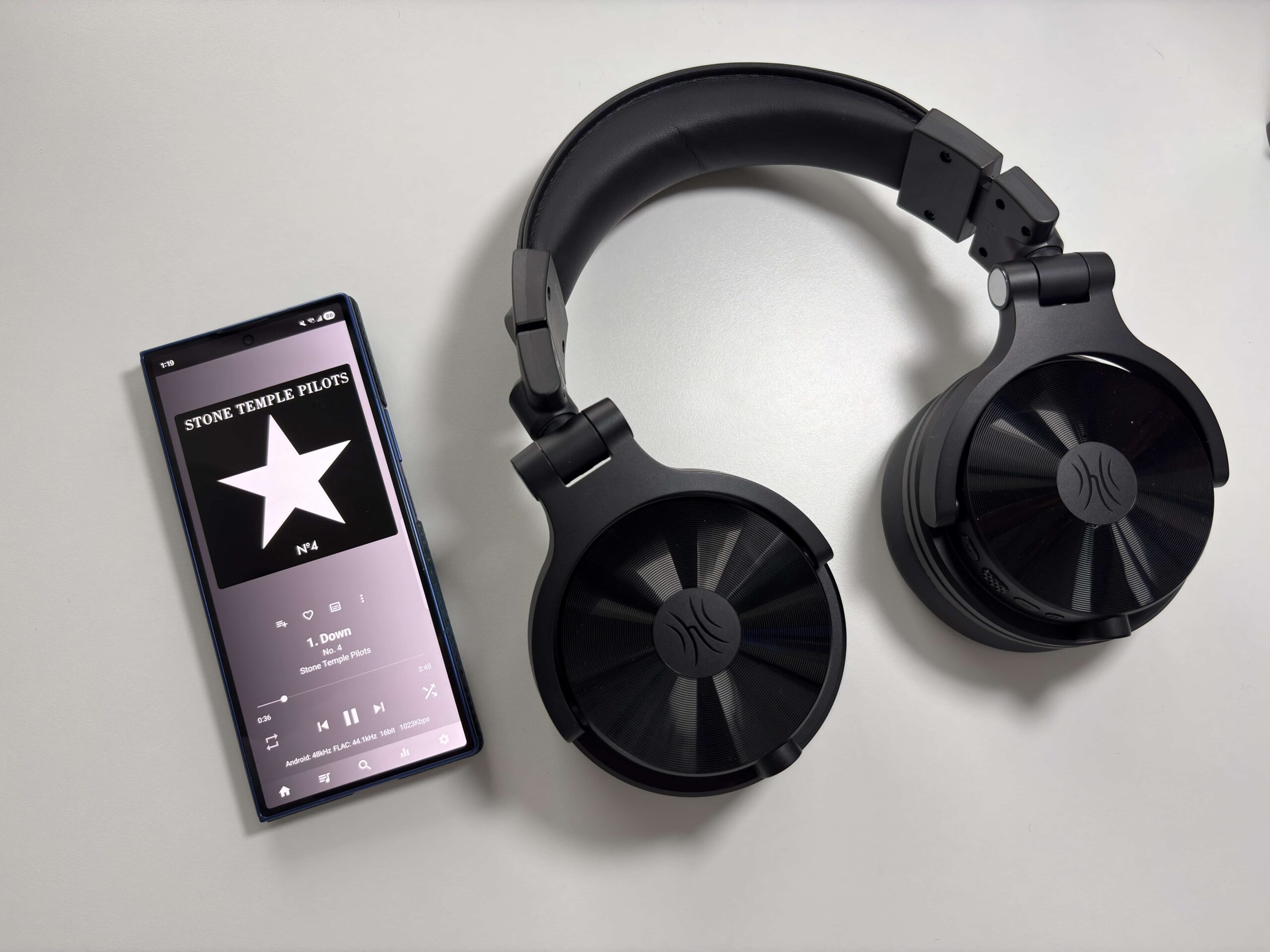
The OneOdio Studio Max 1 supports Bluetooth 5.3 connectivity with codec support for LDAC, AAC, and SBC. I mainly tested the LDAC performance, and overall, it’s excellent. I encountered no stuttering or performance issues with it. The connection is incredibly stable and reliable. In Bluetooth mode, you have access to the “Bass Mode” EQ by double-pressing the multi-function button.
Another connection method is the M1 wireless transmitter using OneOdio’s proprietary Rapid WiLL+ protocol. Offering 20ms latency, wireless DJ monitoring, as well as videos and games, finally becomes viable. The transmitter accepts both USB digital and 3.5mm analog inputs, enabling connection to laptops, phones, mixers, guitar amps, and vintage equipment lacking built-in Bluetooth. Its separate battery provides approximately 60 hours of operation.


Initial pairing can be confusing. When you power on the headphones, it will state what mode they are in with an audible voice. If it says Bluetooth mode, you can pair as usual with Bluetooth. If it says “low latency mode”, then you need to pair it with the M1 Transmitter by long-pressing the button on the transmitter. It’s actually very simple once you’re aware of the details.
The “low latency” transmitter mode is truly low latency, though. In fact, I would say you almost never need to use the wired connection as the sound quality and the latency is THAT good.

Sound Quality
Devices and sources used for this review:
- FiiO M21 (3.5mm, LDAC)
- FiiO K11 (6.35mm)
- Samsung Galaxy Fold 7 (LDAC)
Links to my music playlist used for the majority of testing:
Spotify: https://open.spotify.com/playlist/6QSIhuCBDAUyoWGcyxPeN8?si=c0a4eb6bd3e3421e
Apple Music: https://music.apple.com/ca/playlist/hifi-oasis-audio-testing/pl.u-lKWlcjy04xp
Qobuz: https://open.qobuz.com/playlist/39521747
Tidal: https://tidal.com/playlist/503485c7-7f3d-43f0-b904-4b9a89c33875

The OneOdio Studio Max 1 is tuned for a strong low end, but that comes at a cost to overall clarity. In general, the sound is bass-heavy and somewhat coarse. In listening, the headphones deliver a powerful sub-bass rumble that you can feel, but it is often a bit one-dimensional. The midrange and vocals suffer a bit as a result, where voices and instruments can sound a bit recessed.
The highs are equally modest. Treble is deliberately rolled off, and the Studio Max 1 avoids sharpness or sibilance as a result, but that means cymbals, percussion, and vocal air lack sparkle and some clarity. The overall result here is a safe, non-fatiguing upper range, but it also makes the presentation a bit dull compared to more neutral headphones.
All this being said, I think this tuning will sound great to the average listener, to bassheads, and even to some audiophiles looking for a more musical or energetic sound.
Bass
The bass is very strong and deep, with a big physical punch. The bass impact is impressive, but it is not tightly controlled, and it can sound somewhat indistinct and crunchy. There is a significant bass shelf, which makes EDM and hip-hop feel powerful, but it can overwhelm the mix in more delicate music. It’s definitely tuned to bring a lot of energy to the sound profile.
Midrange
Vocals and midrange instruments sit back in the mix. Separation is fair but not expensive. Voices sometimes feel distant or slightly recessed because of the strong bass. Instrument layers blend together rather than popping forward. In general, the midrange is present but subdued, meaning that vocals can lack presence if the bass is loud.
Treble
Smooth and non-fatiguing, but rolled off. Highs lack sparkle and are not especially detailed. The treble is more muted and subdued, lacking crispness. The upside is that there is no harshness or sibilance, so the sound stays warm, but on complex tracks, you miss the shimmer and microdetail that good treble provides.
Soundstage and Imaging
Modest soundstage and imaging. These are closed-back headphones, so the sound feels intimate and not very wide. Layered instruments don’t have a wide stereo spread, and the overall resolution is average. Detail retrieval is limited, which makes precise mixing or critical listening difficult. In other words, while the Studio Max 1 can play any genre without distortion, and they present it in a cozy, bass-centric way rather than a transparent, studio-accurate way.
Final Thoughts

The OneOdio Studio Max 1 succeeds at a specific mission: delivering cable-free DJ monitoring with professional-grade latency and extraordinary battery endurance. The M1 transmitter also genuinely solves the wireless latency problem that typically comes with wireless solutions. Build quality inspires confidence for general use, comfort is excellent for long listening sessions, and the comprehensive accessory package provides immediate functionality without supplementary purchases.
The divisive sound quality prevents a universal recommendation, though. Those who find the tuning engaging will consider this an outstanding value; those bothered by emphasized bass and recessed midrange should look elsewhere. Understanding this product requires accepting what it is: a wireless DJ tool with impressive specifications, rather than expecting it to satisfy every headphone need. I think it’s also an excellent alternative to someone looking for the typical “Beats” style sound in a headphone, as these offer more nuance and detail than most consumer sound profiles. The price is also hard to argue about, so if the sound and style fit your requirements, I think the OneOdio Studio Max 1 offers exceptional value.
Buy from Amazon: https://amzn.to/48KvFiI
Buy directly from OneOdio (use code hifioasis20 for 20% off): https://bit.ly/48RAq8I
The above links may be affiliate links. All commission earned through them goes directly to maintaining this site and bringing you more audio reviews.
I’m not always able to cover all the details of a product, both hardware and software, in our reviews. If you have any specific questions about this product, please feel free to leave a comment or contact me directly.
Be sure to check out our excellent Buyer’s Guides, as well as our other Reviews.
HiFi Oasis Verdict
HiFi Oasis Verdict-
Design & Comfort8/10 Very good
-
Sound6/10 Normal
-
Features/Accessories7/10 Good
-
Value7/10 Good
Pros
- Strong, powerful bass response that bassheads will love
- Smooth, non-fatiguing treble with no harshness or sibilance
- Outstanding battery life
- Ultra-low-latency wireless transmitter is genuinely effective
- Very comfortable for long sessions with well-padded headband and earcups
- Excellent connectivity options: Bluetooth, low-latency dongle, 3.5 mm, and 6.35 mm
- Stable Bluetooth performance with LDAC support
- Generous accessory bundle included in the box
- Strong value for money given features and battery performance
Cons
- Bass-heavy tuning sacrifices clarity and midrange presence
- Recessed midrange makes vocals and instruments sound distant
- Average soundstage and imaging, not suited for critical listening or mixing
- No companion app for EQ or firmware updates
- Passive noise isolation is only average
- Bulky design limits portability