




Disclosure: I’d like to thank Bluesound for providing me with the Pulse Flex for this review. All thoughts and opinions are my own, and Bluesound had no say or input on the contents of this review.
The Bluesound Pulse Flex is Bluesound’s attempt to bring its hi-fi-first approach into the compact, ultra-portable wireless speaker space, and on paper, it is exactly the kind of product that makes sense for the brand. Bluesound has always been strongest when combining serious audio performance with convenient wireless streaming, and the Pulse Flex takes that same formula and scales it down into a bookshelf-friendly form factor.
On paper, it sits in a very interesting spot. It is small enough to fit on a desk, kitchen counter, bookshelf, nightstand, or side table, but it still offers features that you normally associate with more serious network audio products. You get BluOS, AirPlay 2, Spotify Connect, TIDAL Connect, Qobuz Connect, Roon Ready support, Bluetooth 5.3 with aptX HD, Ethernet, Wi-Fi, USB-C input, optical/analog input, USB-A storage playback, and the option to pair two units for stereo playback (you can also pair two of them with the PULSE CINEMA to create a proper surround system).
At $379 USD, the Pulse Flex sits firmly in premium lifestyle territory. That means expectations are high. For this kind of money, it needs to be more than just a convenient kitchen or home office speaker. It needs to be able to handle hi-res audio files gracefully and justify the investment in the Bluesound ecosystem over its mainstream rivals.
So, does the Bluesound Pulse Flex make sense as a compact hi-fi wireless speaker? Let’s get into the review and find out.
Key Specifications
- Product Page: https://www.bluesound.com/collections/speakers/products/pulse-flex
- MSRP: $379 USD, $429 CAD
- Operating System: BluOS
- Processor: Quad Core ARM Cortex A53, 1.8GHz per core
- Configuration: Mono (Stereo pairable)
- Speaker Type: Wireless all-in-one music streaming speaker
- Drivers:
- Woofer (102mm)
- Tweeter (21mm)
- Power Output:
- 50W total system power
- 40W woofer
- 10W tweeter
- Connectivity:
- Subwoofer output
- Ethernet RJ45, Gigabit 1000Mbps
- 3.5mm Optical/Analog Combo
- WiFi 5 (802.11ac), dual-band
- Bluetooth 5.3 (SBC, AAC, aptX, aptX HD)
- USB-A input
- USB-C input
- Wireless support for PULSE SUB+
- IR Sensor Built in with IR learning
- Supported Sample Rates and Formats:
- Up to 24bit 192kHz PCM
- DSD256
- MP3, AAC, WMA, WMA-L, OGG, OPUS, FLAC, MQA, ALAC, WAV, AIFF, MPEG-4 SLS
- Features:
- BluOS App support
- AirPlay 2, Spotify Connect, Tidal Connect, Roon Ready
- Dimensions: 131 x 196 x 111 mm
- Weight: 1.61kg
In the Box
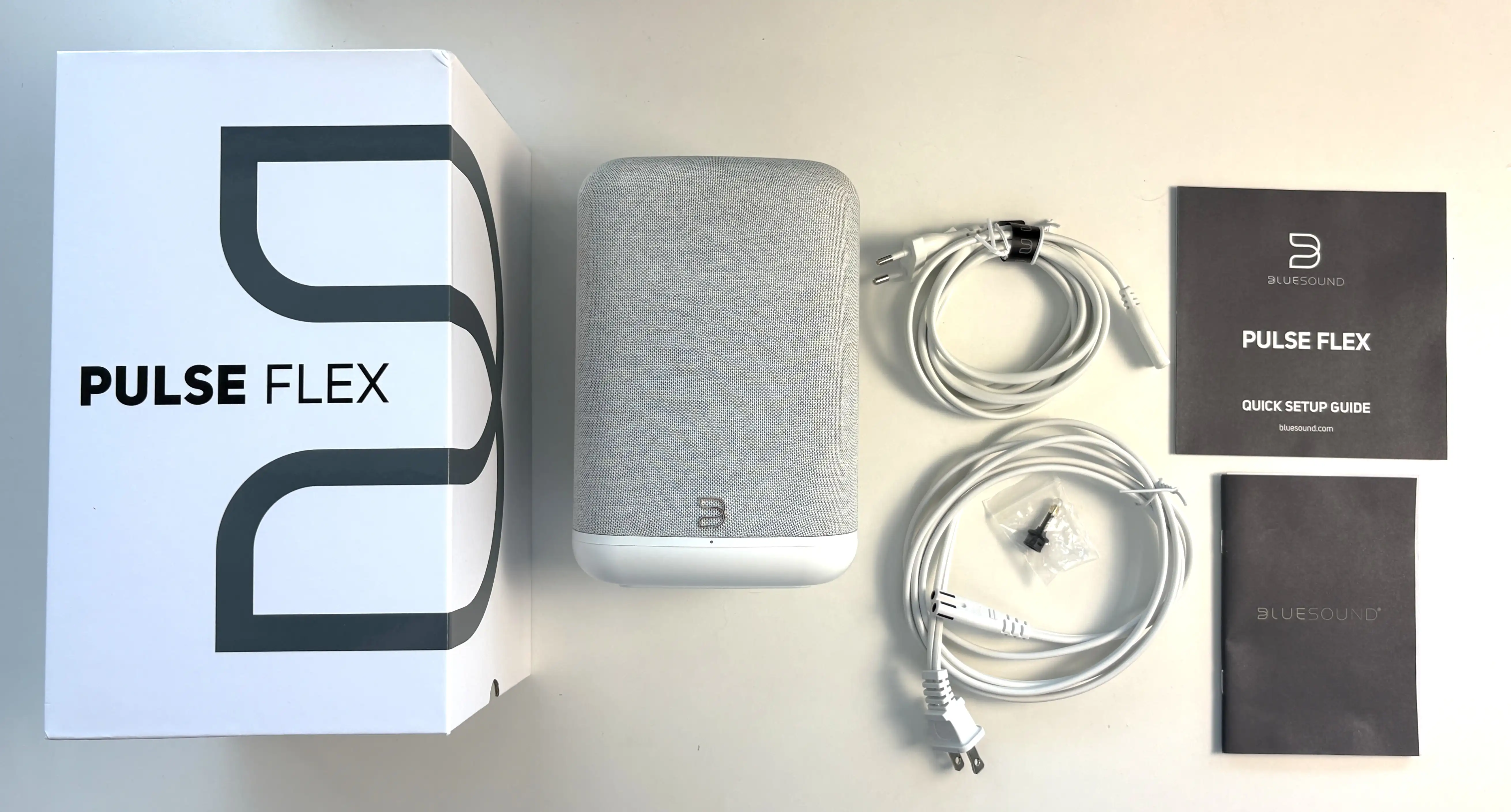
- Bluesound Pulse Flex
- 120V AC Power Cord
- 230V AC Power Cord
- Toslink Mini Adapter
- Quick Setup Guide
Design & Build Quality
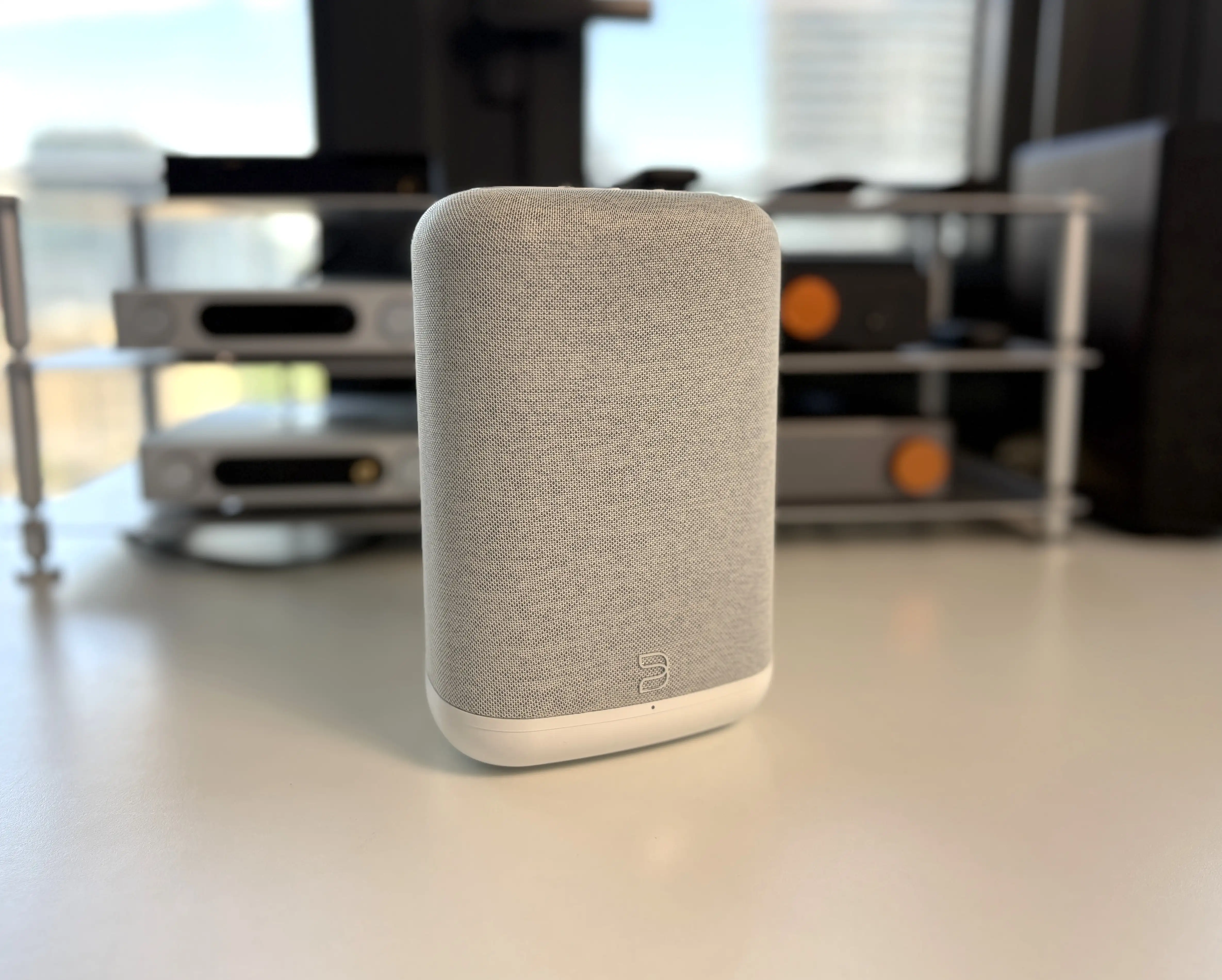
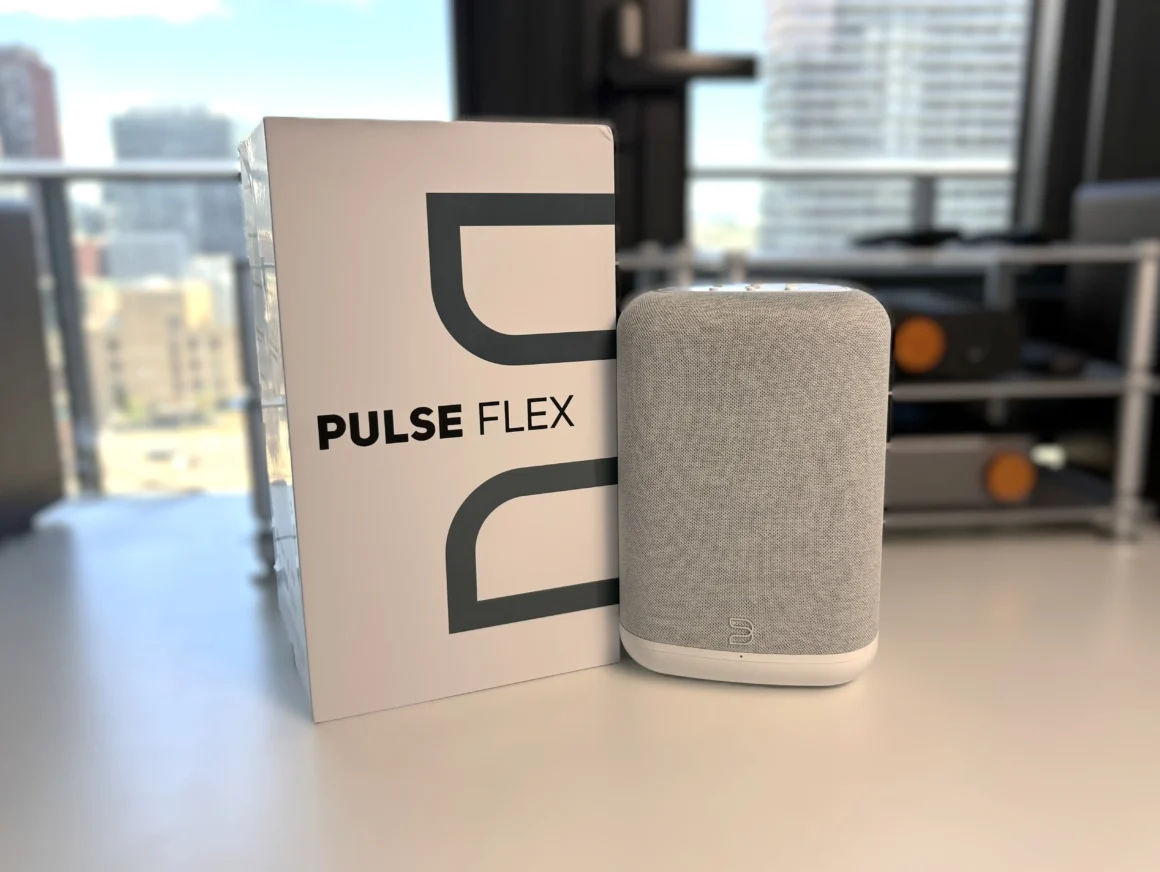
The Pulse Flex has a very clean and modern design. It does not look like a typical Bluetooth speaker, nor does it look like a miniature studio monitor. Instead, it fits nicely into Bluesound’s current design language, with a softened rectangular shape, fabric grille, rounded edges, and a compact footprint that makes it easy to place pretty much anywhere around the home.
I reviewed the White/Pebble Grey version, which is probably the safest and most lifestyle-looking option. It blends easily into most rooms and does not draw unnecessary attention to itself, but still gives a warm presence. The overall size is one of the Pulse Flex’s biggest strengths. At just over 7.7 inches tall and 3.55 pounds, this is easy to move from room to room, even though it is not battery-powered.
Build quality is very strong. The housing feels solid, the fabric grille is nicely integrated and feels premium, and the speaker has an overall high-end feel that a lot of compact wireless speakers simply do not have. It does not feel overly dense, but it does feel well put together.
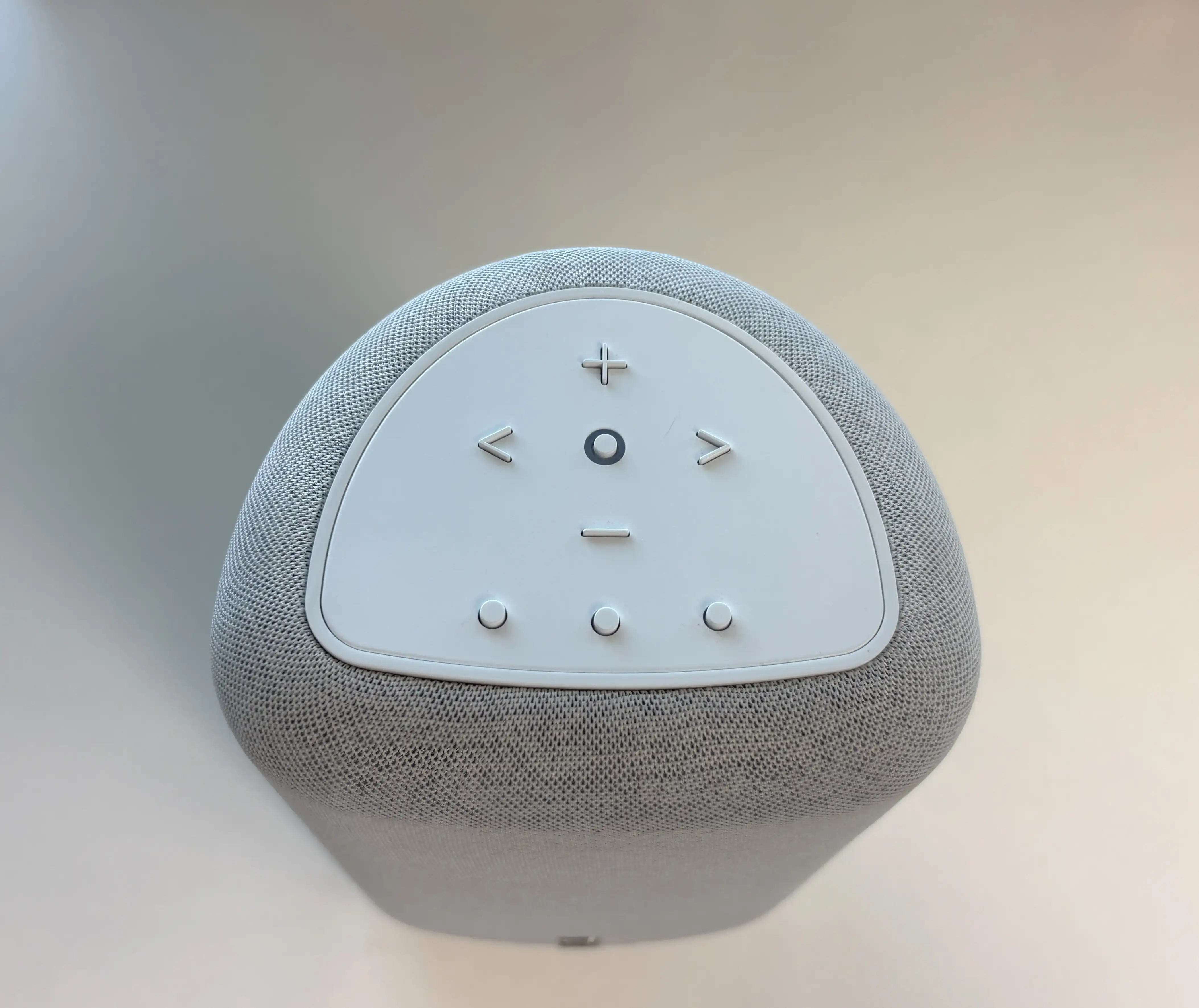


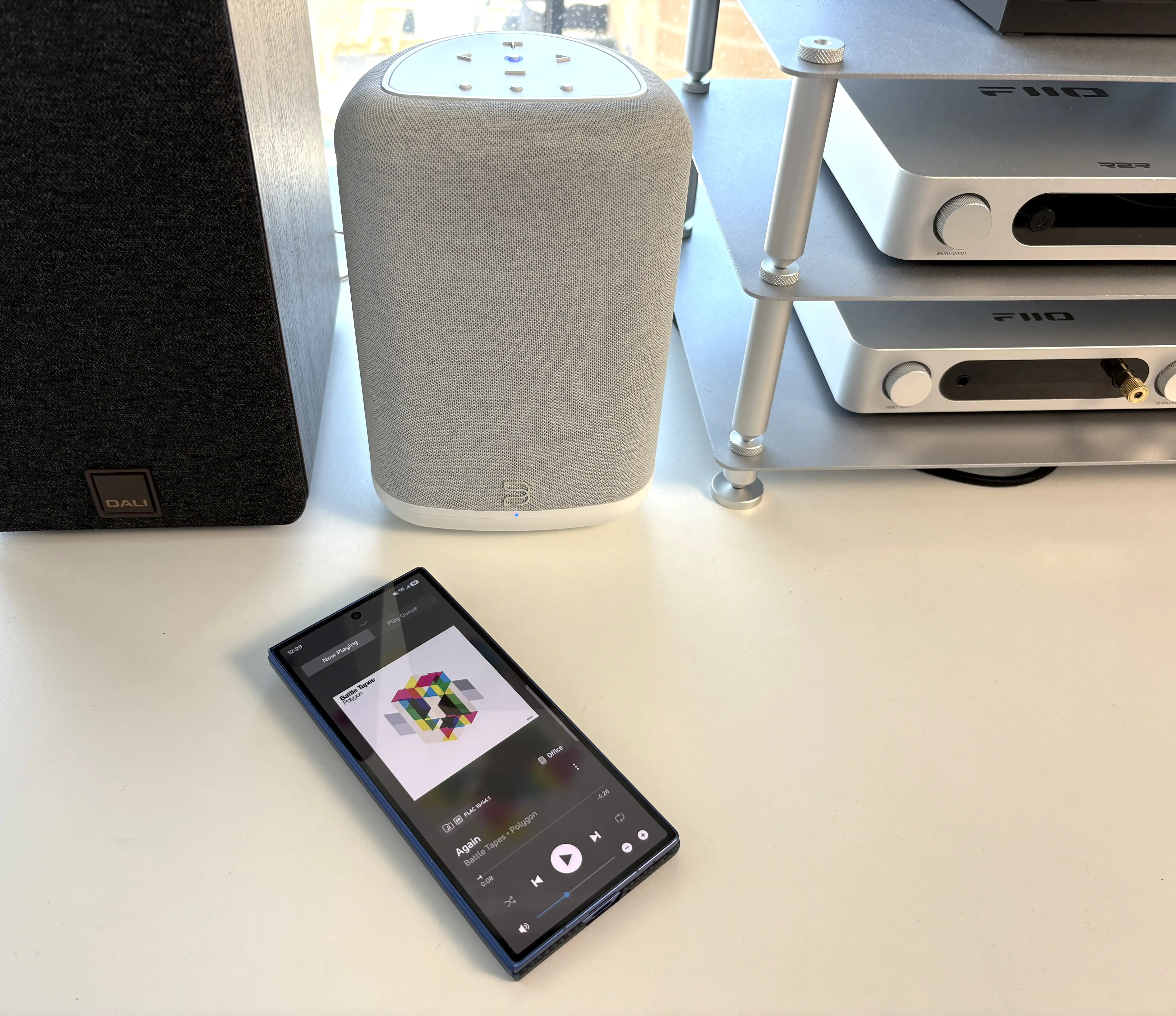
The top panel includes physical controls for playback, volume, track skipping, and three presets. I always appreciate it when a wireless speaker has proper physical controls instead of relying entirely on an app or remote. The buttons are simple, responsive, and useful for everyday use.
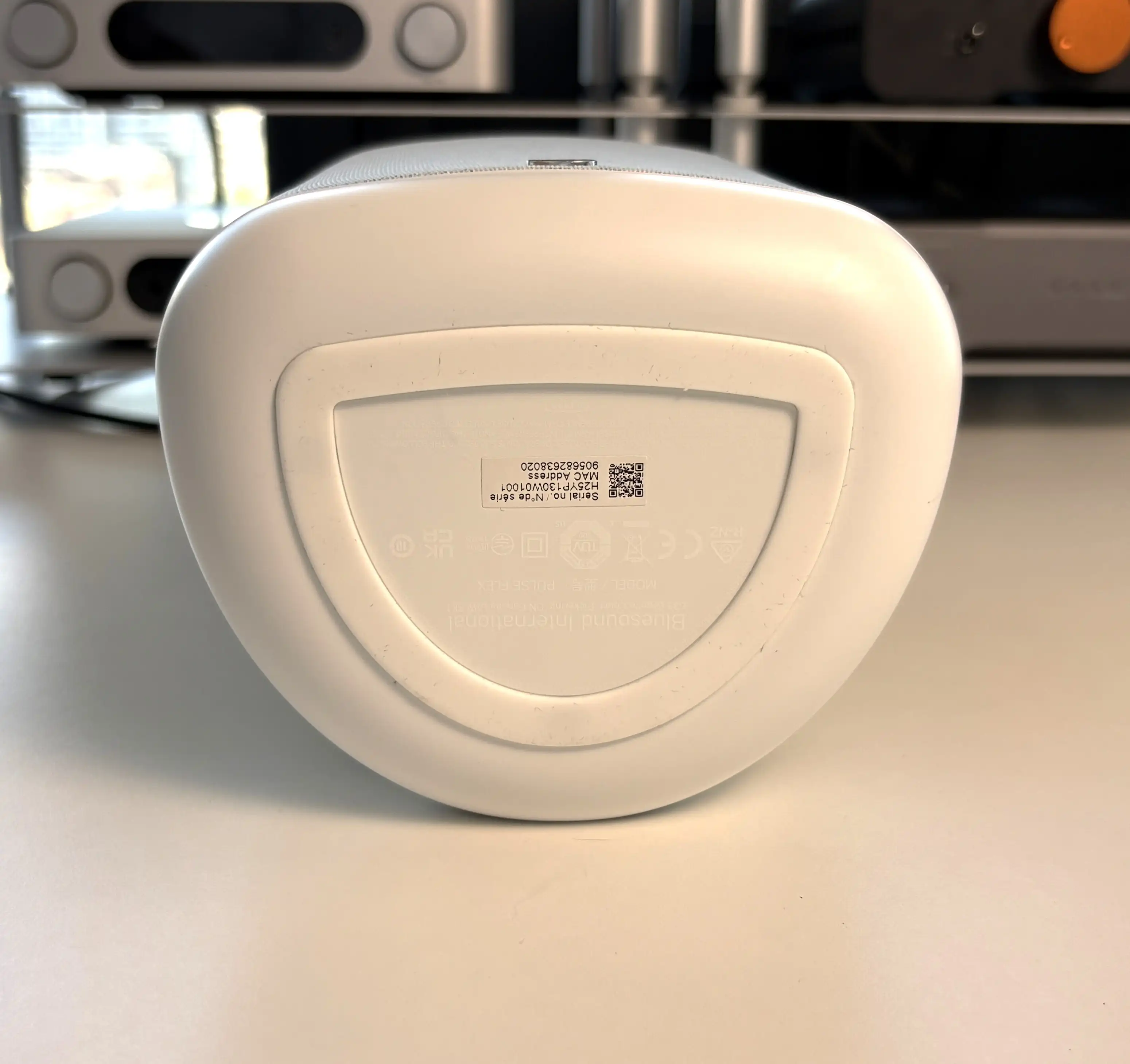
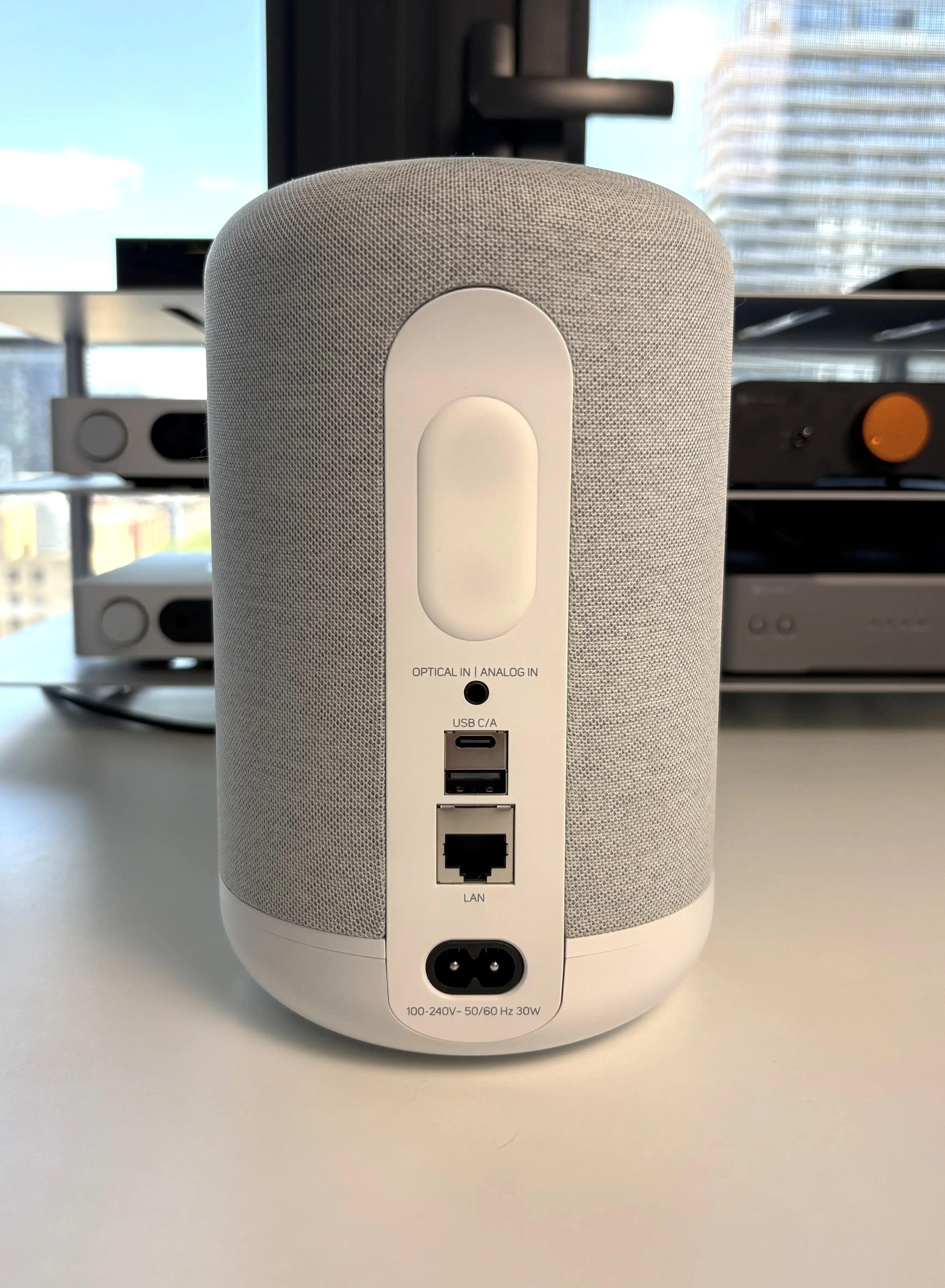
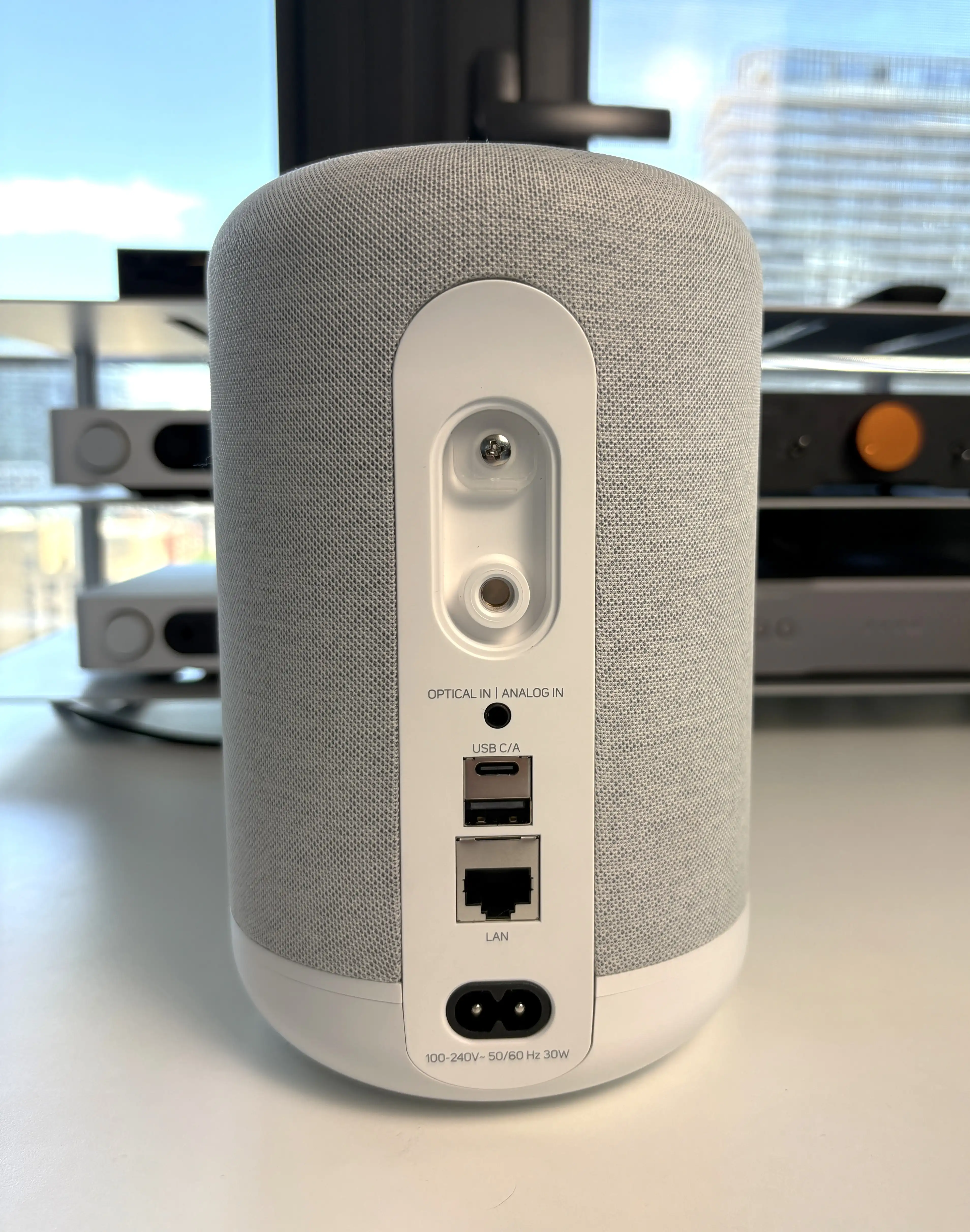
The back of the speaker is where the Pulse Flex starts to separate itself from more mainstream wireless speaker options. You get power input, Ethernet, USB-A, USB-C, and a 3.5mm optical/analog combo input. That is far more flexible than most compact smart speakers, and it makes the Pulse Flex feel more like a small hi-fi component than a simple wireless speaker.
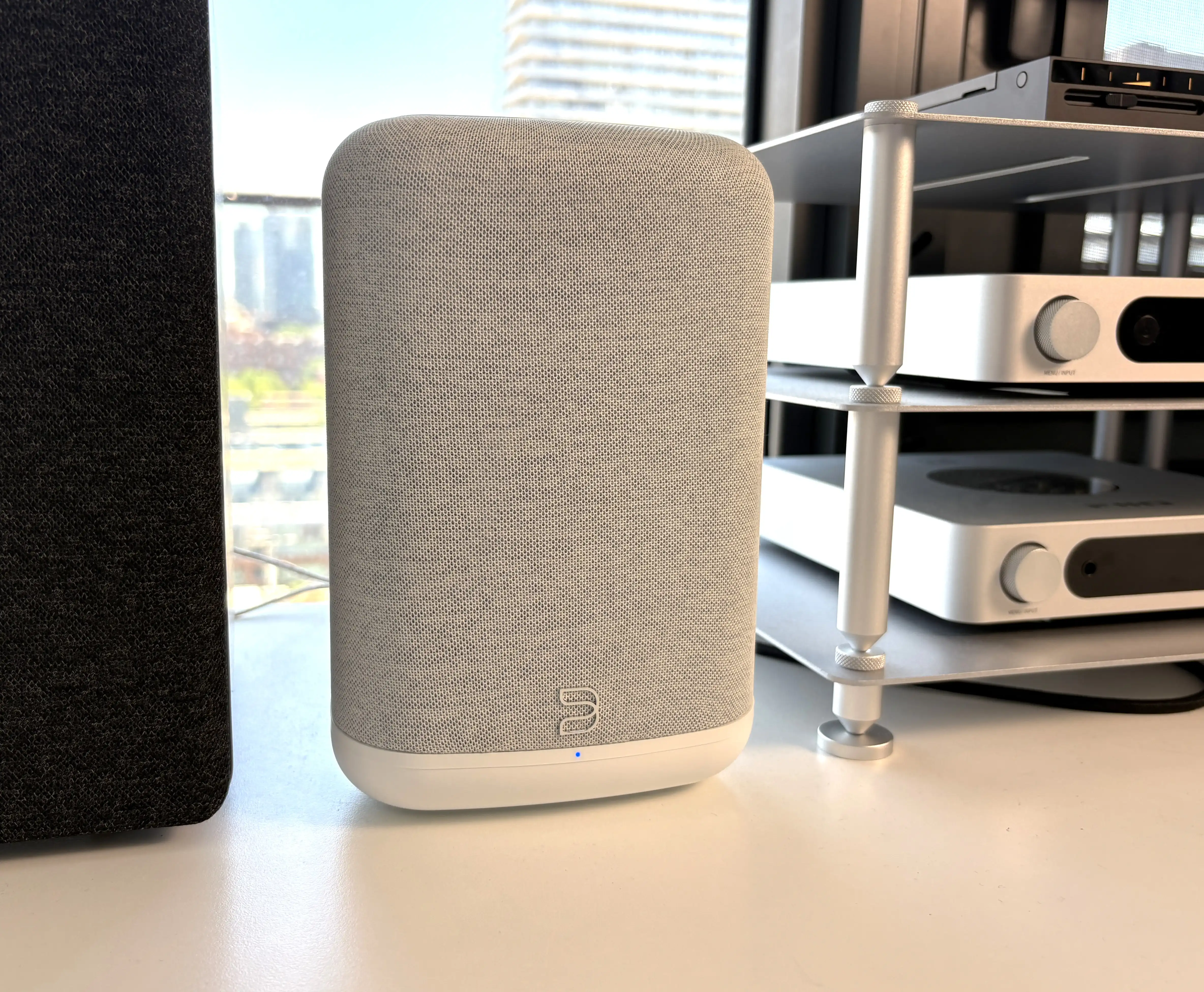
My main design criticism is that this is not a truly portable speaker. There is no built-in battery, and unlike the older Pulse Flex 2i, this new model is more clearly designed as a stationary home speaker. You can move it around the house easily, but you still need to plug it into a wall outlet.
That is not necessarily a deal breaker, but it is worth knowing before buying. If you want something for the patio, beach, park, or backyard without needing power nearby, this is not that kind of speaker.


Setup & Connectivity
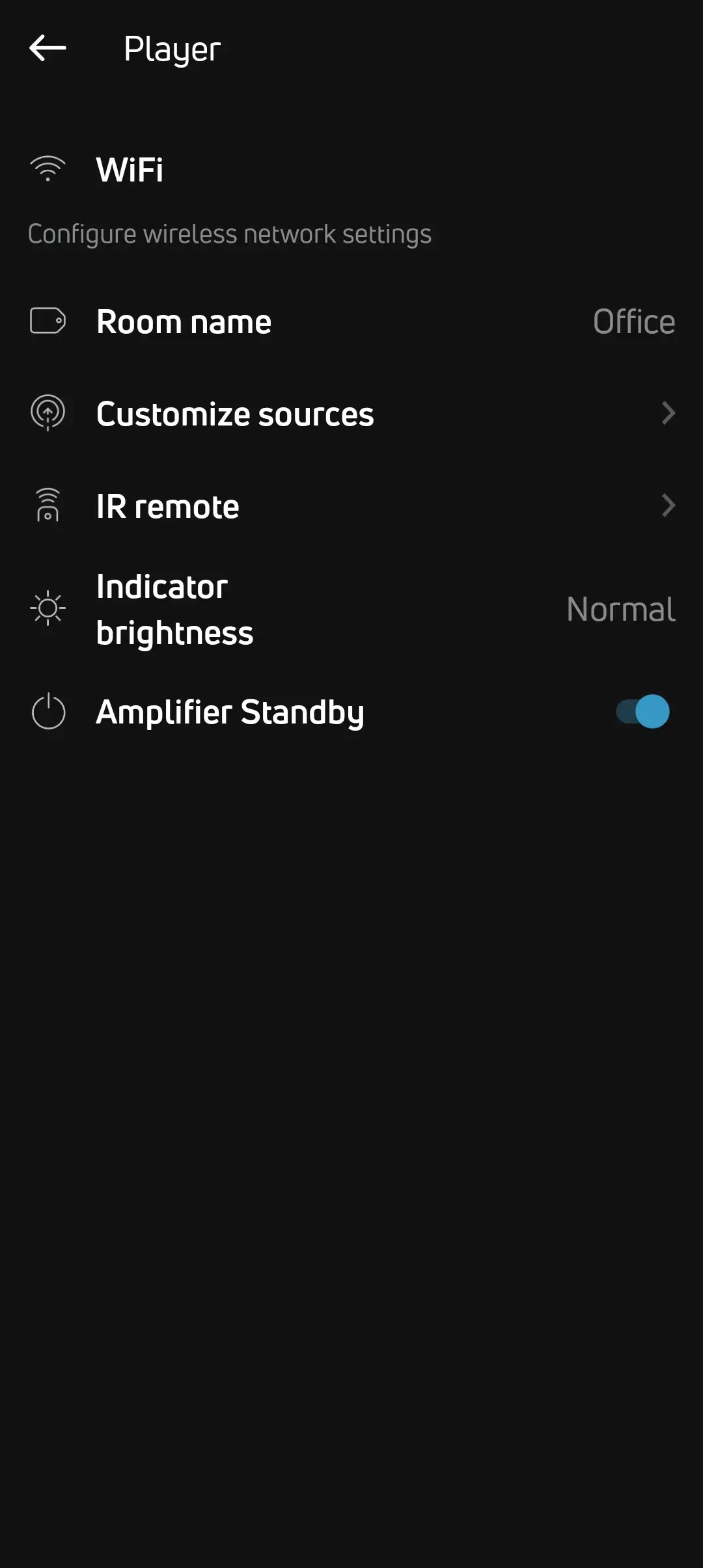
Setting up the Pulse Flex is pretty straightforward. You plug it in, open the BluOS app, let the app find the speaker, connect it to your wireless network, and then you are essentially ready to go.
During my time with the Pulse Flex, setup was quick and uneventful, which is exactly what I want from a wireless speaker. I used it over Wi-Fi for the majority of my testing, but the inclusion of Ethernet is a major plus for anyone who wants the stability that a wired connection brings.
This is one of the advantages of Bluesound’s approach. A lot of wireless speakers are designed around convenience first and everything else second. The Pulse Flex is convenient, but it still gives you more serious connection options.
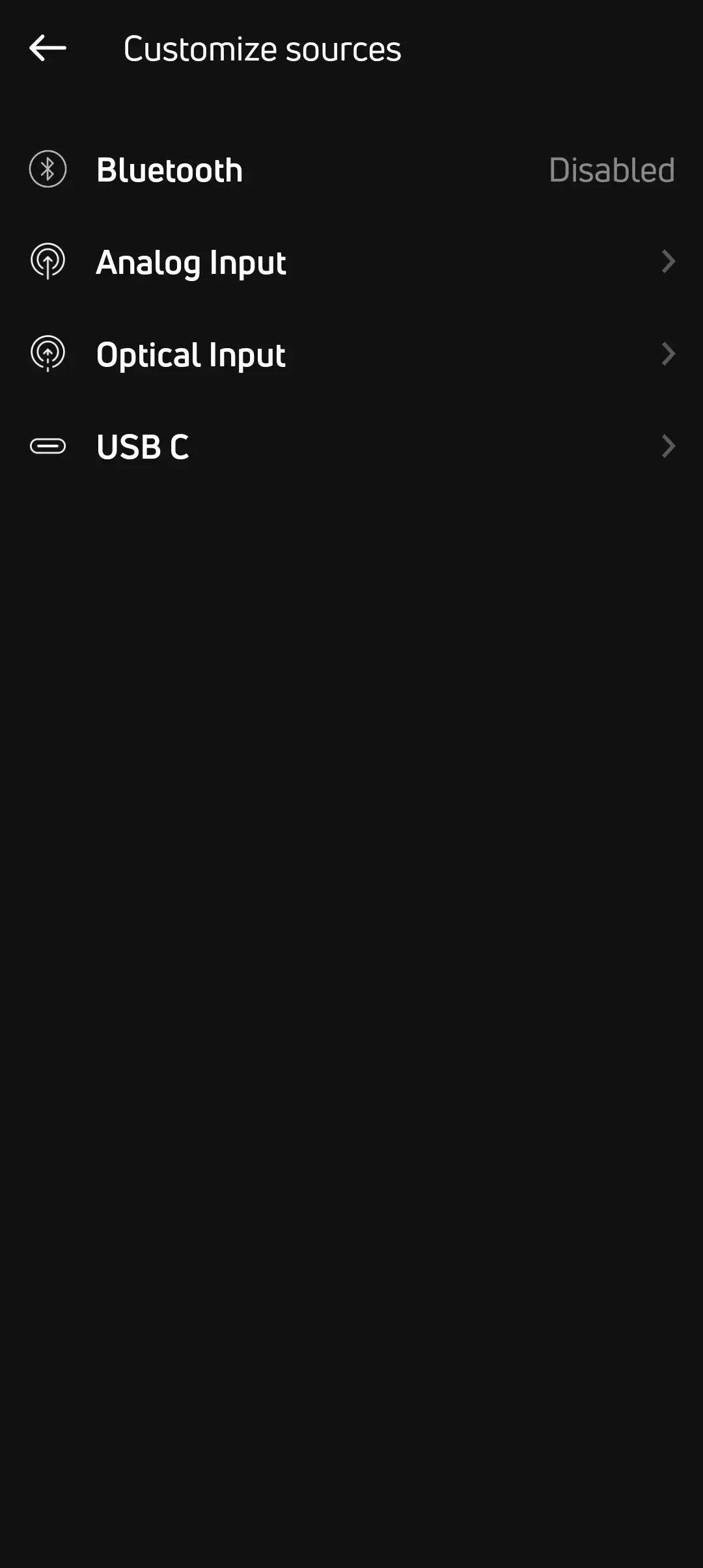
The USB-C input is especially useful. You can connect it to a computer and use the Pulse Flex as a compact desktop speaker. This is not something every wireless speaker can do, and it makes the Pulse Flex more versatile as a result.
I also like that there is a 3.5mm optical/analog combo input. Whether you want to connect a CD player, TV, DAC, or other source, the Pulse Flex gives you options. It is not limited to just app-based streaming.
Bluetooth performance was stable in my testing, and aptX HD support is a nice addition for Android users.
This is one of the things I like most about the Pulse Flex. It gives you multiple ways to use it. You can treat it as a simple wireless speaker, a compact desktop speaker, a kitchen speaker, a Roon endpoint, a multi-room audio zone, a stereo pair, or rear surrounds in a larger Bluesound system.
That flexibility is the whole point of a speaker like this.
BluOS App & Everyday Use
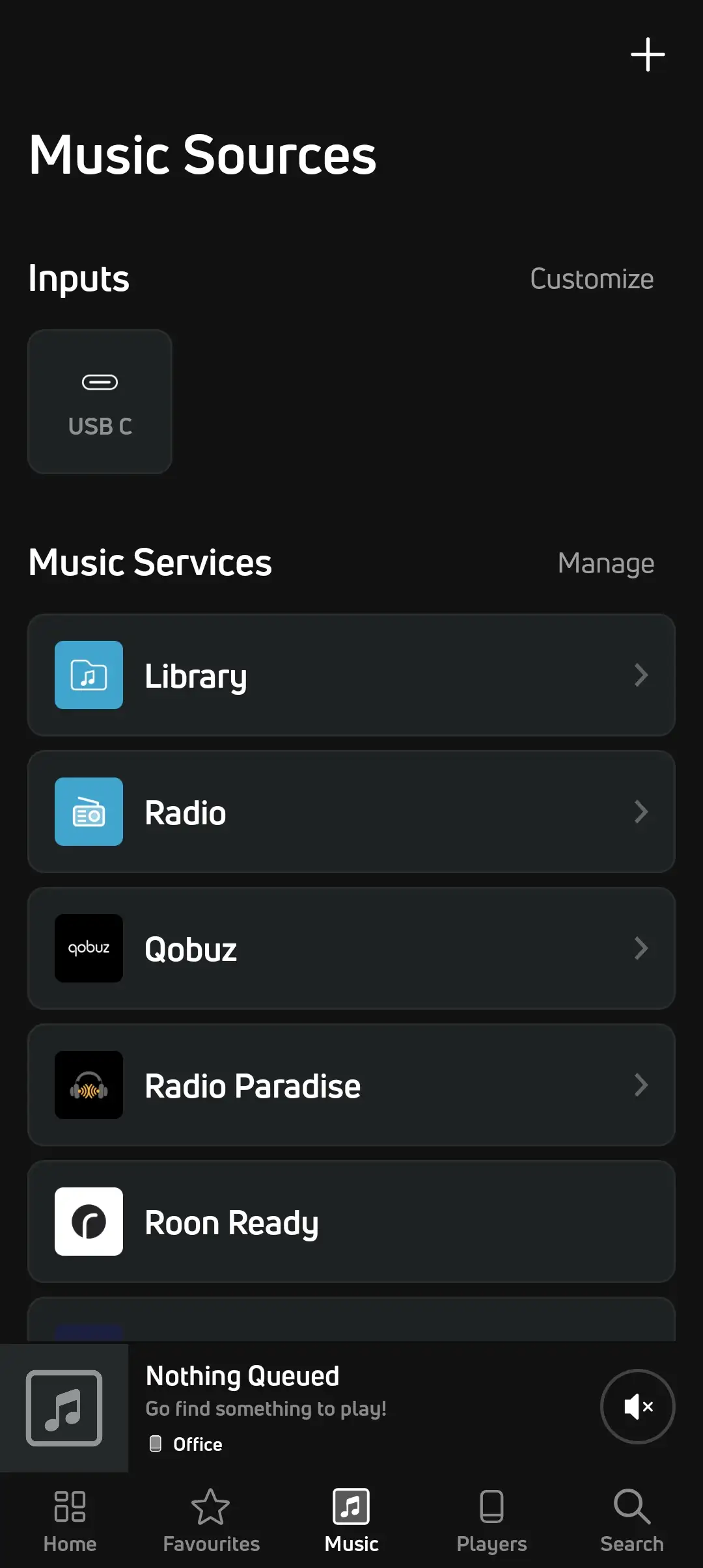
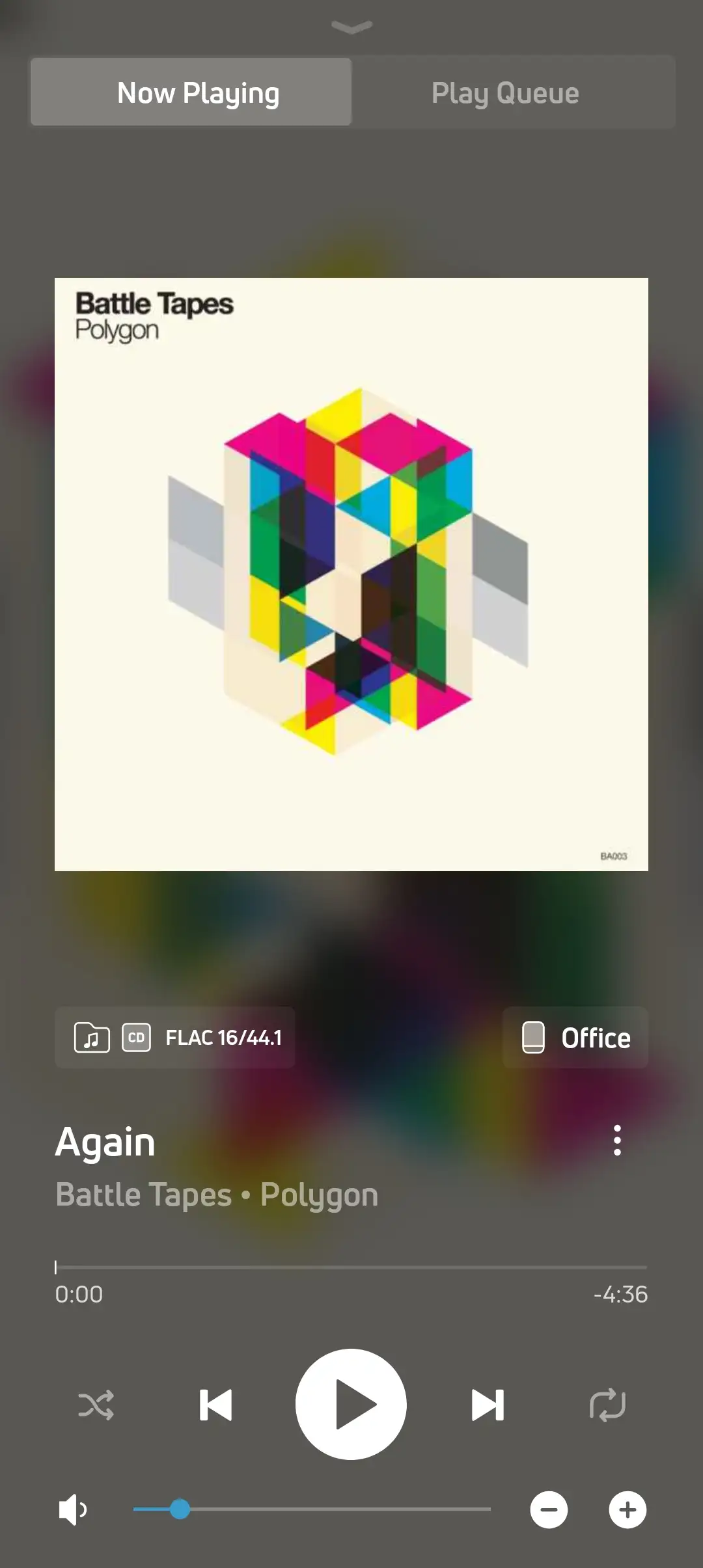
BluOS remains one of the better streaming platforms for people who care about music quality. It supports a wide range of services, handles hi-res playback well, and works nicely across smartphones and computers.
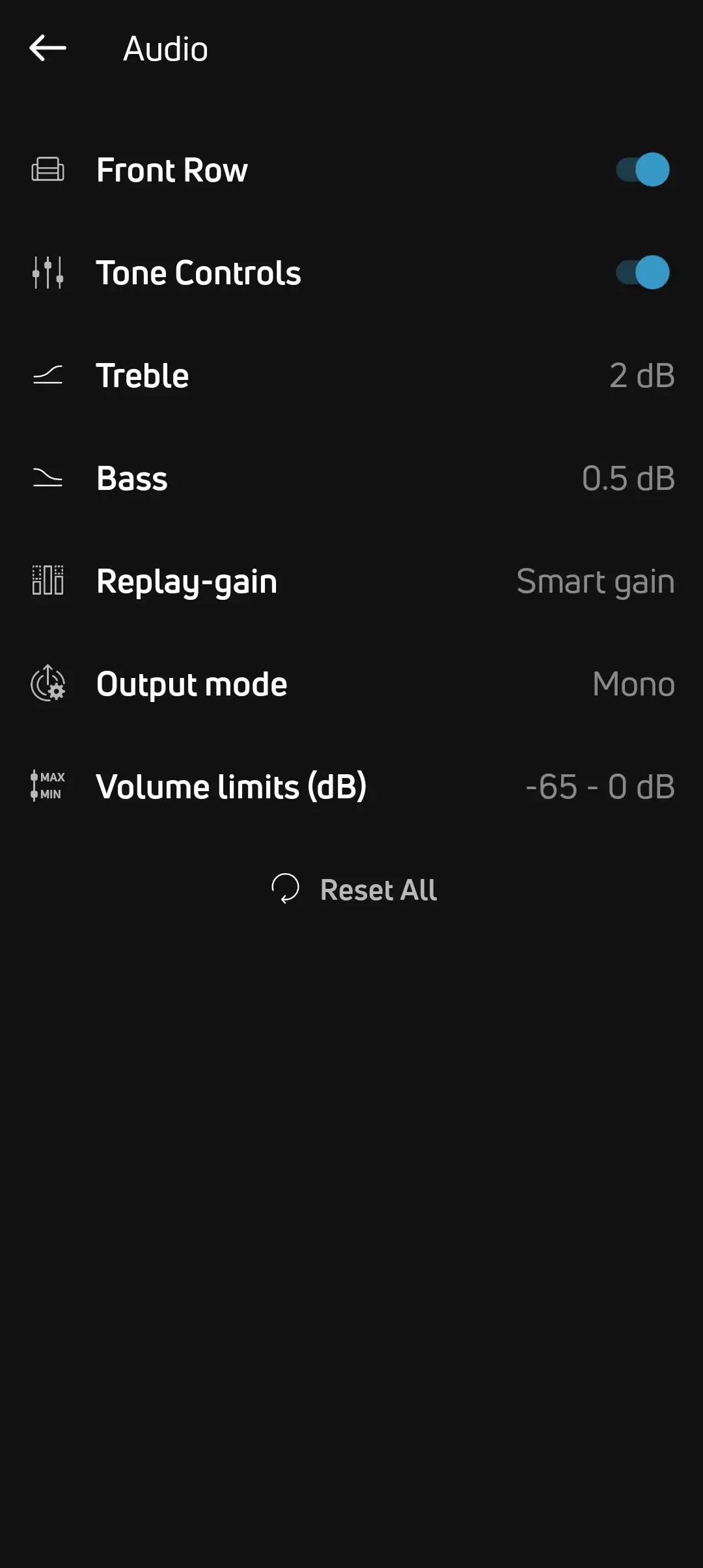
Within BlueOS, you can access streaming services, local network libraries, internet radio, set presets, groupings, EQ settings, and multi-room playback. You can also group the Pulse Flex with other Bluesound speakers around the home, which is one of the reasons someone may choose this over a more basic wireless speaker.
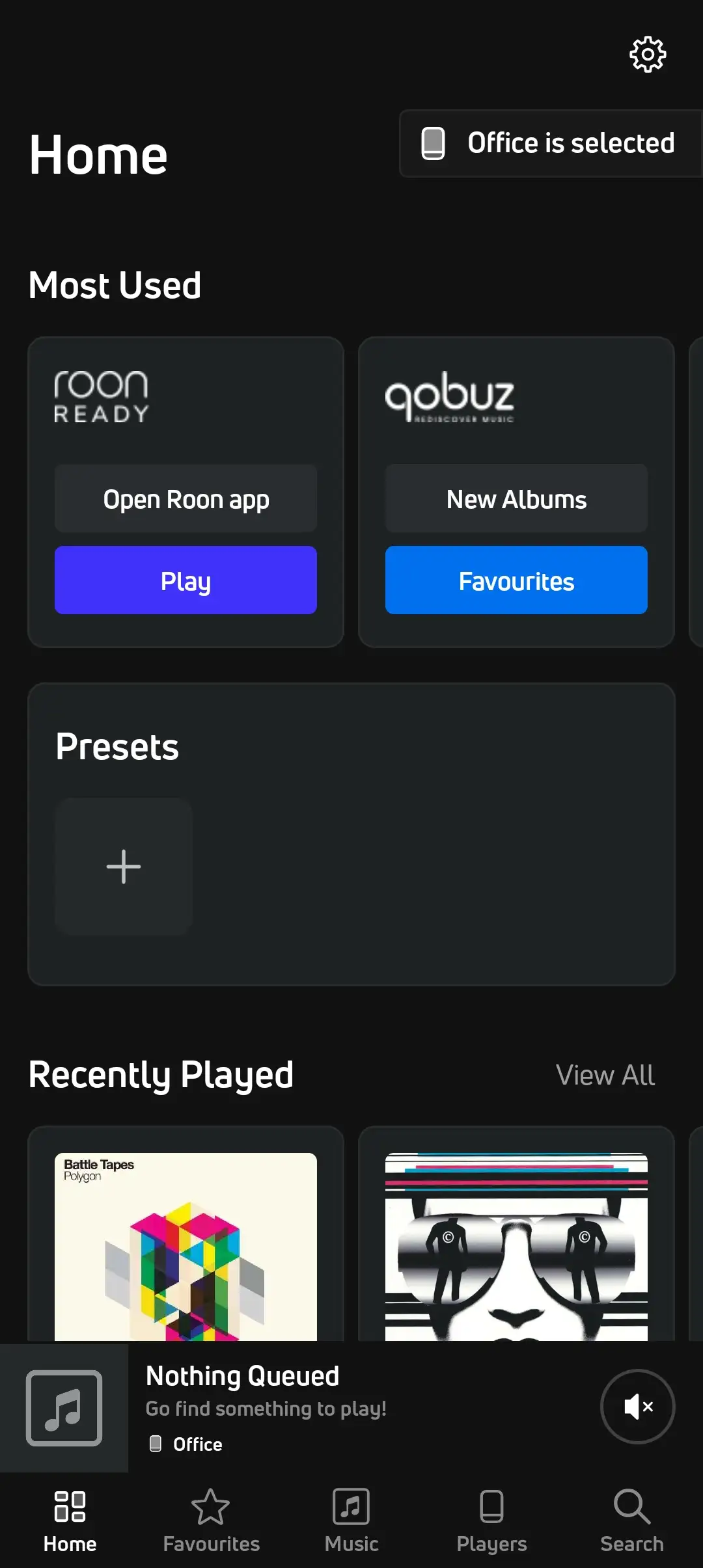
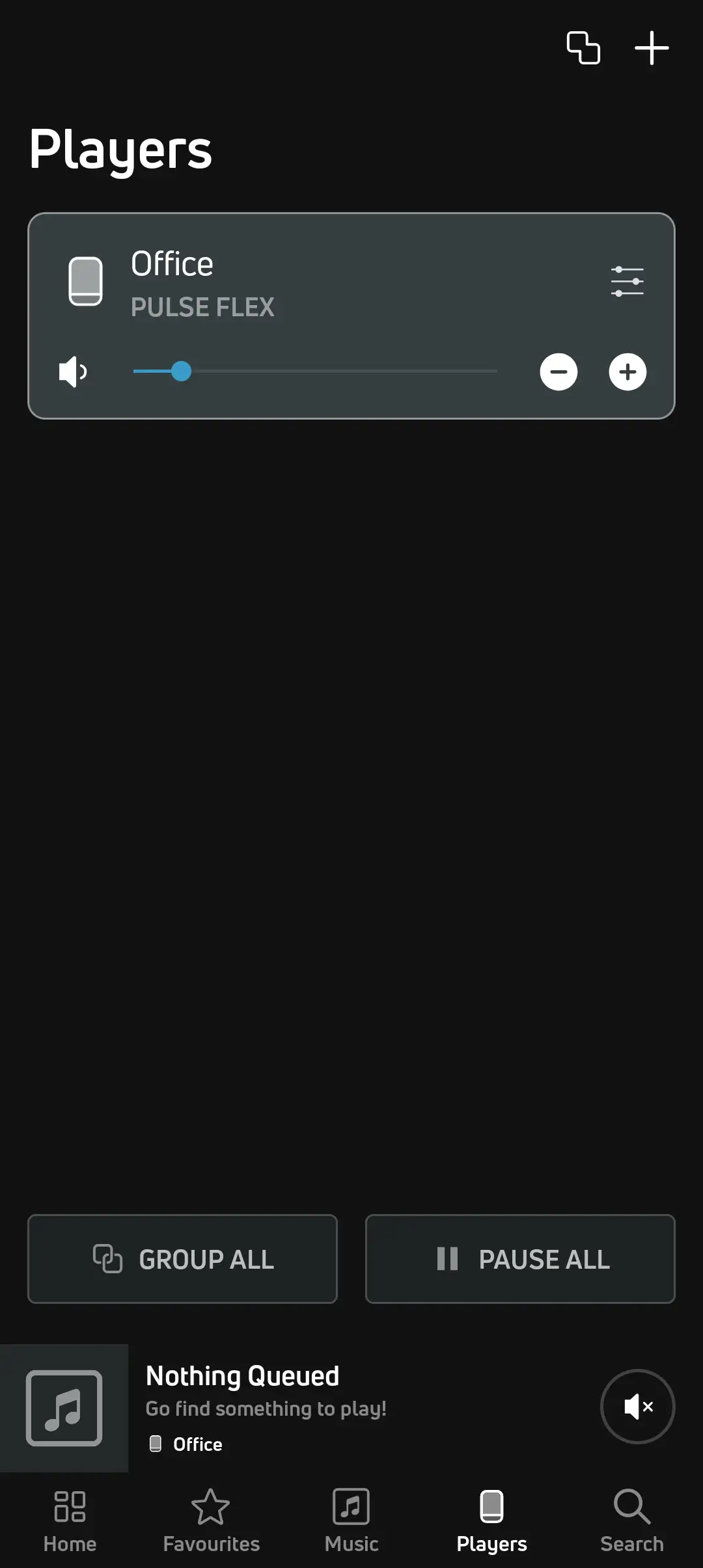
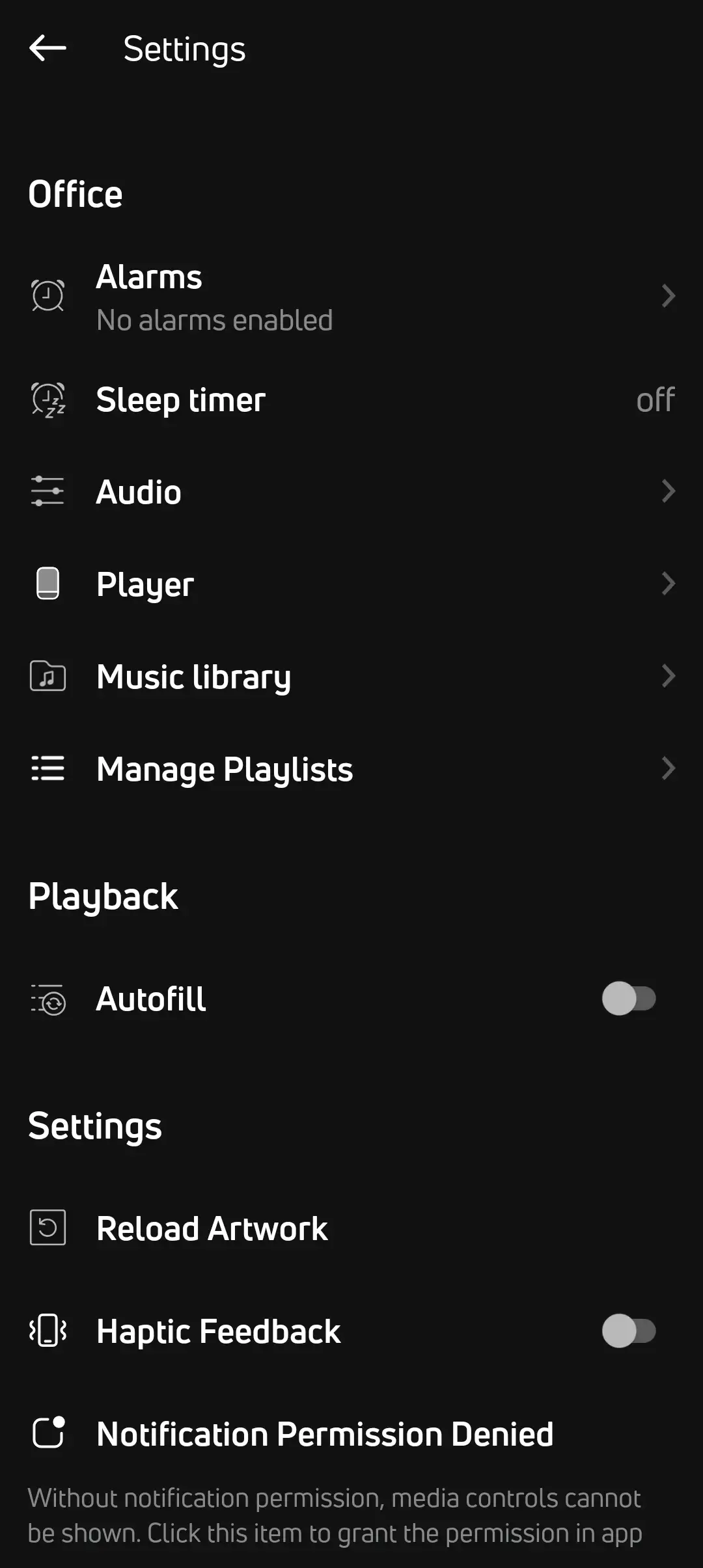


The three preset buttons on the speaker are also genuinely useful. You can assign them to favourite playlists, radio stations, or sources, and then access them without opening the app. That makes the Pulse Flex feel less dependent on the app in day-to-day use.


The biggest missing feature (for me, at least) is Google Cast. This was also one of my criticisms of the Pulse Cinema soundbar. If you are an iPhone user, AirPlay 2 makes life easy and offers good sound quality. If you use Spotify, TIDAL, Qobuz, or Roon, you are also well covered here. But if you use Android and rely heavily on Google Cast, its absence is noticeable, and forces you to use Bluetooth.
Since I use Android, I would love to see Google Cast support added to Bluesound products eventually. Until then, Android users will mostly rely on BluOS’ streaming services integrations, and Bluetooth.
Sound Quality
Sources used for this review:
- Apple iPhone 16 (AirPlay 2)
- Microsoft Surface Laptop 7 (USB)
- Roon, Qobuz, Spotify (BluOS)
- Samsung Galaxy Fold 7 (aptX)
Links to my music playlist used for the majority of testing:
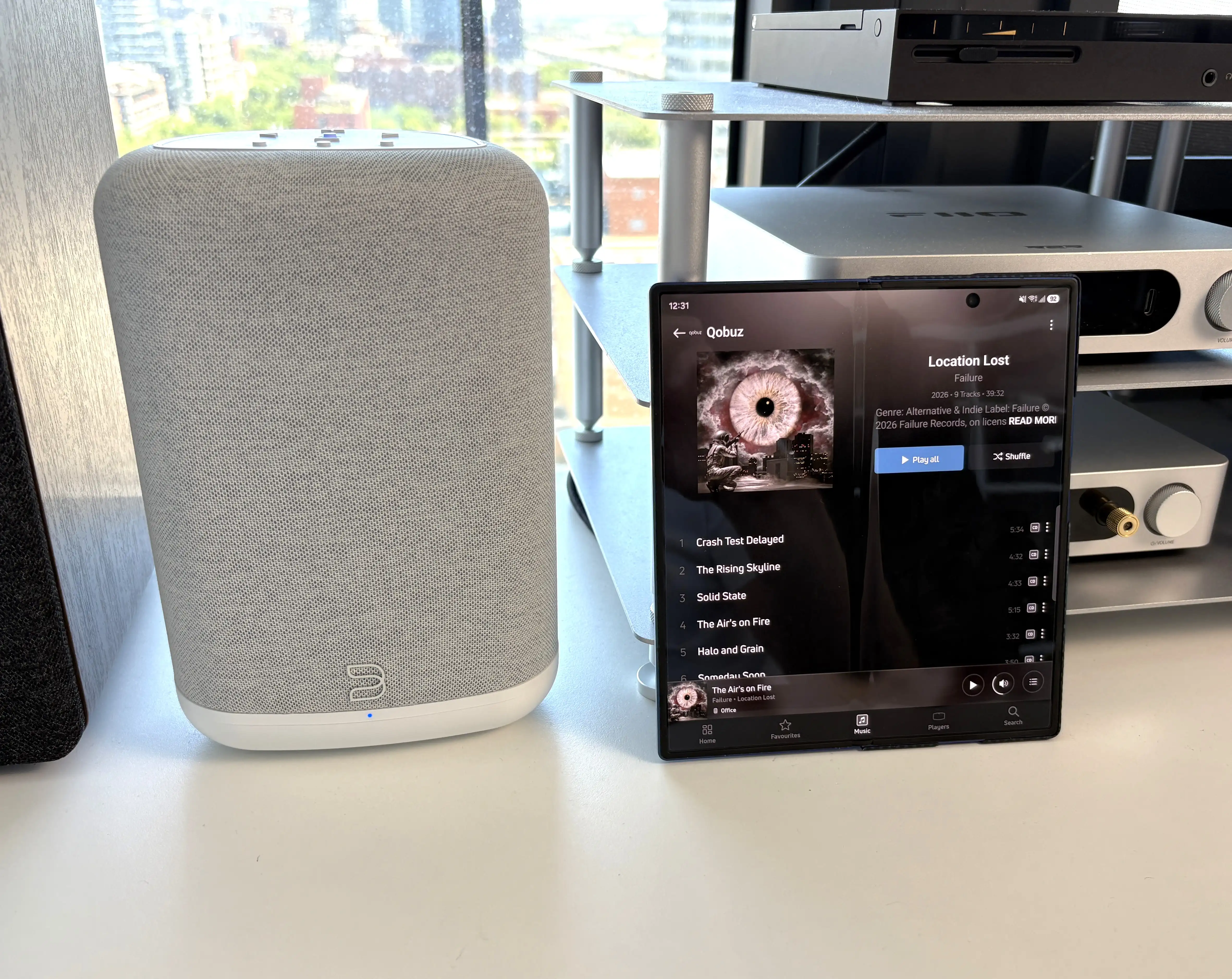
To get this out of the way, the Pulse Flex is not a bass-heavy party speaker. It is not trying to shake the room or raise the roof. It is not tuned to impress instantly with exaggerated low-end or overly sparkly treble.
Instead, the Pulse Flex has a cleaner, more balanced, more midrange-focused presentation. The result is that it sounds more refined than a lot of compact wireless speakers, with good vocal clarity, solid detail retrieval, and a surprisingly composed presentation for its size.
The first thing that stood out to me was really the midrange, so let’s start there. Vocals sound clear and present without being pushed too aggressively forward. Acoustic instruments have a good body, and the speaker does a nice job keeping vocals intelligible even at lower volumes.
The treble performance is also handled well. It is crisp enough to provide detail and air, but it does not become harsh. If anything, it might be slightly underwhelming to most, but I found it fatigue-free and enjoyable.
The bass is where expectations need to be realistic. There is only so much a compact speaker with a single 4-inch woofer can do. The Pulse Flex has decent mid-bass warmth and enough low-end presence for casual listening, but it does not produce deep sub-bass or the kind of physical impact you get from larger speakers.
For jazz, acoustic, indie, folk, vocal music, classic rock, podcasts, and general daily listening, the bass is perfectly acceptable. For hip-hop, EDM, modern pop, movie soundtracks, and anything that depends heavily on sub-bass, the limitations are easier to hear.
For background listening, the Pulse Flex is simply excellent. It has enough fullness to avoid sounding thin, but it also stays clean and controlled. In a kitchen, office, bedroom, or smaller living space, it creates a pleasant and refined sound that is easy to listen to for long periods of time.
Since the Pulse Flex is a mono speaker, stereo imaging is inherently limited when using a single unit. That is not a criticism unique to Bluesound, but it is simply the reality of this type of speaker.
A single Pulse Flex can sound spacious enough for casual room-filling playback, but it will not create a true stereo image. Instruments and vocals are presented clearly, but everything is anchored from one physical point.
Volume & Room Size
The Pulse Flex gets loud enough for its size, but it is best suited for small to medium-sized spaces.
In a bedroom, office, kitchen, or apartment living room, it has enough output to sound full and engaging. It can fill a space nicely without sounding strained at moderate to high volumes.
In a larger open-concept room, it starts to feel more like background music. It can still play loudly, but it does not have the same scale or weight as it does in a smaller space. This is expected, of course. The Pulse Flex is the compact model in the lineup, and it should be judged accordingly.
If you want one speaker to fill a large room with powerful sound, I would look higher in the Bluesound lineup. If you want a compact speaker for everyday listening in smaller spaces, the Pulse Flex does the job perfectly well.
Final Thoughts
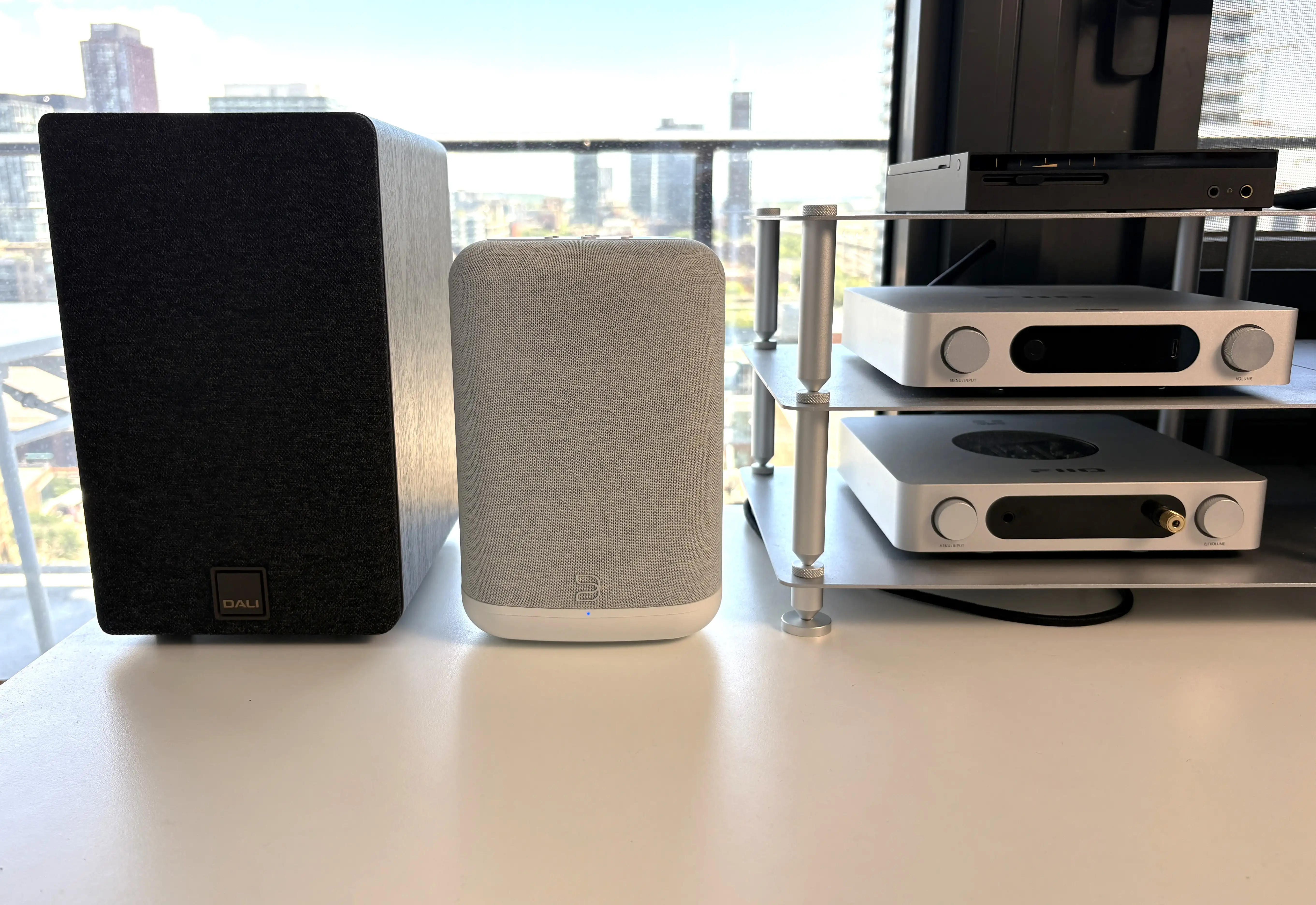
The Bluesound Pulse Flex is a very good compact wireless speaker. Its biggest strengths are sound refinement, midrange clarity, overall connectivity, and BluOS ecosystem integration and support. It sounds clean and mature, offers more input options than most compact wireless speakers, and can work beautifully as part of a larger Bluesound setup.
It is also much more versatile than a typical Bluetooth speaker. You can use it with AirPlay 2, Spotify Connect, TIDAL Connect, Qobuz Connect, Roon, over Bluetooth, and via USB-C. That is a lot of functionality in a small package.
The trade-offs are also clear. A single Pulse Flex is mono, bass depth is limited, there is no built-in battery, there is no Google Cast, and the price becomes much harder to justify if you need two of them for proper stereo.
Still, I like what Bluesound has done here. The Pulse Flex feels like a proper hi-fi wireless speaker scaled down into a more lifestyle-friendly form factor. It is not trying to be the loudest, bassiest, or even cheapest speaker in its class. It is trying to be clean, flexible, reliable, and musically satisfying.
For casual users who just want the most bass or the simplest smart speaker experience, there are other options that may make more sense for you. But for listeners who care about sound quality, hi-res streaming, and long-term ecosystem flexibility, the Pulse Flex is easy to recommend.
If you already own Bluesound products, it is one of the easiest additions you can make. If you are new to the ecosystem, it is a strong entry point into what BluOS does well.
Purchase Links
Buy direct from Bluesound: https://www.bluesound.com/collections/speakers/products/pulse-flex
Buy from Amazon: https://amzn.to/4emiabS
Buy from Best Buy (USA): bestbuycreators.7tiv.net/WO2d53
Buy from Best Buy (Canada): bestbuyca.o93x.net/xJz535
B&H Photo: https://bhpho.to/4aaDYEI
I’m not always able to cover all the details of a product, both hardware and software, in our reviews. If you have any specific questions about this product, please feel free to leave a comment or contact me directly.
Be sure to check out our excellent Buyer’s Guides, as well as our other Reviews.
HiFi Oasis Verdict
HiFi Oasis Verdict-
Design & Build Quality8/10 Very good
-
Sound8/10 Very good
-
Features/Accessories8/10 Very good
-
Value7/10 Good
Pros
- Clean, refined, and mature sound signature
- Excellent midrange clarity, especially for vocals
- Fatigue-free treble with good detail
- Strong build quality with a premium feel
- Compact, lifestyle-friendly design
- BluOS remains a strong hi-res streaming platform
- Wide streaming support, including AirPlay 2, Spotify Connect, TIDAL Connect, Qobuz Connect, and Roon Ready
- Physical controls and preset buttons are genuinely useful
- Can be used as part of a larger Bluesound multi-room or surround setup
- Stable Bluetooth performance with aptX HD support
Cons
- Slightly expensive for a compact wireless speaker
- Bass depth and sub-bass impact are limited
- No built-in battery, so it is not truly portable
- No Google Cast support
- Larger rooms show the output power limitations


