





Disclosure: I’d like to thank FiiO for sending me the FP3 TC for this review. All thoughts and opinions are my own, and FiiO had no say or input on the contents of this review.
FiiO has finally entered the planar magnetic IEM space with the FP3, and at $89.99 USD, they’re making a serious statement about accessibility. This marks their first attempt at cramming a self-developed 14.5mm planar magnetic driver into a wooden shell, creating something that catches your eye as much as it challenges your expectations for budget audio. What’s also unique about this IEM is that FiiO is also releasing a TC version, which comes with a Type-C cable with built-in DSP and support through the FiiO Control app.
The technical specs tell an interesting story. That ultra-thin 1μm PET diaphragm gets a patented titanium-aluminum coating, which sounds impressive on paper but raises the question of whether it translates to real-world performance. FiiO has also included a ‘Tesla Valve’ bass enhancement system and Hi-Res Audio certification, suggesting they’re targeting listeners who want both technical capability and engaging sound. I’ve been testing the FP3 across different genres to see how these features actually perform in practice.
The bigger question here is whether FiiO can deliver genuine planar magnetic benefits at this price point. After spending considerable time with the FP3, I’m ready to break down what works, what doesn’t, and how it stacks up against the competition. Can FiiO’s first planar IEM claim the budget crown? Let’s get into it and find out.
Key Specifications
- Product Page: https://www.fiio.com/fp3
- MSRP: $89.99 USD
- Type: IEM (in-ear monitor)
- Driver Type: 14.5mm Planar driver
- Frequency Response: 10 Hz – 40 kHz
- Impedance: 32 ohms
- Sensitivity: 105 dB SPL
- Weight: 6.5 grams per earbud
- Connection: 0.78mm 2-pin connector
- Detachable Cable: Yes
In the Box and Unboxing


- FiiO FP3
- S, M, L silicone treble eartips
- S, M, L silicone balanced eartips
- 1.2m 3.5mm cable
- 1.2m Type-C cable
- Storage case
- Manual
The package includes two cables, one with a 3.5mm termination, and one with in-line controls and a USB-C termination. Both cables pack 392 wire cores of silver-plated copper in a 4-strand configuration. Each strand gets individual enameling and insulation to minimize microphonics. The cable uses standard 0.78mm 2-pin connectors. The 3.5mm cable has a slightly rougher texture, with the Type-C cable having a smoother finish.

I found both cables to be well-made but noticeably stiff compared to those that usually come with IEMs. The silver-plated copper should provide good conductivity, though at this price point, the cable choice likely has more impact on durability than sound quality.

The included silicone eartips are fairly standard at this price range. FiiO calls the two included sets “treble” and “balanced”, with the treble eartips indicated by a blue stem and the balanced ones black.
The included case is made of clear plastic and almost looks like a Lego brick with its raised circles on the top. It’s very roomy and can fit both cables, both sets of eartips, and the IEMs comfortably. Not my favorite case as it’s not very travel-friendly, but very unique.


Design & Comfort

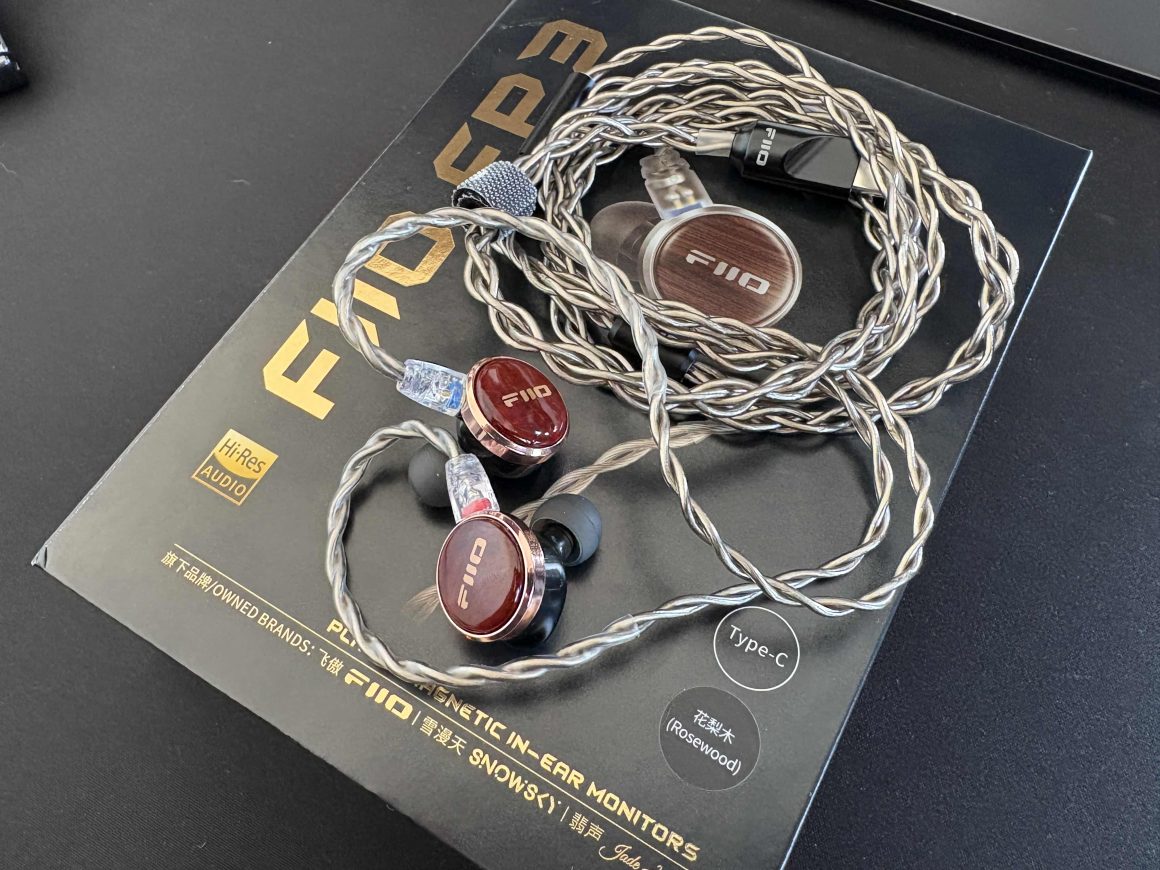
The FP3’s wooden faceplates are probably its most distinctive feature. You can choose between Rosewood (which is what I have) with its vivid grain patterns or Black Walnut with the fine texture you’d find in luxury applications. The main shell uses medical-grade resin with 3D printing technology, while a zinc alloy middle frame provides structural support. The FP3 looks like an elegant luxury item, and I really love the overall look as it’s different from the usual resin shells we see.

At 6.5 grams per earpiece, these are surprisingly light for a planar IEM. The weight distribution feels balanced, though the slightly larger shell might not suit everyone’s ears.
The nozzle is on the longer side, which helps with deeper insertion and better seal. With an outer diameter of 5.8/5.2mm (the raised part measuring 5.8mm and the other part 5.2mm), it accommodates ear tips with 4-5mm inner diameter.


The issue with the longer nozzle is that, in order to get a proper seal, you need to insert the IEM all the way in. Otherwise, you’ll lose the intended frequency response. If you are averse to IEMs that are inserted a little more than most, you may want to avoid the FP3.
For myself, it’s not a huge issue, but the issue I usually have is the eartip size. With the FP3, I chose to use the smallest eartips as it gave the best balance between the seal and comfort. The FP3’s shell has a small lip on the back part that helps brace against your ear. This keeps the FP3 stable and secure in your ear, and distributes the weight more evenly.


The FiiO FP3 isn’t the most comfortable IEM I’ve used, but it’s far from the least comfortable. The included eartip sizes greatly help find the right balance here.
Sound Quality
Sources used for this review:
- Samsung Galaxy Fold 5 (Type-C cable)
- iPhone 16 (Type-C cable)
- Surface Laptop 7 (Type-C cable)
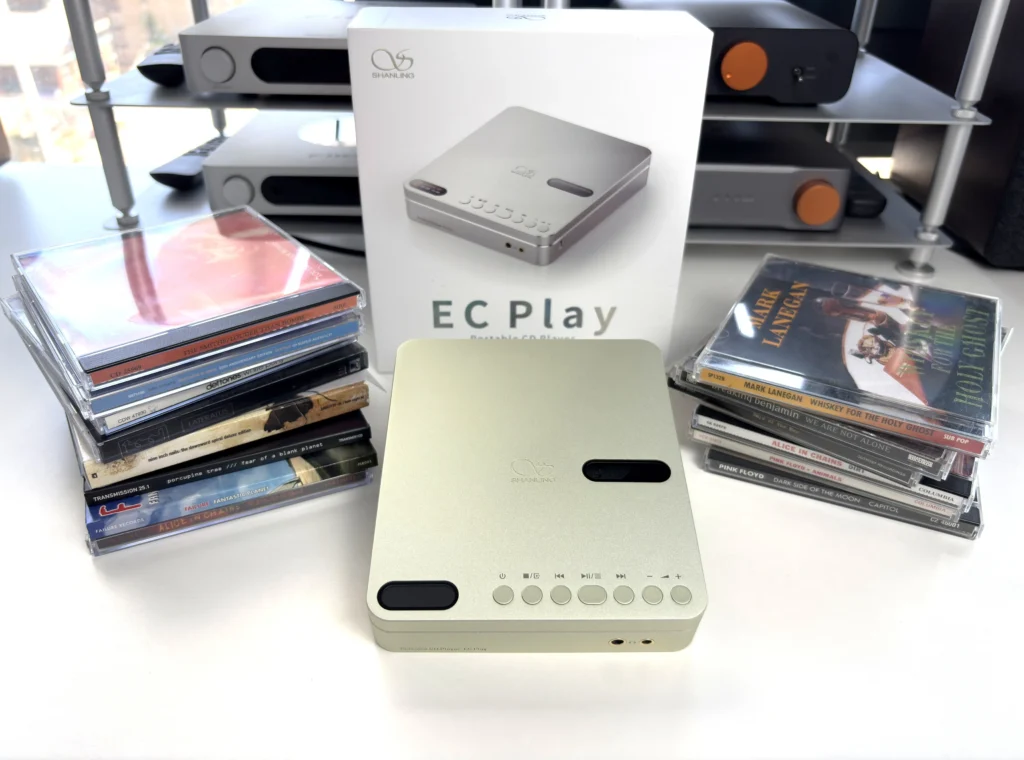
- Shanling EC Zero T
- FiiO JM21
- Sony NW-A306

FiiO spent two years developing the FP3, and the result is their first attempt at planar magnetic technology. The centerpiece is a 14.5mm planar magnetic driver that FiiO developed entirely in-house. The ultra-thin 1μm PET diaphragm gets a dual-coating treatment – aluminum for conductivity and reduced impedance, then titanium for rigidity and treble resolution.
The magnetic array uses 14 high-power N52 Neodymium magnets per driver (seven on each side), which should provide the strong magnetic field needed for proper planar operation. Whether this translates to real-world performance advantages over dynamic drivers at this price point remains to be seen.
The FP3 particularly excels with electronic music, pop, and modern rock. The punchy bass and forward treble bring excitement to EDM tracks, while still maintaining enough clarity for vocals in pop music. Rather than offering a perfectly balanced presentation, the FP3 prioritizes an engaging, fun sound that works well for contemporary genres.
Classical and acoustic recordings may expose the slight metallic quality in the upper registers, but even then, the FP3 remains listenable. It’s just not the ideal choice if you’re primarily listening to jazz, classical, or acoustic folk.

Bass
The Tesla Valve bass enhancement system actually works well, though not quite how you might expect. The sub-bass digs deep with good authority, but the real star here is the mid-bass presence. It’s full-bodied and meaty, delivering the kind of texture that makes you appreciate what planar magnetic drivers can do. The attacks are clean and precise, offering satisfying slam without the excessive boom that often plagues budget IEMs.
That said, the mid-bass can occasionally feel a bit congested, especially with busy electronic tracks. The sub-bass, while present, doesn’t quite match the prominence of that mid-bass warmth. It’s not a dealbreaker, but bassheads looking for that rumbling low-end might want to manage their expectations.
Midrange
Here’s where the FP3 shows its V-shaped personality most clearly. The lower midrange takes a step back, while the upper midrange is pushed forward with noticeable energy. Male vocals get placed somewhat behind the mix, though they retain good clarity and texture. Female vocals, on the other hand, stand out with their forward presentation but occasionally exhibit a slightly metallic timbre.
This tuning creates an engaging listening experience, though it comes at the cost of absolute neutrality. Guitar notes display satisfying thickness, but the overall transparency and resolution in this region fall short of exceptional. It’s a trade-off that works well for contemporary music but might leave acoustic and classical listeners wanting more natural timbre and detail.
Treble
The FP3’s treble is where you’ll either love it or find it fatiguing. It’s slightly bright with substantial sparkle and definition. Hi-hats and cymbals get impressive articulation, and this elevated treble response enhances perceived detail and clarity throughout the frequency spectrum.
For treble-sensitive listeners, extended sessions may prove challenging, especially with the included treble tips. I found the balanced tips helped tame some of this brightness without sacrificing too much detail. The treble stays crisp and clear, but that slight metallic quality becomes more apparent with certain recordings.

Soundstage and Imaging
Here’s where the FP3 genuinely impresses. The soundstage is impressively wide for a planar IEM in this price bracket. Horizontal imaging proves quite accurate, allowing for precise instrument placement across the left-right axis. The background sounds remarkably black, enhancing separation between elements.
Depth perception isn’t quite as pronounced as the width, which is understandable at this price point. Still, the overall presentation feels spacious and engaging, particularly with well-recorded material.
Gaming
The V-shaped sound signature works great for casual gaming. I’ve been playing The Elder Scrolls IV: Oblivion Remastered, as well as GTAV and Cyberpunk 2077. All games sounded great, and the FP3’s wide soundstage really helps immerse yourself in these open-world games.
Competitive shooters like Call of Duty and PUBG also sounded just fine, but the emphasized treble did make gunshots sound a little too bright and hot. As well, footsteps and player movement were not as clearly defined as they could be. This all could be fixed with some EQ.
Type-C Cable and DSP

The Type-C cable includes its own DSP chip. It supports up to 24-bit/384kHz playback, EQ profiles, and an 8-band custom PEQ through the FiiO Control Android app. This allows you to fine-tune the sound to your liking and save it to the cable, and use it with any device. The cable also has in-line controls that work well.
One thing I found is that the Type-C cable’s DSP gives the FP3 a bit more of a dynamic sound, and slightly expands the soundstage. In all honesty, I ended up preferring the sound quality through the Type-C cable vs the 3.5mm cable due to the slightly better dynamics.

Here are some screenshots of the EQ screens in the FiiO Control app:


Final Thoughts

The FiiO FP3 has spent several weeks in my daily rotation, and I have to say, it’s been an interesting journey. At $90, FiiO has managed to create something that genuinely surprised me, not because it’s perfect, but because it delivers on most of its promises without the usual budget compromises.
The low-end has real texture and authority that you typically don’t get at this price point. The V-shaped tuning works particularly well for the genres I find myself reaching for most often. Electronic music sounds engaging, pop and rock vocals cut through the mix nicely, and rock tracks have the energy they need.
The lightweight design became one of those things you don’t think about until you switch back to heavier IEMs, which speaks volumes about FiiO’s attention to comfort. The wooden faceplates also add a premium touch that makes the FP3 feel more expensive than it is, and helps make it look rather unique.
That said, the FP3 isn’t without its issues. The bright treble signature can be fatiguing if you’re sensitive to that region, and the recessed lower midrange means male vocals sometimes get pushed back. The cables feel well-made but surprisingly stiff for something at this price point, but this will all be personal preference, as you can easily swap the cable for something more to your liking.
The FP3 works best for listeners who enjoy contemporary music and want their first taste of planar magnetic technology. If you’re looking for a perfectly neutral reference monitor, this isn’t it. But if you want an IEM that makes your music sound exciting while still delivering solid technical performance, the FP3 hits that sweet spot.
FiiO’s first planar IEM shows they understand what budget-conscious listeners actually want, not just impressive specs, but genuine performance improvements that you can actually hear over more budget earphones. The FP3 delivers exactly that.

Buy from Amazon: https://amzn.to/4f3rKPw
Buy from AliExpress: https://s.click.aliexpress.com/e/_omGV8Eo
Buy Type-C version from AliExpress: https://s.click.aliexpress.com/e/_oB0fRlw
Buy from HiFiGo: https://hifigo.com/products/fiio-fp3?rfsn=8743649.bf4c478
The above links may be affiliate links. All commission earned through them goes directly to maintaining this site and bringing you more audio reviews.
I’m not always able to cover all the details of a product, both hardware and software, in our reviews. If you have any specific questions about this product, please feel free to leave a comment or contact me directly.
Be sure to check out our excellent Buyer’s Guides, as well as our other Reviews.
HiFi Oasis Verdict
HiFi Oasis Verdict-
Design & Comfort7/10 Good
-
Sound8/10 Very good
-
Features/Accessories8/10 Very good
-
Value8/10 Very good
Pros
- Excellent value for planar magnetic technology
- Lightweight, comfortable design with premium wooden faceplates
- Engaging V-shaped tuning perfect for modern genres
- Included cables and eartips are great quality
- Type-C DSP cable gives meaningful sound quality improvements, as well as PEQ support
- Wide soundstage with good imaging performance
Cons
- Treble can be fatiguing for sensitive listeners
- Recessed lower midrange negatively affects male vocal presentation
- Not ideal for those seeking neutral sound signature
- Longer nozzles may not be for everyone


