


Disclosure: I’d like to thank FiiO for providing me with the Tiny A and Tiny B for this review. All thoughts and opinions are my own, and FiiO had no say or input on the contents of this review.
The FiiO SnowSky Tiny A and Tiny B are ultra-compact USB-C DAC/Amps designed to give your device a serious audio upgrade without breaking the bank. Priced at roughly $21.99 USD each, these dongles are among the most affordable hi-res audio accessories on the market. Don’t let the price fool you, though, as FiiO has packed in features that appeal to both casual listeners and audiophiles. Both Tiny models support high-resolution playback up to 32-bit/384 kHz PCM and DSD256, allowing you to tap into lossless and hi-res streams from services like Spotify (Lossless tier), Apple Music, TIDAL, and more. In essence, the SnowSky Tiny series replaces your phone or laptop’s mediocre built-in sound circuitry with a purpose-built audio solution that delivers cleaner, richer sound for your wired headphones.
FiiO offers the SnowSky Tiny in two variants to suit different needs. The Tiny A model features a standard 3.5 mm headphone jack plus an extra USB-C port for pass-through charging, so you can listen to music while charging your device. This is especially useful for phones or tablets with a single port (like an iPad) – Tiny A ensures you don’t run out of battery during long listening sessions. The Tiny B, on the other hand, foregoes the charging port in favor of a 4.4 mm balanced headphone output (in addition to a 3.5 mm jack). This means Tiny B can accommodate headphones or earphones with balanced plugs, and it even allows simultaneous use of both 3.5 mm and 4.4 mm outputs – effectively letting two people listen at once (or one person connect two sets of headphones. Both units share the same core DAC/amp hardware and functionality. Let’s get into the details, then.
Key Specifications
- Product Page: https://www.fiio.com/tiny
- MSRP: $ 21.99 USD
- DAC Components: Unknown
- Connectivity:
- Tiny A: 3.5mm SE output (45mW@16ohms, 34mW@32ohms), USB-C input, USB-C connector for charging
- Tiny B: 3.5mm SE output (68mW@16ohms, 34mW@32ohms), 4.4mm Balanced output (45mW@16ohms, 34mW@32ohms), USB-C input
- Supported Sample Rates and Formats:
- Up to 32bit 384kHz PCM
- DSD256
- Features:
- Configuration though FiiO Control app
- 10-band PEQ
- Toggle for UAC 1.0 mode
- Supports in-line controls
- Supported Platforms:
- Windows
- macOS
- Android
- iOS
- Video game consoles (UAC 1.0 mode)
- Case and Dimensions:
- Tiny A
- 29 x 22 x 10 mm
- 7 grams
- Tiny B
- 35x 24 x 10.8 mm
- 10 grams
- Tiny A
In the Box

- SnowSky Tiny
- Plastic USB-C connector cap
- Manual
Design & Build Quality

Both Tiny A and B share a similar T-shaped, plug-and-play design and CNC-machined aluminum chassis, giving them a surprisingly premium feel for such inexpensive gadgets. Instead of a dangling cable, the Tiny series plugs directly into your device’s USB-C port with a short male connector, and the headphone jacks (and extra port, in the case of Tiny A) branch out to the side – creating a “T” form factor. This smart layout means that when it’s plugged in, the unit sits flush against the device and prevents bending or torque on the USB port during use. In practical terms, you can leave the Tiny attached to a phone or laptop without fear of it snagging or snapping off easily – a common concern with traditional dongles.


In terms of aesthetics and size, these units live up to the “SnowSky Tiny” name. The Tiny A measures about 29 × 22 × 10 mm and weighs a featherlight ~7 grams, while the Tiny B is only slightly larger at roughly 35 × 24 × 11 mm and 10 grams. You likely won’t notice the difference in weight, though Tiny B’s body is a tad longer to accommodate the 4.4 mm output. Both feel solid in hand thanks to the metal build, with smooth polished edges that wouldn’t look out of place on far more expensive gear. FiiO offers three finish options – black, silver, or gold – for a bit of personal flair. The paint/anodizing is evenly applied, and overall the fit and finish exude quality well beyond the ~$20 price tag.


FiiO Control App
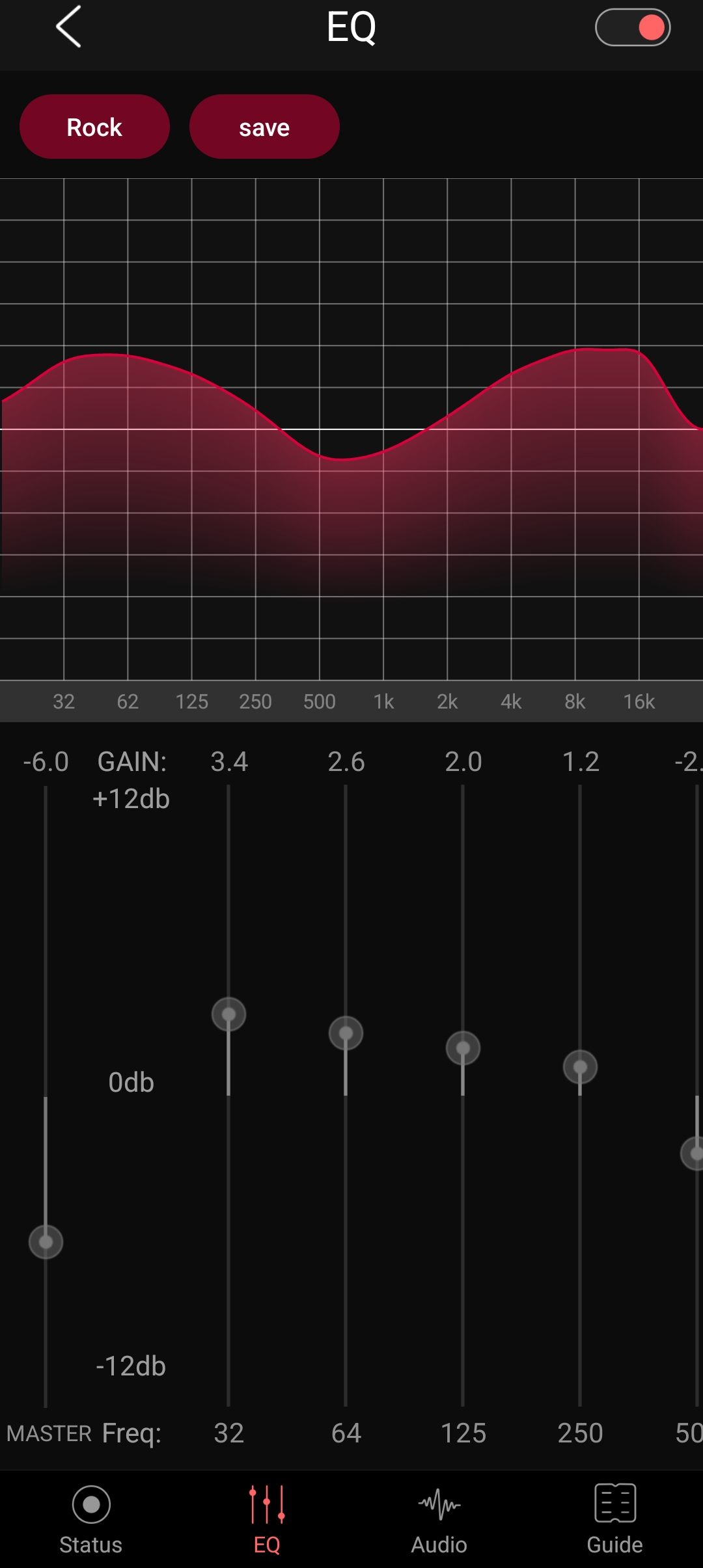
One of the standout features of the FiiO SnowSky Tiny series is the integration of a built-in DSP (Digital Signal Processor) that works with the FiiO Control app for advanced audio tuning. It’s quite remarkable to see a 10-band parametric EQ on a $22 dongle DAC – this gives users fine-grained control over the sound output. Through the FiiO Control mobile app or the web interface on PC, you can adjust 10 frequency bands with precision, modifying gain (dB) and Q values (bandwidth) for each band. In practical terms, this means you can shape the sound to your exact preference or even correct the frequency response of your headphones. Want a little more sub-bass, a dip to tame a treble peak, or a custom “smiley-face” EQ? The Tiny’s onboard DSP has you covered. You can create and save multiple EQ profiles, and FiiO even lets you save profiles to the cloud and share them with others – a social twist for EQ enthusiasts. The app also includes some preset EQ profiles, but the real allure is dialing in your own settings and squeezing the best performance out of your gear.
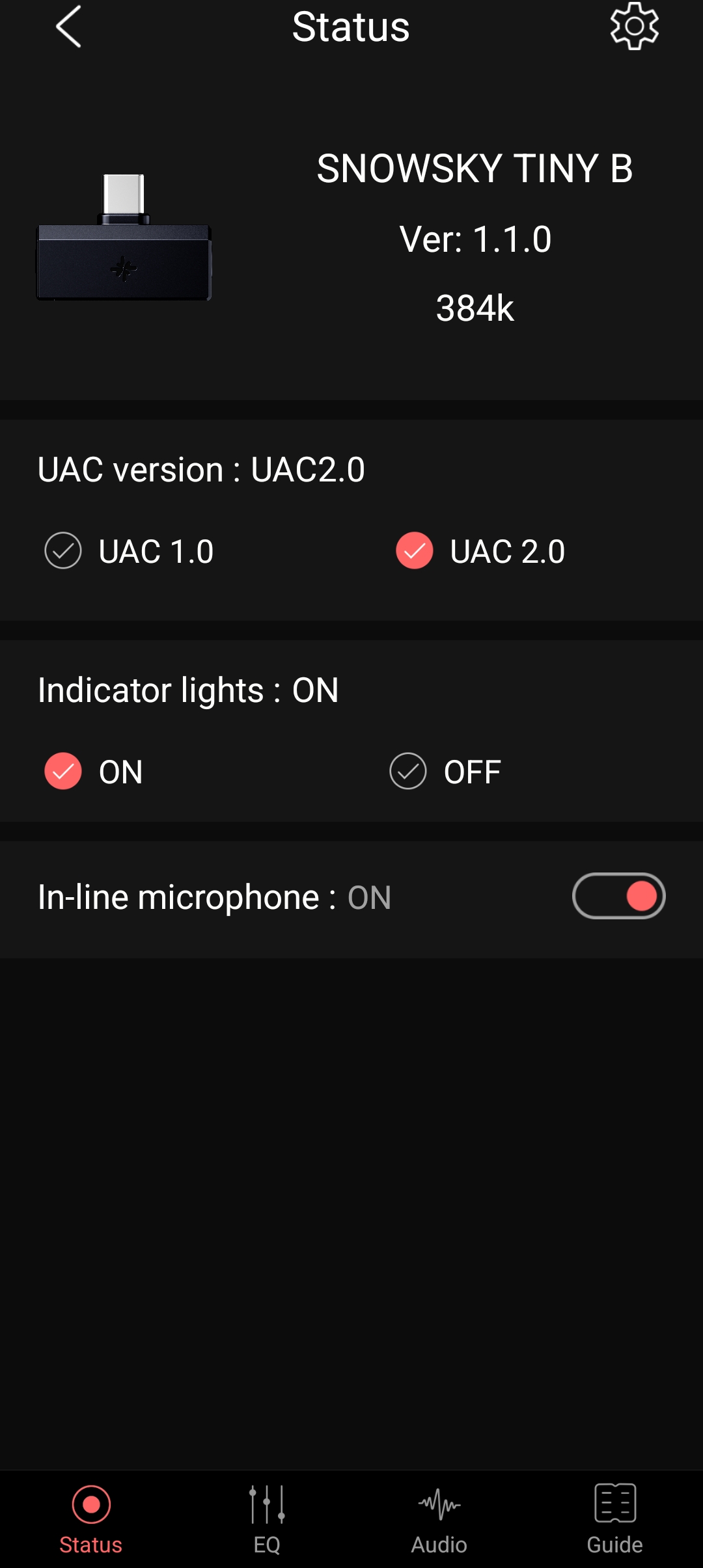
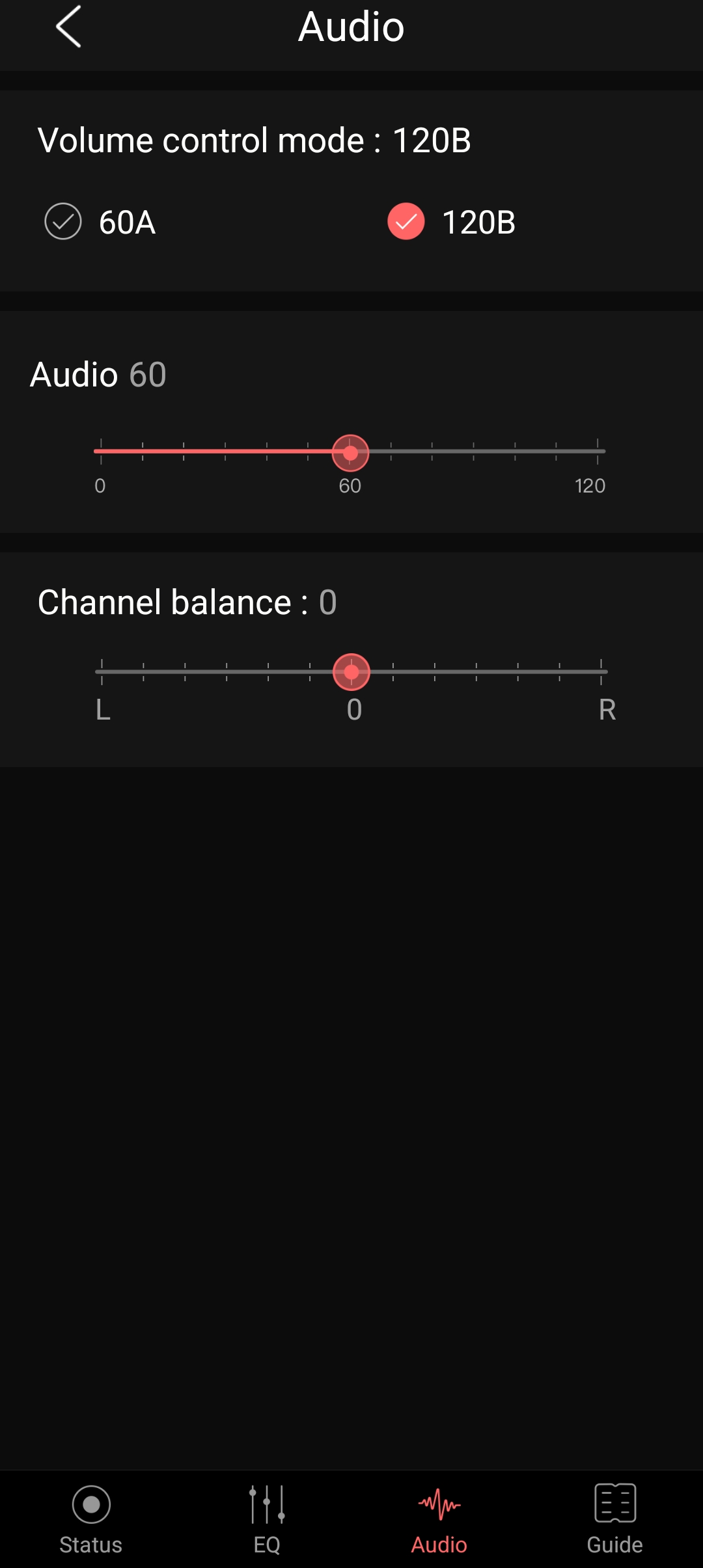
Beyond EQ, the FiiO Control app offers a dashboard of useful settings and status info. Notably, you can switch between UAC 2.0 and UAC 1.0 modes via the app – UAC 2.0 is the default for full hi-res support on modern OSes, while UAC 1.0 mode ensures compatibility with certain devices (like game consoles) that only recognize the legacy USB audio protocol. The app also provides software volume control and the ability to choose between 60-step or 120-step volume granularity, giving you finer volume adjustment if needed. Another neat feature: since the Tiny supports headset in-line controls and microphones, the app has options related to call audio and even a toggle for enabling in-line mic input or call recording. In short, FiiO has built a comprehensive control center for the Tiny, turning what could have been a simple plug-and-play DAC into a tweakable audio tool.
Note that you cannot use the FiiO Control app on iOS to modify settings for either Tiny models, as the Tiny does not have MFI certification, which is required for USB communication. While this is disappointing, it also helps keep the cost down, and you still have the option of using a computer or Android device to modify the settings.
Here are some screenshots of what is available in the FiiO Control app (the options are the same for both Tiny models):


Usability

One of the key questions for any portable DAC/amp is: how does it perform across different devices and scenarios? I tested the FiiO SnowSky Tiny A and B with a variety of sources to see how they handle real-world use. Below is an overview of their usability and performance with smartphones, laptops, a budget DAP, and the Nintendo Switch 2.
Smartphones: Using the Tiny with my Samsung Galaxy Fold 7 and Apple iPhone 16 is as simple as plug-and-play – no drivers or external power needed. On Android devices, the Tiny is recognized as a USB audio output instantly. With iPhones (especially newer models with USB-C), it’s also a seamless experience. In everyday use, the difference in sound quality is immediately noticeable compared to a phone’s built-in DAC or the little Apple dongle – the Tiny delivers clearer detail, less noise, and more driving power. Even sensitive in-ear monitors benefit from the Tiny’s <0.5 Ω output impedance, which means the phone + Tiny combo won’t distort their frequency response or add hiss. A big plus for Tiny A here is the pass-through charging: you can connect your charger to Tiny A’s USB-C port and keep your phone topped up while listening. This is a game-changer for long flights or commutes when you want to use wired headphones but not kill your battery. Tiny B lacks this, so with that model you’re running on the phone’s battery – not a huge issue given the Tiny’s power draw is fairly low, but something to consider.
Both Tiny A and B support in-line remote commands (play/pause, track skip) and the use of the headphone’s built-in microphone for calls. We tested with a 3.5 mm headset on Android: music would pause and resume correctly with button presses, and call audio went through the headset mic without issue. This makes the Tiny very practical for day-to-day phone use – you don’t lose the convenience features of your headset. Physically, the Tiny’s compactness is a blessing; it adds minimal bulk to the phone. All of the above also applies to tablets like the iPad Pro. The experience with my 2020 iPad Pro 11” is exactly the same as with my iPhone 16.


Laptops and PCs: On my Surface Laptop 7, the Tiny was recognized instantly as an external audio device (no driver installation needed). Both Tiny models are USB Audio Class 2 devices by default, so they can play hi-res PCM and DSD from your computer. I was able to select up to 32-bit/384 kHz in the Windows sound settings after plugging the Tiny in. For most users, the benefit of using a Tiny with a computer is cleaner output and potentially more volume headroom than the stock headphone jack (which on many laptops can be quite noisy or low-powered. If you want to play DSD files, a player like foobar2000 (with ASIO component) or MusicBee can send DoP to the Tiny, which is indicated with a green LED on the device (DSD mode). If you want bit-perfect audio, simply use “WASAPI Exclusive Mode,” and you’re good to go.
I didn’t observe any significant battery drain on my laptop when using either Tiny model, and thermals are a non-issue, it barely gets lukewarm even after hours of use. The Tiny B’s dual outputs also work on PC simultaneously: we could have two pairs of headphones plugged in, and both would play the system audio in parallel (useful perhaps for watching a movie with someone on the same laptop). Overall, using Tiny A or B with a computer is straightforward and beneficial if you do any serious listening (or gaming) on your desktop or laptop. It’s an easy audiophile upgrade for a PC, and even gamers might prefer it for the improved clarity in sound effects and positional audio.
Digital Audio Players (DAPs): If you own a dedicated DAP, especially an entry-level or older model, you might wonder if the Tiny can augment its performance. The answer is yes, as long as the DAP can output audio over USB. I tested the Tiny B with the HiBy R1and Sony NW-A306 as they both lack the 4.4mm balanced output. Connecting the Tiny was as simple as connecting to a phone. Once connected, the DAP routed audio to the Tiny, using it as the DAC/amp (in Android, you need to accept the prompt to give it permission to use the Tiny when you open your music app). The Tiny also adds the benefit of parametric EQ to any source. For instance, if your budget DAP’s firmware lacks a good EQ, you could create a custom EQ on the Tiny (using your phone/PC) and have that active while playing music from the DAP, effectively bypassing the DAP’s limitations.
Nintendo Switch 2 (and other consoles): The Nintendo Switch 2, like its predecessor, can benefit from an external DAC for better audio, and the Tiny fits the bill perfectly. Thanks to FiiO’s inclusion of UAC1 mode for console compatibility, the Tiny is essentially plug-and-play with the Switch. I connected the Tiny B to the Switch 2 via the USB-C port and was able to get game audio through to my IEMs instantly. In UAC1 mode, the Tiny’s hi-res capabilities are not fully utilized, but the sound quality still improved over the Switch’s built-in headphone jack. You notice a cleaner output with less background noise and a bit more driving power for larger headphones. For example, the orchestral swell in a game like Zelda: Tears of the Kingdom felt more dynamic through the Tiny than via the console’s own jack. Beyond the Switch 2, the Tiny is equally useful on a PS5 or other consoles with USB audio support. Console gamers can use it to connect high-quality studio headphones or IEMs and get a richer, more immersive audio experience than plugging into a controller or TV
Sound Quality
Sources used for this review:
- Microsoft Surface Laptop 7
- Sony NW-A306
- Apple iPhone 16
- Samsung Galaxy Z Fold 7
- HiBy R1
Headphones used for this review:
- Focal Azurys
- Meze 105 AER
- Sennheiser HD 620S
IEMs used for this review:
- 64 Audio Solo
- DUNU DN242
- Simgot EA1000 Fermat
- ZiiGaat Crescent
Links to my music playlist used for the majority of testing:
Spotify: https://open.spotify.com/playlist/6QSIhuCBDAUyoWGcyxPeN8?si=c0a4eb6bd3e3421e
Apple Music: https://music.apple.com/ca/playlist/hifi-oasis-audio-testing/pl.u-lKWlcjy04xp
Tidal: https://tidal.com/playlist/503485c7-7f3d-43f0-b904-4b9a89c33875

Given their size and price, the FiiO Tiny A and B deliver impressively high-fidelity sound. Both models use the same core DAC/amp architecture (FiiO hasn’t publicly specified the chip, but it’s described as an “audiophile-grade” processor) and thus they perform virtually identically in terms of audio output. In a word, the sound signature is neutral and clean. FiiO isn’t adding any deliberate coloration here, which is exactly what you want from a DAC meant to output bit-perfect audio. My listening tests revealed a clear, detailed presentation. The Tiny offers a level of clarity and resolution that handily outclasses typical built-in headphone jacks. Music played through the Tiny gains a blacker background (no audible hiss, thanks to its low noise floor) and more precise imaging. Subtle details in high-quality recordings – the brush of fingers on guitar strings, slight reverb tails – come through where they might be blurred or lost using a device’s built-in audio output.
One important point: output power. The SnowSky Tiny is designed for efficient headphones and IEMs. FiiO quotes about 34 mW into 32 Ω for both Tiny A and Tiny B (3.5 mm output). In real use, this is enough to drive common portable headphones to loud levels. Using headphones such as the Sennheiser HD 620S, Focal Azurys, and Meze 105 AER all performed just fine, with more than enough volume overhead. Both models were able to drive my Beyerdynamic DT 770 Pro 80ohm, but this was pushing the limits of their output power.
Final Thoughts

FiiO’s SnowSky Tiny A and Tiny B have achieved a rare feat: they offer a balanced blend of consumer-friendly convenience and audiophile-grade capability. After spending extensive time with both, it’s clear that these pocket-sized adapters are more than just another cheap dongle. The Tiny A and B deliver genuine sonic improvements, robust build quality, and a feature set that is unrivaled at this price point. At roughly $22 each, they are practically a steal, an easy recommendation for anyone who listens to wired headphones on modern devices that lack output connectivity.
Which one to choose? It ultimately comes down to your use case:
- If you often find yourself wanting to charge your device while listening (for example, phone users on long trips, iPad users, or Switch handheld gamers), and only require a 3.5mm connection, the SnowSky Tiny A is the obvious choice with its USB-C charging pass-through.
- If you use higher-end headphones or IEMs with balanced cables, or you like the idea of dual headphone outputs for sharing, then SnowSky Tiny B is very appealing. It gives you the 4.4 mm option (while still retaining a 3.5 mm jack) and can output to two sets of headphones at once. Just remember that Tiny B cannot charge your device, so it’s best used when battery life is less of a concern (e.g., at a PC, or if you carry a big power bank for your phone anyway).
Are there any downsides? Only minor ones, which feel forgivable given the cost. The limited output power means this isn’t the solution for very power-hungry. The lack of iOS app support is a slight nitpick for iPhone users, though the device works flawlessly on iOS for playback (and you can configure it via other means if needed).
Crucially, the listening experience the Tiny A and B provide is far above “budget. This balance of hi-fi performance and everyday practicality is exactly what many consumers need. For the price of a couple of music album downloads, you can drastically improve how those albums sound on all your devices, and that is perhaps the best endorsement one can give. SnowSky Tiny A and B come highly recommended from me for anyone seeking hi-fi sound on the go without the hi-fi price tag.


Buy from Amazon: https://amzn.to/48krpFb
Buy from AliExpress: https://s.click.aliexpress.com/e/_c4Cwr6S9
The above links may be affiliate links. All commission earned through them goes directly to maintaining this site and bringing you more audio reviews.
I’m not always able to cover all the details of a product, both hardware and software, in our reviews. If you have any specific questions about this product, please feel free to leave a comment or contact me directly.
Be sure to check out our excellent Buyer’s Guides, as well as our other Reviews.
HiFi Oasis Verdict
HiFi Oasis Verdict-
Design & Build Quality8/10 Very good
-
Sound8/10 Very good
-
Features/Accessories7/10 Good
-
Value9/10 Amazing
Pros
- Extremely affordable at around $22 USD each
- Neutral, clean, low-noise sound
- Aluminum build feels premium and durable
- Very compact T-shaped form factor
- FiiO Control app provides advanced tools such as 10-band PEQ
- Low output impedance (<0.5 Ω) makes it great for sensitive IEMs
Cons
- Limited output power
- No iOS app configuration due to lack of MFi certification


