




Disclosure: I’d like to thank HiFiGo for providing me with the Juzear Harrier for this review. All thoughts and opinions are my own, and HiFiGo had no say or input on the contents of this review.
The Juzear Harrier is a mid-range in-ear monitor (IEM) that has generated buzz for its collaboration with well-known reviewer Mark Ryan (Super* Review) and its scientific approach to tuning. Priced around $330, the Harrier is a 9-driver tribrid design (1 dynamic driver, 6 balanced armatures, 2 micro-planar tweeters) aimed at providing an In-Ear Fidelity (IEF) neutral sound with a tasteful bass boost. In practical terms, this means the Harrier’s sound signature is balanced and “safe” – the low end is supportive without going overboard, the midrange is neutral and well-proportioned, and the treble is tuned down just enough to avoid fatigue. The result is a tuning intended to appeal to both casual listeners and discerning audiophiles who value natural tonality over flashy extremes.
In this review, I’ll go into all of the usual things one is interested in knowing when considering an IEM, such as the design and comfort, and a detailed breakdown of its sound quality (including Efficiency & Sensitivity, Bass, Midrange, Treble, and Technical Performance). I’ve also decided to draw comparisons with some notable IEMs that are priced similarly, like the DUNU DN242, ZiiGaat Crescent, ZiiGaat Horizon, and KBEAR Cepheus (KB16), highlighting where the Harrier excels and where it falls short compared to these IEMs. By the end, you should have a clear picture of what the Juzear Harrier offers and whether this “meta-tuned” all-rounder fits your personal audio tastes. Alright, let’s get into it.
Key Specifications
- Product Page: https://hifigo.com/products/juzear-harrier?variant=47057026941167
- MSRP: $329.99
- Type: IEM (in-ear monitor)
- Driver Type: 1x 10mm Dynamic Driver (DD), 6x Balanced Armature (BA), 2x Micro Planar (MP) drivers
- Impedance: 32 ohms
- Sensitivity: 112 dB SPL
- Weight: 7.1 grams per earbud
- Connection: 0.78mm 2-pin connector
- Detachable Cable: Yes
In the Box and Unboxing
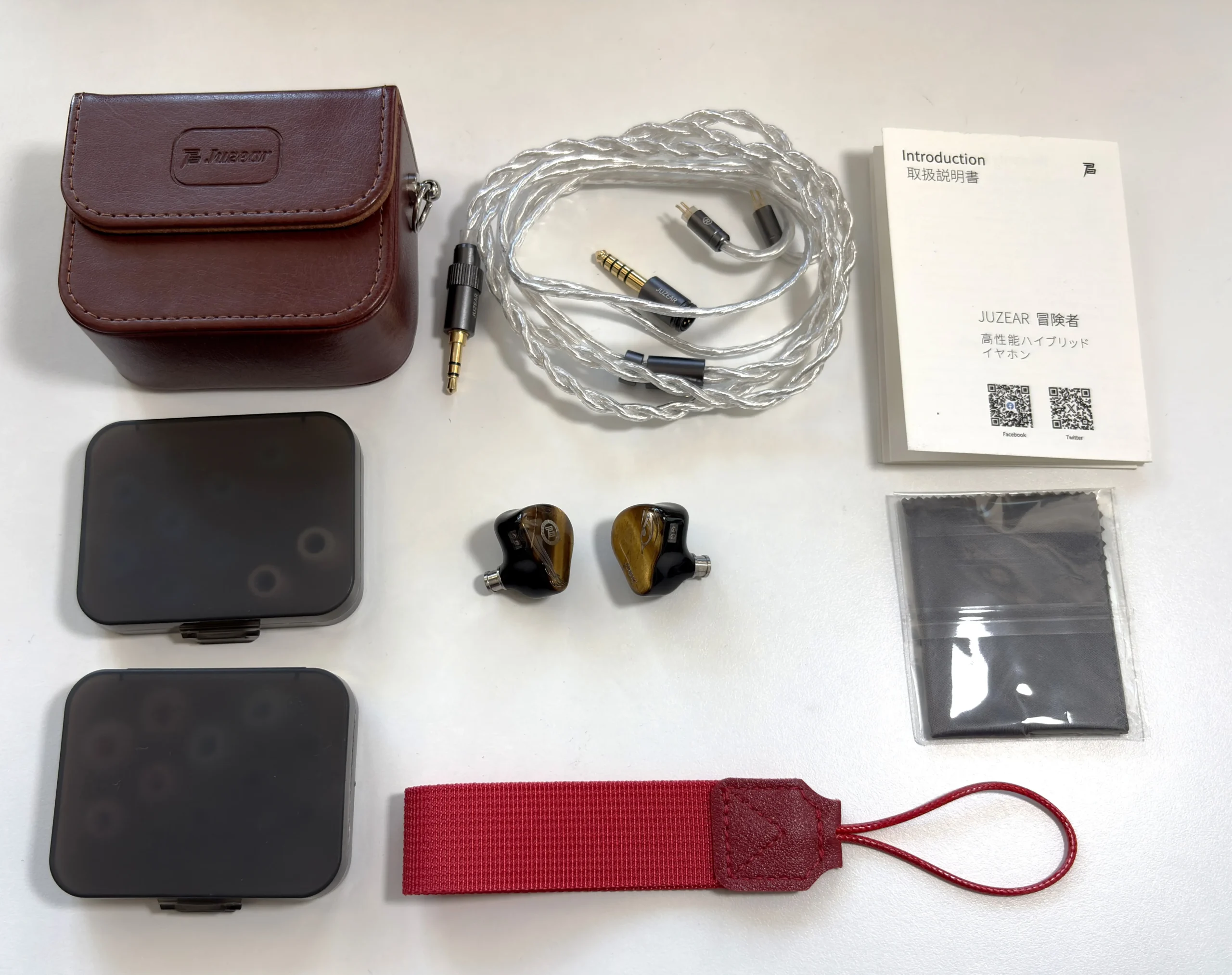
- Juzear Harrier
- 1.25m 6N SPOCC+SCCW Hybrid Cable with swappable connector
- 3.5mm cable connector
- 4.4mm cable connector
- 4 pairs of balanced bore eartips
- 4 pairs of liquid silicon eartips
- 3 pairs of wide-bore eartips
- 1 pair of memory foam eartips
- Eartip cases
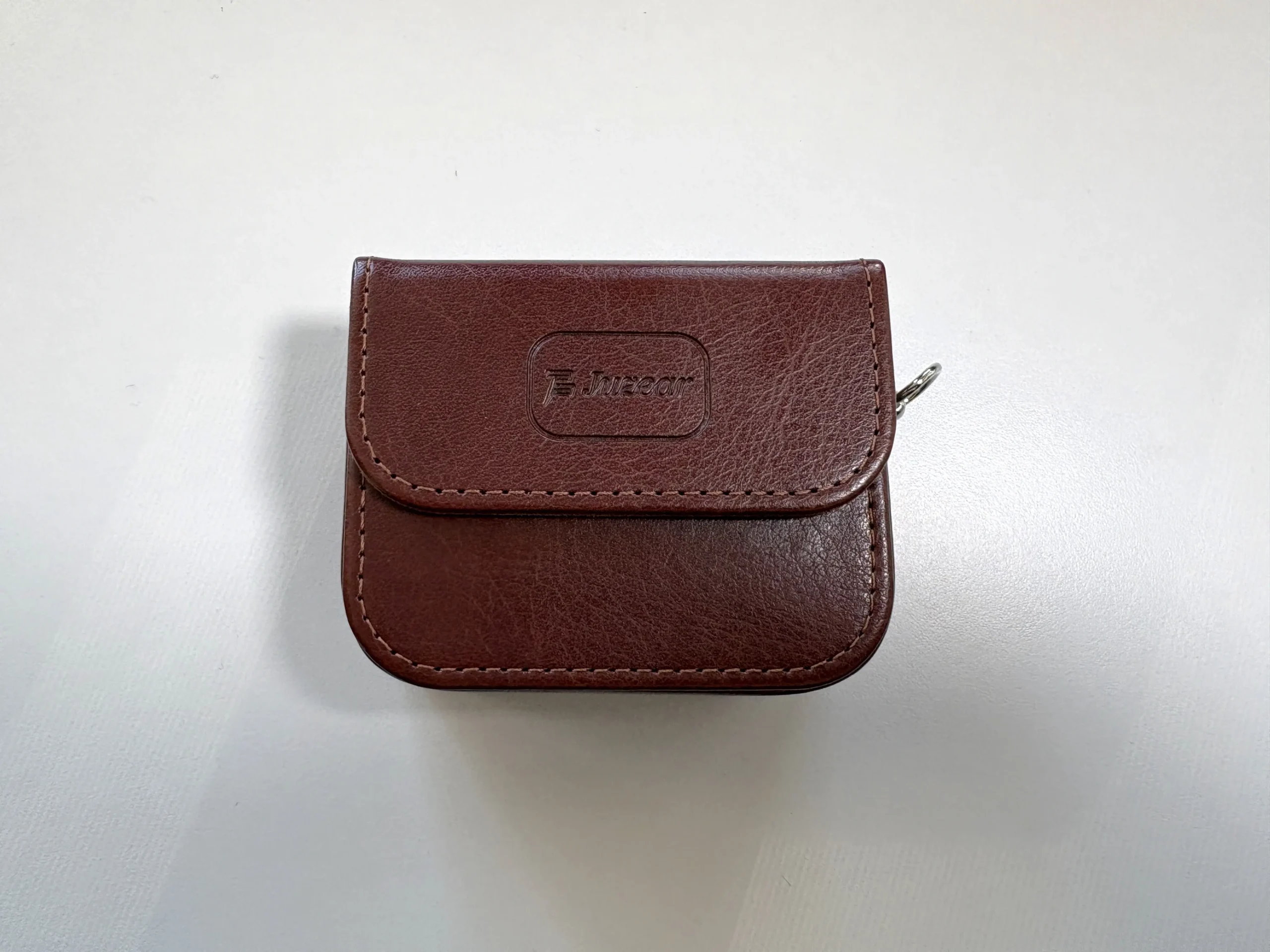
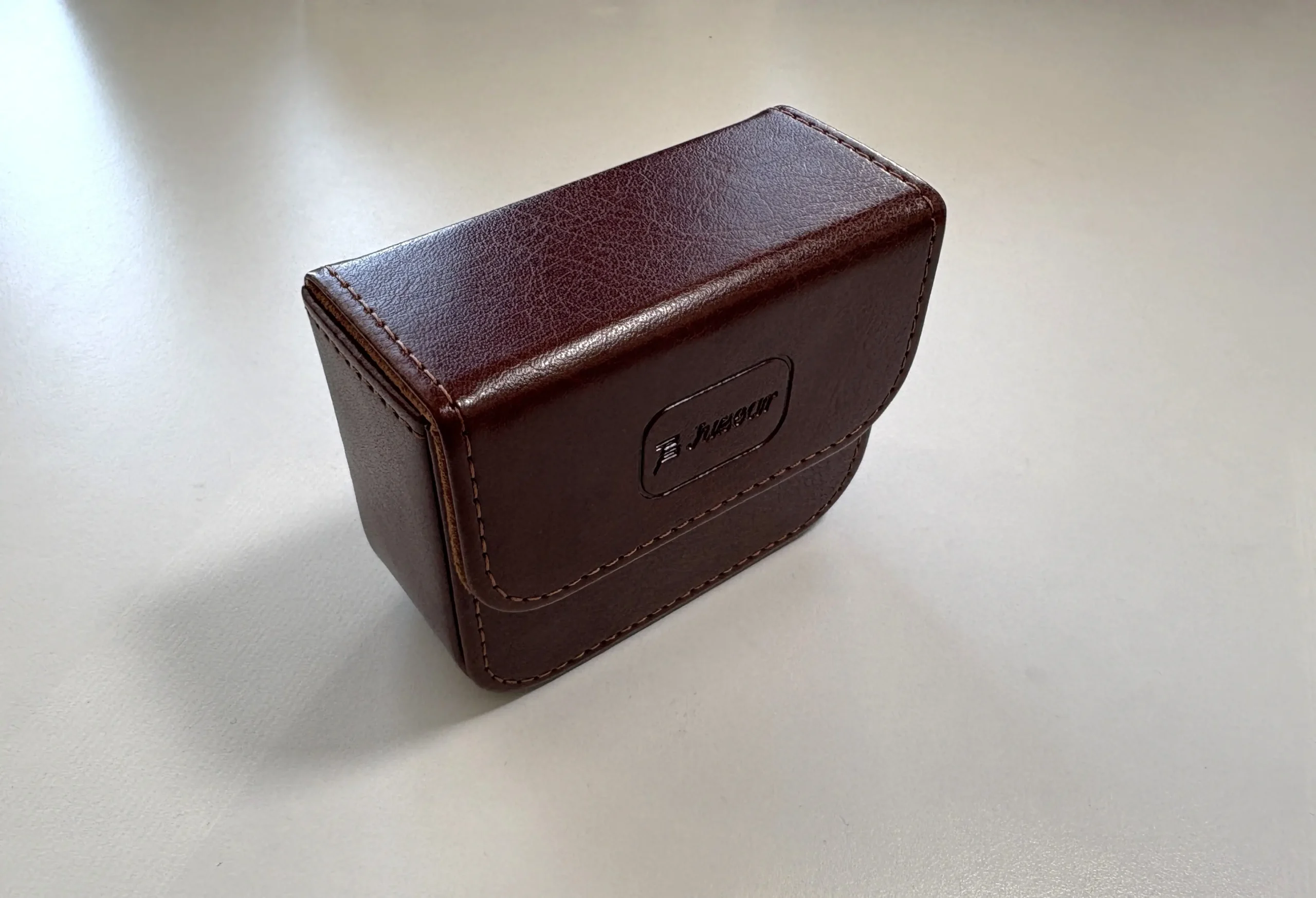
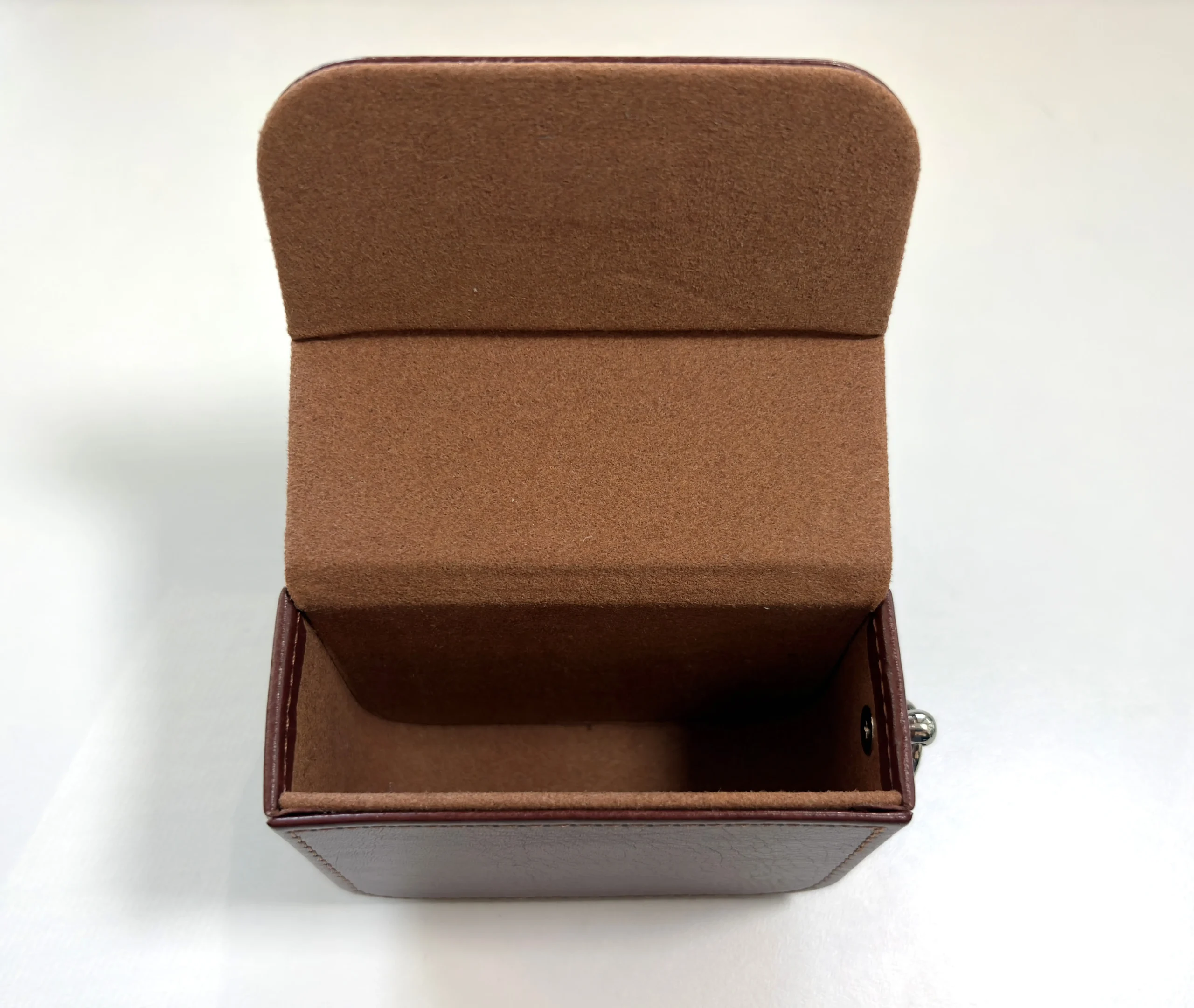
- Leather storage case
- Cleaning cloth
- Lanyard strap
- Documentation
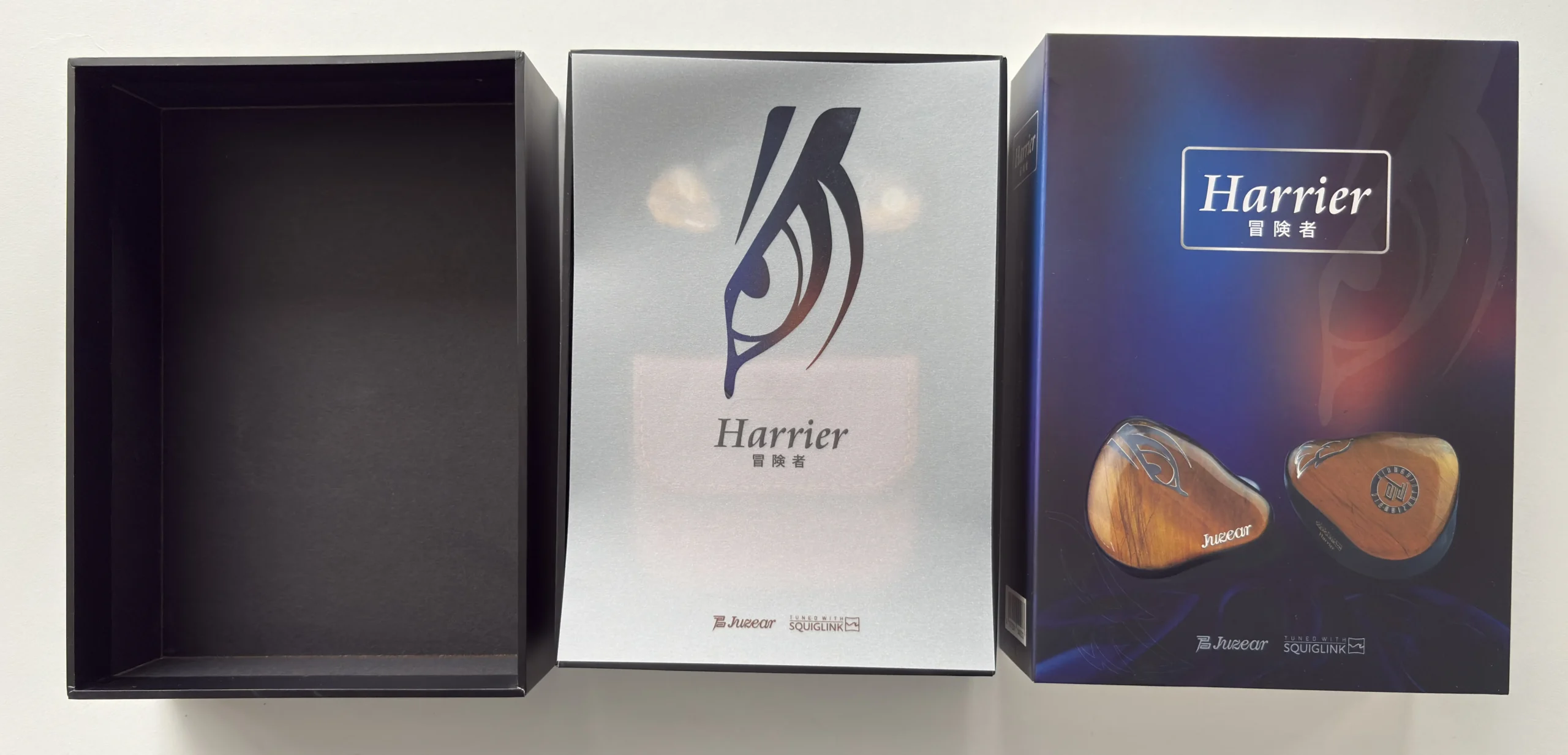
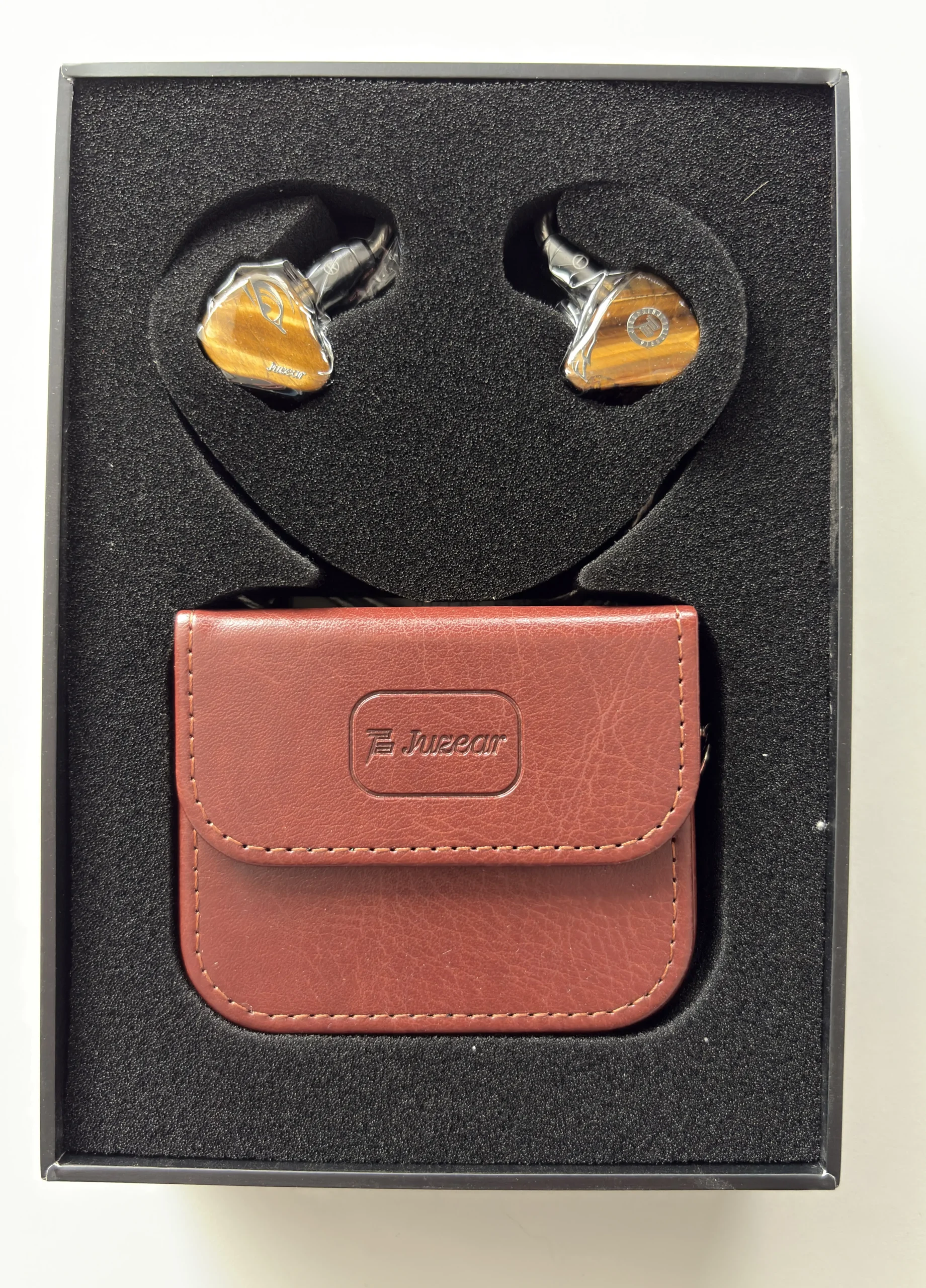
Juzear clearly put thought into the packaging and accessories for the Harrier. The IEMs come in a well-presented box, and inside you’ll find a surprisingly comprehensive bundle for this price range.
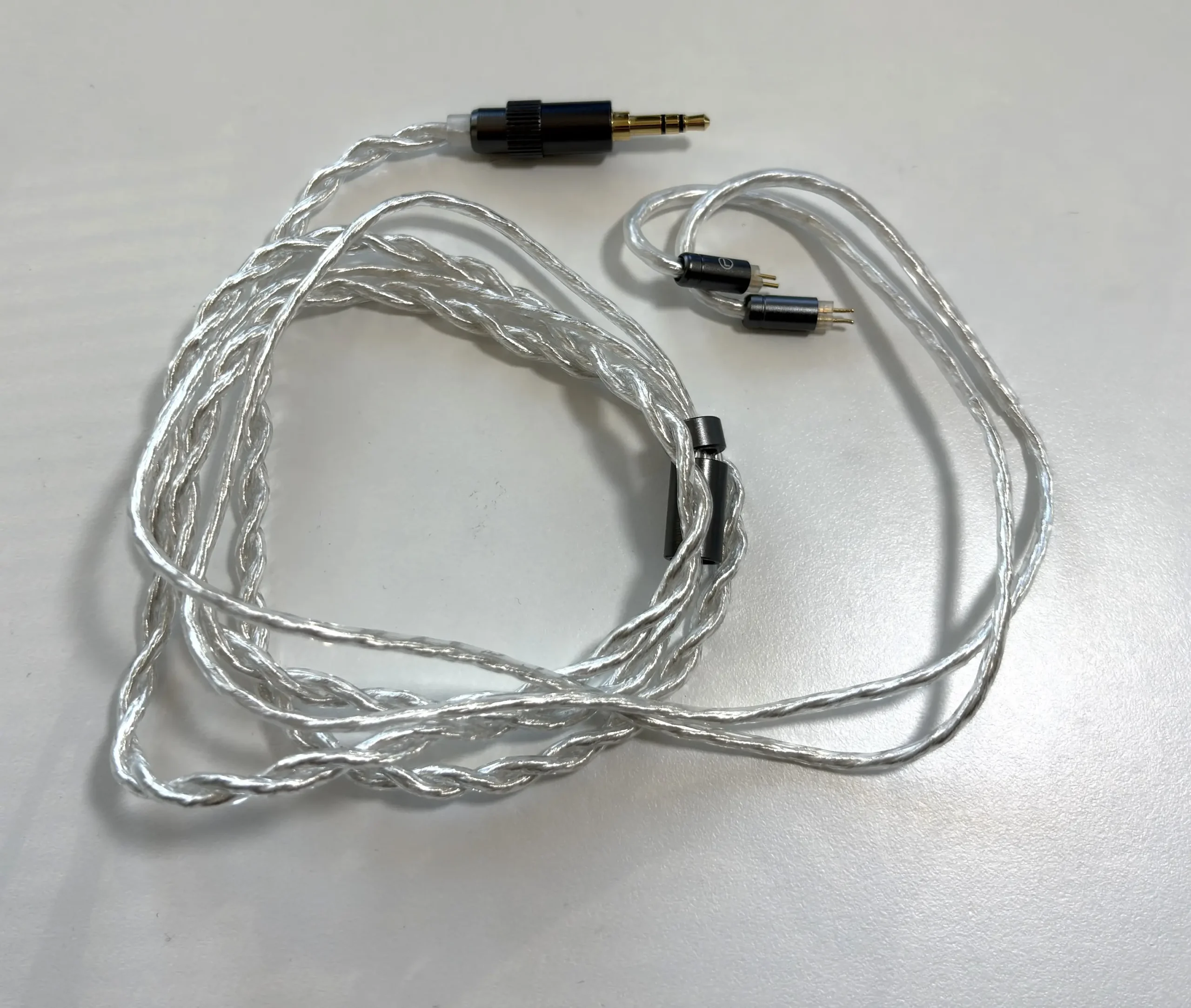
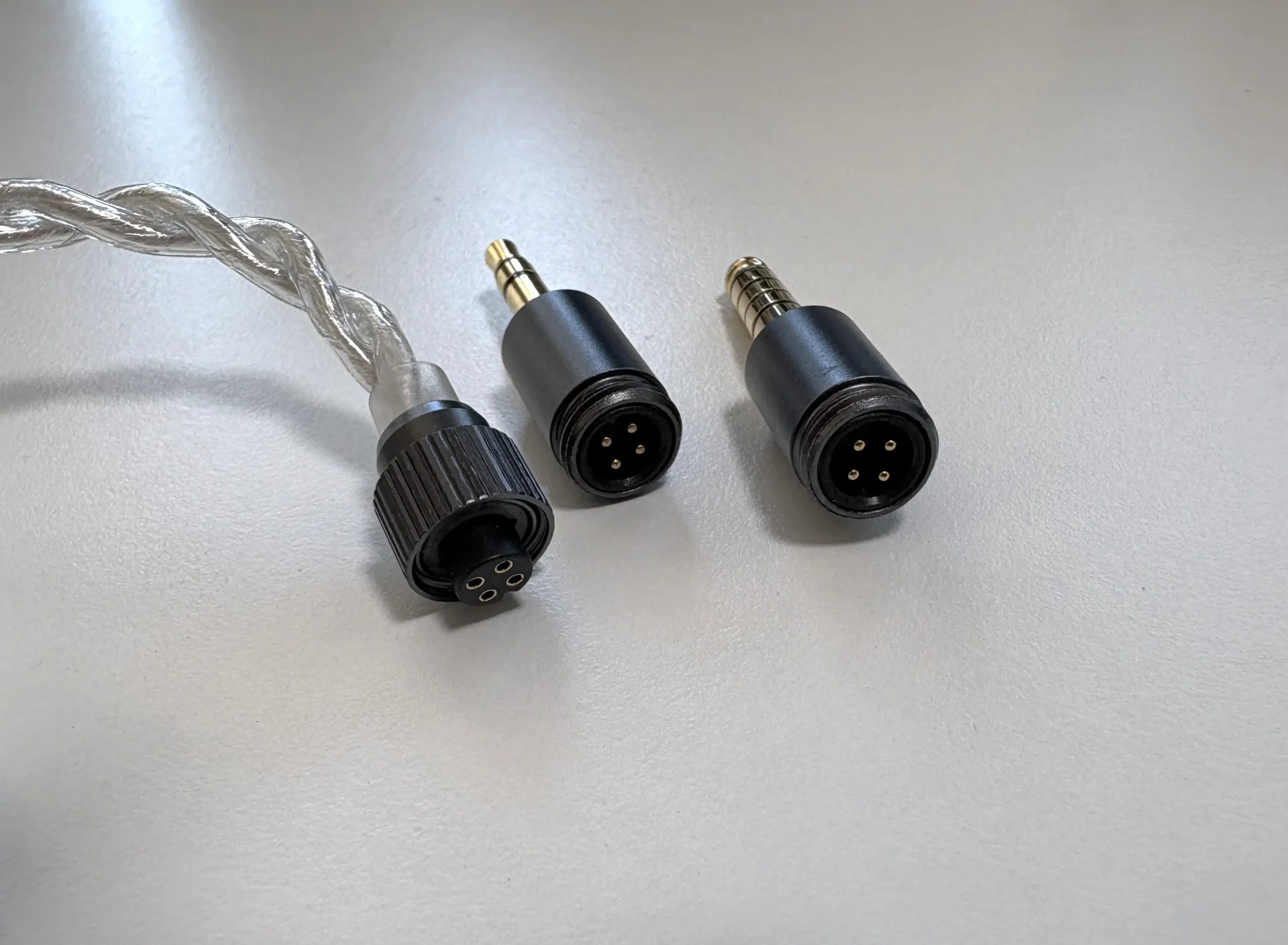


The modular 2-pin cable (silver-plated) is soft, tangle-resistant, and comes with interchangeable 3.5mm and 4.4mm plugs for single-ended or balanced use. The modular system uses a secure threaded adapter, which feels robust in hand.

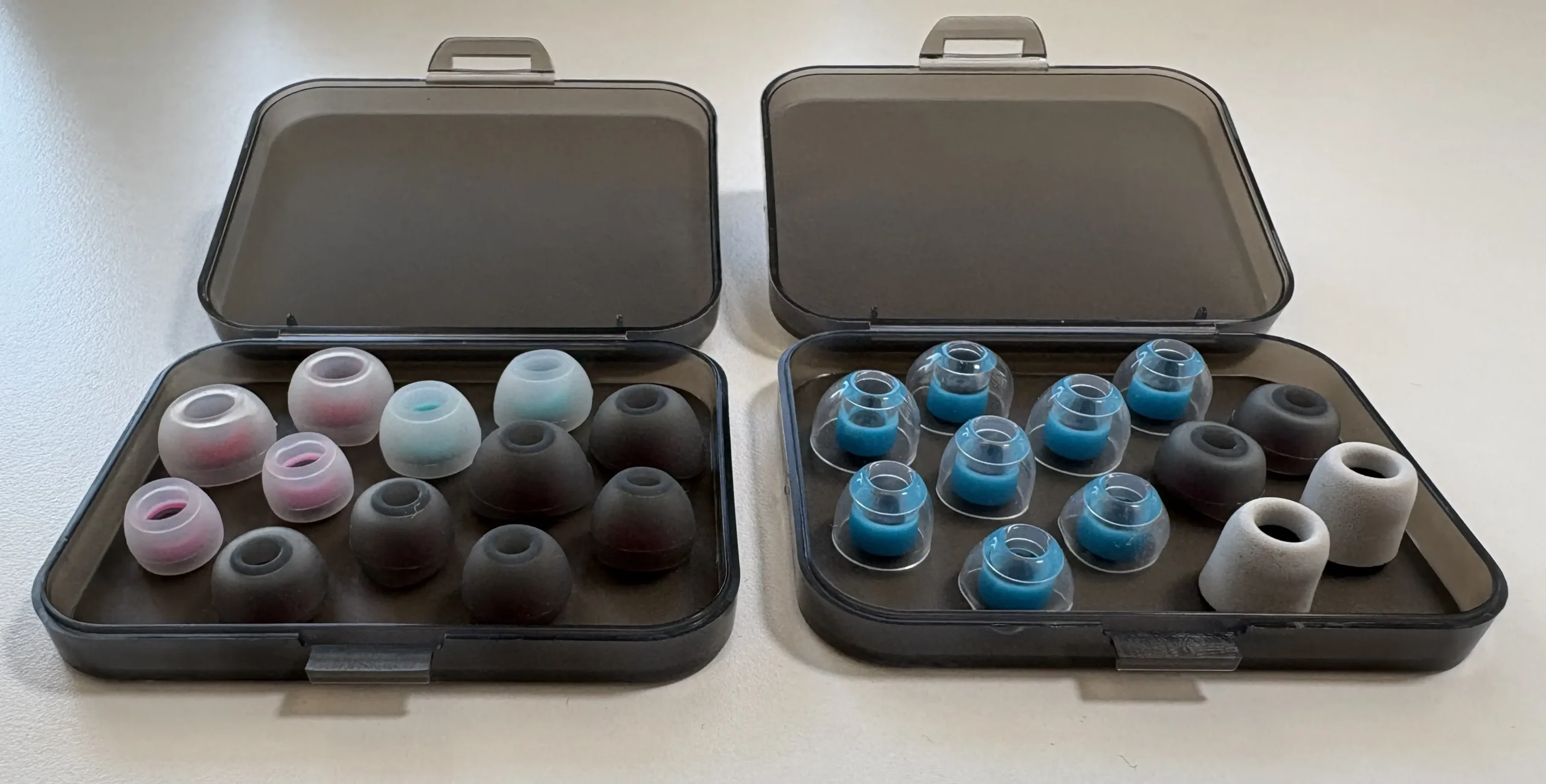


Abundant eartips: 11 pairs of silicone tips in total, organized neatly in two trays. Juzear includes four pairs of soft “liquid silicone” tips, four pairs of standard silicone tips, and three pairs of wide-bore silicone tips. There’s essentially every size and style you might need to get a good seal. They even throw in a pair of foam tips in some packages for those who prefer foam.
A leatherette carrying case with a magnetic flap and an attached fabric wrist strap. The case looks stylish and is great for everyday storage, and is rigid enough to protect from being crushed in a bag.
Other extras, like a cleaning cloth, are nice touches to keep the IEMs pristine.


Design & Comfort
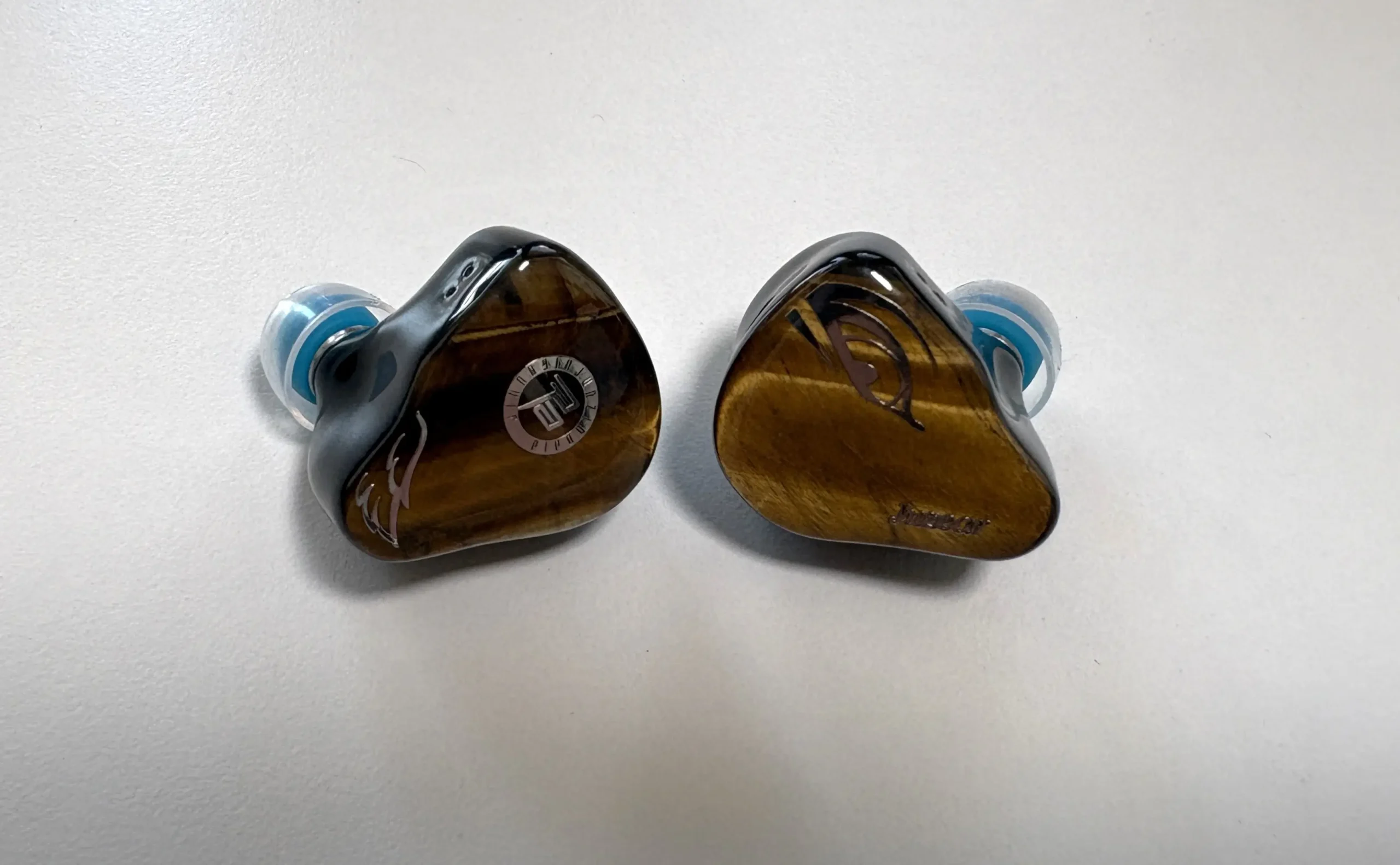
The Juzear Harrier’s design strikes a blend of elegance and solid ergonomics. The shells are built from smooth, 3D-printed resin and feature gorgeous faceplates inlaid with Blue Tiger’s Eye (Hawk’s Eye) gemstone. In person, the faceplate has a chatoyant effect, a subtle, cat-eye shimmer of brown and gold, that makes the IEMs look boutique and unlike your typical graphic-printed design. A small metal Juzear logo and a polished finish complete the look. Despite the luxurious faceplates, the overall aesthetic is understated and chic rather than flashy.
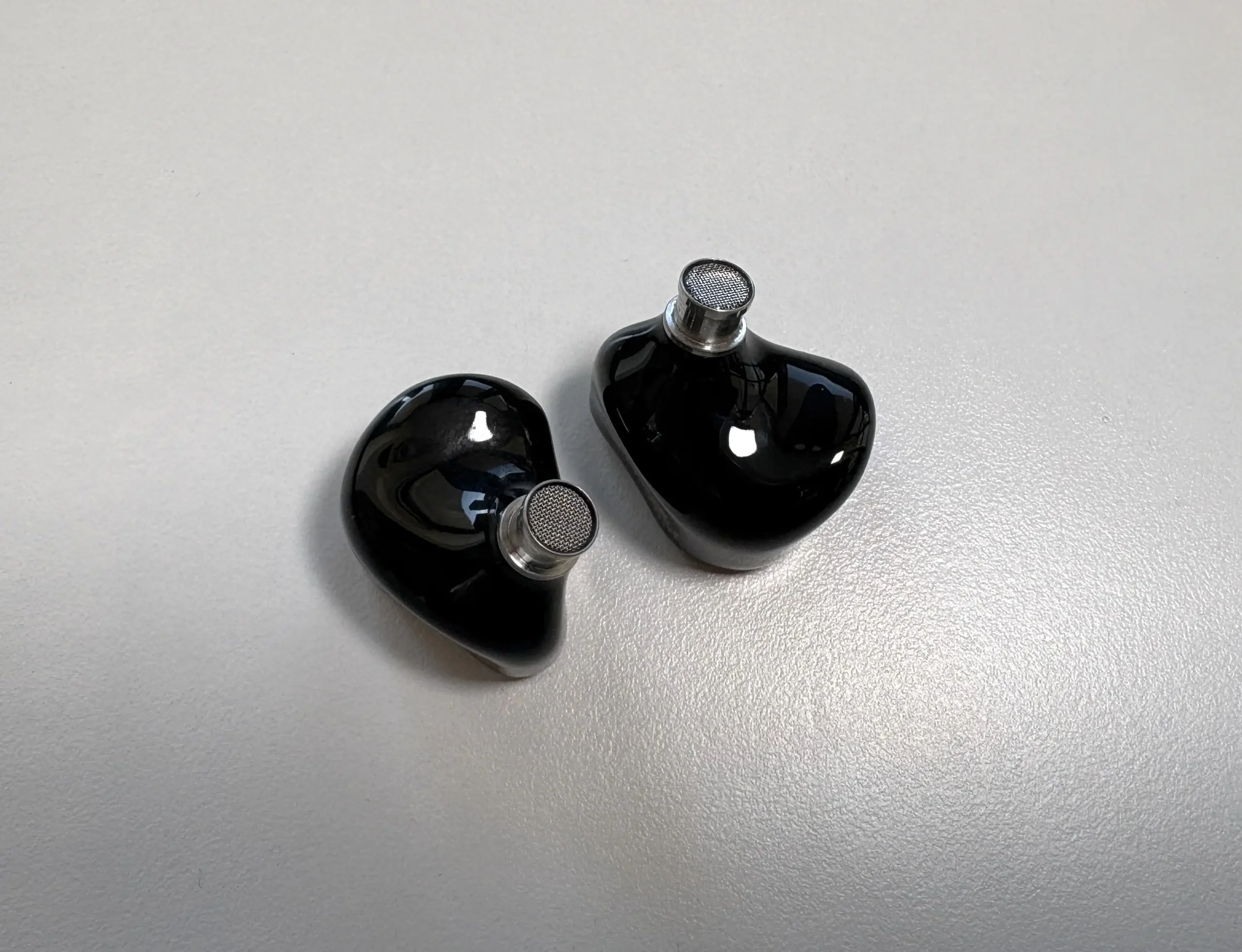
In terms of form, the Harrier is what I would classify as a medium-sized IEM. Each earpiece weighs about 7 grams, which is reasonably light for a multi-driver unit with a stone faceplate. I found the fit comfortable (once I selected the right tip type and size), and the nozzle and housing shape sit securely. My ears are slightly smaller than average, and I did encounter a slight pressure on both ears, near the bottom where the IEM sits against them. This is due to the larger size of the shells, but after some adjustment time it wasn’t very noticeable. Those with small ears may not find these comfortable, so try them beforehand if you can. Otherwise, you can definitely wear these for multi-hour listening sessions after you fine-tune the fit. The nozzle includes a mesh filter to keep earwax out, and there’s a single vent on the shell to alleviate pressure from the dynamic driver.
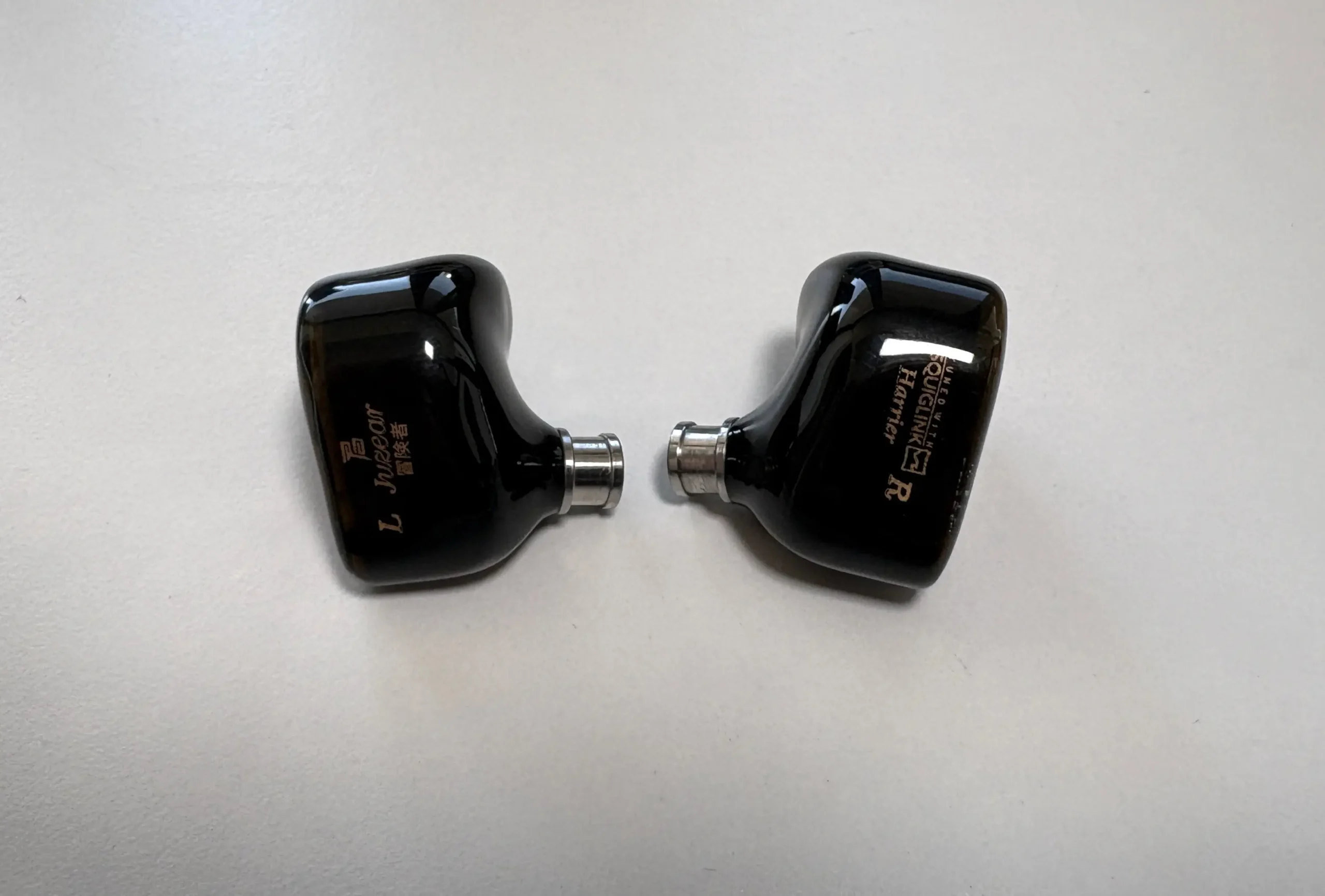
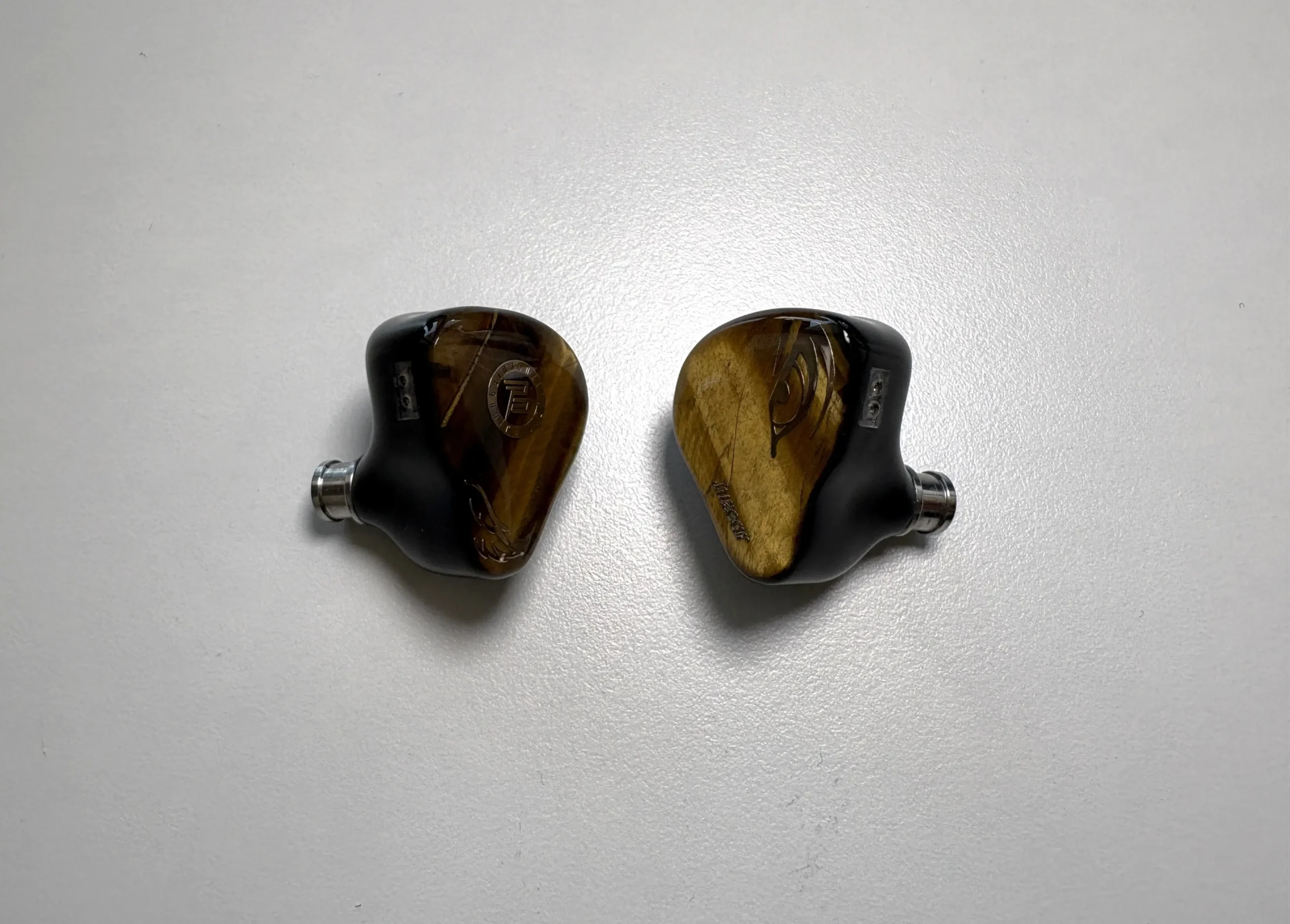


Isolation is above average. When using the liquid silicone tips from the generous selection included, the Harrier can block a lot of ambient noise, almost to the level of a shallow-fit earplug. The deep seal and ergonomic shape contribute to this secure, noise-blocking fit. If you need even more isolation, the included foam tips can provide a tighter seal at the expense of a bit of treble clarity. Really, though, these IEMs have excellent passive noise isolation, to the point where you might be wondering if you’re using ANC earbuds.
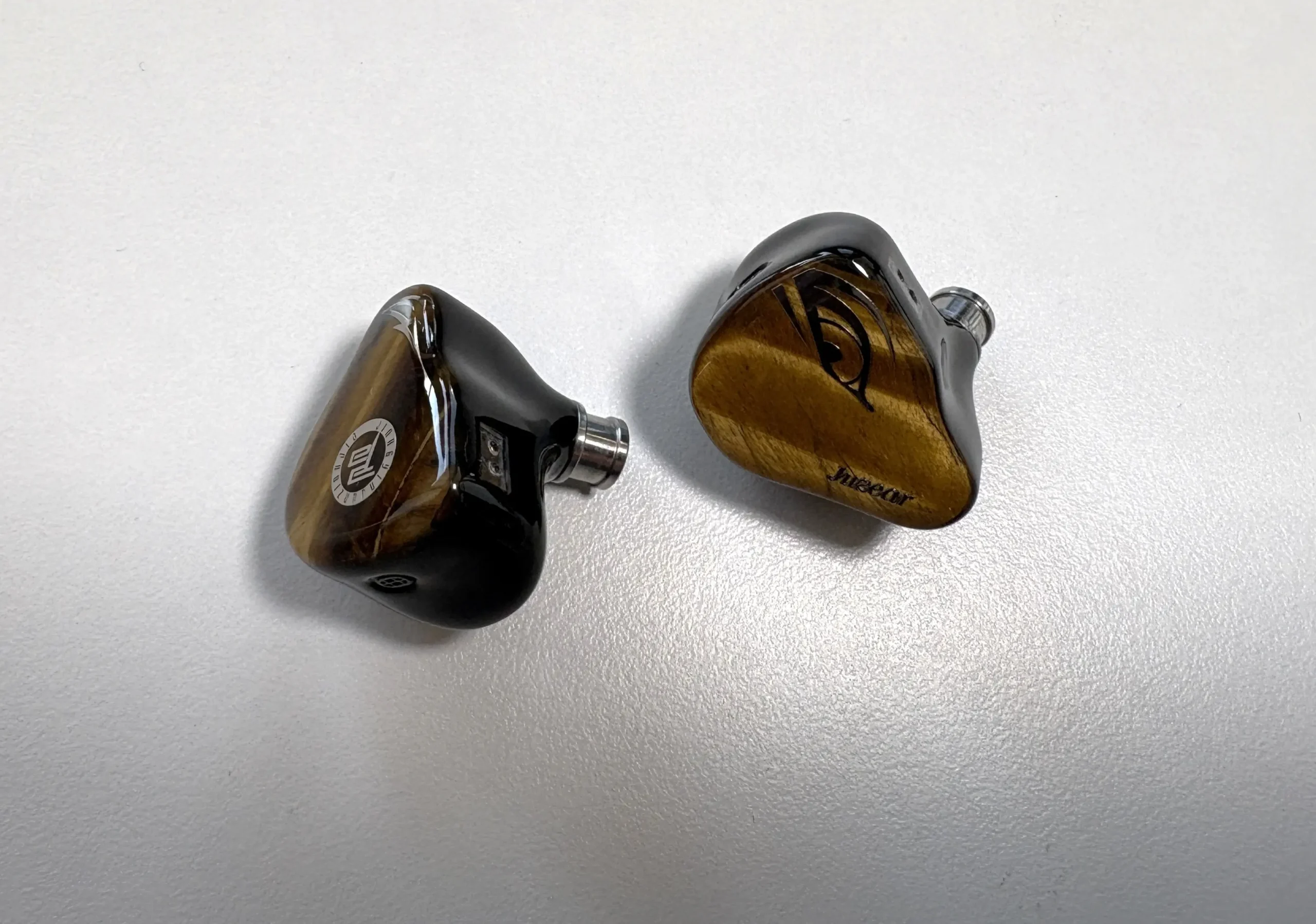
Build quality feels very solid. The combination of resin and gemstone gives a robust yet artisanal impression. The one issue I had was the 2-pin connector on the right earphone. It was incredibly tight, to the point that I actually broke connectors on the stock cable trying to get it off the IEM. I’ve had IEMs with tight connectors, but never to this level. It might be just my sample, but even when using a different cable, the connector is so tight that I’m not sure I want to risk taking it off again, so this is why you will see many pictures in this review where I do not use the stock cable (which is a shame, as the cable is very nice).
Sound Quality
Sources used for this review:
- FiiO K13 R2R
- FiiO M21
- iBasso DX180
Links to my music playlist used for the majority of testing:
Spotify: https://open.spotify.com/playlist/6QSIhuCBDAUyoWGcyxPeN8?si=c0a4eb6bd3e3421e
Apple Music: https://music.apple.com/ca/playlist/hifi-oasis-audio-testing/pl.u-lKWlcjy04xp
Qobuz: https://open.qobuz.com/playlist/39521747
Tidal: https://tidal.com/playlist/503485c7-7f3d-43f0-b904-4b9a89c33875
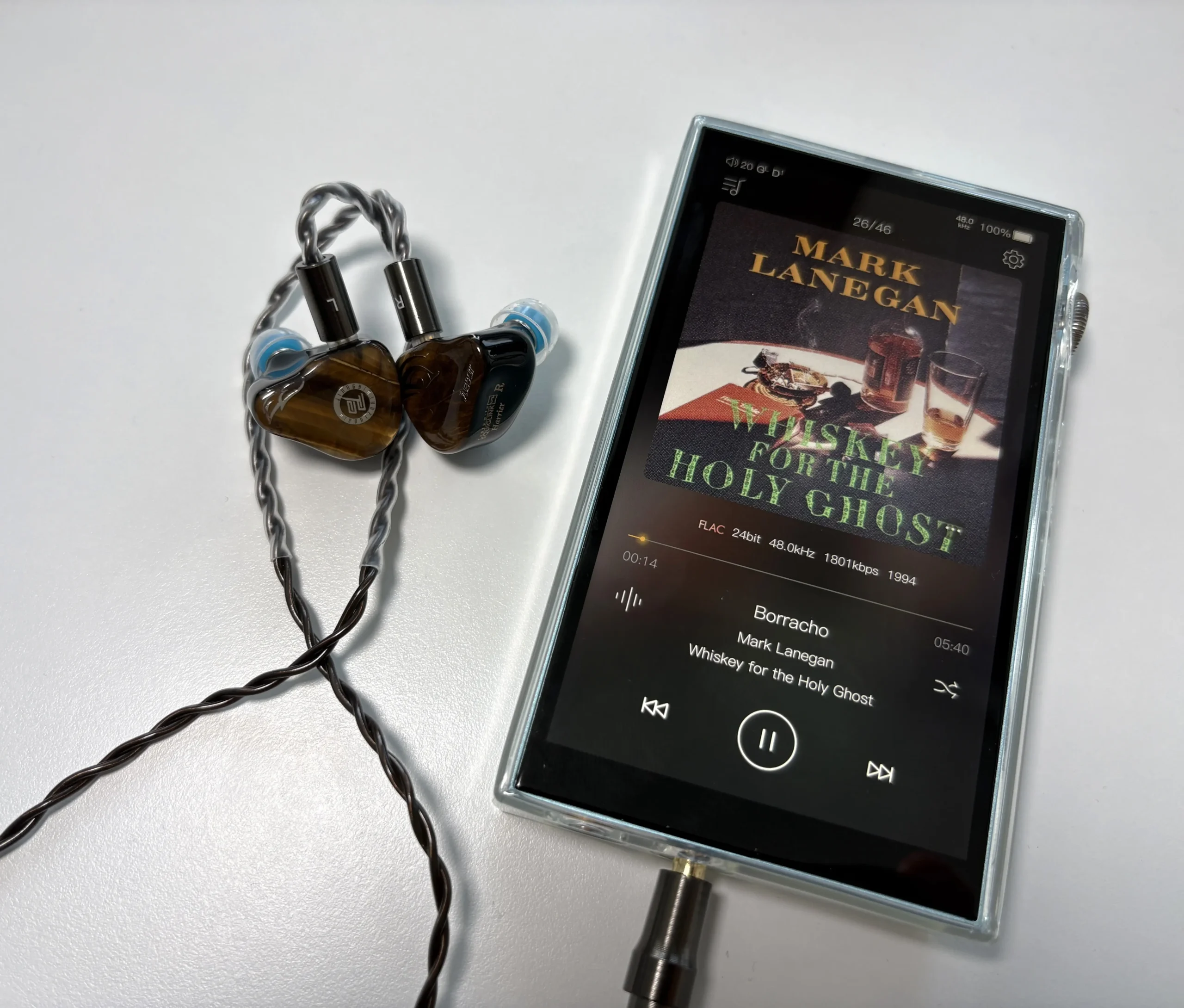
The Juzear Harrier’s sound can be characterized as balanced, mid-centric, and fatigue-free. It was explicitly tuned to be a crowd-pleaser based on the Squiglink data, meaning Juzear carefully avoided any frequency extremes that could offend sensitive ears. The resulting signature is a slightly warm neutral with an emphasized sub-bass, a very clean midrange, and treble that is smooth yet retains detail.
There are a total of nine drivers in this IEM. A 10mm dynamic driver for “deep, impactful bass”. 6 balanced armature drivers (four custom midrange balanced armatures and two Knowles 31736 balanced armatures for the treble), and two micro planar drivers for “expansive treble and spacious soundstage”.
Efficiency & Sensitivity
One of the first things to note about the Harrier is how easy it is to drive. With a rated impedance of 32 Ω and sensitivity of 112 dB per mW, this IEM reaches comfortable (even loud) listening volumes from even the most basic of dongle DACs. I also didn’t detect any perceptible hiss from the sources I tested, which is great from a compatibility standpoint. In practical terms, that means you don’t need a powerful amplifier to enjoy the Harrier’s full potential. A simple USB DAC, or even the headphone jack on your laptop, will do just fine, making the Harrier a convenient choice for casual listening on the go.
That said, like many multi-driver IEMs, the Harrier can scale with a cleaner, dedicated source. Using a decent external DAC/amp can bring a touch more control and dynamics to the sound (for example, slightly better bass tightness and overall control when moving from my laptop’s 3.5mm jack to an iFi Go Link Max). But the differences are not night-and-day, so even straight out of a modest device, the Harrier performs confidently, and you shouldn’t worry about needing anything fancy to drive it.
Bass
The bass on the Juzear Harrier is tuned to please, but also to play nicely with the rest of the spectrum. Juzear opted for a boosted sub-bass with a restrained mid-bass, aligning with the idea of adding warmth and foundation without bloating the sound. In listening, the Harrier’s low-end comes across as deep and supportive. There’s a satisfying rumble and extension into the lowest frequencies, giving music a sense of weight and body. For instance, electronic and bass-heavy tracks with sub-bass content have a healthy rumble that is highly textured and well-controlled (Angel by Massive Attack sounds incredible here). The sub-bass can provide a car-subwoofer-like growl when called upon, which is quite immersive for a mid-tier IEM.
Where the Harrier diverges from a typical bass-heavy tuning is in the mid-bass region. The mid-bass is present but not overdone, as it doesn’t thump you in the chest so much as it confidently underpins the music. On well-recorded tracks like Dire Straits’ Six Blade Knife, the bass lines sound textured rather than bloated, providing a rich foundation without overpowering the mix. On the other hand, in very bass-forward mixes (like Find My Way from Nine Inch Nails) the Harrier pushes about as much bass as a listener would want before it becomes distracting and overwhelming. It stops short of turning the sound into a bass soup as the bass dominates slightly on such tracks, but never to the point of complete imbalance. Importantly, the bass has a slightly slower decay and a warmth that can add a bit of richness to the lower midrange, but Juzear was careful to roll off the excess mid-bass energy that could cause bleed. The result is that bass seldom bleeds into the midrange, even when the bass is super strong.
In terms of quality, the Harrier’s single dynamic driver shows good control. Bass notes are tight enough to distinguish textures (you can hear bass guitar plucks vs. kick drum hits distinctly), though if we’re being critical, the Harrier’s bass is not the absolute tightest in class.
Midrange
If there is one area where the Juzear Harrier truly shines, it’s the midrange. This IEM was tuned with a clear love for mids, as they come across as natural, cohesive, and rich with detail. The tonality is just slightly warm, which gives body to instruments and vocals, yet the midrange isn’t muddy or overly thick. In fact, I might even say the Harrier’s midrange is class-defying for its price bracket.
Both male and female vocals sound engaging. There’s a sense of intimacy and correctness to voices as they’re neither recessed behind the bass/treble nor artificially pushed forward. Instead, vocals tend to sit present, standing their ground in the mix. This means a singer’s voice will come through clearly and with realistic timbre, as the Harrier doesn’t suffer from the common V-shaped dip that pushes vocals back. On tracks with multiple instruments and vocals, the Harrier manages to keep the midrange uncluttered and well-separated. Guitars, pianos, horns, and vocals all have their own space and maintain a lifelike tone.
The cohesiveness of the midrange can be attributed to both the tuning and the quality of the drivers handling this range. The Harrier’s mid frequencies, handled by a combination of balanced armature drivers, are tuned to avoid any significant peaks or valleys. There is a slight bump in the lower mids to avoid thinness, giving that touch of warmth so that cellos, male vocals, and lower registers of piano have solidity and body. Meanwhile, the upper midrange is lifted just enough to aid vocal clarity and presence, but not so much as to introduce shoutiness or fatigue. Juzear carefully avoided the notorious 5 kHz peak that can make some IEMs sound shouty or harsh in the upper mids, and as we know from the tuning philosophy, the Harrier is deliberately polite in that region to cater to those with sensitivities. The result is a midrange that feels immersive and organic, with plenty of resolution and texture on offer.
Listening to complex midrange-focused tracks, like layered rock or acoustic recordings, really shows off the Harrier’s abilities. It can juggle layers of instruments without blurring them together. For example, in a track with overlapping electric and acoustic guitars, plus vocals, the Harrier presents each guitar line distinctly and maintains the separation between the strumming and picking patterns, all while keeping the vocals clear in the center. This kind of layering and spatial control in the midrange is something not many IEMs at this price do so effortlessly.
To put it plainly, the timbre in the midrange is very convincing. Instruments sound realistic. Vocals have that human quality (neither too nasal nor too chesty). There’s no odd plastic tonality that sometimes plagues multi-BA IEMs, so Juzear has managed to achieve a natural sound likely by carefully blending the dynamic driver’s warmth with the BA’s clarity.
Treble
The treble on the Juzear Harrier is perhaps its most distinctive aspect. It manages the tricky balancing act of being detailed and articulate, yet smooth and non-fatiguing. This is a big deal because, often with IEMs, enhanced detail can come at the cost of harshness or sibilance. The Harrier, however, leverages its dual micro-planar tweeters to pull out plenty of treble information without the typical peaks that induce listening fatigue.
From a tuning perspective, the Harrier’s treble is intentionally dialed back in the most problematic regions. There are deliberate scoops or dips around the 7 kHz to 11 kHz band, which is usually where a lot of IEMs either spike (causing sibilance) or dip (causing darkness and loss of detail). Juzear’s approach was to tame this region just enough to avoid harsh spikes, yet keep the treble extended and present.
In my listening, I definitely get the sense of clarity and air in the music, but without the usual treble bite. The Harrier’s treble can reveal the shimmer of a hi-hat, the breathiness of a flute, or the upper harmonics of a violin stroke clearly, but it very rarely, if ever, crosses into harsh territory. Cymbals sound natural, and they have the necessary sparkle and decay, but are not piercing. There’s no sibilance to vocals either, even sibilant-heavy tracks come across smooth. This makes the Harrier a blessing for treble-sensitive listeners.
Now, some might wonder: Does this smoother treble mean the Harrier sounds dark or lacks detail? And the answer is no, or at least, not really. The Harrier is not a dark IEM at all, it’s just not a bright IEM. Detail is certainly there. You can hear subtle things like the trailing echo of a snare reverb or the subtle brush of a jazz cymbal. However, the Harrier doesn’t shove the detail in your face as some other IEMs do, which may be disappointing to some. Detail is achieved through the sheer quality of drivers and balanced tuning. You won’t get the exaggerated “zing” that some IEMs have, but you also won’t get the harshness. Those who are focused on detail and an analytical sound will find the Harrier’s treble much too polite. For the vast majority of listeners, though, it strikes a perfect happy medium.
Soundstage and Imaging
Beyond frequency response, two areas where IEMs often distinguish themselves are in imaging (how well they place sounds in space) and soundstage (the perceived width, depth, and overall space of the sound). The Juzear Harrier, being a 9-driver tribrid, has the potential for excellent technical performance, and in many ways, it delivers.
The Harrier offers clear and solid imaging across the stereo field. Thanks to the combination of its detailed yet smooth treble and well-separated midrange, the Harrier can position instruments and effects with good accuracy. When listening to a well-mixed live recording or a complex studio track, you can point to where each element is coming from (the lead vocal centered, a guitar maybe slightly right, a cymbal hit to the left, etc.). It presents a good amount of detail and imaging without the cost of fatiguing treble. This is a strong point as it means the imaging performance is coming from true resolution and driver capability. For listeners, that translates to a realistic sense of where things are in the music.
The soundstage of the Harrier is above average for an IEM, with particular strength in width and layering. It’s not the widest stage ever, but I’d call it a spacious stage that gives room when needed. Listening to tracks with a lot of stereo information, the Harrier can extend beyond the ears somewhat, giving a sense of sound coming from around you rather than just inside your head. The layering (or depth) is also commendable, especially in tracks where the recording has a guitar or bass player moving closer to the microphone and then away. It’s not a completely holographic 3D sphere of sound (few IEMs can achieve that), but it avoids presenting everything on a flat plane.
Comparisons
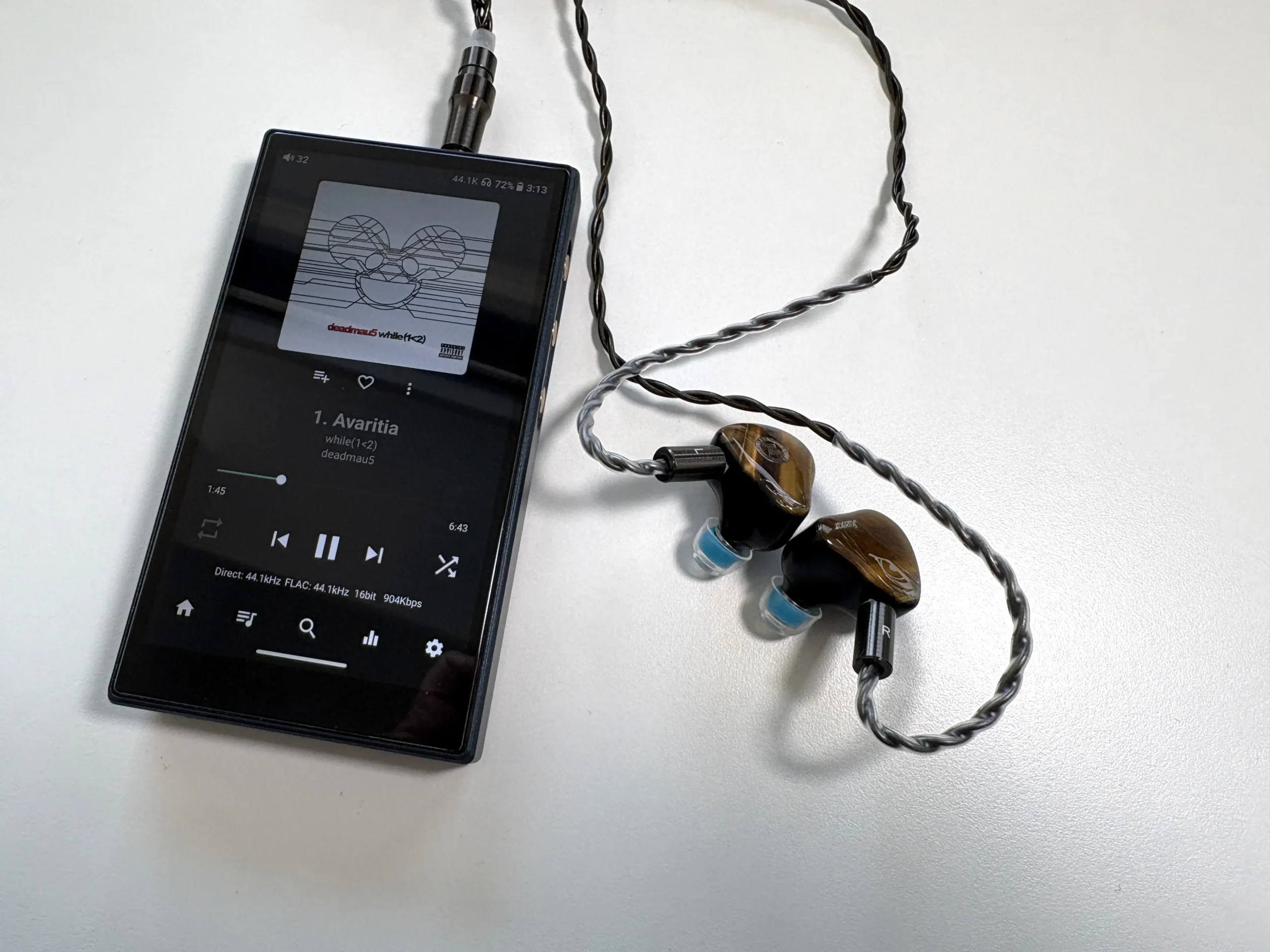
Here are a few select comparisons with some of the more prominent IEMs that have been released lately (that I’ve at least reviewed, anyway) that also fall into a similar price bracket.
vs. KBEAR Cepheus KB16 ($248)
At $80 less than the Harrier, the KB16 (8-driver hybrid: 2DD + 6BA) delivers excellent soundstage width and vocal clarity that rivals more expensive IEMs. Its V-shaped signature provides more engaging bass texture and sub-bass physicality while maintaining a controlled mid-bass. The KB16’s treble sparkles without much harshness and is a bit livelier than the Harrier at the cost of some sibilance. Imaging and soundstage are similar for both IEMs, meaning it is excellent. Build quality and accessories lag behind the Harrier’s premium presentation (plastic nozzles and generic tips disappoint), but pure sonic performance per dollar favors the KB16. Those prioritizing value and versatility may find the KB16 delivers comparable or superior results at significant savings, but the Harrier offers a slightly more cohesive sound signature.
vs. ZiiGaat Crescent ($279)
The Crescent offers warmer, more analog-flavored musicality with significantly more mid-bass punch and slam. Its dual dynamic driver configuration delivers fuller bass impact, while the Harrier provides cleaner sub-bass texture. The Crescent’s midrange runs warmer and more euphonic; the Harrier leans more toward a neutral foundation with forward vocals. Both IEMs avoid treble fatigue, but the Harrier’s planar-assisted extension theoretically reaches higher despite its subdued presentation. The Crescent represents better value for listeners wanting warm musicality and bass authority, whereas the Harrier suits those prioritizing vocal clarity and tribrid complexity.
vs. ZiiGaat Horizon ($329)
At identical pricing, the Horizon’s dual planar tweeters deliver noticeably superior treble extension with genuine sparkle and airiness, qualities the Harrier specifically sacrifices. Soundstage runs wider on the Horizon with better imaging precision, making it potentially superior for gaming use. The Horizon’s bass leans cleaner and tighter with less mid-bass body, whereas the Harrier provides more warmth. Where the Harrier prioritizes fatigue-free safety, the Horizon chases technical performance and clarity. Detail-seekers should strongly consider the Horizon, while treble-sensitive listeners will prefer the Harrier’s restraint.
vs. DUNU DN242 ($349)
The DN242 has a somewhat opposite tuning philosophy despite a similar tribrid architecture (8 drivers versus 9). DUNU’s offering emphasizes balanced-neutral presentation leaning bright, with exceptional vocal clarity, realistic timbre, and extended treble that reveals micro-details. The DN242’s bass prioritizes discipline over impact even more than the Harrier, making neither suitable for bassheads. Where the Harrier recesses treble for comfort, the DN242 pushes brightness that may fatigue sensitive listeners but rewards analytical listening. The DN242 delivers superior midrange articulation and treble air, whereas the Harrier counters with more bass warmth and guaranteed fatigue-free sessions. The $20 premium for the DN242 buys significantly more technical capability at the cost of listening comfort. Personally, I really love the DN242 for the type of music that I listen to.
Final Thoughts
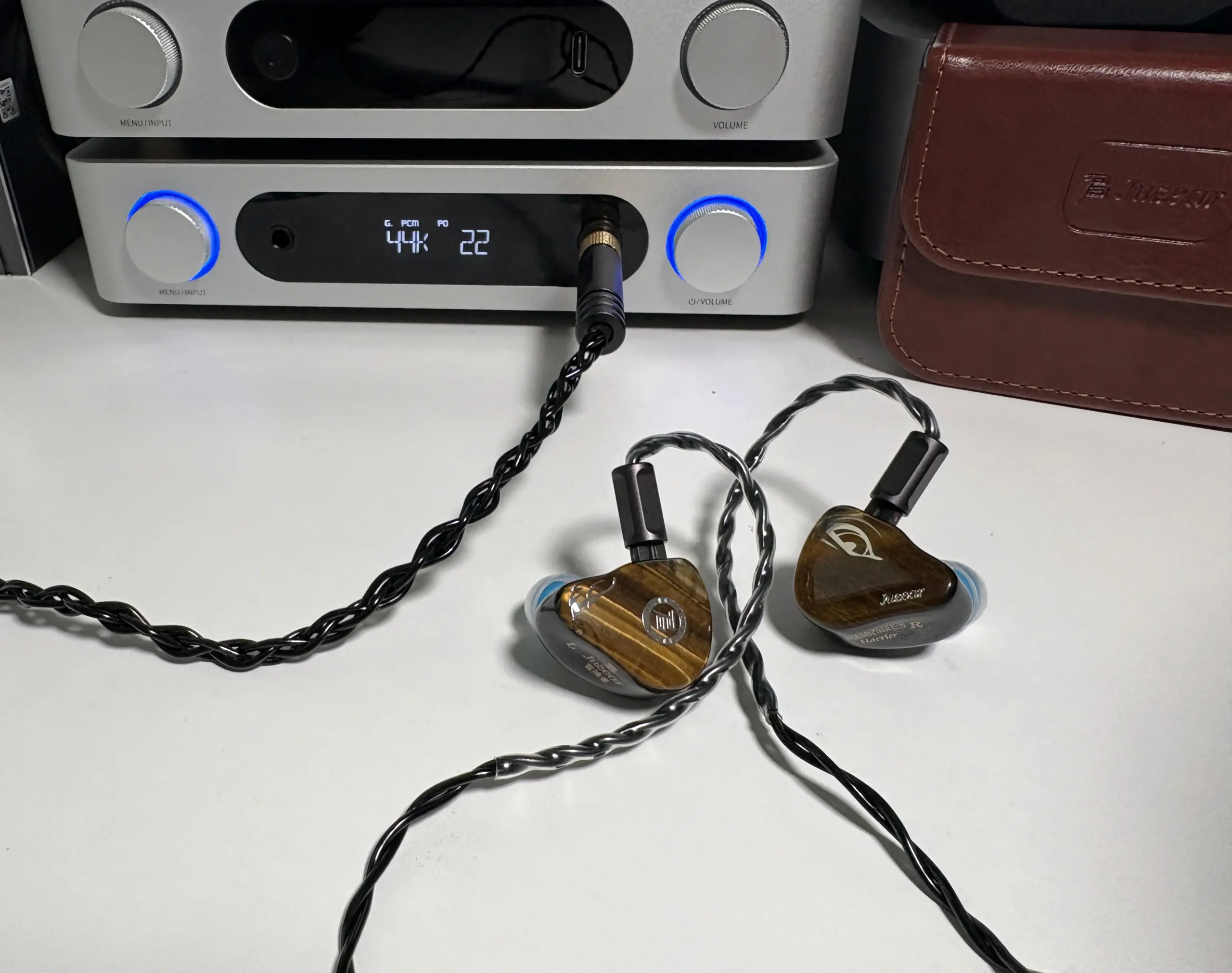
The Juzear Harrier is a well-rounded and mature-sounding IEM that lives up to its promise of a balanced, “meta-tuned” audio experience. For casual listeners, the Harrier offers an immediately appreciable mix of qualities: the bass is engaging but not overwhelming, vocals and instruments come through clearly, and there’s never that harsh edge that makes you want to rip the earphones out after a few songs. You can enjoy everything from Top 40 hits to classic rock to instrumentals without needing to EQ or reduce volume to tame unruly frequencies. The sound is just pleasantly balanced. For those new to IEMs, the Harrier could be a great entry into higher-quality audio because it doesn’t demand that you acclimate to any tonal quirks. It’s easy to like, easy to listen to for hours, and it will scale with your knowledge. As you learn to pick out details, the Harrier will reveal them, but it doesn’t beat you over the head with analytical sound.
For audio enthusiasts, the Harrier provides a nuanced tuning that respects your listening fatigue thresholds while still delivering detail and technical performance. It’s a set that many enthusiasts would describe as “sounding right” and have nothing major to complain about in the frequency response
The involvement of Mark Ryan in the tuning process is evident in the result, as it’s very much in line with the IEF Neutral target philosophy (natural balance, nothing exaggerated) plus a splash of bass for fun. In a way, it’s a bit of a “connoisseur’s tuning”, one that favors subtlety and correctness over wild coloration. Enthusiasts with treble sensitivities or those simply looking for a great daily driver IEM will find the Harrier extremely appealing.
My only real complaint with the Harrier is the comfort and size. It is on the larger size, and thus, fit and comfort will be troublesome for those with smaller ears (like me). While I’ve mostly gotten used to the fit, at times it still does bother my ears a bit to the point where it’s uncomfortable to listen. I will also reiterate the 2-pin connector issue I had with the right earphone, but I won’t hold it against Juzear, as these things do happen, and that is what warranty is for.
All this being said, if you’re someone who wants a well-tuned all-rounder IEM that you can count on for daily enjoyment, the Juzear Harrier should definitely be on your radar. It has a safe tuning that is also done exceptionally well, which ironically makes it a bit of a standout. Sometimes, not taking huge risks (tuning-wise) results in a product that’s greater than the sum of its parts. The Harrier is exactly that: a harmonious blend of sound qualities that is likely to satisfy a wide array of listeners, from newcomers looking for an upgrade to seasoned audiophiles seeking a reliable mid-fi companion.


Buy from HiFiGo: https://hifigo.com/products/juzear-harrier?rfsn=8743649.bf4c478&variant=47057026941167
Buy from Amazon: https://amzn.to/4r5pSdW
Buy from AliExpress: https://s.click.aliexpress.com/e/_c3VvN0iL
The above links may be affiliate links. All commission earned through them goes directly to maintaining this site and bringing you more audio reviews.
I’m not always able to cover all the details of a product, both hardware and software, in our reviews. If you have any specific questions about this product, please feel free to leave a comment or contact me directly.
Be sure to check out our excellent Buyer’s Guides, as well as our other Reviews.
HiFi Oasis Verdict
HiFi Oasis Verdict-
Design & Comfort8/10 Very good
-
Sound8/10 Very good
-
Features/Accessories9/10 Amazing
-
Value8/10 Very good
Pros
- Balanced, fatigue-free sound signature suitable for long listening sessions
- Exceptional midrange with natural, cohesive tonality and excellent vocal clarity
- Deep, well-controlled sub-bass with good texture and extension
- Smooth, detailed treble that avoids harshness and sibilance while maintaining clarity
- Very easy to drive
- Excellent passive noise isolation
- Premium build quality with beautiful Blue Tiger's Eye gemstone faceplate
- Comprehensive accessory package
- Overall great value
Cons
- Larger shell size may cause comfort issues for small ears
- Treble may sound too polite for detail-focused or analytical listeners
- Bass not the tightest in class despite good texture
- Extremely tight 2-pin connector can risk cable damage (on my sample, at least)


