

-80x80.jpg)



-110x110.jpg)


Disclosure: I’d like to thank beyerdynamic for providing me with the Aventhoo 100 for this review. All thoughts and opinions are my own, and beyerdynamic had no say or input on the contents of this review.
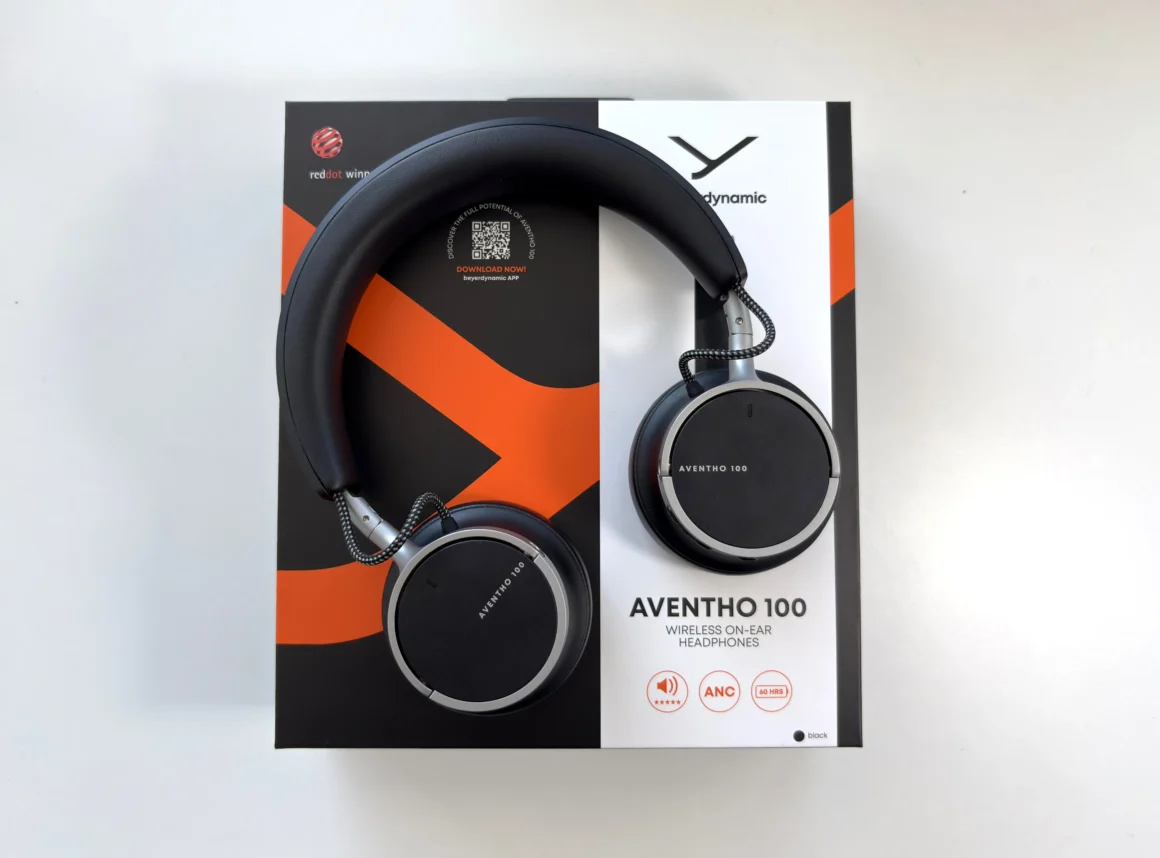
The Beyerdynamic Aventho 100 Wireless is a stylish on-ear Bluetooth headphone that combines vintage-inspired design with modern tech. Priced at $229 USD, it’s positioned as an everyday audio companion offering features like active noise cancellation (ANC), transparency mode, and an impressive battery life reaching up to 40 hours when using ANC. The Aventho 100 utilizes Bluetooth 5.4 and features the modern aptX suite of aptX, aptX Adaptive, and aptX Lossless, as well as supporting SBC and AAC.
The Aventho 100 looks to target listeners who value portability and distinctive style without compromising on audio quality. These headphones appeal particularly to those seeking an alternative to over-ear designs, offering a more compact solution for travel and daily commuting while maintaining serious audio credentials. On-ear headphones seem to be increasingly rare these days, but they still have their place. I’ve never been too much of a fan of the design purely due to comfort, so let’s see if the Aventho 100 can change that. Let’s get into it.
Key Specifications
- Product Page: https://north-america.beyerdynamic.com/p/aventho-100
- MSRP: $ 229 USD / €199 / $299 CAD
- Battery Life: Up to 40 hours per charge ANC On, up to 60 Hours with ANC Off
- Battery Capacity: 630mAh
- Type: On-ear
- Driver Type: 45mm Dynamic Driver
- Weight: 220 grams
- Connections: Bluetooth 5.4
- Impedance: 48 ohms
- Codec support: SBC, AAC, aptX, aptX Adaptive, aptX Lossless
- Microphone: Yes, 4x digital microphones
- Active Noise Cancellation (ANC): Yes
- Charging Method: USB-C
- Weather/Dust Resistance: IP53 (sweat and water resistance)
In the Box
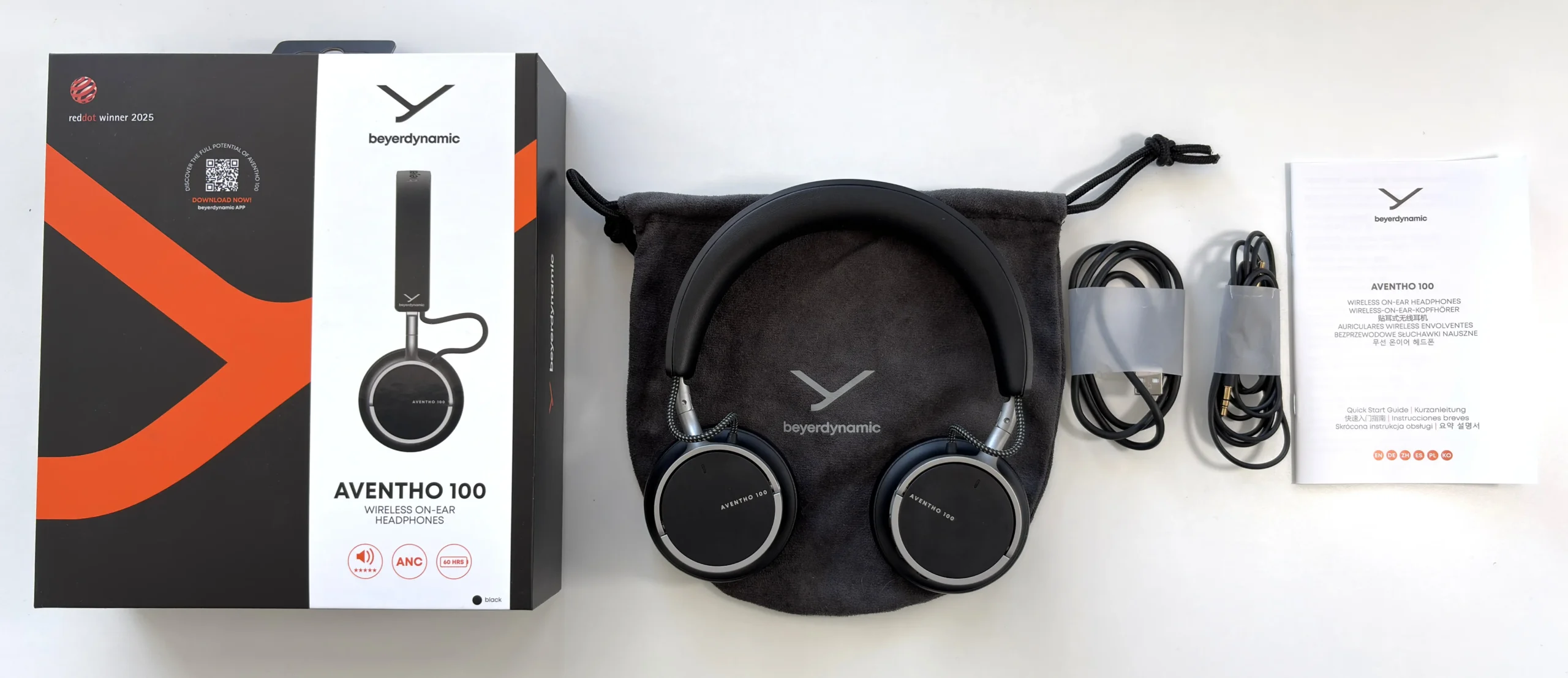
- beyerdynamic Aventho 100
- fabric pouch
- USB-C to USB-A cable
- 3.5mm to 3.5mm cable
- Manual
Design & Comfort
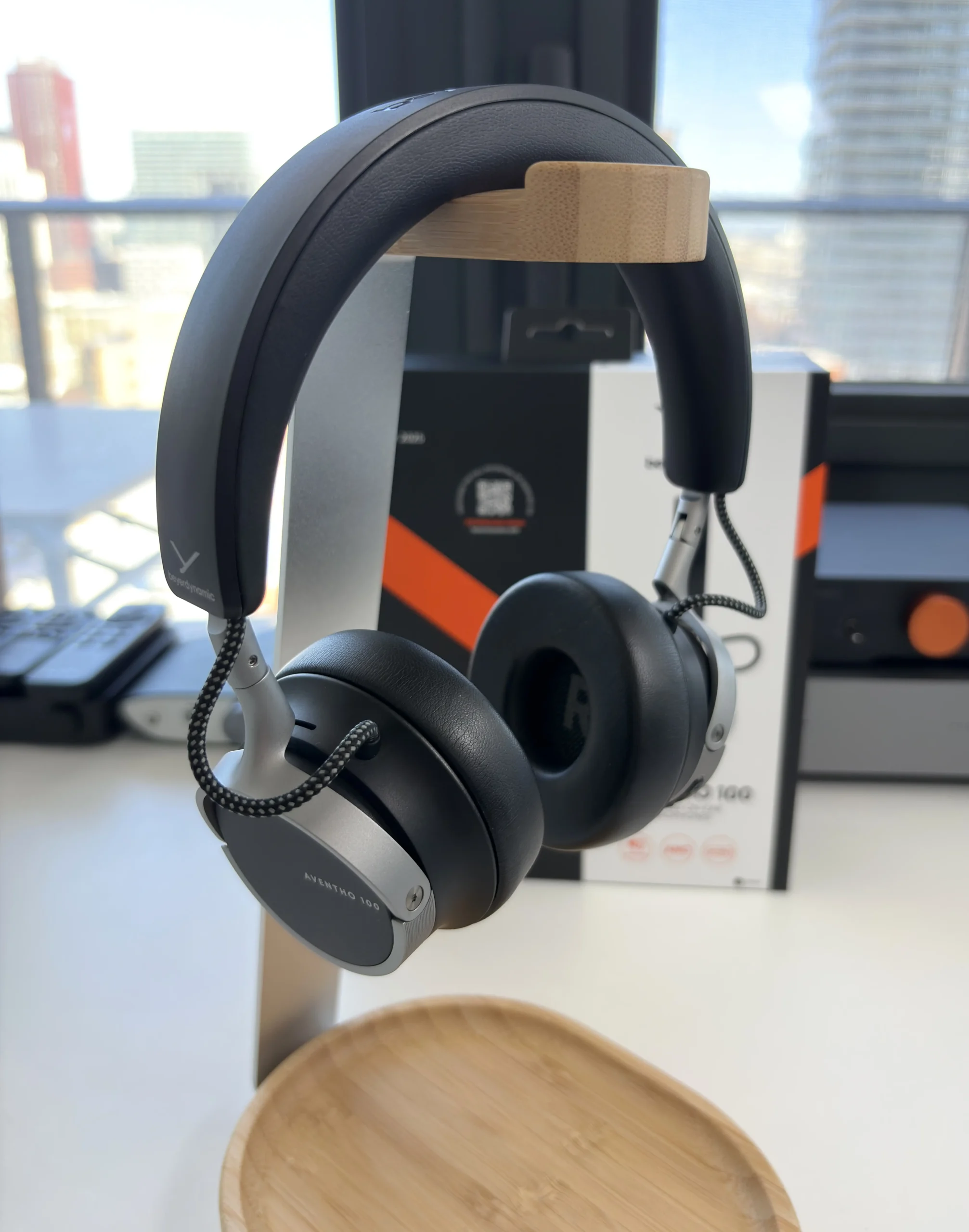
The beyerdynamic Aventho 100 immediately stands out with its retro-modern aesthetic. It features a metal frame (aluminum components), with fabric-insulated cables running to each earcup, giving a bit of a throwback vibe. High-quality materials are used throughout, from the sturdy aluminum forks to the leatherette padding on the headband and ear pads. The top of the headband is plastic, as is the earcup housing. Overall, it feels very well-constructed for daily use with no loose components or creaking of any kind. The Aventho 100 is available in three colors (black, brown, and cream), with my loaner unit being the black version. The silver aluminum accents against the black colorway give a very professional yet elegant look to it. Small design touches, like the large L/R markings inside the ear pads and the subtly embossed beyerdynamic logo on the top of the headband, make everyday use a bit more convenient and give a premium feeling to the headphones.
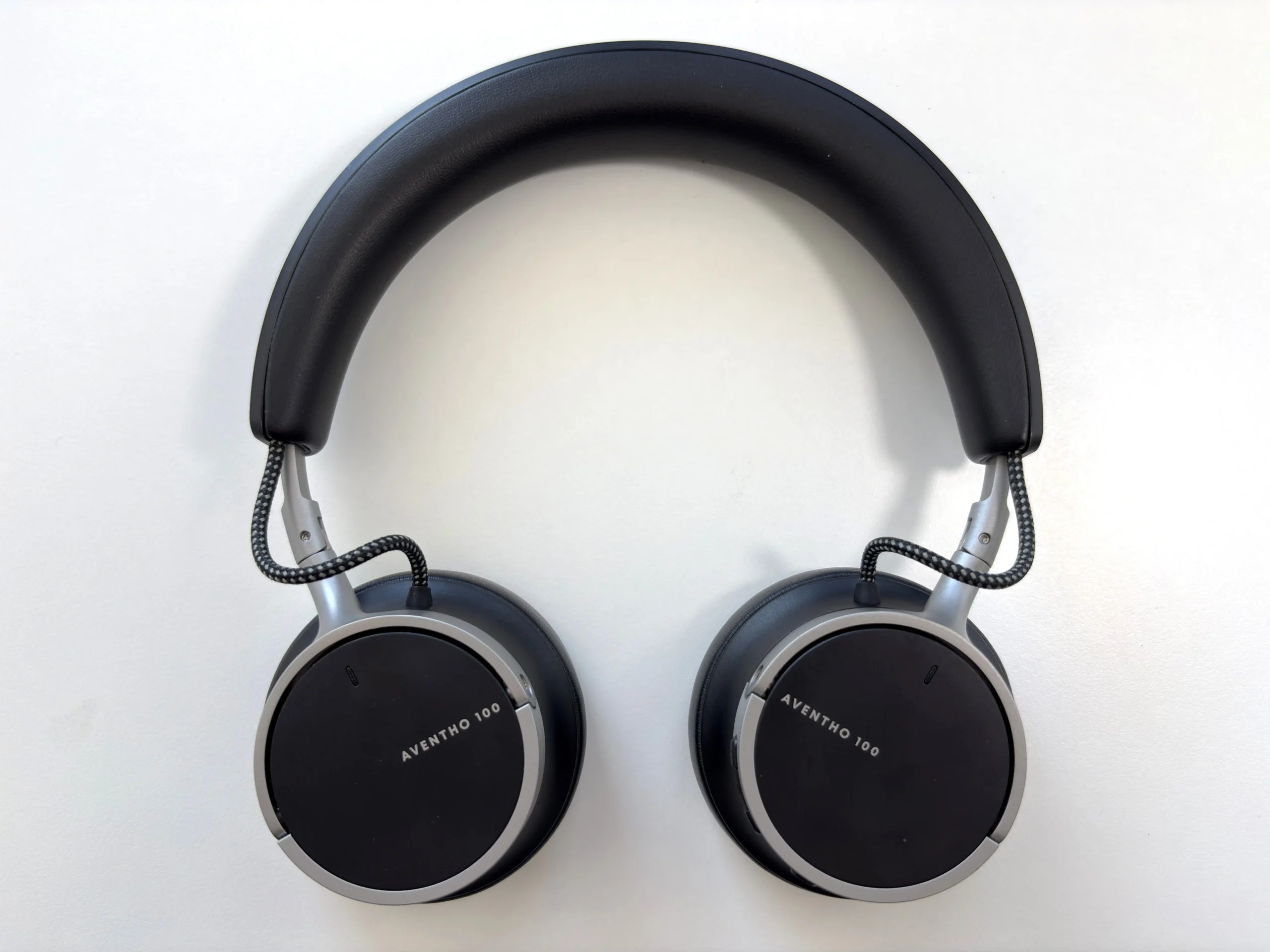
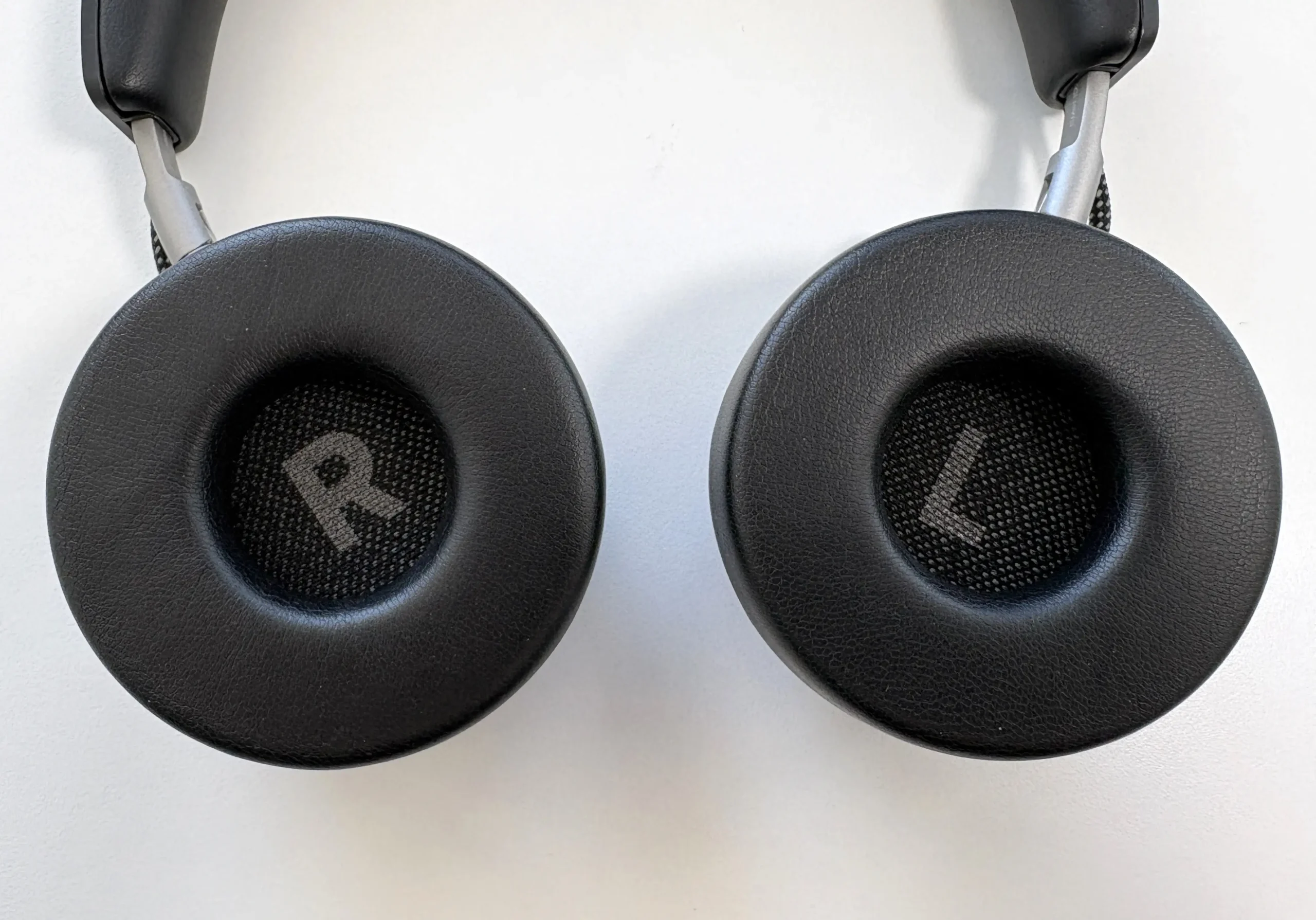
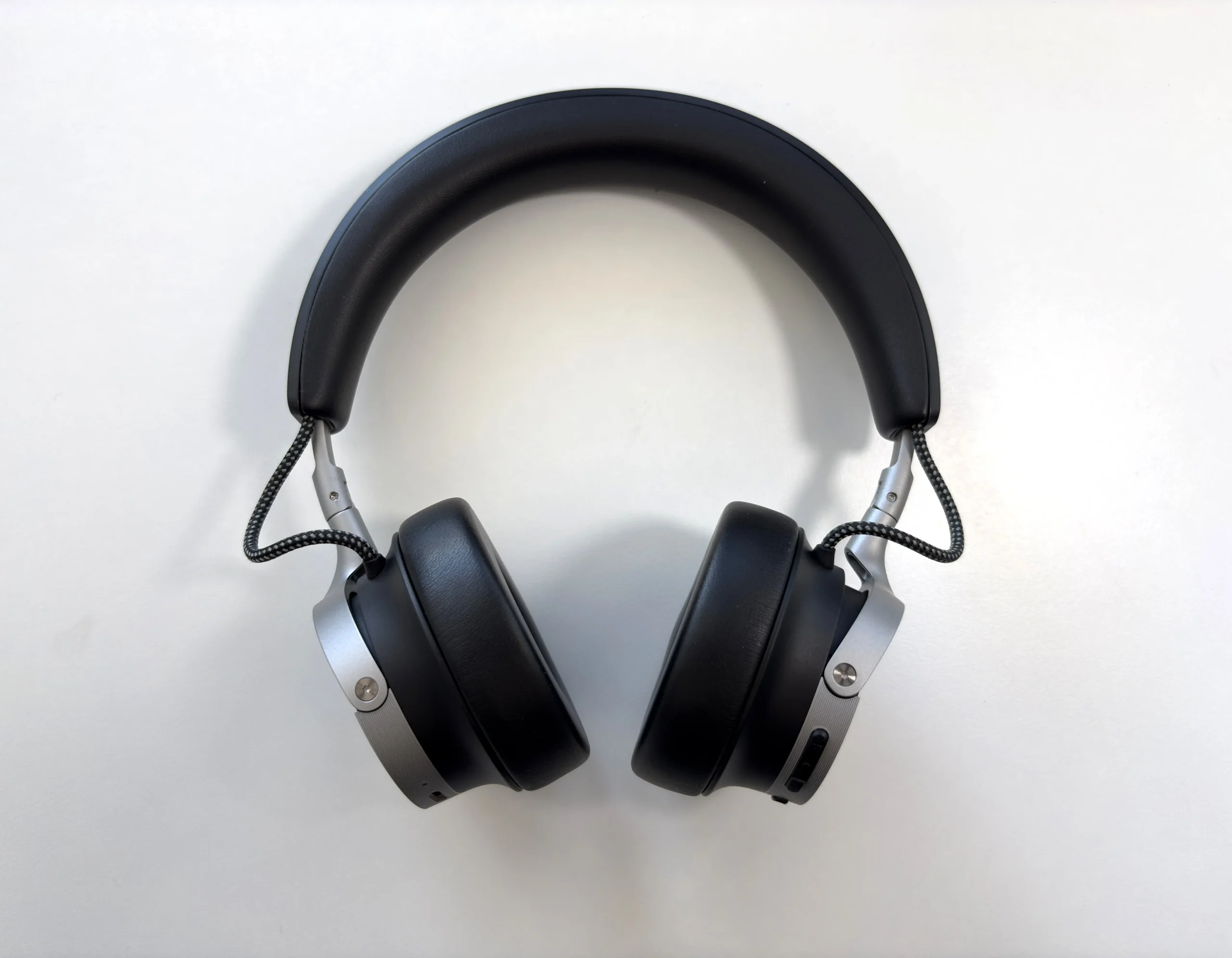


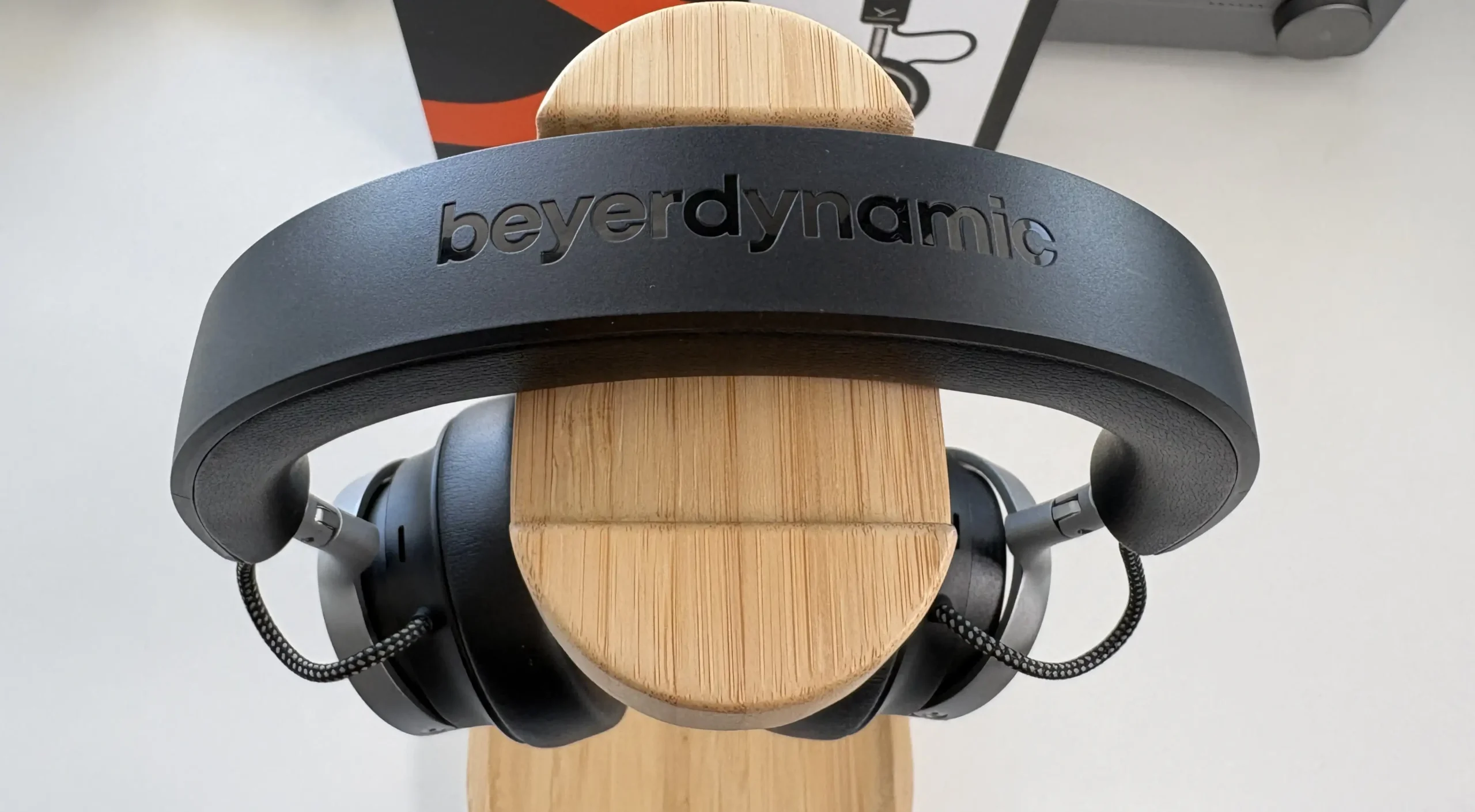
These headphones are relatively lightweight at just 220 grams. The earcups are on-ear as opposed to over-ear, meaning they sit against your ears rather than around them. The memory-foam padded earpads do a pretty good job at making them feel comfortable and have a decent thickness to them, and the clamping force is snug enough to keep the Aventho 100 secure during use (they don’t slip off very easily). Depending on your level of sensitivity, the clamping force will either feel just right or a bit too much. It’s always a trade-off when it comes to on-ear headphones, as too little clamping force means the headband is doing most of the work to distribute the weight and keep the headphones in place, and too much means your ears feel like they’re being crushed.
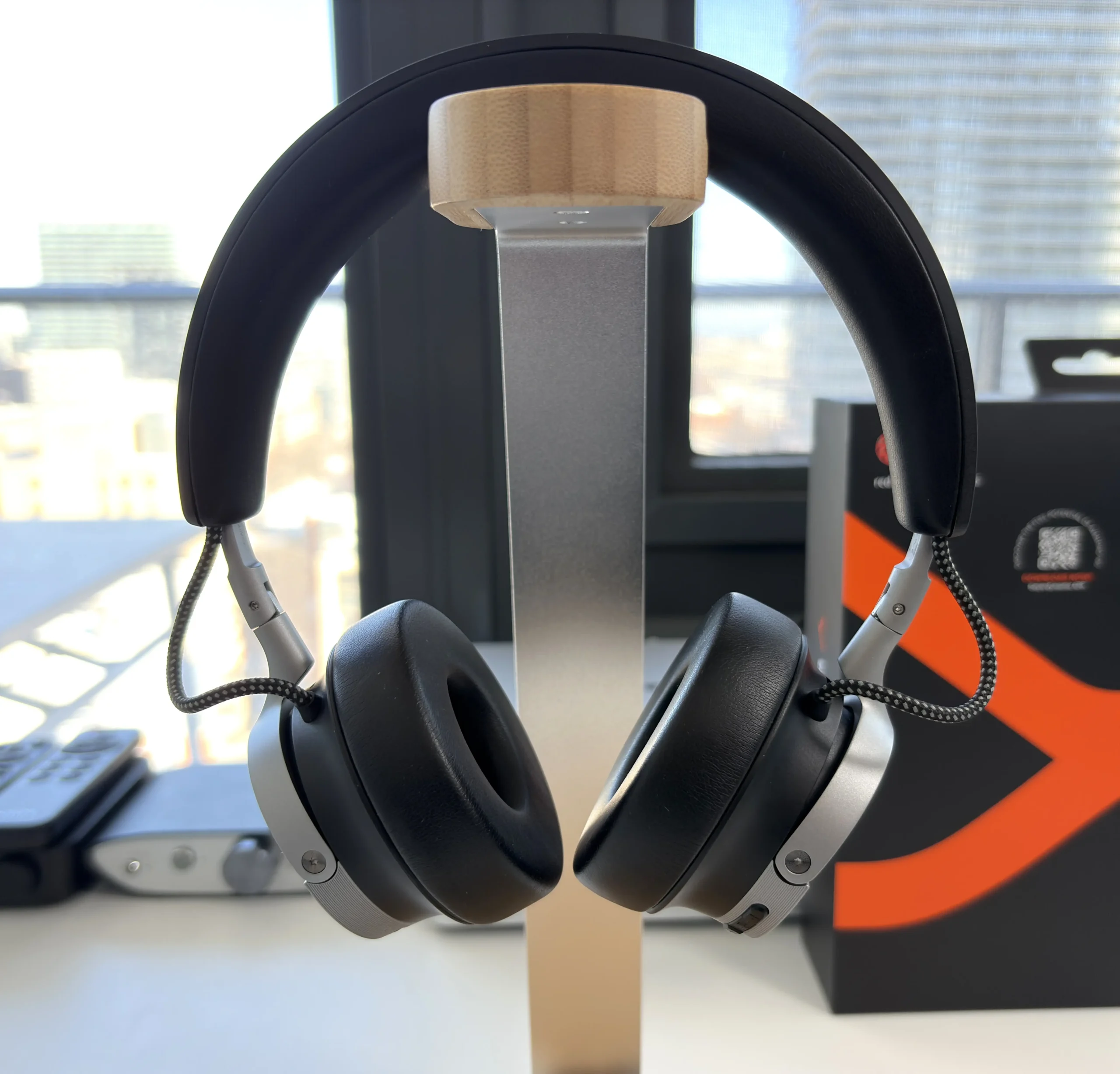
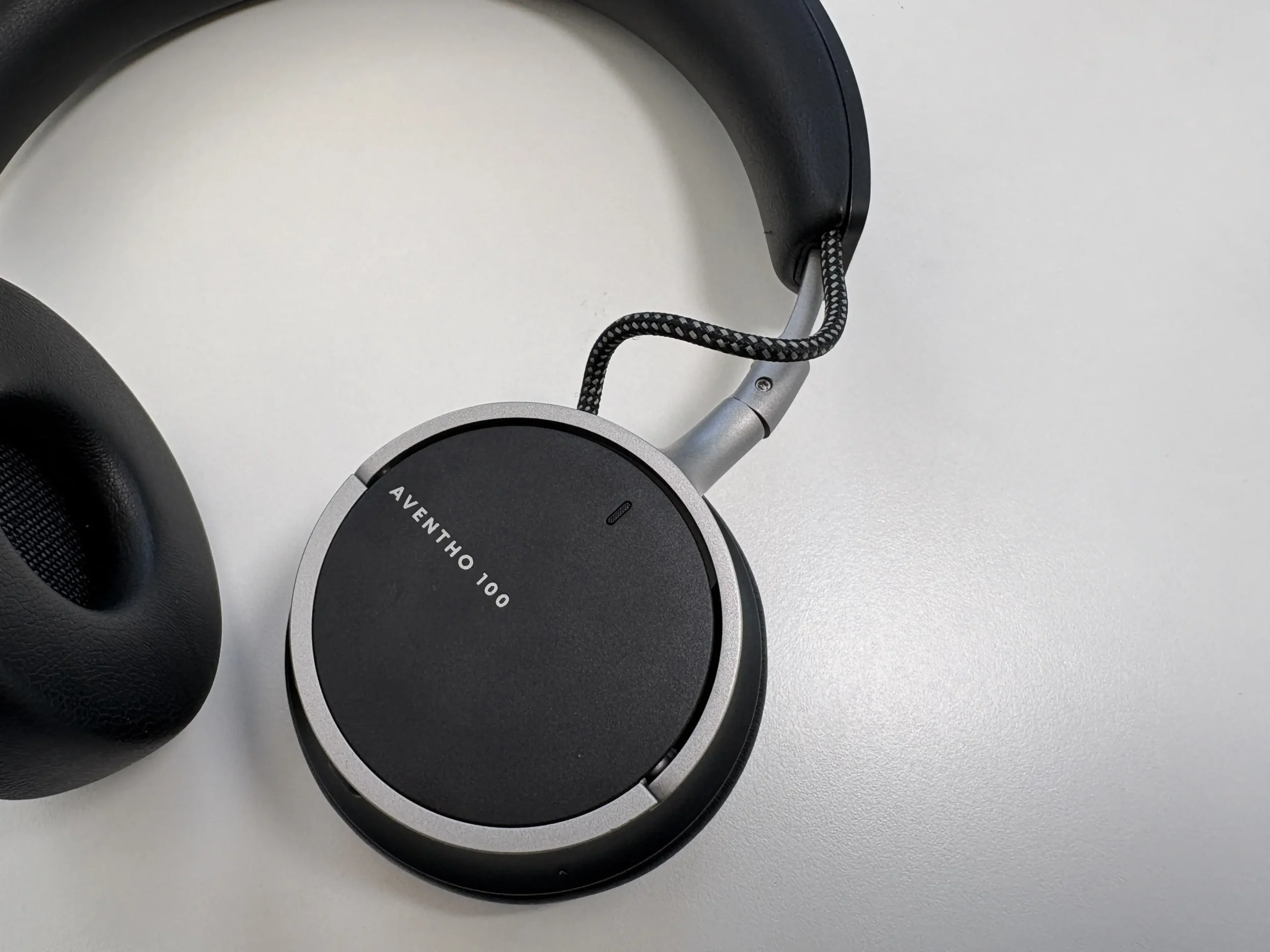


For me, as I wear glasses, the clamping force is on the “just a bit too much” side of things. My glasses have very thin arms, and after 30 minutes or so of wearing the headphones, my ears and sides of my head start to feel uncomfortable from having the arms of my glasses pushed in. Taking off my glasses yields a much more comfortable experience, and the clamping force then feels just right. The headband also has a good amount of padding, and I had no hot-spot issues as the surface area felt fairly evenly distributed on the top of my head.
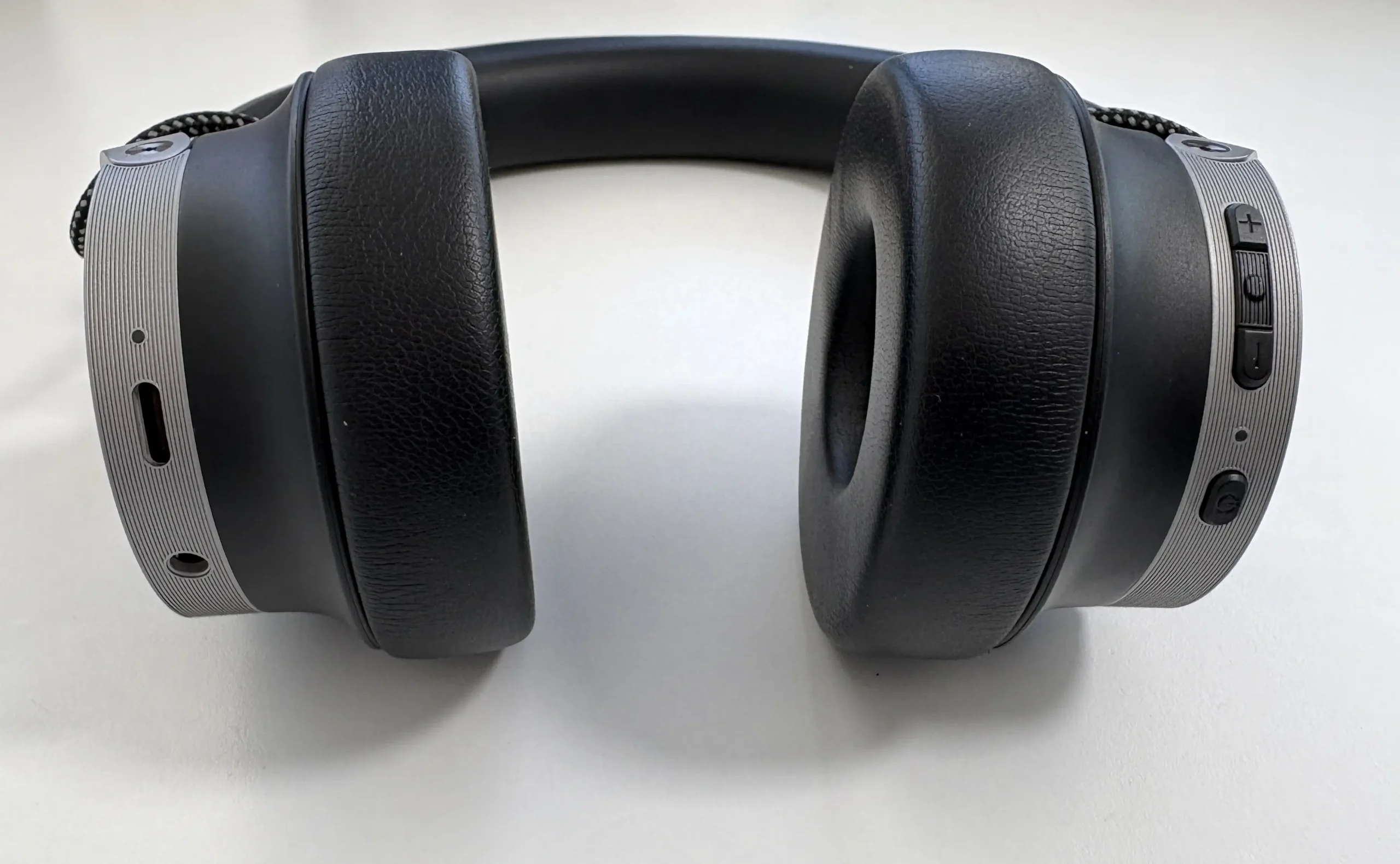
The controls all reside on the right earcup (volume up, play/pause/multifunction, volume down, and power/pairing), with the USB-C and 3.5mm connections on the left earcup. The buttons are raised, and you can easily identify each without having to look at them. They also have a satisfying tactile, clicky feel to them when pressed.
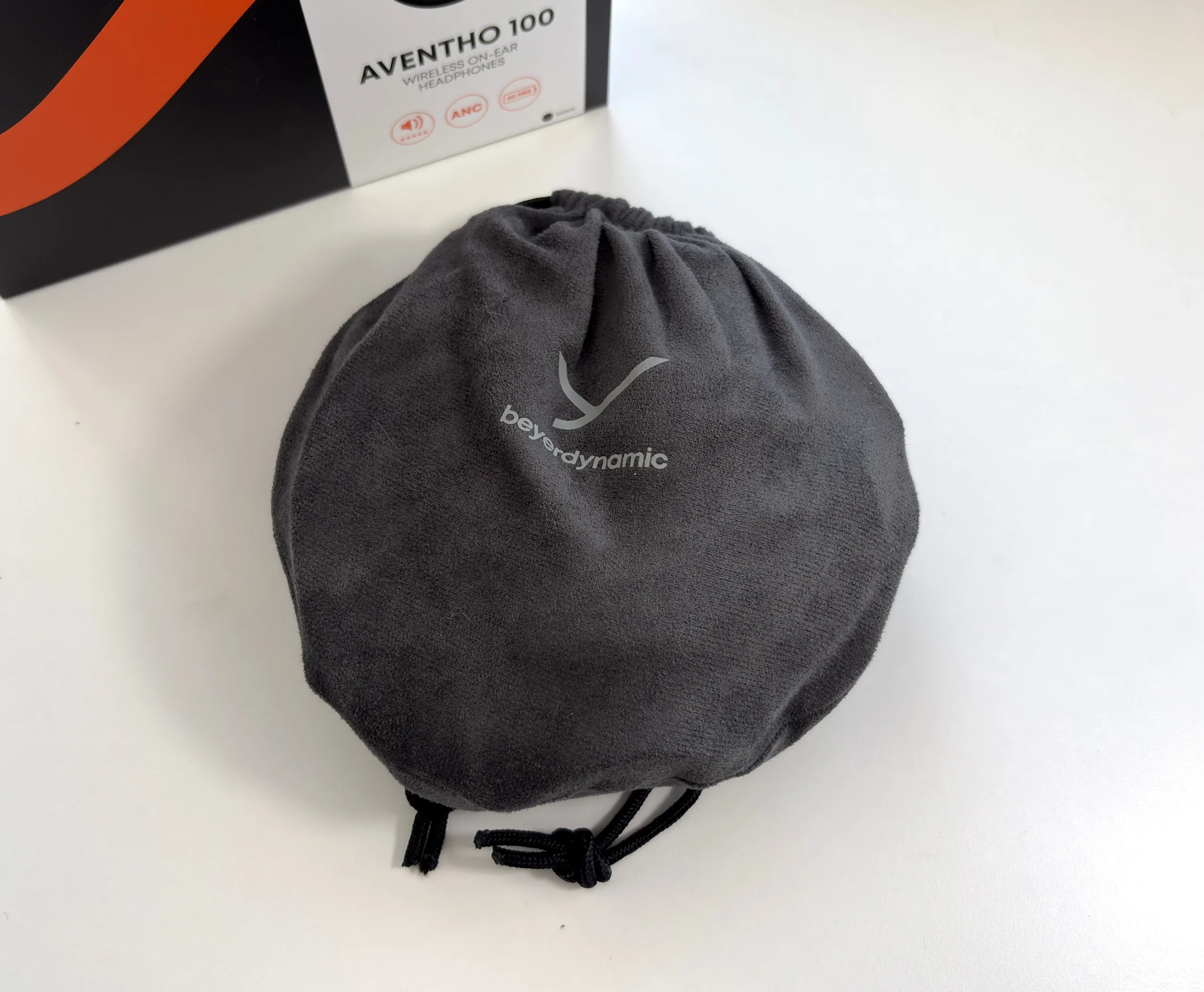
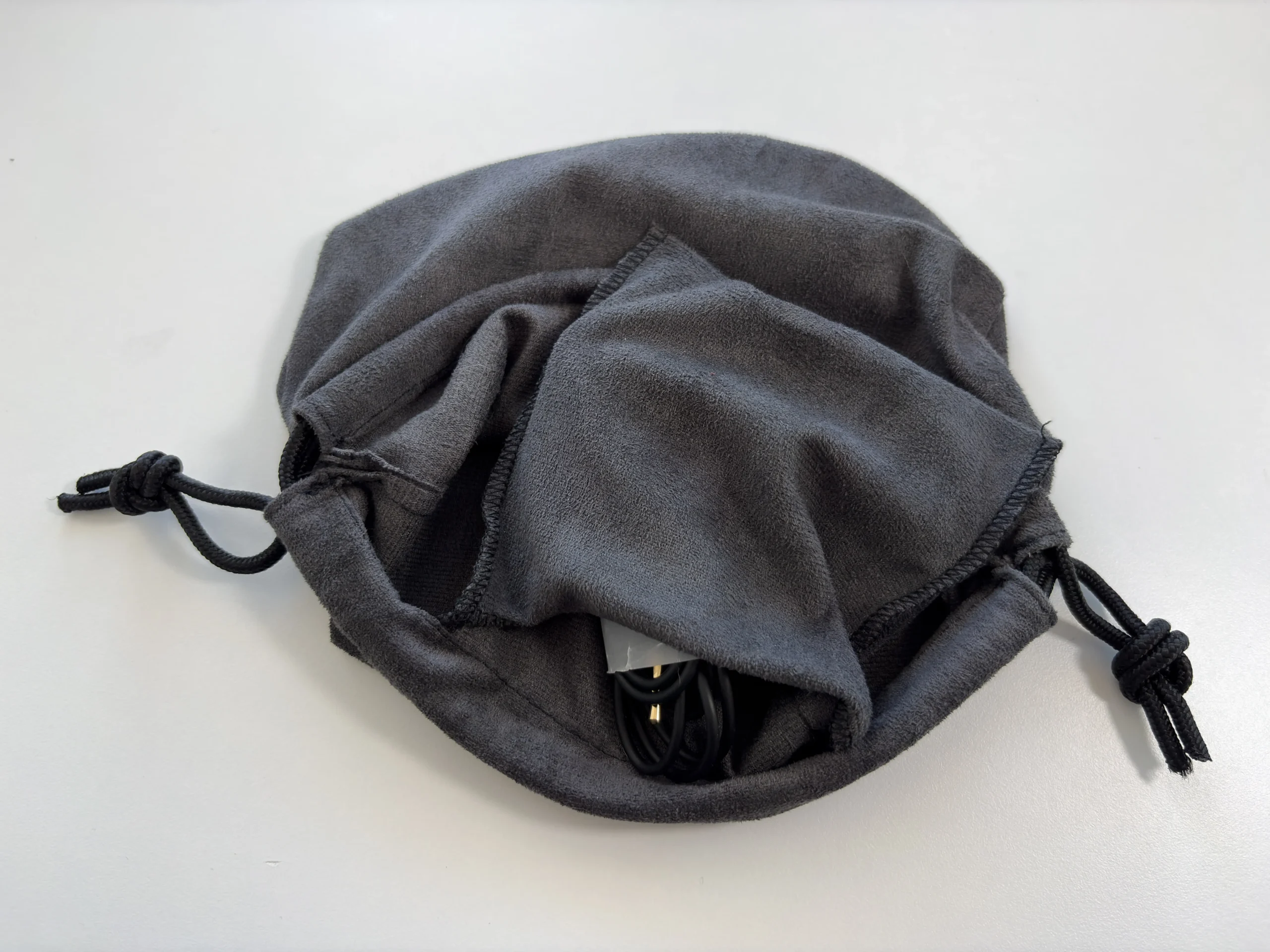
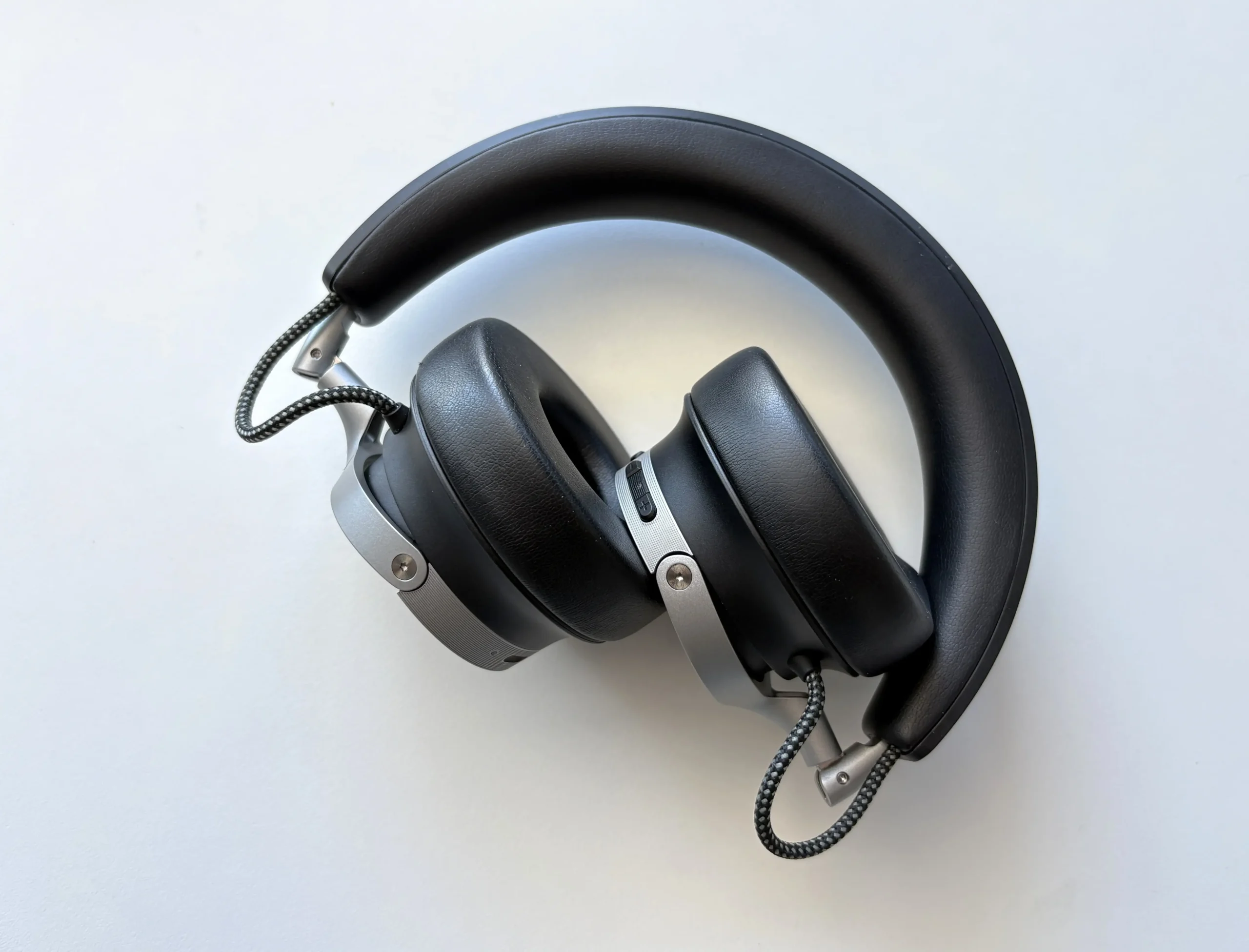
The Aventho 100 is highly portable, thanks to the foldable hinges that let you collapse the earcups inward and flat, so it can slip into the carrying case or a bag with ease. The included soft drawstring carry pouch is much nicer than I expected. It’s made of a soft material, and inside the pouch is a smaller, secondary pouch for the 3.5mm and charging cables.



Companion App

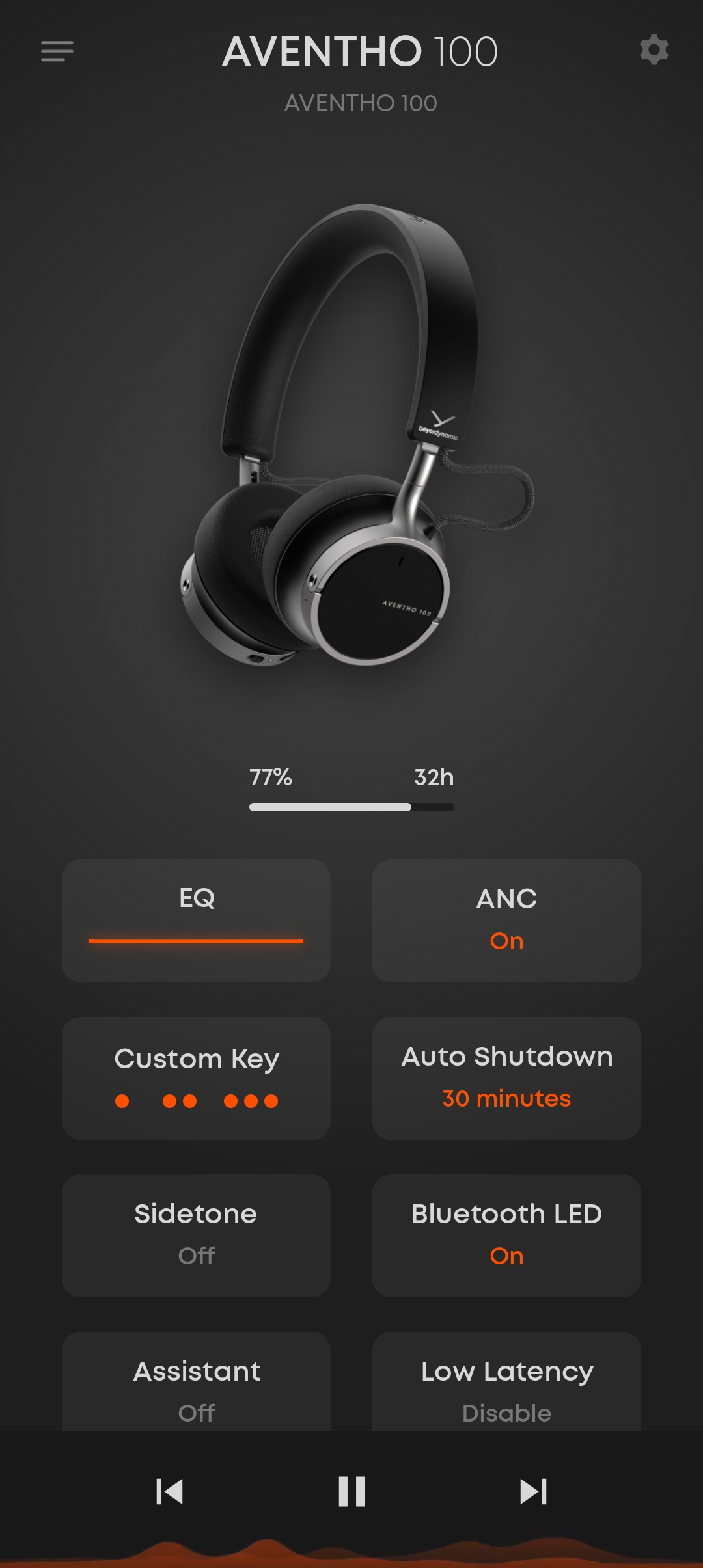
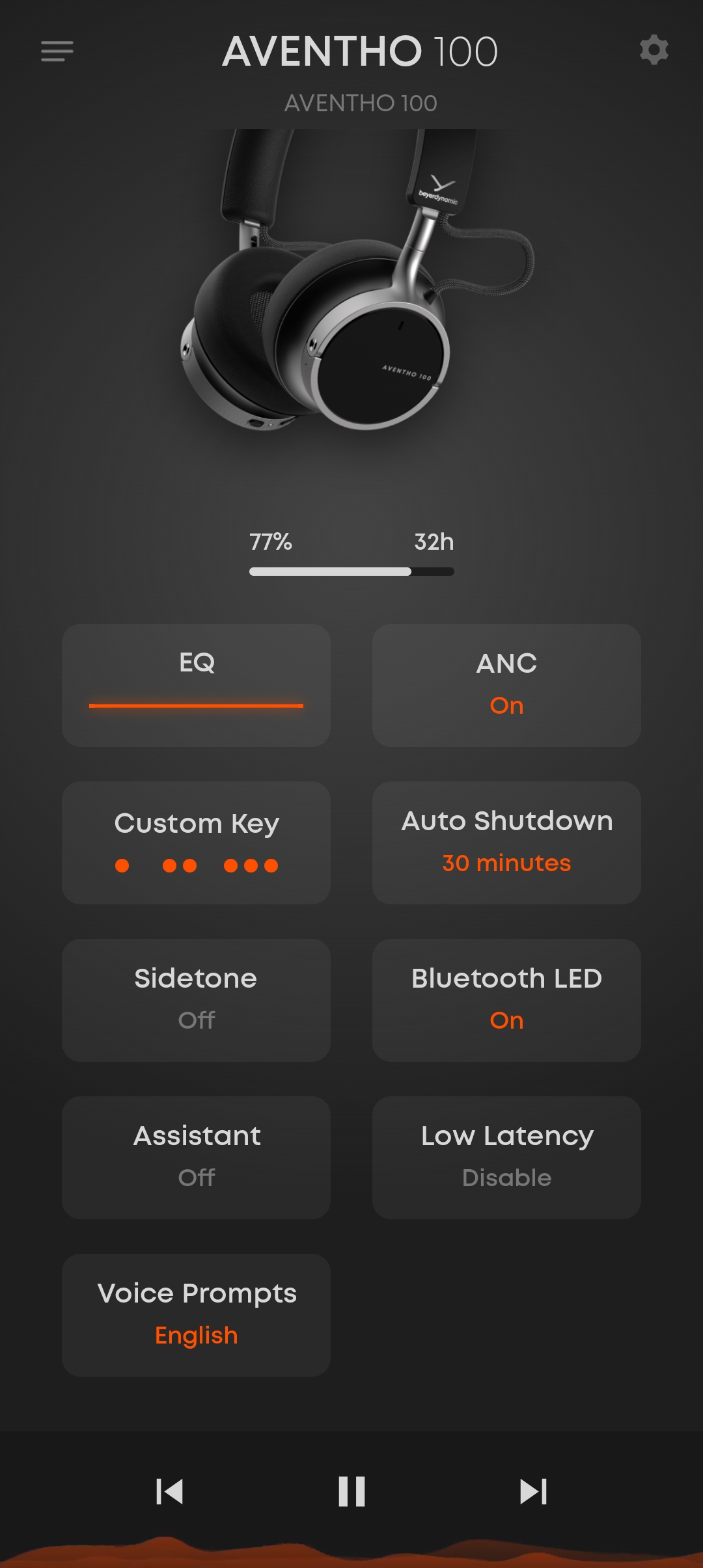


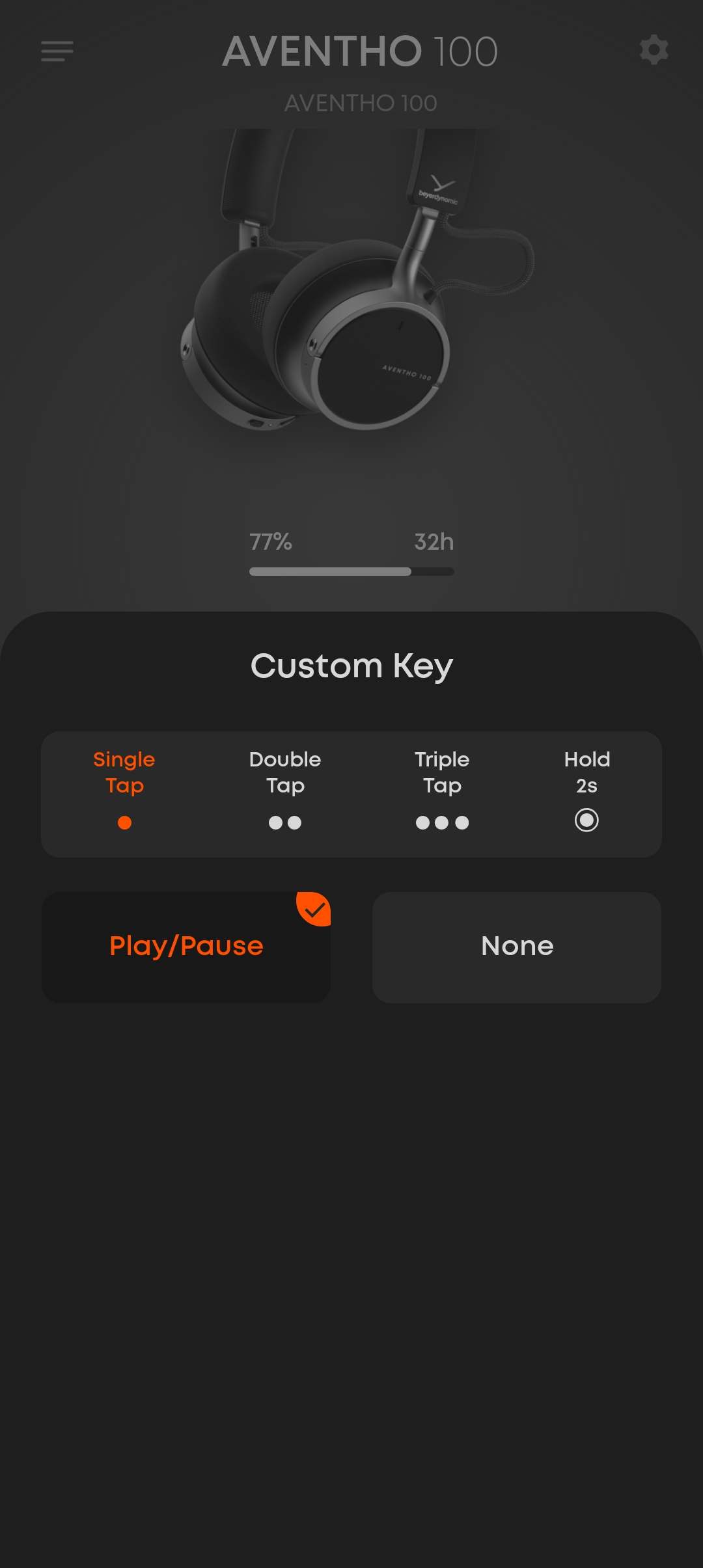
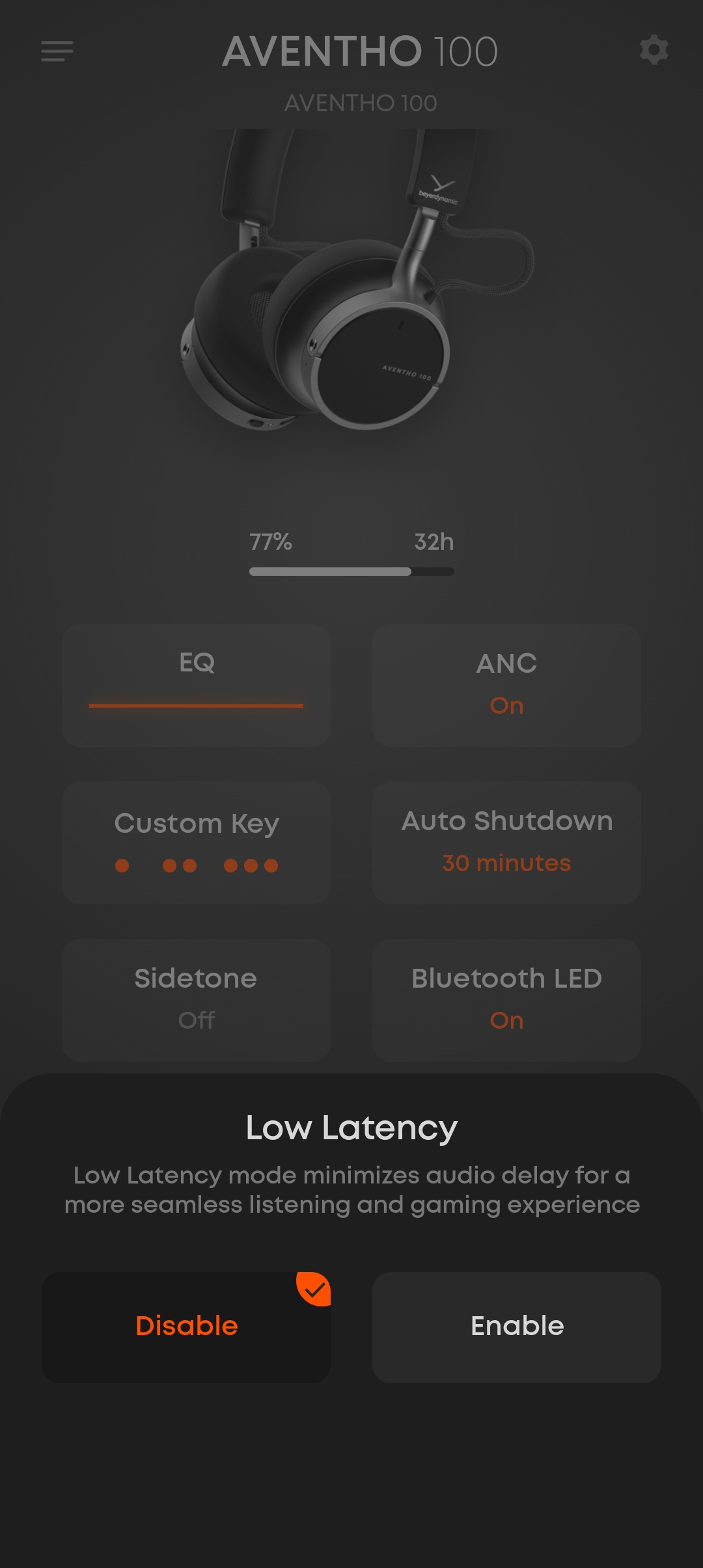
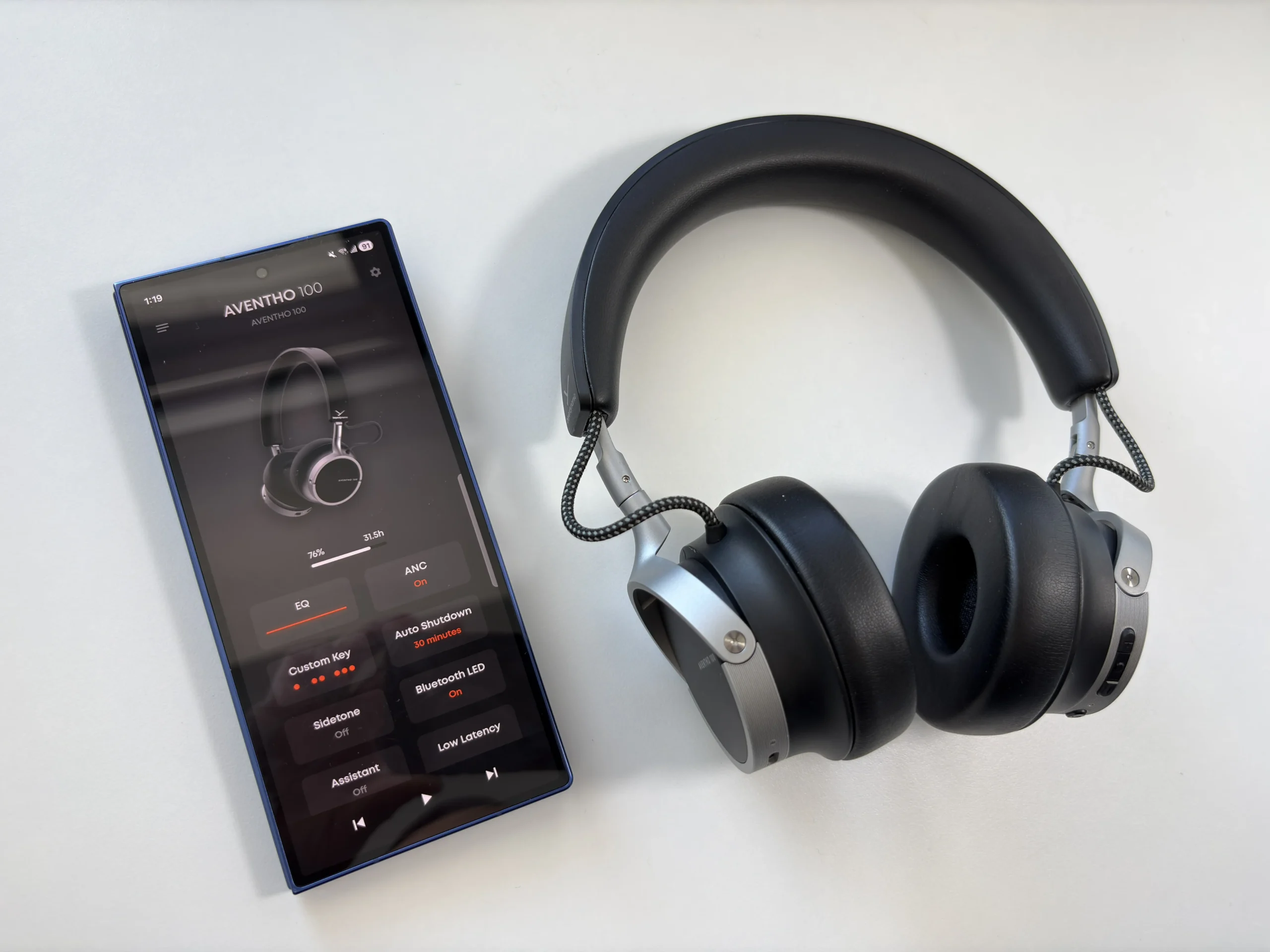
The “beyerdynamic” app is used to control and personalize settings for the Aventho 100. Through the app, you can do things like remap the button controls, change ANC and Transparency settings, use the built-in EQ to modify the sound to your liking, and enable or disable low-latency mode. The built-in EQ is limited to 5 bands (62Hz, 125Hz, 500Hz, 2000Hz, 4000Hz), for which you can create and name your own EQ profiles. I’m not sure what the limit is, but I went up to 12 custom EQ profiles before I stopped, so that should satisfy most users. There are also a number of presets included.
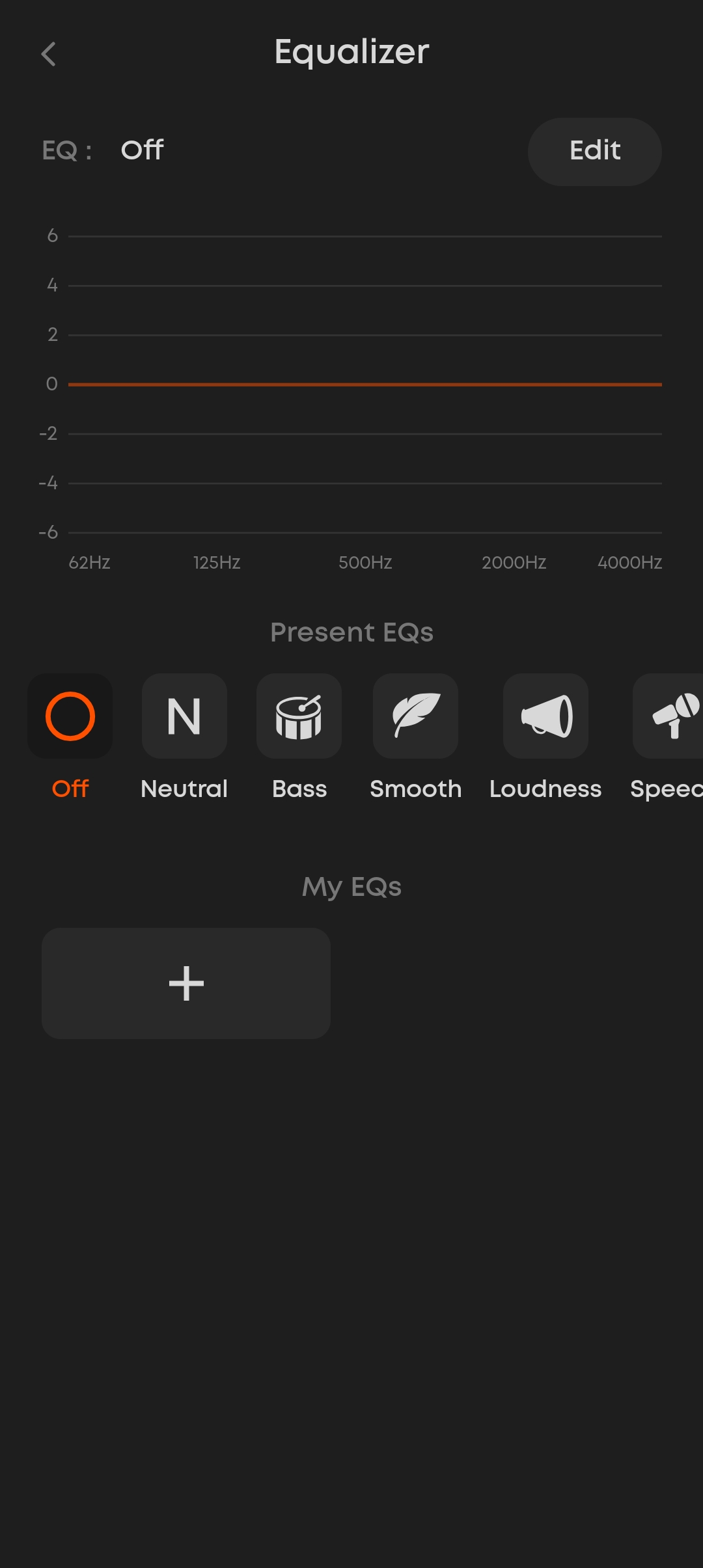
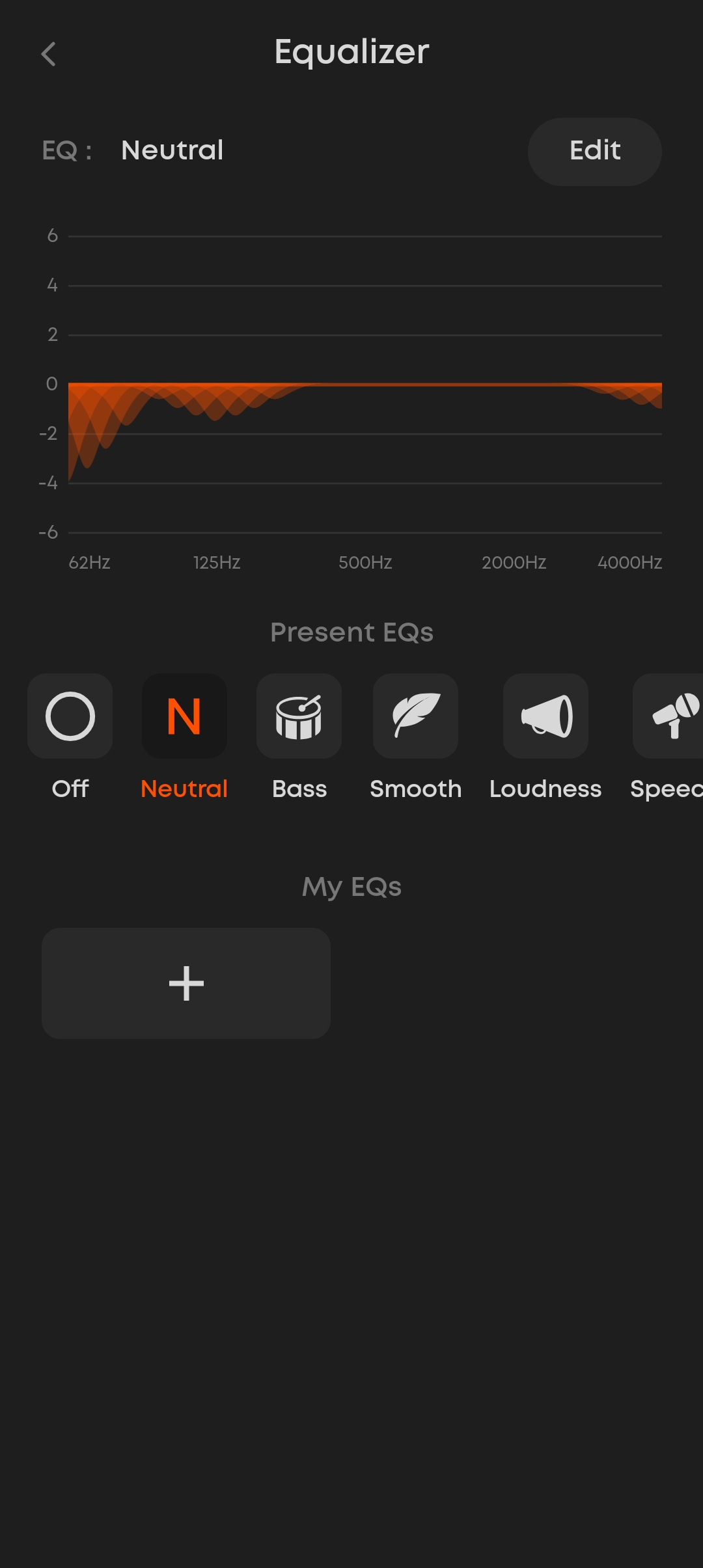
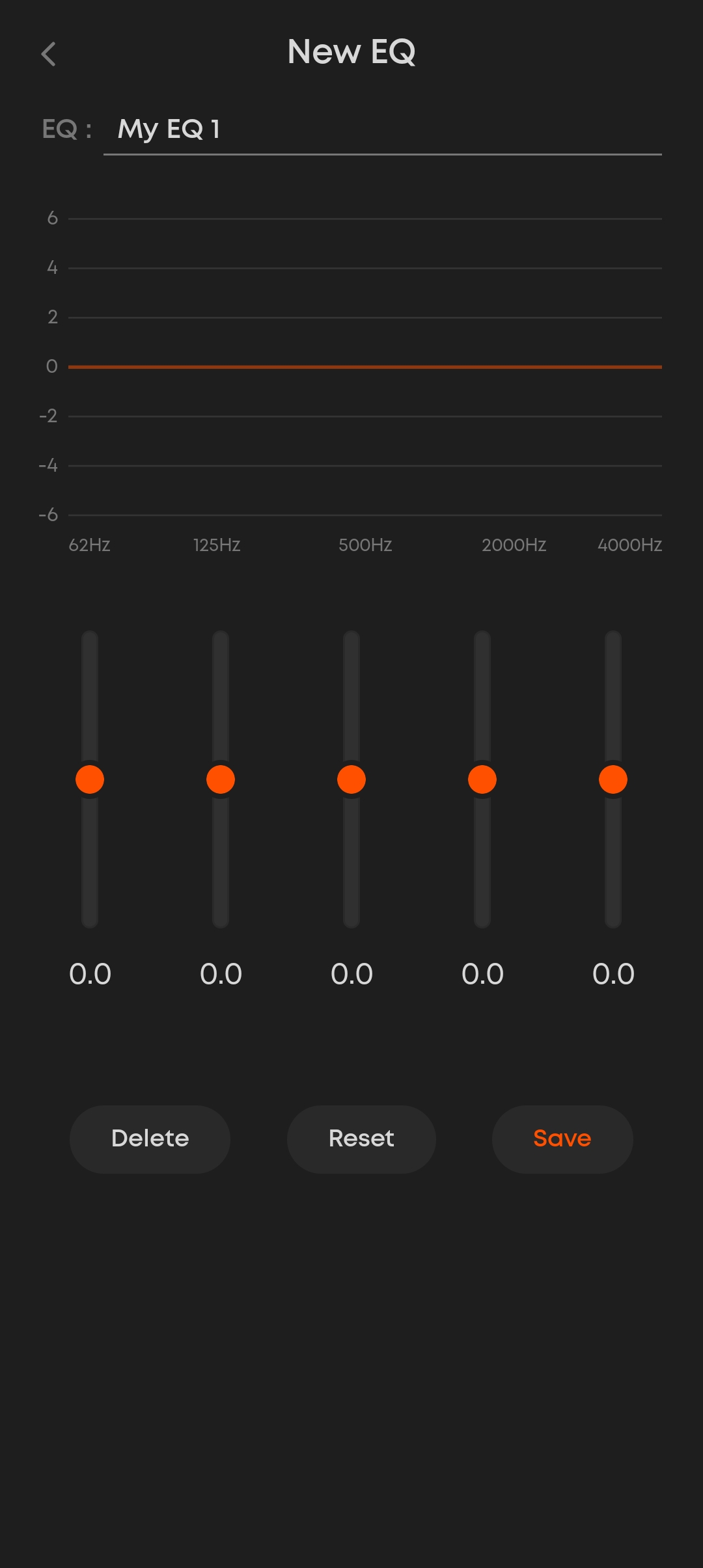


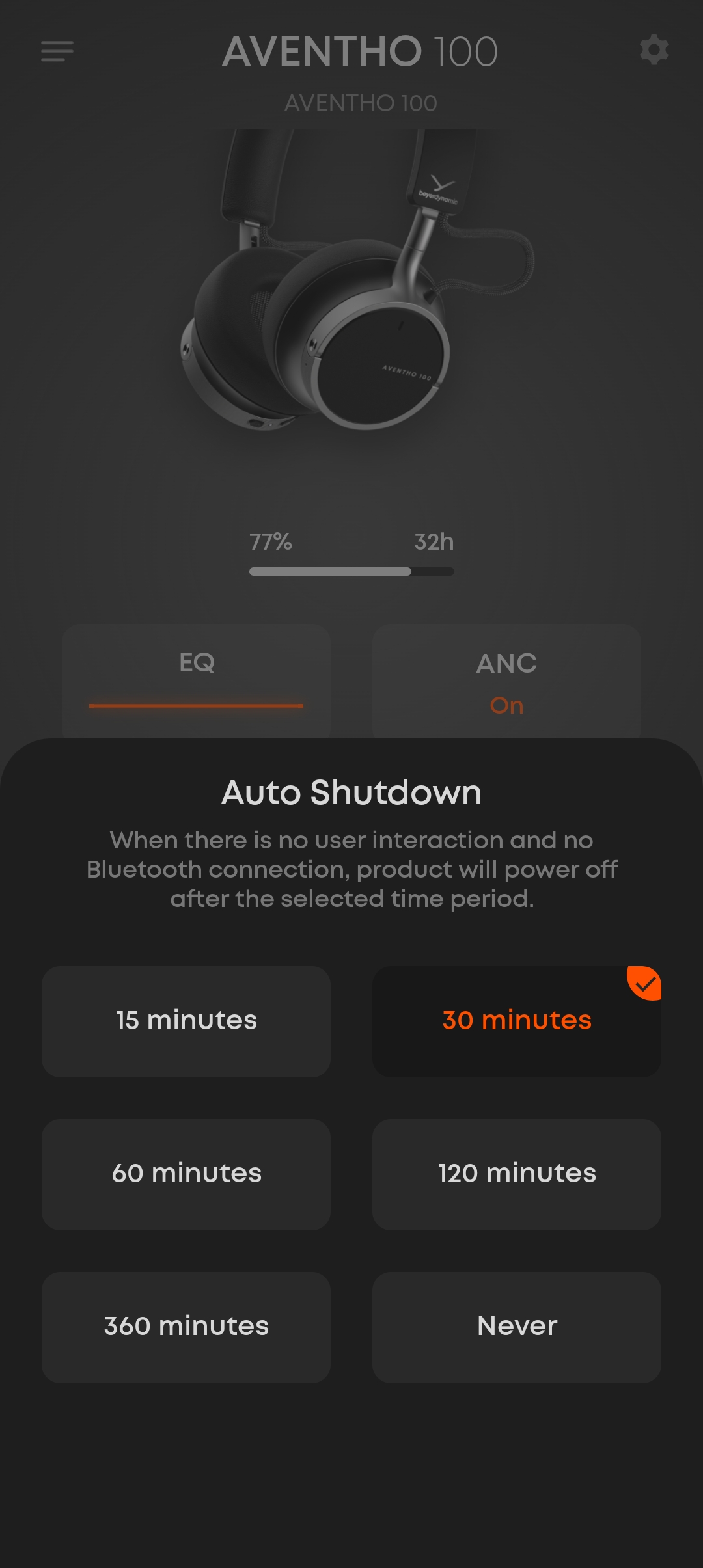
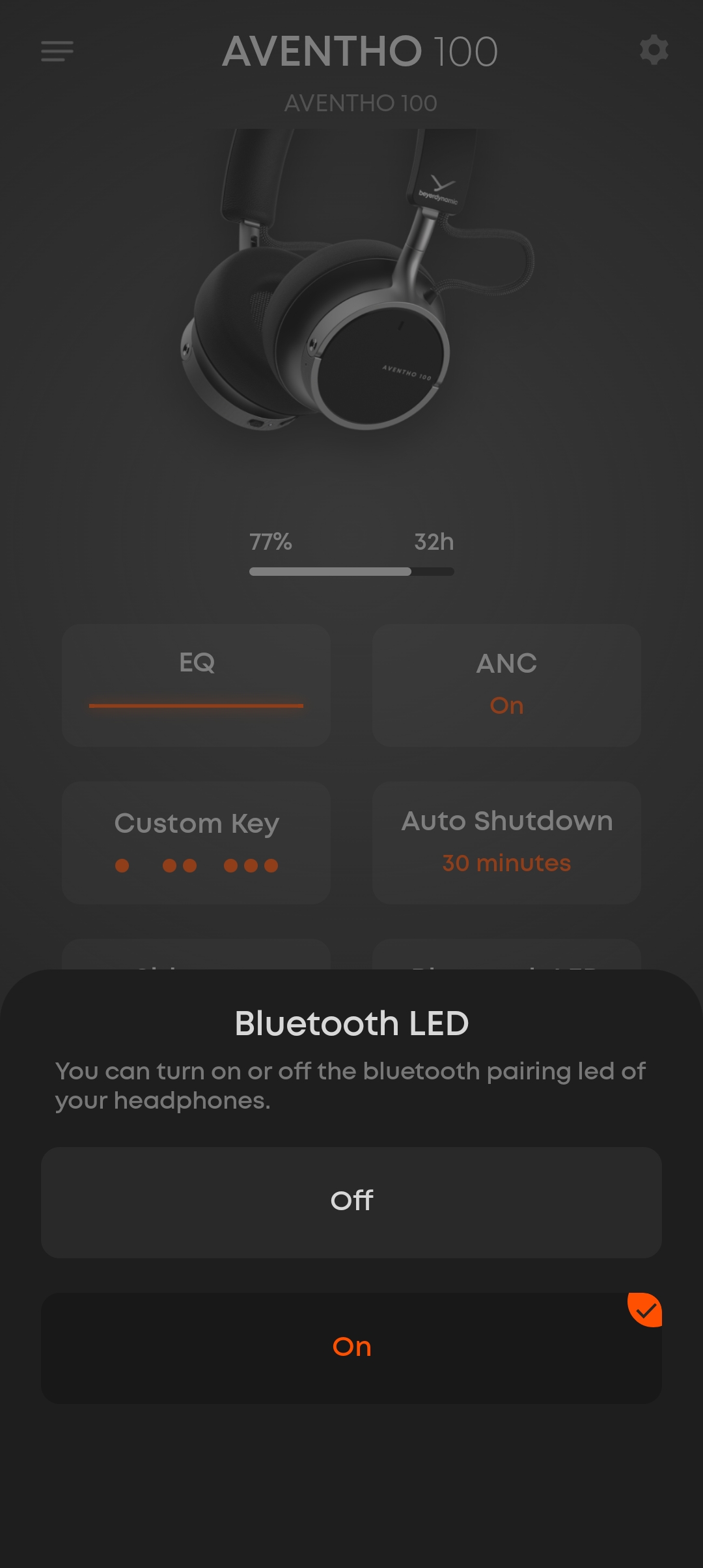
The app itself is intuitively laid out, is fast and fluid to use, and overall, I have no real complaints about it. Definitely one of the better companion apps. I would like to see a bit more flexibility in the button remapping, such as being able to assign the low-latency mode to one of the button options, but this is a minor nitpick. Here are some other screenshots of the app from my Android smartphone:






Bluetooth Performance
The Aventho 100 utilizes Bluetooth 5.4 and supports the SBC, AAC, aptX, aptX Adaptive, and aptX Lossless codecs. If you have a compatible source (like a newer Android phone with Qualcomm’s Snapdragon Sound, or a Bluetooth adapter like the Sennheiser BTD 700 or FiiO Air Link), you can benefit from higher-bitrate audio and even lossless-quality streaming. In practice, using aptX Adaptive and aptX Lossless yielded excellent sound quality with no noticeable compression artifacts. The connection also holds steady without stutters within a typical range of about 10–15 meters, which is enough to walk around your room or office without carrying your source device.
The headphone also features Google Fast Pair, so Android users can pair it with a single tap and have the device remembered across their Google account for quick reconnects (tested with my Samsung Galaxy Fold 7, so I can confirm it works).
The Aventho 100 supports multipoint pairing, allowing it to connect to two devices simultaneously (such as your laptop and your smartphone). In everyday use, this worked as seamlessly as you’ve come to expect. For example, while listening to music from my laptop, the Aventho 100 automatically switched to an incoming phone call and then back to the music when the call ended. Additionally, a Low Latency mode in the app can be activated if you notice any audio sync issues when watching videos, though with aptX Adaptive’s low-latency capabilities, I never needed it as the latency was good enough. I did need to use it with my smartphone since it only supports the aptX (Classic) codec, and there was a small delay between the audio and video when watching YouTube videos and podcasts. Enabling the Low Latency mode fixed that.
ANC and Transparency
beyerdynamic equipped the Aventho 100 with active noise cancellation and a transparency (ambient sound) mode. The ANC uses a hybrid setup of four digital mics (two feed-forward, two feedback) to analyze and cancel noise, and it’s assisted by two additional microphones for environmental sensing. In my usage, the Aventho 100’s ANC is effective for everyday situations. It significantly reduces droning sounds like air conditioning, engine rumbles on a bus, or the clatter of a busy cafe, allowing you to listen at lower volumes. When travelling on the metro, I found that engaging ANC created a much quieter backdrop, enough to enjoy music without distraction. Given the on-ear design (which inherently lets in a bit more external sound than over-ear cups), the ANC performance is actually impressive.
That said, the Aventho 100’s noise cancellation is not at the absolute cutting-edge level of flagship over-ear models (like the best offerings from Bose, Sony, or Apple). Very deep low-frequency rumbles aren’t completely erased, and sudden sharp sounds can still be heard. For everyday urban noise (offices, public transport, coffee shops), the ANC is more than sufficient to give you some peace.
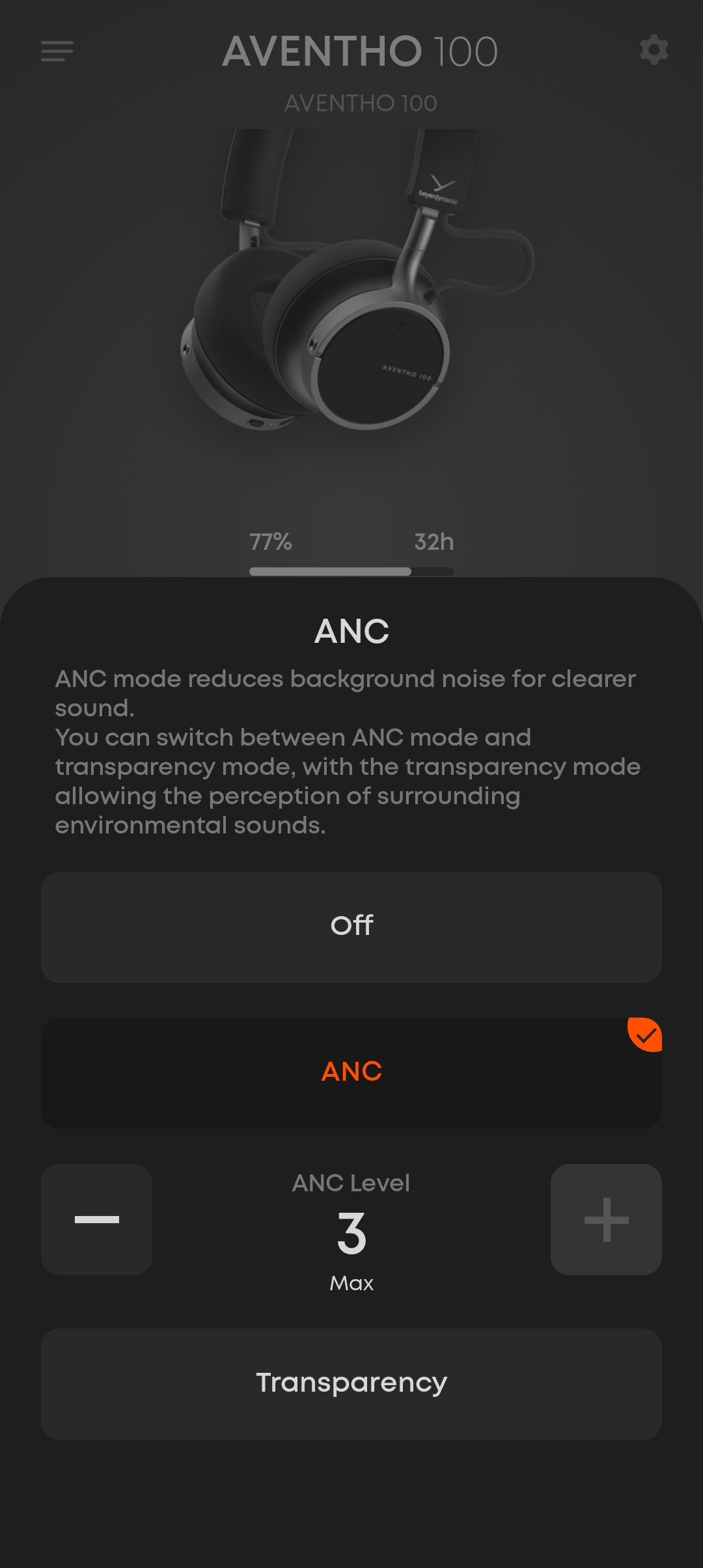


The Aventho 100 offers transparency mode as well, which does the opposite: it pipes in outside sound via the microphones so you can hear your surroundings. This is handy when you need to catch an announcement or have a quick chat without removing the headphones. The transparency can be toggled by double-pressing the power button (it cycles through ANC, Transparency, and off) or via the app, and in the app, you can select different intensity levels. I found the transparency mode serviceable. Voices and ambient sounds are audible enough for awareness, and there was no harsh noise amplification or white noise. It’s useful, for example, when walking on a busy street and wanting a bit more awareness for safety.
Usability
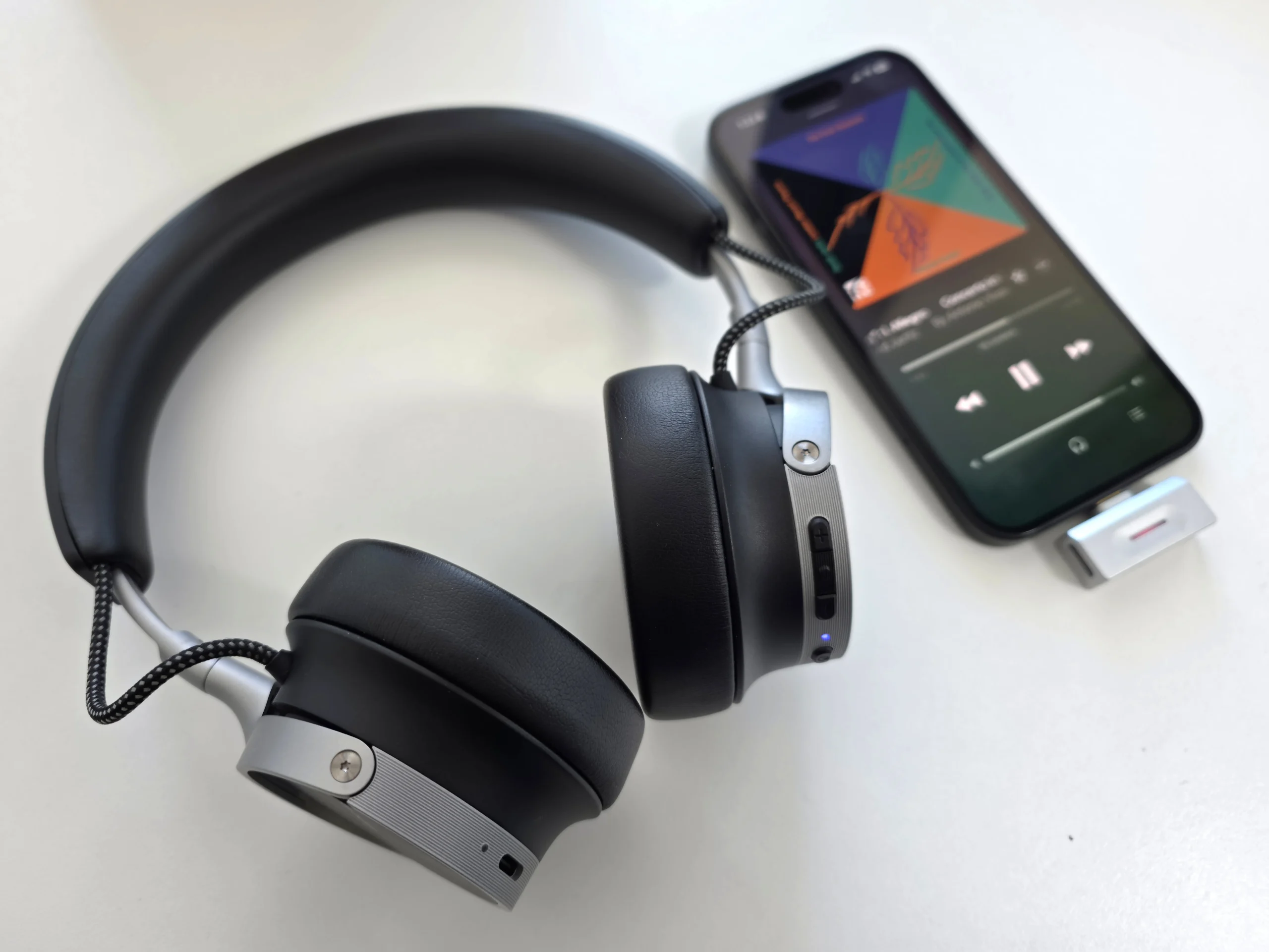
In day-to-day use, the beyerdynamic Aventho 100 proves to be user-friendly and practical. It uses physical buttons for controls, which many will appreciate for their tactility and reliability (no accidental swipes or missed touch gestures). On the right earcup, there’s a three-piece rocker for volume up, volume down, and a central multi-function button. The volume buttons do exactly what you expect, and the middle button handles play/pause, track skips (double-press for next, triple for previous), and call answer/hang-up. These buttons are well-textured but closely grouped, so there was a learning period to distinguish them by feel. After a day or two, though, muscle memory kicked in and I rarely mis-pressed the wrong one. A separate dedicated button near the bottom of the earcup controls power, pairing, and ANC/transparency modes. Holding for a few seconds turns the headphones on/off, tapping it cycles through noise cancelling on, transparency, or off (with voice prompts confirming each mode), and triple pressing the button forces the headphones into pairing mode.
Something that Id idn’t expect I would appreciate is the Aventho 100’s voice prompt feedback and indicators. As mentioned, it speaks the battery level at startup and says “Power On/Off” when toggling. It also audibly confirms “Noise Cancelling”, “Transparency”, or “ANC Off” when you change modes, as well as the codec. These prompts (in a pleasant female voice) are clear and not overly loud, and you can customize which prompts play via the app if desired. There’s a small LED on the earcup that indicates pairing or charging status, but thanks to the voice cues, you won’t be relying on cryptic blinks often. It’s all very well thought out.
Portability and durability add to the Aventho’s everyday usability. The folding design lets you pack it into a bag easily, and the build quality feels robust enough for daily commuting. It even carries an IP53 rating, meaning it has some dust and splash resistance. While this isn’t a fully waterproof headphone, it’s reassuring for use in light rain or sweaty workouts that a little moisture won’t hurt it.
Lastly, it’s worth mentioning that the wired playback option is a usability win. If the battery dies mid-trip (a rare scenario given its capacity), just plug in the audio cable to continue listening passively. Unlike some wireless headphones, the Aventho 100 doesn’t require power to play audio over the cord. This means you’re never completely out of luck if you forget to charge. As well, the USB-C connection also supports audio (up to 16-bit/48kHz), as well as the microphone.
Battery Life
Battery endurance is a major strong suit of the Aventho 100. beyerdynamic claims up to 60 hours of playback on a single charge with ANC off, and up to 40 hours with ANC on. In my testing, the headphone indeed lasted multiple days of heavy use without needing to recharge. For perspective, using the Aventho 100 around 4-5 hours a day with mixed ANC usage, I easily went a week before hitting low battery.
Charging is quick and convenient via USB-C, and a full charge takes roughly 1.5 hours. Even better, the Aventho 100 supports fast charging.15 minutes of charging time provides about 15 hours of listening time. In real terms, that means even if you forget to charge and wake up to a near-empty battery, a short charge while you get ready can power an entire day’s use. The headphones also work while charging (you can listen wired or even via Bluetooth when plugged in), so there’s flexibility there.
Sound Quality
Devices and sources used for this review:
- Apple iPhone 16 (AAC)
- FiiO AirLink (aptX Adaptive, aptX Lossless)
- iBasso DX180 (3.5mm wired)
- Microsoft Surface Laptop 7 (USB-C, aptX)
- Samsung Galaxy Fold 7 (aptX)
- Sennheiser BTD 700 (aptX Adaptive, aptX Lossless)
Links to my music playlist used for the majority of testing:
Spotify: https://open.spotify.com/playlist/6QSIhuCBDAUyoWGcyxPeN8
Apple Music: https://music.apple.com/ca/playlist/hifi-oasis-audio-testing/pl.u-lKWlcjy04xp
Qobuz: https://open.qobuz.com/playlist/39521747
Tidal: https://tidal.com/playlist/503485c7-7f3d-43f0-b904-4b9a89c33875
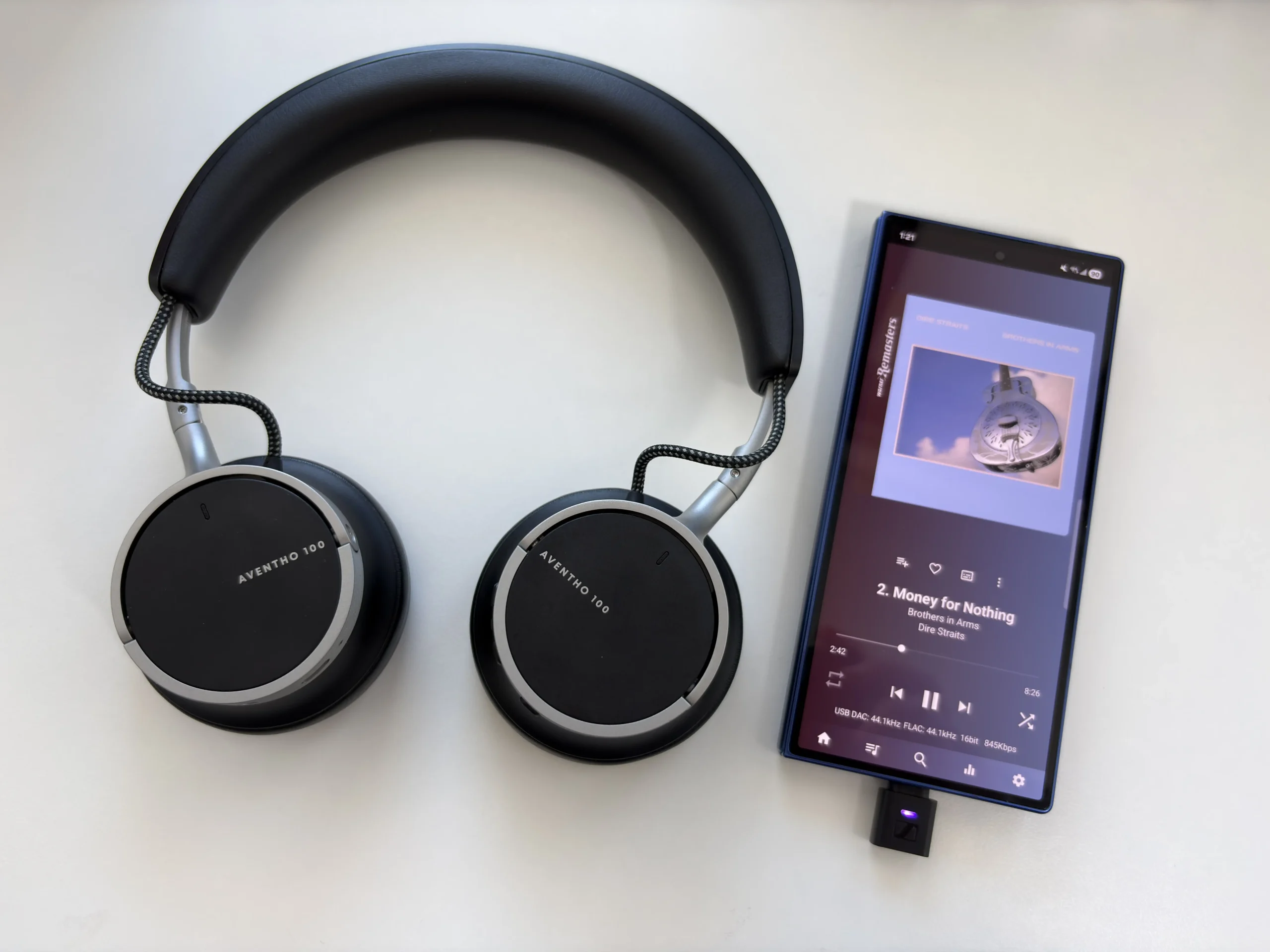
The Aventho 100 has a nominal impedance of 48 Ω when in passive mode, but most of its use is as an active Bluetooth headphone, so you won’t need to worry about driving it with a powerful source as the internal electronics handle amplification. In practical terms, the Aventho 100 can get very loud without distortion. Even at 50% volume, it produces a full sound and was more than sufficient for any scenario I tried with it. beyerdynamic’s tuning and amplification give it plenty of headroom, meaning you can EQ or boost certain frequencies (via the app) without the sound breaking up or distorting easily.
Also important, the Aventho 100’s electronics are well-engineered in terms of noise floor. I did not hear any hiss or hum during playback or when idle, except for a very faint noise when ANC is on. This makes quiet listening (for example, classical music at low volume at night) enjoyable without electronic background noise. Alright, let’s get into the sound profile details.
Bass
The Aventho 100’s bass response is one of its defining characteristics. This headphone delivers a rich bass response that gives music a warm and full-bodied foundation. Genres like hip-hop, EDM, or pop (which emphasize bass) come through with powerful thump and rumble. The sub-bass reaches deep, and mid-bass hits with some authority, adding a satisfying weight to kick drums and basslines. beyerdynamic seems to have tuned the Aventho 100 for a fun, impactful sound that will please bass enthusiasts.
Crucially, the bass isn’t just loud, it’s also quite clean and controlled. There’s texture and detail in the low frequencies, so while bass is always present, it doesn’t turn to muddy boominess. When a track calls for it, the Aventho 100’s bass can slam and drive hard, and in mellower songs, it still provides body without overwhelming the mix. Fast bass lines (like rapid double-bass in rock or quick electronic sub-bass drops) stayed fairly tight as the drivers can keep up without smearing the bass notes together.
If you’re a basshead, the Aventho 100 will likely delight you with its impactful low-end. If you prefer a leaner bass response, I’d recommend using the “Neutral” EQ preset in the beyerdynamic app, as one of the things it does is dial back the bass a couple dB to achieve a more neutral balance (I found it works well for acoustic and classical music).
Midrange
The midrange on the Aventho 100 is tuned to sound clean and musical, though it sits slightly behind the bass in the overall balance. Vocals and midrange instruments come through with a natural tonality that beyerdynamic is known for. Both male and female vocals sounded realistic, as there’s a warmth in the midrange that gives voices a pleasing fullness without veering into muddiness or hollowness. Acoustic guitars, pianos, and snares have good body and presence as well. Details like vocal breaths and subtle string resonances are present, indicating the midrange isnt’t smoothed over or overly recessed.
However, due to the strong bass and slightly relaxed treble, the Aventho 100’s midrange leans somewhat V-shaped in signature. The lower midrange, where deep male vocals or the richness of cellos reside, takes a bit of a hit in the default tuning. This means those frequencies are dialed back slightly, which can make the midrange sound a touch scooped in certain tracks. For example, a busy rock track with heavy bass and sparkling cymbals might cause vocals to sit just slightly behind the mix. That said, the midrange is not drowned out, and thanks to the clarity and a gentle upper-midrange presence, vocals usually remain intelligible and even forward enough for most genres.
Treble
For the treble, beyerdynamic has taken a more relaxed approach with the Aventho 100. Unlike some of the brand’s studio-oriented models known for very bright or crisp highs, this headphone keeps the treble on the smoother side. The high frequencies are slightly soft in their presentation, in that they don’t leap out aggressively, which is great for avoiding listening fatigue. You won’t find harsh sibilance or piercing high notes here. Instead, the treble acts as a subtle glue that brings the whole sound signature together. For example, cymbals and hi-hats are audible and carry a sheen, but they sit politely in the mix rather than sharply on top.
Despite being moderate in level, the Aventho 100’s treble is surprisingly clear and detailed. In my listening tests, I could still hear fine details like the trailing echoes of a high piano note or the breathiness in a singer’s voice. The benefit of this tuning is that you can listen for hours without the treble wearing out your ears. High-hats and violins have a delicate lightness, which makes the overall sound easygoing and non-aggressive. On the flip side, extremely detail-oriented listeners might find the top-end too polite. The highest frequencies don’t extend with a lot of air or brilliance, so you won’t get that airy, ethereal sense on hi-res recordings that some open-back headphones can produce. Considering the target usage (casual to moderate critical listening in everyday environments), beyerdynamic’s choice to rein in the treble seems logical. You can always EQ up a couple dB at 10 kHz if you want a bit more brightness, and the drivers can handle it without sounding shrill.
Technical Performance
When it comes to the technical performance, the Aventho 100 performs well for a closed-back on-ear, though it has inherent limitations due to its form factor. Soundstage is the most affected aspect, as an on-ear headphone, it can’t quite create the expansive sense of space that larger over-ear headphones do. It has a narrower soundstage, as the sound doesn’t extend far beyond the ears horizontally. You get a more in-your-head presentation, with instruments and vocals mostly constrained between the earcups. Interestingly, the Aventho 100’s soundstage has a decent sense of depth and height. While it may not spread broadly around you, it does layer sounds from front to back better than expected.
Microphone Performance
For phone calls and voice chats, the Aventho 100 includes a built-in microphone array that performs reliably. The headset leverages Qualcomm’s cVc noise reduction technology, which is designed to filter out background noise and clarify your speech on calls. In my call tests, the Aventho 100 proved to have very good voice clarity in quiet environments. Callers reported that my voice sounded clear and full, without the “muffled” quality that some Bluetooth headsets suffer from. When making calls in busy indoor and outdoor environments, the Aventho 100’s mics managed to dampen much of the background noise so that my speech remained intelligible, even with a bit of residual noise coming through.
The placement of the mics (some of which sit at the top of the ear cups) helps capture your voice even though the microphone isn’t near your mouth. I did not have to speak unnaturally loud, and callers heard me just fine at a normal speaking volume. The latency of the mic audio is minimal, so conversations felt natural with no noticeable delay. Also, using the Aventho 100 for video calls on a computer was hassle-free. It was recognized as a headset and delivered clear audio both ways.
Final Thoughts
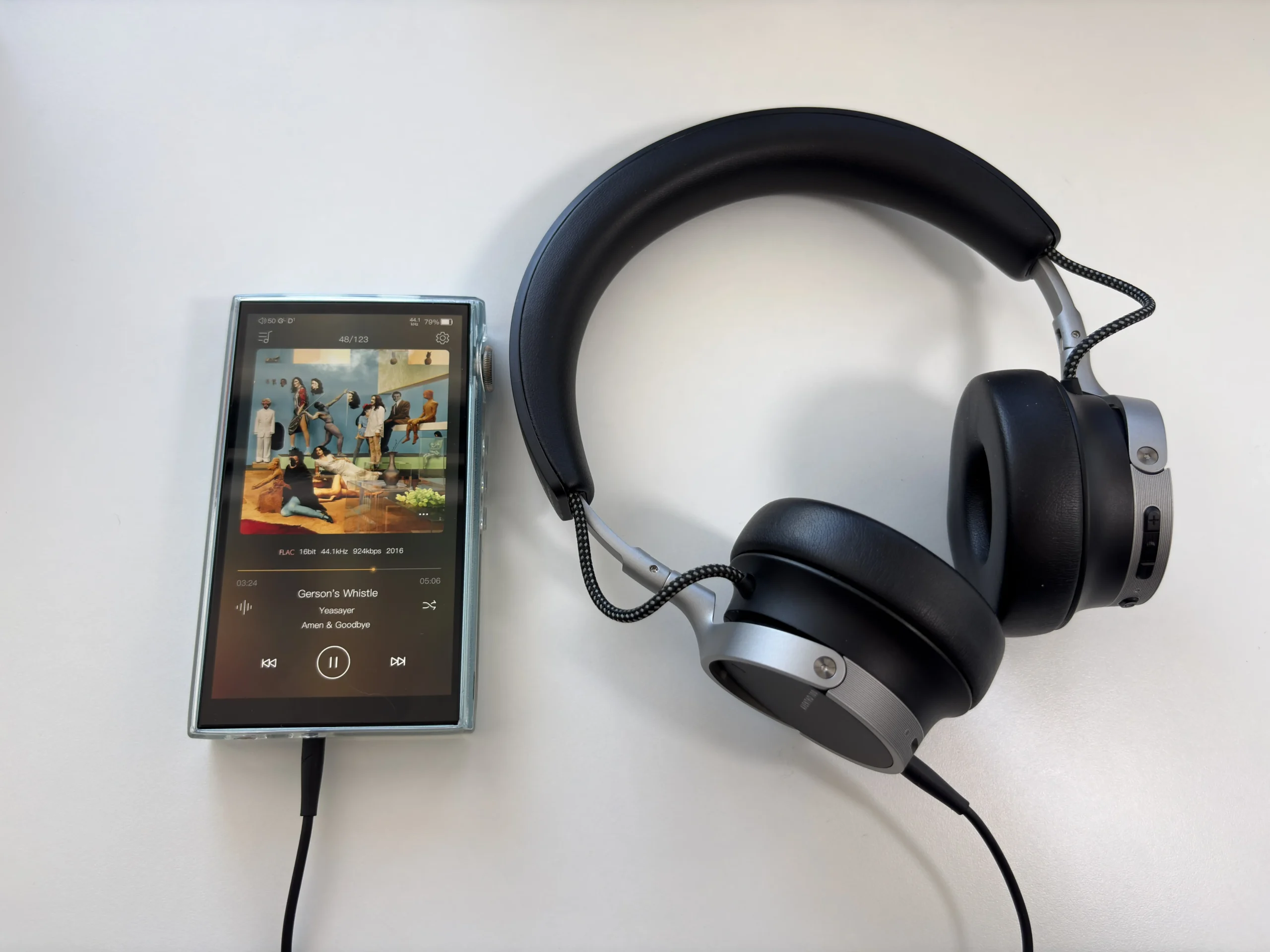
The beyerdynamic Aventho 100 Wireless is a compelling choice for those seeking an all-in-one on-ear headphone that doesn’t compromise on sound or features. After extensive hands-on use, it’s clear that beyerdynamic successfully blended its audio heritage with modern needs. The Aventho 100 offers a unique mix: a vintage-flavored design that’s also highly functional (foldable, durable, and comfortable), paired with thoroughly modern tech like ANC, transparency mode, cutting-edge Bluetooth codecs, and an excellent companion app.
In terms of strengths, the list is long. The sound quality is enjoyable and tailored for pleasure, with a lush bass, clear midrange, and smooth treble, making it great for casual listening across all genres. Yet it’s also versatile enough to tweak for more critical tastes using EQ. The battery life is class-leading, freeing you from constant charging. Usability features like physical controls, voice prompts, multipoint, and fast-pairing streamline daily use. And let’s not forget the style factor. The Aventho 100’s design manages to be both retro-chic and practical, which isn’t easy to pull off. You’re getting a premium build and look alongside the performance.
No product is perfect, so what are the weaknesses or caveats? First, while the ANC is good, it’s not the very best out there. Heavy travelers who demand absolute silence might find it falls short of top-tier over-ear ANC headphones. It’s effective for moderate noise, just not a magic bubble of silence. Second, the on-ear fit, by nature, can become uncomfortable for some (like me). Beyerdynamic tried to mitigate this with soft pads and a balanced clamp, but if you’re overly sensitive to this design, it won’t win you over. Lastly, the soundstage is on the intimate side, which is expected for an on-ear closed design.
Despite the comfort and design aspect not really being something that suits me well, I can admit that the beyerdynamic Aventho 100 shines as a well-rounded headphone. It delivers a satisfying user experience and offers an excellent and fun sound in a portable and stylish package. It’s especially appealing if you’re drawn to the on-ear form factor or the retro design, as there are few rivals that tick all these boxes. If this sounds like what you’re looking for, I highly recommend you check out the beyerdynamic Aventho 100.

Buy from Amazon: https://amzn.to/49NoyGD
Check other online stores: https://geni.us/VsHela
Buy directly from beyerdynamic: https://north-america.beyerdynamic.com/p/aventho-100
The above links may be affiliate links. All commission earned through them goes directly to maintaining this site and bringing you more audio reviews.
I’m not always able to cover all the details of a product, both hardware and software, in our reviews. If you have any specific questions about this product, please feel free to leave a comment or contact me directly.
Be sure to check out our excellent Buyer’s Guides, as well as our other Reviews.
HiFi Oasis Verdict
HiFi Oasis Verdict-
Design & Comfort7/10 Good
-
Sound8/10 Very good
-
Features/Accessories8/10 Very good
-
Value8/10 Very good
Pros
- Fun, impactful sound signature with deep, controlled bass and smooth treble
- Well-built, retro-modern design with premium materials and foldable portability
- Excellent battery life
- Strong Bluetooth feature set
- Effective ANC for everyday environments
- Easy to use companion app that is packed with features
- Works in passive wired mode without power
- IP53 rating for dust and splash resistance
- Helpful voice prompts for battery and mode confirmations
Cons
- Doesn't solve comfort issues of on-ear headphones (for those who are sensitive to it)
- ANC is good but not class-leading
- Soundstage is relatively narrow
- Clamping force may be too tight for glasses wearers or sensitive users


