


-80x80.jpg)


Disclosure: I’d like to thank OneOdio for providing me with the Fusion A70 GEN 2 for this review. All thoughts and opinions are my own, and OneOdio had no say or input on the contents of this review.
OneOdio has always occupied an interesting corner of the headphone market. Its products are usually affordable, practical, and designed to work across different use cases rather than doing only one thing. The new OneOdio Fusion A70 Gen 2 does not change the basic formula of having multiple connection options (3.5mm, 6.35mm, and Bluetooth). Instead, it modernizes it with Bluetooth 6.0 with LDAC, multipoint support, USB-C charging and companion-app support, a foldable design, rotating earcups, and a massive 72-hour battery rating.
At $59.99 USD, the feature list is honestly ridiculous (in a good way). Of course, that does not mean the Fusion A70 Gen 2 is secretly a flagship headphone. The construction is still mostly plastic, there is no active noise cancellation, and its default tuning is designed more for enjoyment than truly neutral studio monitoring. What OneOdio markets the Fusion A70 Gen 2 as is a flexible, comfortable, and enjoyable budget headphone that can move between wireless listening, gaming, DJ gear, and home audio setups with very little issue.
So, let’s see what to actually make of the OneOdio Fusion A70 Gen 2 headphone.
Key Specifications
- Product Page:https://www.oneodio.com/collections/fusion-series/products/oneodio-fusion-a70-gen-2-wireless-wired-hi-res-headphones
- MSRP: $59.99 USD
- Battery Capacity: 650mAh, up to 72 hours per charge
- Type: Closed-back over-ear
- Driver Type: 40mm Dynamic Driver
- Impedance: 32 ohms
- Sensitivity: 112dB ± 3dB
- Weight: 242g
- Connections: Bluetooth 6.0, 3.5mm wired connection, 6.35mm wired connection
- Codec support: SBC, AAC, LDAC
- Microphone: Yes
- Active Noise Cancellation (ANC): No
- Charging Method: USB-C
- Weather/Dust Resistance: No
In the Box
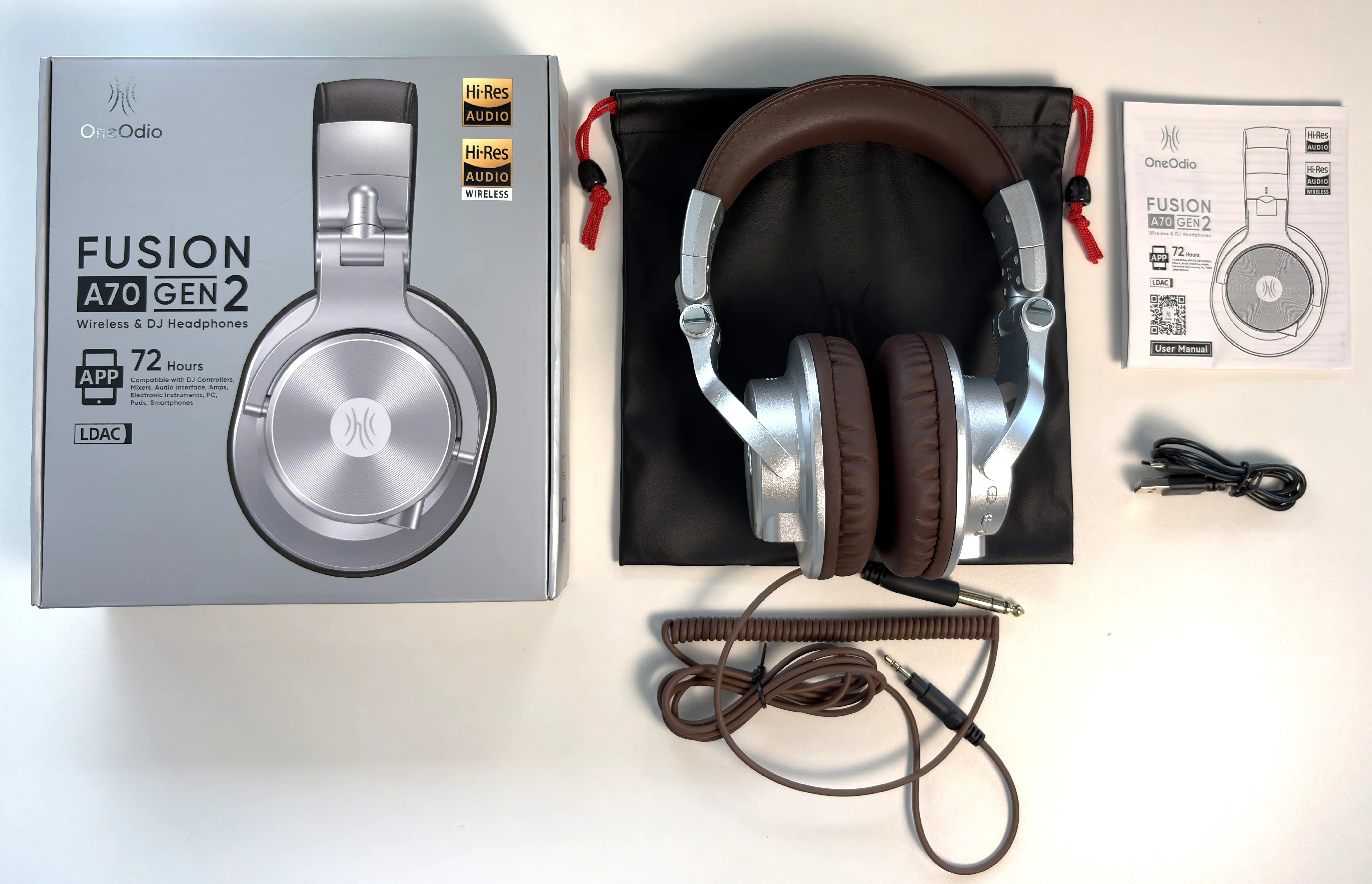
- OneOdio Studio Max 2 Wireless
- 6.25mm to 3.5mm coiled cable
- USB-C to USB-A cable
- Travel pouch
- Manual
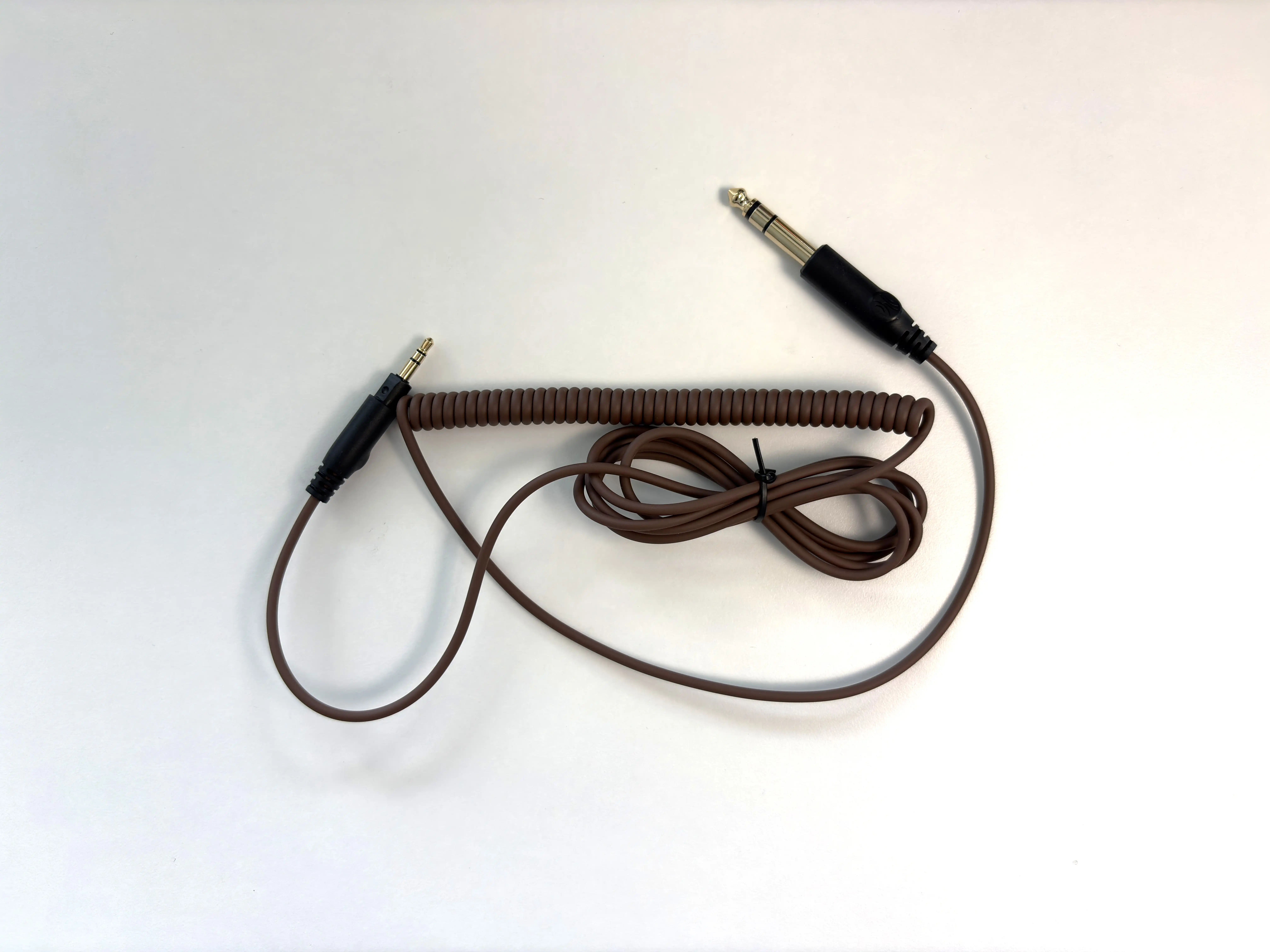
OneOdio has included the essentials, especially for anyone planning to use the A70 Gen 2 with an audio interface, mixer, keyboard, or headphone amplifier. The long coiled cable makes far more sense in those environments than a short portable cable, and the ability to connect directly to either a 3.5mm or full-size 6.35mm output means there is no adapter to lose while giving you enormous flexibility.
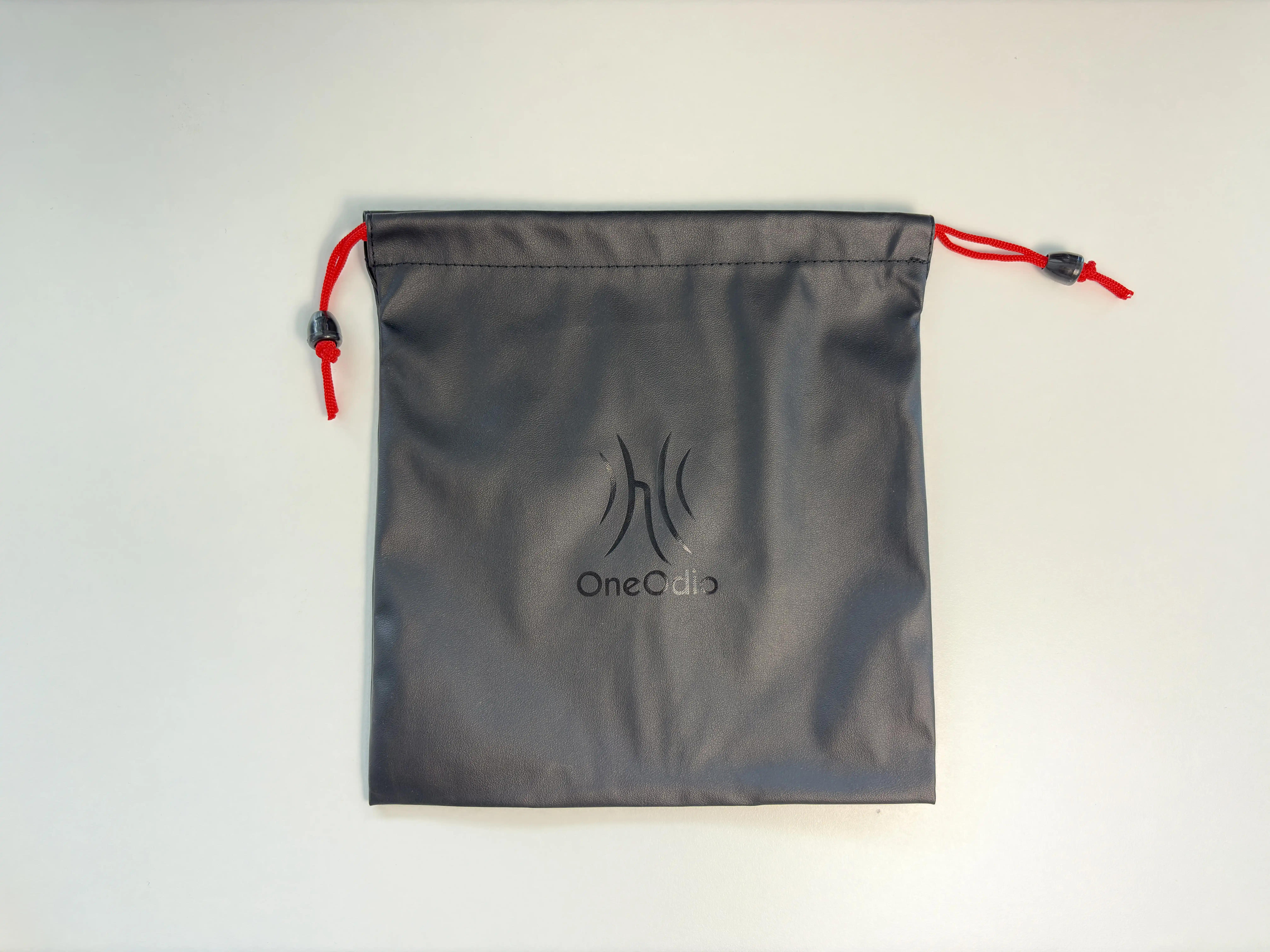
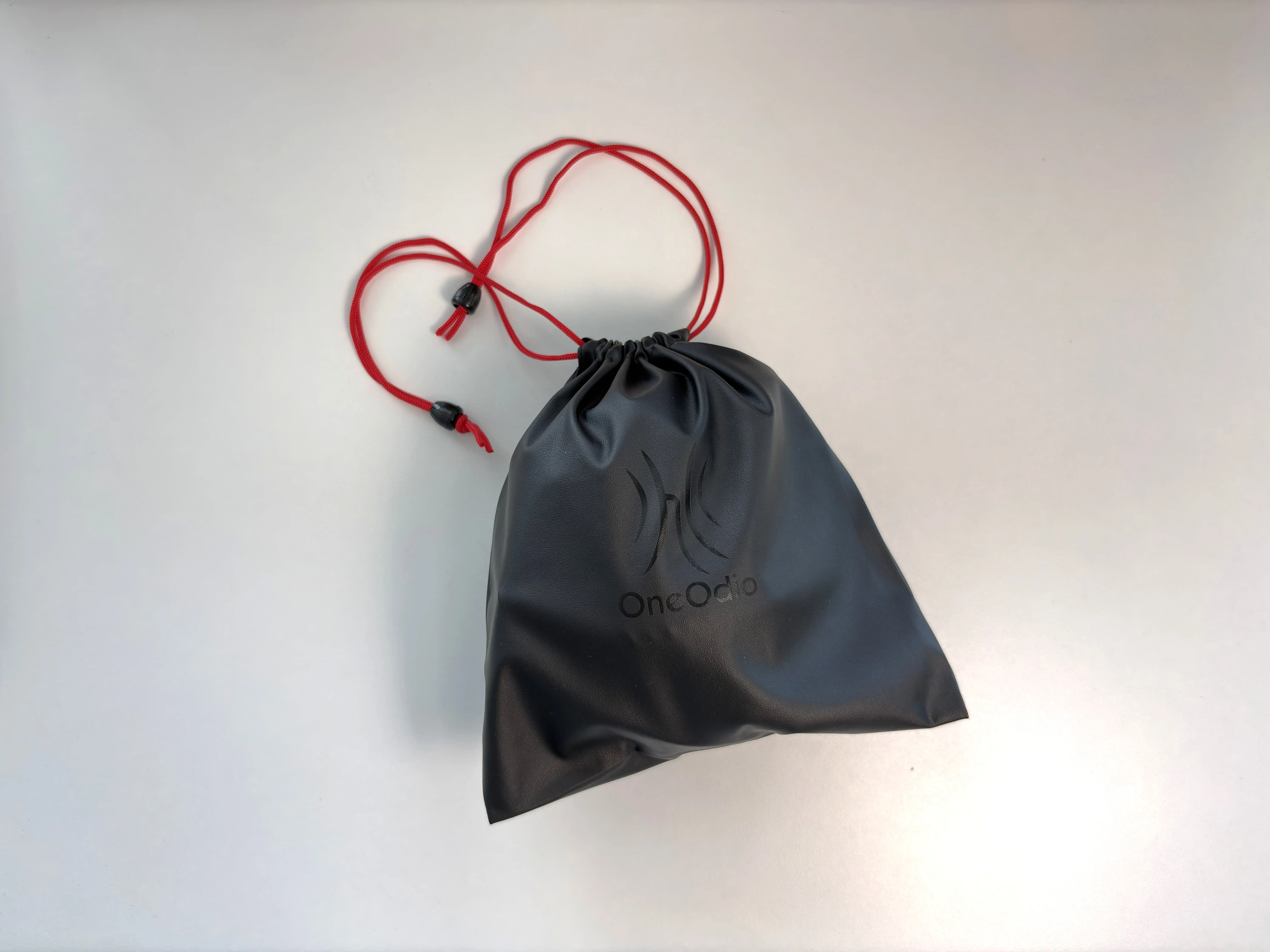


The soft plastic pouch will keep the headphones from getting scratched in a bag, but it does not offer much impact protection. At this price, I think this is acceptable, and I’m always happy when some sort of storage/travel solution is included.
Design & Comfort
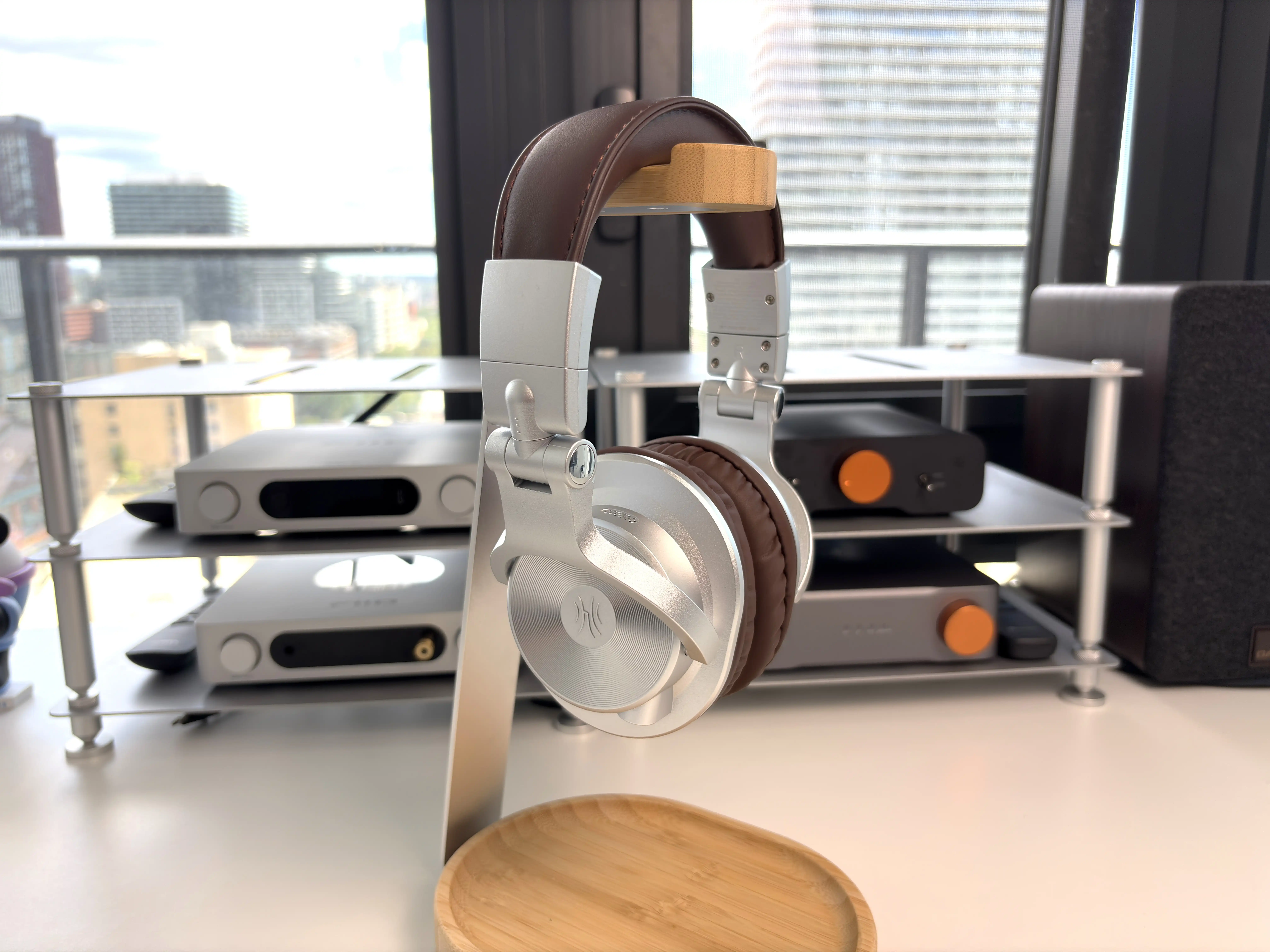
The Fusion A70 Gen 2 has a practical, and I would say slightly retro design. The circular detailing on the outer earcups and visible stitching across the headband give it more personality than a completely generic pair of budget headphones, but it still looks restrained enough for everyday use. The model I have is silver and brown, and the silver is very convincingly metallic until you actually touch it.
Most of the chassis is plastic, and that is one of the first reminders that this is a $60 headphone. It does not have the dense, premium feel of a more expensive wireless headphone, and the folding hinges are something I would handle with reasonable care. At the same time, the construction does not feel alarmingly fragile. The headband has internal metal reinforcement, the adjustment mechanism feels secure to use, and the lighter materials help keep the weight down to roughly 242 grams.

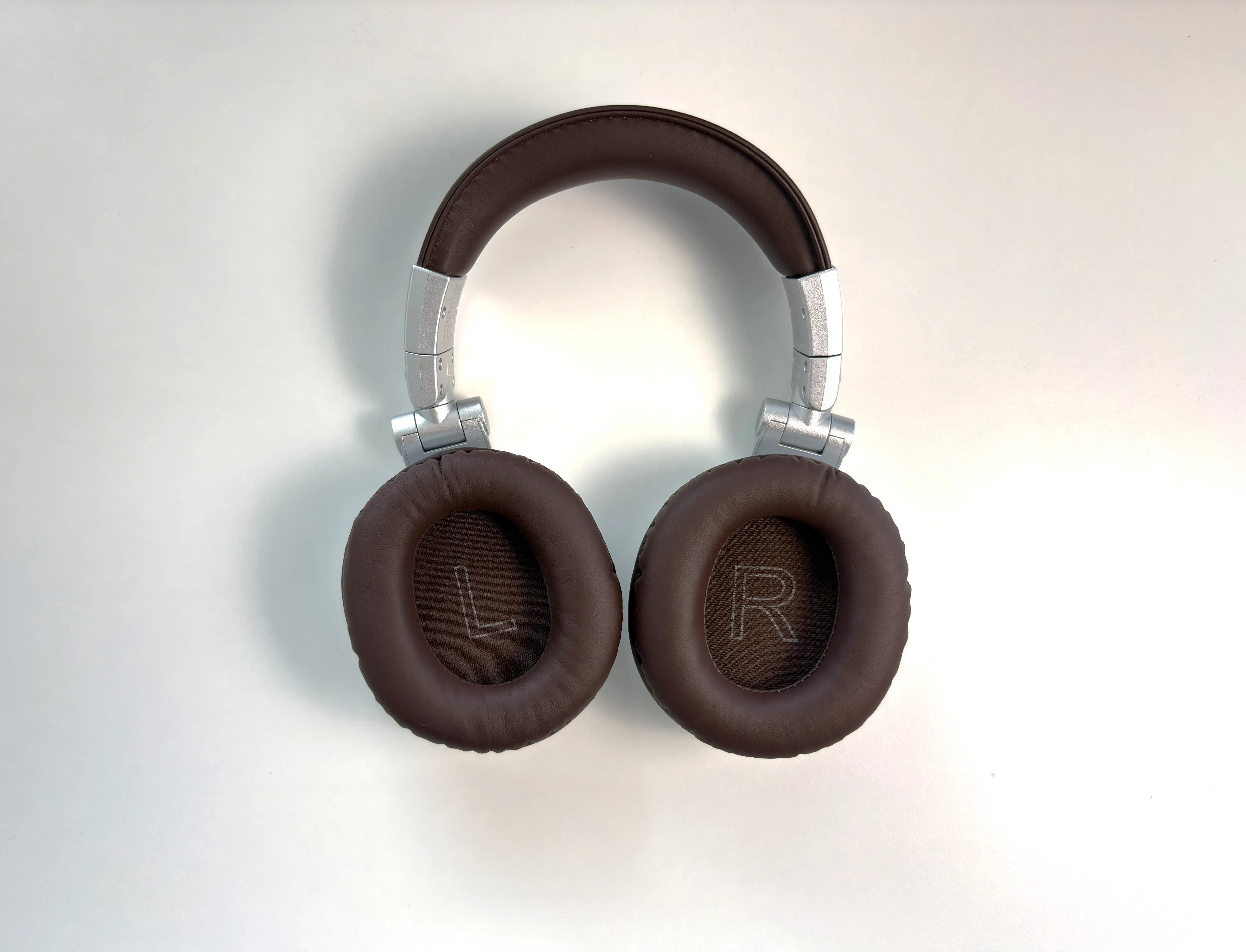
The low weight makes a real difference to comfort, though. The headband has enough padding to mostly avoid creating an obvious pressure point, while the memory-foam earpads distribute the clamping force evenly around the ears. The clamp is fairly relaxed, but the headphone still stays in place when moving around. After about 30 minutes or so, I do have to adjust the headband slightly as it starts to cause some discomfort on the very top of my head, but otherwise, these headphones are pretty comfortable.
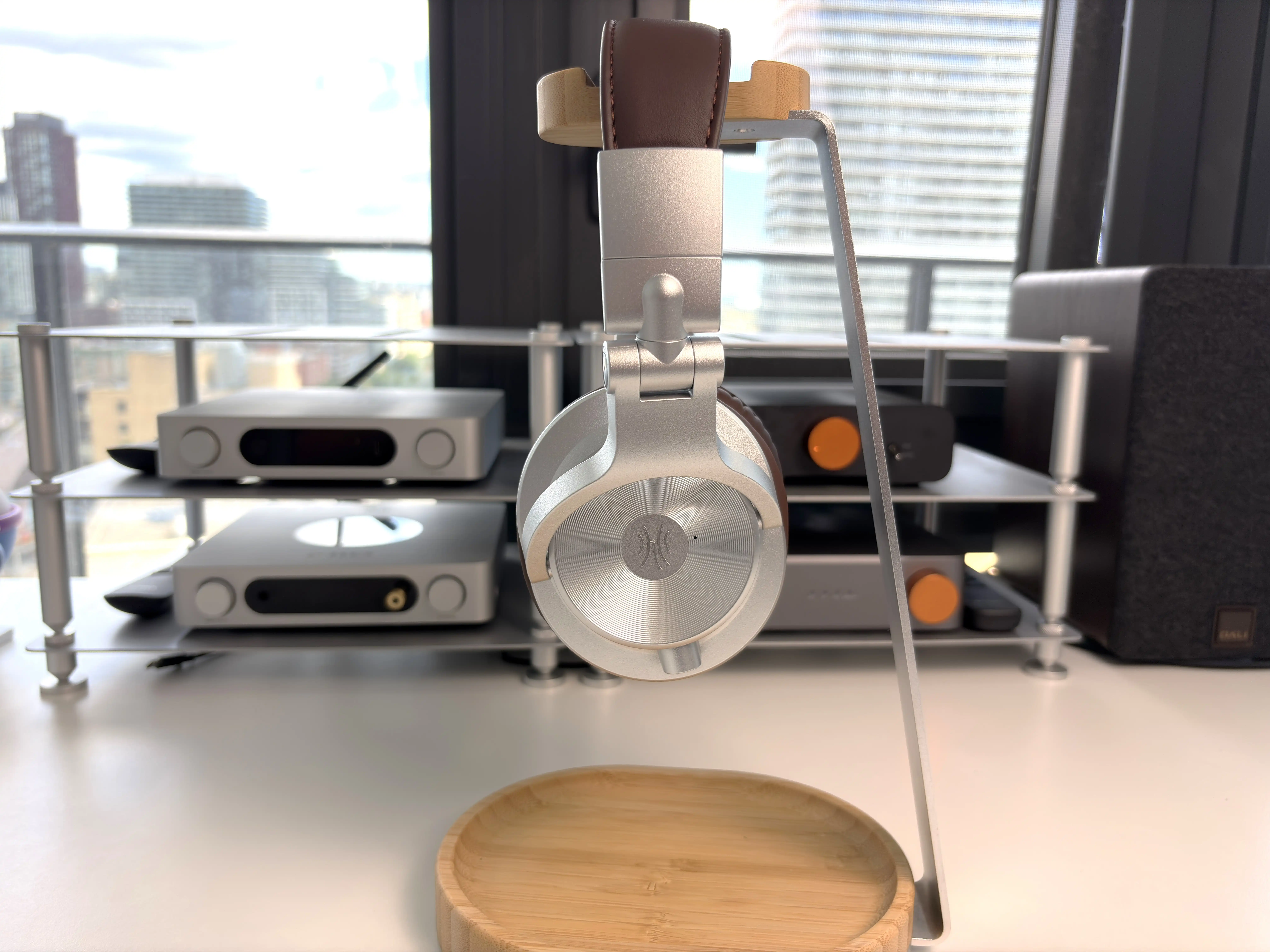
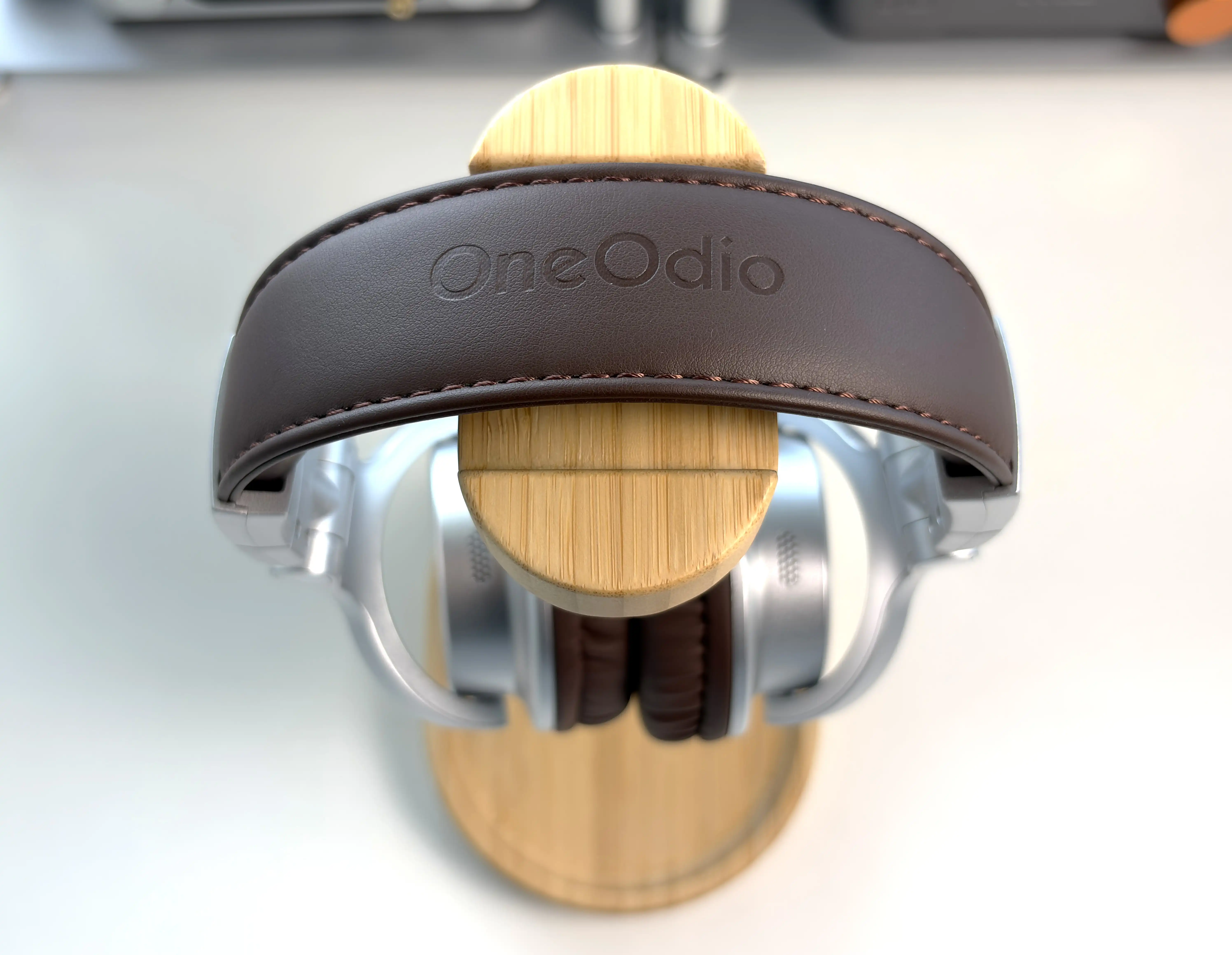


I was able to wear the A70 Gen 2 for multi-hour sessions without any major discomfort, while adjusting the headband position every once in a while, as mentioned. The main issue is heat. The synthetic-leather pads create a decent passive seal, but they do not breathe especially well, so my ears became warm during longer sessions. This is not unusual for a closed-back headphone at this price, but it is worth keeping in mind if you live in a warm climate or plan to wear it for an entire workday.85
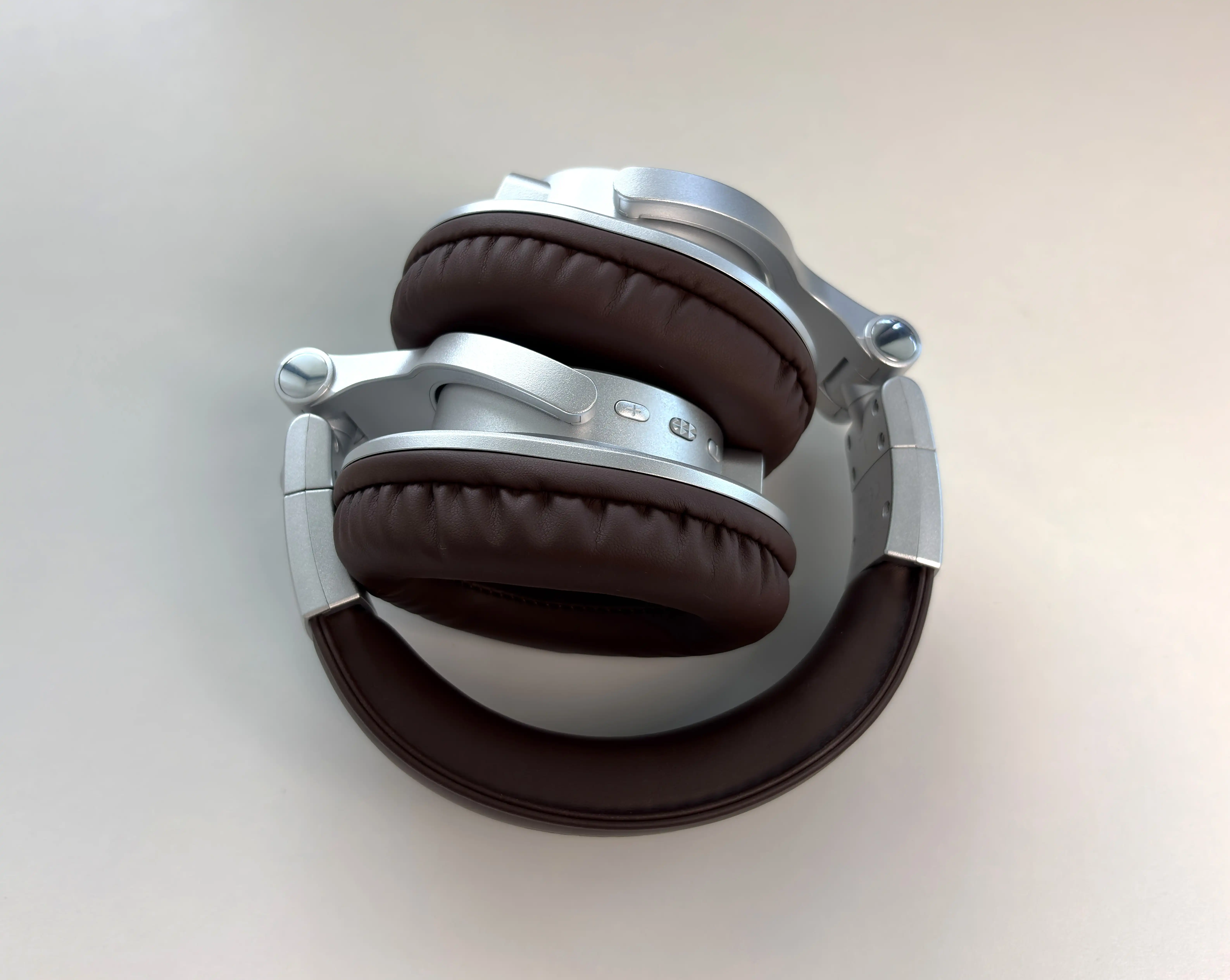
The earcups rotate 90 degrees for single-ear monitoring and fold inward for storage. That flexibility is genuinely useful for DJs, but it also makes the A70 Gen 2 easier to throw into a backpack. It is not a particularly small headphone when worn, yet it becomes reasonably compact when folded.
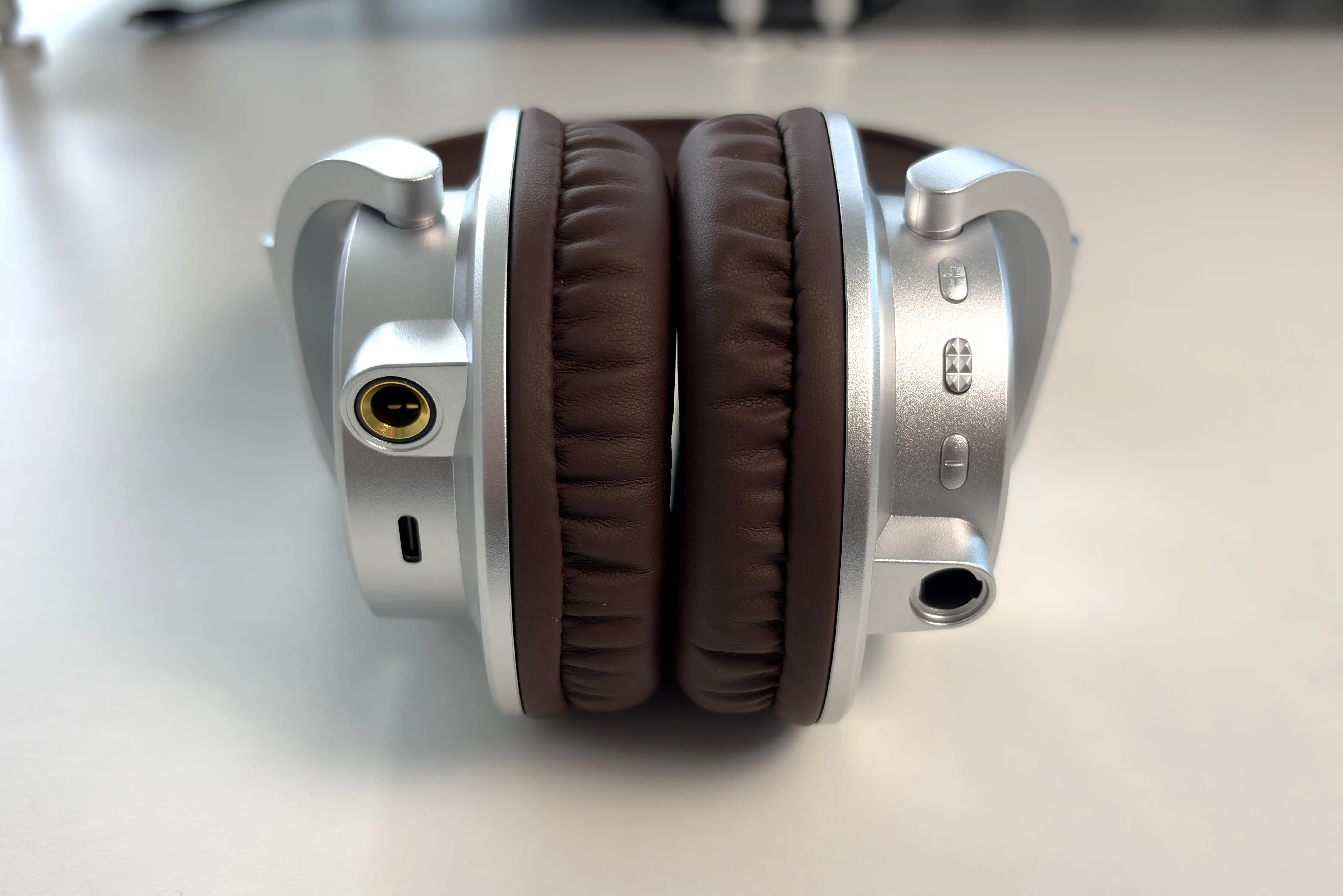
OneOdio uses physical buttons instead of touch controls, which I appreciate. The controls are grouped around the right earcup and cover power, pairing, playback, volume, and track navigation. They are easy enough to locate by feel after a little use, and physical controls are much less prone to accidental inputs when adjusting the headphones.
Companion App
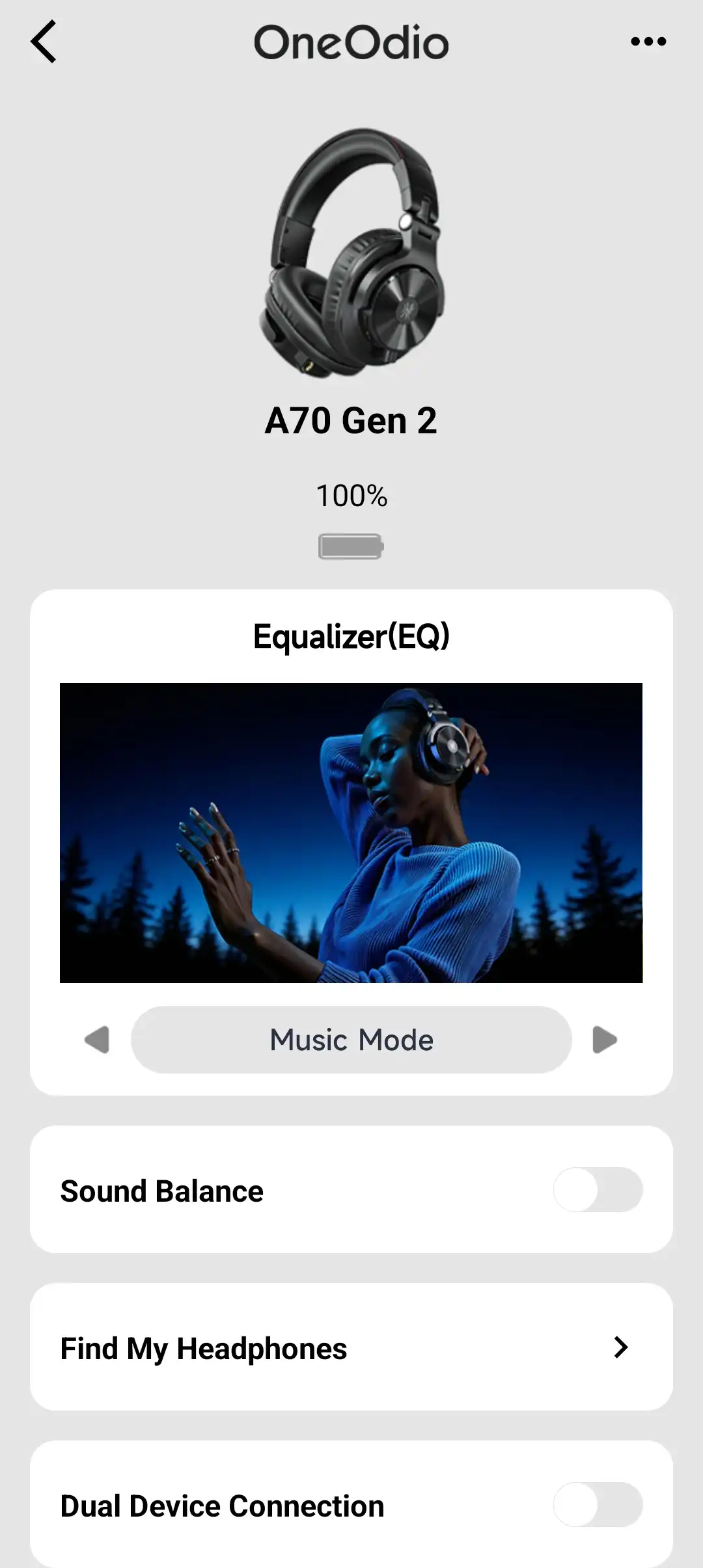
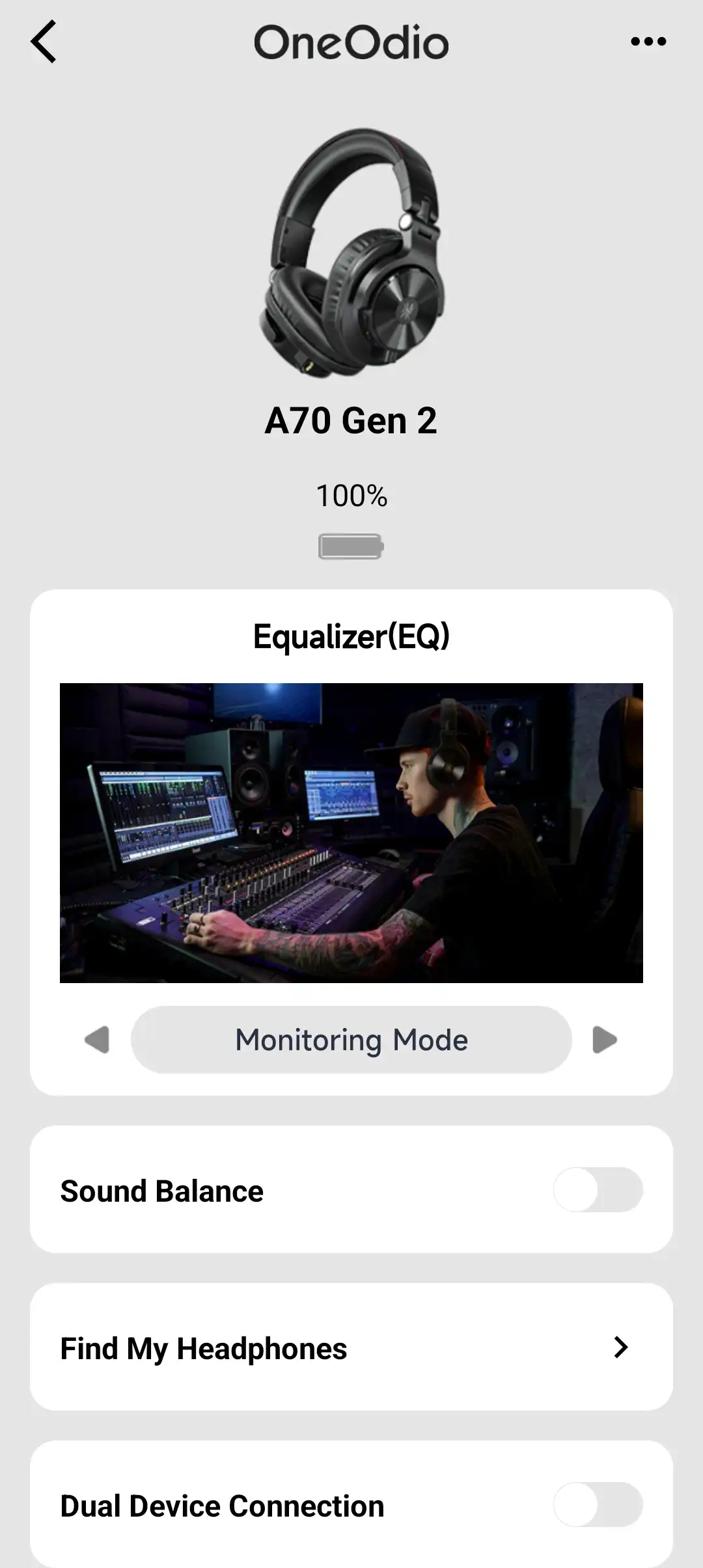
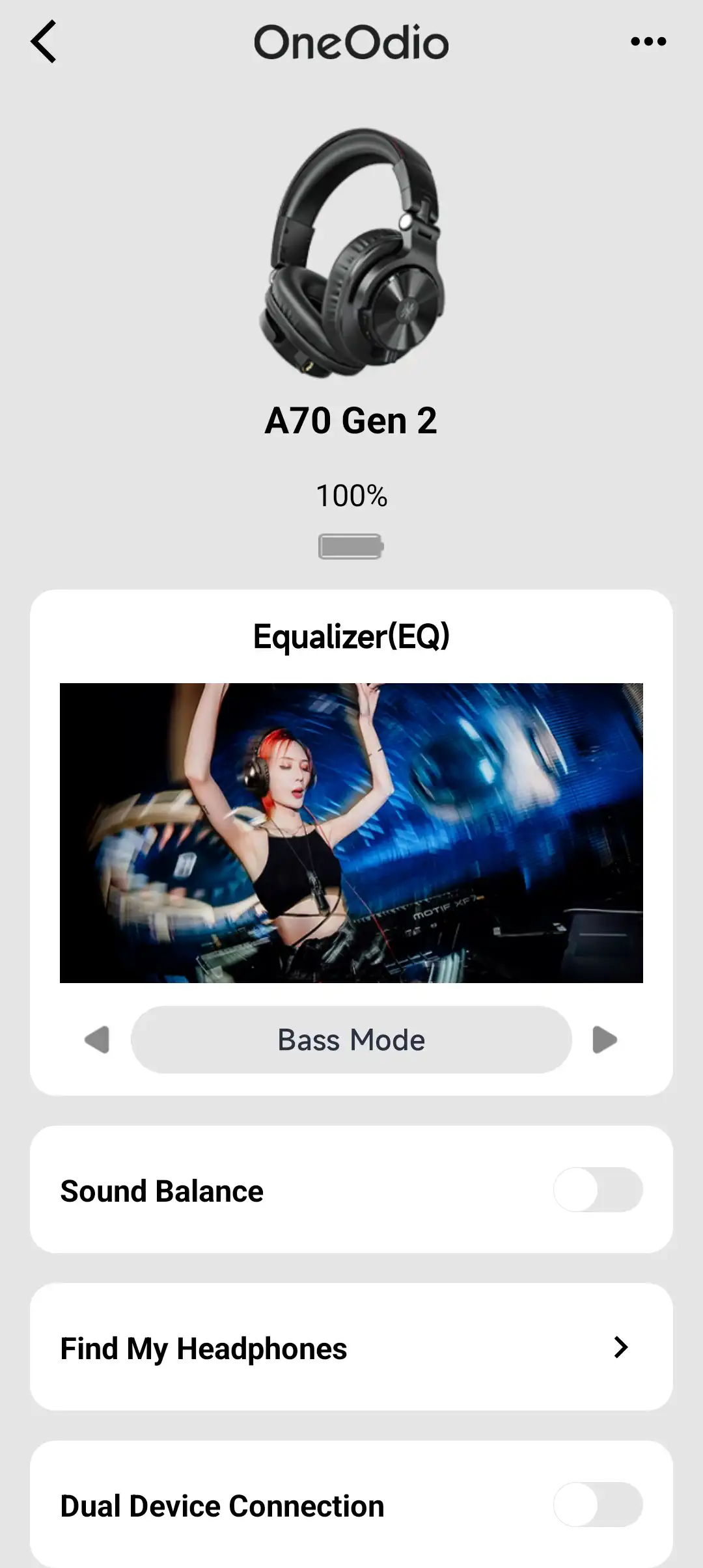
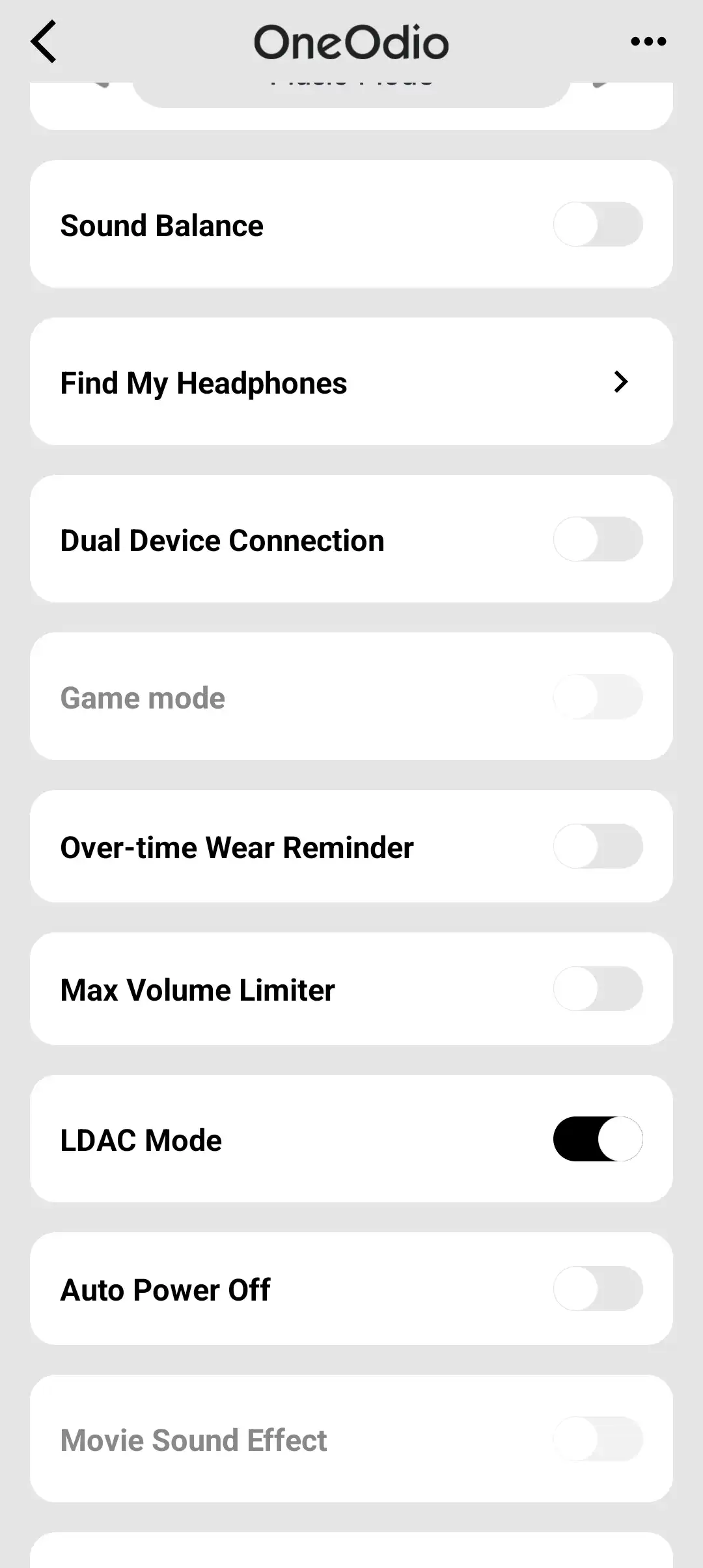
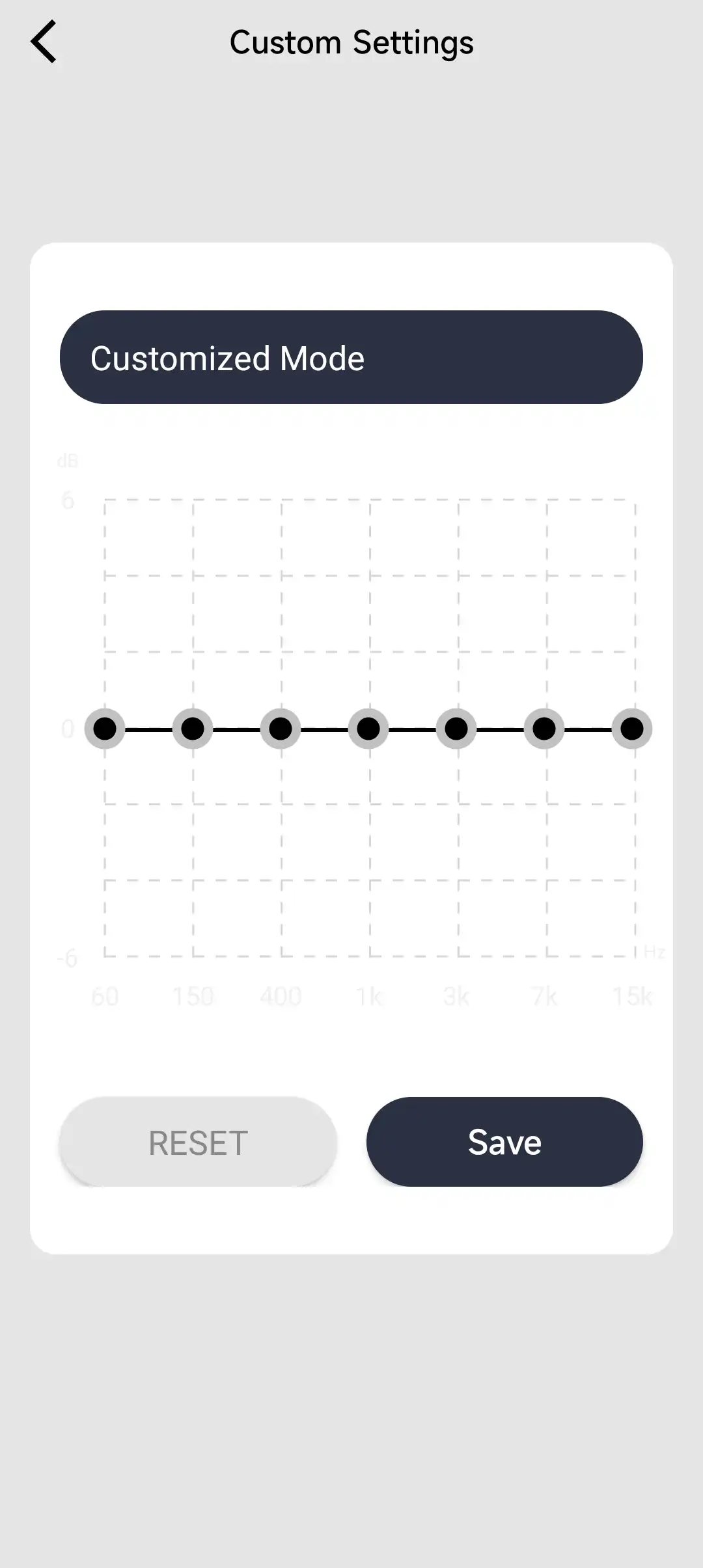
App support is another meaningful Gen 2 upgrade. The OneOdio app is relatively simple, but it provides preset sound profiles, a customizable graphic EQ, and access to options such as gaming mode.
The custom EQ is the most useful feature. The default tuning is still fairly bass-forward, and being able to reduce the low end or bring the midrange forward makes the A70 Gen 2 suitable for a much wider range of preferences. OneOdio also includes profiles intended for more casual listening and monitoring, so you do not need to build an EQ curve from scratch.
The app is functional rather than luxurious. It does not feel as polished or comprehensive as the software supplied with premium headphones, but it connects reliably and exposes the settings that actually matter the most. At this price, having any useful app-based sound customization is a major advantage.
As expected, the app and its EQ apply to Bluetooth playback. When the A70 Gen 2 is used passively with an analog cable, you are listening to the headphones without the Bluetooth-side processing. Here are some screenshots of the app:





Battery Performance
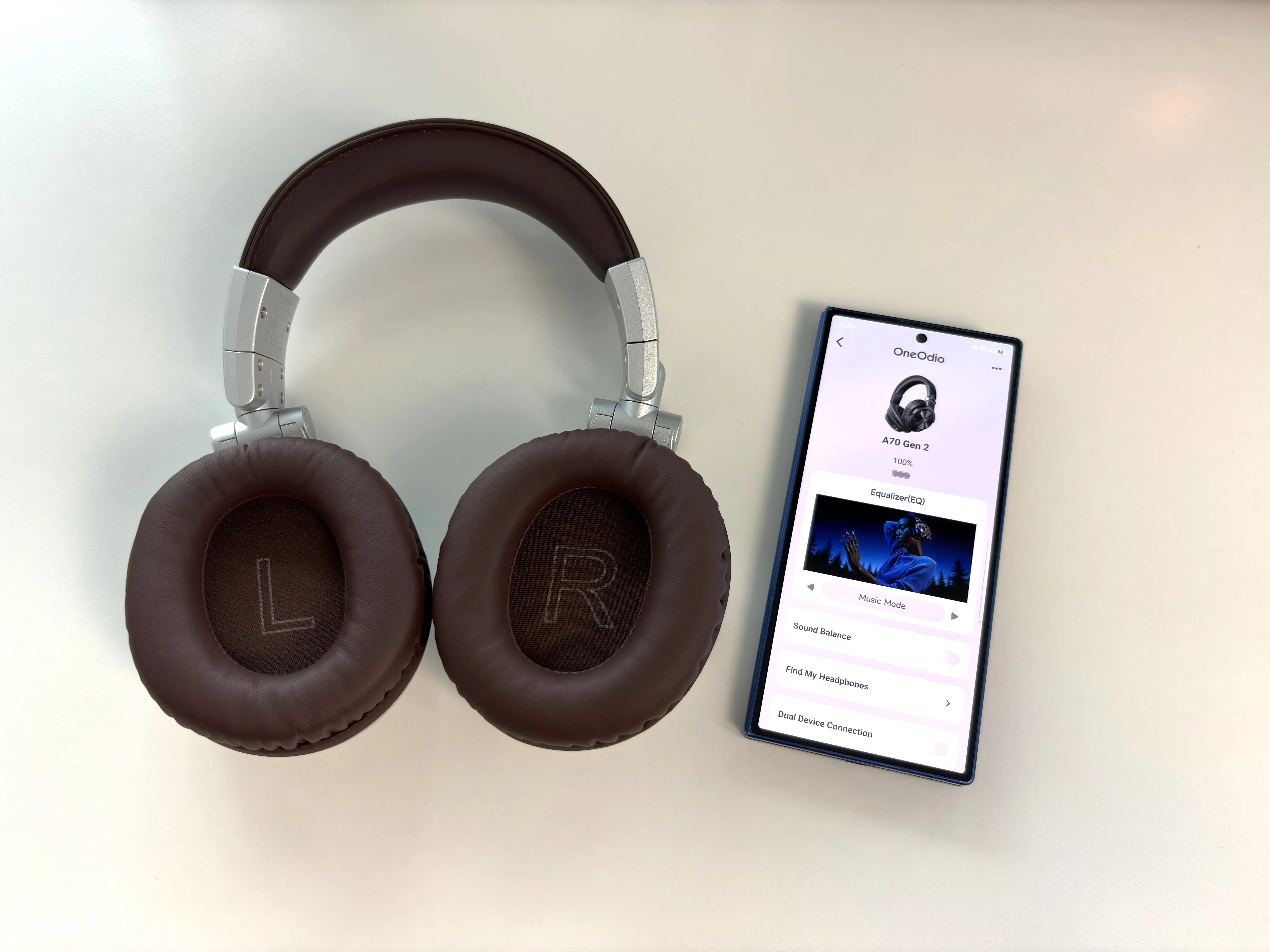
OneOdio rates the Fusion A70 Gen 2 for up to 72 hours of wireless playback from its 650mAh battery. Actual runtime will vary with volume, codec, and connection settings, but the battery reserve is large enough that charging becomes an occasional task rather than part of the daily routine.
Using the AAC codec, I was able to get very close to the 72-hour runtime at about 70.5 hours. When using LDAC, battery life is around 60 hours, which is still pretty good, to be honest.
A full charge takes approximately two hours over USB-C. There are premium headphones with similarly long endurance, but very few products near $60 combine this kind of battery life with LDAC, multipoint, and passive wired operation. Battery life is easily one of the A70 Gen 2’s strongest features if you plan on using Bluetooth.
Bluetooth Performance
The Bluetooth pairing is straightforward, and multipoint support allows the A70 Gen 2 to remain connected to two devices at once. This is useful if you regularly move between a phone and laptop, although playback handoff was not always as immediate as I expected. Connection stability is strong at normal indoor distances, and I did not experience any dropouts during everyday use.
LDAC is one of the biggest upgrades here. When connected to a compatible Android device or digital audio player, it gives the A70 Gen 2 access to a higher-bitrate Bluetooth connection than SBC or AAC. iPhone users are limited to AAC, which still works perfectly well, but Android and DAP users get the better codec option.
It is important not to read too much into the Bluetooth 6.0 label, though. A newer Bluetooth version does not automatically guarantee lower latency or better sound. The OneOdio app includes a gaming mode that helps with video and casual gaming, but I would still use a wired connection for competitive gaming, DJ cueing or any other task where timing needs to be exact.
Wired Connectivity

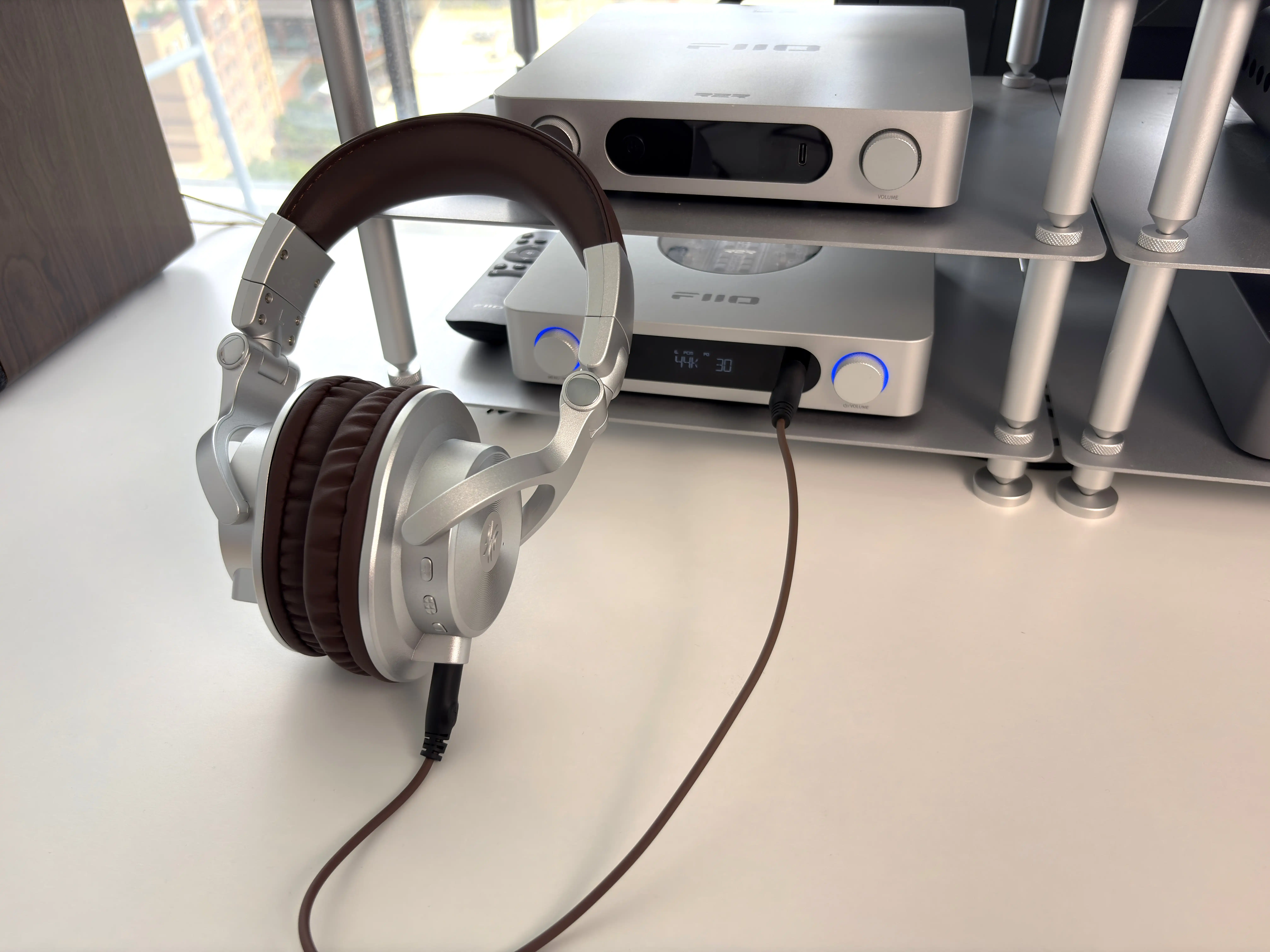
Wired connectivity is not an afterthought here. The 32-ohm impedance and high sensitivity make the A70 Gen 2 easy to drive from almost anything, while the 6.35mm input allows it to connect directly to equipment that would normally require an adapter.
The wired presentation keeps the same generally warm character, but removing Bluetooth latency makes it the better option for gaming, instrument practice, DJ work, and video editing. It also keeps the headphone usable when the battery is empty.
You do lose the app-based EQ and wireless features in passive mode, so the stock acoustic tuning matters more. For casual listening, I prefer the convenience and adjustability of LDAC. For anything timing-sensitive, the wired connection is the obvious choice.
Sound Quality
Main sources used for this review:
- FiiO K13 R2R (6.35mm)
- Microsoft Surface Laptop 7 (AAC)
- Samsung Galaxy Fold 7 (LDAC)
- Shanling M3 Plus Master (3.5mm)
Links to my music playlist used for the majority of testing:
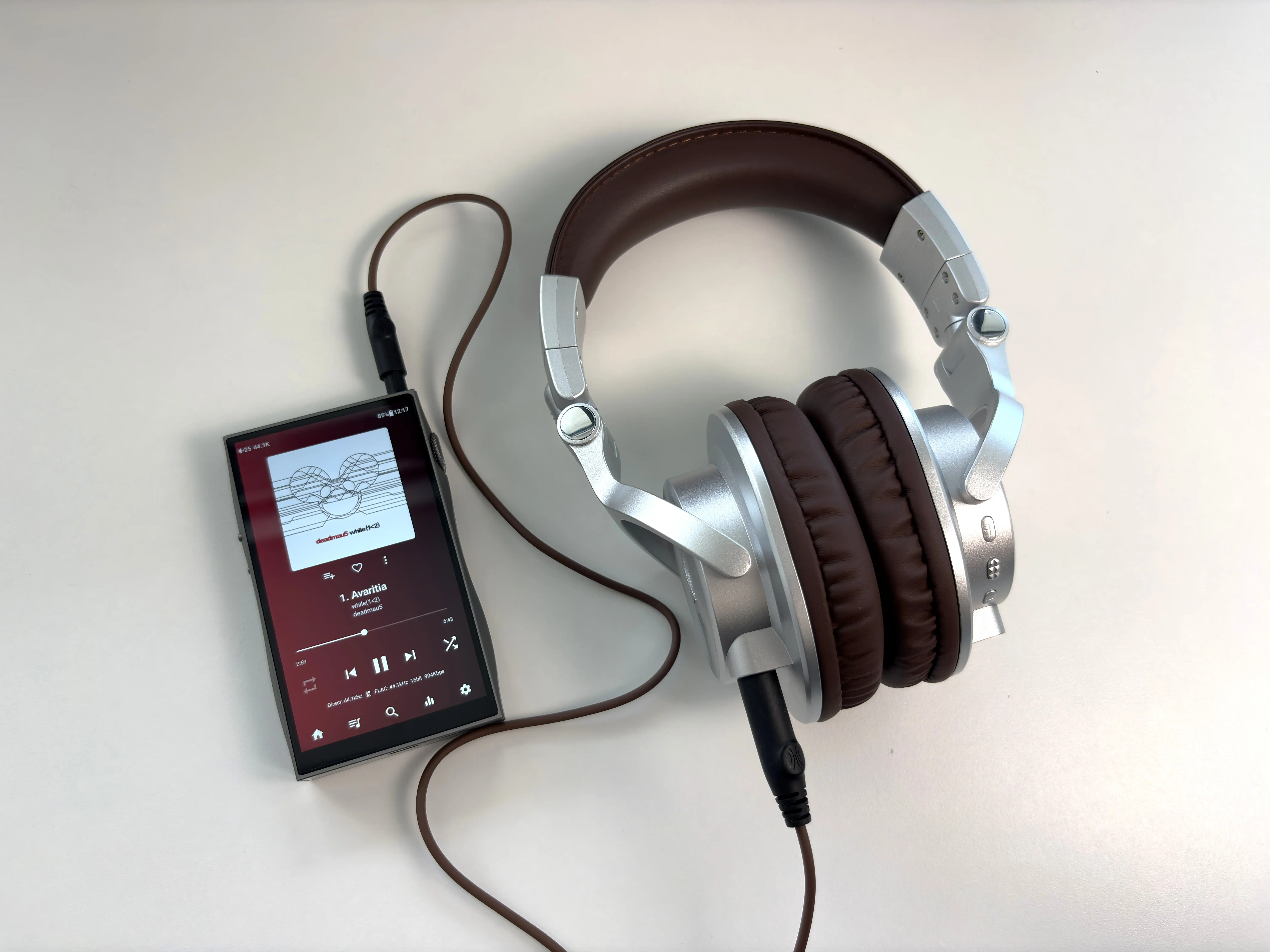
For sound testing, I used the A70 Gen 2 over LDAC and AAC, as well as through its analog inputs. Unless otherwise stated, my comments refer to the stock sound profile without any custom EQ.
The easiest way to describe the sound of the Fusion A70 Gen 2 is that is has a warm, punchy, and forgiving signature. OneOdio has reportedly reduced the overly boomy character of the original A70. I have not personally heard the original, but the Gen 2 does sound clean and controlled. It is still not a neutral studio-monitoring headphone, despite some of the marketing language. The bass remains slightly elevated, the midrange leans more towards relaxed, and the treble is tuned to avoid sharpness.
That presentation works well for modern pop, hip-hop, electronic music, rock, movies, and gaming. It gives music a satisfying sense of weight and rarely becomes fatiguing. The trade-off is that it does not retrieve fine detail or separate complex arrangements as well as a good wired audiophile headphone.
For $59.99, that is a reasonable compromise. The A70 Gen 2 is tuned to be enjoyable first, and the companion EQ provides a straightforward way to move it closer to neutral if that is what you prefer.
Bass
Bass is the most unexpected aspect of the A70 Gen 2’s sound for me. Having heard a few OneOdio products already, I fully expected to be complaining about a boomy or exaggerated bass. This turned out not to be the case. There is good extension into the sub-bass, along with a broad mid-bass emphasis that gives kick drums, bass guitars and electronic beats plenty of physical weight.
But the low end is more controlled than I expected, and I almost wish there was a bit more impact. It can hit hard without immediately turning every track into a muddy mess, and there is enough texture to follow bass lines in simpler arrangements. On busier tracks, though, the upper bass can still add warmth to the lower midrange and make the presentation feel a little congested, but you are mostly hearing this area of the bass rather than feeling it.
Listeners who enjoy a restrained low end will probably be happy with the stock tuning. If you prefer a more impactful presentation, increasing the bass by a few decibels in the app can help with this.
Midrange
The midrange is smooth and full-bodied, but it sits slightly behind the bass. Male vocals have good weight, and guitars sound substantial, while female vocals remain clear without becoming shouty. The A70 Gen 2 avoids the hollow, scooped sound that some aggressively V-shaped budget headphones have, although voices are not especially forward.
Clarity is good for the price, particularly over LDAC or a wired source. Acoustic instruments have a believable tone, and dialogue is easy to follow in movies and games. When several instruments occupy the same part of the mix, separation becomes less convincing, and some smaller details tend to blend together.
The monitoring-oriented preset or a mild reduction to the bass helps bring vocals and instruments forward. I would not use the A70 Gen 2 as my first choice for making critical mix decisions, but it is perfectly capable for practice, editing, casual recording, and general content creation.
Treble
Treble is smooth and fairly relaxed. There is enough energy to give cymbals, strings, and vocal overtones some presence, but OneOdio has clearly prioritized comfort over maximum brightness or detail.
That makes the A70 Gen 2 forgiving with compressed music, streaming video and less-than-perfect recordings. I did not find it aggressively sharp or fatiguing, which is a positive for long listening sessions. The downside is that the upper treble lacks air and sparkle, so the presentation can sound slightly closed-in.
If you want more treble energy, the app’s EQ can add some brightness, although pushing it too far exposes the limits of the driver fairly quickly, in my opinion.
Soundstage & Imaging
Soundstage is better than expected for an inexpensive closed-back headphone. The presentation extends beyond the centre of the head and avoids feeling completely boxed in, giving games, live recordings and movie soundtracks a useful sense of space.
Imaging is also competent. Directional effects are placed clearly enough for casual gaming, and instruments occupy recognizable positions across the stereo field. Depth and layering are more limited, especially when a track becomes dense, so this is not going to replace a good open-back headphone for competitive gaming or critical monitoring.
Still, the A70 Gen 2 sounds larger and more organized than its price suggests. The independent acoustic chamber may be partly responsible, but regardless of the marketing explanation, the result is one of the better aspects of its sound.
Microphone Performance
The built-in microphone is suitable for short calls in a quiet indoor space. Voices come through clearly enough to understand, and it is convenient to have a microphone built into a headphone that can also be used for work and gaming.
Background-noise reduction is very limited, though. Keyboard noise, nearby conversations, and street sounds can still reach the other person, and voice quality is thinner than what you would get from a dedicated boom microphone. It is useful for everyday communication, but I would not choose it for recording, streaming, or frequent calls in noisy environments.
Final Thoughts
The OneOdio Fusion A70 Gen 2 succeeds because it understands what a budget headphone should prioritize. It is not trying to compete with premium ANC headphones on materials, noise cancellation, or microphone quality. Instead, it gives you an unusually flexible set of listening options for $59.99.
The 72-hour battery life is excellent, LDAC and app-based EQ make wireless listening far more capable than it was on the original model, and the dual 3.5mm and 6.35mm connections are genuinely useful for DJs, musicians and creators. It is also lightweight, comfortable and able to continue working passively when the battery is empty.
There are still obvious compromises. The plastic construction feels inexpensive, the synthetic pads become warm, and the default sound is too V-shaped to be considered neutral. And again, I never thought I’d say this about a OneOdio product, but I wish the bass had just a little more impact (although the Studio Max 2 exists and pretty much gives me what I want).
The phrase “jack of all trades, master of none” comes to mind to me for the Fusion A70 Gen 2, but not in a bad way. As a complete package, it offers a lot for very little money, and generally does those things well. It sounds engaging, the app makes the tuning easy to adjust, and it can connect to almost anything without requiring a collection of adapters. If you want one affordable headphone for music, casual gaming, home-studio use, and occasional DJ monitoring, the OneOdio Fusion A70 Gen 2 is very easy for me to recommend.

Purchase Links
Buy from Amazon: https://amzn.to/4gWCu4x
Buy from OneOdio: https://www.oneodio.com/collections/fusion-series/products/oneodio-fusion-a70-gen-2-wireless-wired-hi-res-headphones
I’m not always able to cover all the details of a product, both hardware and software, in my reviews. If you have any specific questions about this product, please feel free to leave a comment or contact me directly.
Be sure to check out our excellent Buyer’s Guides, as well as our other Reviews.
HiFi Oasis Verdict
HiFi Oasis Verdict-
Design & Comfort7/10 Good
-
Sound7/10 Good
-
Features/Accessories7/10 Good
-
Value8/10 Very good
Pros
- Enjoyable, controlled sound
- Good soundstage for the price
- Comfortable, lightweight design
- Excellent battery life
- LDAC + multipoint Bluetooth
- 3.5mm and 6.35mm wired support
- Useful app with customizable EQ
- Excellent overall value
Cons
- Earpads get warm over time
- Stock tuning is not neutral
- Limited detail and layering
- Mediocre microphone


