


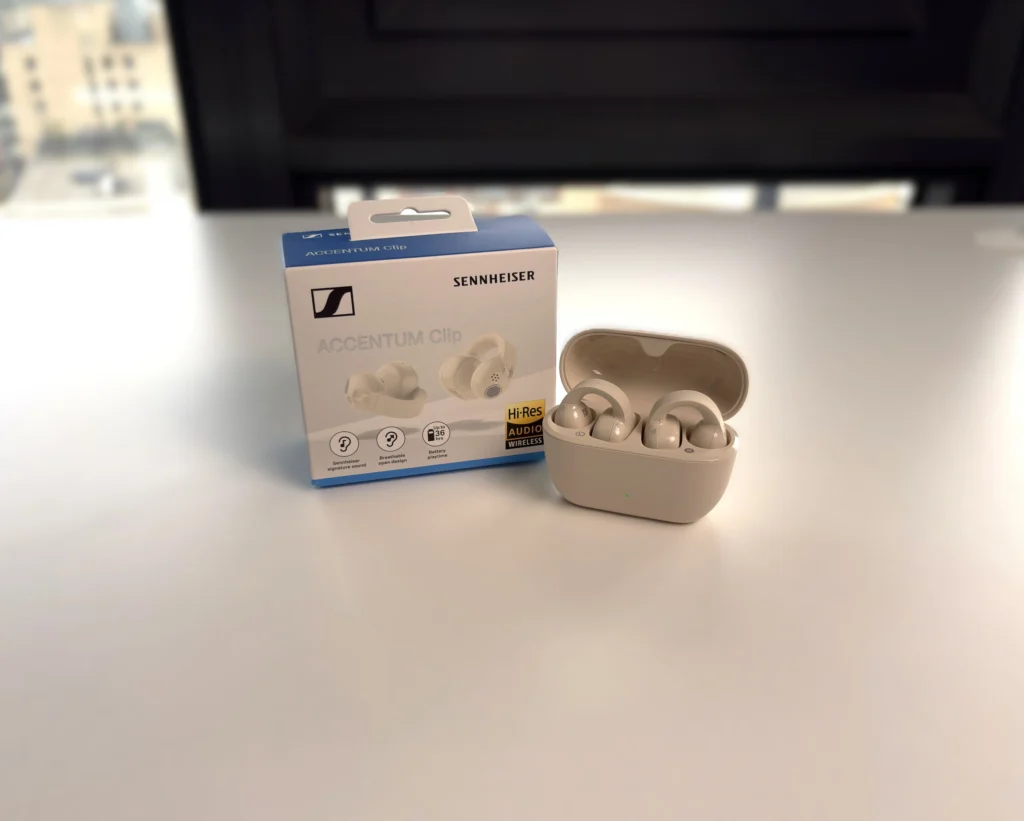


Disclosure: I’d like to thank Sennheiser for providing me with the ACCENTUM Clip for this review. All thoughts and opinions are my own, and Sennheiser had no say or input on the contents of this review.
Open-ear earbuds have become much more common over the last year or two, and the clip-on models are quickly becoming one of the most popular versions of this concept. Instead of placing a speaker inside your ear canal or wrapping a hook over the top of the ear, they balance a small speaker directly in front of the ear with a battery and Bluetooth module behind it.
The appeal is pretty easy to see. Your ears remain open, you can hear what is happening around you, and there is no silicone eartip creating pressure inside the ear canal, which makes it ideal for those who have sensitivity issues when inserting things into their ears. The compromise is that bass, volume, and overall tonal balance become much more dependent on fit, while outside noise is free to compete with whatever you are listening to.
The ACCENTUM Clip is Sennheiser’s attempt to make that compromise feel more premium. It uses a 12mm dynamic driver, automatic Dynamic EQ, packs in Bluetooth 6.0 with LDAC support and multipoint connectivity, and uses the same Smart Control Plus app that is used by Sennheiser’s other consumer headphones and earbuds.
At $269.95 CAD, however, these are not casual impulse-buy open-ear earbuds. They cost nearly four times as much as something like the SOUNDPEATS UU2, another Bluetooth 6.0 clip-on model with LDAC and a 12mm driver. That means the ACCENTUM Clip needs to offer more than a recognizable logo and a polished app. Interestingly, these clip-on earbuds are currently not available in the USA, so keep that in mind.
So, let’s get into the review and see if the Sennheiser ACCENTUM Clip does enough to justify its premium price.
Key Specifications
- Product Page: https://ca.sennheiser-hearing.com/products/accentum-clip?variant=56542944624806
- MSRP: $269.95 CAD
- Battery Life: Up to 9 hours per charge and 36 hours total with the charging case
- Battery Capacity: 49mAh for the earbuds, 545mAh for the charging case
- Type: Open-ear clip-on true wireless earbuds
- Driver Type: 12mm dynamic driver
- Weight: 6.8g per earbud, 57g with charging case
- Connections: Bluetooth 6.0
- Codec support: SBC, AAC, LDAC
- Microphone: Yes, 2 MEMS microphones per earbud with AI noise reduction
- Active Noise Cancellation (ANC): No
- Charging Method: Charging case, USB-C for the charging case
- Weather/Dust Resistance: IP54 (splash resistant) – earbuds only
In the Box
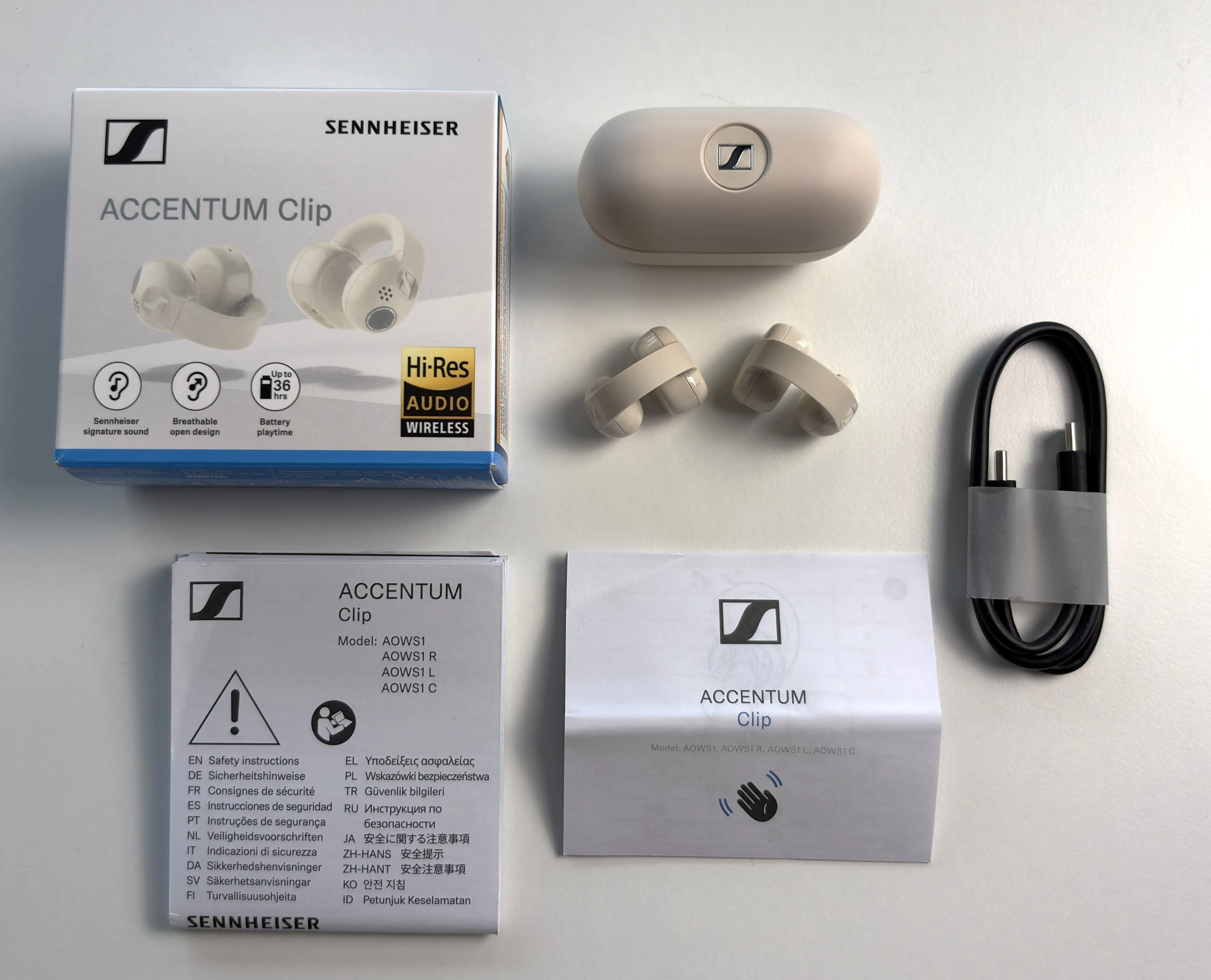
- Sennheiser ACCENTUM Clip earbuds
- Charging case
- USB-C to USB-C charging cable
- Documentation
There are no fit accessories to include because nothing is inserted into the ear canal. The package is simple, but it contains everything required other than a USB power brick.
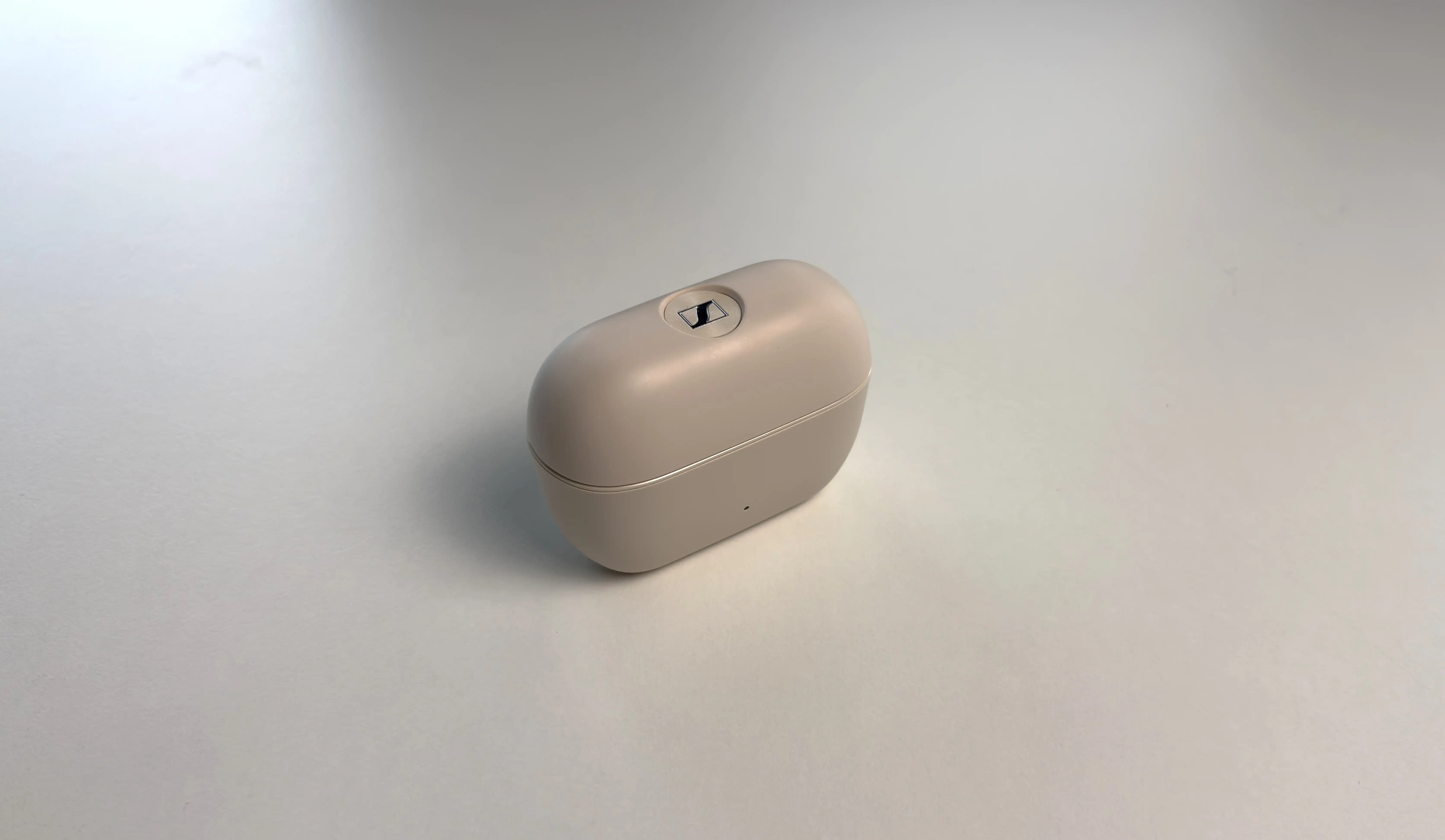
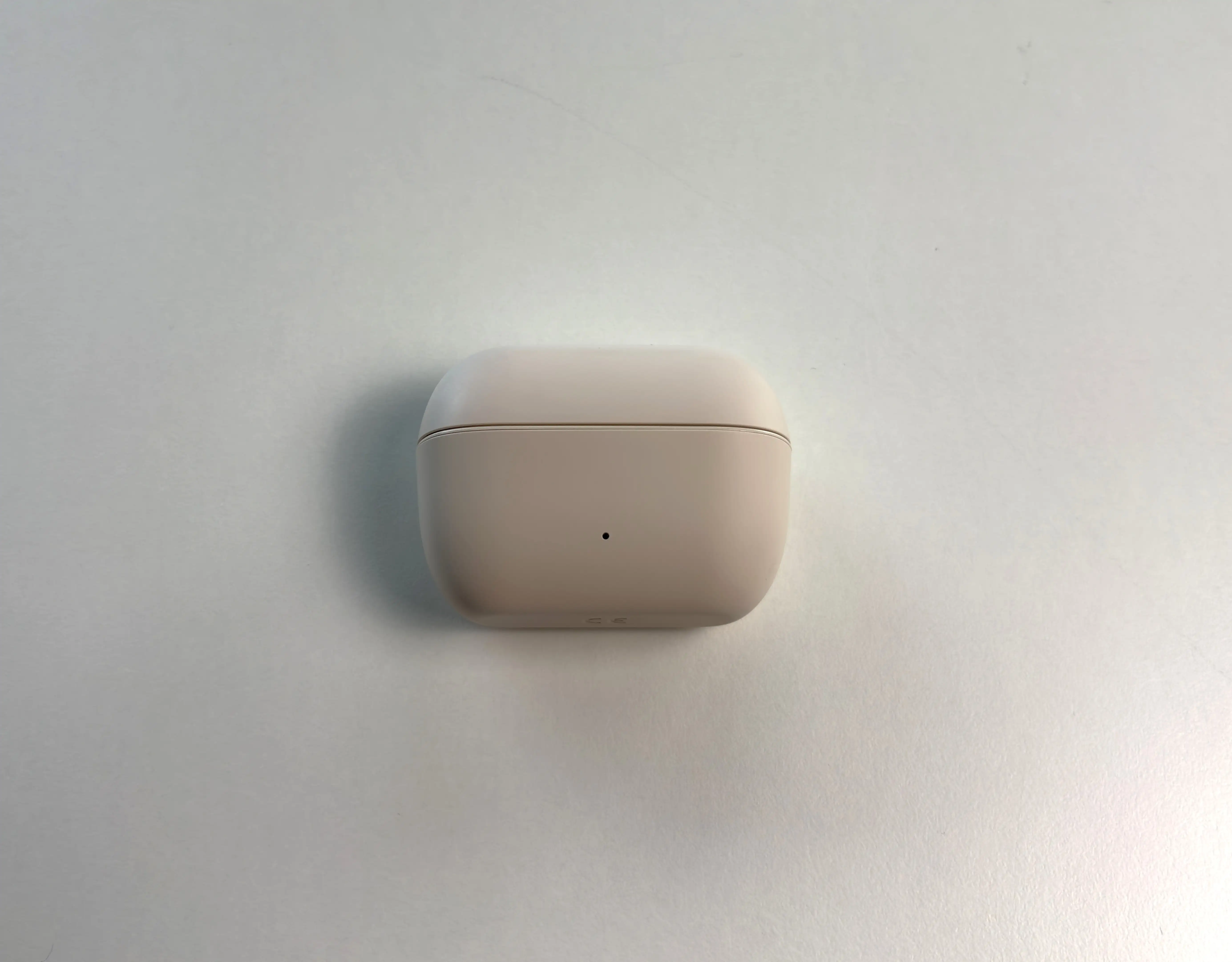


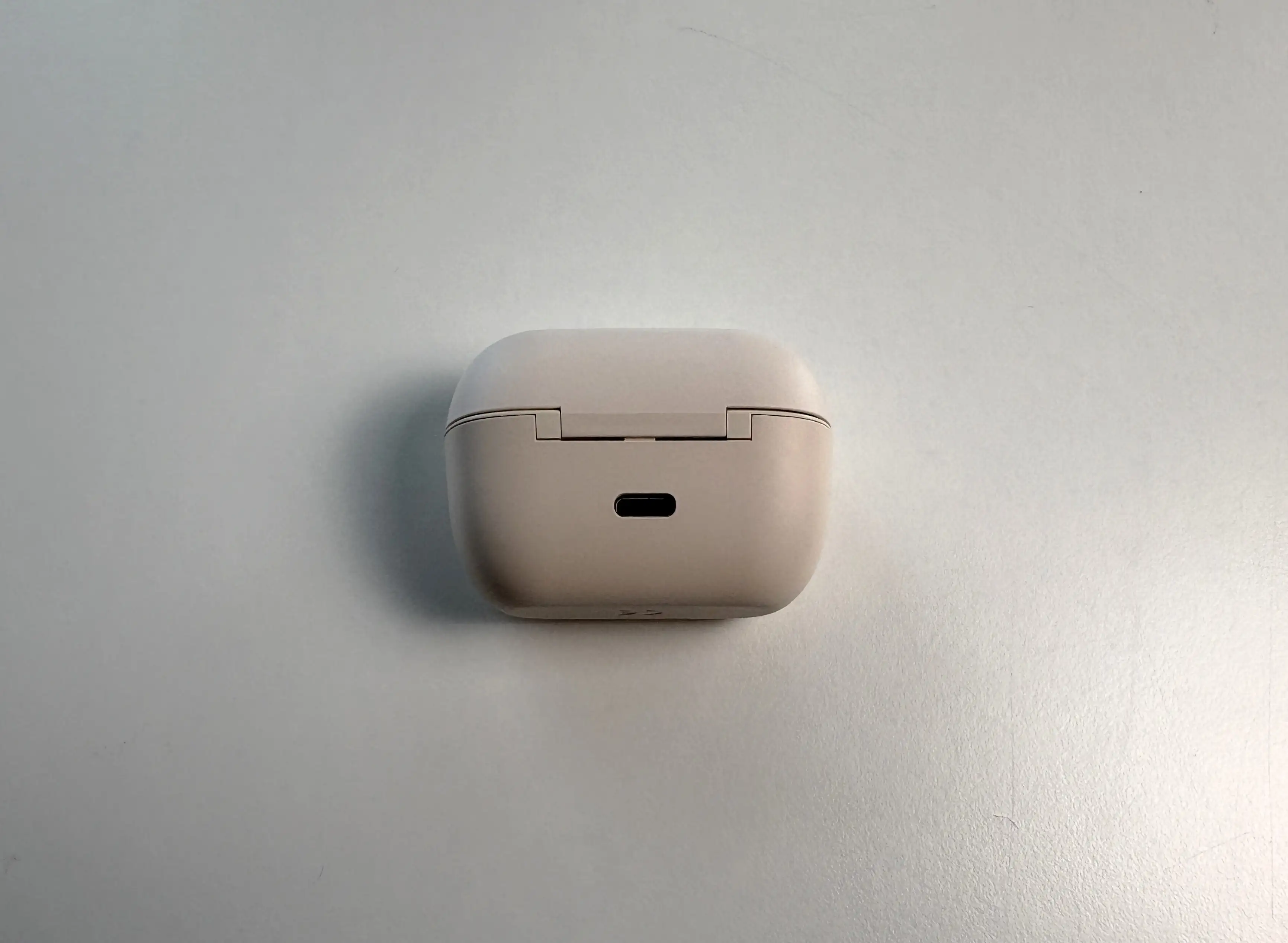
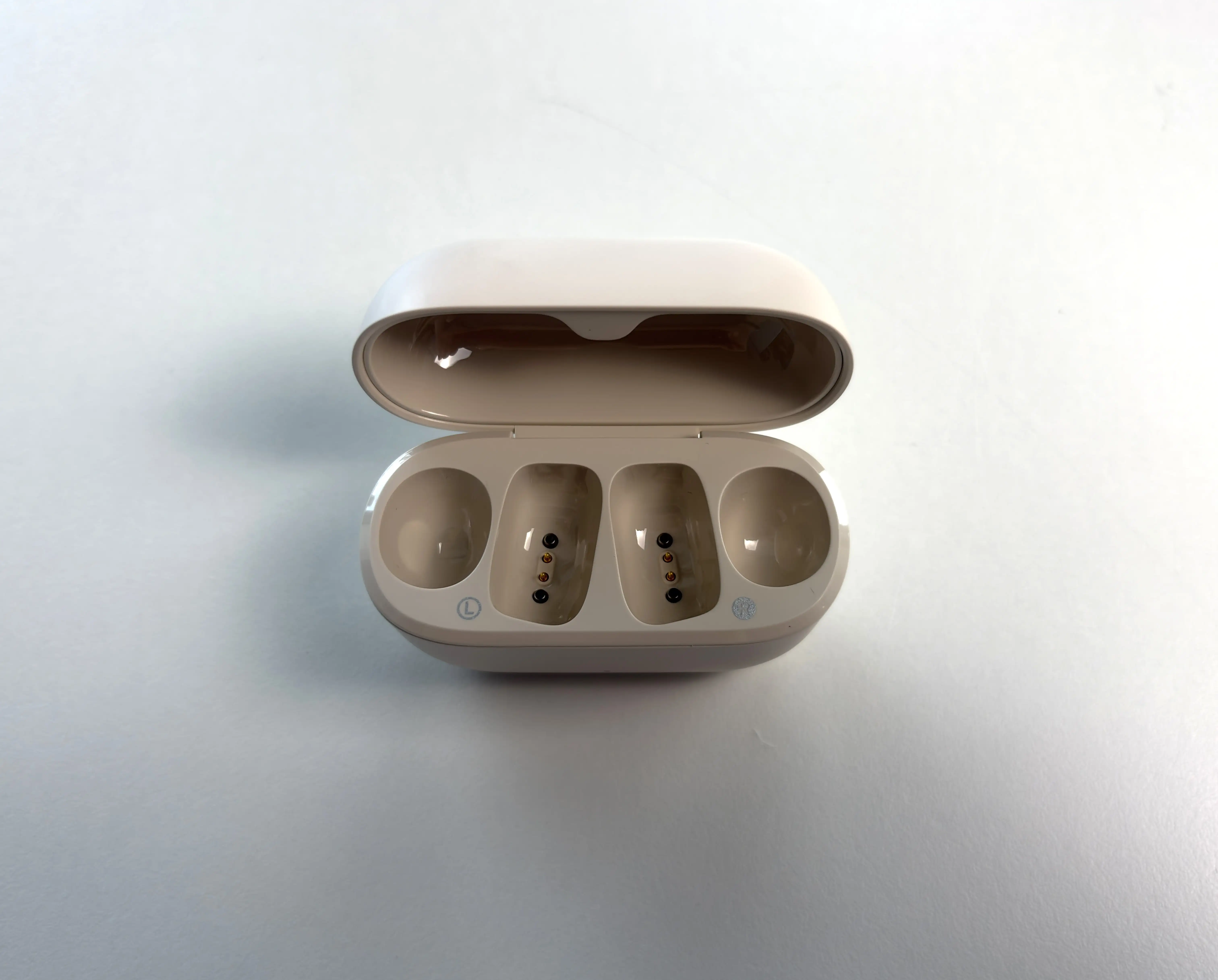


The case charges over USB-C and does not support wireless charging. It is thicker than the average conventional true wireless earbud case, though that is common with clip-on models because the earbuds themselves occupy more space. At 43g, the case is still light and easy enough to carry in a jacket pocket or small bag.
Design & Comfort
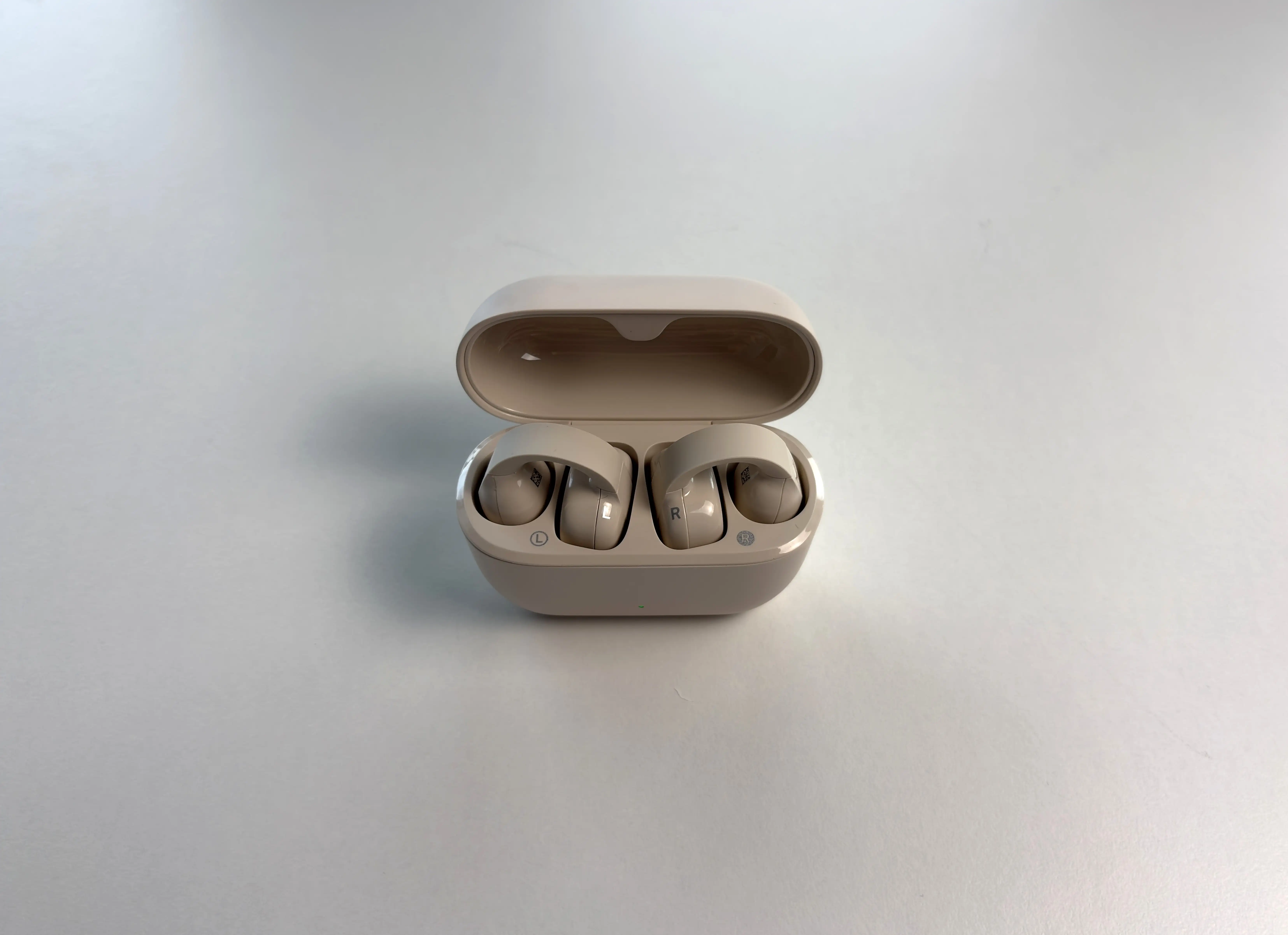
The ACCENTUM Clip follows the now-familiar ear-cuff layout. A rounded speaker module rests inside the concha near the entrance of the ear canal, while a larger rectangular section sits behind the earlobe. A flexible silicone-covered bridge connects the two halves and provides the clamping force required to hold everything in place.
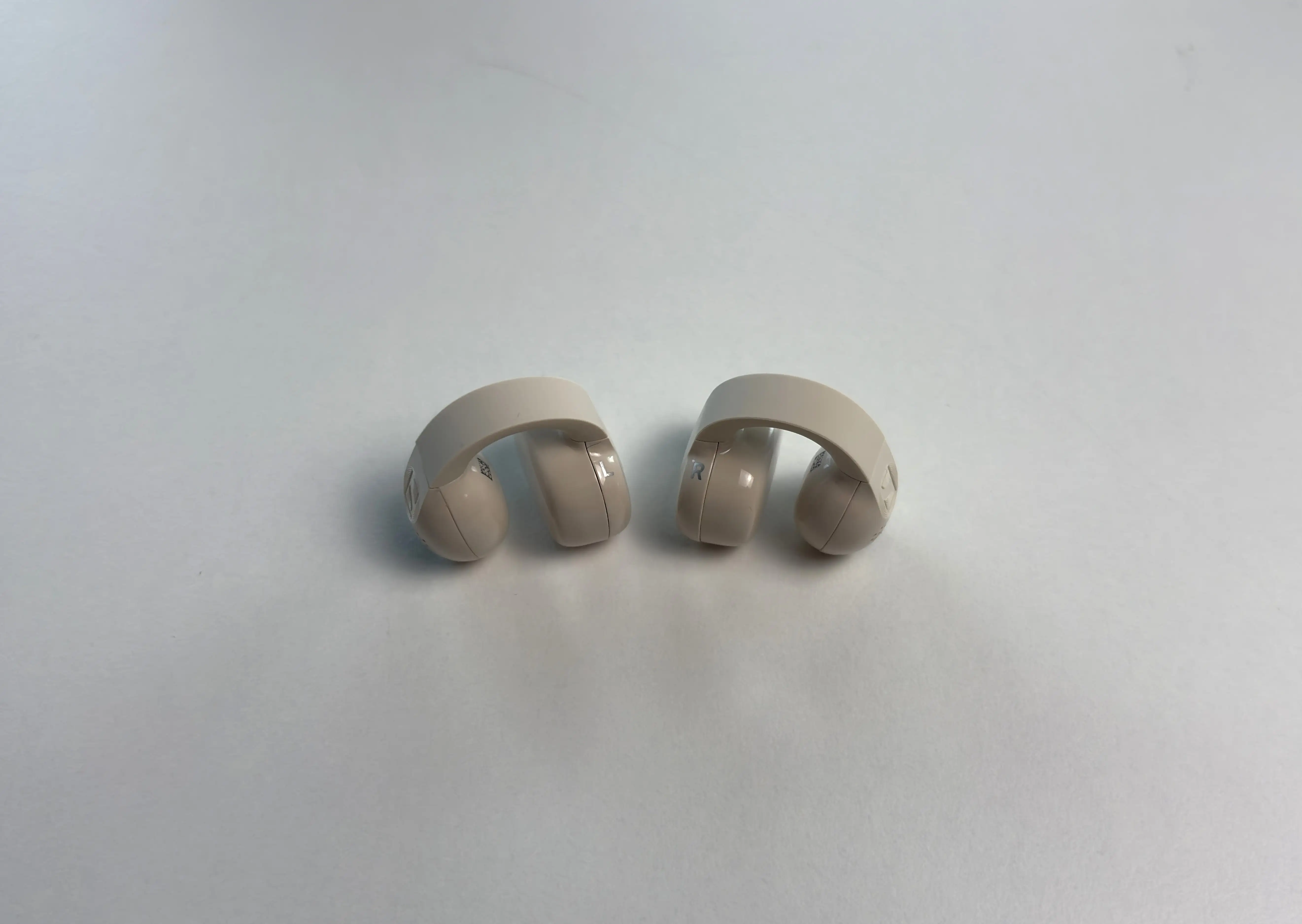
The design is clean and understated, especially in the Cream version supplied for my review. The Sennheiser logo is visible without being overly prominent, and the soft neutral colour looks less like sports equipment than many black open-ear models. The plastic construction does not feel luxurious, but the fit, finish, and hinge-free design all feel suitably well made.
Each earbud weighs 6.8g. That is slightly heavier than the 5g SOUNDPEATS UU2, but still light enough that the weight itself is rarely noticeable. Because nothing seals the ear canal, there is no plugged-up sensation and none of the pressure that some listeners experience with conventional IEMs or true wireless earbuds.
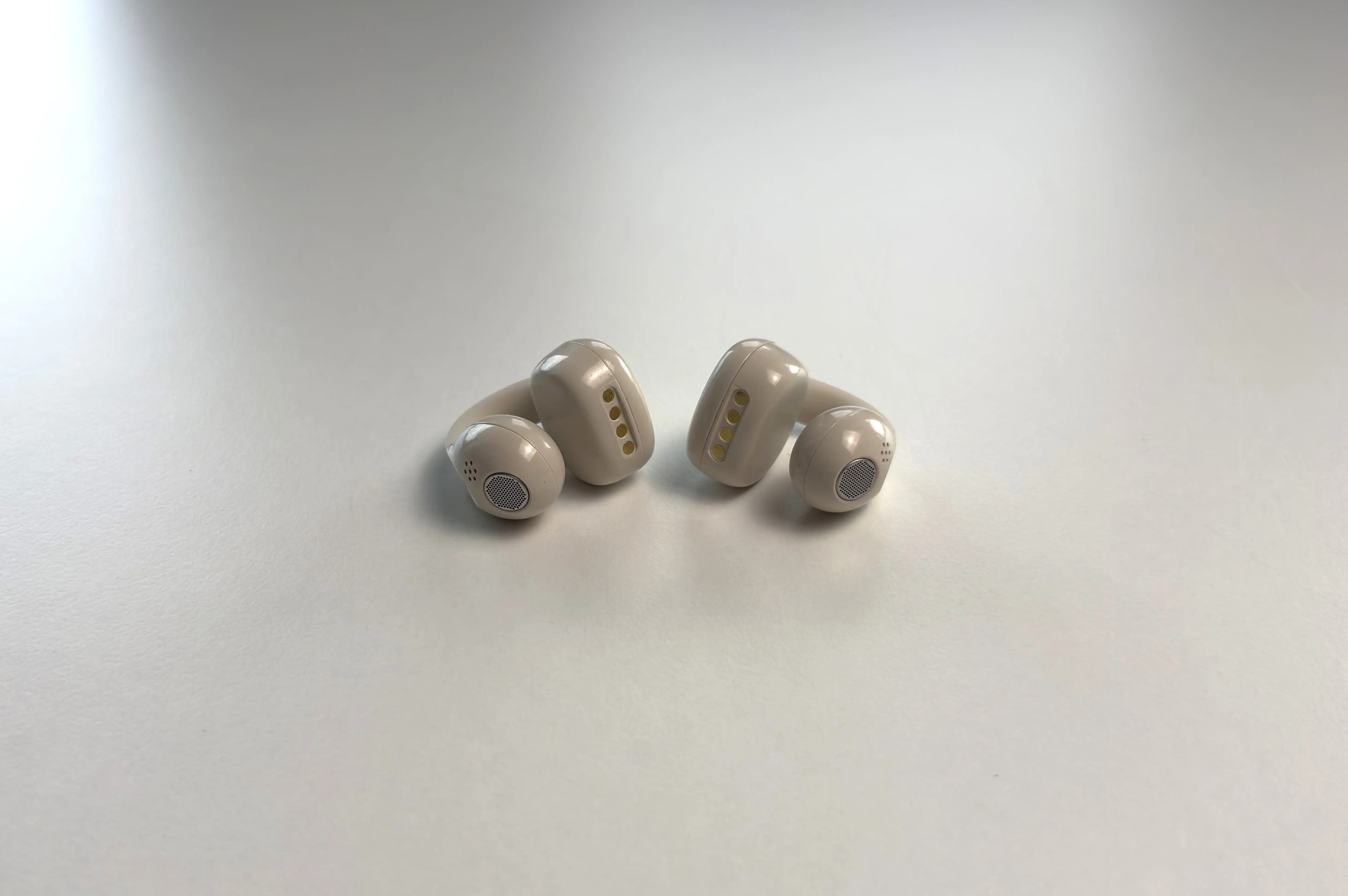
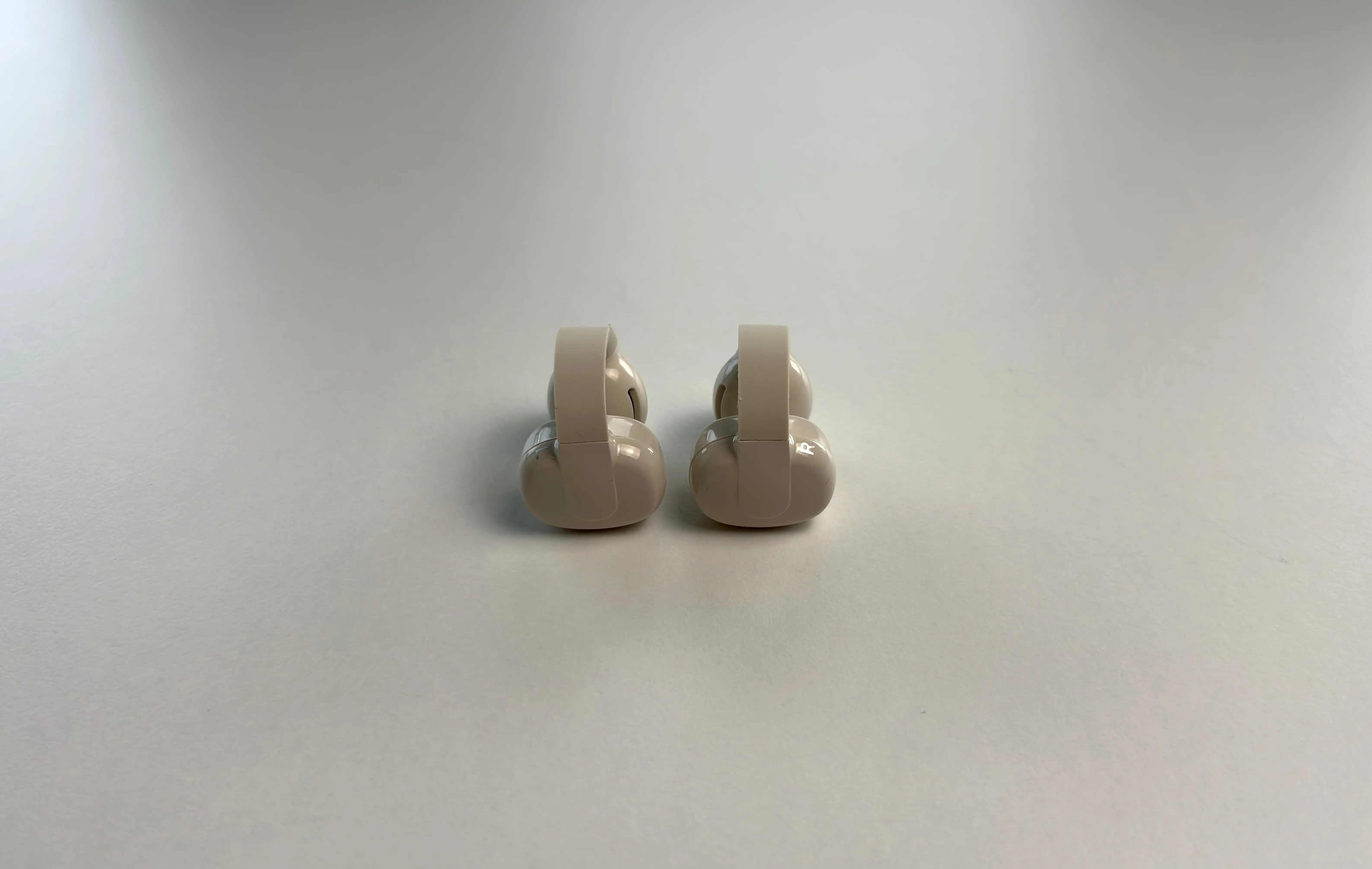


Once correctly positioned, the ACCENTUM Clip sits securely enough for walking, commuting, desk work, and light exercise. The bridge wraps around the side of the earlobe rather than occupying the space above or behind the ear, so it also plays nicely with glasses. The IP54 rating provides protection against dust, sweat, and splashes, making these earbuds suitable for workouts and light rain, though they are not designed for full immersion.
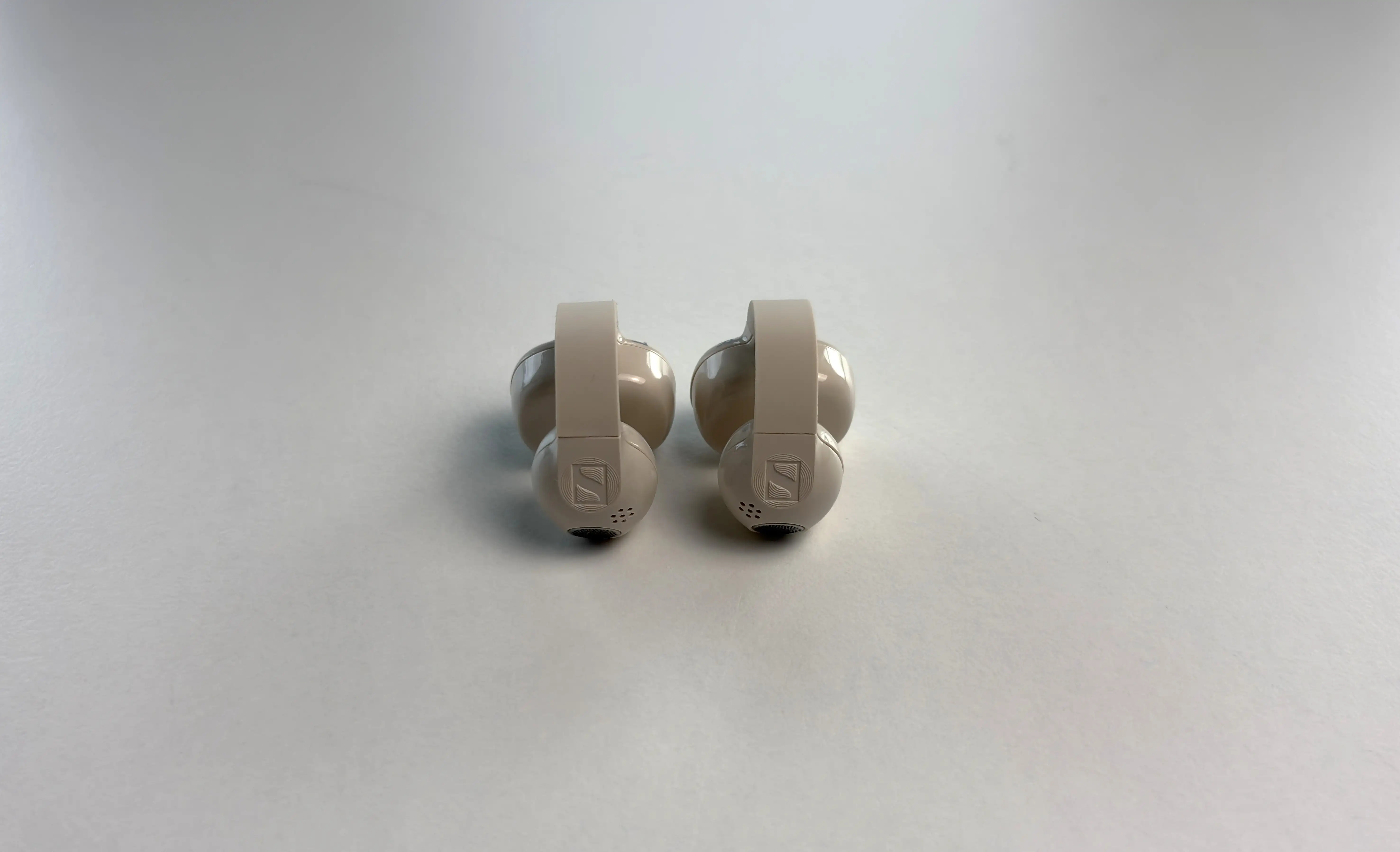
Fit is still going to be very personal. The rear module is fairly large, and listeners whose ears sit close to the side of their head may feel more pressure from it over long sessions. Ear shape also determines how close the front speaker sits to the canal. A few millimetres of movement can change the bass response and perceived volume more than any app setting.
It is worth taking a moment to slide each earbud forward or backward until the metal speaker grille is aimed directly toward the ear canal. When the positioning is right, the sound is fuller and more balanced. When it is wrong, the ACCENTUM Clip can become noticeably thinner and brighter.
Usability

The ACCENTUM Clip is straightforward to use once you become familiar with the shape. Opening the case powers the earbuds on, and they reconnect automatically to the last paired device. Google Fast Pair makes the initial setup especially quick with compatible Android phones.
Unlike the SOUNDPEATS UU2, which can automatically assign left and right channels depending on how they were inserted into the case, the ACCENTUM Clip uses fixed left and right earbuds. The markings are small but still noticeable due to the silver finish of the letters.
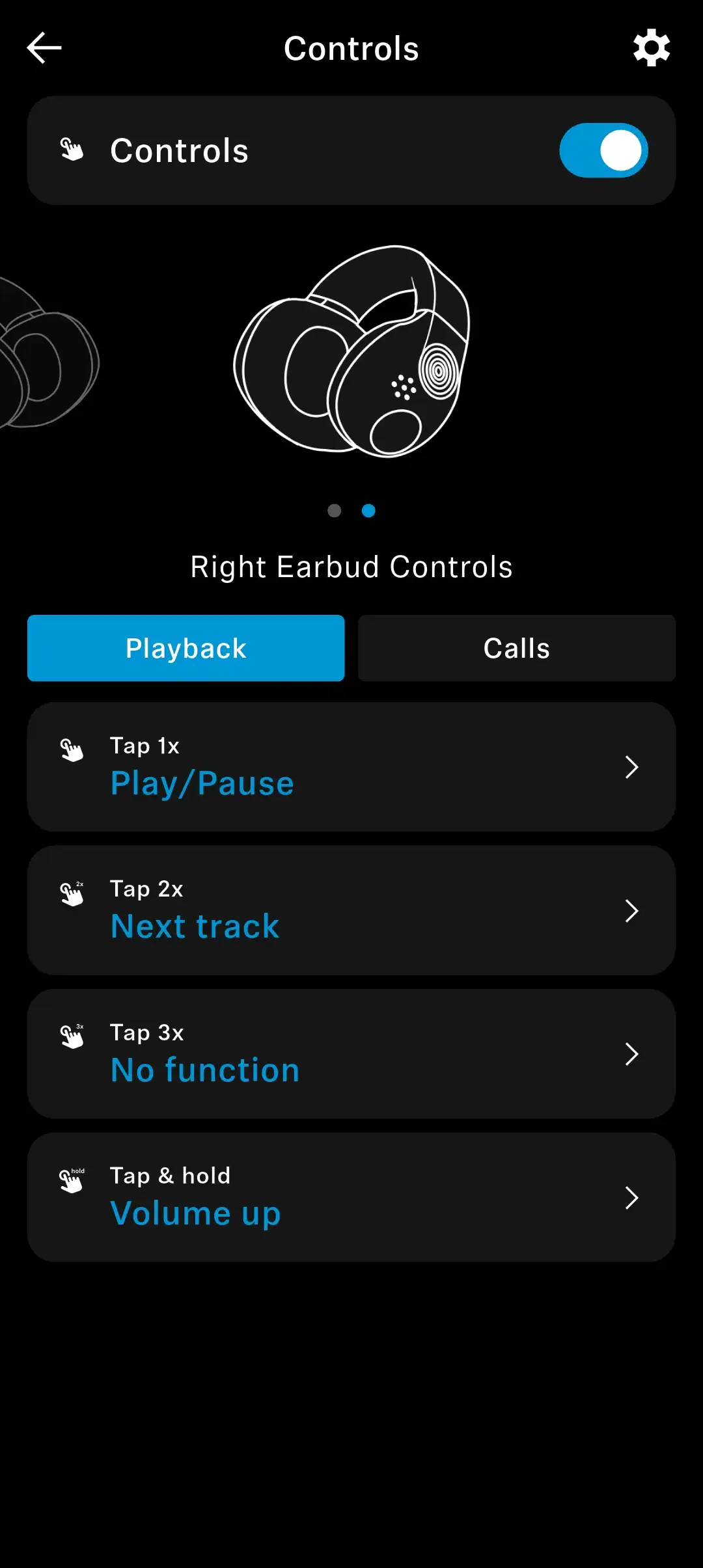
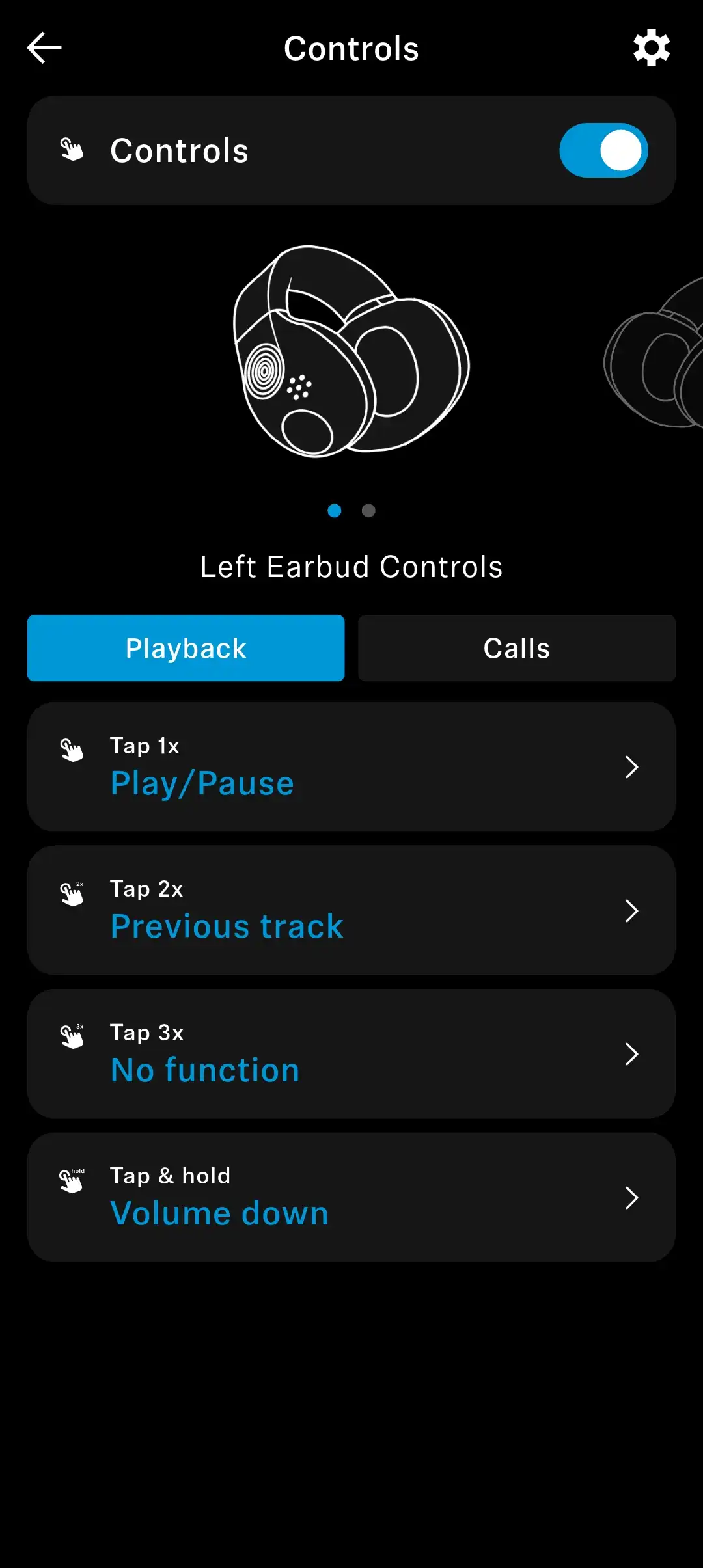
Controls are handled through capacitive touch surfaces on the outer speaker modules. By default, a single tap on either side plays or pauses audio, a double tap skips tracks, and holding the left or right side adjusts the volume. A triple tap on the right activates the phone’s voice assistant. Most media controls can be remapped or disabled in the Smart Control Plus app.
The touch panels are responsive and easier to reach than controls placed on the rear modules. The downside is that it is possible to trigger a command while adjusting the fit, which I frequently did. Because of this, I still prefer the physical buttons used by the SOUNDPEATS UU2 for this type of earbud, especially during a workout or when wearing gloves, but Sennheiser’s touch implementation is otherwise mostly reliable.
Wear detection is included, and removing either earbud can automatically pause playback. Each side can also be used independently, which is useful for calls, podcasts, or situations where you want one ear completely unobstructed.
Companion App
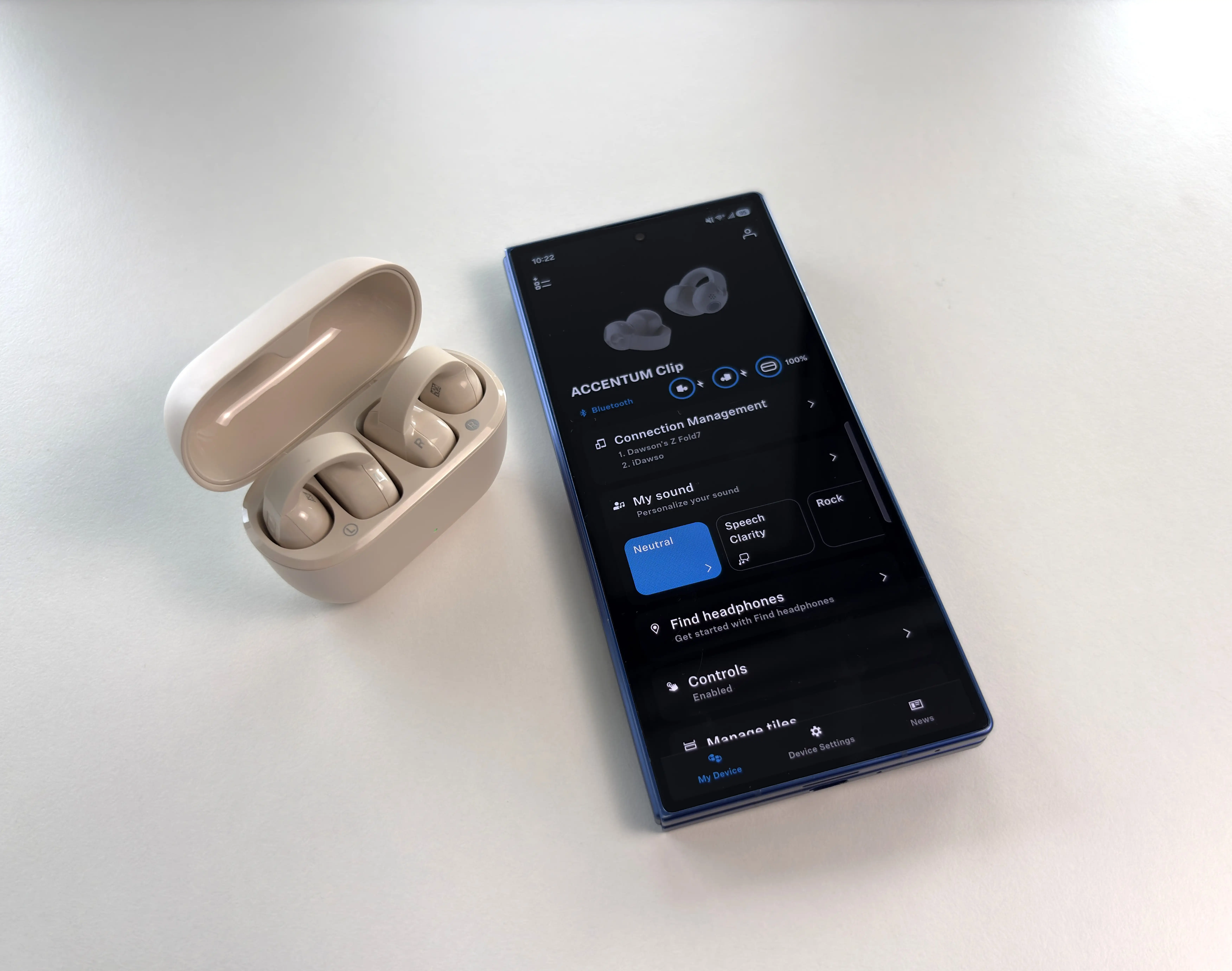
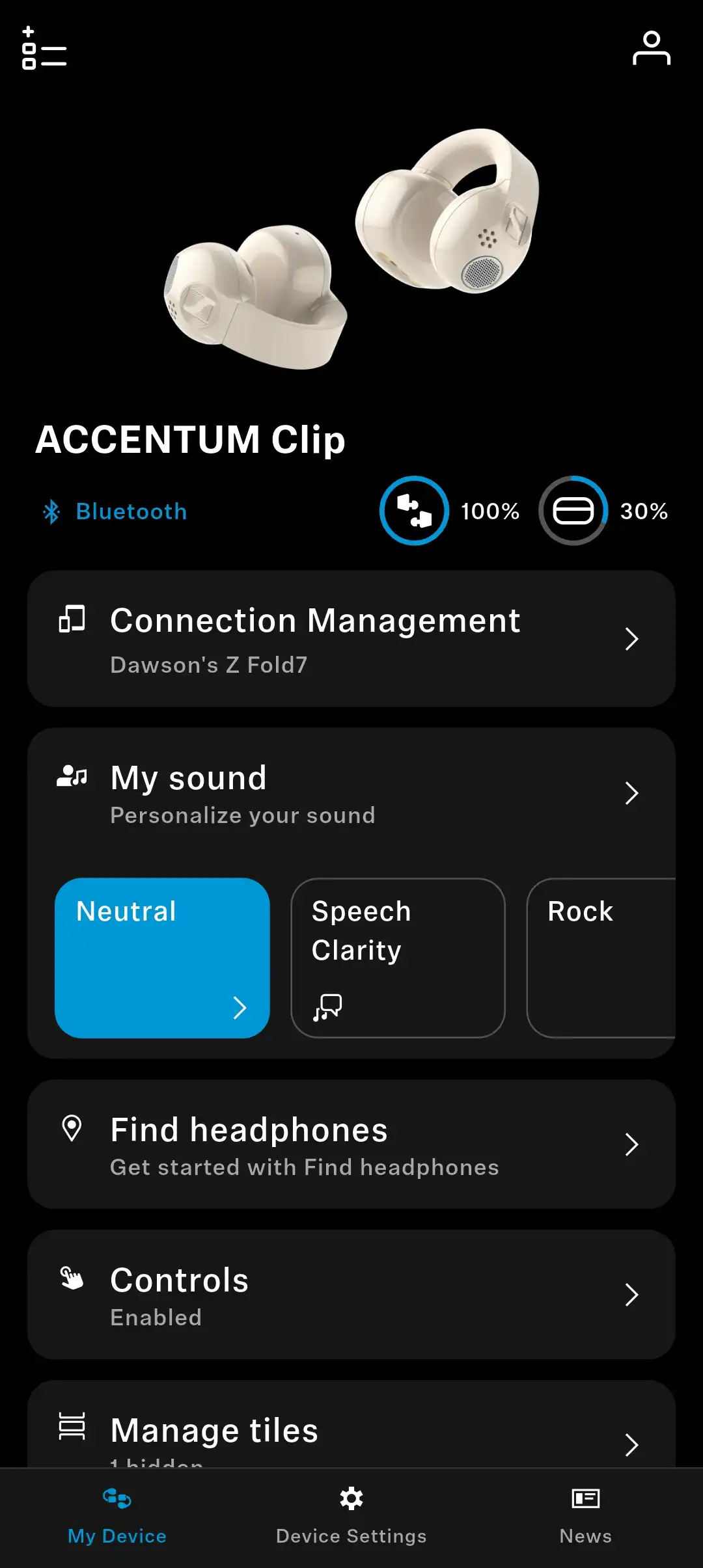
The Smart Control Plus app is one of the ACCENTUM Clip’s strongest advantages over many less expensive open-ear earbuds. It is clean, responsive, and mature, with enough useful options to justify installing it without making the earbuds feel dependent on the app.
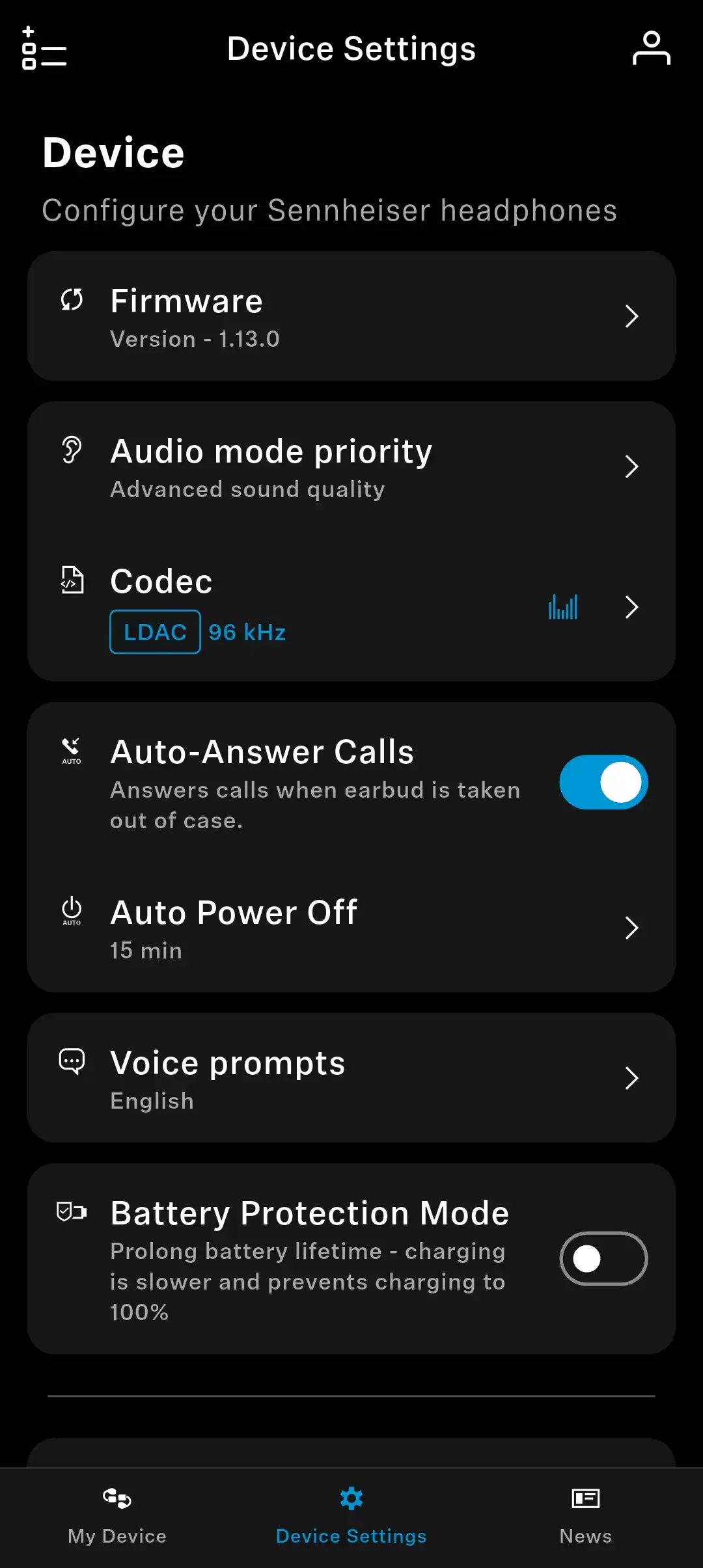
Sound can be adjusted with a five-band equalizer, seven presets, and Sennheiser’s guided Sound Check process. The app also handles firmware updates, touch-control customization, multipoint, wear detection, device status, audio-quality priority, and a Find Headphones function. EQ settings are stored on the earbuds, so they remain active when switching to another source.
Dynamic EQ operates in the background and changes its compensation with volume. At lower listening levels, it adds bass and detail so the open design does not sound overly dry. As the volume increases, that compensation backs away to maintain balance and avoid distortion. It is a sensible feature for open-ear earbuds, which are often used at lower volumes while working or walking.
Here are some screenshots of the app:






Bluetooth Performance
The ACCENTUM Clip uses Bluetooth 6.0 and supports SBC, AAC, and surprisingly, LDAC. AAC provides the best available option for iPhone users, while compatible Android phones and digital audio players can enable LDAC through the app’s Advanced Sound Quality mode. LDAC supports transmission up to 24-bit/96kHz, though the real-world advantage is easiest to hear in a quiet room where ambient noise is not masking the extra detail. It is interesting that Sennheiser has chosen to add LDAC instead of aptX and aptX Adaptive, though it may come down to the chipset used.
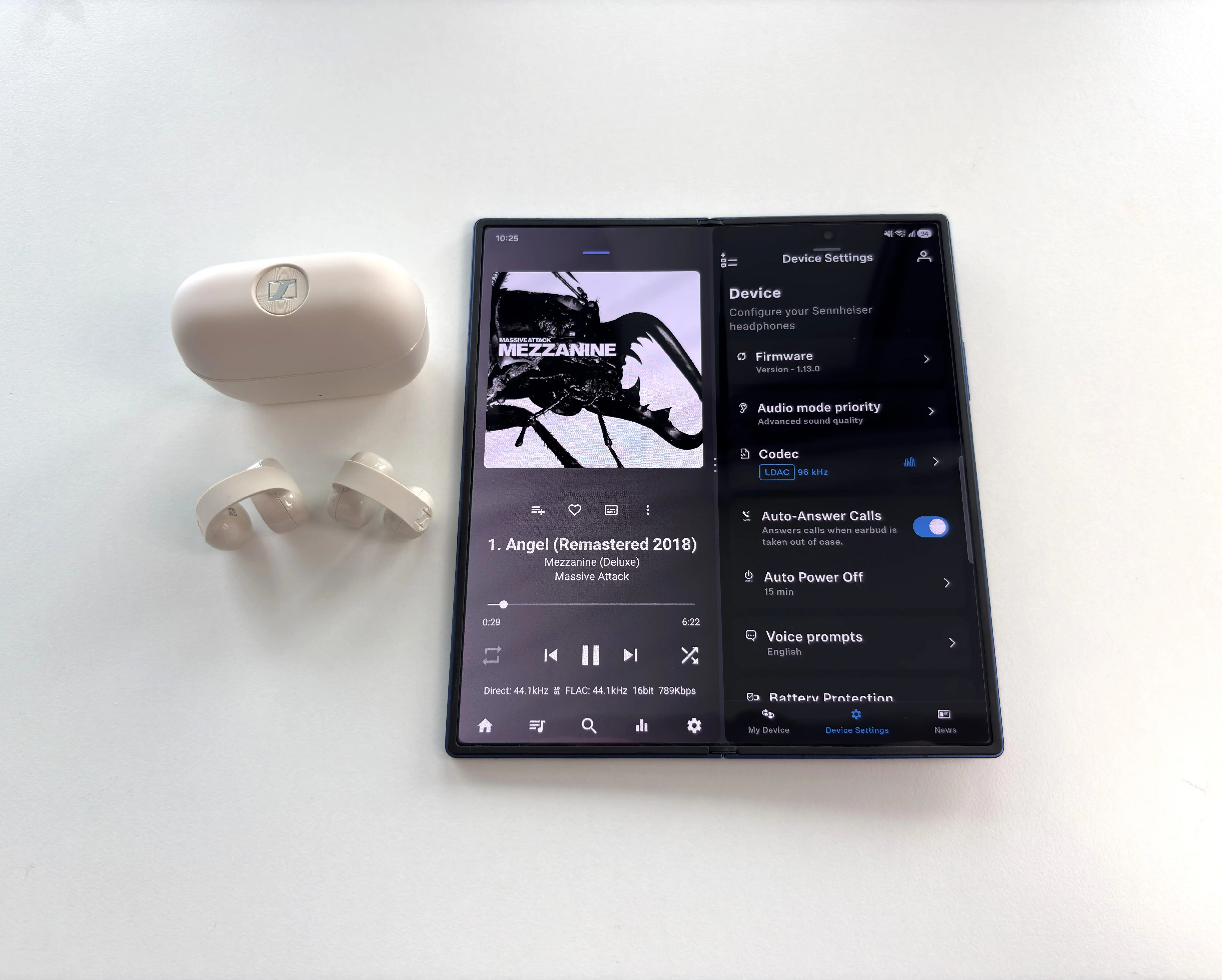
Pairing and reconnection are quick, and the connection remains stable at normal indoor distances. Up to six devices can be stored in the pairing history, and multipoint allows two devices to remain connected simultaneously. It works well for moving between a phone and laptop, although audio needs to be stopped on one device before playback begins on the other.
The app also offers a Robust Connection mode that disables LDAC and prioritizes SBC or AAC to reduce bandwidth and power consumption. This is useful outdoors or in congested wireless environments where stability matters more than the highest possible bitrate.
Despite the Bluetooth 6.0 branding, there is no advertised LE Audio, LC3, or Auracast support (though these are not dependent on Bluetooth 6.0). There is also no dedicated low-latency gaming mode. Video playback is generally fine, but the ACCENTUM Clip would not be my first choice for action movies or other timing-sensitive uses.
Battery
Sennheiser rates the ACCENTUM Clip for up to nine hours per charge using AAC at moderate volume, with the case increasing total listening time to 36 hours. That is enough to cover a full workday or several shorter walks and commutes before the earbuds need to return to the case.
Battery life drops when LDAC and higher listening levels are used, as expected, and enabling Battery Protection Mode limits the available charge to approximately 80%. Even with those caveats, the practical endurance is good for such a small design. A 10-minute quick charge provides up to two hours of playback, and a full charge of the earbuds and case takes approximately one hour under suitable conditions.
The case uses a single colour-changing status light located on the front, with more detailed battery information is available in the app. Wireless charging would have been a welcome inclusion at this price, but USB-C charging is quick enough that its absence is more of an inconvenience than a major problem. I also appreciate that the USB-C connection is on the back of the case, allowing it to stand upright when charging.
Sound Quality
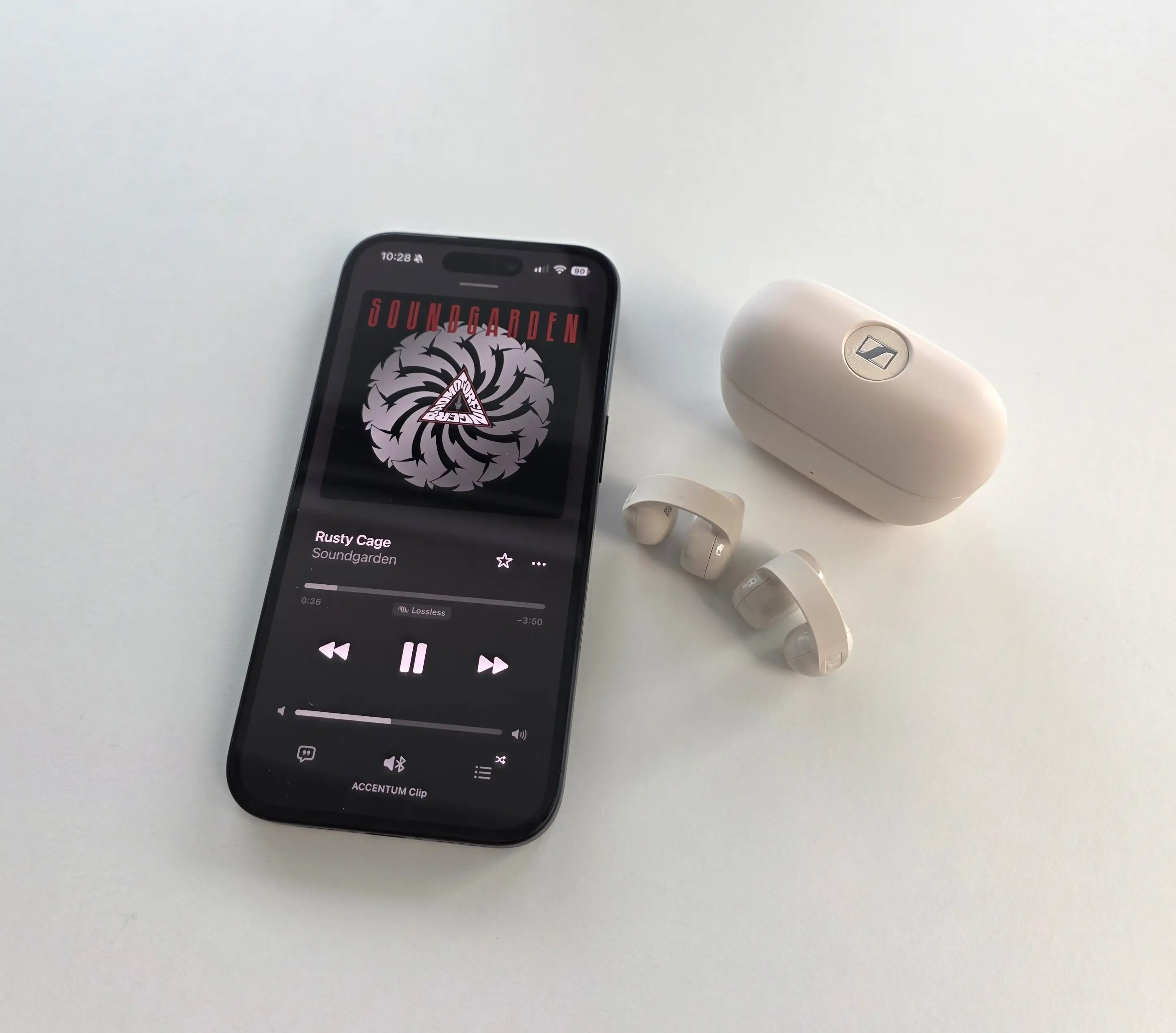
Main sources used for this review:
- Apple iPhone 16 (AAC)
- Apple MacBook Pro (AAC)
- FiiO Air Link (LDAC)
- Microsoft Surface Laptop 7 (AAC, LDAC)
- Samsung Galaxy Fold 7 (AAC, LDAC)
Links to my music playlist used for the majority of testing:
The ACCENTUM Clip uses a 12mm dynamic driver and has a balanced, slightly warm sound at moderate listening levels. The tuning is fuller than the thin, distant presentation people may associate with older open-ear products. Bass has useful punch, vocals remain clear, and the treble is detailed without being excessively sharp.
There are two important qualifications. First, no open-ear earbud can reproduce the pressure and low-frequency extension of a properly sealed in-ear model. Second, speaker positioning has a large effect on what you hear. With the speaker aimed toward the ear canal, the ACCENTUM Clip sounds full and cohesive. Move it slightly away and bass output drops quickly, leaving the upper midrange and treble much more exposed.
The Dynamic EQ also means the balance changes slightly with volume. Lower-volume listening sounds warmer and fuller, while higher levels reduce the bass compensation and allow the upper frequencies to become more prominent. I prefer the ACCENTUM Clip at low-to-moderate levels, where its tuning and intended use case make the most sense.
Bass
Bass sounds impressive by open-ear standards, but expectations need to remain realistic here. Mid-bass has enough weight and speed to give drums, bass guitars, and electronic beats a satisfying sense of rhythm. It does not sound muddy, and the added warmth does not spill heavily into the midrange.
Sub-bass is where the physical limitations become obvious. The ACCENTUM Clip can reproduce deep notes, but it cannot create the rumble or pressure that comes from sealing the ear canal. Hip-hop and electronic tracks remain enjoyable, though the lowest synth notes have less authority than they would through a good conventional earbud. To me, it sounds fine overall in this area.
Midrange
The midrange is the strongest part of the tuning. Vocals sound clean, natural, and present, with enough lower-midrange warmth to avoid becoming sterile. Guitars and piano retain convincing texture, and dialogue remains easy to follow at low volumes.
Sennheiser has avoided pushing the bass so far forward that it clouds the centre of the mix. Male vocals have decent body, while female vocals sound clear and open. At higher volumes, the upper midrange can become more noticeable as Dynamic EQ reduces its low-frequency compensation, and aggressive rock or metal recordings may start to sound a little leaner than they do at moderate levels.
Overall, the ACCENTUM Clip has a more composed and natural midrange than most inexpensive clip-on earbuds. It is not an analytical or studio-neutral presentation, but it preserves the character of voices and acoustic instruments very well for this form factor.
Treble
Treble is clear and generally smooth. Cymbals, strings, and small production details have enough definition to prevent the open presentation from sounding dull, but Sennheiser has mostly avoided the brittle edge that can make inexpensive open-ear products tiring.
There is a mild sense of brightness when the volume is pushed, or the speaker is not positioned close enough to the canal. Treble-sensitive listeners may want to reduce the upper bands slightly in the app, particularly for dense rock and metal recordings. At moderate levels, though, the balance is easy to enjoy for long sessions.
Soundstage and Imaging
The open design creates a spacious presentation that feels less confined than most conventional true wireless earbuds. Music spreads naturally around the ears rather than forming a tight image in the centre of the head, and there is enough separation to keep moderately busy arrangements from becoming congested.
Imaging is respectable, with clear left-to-right placement and a reasonable sense of depth. It is not as precise as a good sealed IEM, and centre images can feel slightly diffuse, but that is not what this form factor is designed to prioritize. For podcasts, live recordings, acoustic music, and relaxed everyday listening, the airy presentation is one of the ACCENTUM Clip’s biggest strengths.
Microphone Performance
Each earbud contains two microphones supported by AI noise reduction. Voice pickup is clear enough for phone calls, video meetings, and voice messages in a quiet room. Speech can sound slightly thin and processed, but it remains intelligible.
Background-noise handling is, well, not great. Steady indoor sounds are reduced reasonably well, but traffic, bus noise, nearby conversations, and especially wind can compete with the speaker’s voice. The ACCENTUM Clip is fine for everyday calls, but I would still use a dedicated headset for an important meeting or a long conversation in a noisy environment.
Here are a couple of microphone tests:
Final Thoughts
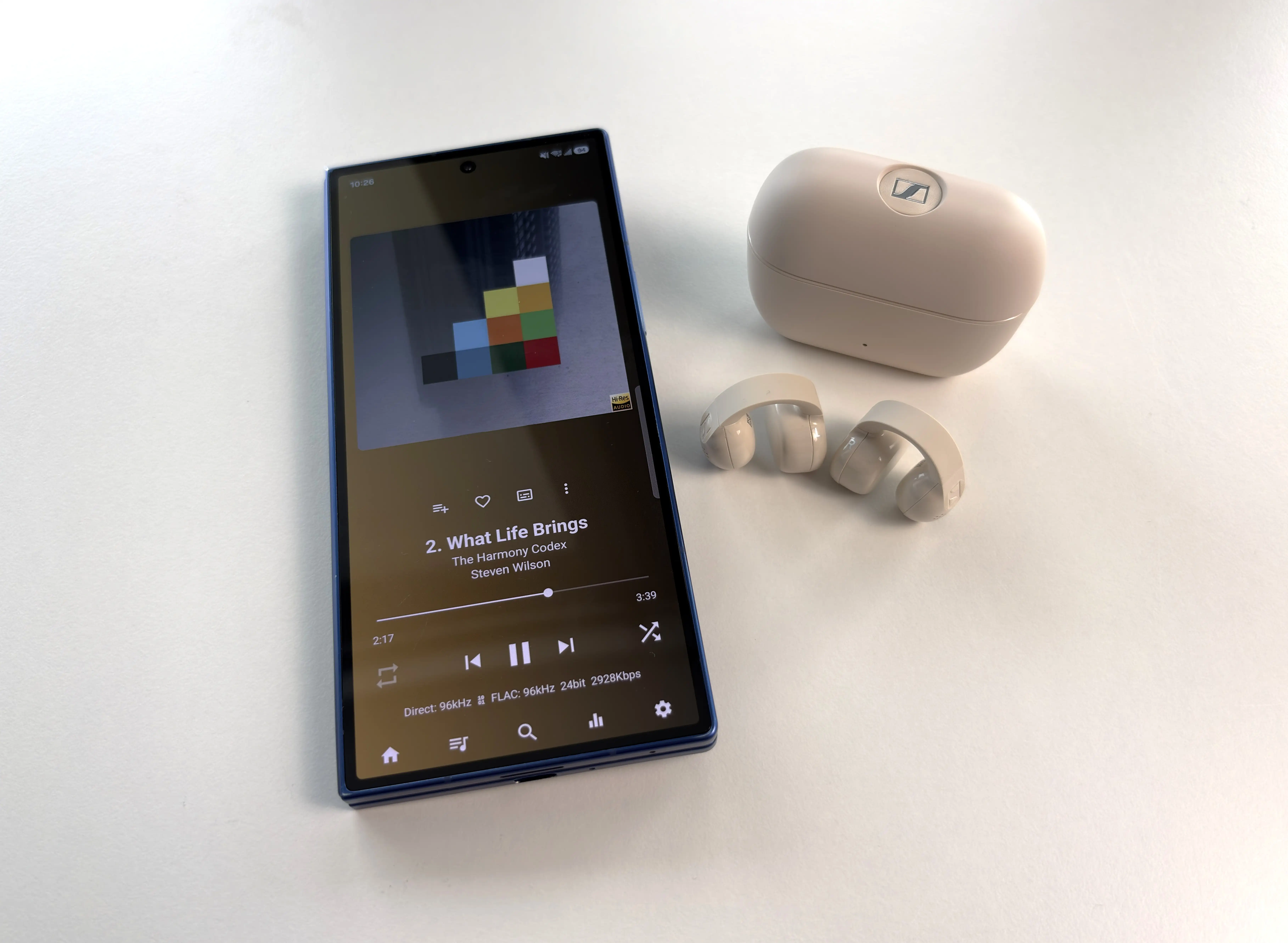
The Sennheiser ACCENTUM Clip is a very good open-ear earbud built around a very specific use case. It is comfortable, secure, easy to live with, and able to provide a fuller and more balanced sound than the open design initially suggests. LDAC, multipoint, wear detection, strong app support, and useful battery-management features make the overall experience feel more complete than many cheaper alternatives.
It is also important to understand what it cannot do. It does not isolate outside noise, bass depends heavily on positioning, the microphones struggle in demanding environments, and there is no ANC, low-latency mode, wireless charging, LE Audio, or Auracast. Some of those omissions are understandable for the form factor, but they become harder to ignore at the $269.95 CAD price point.
In the end, the price is the deciding factor to me. The ACCENTUM Clip is one of the more polished and better-sounding clip-on earbuds available, but much cheaper products now cover most of the same basic features with reasonable sound quality. If refined sound quality, comfort, and Sennheiser’s software experience matter more than getting the absolute best value, the ACCENTUM Clip is easy to enjoy and recommend. Everyone else should wait for a sale or look very closely at something like the SOUNDPEATS UU2.
Purchase Links
Buy from Sennheiser: https://ca.sennheiser-hearing.com/products/accentum-clip?variant=56542944624806
Buy from Best Buy Canada: https://bestbuyca.o93x.net/c/5338875/898179/10221?prodsku=20003574&u=https%3A%2F%2Fwww.bestbuy.ca%2Fen-ca%2Fproduct%2Fsennheiser-accentum-clip-open-ear-true-wireless-earbuds-cream%2F20003574&intsrc=APIG_7094
I’m not always able to cover all the details of a product, both hardware and software, in my reviews. If you have any specific questions about this product, please feel free to leave a comment or contact me directly.
Be sure to check out our excellent Buyer’s Guides, as well as our other Reviews.
HiFi Oasis Verdict
HiFi Oasis Verdict-
Design & Comfort8/10 Very good
-
Sound8/10 Very good
-
Features/Accessories7/10 Good
-
Value7/10 Good
Pros
- Comfortable, lightweight open-ear fit
- Full, balanced sound by open-ear standards
- Natural, clear midrange with smooth treble
- Spacious and airy presentation
- Excellent Smart Control Plus app
- Secure enough for walking, commuting, and exercise
- LDAC, Bluetooth multipoint, and reliable connectivity
- Good battery life with useful quick charging
- IP54 dust, sweat, and splash resistance
Cons
- Bass and volume are highly dependent on positioning
- Very expensive for clip-on open-ear earbuds
- Touch controls are easily activated while adjusting the fit
- Microphones struggle with wind and dynamic background noise
- No low-latency gaming mode
- No LE Audio, LC3, or Auracast support


