


Disclosure: I’d like to thank Lenbrook/DALI for loaning me the KUPID for this review. All thoughts and opinions are my own, and Lenbrook/DALI had no say or input on the contents of this review.
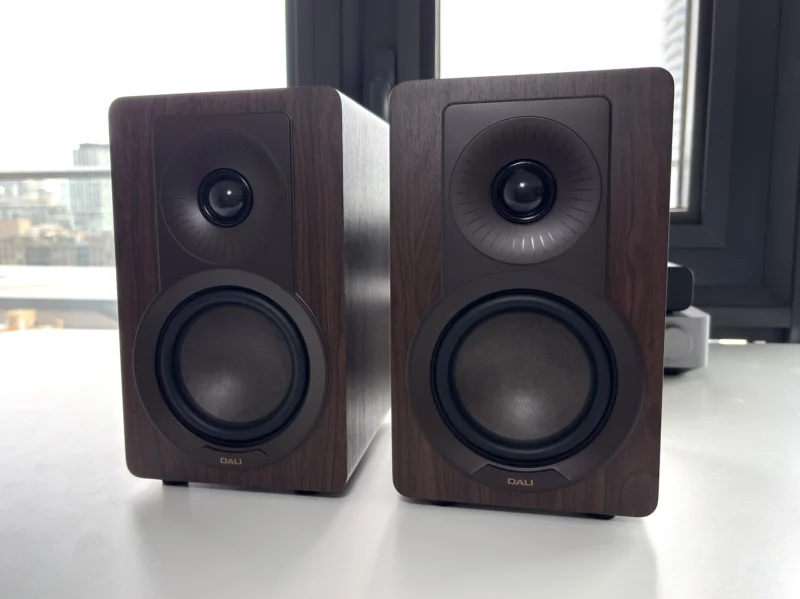
The DALI KUPID lands in an interesting spot for budget bookshelf speakers. Most speakers at $599USD/£299 ask you to pick between good sound and attractive design, but DALI’s latest bookshelf speaker tries to deliver on both. This Danish-designed speaker packs a 4.5-inch paper and wood fiber woofer alongside a 26mm soft dome tweeter into a cabinet that actually looks like something you’d want on display at home.
There is one potential catch, though. The 4-ohm nominal impedance and 83dB sensitivity mean the KUPID demands more from your amplifier than typical budget speakers in order to reach its full potential. DALI states that you’ll need a minimum of 40 watts of capable power to hear what these speakers can really do. This is certainly not unachievable, but it does mean you will need to rely on a solid amp to drive these.
I’ve said these are budget speakers, but I use the term “budget” somewhat loosely, as $599 USD is a lot of money and gives you a lot of options when looking to buy a speaker. In the audiophile world, especially with regards to a high-end brand like DALI, this is still in the “budget” range for a passive bookshelf speaker, so let’s all agree that’s the case to make this easier. So, the question becomes whether DALI managed to create a budget bookshelf speaker that doesn’t sound like one. Let’s dig into the build quality, setup requirements, and most importantly, how the KUPID actually sounds when you get everything dialed in properly.
Key Specifications
- Product Page: https://www.dali-speakers.com/en/products/kupid/kupid/
- MSRP: $599 USD, £299, $599 CAD, €338
- Speaker Type: Bookshelf, Passive
- Driver Size and Type:
- Low/Mid Frequency Driver: 1 x 4½ inch (Paper and wood fibre cone)
- High Frequency Driver: 1 x 26 mm soft dome (Soft woven fabric)
- Crossover: Two-way
- Impedance: 4 Ohm
- Sensitivity: 83 dB @ 1 m for 2.83 V
- Ported: Yes
- Connection Type: Single wire (Bare Wire, Banana, Spade)
- Bi-wire Capable: No
- Power: 40 – 120 Watts
- Dimensions:
- Main speaker: 245 x 150 x 198 mm (9.64 x 5.91 x 7.80 inches)
- Weight: 2.9 Kg (6.4 lbs)
In the Box

- DALI KUPID speakers
- 2x wall brackets and screws
- 8x rubber feet
- 2x front grills
Design & Build Quality
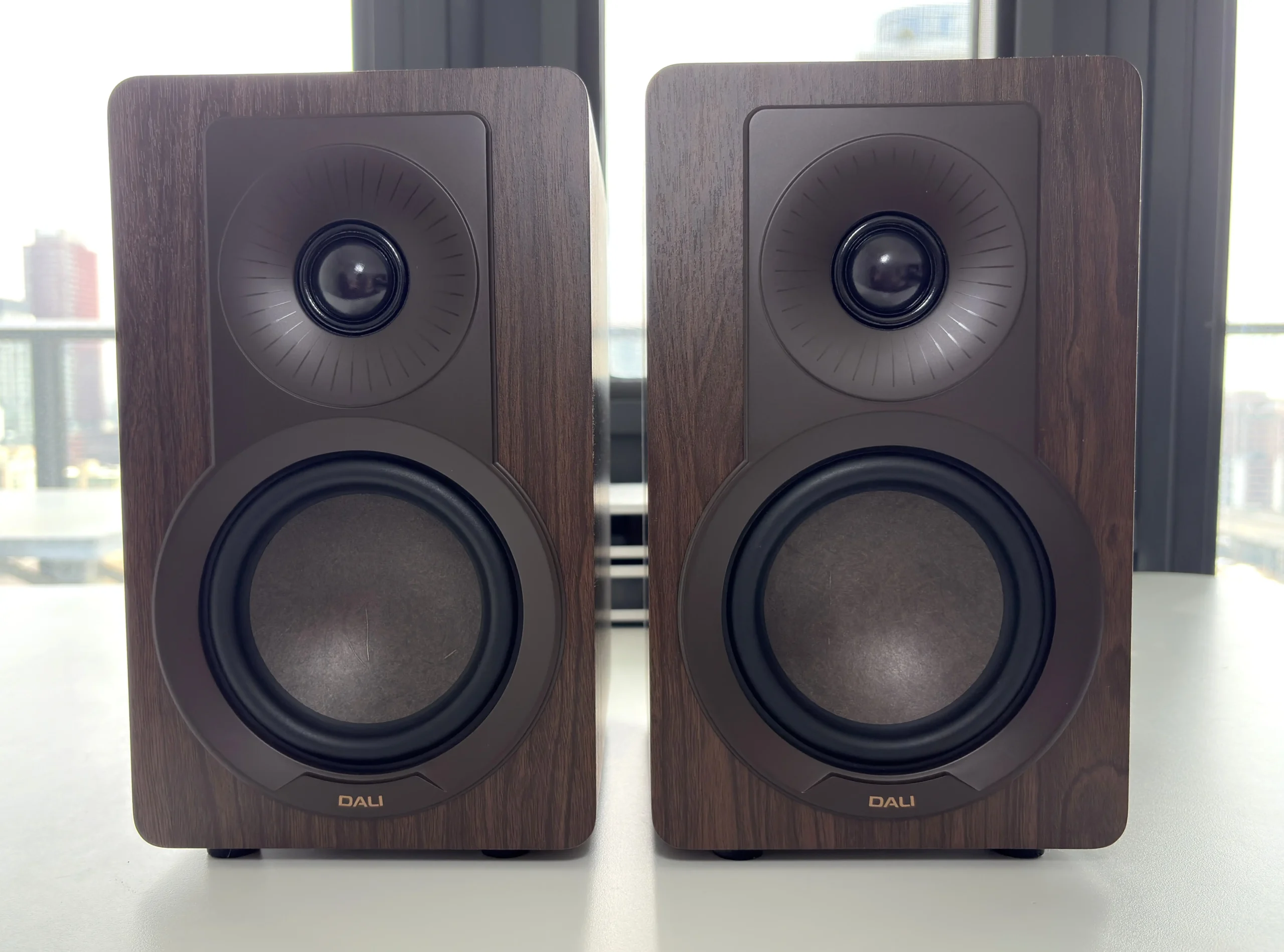
DALI decided to have some fun with the color palette here, and I really appreciate the effort. You get five finish options to choose from: Black Ash, Dark Walnut (Vinyl coating), Caramel White, Golden Yellow (Vinyl coating), and Chilly Blue. They also come with matching woofer cones and magnetic grilles, which is a nice touch. The colorway that I have for this review is the Dark Walnut version, but the variety of colors gives you a lot of options for your intended use case.
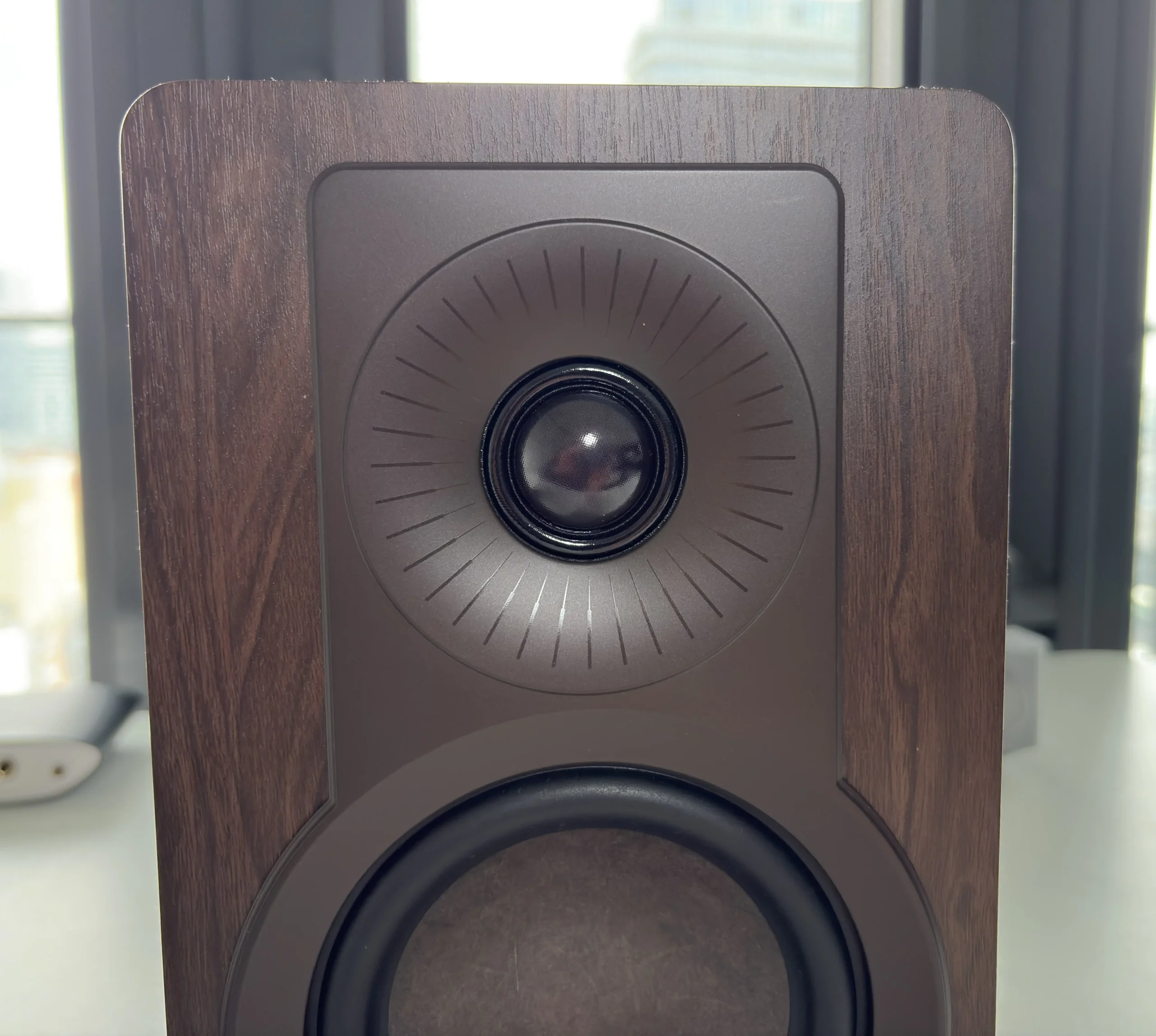
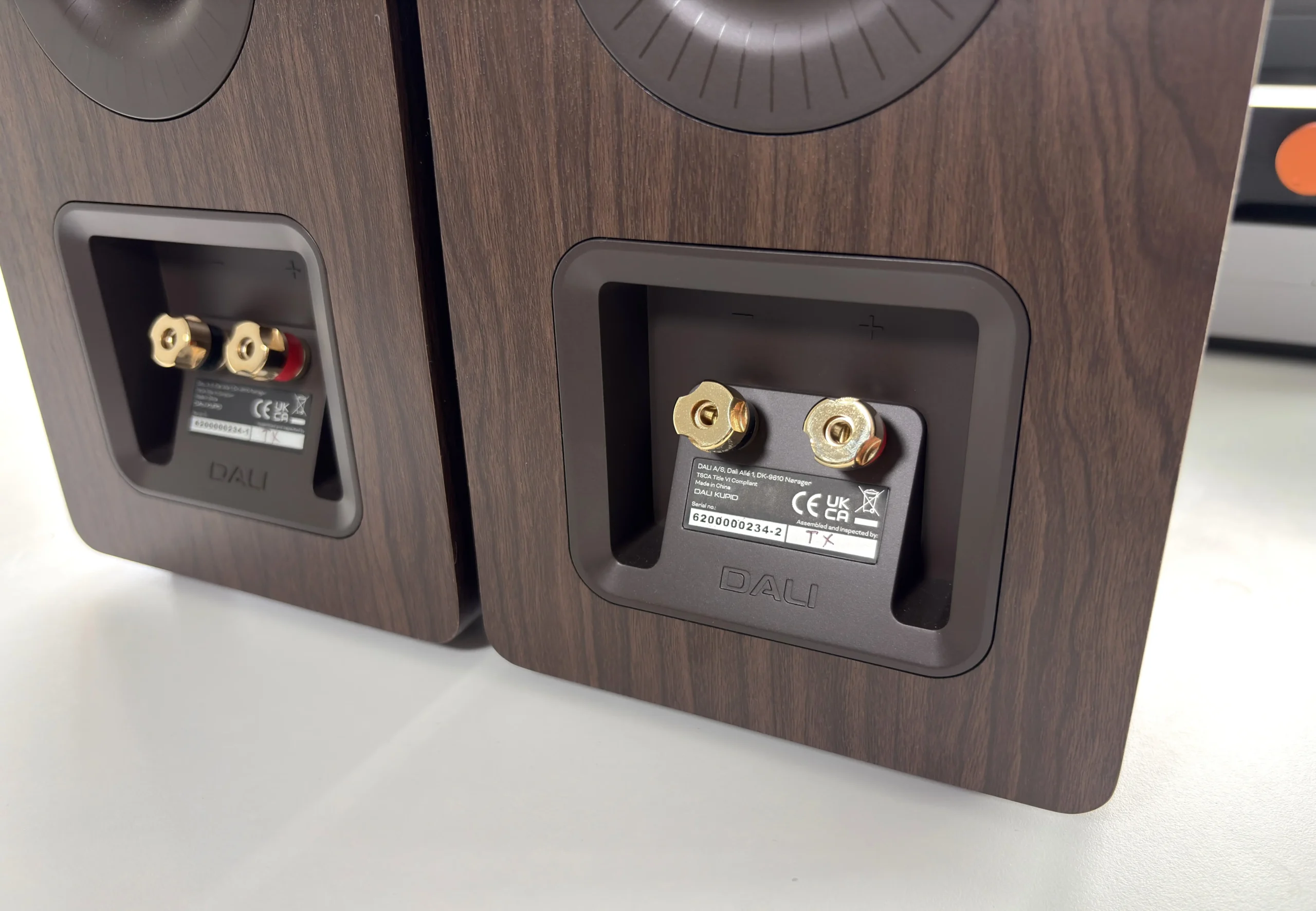
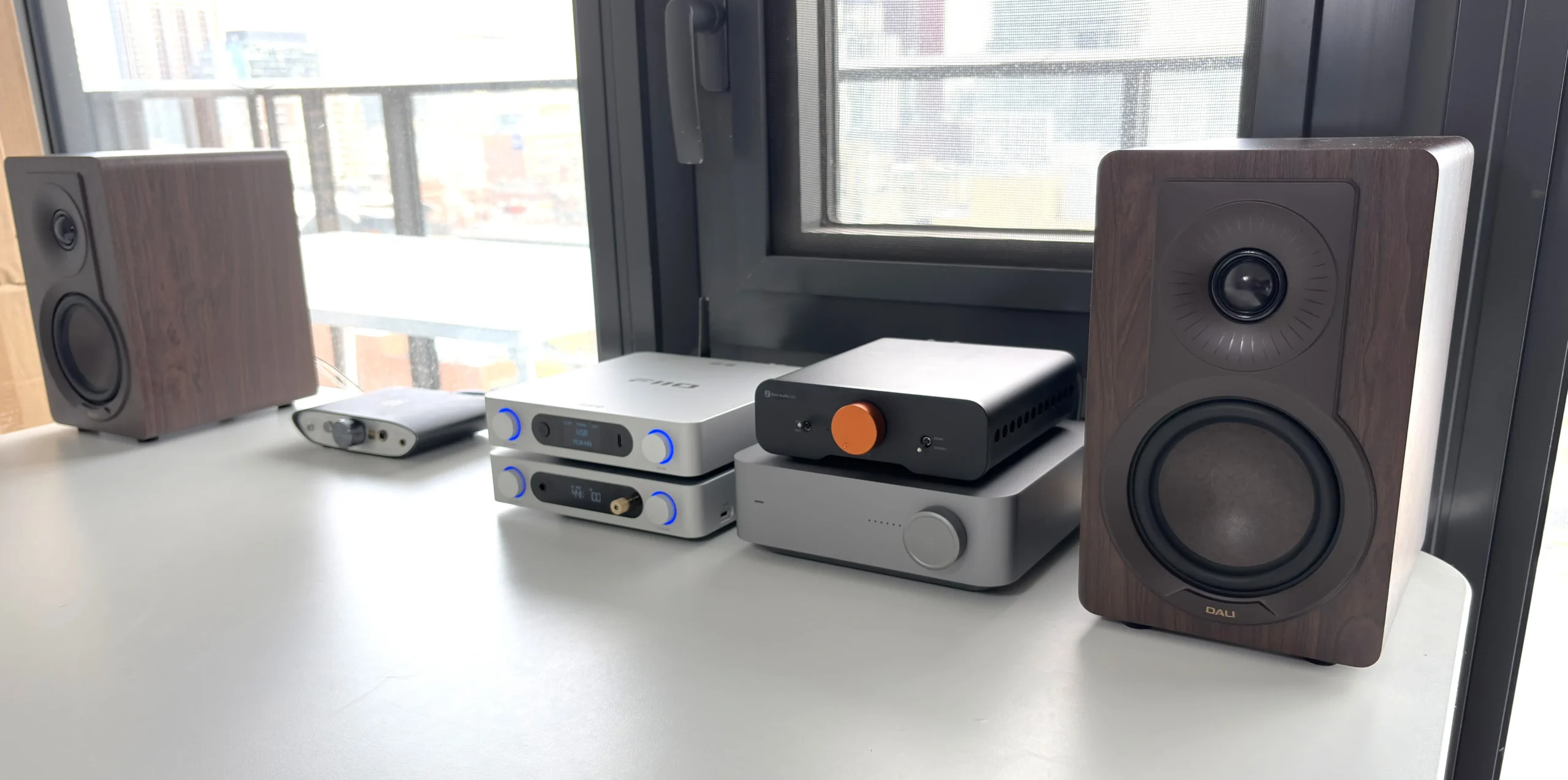
The tweeter surround features a decorative starburst pattern that creates some serious visual pop. They even carried the same starburst detail to the rear port surround, showing someone actually cared about design consistency.
DALI includes wall bracket hardware and rubber feet right in the box, plus textured magnetic grilles that snap on cleanly without visible mounting hardware. The rounded cabinet edges, instead of harsh 90-degree corners, make these look more expensive than they are, in my opinion.
Picking up the DALI KUPID speakers felt odd at first. At roughly 2.9kg per speaker, they’re surprisingly light, but there’s a density to the build that gives you a sense of quality and premium materials. The cabinets use reinforced MDF with gently curved edges instead of the sharp 90-degree corners you typically see at this price point.


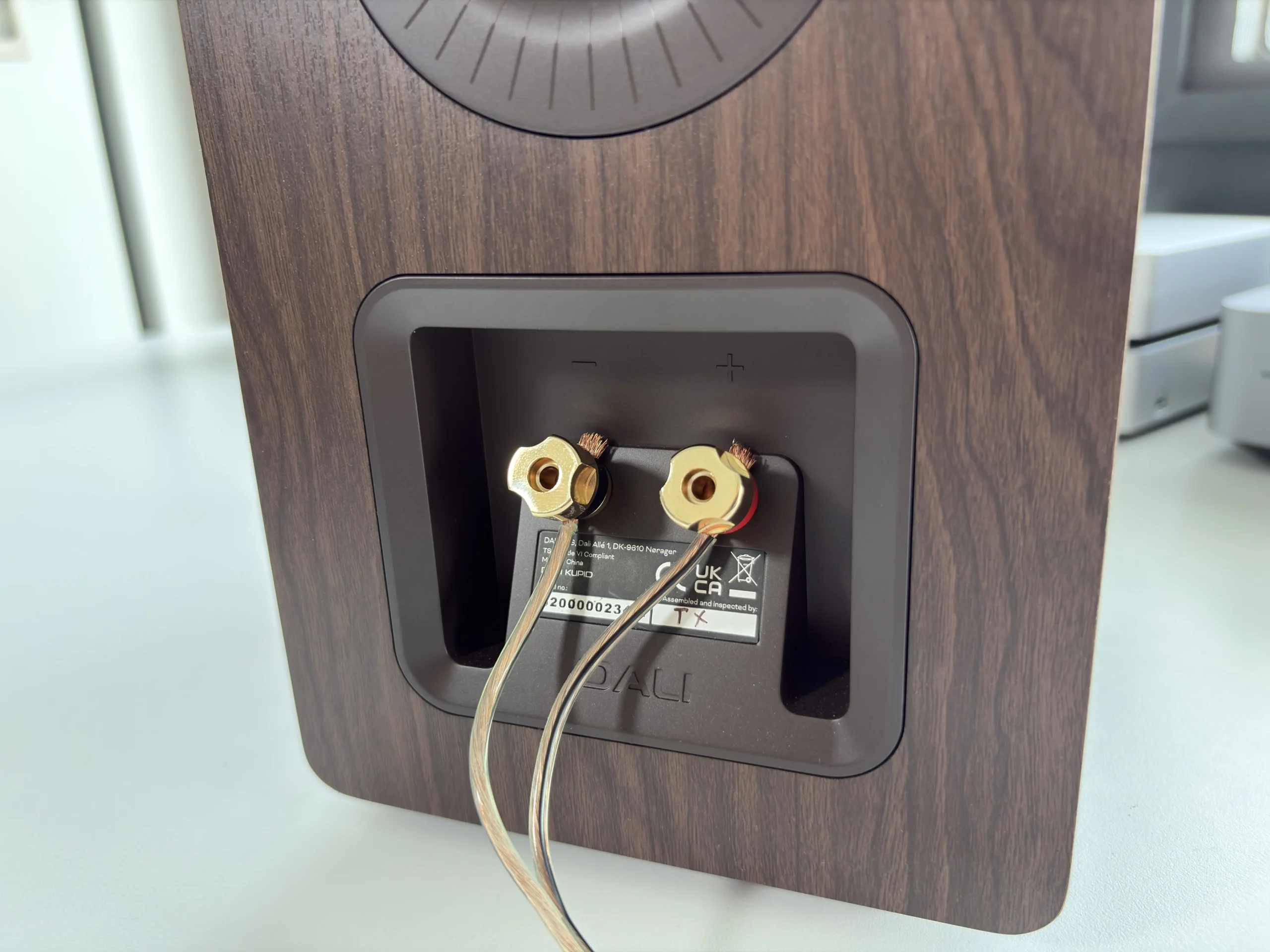


The finish quality on my dark walnut sample is very impressive. The surface is very smooth, the color is extremely consistent, and there are no mounting holes or indicators for where the rubber feet should go. It’s an extremely clean look that is eye-catching yet subtle.
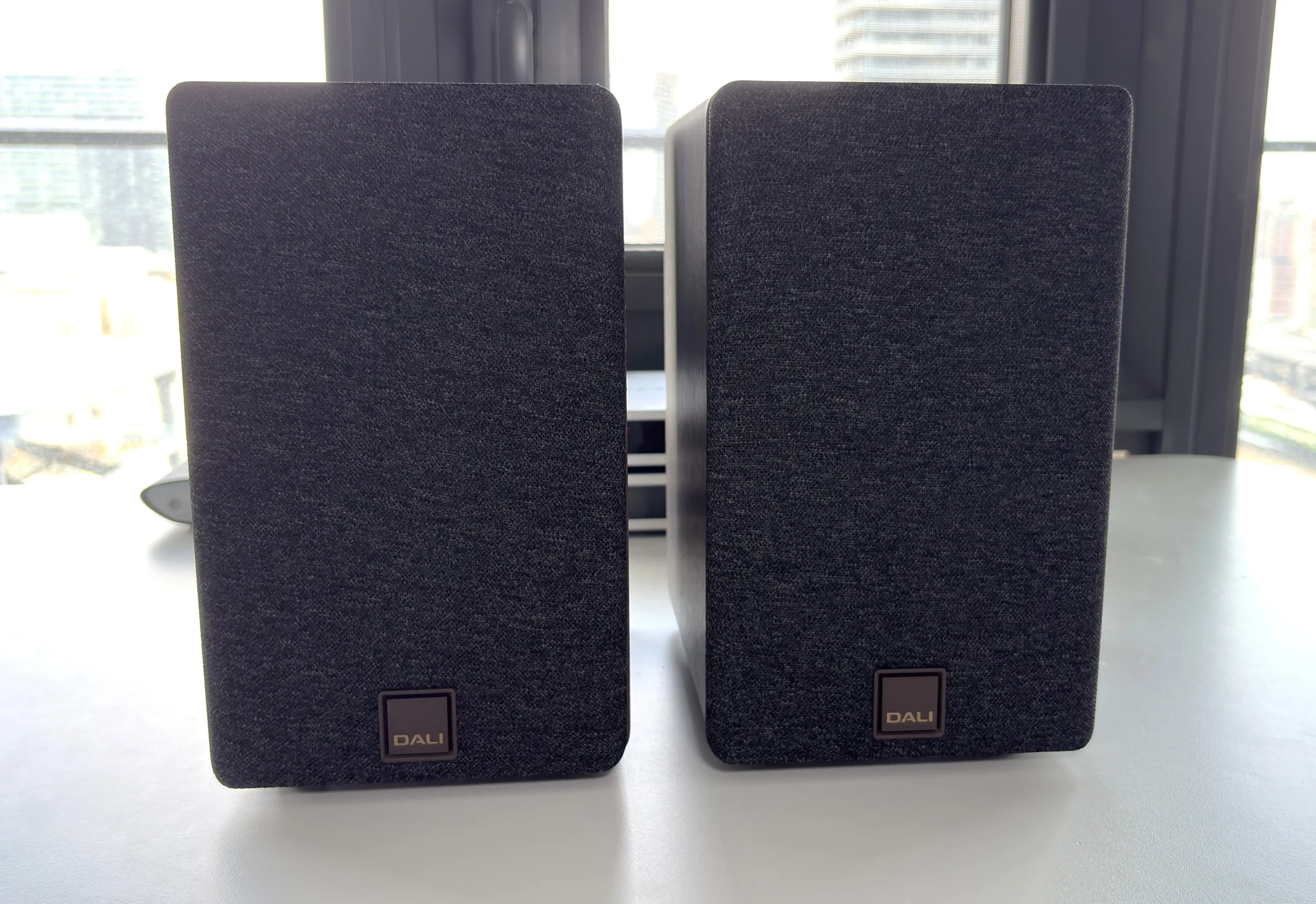
The included textured magnetic grilles attach cleanly without visible hardware. They’re color-matched and textured to fit the Scandinavian design aesthetic. Honestly, most people will probably leave them off to show the starburst pattern around the tweeter, but it’s nice having the option if you’ve got kids or pets around, or if you just want to change up the look for a bit.




Features
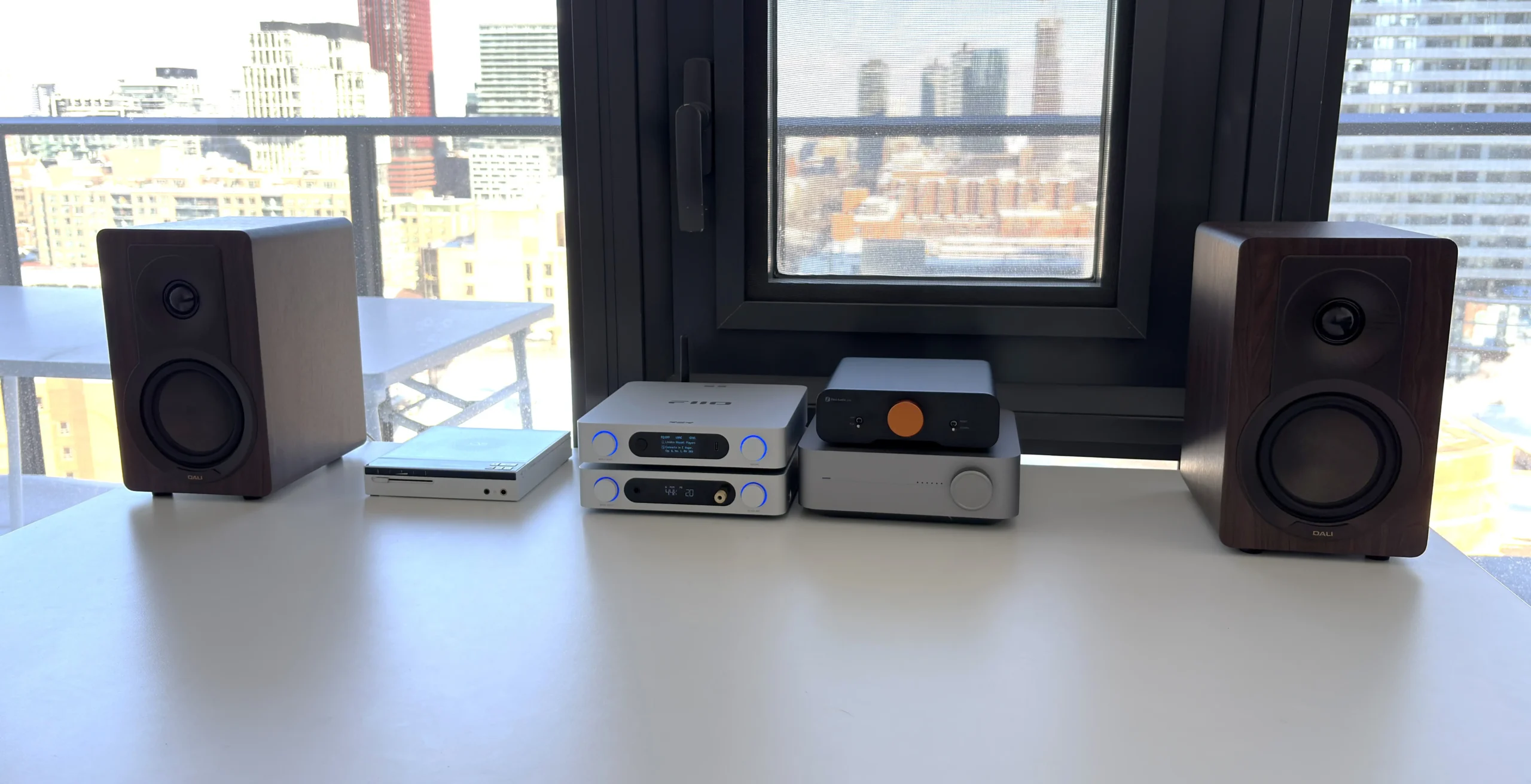
The KUPID features a 26mm soft dome tweeter that sits in what DALI calls a “mildly dished waveguide”. Sounds fancy, but it’s really about getting that tweeter to blend seamlessly with the midrange driver below it. The baffle design helps create what DALI describes as a natural, cohesive soundstage.
What you get is detailed, extended highs that don’t sound harsh or fatiguing. The soft dome construction keeps treble response smooth while the wide dispersion design creates a sweet spot that’s bigger than what you’d expect from budget speakers. Basically, DALI took engineering tricks from their expensive speakers and brought them here.
The midrange driver uses DALI’s paper and wood fiber cone material, which is something they’ve been refining for decades. Combined with the ferrite magnet system and low-loss rubber surround, you get fast, tight bass response and dynamic midrange performance. The driver cone even matches the cabinet finish, a small detail that shows they cared about more than just the sound.
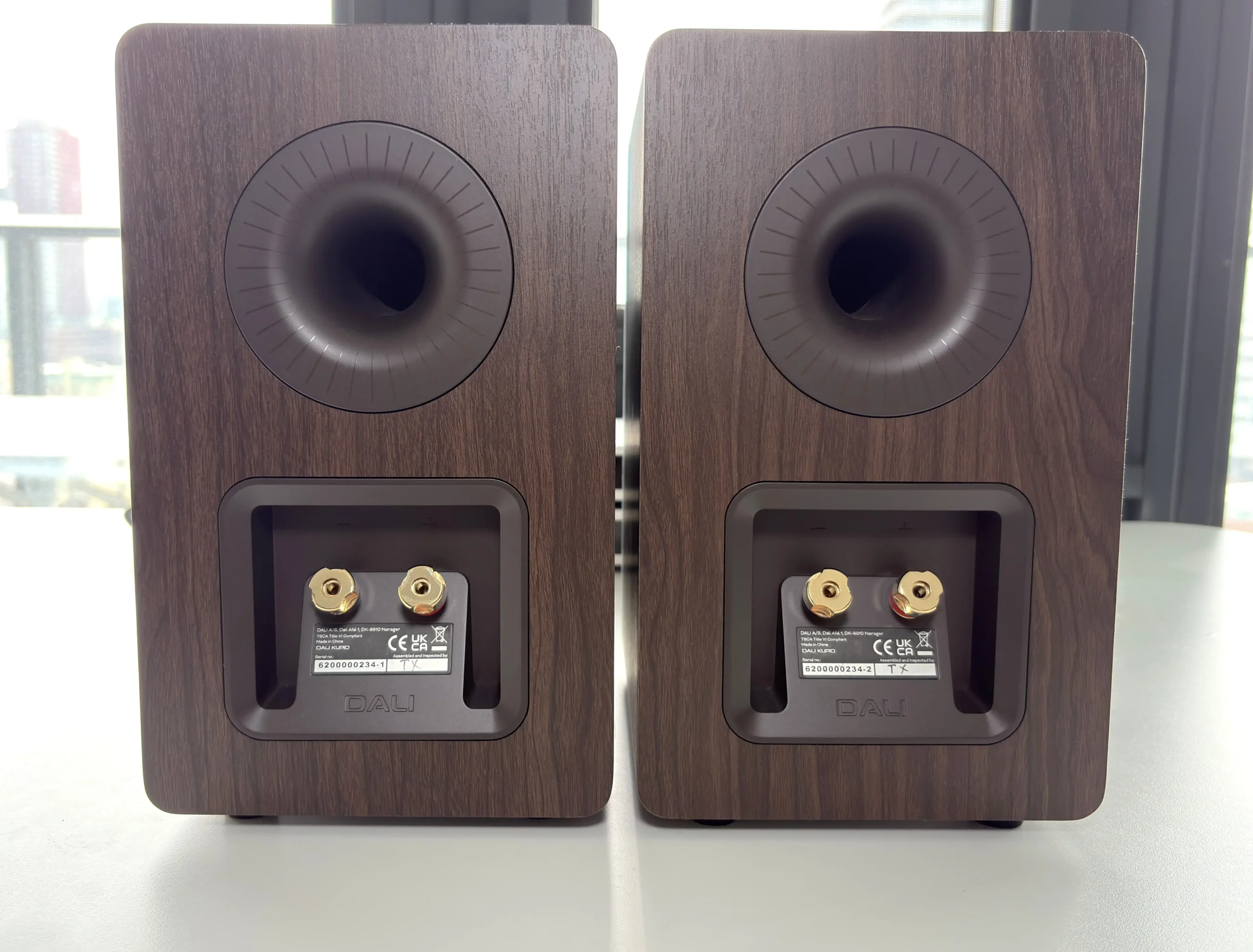
The rear-firing bass reflex port uses DALI’s dual-flare design, which sounds like marketing speak until you realize it’s precisely tuned to optimize airflow and minimize resonances. More importantly for real-world use, you can place these speakers as close as one inch (25mm) from a wall without affecting the sound. That flexibility matters when you don’t have room for dedicated stands. The downside? That rear-firing design makes shelf mounting a bit less ideal than speakers with front or bottom-firing ports.
Setup and Amplification
Setting up the DALI KUPID is refreshingly straightforward. This is important as these are marketed as an accessible entry point to passive bookshelf speakers, so odds are someone who is buying these will be setting up their first speaker system.
For my testing, I had the KUPID set up on my “audio table” in my home office. The included rubber feet keep the cabinets rock-steady on desk surfaces without any unwanted vibrations, and the compact footprint doesn’t eat up too much workspace.
DALI takes a slightly unusual stance on speaker positioning. They design their speakers so that toe-in (angling the speakers towards you) isn’t necessary, instead relying on wide dispersion that keeps the frequency response consistent both on-axis and off-axis. The owner’s manual actually shows toe-in with a big red X through it.
This approach stems from DALI’s directivity management, where the frequency response stays relatively flat even when you’re sitting slightly to one side. The result is a sweet spot that extends beyond what most budget speakers offer, making shared listening more enjoyable.
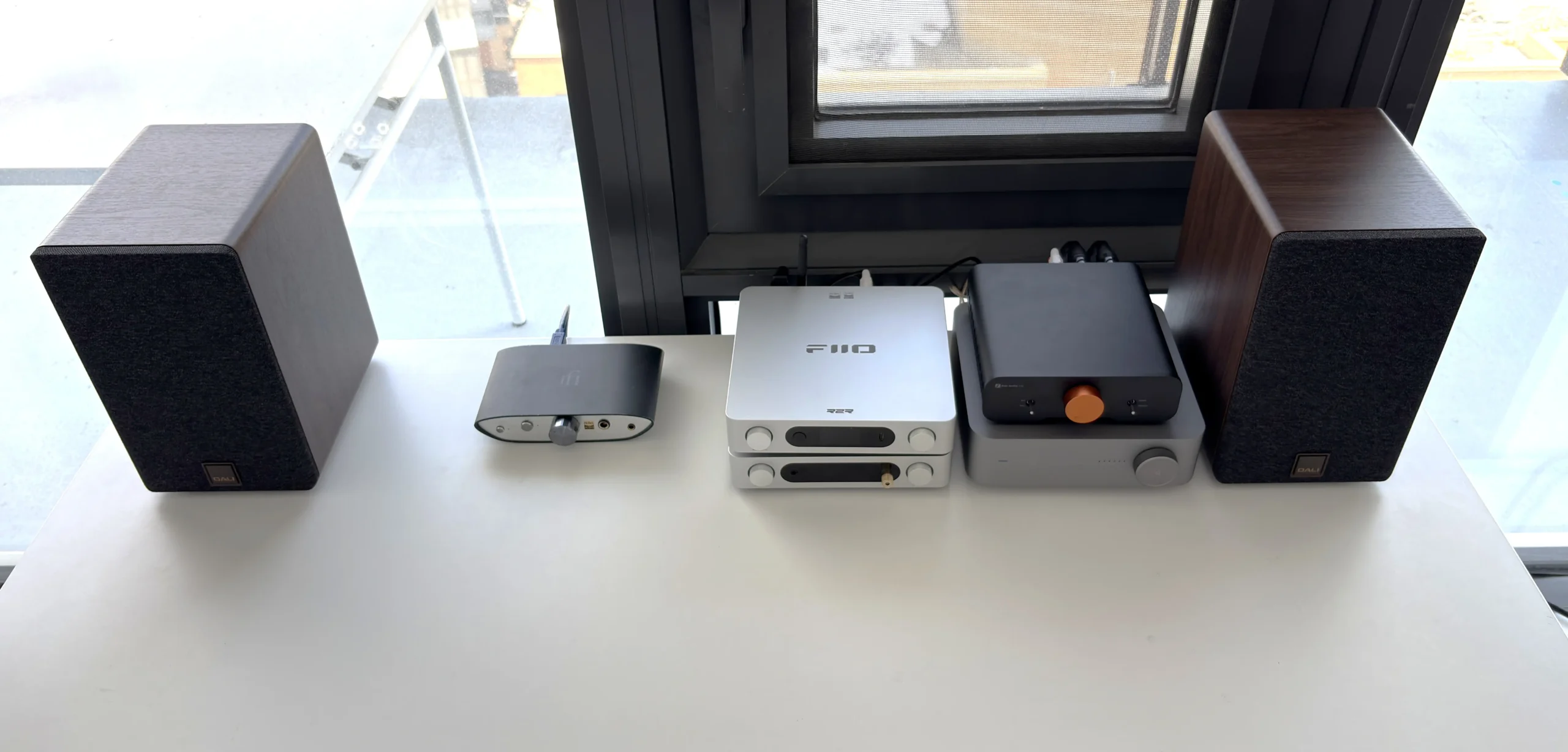
Distance from walls matters more than angling. I set up the speakers about 2.5 inches away from the wall and got good bass extension. Moving them away from the wall to about 5 inches gives you slightly tighter bass performance. Your room size and whether you’re using a subwoofer will determine the best compromise here.
DALI recommends 40 to 120 watts to drive the KUPID, and with a 4-ohm impedance, that means these speakers need proper amplification to wake up. The impedance does stay above 4 ohms consistently, helping compatibility with budget amps that struggle with really low loads. Don’t get hung up on just the wattage numbers, though. Current delivery, damping factor, and power supply quality also matter.
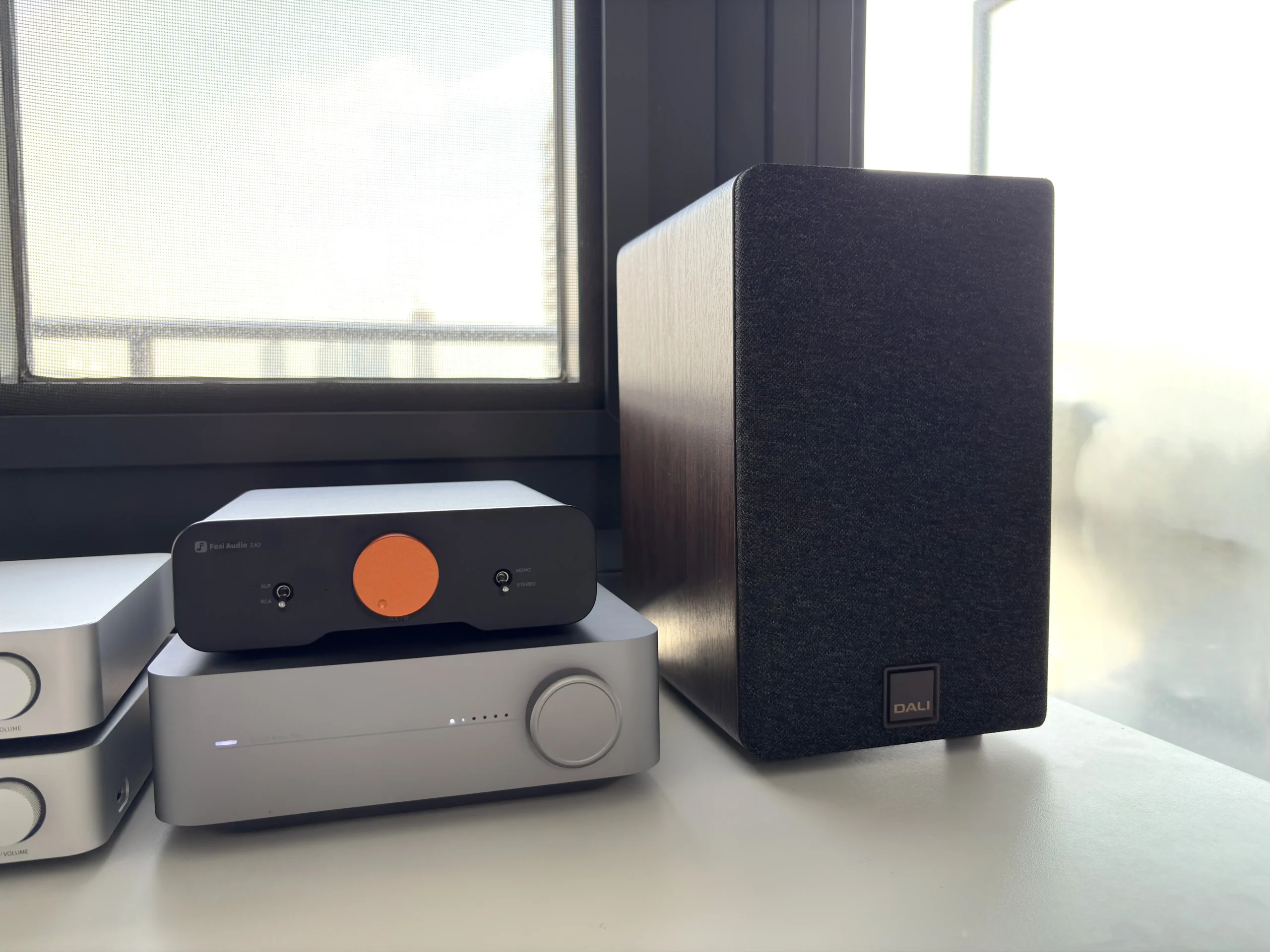
I tested with both the Fosi Audio ZA3 and a WiiM Amp Pro, both of which have more than enough power for the KUPID. Both use class D amps, meaning you don’t need to invest in anything crazy here. With the Fosi Audio ZA3, I barely had to turn the volume up before it was sufficient to fill my apartment’s home office with sound, so you can definitely get away with something slightly less powerful.
Sound Quality
Amps used for this review:
- Fosi Audio ZA3
- WiiM Amp Pro
Audio Sources used for this review:
- FiiO K13 R2R
- FiiO BR15 R2R
- iFi ZEN DAC V2
- Shanling EC Zero AKM
Links to my music playlist used for the majority of testing:
The main attributes of the DALI KUPID’s sound are that they are lively and full of energy, with a character that leans warm rather than sterile. There’s a subtle treble emphasis that never turns harsh, instead bringing focus to textures and details without fatigue.
The overall balance prioritizes musical engagement over clinical accuracy. Vocals sit prominently with delicacy and depth, while the warm midrange pairs nicely with extended treble. I never found myself heaving to lean in to hear the details, nor did I ever find myself leaning back out of boredom. The KUPID gives you enough detail to feel immersed, but it never enters clinical territory that could ruin musical engagement. There’s sort of something for everyone here.
Bass
Bass performance focuses on control and speed rather than depth. The low-end feels tight and quick, keeping basslines tuneful and punchy. My testing revealed a subtle upper bass boost that adds warmth without the bloat you’d expect from poor tuning.
Physics dictates what a 4.5-inch driver can do in this cabinet size. Running full-range, the speakers handle most material without audible port noise until pushed well beyond their comfort zone. Adding a subwoofer would definitely give more depth and texture to the bass, but on their own, the KUPID handles most bass-heavy genres just fine without introducing distortion. This applies whether I am listening to the plucking bass lines of Dire Straits’ Six Blade Knife, or the digital bass notes of deadmau5’s Avaritia.
Midrange
The midrange is where the KUPID really shines. Listening to The River Rise by Mark Lanegan showcased natural, authentic vocal reproduction, with texture and nuance remaining intact even at higher volumes. The KUPID even captured pressure variations on piano keys during Stephen Kovacevich’s rendition of Beethoven’s Piano Sonatas No. 14, which is a detail that exceeds what you’d expect at this price.
Midrange clarity was obviously a key part of the tuning, as instruments and vocals both sound honest and present, with no audible peaks or dips ruining the sound. This is an accessible midrange done right.
Treble
The treble extends smoothly without drawing unwanted attention or causing fatigue. The soft dome tweeter delivers brilliant, well-dispersed highs with minimal distortion, handling everything from cymbal shimmer to falsetto vocals with precision. More importantly, harsh recordings never sound shrill or piercing. What this means is the KUPID won’t extend as extremely as more high-end speakers do, which is a trade-off at this price. There’s a gentle roll-off that helps avoid the shrill or piercing characteristics of some tracks that I mentioned earlier.
In the mix, there’s good air and detail, and I heard no obvious harshness even on strongly sibilant tracks. Dynamics and timing help deliver an energetic high-frequency performance. However, if you choose to use the KUPID as nearfield speakers, like on a desk setup where you are sitting less than 3 feet from them, they will sound brighter.
Soundstage and Imaging
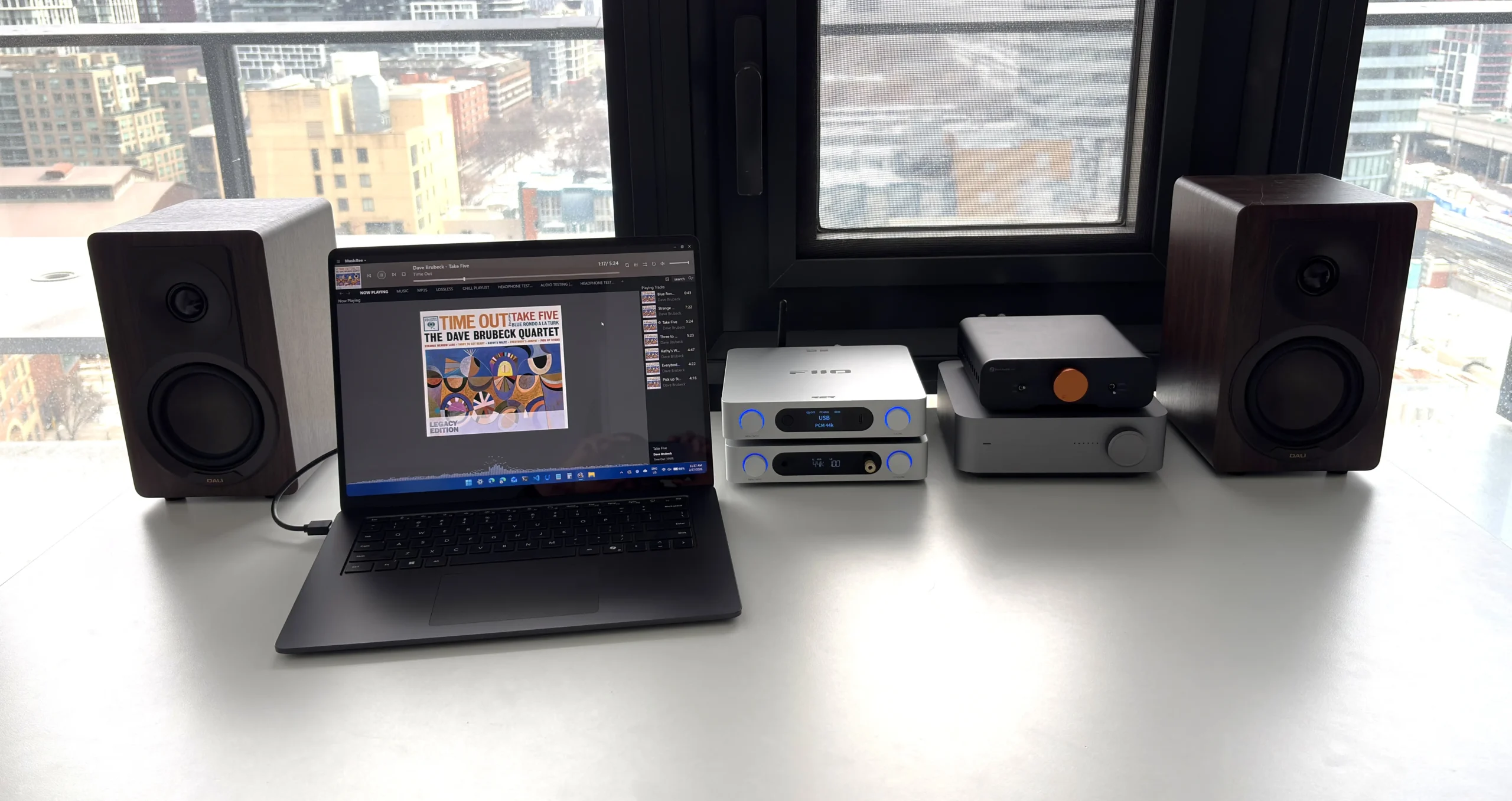
Despite its small baffle, the KUPID delivers an impressively wide soundstage with stable imaging performance. Instruments get adequate breathing room and proper placement. If you’re coming from a soundbar, you might be surprised at the refreshing precision that a 2.0 speaker system can deliver. One of my favorite tracks to listen to with the KUPID is Dave Brubeck’s Take Five, as you can “see” where each instrument is in the mix.
Dynamic Performance
Dynamic capabilities proved surprisingly strong, almost shocking. The KUPID maintains snappy timing with a fleet-footed quality that keeps pace with most musical styles. This agility makes them particularly engaging with rhythmically complex material, where timing accuracy matters more than absolute scale.
Final Thoughts
If you’re just getting into hi-fi, the DALI KUPID offers a straightforward setup and reliable, consistent performance. Anyone needing quality sound in small spaces and who values attractive design and color options, or is building a secondary system, should definitely consider these. Just remember, you’ll need a somewhat capable amplifier to make them truly sing.
On the flip side, if you need full-range bass without a subwoofer or you’re trying to fill a very large room, look elsewhere. These speakers excel within their limits but won’t pretend to be something they’re not.
The DALI KUPID delivers on its promise of bringing Danish engineering to the budget bookshelf market. That warm, engaging sound signature paired with genuinely attractive design options makes these speakers stand out in a crowded category. If the $599USD/£299 pricing is within your budget, they’re almost a no-brainer purchase.
I’d recommend the KUPID to anyone looking for their first serious bookshelf speakers or building a secondary system where both sound and looks matter. Just make sure your amplifier is up to the task, as these speakers will only be as good as what you pair them with.


Purchase Links
Buy from Amazon: https://amzn.to/4aFcmZ1
Check other Online Stores: https://geni.us/5caxh
The above links may be affiliate links. All commission earned through them goes directly to maintaining this site and bringing you more audio reviews.
I’m not always able to cover all the details of a product, both hardware and software, in our reviews. If you have any specific questions about this product, please feel free to leave a comment or contact me directly.
Be sure to check out our excellent Buyer’s Guides, as well as our other Reviews.
HiFi Oasis Verdict
HiFi Oasis Verdict-
Design & Build Quality9/10 Amazing
-
Sound8/10 Very good
-
Features/Accessories8/10 Very good
-
Value8/10 Very good
Pros
- Lively, energetic, warm-leaning sound signature
- Excellent midrange clarity and vocal reproduction
- Smooth, non-fatiguing treble response
- Tight, controlled bass with good punch
- Impressive imaging and wide soundstage
- Strong dynamic performance and rhythmic agility
- Rounded cabinet edges and high-quality finish
- Wide dispersion design (no toe-in required)
- Can be placed relatively close to a rear wall (as little as 1 inch)
- Great overall value
Cons
- 4-ohm impedance and 83dB sensitivity require capable amplification
- Limited deep bass extension
- Can sound brighter in nearfield setups
- Not suited for filling large rooms
- "Budget" price is subjective


