







Disclosure: I’d like to thank FiiO for providing me with the BR15 R2R for this review. All thoughts and opinions are my own, and FiiO had no say or input on the contents of this review.
I’ve spent a while now with the FiiO BR15 R2R, and I can confidently say it’s a unique little device in the audiophile world. The BR15 R2R is essentially a compact desktop Bluetooth receiver and DAC that uses a 24-bit R2R ladder DAC architecture, all in a box about the size of a small book. Priced at around $199 USD, it’s aimed at enthusiasts who want a do-it-all digital hub without breaking the bank. This unit is not a traditional headphone amp (it actually has no headphone jacks); instead, it’s designed to feed your powered speakers, studio monitors, or external amplifiers with high-quality analog or digital audio. In short, the BR15 R2R is for audiophiles who crave convenience (Bluetooth streaming, multiple inputs and outputs) but don’t want to sacrifice sound quality. It’s a one-stop DAC/preamp solution for both modern and classic setups.
Despite its affordable price, the BR15 R2R doesn’t skimp on tech. It features the latest Bluetooth 6.0 chipset that supports practically every codec an audiophile could ask for: SBC, AAC, aptX, aptX HD, aptX Adaptive, aptX Lossless, and LDAC. From my perspective, it’s positioned as the ideal centerpiece for a desktop or living room audio system, especially for someone who wants to seamlessly switch between streaming music from a phone or tablet, using a PC or CD transport, and outputting to different speakers or amps. There’s a lot to cover, so let’s get into it.
Key Specifications
- Product Page: https://www.fiio.com/br15r2r
- MSRP: $199 USD
- Core Processor/Chipset: XMOS XU316, ESP32-S3 SOC
- DAC Components: FiiO proprietary true 24-bit R2R DAC
- Bluetooth Chipset: Qualcomm QCC5181
- Bluetooth: 6.0 (LC3, SBC, AAC, aptX, aptX HD, aptX Adaptive, aptX Lossless, LDAC)
- Connectivity:
- Inputs:
- Bluetooth 6.0
- 2x USB-C (data only)
- Optical
- Coaxial (combo in/out)
- Outputs:
- Balanced XLR
- 2x RCA
- Coaxial (combo in/out)
- Optical
- Inputs:
- Supported Sample Rates and Formats:
- USB input: Up to 32-bit/384kHz PCM, DSD256, MQA full decoding (PEQ off)
- Coaxial input: 24-bit/192kHz, DSD64
- Optical input: 24-bit/96kHz, DSD64
- Coaxial output: 24-bit/192kHz, DSD64
- Optical output: 24-bit/192kHz, DSD64
- Features:
- Global 10-band PEQ (through FiiO Control app)
- Infrared remote control
- AC/DC dual power supplies
- DAC NOS/OS modes
- Power:
- AC 100-240V~50/60Hz, or
- DC 5V/≥2A
- Dimensions and Weight:
- 210mm x 188mm x 42mm (including feet)
- Weight: 760g
In the Box
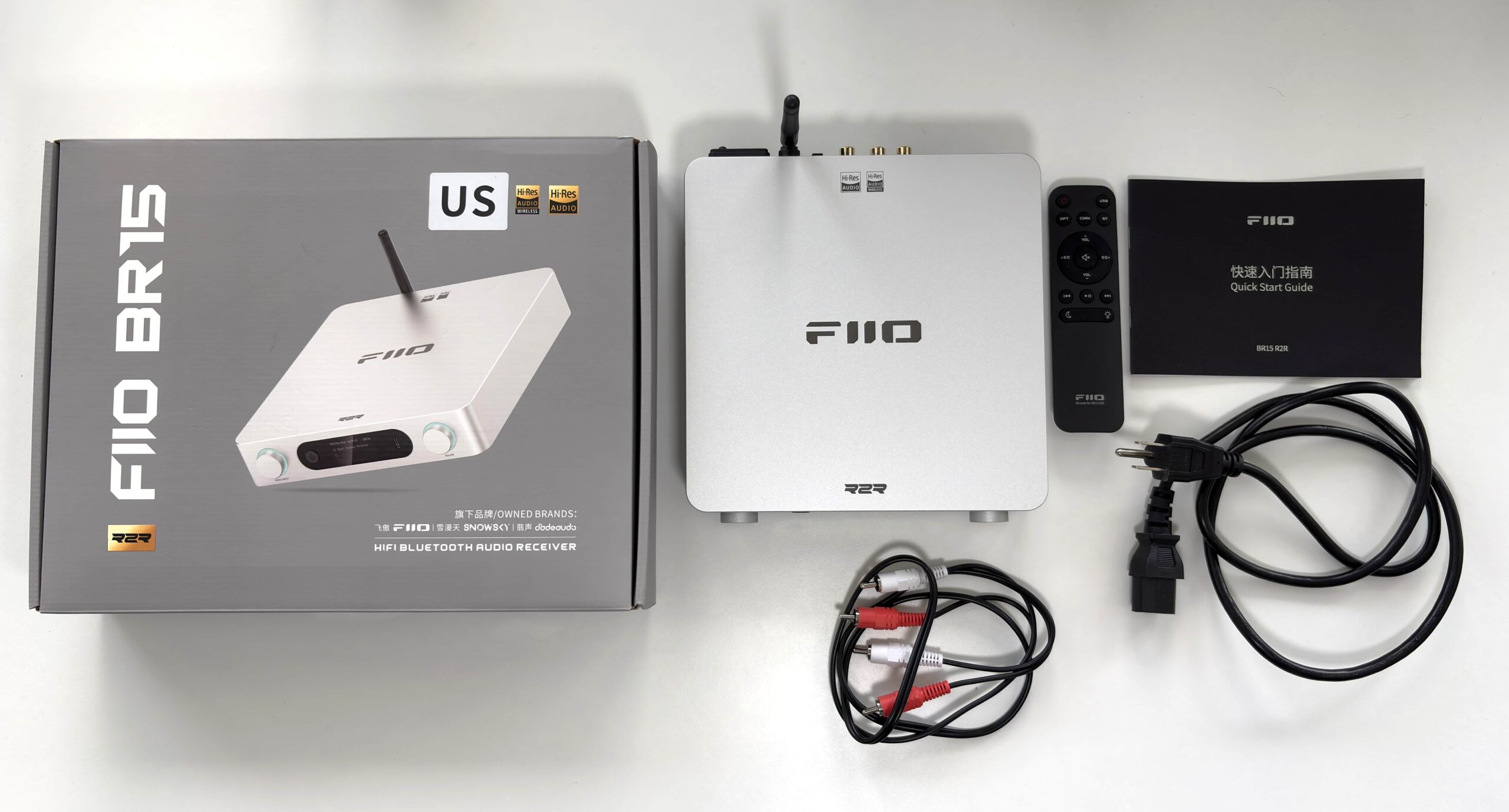
- FiiO BR15 R2R
- Remote control
- AC power cord
- RCA cable
- Manual
Design & Build Quality

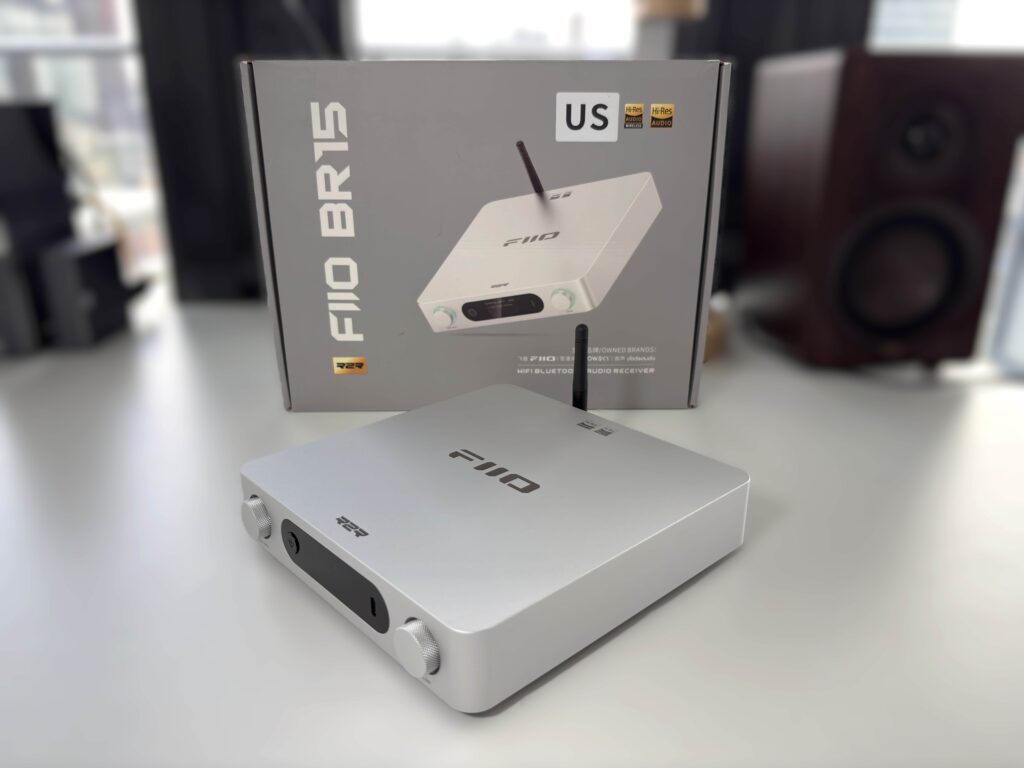
First impressions: the BR15 R2R is a sleek and modern-looking box that doesn’t take up much space on my desk. If you’re familiar with FiiO’s K13 R2R DAC/Amp, the BR15 R2R has exactly the same dimensions as it. Similarly, the chassis is a single block of CNC-machined aluminum, with an anodized finish available in either black or silver. My unit is silver, and it has a nice matte sheen that resists fingerprints and scratches during use. The build quality feels extremely solid and premium in the hand, and at about 760 grams in weight, it’s not overly heavy, but it’s dense enough to feel like a quality device. The minimalist design language FiiO used here really appeals to me: on the front panel, you have just two knobs and a small oval display, with a discreet power button off to the side. There are no gaudy accents or excessive lights, it’s clean and functional, fitting nicely into both my studio setup and living room shelf without drawing unwanted attention. Even the RGB lights around the knobs can be tuned or even disabled completely. I have noticed what appears to be a bug, where the device sometimes does not remember the RGB color you set it to. This usually occurs after a power cycle (turning off and then back on).

The front OLED display is about 1.5 inches diagonally, showing all the info you need: input, volume level, sample rate, Bluetooth codec, track info, EQ mode, etc. Despite its modest size, the resolution is high enough that text (like song titles and settings) looks crisp and is actually readable from a reasonable distance. I could sit at my desk and see the track name and codec indicator at a glance, which is a nice touch for a device in this price range. You can even customize the display theme. There are three different theme options, so you can match it to your taste or room lighting. Here are some pictures of the interface, as well as a video walking through it:


The BR15’s front panel sports a USB-C port, which is meant for auxiliary input (more on that later). The rest of the I/O is on the back: balanced XLR outputs, two RCA outputs, coaxial combo in/out connection, USB-C input, dedicated optical input and output connections, Bluetooth antenna, and the DC and AC power connections and switches.


The two front control knobs are another standout aspect of the design. They’re backlit by RGB LED rings that change color according to the audio sample rate of the input. It’s a neat visual touch (for example, high-res tracks light the rings differently than standard 44.1 kHz streams), and you can adjust these ring colors or even set them to cycle or stay solid. Both knobs have a tactile, notched rotation and also serve as buttons when pressed in. The left knob navigates menus/settings, and the right knob is your volume control (pressing it can confirm selections). I found the action on both to be smooth and precise, with a satisfying clickiness to each. It definitely feels like FiiO paid attention to these details.
The BR15 R2R also comes with a pretty decent infrared remote, making it extra convenient to use in a living room situation. Note that the AAA batteries that are needed for it are not included.

Overall, I’m impressed with the BR15 R2R’s build. It manages to feel well-engineered and durable while remaining lightweight and compact. The design is user-friendly and attractive: nothing feels cheap, the knobs and buttons are sturdy, and the chassis has no flex or creaks. It’s the kind of device that looks unassuming on a desk, yet upon closer inspection, it has attention to detail (like those LED rings and that little high-res display). If I had to nitpick anything, I’d say the small screen can’t really be read from across a large room, so if you place it far from your listening position, you won’t easily see the details on the display. When it’s on a desk or shelf near you, it’s perfectly fine. In terms of durability, after a few weeks of plugging and unplugging cables, stacking other gear on top, and general daily use, I don’t see any scratches or issues. The aluminum finish is holding up well, so it definitely gives an impression of longevity, which inspires confidence that this unit will last.


FiiO Control App
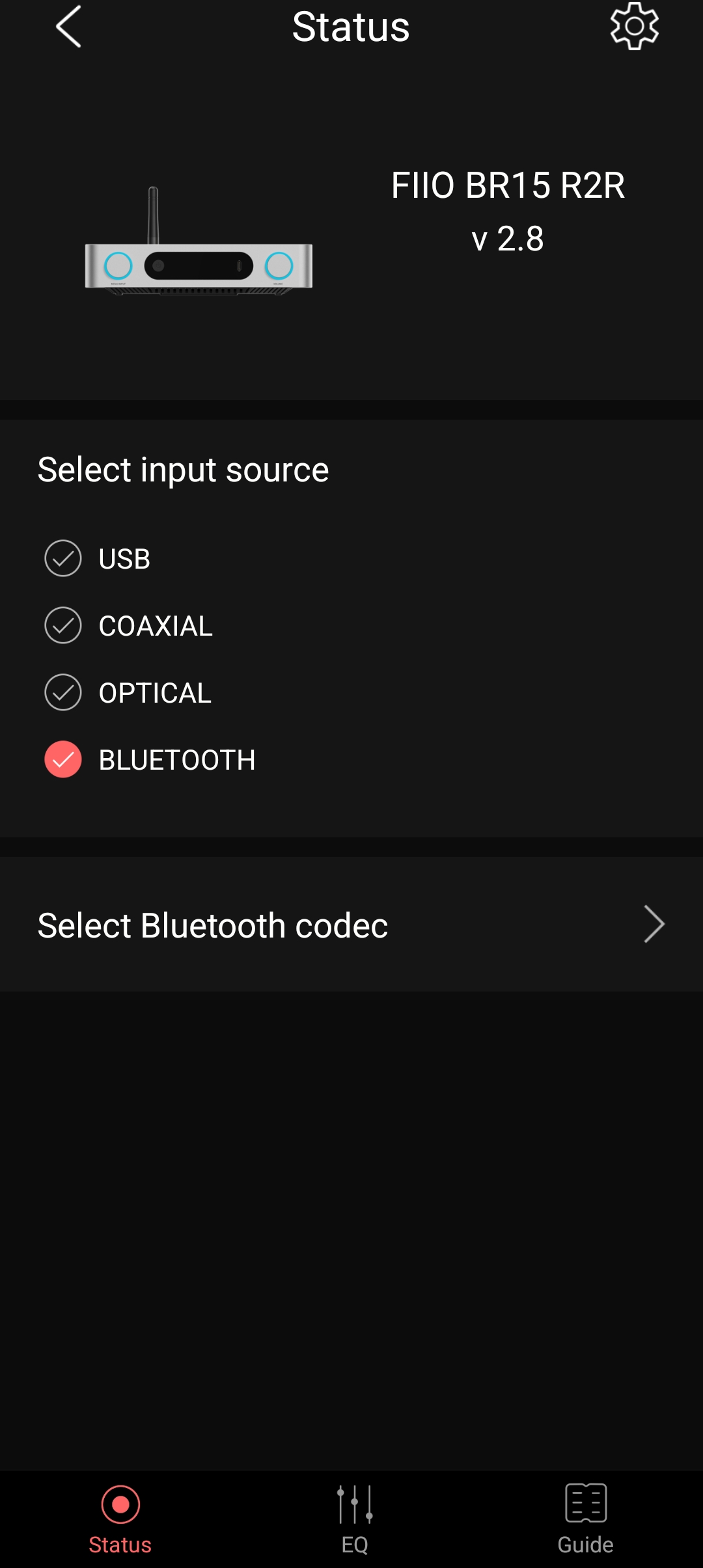
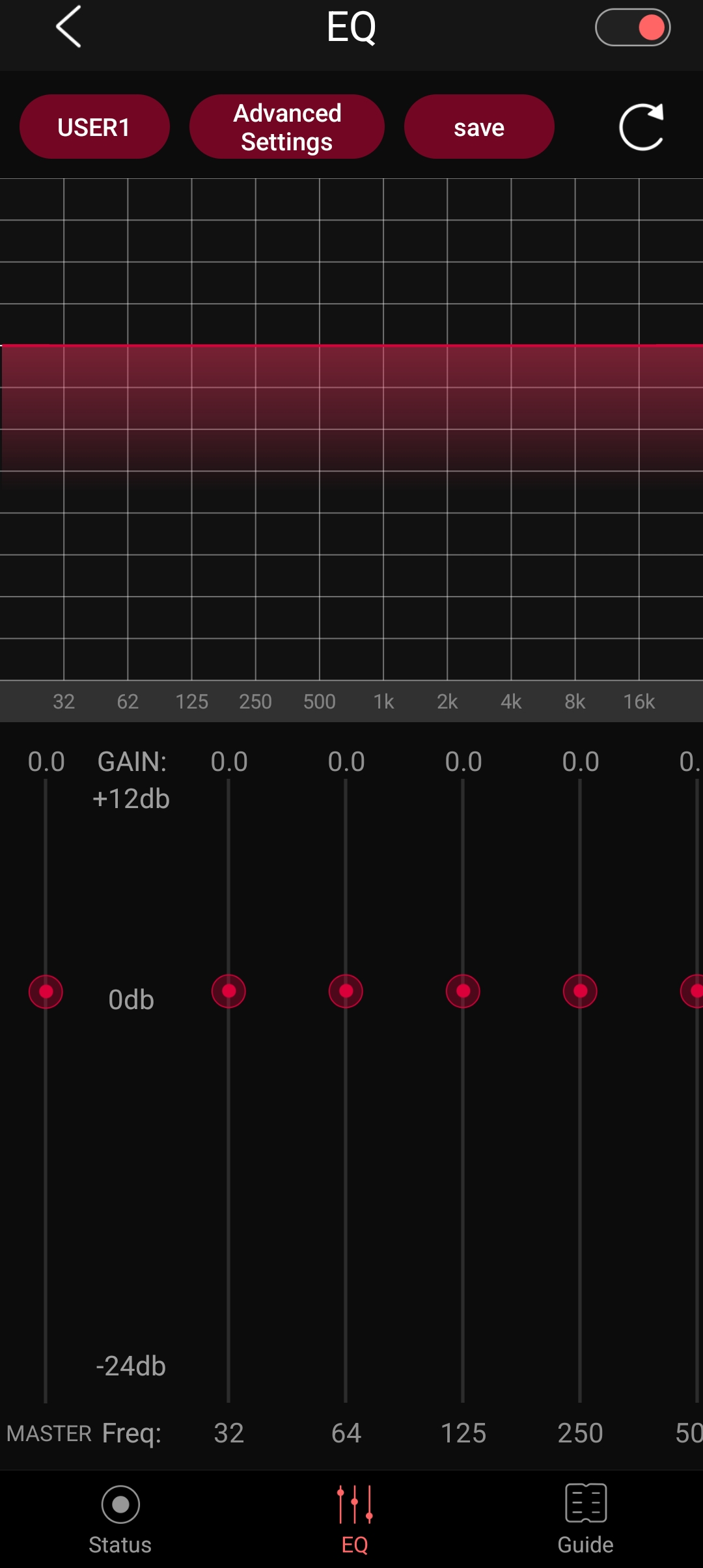
One of the BR15 R2R’s greatest strengths is how it integrates with FiiO’s companion smartphone app, FiiO Control. As someone who has used many DACs and streamers that lack any app control, this was a welcome change, as it makes accessing the BR15’s features and settings much more convenient. Setting up the app is straightforward: I downloaded FiiO Control on my phone (it’s available for iOS and Android), and the app immediately sees the BR15 R2R over Bluetooth. Through the app’s interface, I can remotely control many of the device’s functionalities. For example, I can change the active input with a tap (switch between USB, optical, coax, or Bluetooth input without getting up). I can also select the Bluetooth codec priority – the app lets me toggle codecs on or off, which is useful if I want to force a connection in LDAC or aptX mode for best quality. All the 10-band EQ settings are accessible as well: you get presets (Jazz, Pop, Rock, etc.) and full parametric EQ (PEQ) customization from the app, with the ability to fine-tune frequencies to your liking. There are 10 custom EQ slots available to use.
FiiO also just happened to roll out a new version of FiiO Control with an updated UI as I was writing this review. I haven’t used it extensively yet, but it provides the same functionality and a similar interface as the old UI. The screenshots below are from the old UI:




Connectivity Options

If you look at the back panel of the BR15 R2R, it becomes obvious that this little box was meant to be the central hub of an audio system. FiiO packed in just about every type of output (and input) you’d need. Let’s break down the outputs first and discuss practical uses:
Balanced XLR Outputs (L/R) – This is one of the headline features, in my opinion. The BR15 R2R provides a pair of full-sized XLR output connectors (left and right), which output a balanced line-level signal. This is fantastic for those using studio monitors or pro audio gear, as well as anyone with an amplifier or powered speakers that accept XLR. It’s rare to see balanced outputs on a ~$200 DAC, and FiiO implementing this is a big plus as it allows the BR15 R2R to slot into higher-end systems without being a bottleneck.
Dual RCA Line Outputs – Next to the XLRs, the BR15 R2R has two pairs of RCA outputs, labeled “Line Out”. These are unbalanced (single-ended) line-level outputs. In practice, you can use these to connect the BR15 to any standard analog input on an amplifier, receiver, or powered speakers. The fact that there are two pairs is interesting, as it means you could conceivably feed two destinations at once. For example, you might connect one RCA pair to a headphone amplifier and the other to a pair of powered bookshelf speakers, and use one or the other as needed. In my testing, both RCA outputs are active simultaneously and controlled by the BR15’s volume knob (this isn’t explicitly stated in the manual I had, but they behaved like parallel outputs). I actually took advantage of this by hooking up one RCA pair to my Fosi ZA3 amplifier I use for the DALI KUPID speakers I’m testing, and the other to the FiiO K13 R2R, so I can listen using headphones and IEMs. I also did test this with my FiiO SA1 speakers by connecting to them directly, since they are powered (active) speakers.
Optical and Coaxial Digital Outputs – The BR15 R2R isn’t just a DAC, it can also act as a digital bridge or converter. It features both Toslink optical output (the top optical port) and a coaxial output (also serves as a coax input). These outputs will pass a digital audio signal out of the BR15 R2R when you’re using a different input. For instance, if you stream via Bluetooth into the BR15, you can have it output that stream in digital form to another DAC or device via the optical or coax out. I tested this by connecting the BR15’s optical out to the FiiO K13 R2R and, effectively, the BR15 acted as a Bluetooth-to-digital transmitter, sending the digital audio to the K13 – and it worked flawlessly. This means the BR15 R2R can serve as a high-quality Bluetooth receiver that feeds an external DAC if you ever want to upgrade the DAC later or use multiple DACs. It’s a lot of flexibility for one unit. Keep in mind, the coaxial port is a single jack that functions as either input or output, depending on mode. In the BR15’s menu, you choose “Coaxial In” mode to use it as an input, or if you’re in any other mode (USB, BT, etc.), that coax jack will output the digital stream.
The USB-C ports on the front and back allow you to connect a source device (laptop, PC, DAP, smartphone, etc) through USB, and input audio to the BR15. The BR15 R2R supports up 32-bit/384kHz sampling rates, DSD256, and full MQA decoding. This is convenient if you have the BR15 R2R setup in a living room situation and want to play audio through it from a desktop PC or other device that lacks Bluetooth.
One quick note: If you connect both the front and rear USB-C ports (for example, two computers or a phone and a PC at the same time), the front port takes priority by default, and the rear USB-C port will be disabled. In fact, FiiO recommends using the front USB-C port to perform firmware updates.
You also have optical and coax inputs (though, as mentioned, the coaxial port is a shared input/output port). How I used this was connecting a CD player, such as the Shanling EC Zero AKM, to the BR15 using a 3.5mm to TOSLINK cable. FiiO’s DM13 (and recently released DM15 R2R) can also be connected this way, or by using coax via their included 3.5mm to coax adapter.
Bluetooth Performance

One of the main reasons you might consider the FiiO BR15 R2R over a conventional DAC is its Bluetooth capabilities. FiiO marketed this as a “High-Resolution Bluetooth Audio Receiver”, and it lives up to that title. The device uses Qualcomm’s QCC5181 Bluetooth 6.0 platform, which is cutting-edge in terms of wireless audio tech. In practical terms, the Bluetooth performance of the BR15 has been excellent in my experience. Pairing my devices was painless: I just selected “FiiO BR15 R2R” on my phone and laptop, and they connected immediately with no strange pairing codes or hiccups. The BR15 supports the latest hi-res codecs, including LDAC and aptX Lossless for the highest quality streams. In fact, it supports SBC, AAC, aptX, aptX HD, aptX Adaptive, aptX Lossless, LDAC, and even LC3 – basically every codec currently relevant. This means whether you’re on an iPhone (AAC) or an Android (where you can use aptX/LDAC), the BR15 has you covered for the best quality that device can transmit.
In daily use, I primarily streamed music from an Android phone that supports LDAC and a DAP using aptX Lossless thanks to FiiO’s Air Link and Sennheiser’s BTD 700 dongles. With LDAC at the highest quality setting (990 kbps), I was effectively getting near lossless audio quality over the air. I was honestly hard-pressed to tell the difference between playing a song over LDAC vs playing it via USB – the BR15’s Bluetooth input sounded virtually as good as wired for most music. That’s a huge compliment, and it speaks to the robust implementation here. FiiO even included support for aptX Lossless, which can, in theory, deliver bit-perfect CD quality (16-bit/44.1kHz) with a 2.1mbps bitrate over Bluetooth. Using the previously mentioned dongles for aptX Lossless, the audio sounded excellent, though to be fair, aptX Lossless is not dramatically different from LDAC in audible terms – but it’s great future-proofing as more devices adopt it.
If you are playing audio from a smartphone, tablet, or DAP, the artist and track name can be displayed on the screen, allowing you to easily see what’s currently playing if you are close enough to read the screen. This info does not get passed through when using dongles such as FiiO’s AIr Link or Sennheiser’s BTD 700, though.

The Bluetooth range is also very good. Thanks to the external antenna, I was able to walk all around my apartment (about 15 meters away through a couple of walls) without any dropouts. The connection remained stable and solid, and I never experienced stuttering or signal loss during music playback, even when I put my phone in my pocket and moved to another room. This stability gives a lot of confidence in using the BR15 as a primary source for casual listening sessions or background music at home.
Another aspect I tested is latency, since I sometimes like to watch videos or play games through a Bluetooth audio setup. The BR15 performed admirably here. When using aptX Adaptive (which can automatically adjust and lower latency) or even regular aptX, I found the audio sync with video content to be very acceptable – lips were in sync, and there wasn’t a distracting delay. FiiO’s use of the QCC5181 seems to have kept latency low enough “not to hinder the enjoyment of streaming videos”, and I concur. Using the LC3 codec, I watched a few YouTube music videos and Netflix shows with the BR15 receiving audio via Bluetooth and feeding my speakers, and I quickly forgot it was wireless. There was no noticeable audio delay that pulled me out of the experience. If you absolutely demand near-zero latency (for, say, competitive gaming), a wired connection is still best, but for everyday media consumption, the BR15’s Bluetooth is more than adequate.
I also appreciate how the BR15 handles multiple Bluetooth connections. It can pair with multiple devices, and you can switch between them relatively seamlessly. In my case, I paired both my phone and my laptop. If I were playing music from my phone and then wanted to switch to the laptop, I could just stop playback on the phone and initiate it on the laptop – the BR15 would quickly switch to the laptop audio and start playing. It remembered pairings reliably, so I didn’t have to re-pair each time. This is great for households where maybe two people want to take turns streaming, or if you have multiple source devices yourself.
One small thing to note: the BR15 R2R is strictly a Bluetooth receiver, not a transmitter. So you can’t use it to send audio from your wired sources out to Bluetooth headphones (that’s a different use case and would require transmitter functionality, which this device doesn’t have). It’s designed to receive Bluetooth audio from phones, tablets, etc., and output to speakers/amps. In that role, it’s pretty much the state-of-the-art right now for audio quality. Many other DACs or receivers top out at aptX HD or LDAC; few support aptX Adaptive, Lossless, and even LC3 as this unit does. So FiiO has made the BR15 R2R quite future-proof for Bluetooth audio.
Sound Quality
Sources used for this review:
- Apple iPhone 16 (AAC)
- FiiO AirLink (aptX Adaptive, aptX Lossless)
- Microsoft Surface Laptop 7 (USB)
- Samsung Galaxy Fold 7 (aptX, LDAC)
- Sennheiser BTD 700 (aptX Adaptive, aptX Lossless)
- Windows 11 Desktop PC (USB)
Output devices used for this review:
- FiiO K13 R2R (coax)
- FiiO SA1 (RCA)
- Fosi ZA3 (RCA)
- WiiM Amp Pro (RCA)
Links to my music playlist used for the majority of testing:
Spotify: https://open.spotify.com/playlist/6QSIhuCBDAUyoWGcyxPeN8?si=c0a4eb6bd3e3421e
Apple Music: https://music.apple.com/ca/playlist/hifi-oasis-audio-testing/pl.u-lKWlcjy04xp
Qobuz: https://open.qobuz.com/playlist/39521747
Tidal: https://tidal.com/playlist/503485c7-7f3d-43f0-b904-4b9a89c33875

Now onto the part that matters most: how does the FiiO BR15 R2R actually sound? I approached this device with a lot of curiosity because R2R DACs have a bit of mystique in the audio community. Some say they impart a unique warmth or “analog” feel, while others claim a well-designed R2R can be as neutral as any delta-sigma DAC. Given the BR15’s budget-friendly price, I was wondering if there would be audible compromises or a distinctive flavor to its sound. After extensive listening through multiple systems, I’ve come away impressed as the BR15 R2R delivers a clean, engaging, and surprisingly transparent sonic performance.
The first thing I noticed is that the BR15’s tonal balance is extremely neutral. By that I mean, it doesn’t exhibit any obvious coloration. The bass, midrange, and treble are presented in a balanced manner without any part of the sound sticking out unnaturally. FiiO appears to have tuned this DAC to be a true source chameleon: it presents what is played without changing the underlying sound of the source. In other words, it’s not adding its own warmth or brightness; any coloration you hear is really coming from the recording itself or other parts of your chain. This neutrality was apparent across genres. When listening to acoustic singer-songwriter tracks, vocals came through pure and unembellished – neither pushed forward nor recessed. Switching to classical orchestras, the strings and brass had their natural timbral balance, and electronic music had the intended amount of bass without extra bloom.
However, and this is key, neutral on the BR15 R2R does not mean boring or clinical. Some highly neutral sources can come across as sterile, lacking emotion or musicality. The BR15 manages to avoid that trap. The sound has a certain organic quality to it that keeps music sounding lively and full of soul. When I say organic, I mean that instruments and voices have a natural body and warmth when they’re supposed to. In short, the BR15’s sound is engaging and inviting rather than analytical, despite its neutrality.

One interesting contrast I found is the audible difference between outputting the BR15’s audio to the WiiM Amp Pro and the Fosi ZA3 amplifier. Both were connected via RCA, but the WiiM Amp Pro has its own internal DAC, whereas the Fosi ZA3 is just an amplifier. I tested the output using both amps to a pair of passive DALI KUPID speakers, and I much preferred the Fosi’s audio output. It sounded lively and engaging, with excellent detail and an overall natural sound. The output from the WiiM sounded slightly recessed in the midrange, and the audio mix a bit claustrophobic.
Final Thoughts

Wrapping up my time with the FiiO BR15 R2R, I have to say this device hit the mark for what it set out to do. FiiO wasn’t trying to create a price-is-no-object reference DAC here; instead, the BR15 R2R is meant to be that one device that can easily integrate into your existing system and make it many times better and more convenient for day-to-day use. In that role, it absolutely succeeds. Considering its feature set and performance at $200 USD, I’d call the BR15 R2R a stellar value.
I think the BR15 R2R is a no-brainer for audiophiles or enthusiasts who have a mix of digital sources and want a convenient way to manage them. If you have a pair of good powered speakers on your desk (or a nice speaker setup in your room), and you want to be able to play music from your phone, your computer, maybe a TV or CD player, all through one DAC/Preamp, the BR15 is made for you. It will let you do all that with minimal cable swapping and with the ability to fine-tune things via the app. It’s also great for someone who’s curious about the R2R DAC sound without spending a fortune; it provides that ladder DAC experience and quality in an affordable, user-friendly package. If you value convenience (Bluetooth streaming, remote control, app control) but also care about sound quality and don’t want a cheap-sounding device, the BR15 R2R strikes a fantastic balance.


Buy from Amazon: https://amzn.to/4qz0flu
Buy from AliExpress: https://s.click.aliexpress.com/e/_c3JsVphL
Buy from HiFiGo: https://bit.ly/4jhe9pL
The above links may be affiliate links. All commission earned through them goes directly to maintaining this site and bringing you more audio reviews.
I’m not always able to cover all the details of a product, both hardware and software, in our reviews. If you have any specific questions about this product, please feel free to leave a comment or contact me directly.
Be sure to check out our excellent Buyer’s Guides, as well as our other Reviews.
HiFi Oasis Verdict
HiFi Oasis Verdict-
Design & Build Quality9/10 Amazing
-
Sound9/10 Amazing
-
Features/Accessories9/10 Amazing
-
Value8/10 Very good
Pros
- True 24-bit R2R DAC implementation with clean, neutral, and engaging sound
- Outstanding Bluetooth performance with full codec support (LDAC, aptX Lossless, aptX Adaptive, LC3, etc.)
- Stable Bluetooth range and low latency for video and casual gaming
- Multiple input options (2× USB-C, optical, coaxial, Bluetooth)
- Balanced XLR outputs
- Acts as a flexible DAC, preamp, and digital bridge (analog + digital outputs)
- Strong build quality with CNC-machined aluminum chassis
- Dual power options (AC or DC) add setup flexibility
- Customizable display and RGB lighting
- Excellent value for money at $199 with a very feature-rich spec set
Cons
- Small display can be hard to read from across a larger room
- Bluetooth receiver only, no Bluetooth transmit capability
- Remote control doesn't include batteries (I'm really nit-picking here, though)
- Device would sometimes forget the configured RGB settings


