


Disclosure: I’d like to thank Carina at Linsoul for providing me with the Punch Audio Portazo for this review. All thoughts and opinions are my own, and Linsoul had no say or input on the contents of this review.
The Punch Audio Portazo is the second release from this emerging brand, following their bass-focused Martillo. Priced at $189 USD, the Portazo is a hybrid IEM that combines a dynamic driver with dual planar magnetic drivers in what Punch Audio describes as their more accessible offering. It features a 102 dB sensitivity with a 10ohm impedance, and thoughtful design elements like pressure-relief vents that suggest careful engineering attention.
Pairing a single dynamic driver with two planar drivers isn’t common at this price point, and the implementation can make or break the overall experience. My goal in this review is to help you understand whether the Portazo’s hybrid driver combo, build quality, and tuning deliver genuine value at its price point, or if you’d be better served looking elsewhere. So let’s get into it.
Key Specifications
- Product Page: https://www.linsoul.com/products/punch-audio-portazo
- MSRP: $189 USD
- Type: IEM (in-ear monitor)
- Driver Type: 1x Dynamic Driver (DD), 2 x Magnetic Planar Drivers
- Impedance: 10 ohms
- Sensitivity: 102 dB SPL
- Weight: 4.3 grams per earbud
- Connection: 0.78mm 2-pin connector
- Detachable Cable: Yes
In the Box and Unboxing
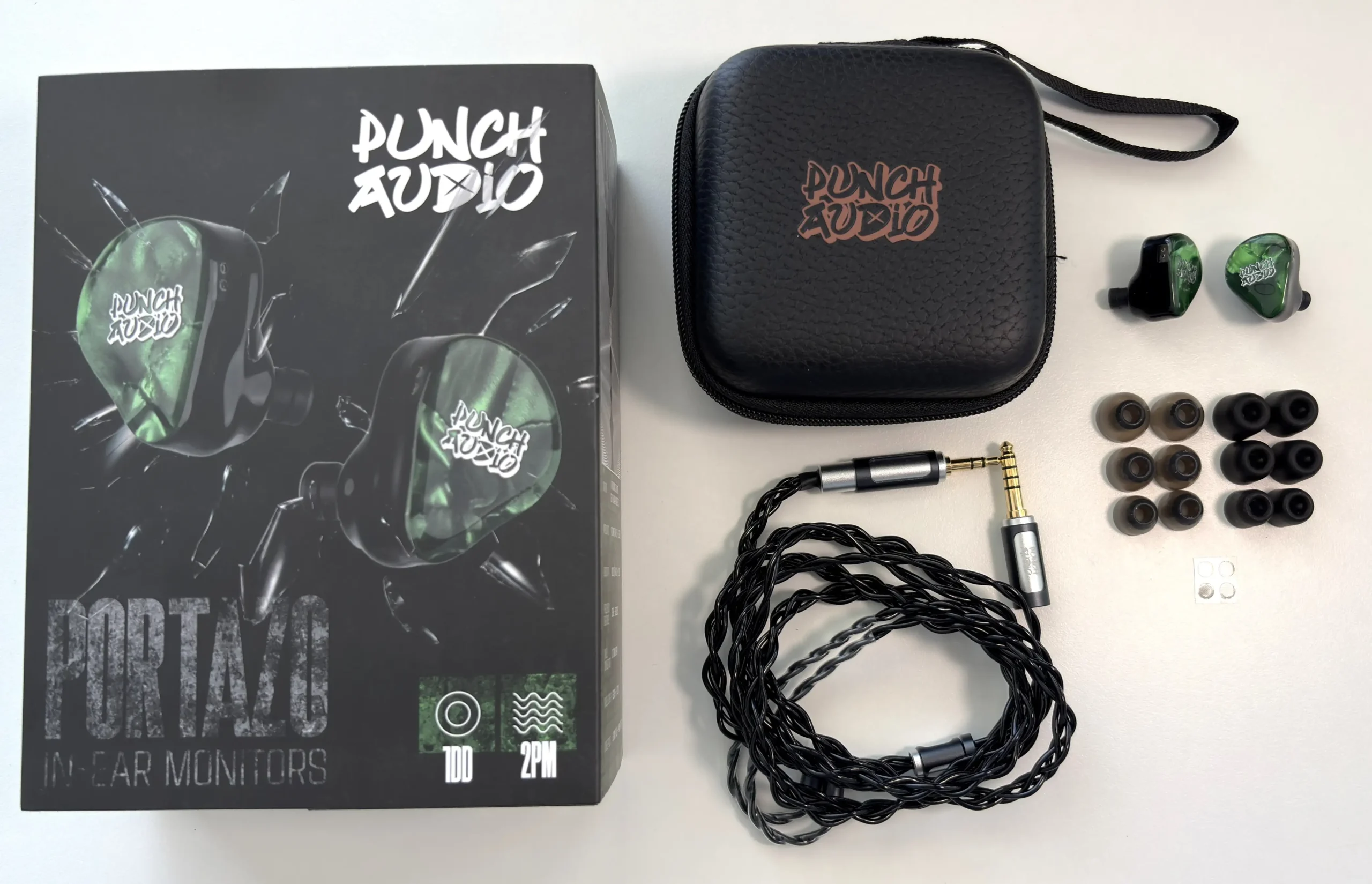
- Punch Audio Portazo
- Set of S, M, L foam eartips
- Set of S, M, L silicone eartips
- 4 mesh filters
- Custom IEM cable with modular termination
- 3.5mm SE and 4.4mm balanced modular connections
- Zipper storage case
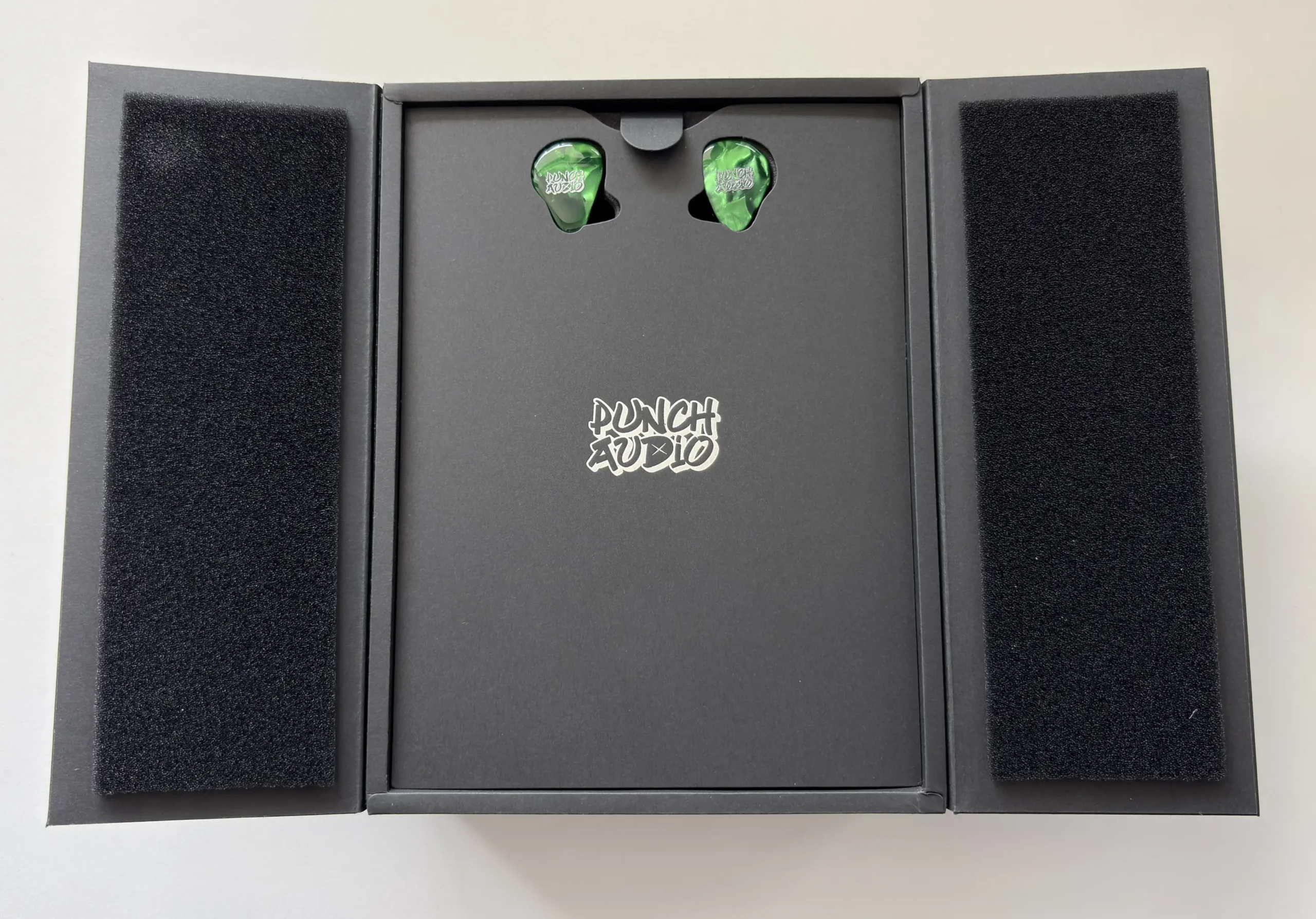
The Portazo’s packaging and unboxing experience are quite nice. The outer sleeve uses a matte black finish with a distinctive shattered glass graphic that gives way to a gatefold-style inner box. Magnetic closures hold everything securely in place, and when opened, the IEMs sit nestled in protective foam with a branded leather carrying case positioned below an insert.
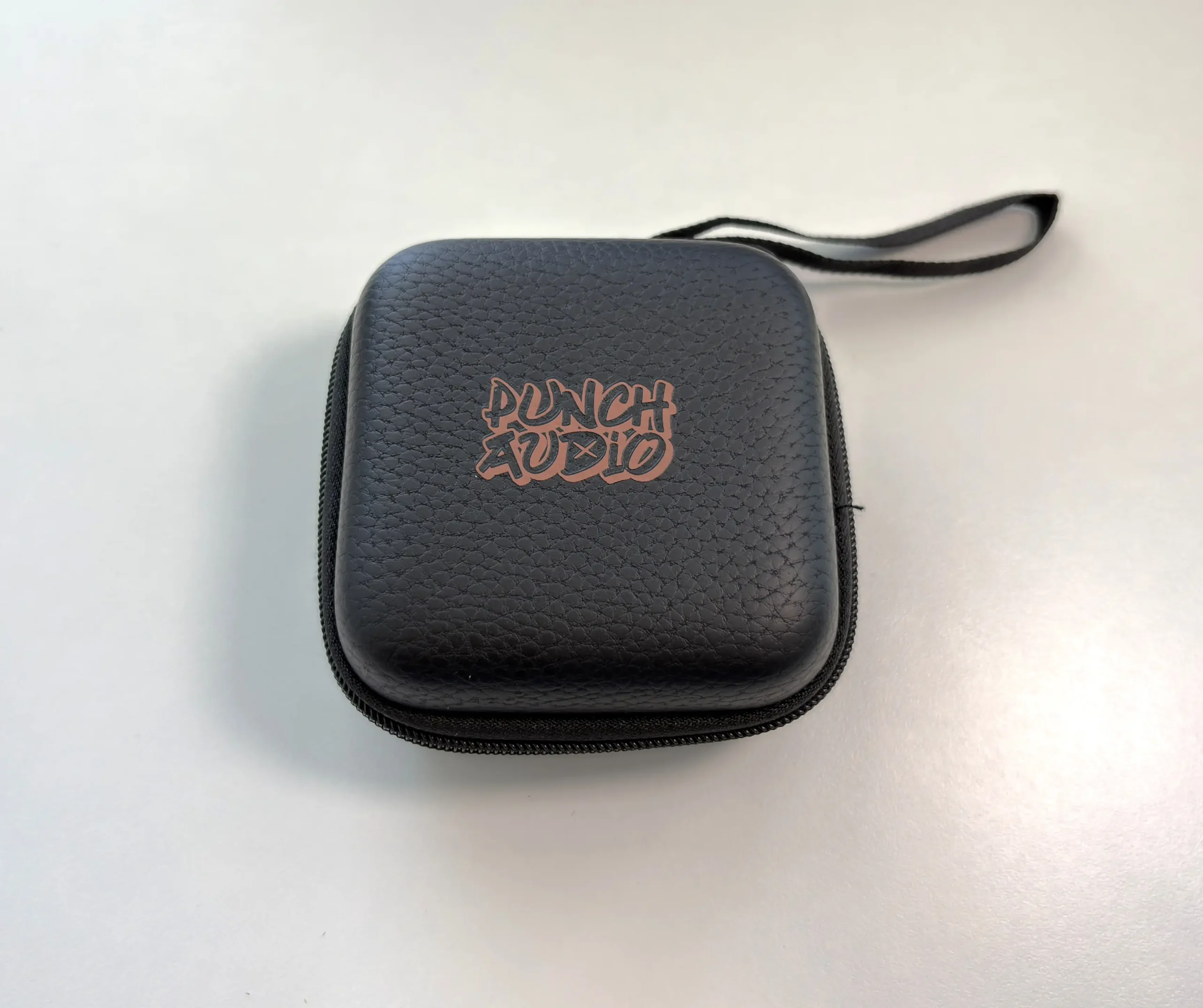
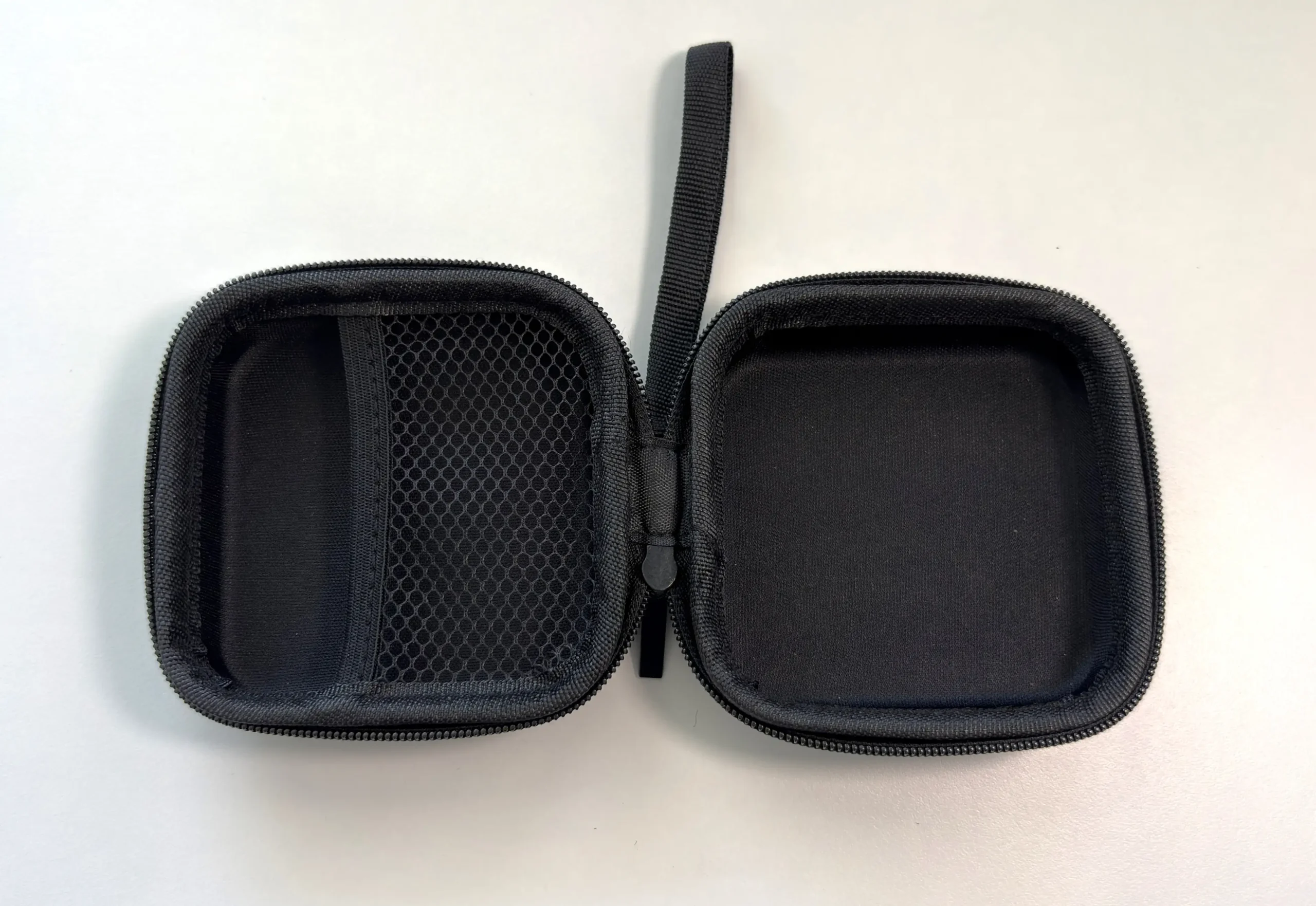


The carrying case is particularly well-executed. It’s a hard leatherette case that provides ample internal space for the IEMs, extra tips, and dongles without cramming everything together.
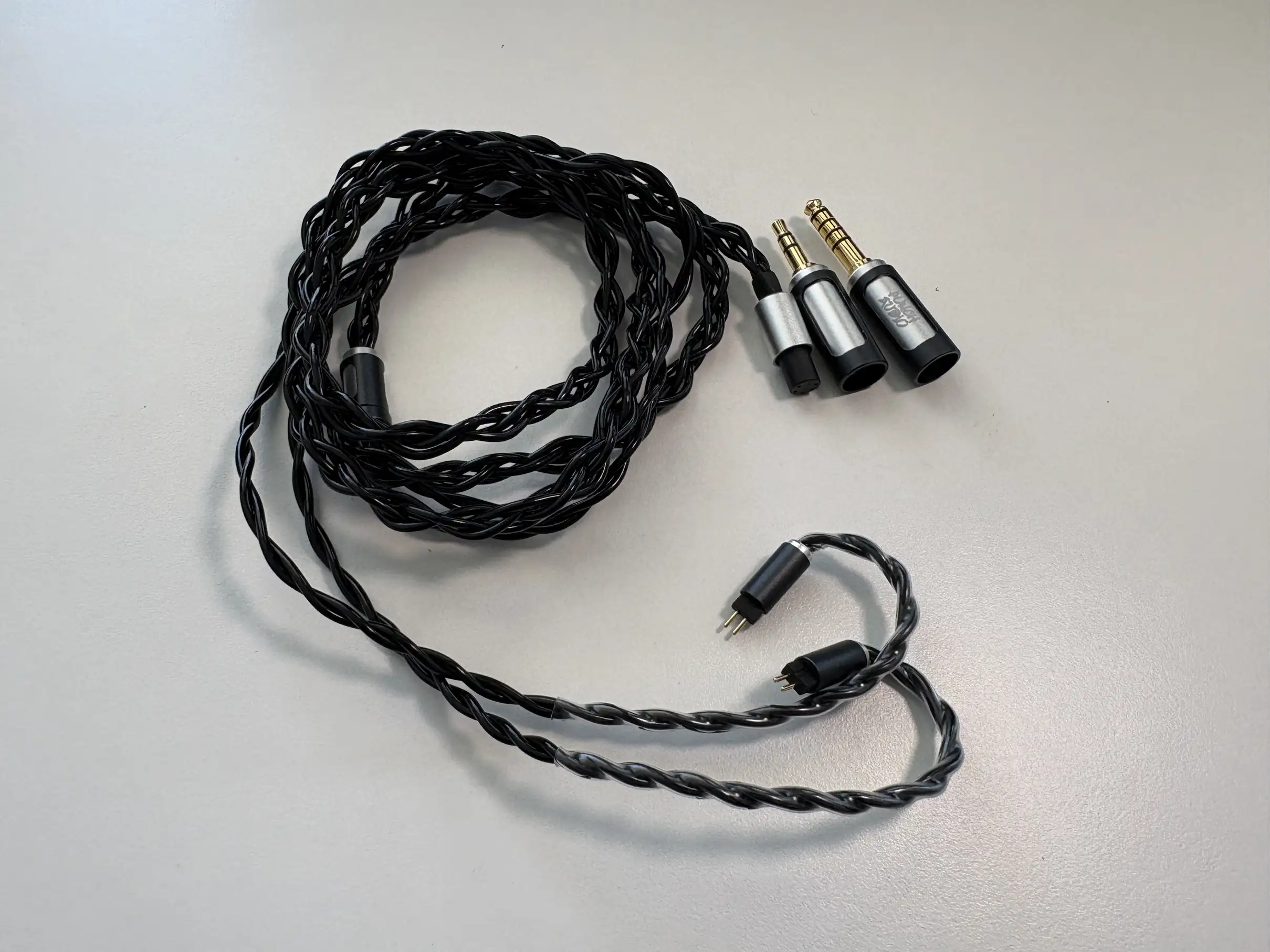
The included cable genuinely exceeded my expectations for a stock cable. Constructed from 4 cores of ultra-pure oxygen-free copper strands, it measures approximately 125cm in length. The dark brown braided construction strikes a nice balance between substance and flexibility. The modular plug system is the one aspect that I do not like, as it’s a simple friction lock system that does not have a way to secure it, which means you run the risk of pulling the cable out of the modular connector if the headphone output is on the tight side. Both 3.5mm single-ended and 4.4mm balanced connectors come included. The 0.78mm 2-pin connectors use color coding for easier installation (red is the right side, blue is the left side), and during use, the cable remains quiet with minimal microphonic noise.
Design & Comfort
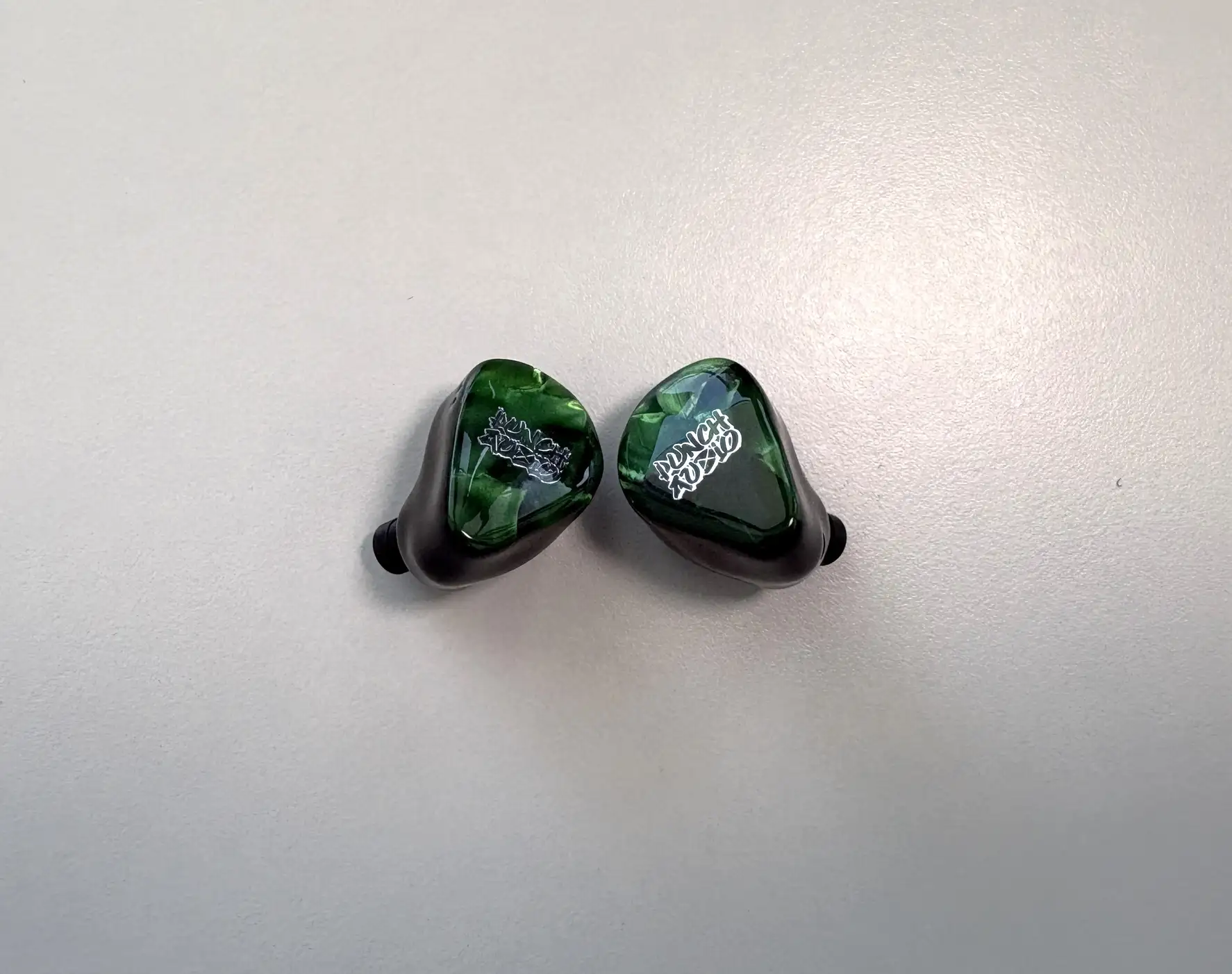
Each Portazo features handcrafted resin construction with an emerald green faceplate that exhibits translucent properties. Internal patterns within the resin shift under different lighting conditions, and because of the handcrafted production process, these patterns will vary between individual units. No two Portazos look exactly alike, which adds a nice personalized touch.
The shells weigh just 4.3 grams, contributing to their remarkably lightweight feel during wear. Flush-mounted 0.78mm 2-pin connectors sit cleanly on the upper edge, while pressure-relief vents appear both on the rear surface and near the nozzles.
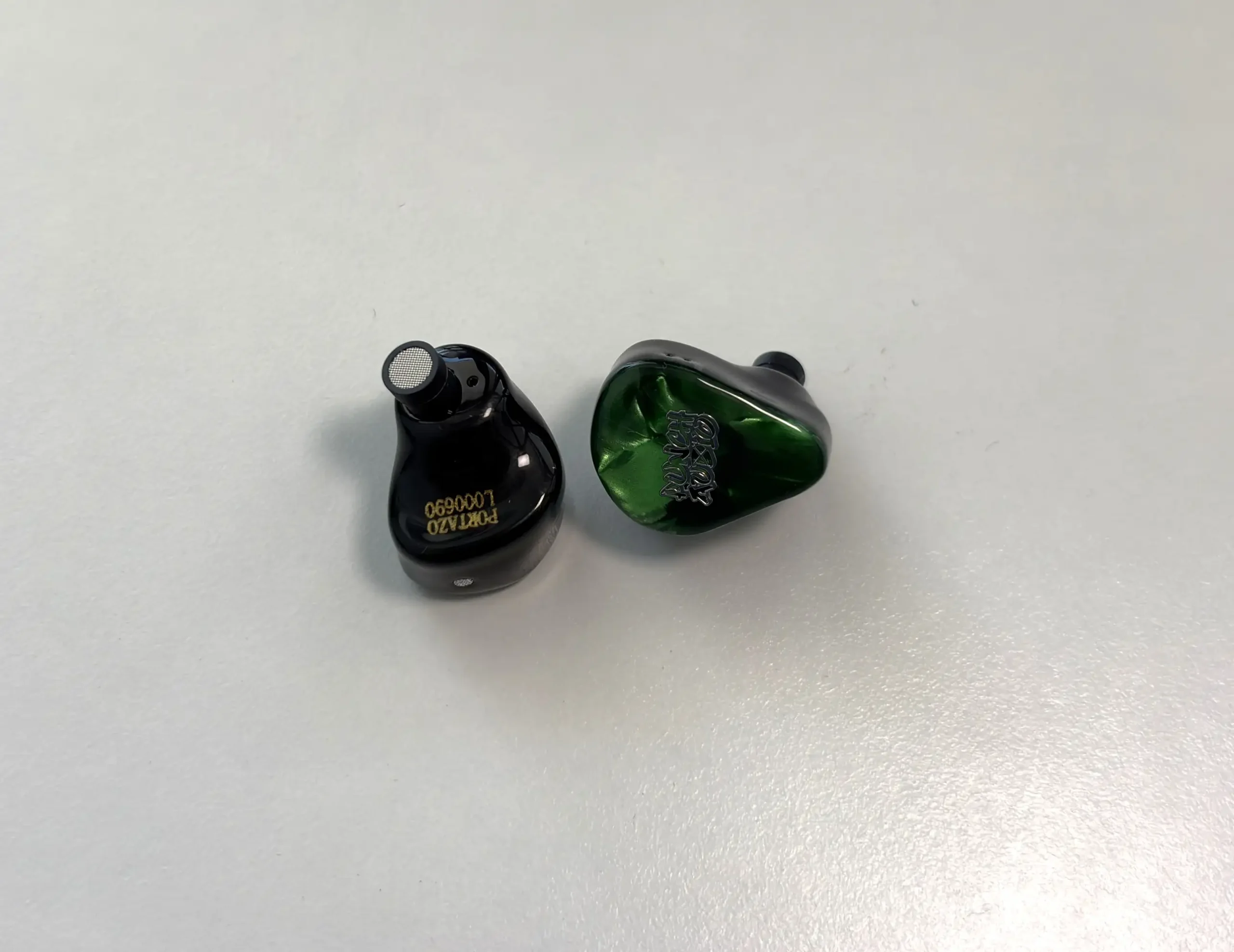
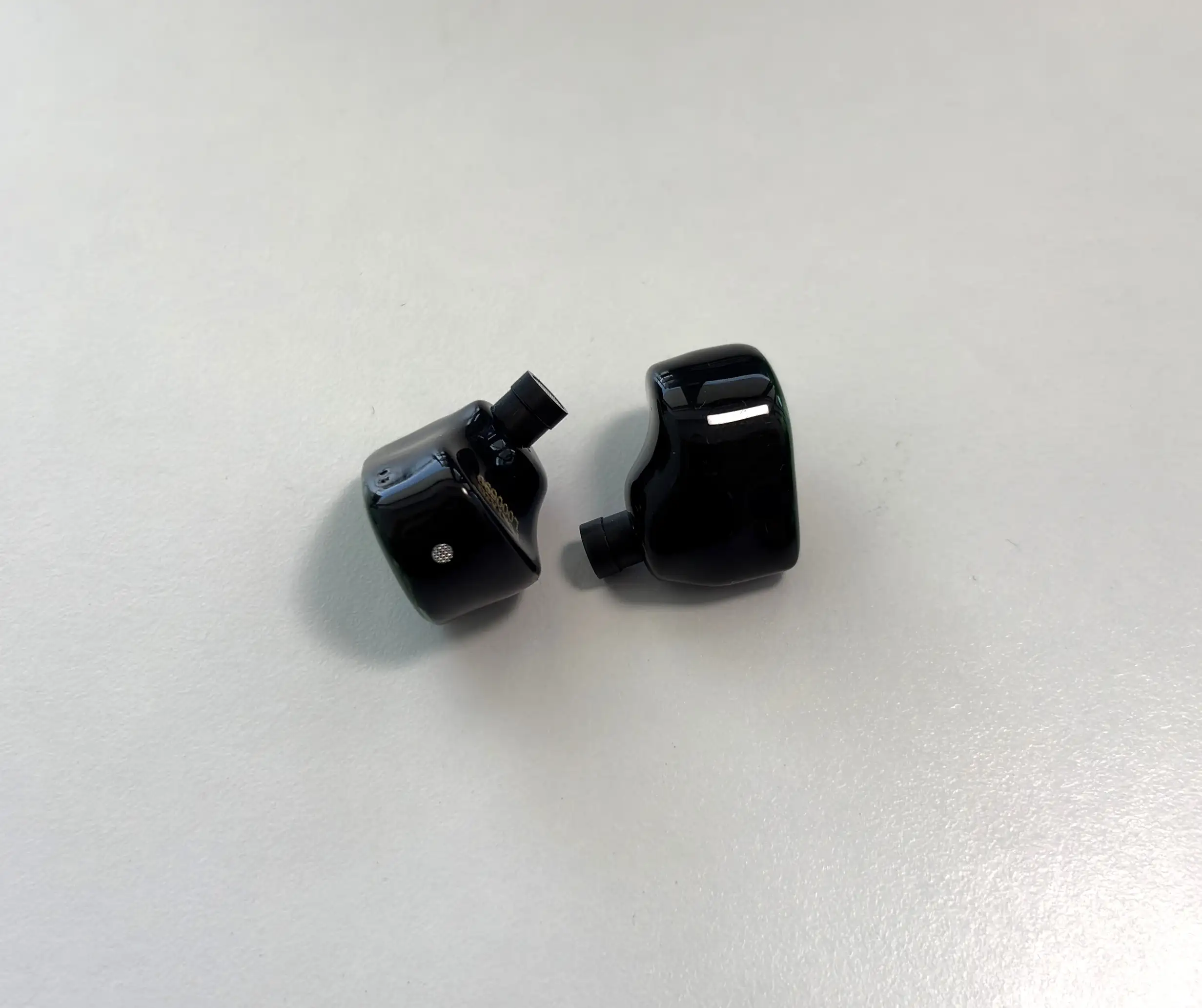
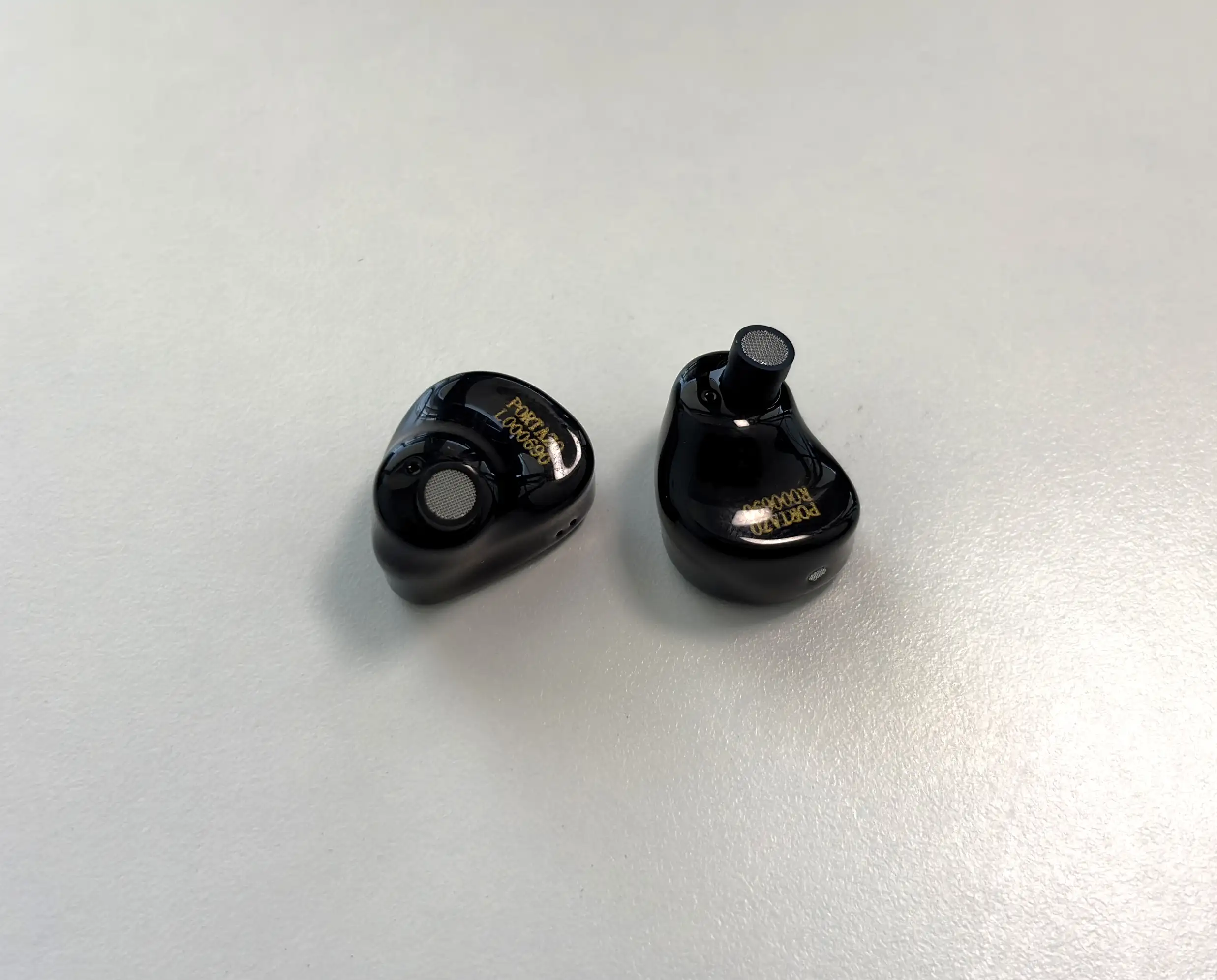


Build quality feels solid despite the lightweight construction. The resin work shows a consistent finish, and the connectors feel secure without any play or looseness that might develop over time. They’re also neither too stiff nor too loose.
The Portazo’s resin shells use what Punch Audio calls a “piano-shell contour” that naturally follows the concha area. This design choice positions the IEMs slightly further from your inner ear compared to typical designs, which may be nice for some, but not for others. I fall into the “others” group. During my testing, I ran into some seal consistency issues with both sets of included eartips (one set of silicone and one set of memory foam eartips are included). The IEMs would sit securely in my ears, but occasionally it felt like the seal had broken or that there was just something off. Not a deal-breaker, but it meant tip rolling became essential. I did end up mainly using the memory foam tips, but I found the clear silicone eartips that I got with the Juzear Harrier to be the best fit for me. The nozzle also isn’t very long, so you may find the Portazo to fit differently than most other IEMs. Try before you buy if possible.
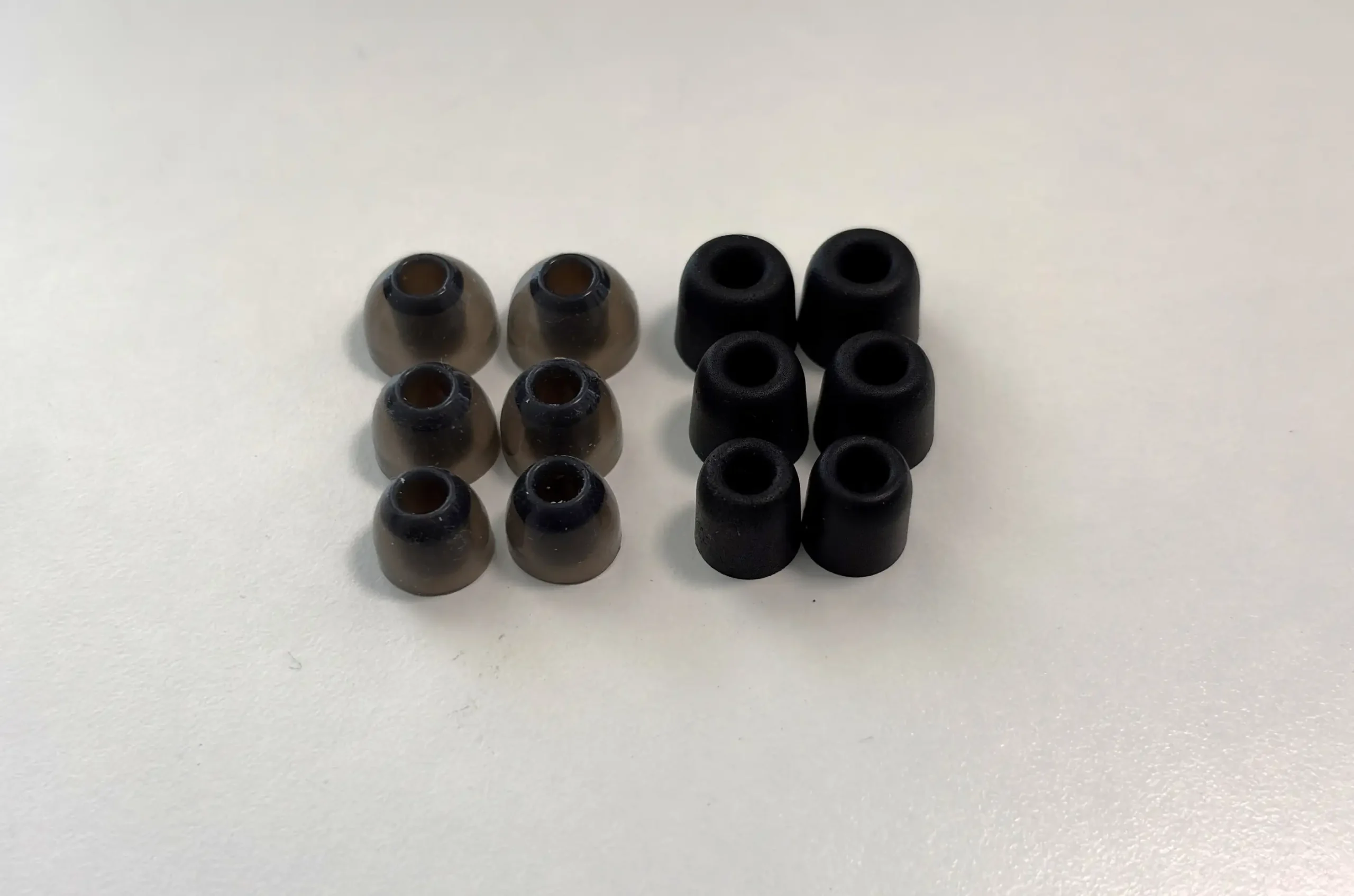
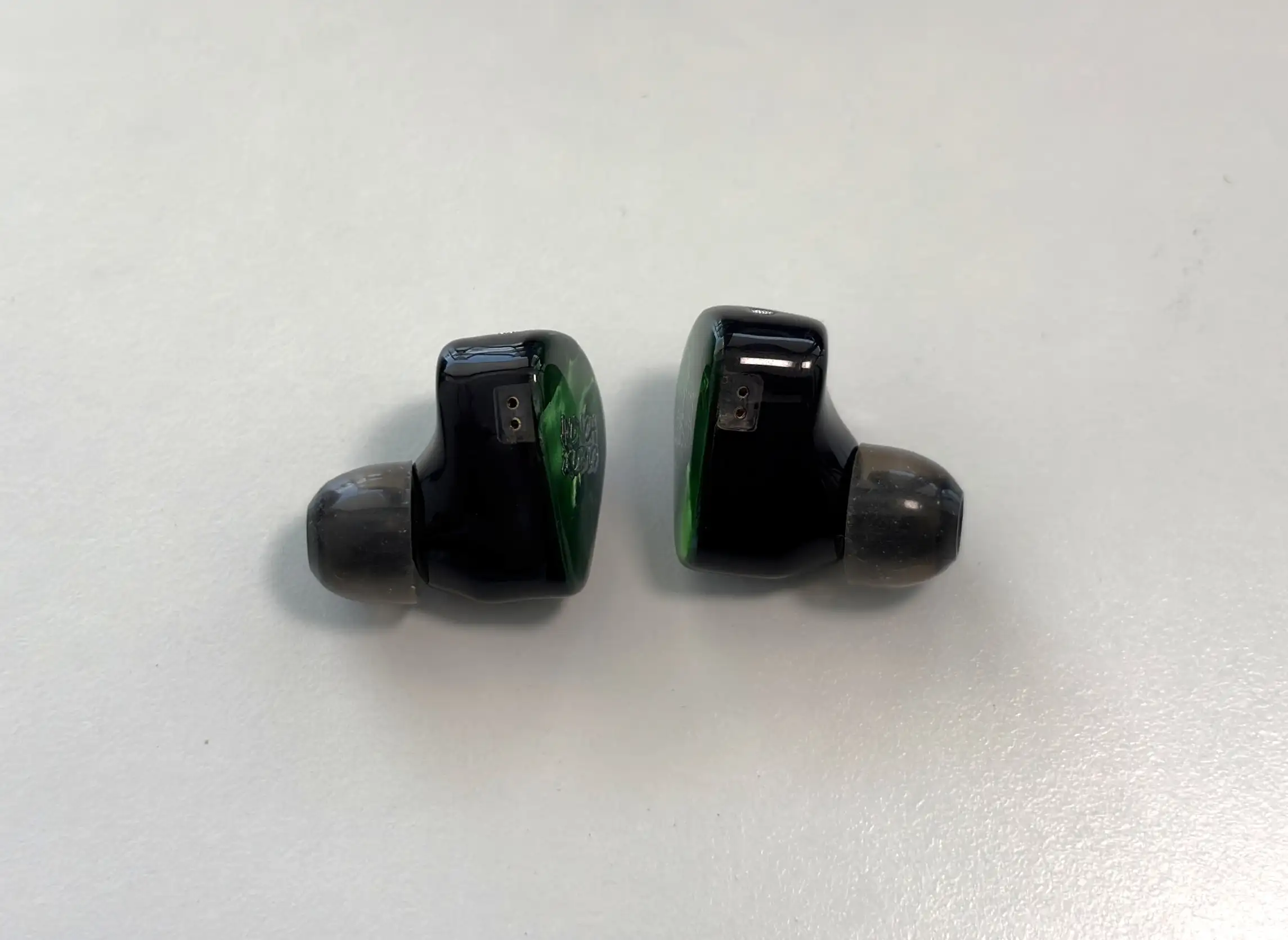

Passive isolation is pretty decent, and handled cafe noise and moderate transit environments well enough for me. Seal quality matters here, especially for getting the full bass impact. A deeper fit tightens bass response, while a shallower fit reduces bass and increases treble.
There is also a pressure-relief system. Punch Audio placed two vents: one on the rear surface to regulate airflow for the dynamic driver and minimize driver flex, plus a second vent near the nozzles. These prevent the pressure buildup that causes headaches and ear pain during extended wear. Your eardrums maintain equilibrium instead of constantly fighting trapped air pressure.
Efficiency & Sensitivity
The low impedance and high sensitivity mean the Punch Audio Portazo works efficiently with smartphones using quality dongles, though it scales well with more capable sources, as I’ll discuss in the sound quality section. DAPs with lower output power and higher output impedance ratings also work very well with the Portazo, so if you have something like the HiBy R1 or SnowSky Echo Mini, you’ll be just fine.
Sound Quality
Sources used for this review:
- HIDIZS AP80 PRO MAX
- ONIX Tocata XM2
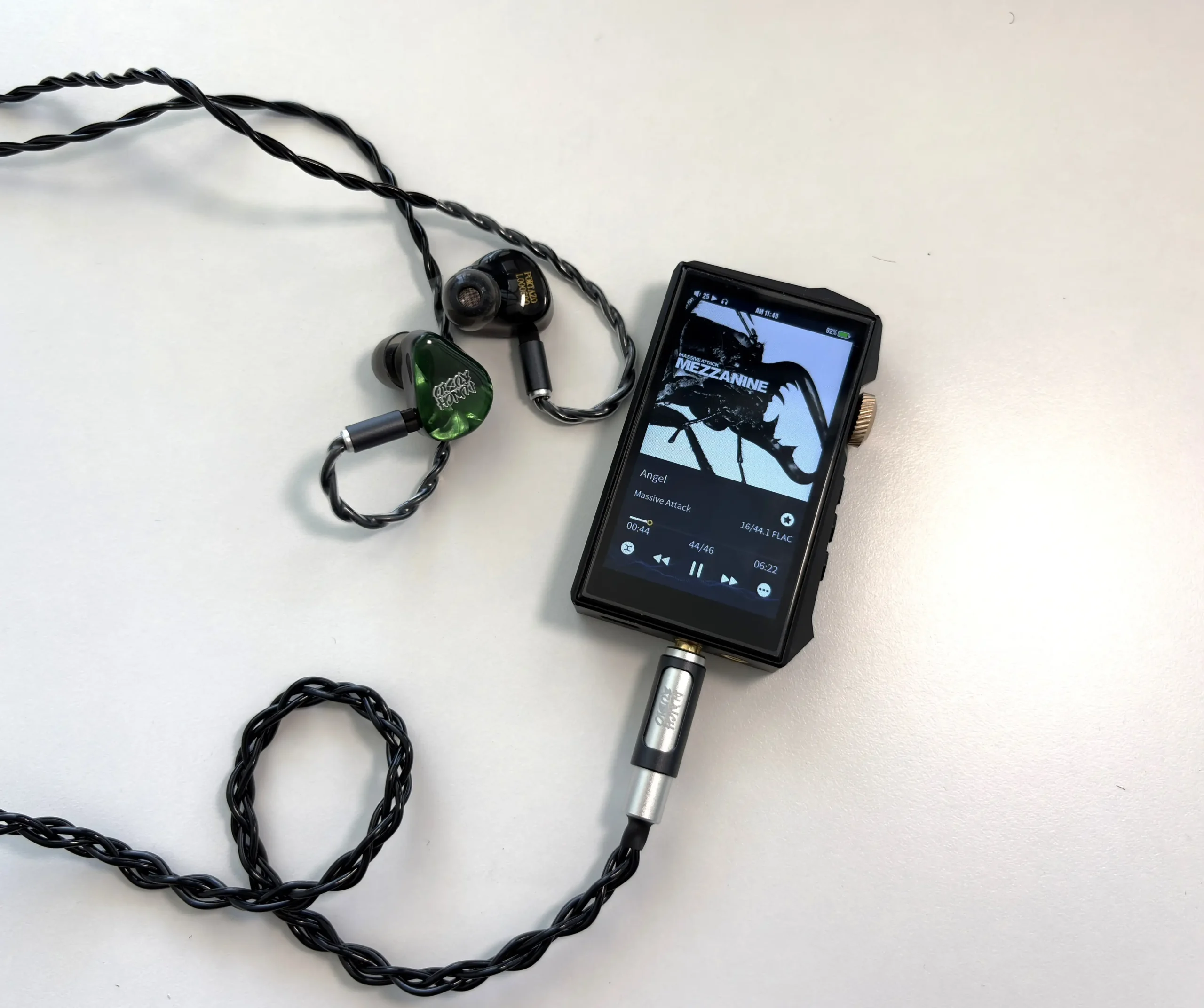
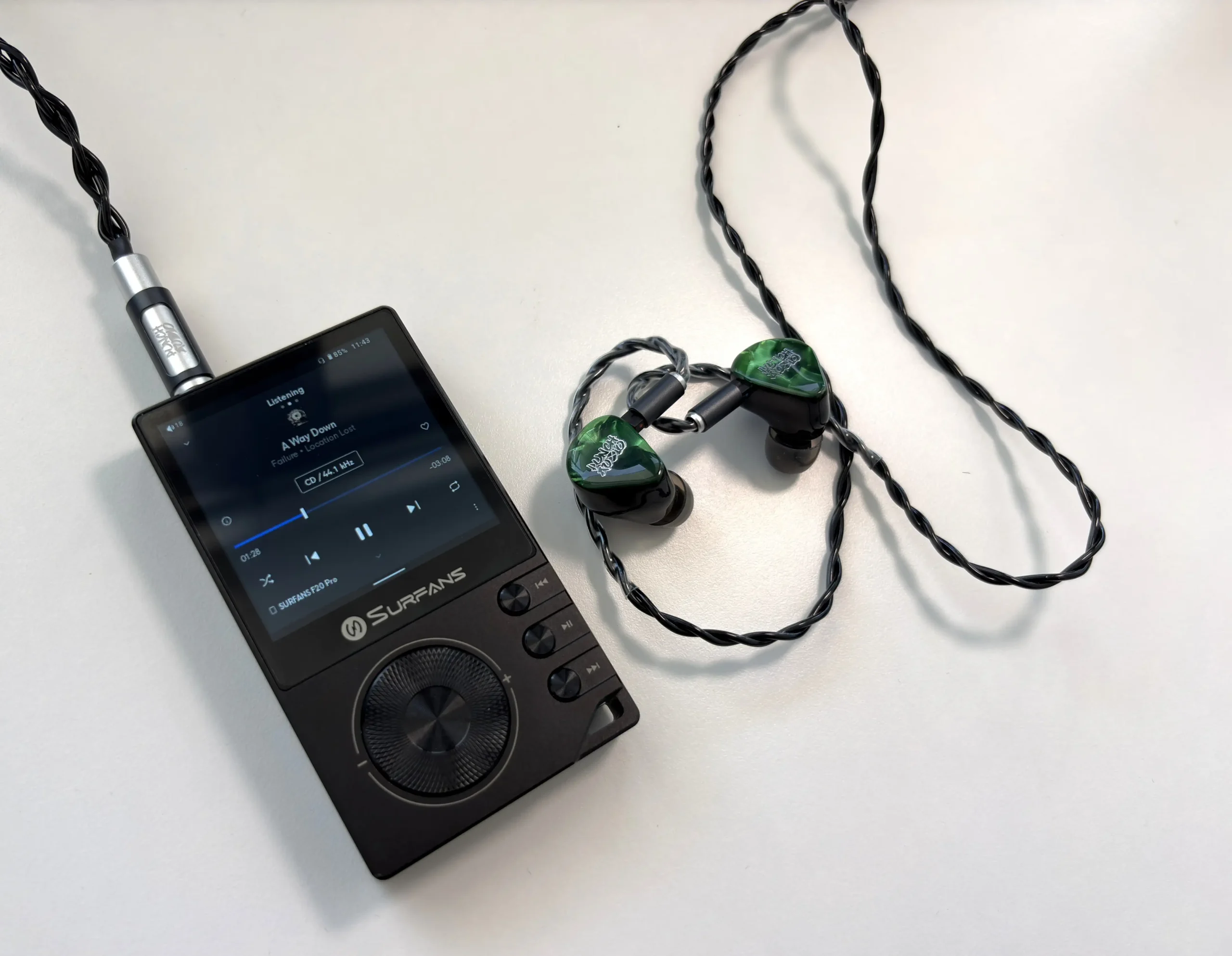
- Surfans F20 Pro
Links to my music playlist used for the majority of testing:
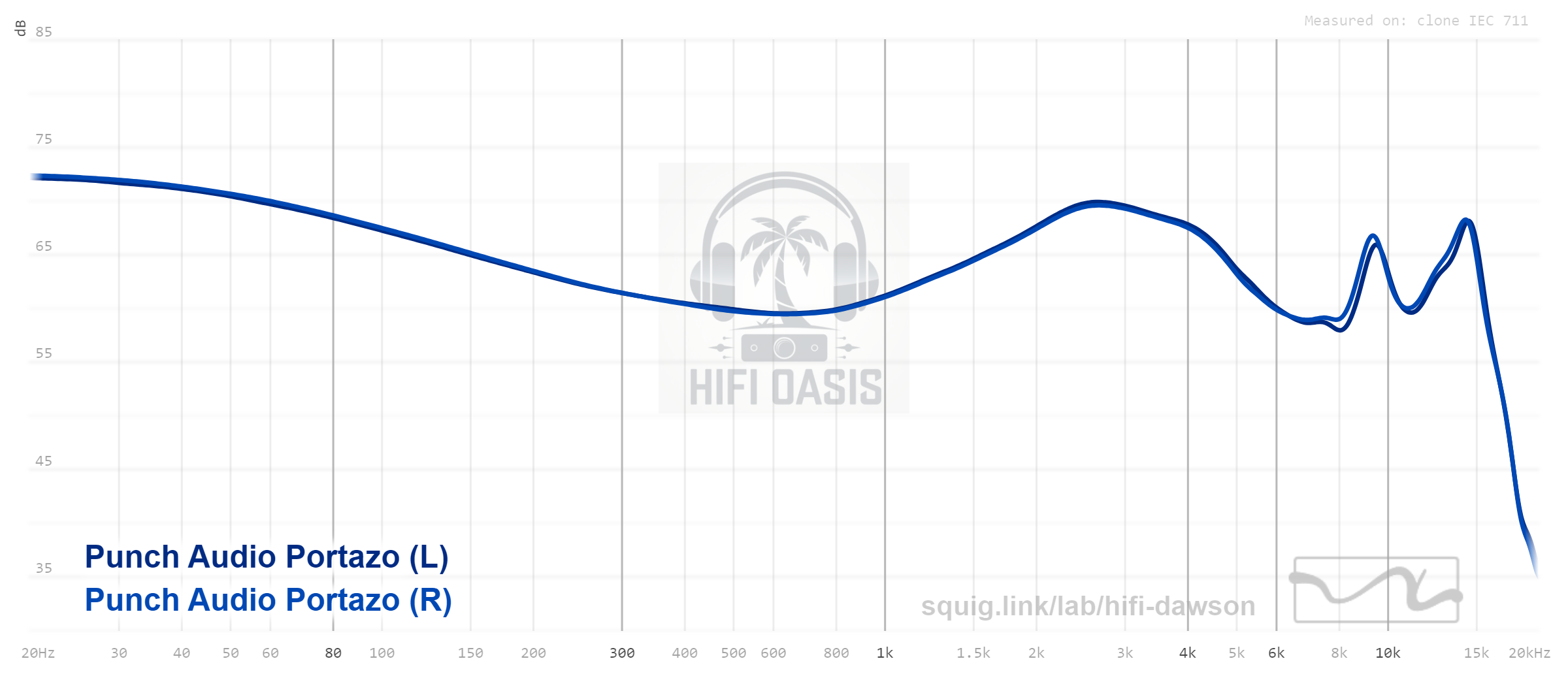
Now onto the most important part: how does the Portazo actually sound? As you can see in the graph below, the Portazo delivers a distinctly V-shaped signature. It prioritizes bass impact and treble extension while keeping the midrange surprisingly coherent for this tuning approach. The hybrid driver implementation works better than I expected, with the composite dynamic driver handling bass duties while the dual planar drivers manage treble extension, creating a division of labor that plays to each driver type’s strengths. The result feels cohesive rather than disjointed, which isn’t always the case with hybrid designs.
Link to graph: https://squig.link/lab/hifi-dawson/?share=Punch_Audio_Portazo
Bass
The bass presentation is where the Portazo makes its strongest statement. The advertised 15dB sub-bass lift from 20Hz to 400Hz translates into physical impact you feel as much as hear. Sub-bass extension digs deep and has a visceral sound, making electronic tracks and hip-hop come alive. The mid-bass delivers punchy speed without becoming boomy, and importantly, the bass stays in its lane without bleeding into the midrange, preserving instrumental clarity even during bass-heavy tracks.
This isn’t subtle bass tuning, the Portazo wants you to feel the low end. Tracks like Massive Attack’s “Angel” showcase the sub-bass extension beautifully, while faster material like drum and bass reveals the mid-bass control. If you’re looking for neutral bass response, look elsewhere. If you want authoritative low-end that still maintains definition, the Portazo delivers. I’m usually not a fan of bass-emphasized tunings, but I quite enjoy this one.
Midrange
The midrange from 400Hz to 1kHz maintains steady neutrality, preventing muddiness. Male vocals gain body from the elevated lower midrange, sounding warm and authoritative. Female vocals benefit from upper midrange lift, appearing more forward and articulate. However, the V-shaped tuning does place the midrange slightly behind bass and treble in the overall presentation. Instruments like acoustic guitars and pianos exhibit natural timbre with pleasant note weight, but do sound slightly recessed.
Treble
The dual planar magnetic drivers deliver a treble performance with impressive speed. The treble peaks at around 3kHz for vocal presence and bite. Detail retrieval excels here, particularly revealing micro-details and trailing note edges. Some sibilance is present on recordings with hot treble mixes, though most tracks remain smooth without harshness. Even those sensitive to sibilance will probably find this tuning enjoyable enough without causing any discomfort.
The planar drivers bring that characteristic speed and resolution that make detail-heavy music engaging. Cymbal crashes have proper shimmer and decay, and the extension gives classical music the air it needs. However, poorly mastered tracks with aggressive treble mixing can become fatiguing, so the source material quality matters.
Technical Performance
The soundstage has above-average width and good depth. Imaging precision allows accurate instrument placement visualization even in dense tracks. The planar drivers contribute significantly to the open, three-dimensional presentation of the Portazo. Live recordings particularly showcase this strength, creating a sense of venue space that many single-driver IEMs struggle to match.
Final Thoughts
The Punch Audio Portazo succeeds in what it sets out to do: deliver engaging, bass-focused sound with hybrid driver technology at a reasonable price point. The hybrid implementation actually works well here as the intentional V-shaped tuning complements the driver choice. The build quality is also excellent, and I have no real complaints about it or the stock cable (though I do wish there was a locking mechanism for the modular connector).
My main criticism is the comfort and fit. The shorter nozzle means this IEM relies more on the shape of the shell to securely fit in your ear, as there’s less physical leverage being put on the nozzle/eartip. This isn’t good or bad, it’s simply a design choice that means it will fit some ears better than others, which is why I always advocate for everyone to try before you buy, if possible.
Even though this is part of the sound signature type, I’ll still call out the recessed midrange positioning. Vocals sit farther back in the mix than I’d prefer, and this becomes noticeable with vocal-centric tracks where you want that intimate connection to the performance. It also affects some instruments like pianos and acoustic guitars, so if that’s what you typically listen to, look for an IEM with a more mid-forward tuning.
For listeners who prioritize bass impact and enjoy a more energetic presentation, the Punch Audio Portazo represents solid value at $189 USD. It’s particularly well-suited for electronic music, hip-hop, and modern pop, where the V-shaped signature enhances rather than detracts from the intended sound. I can recommend the Portazo to anyone seeking powerful, controlled bass in a well-built package without flagship pricing. Just know what you’re getting into with the tuning.
Buy from Amazon: https://amzn.to/42xd85g
Buy from Linsoul: https://www.linsoul.com/products/punch-audio-portazo?sca_ref=5236667.OhF52MYHpZ
Buy from AliExpress: https://s.click.aliexpress.com/e/_c3zz7Mxz
The above links may be affiliate links. All commission earned through them goes directly to maintaining this site and bringing you more audio reviews.
I’m not always able to cover all the details of a product, both hardware and software, in our reviews. If you have any specific questions about this product, please feel free to leave a comment or contact me directly.
Be sure to check out our excellent Buyer’s Guides, as well as our other Reviews.
HiFi Oasis Verdict
HiFi Oasis Verdict-
Design & Comfort7/10 Good
-
Sound8/10 Very good
-
Features/Accessories7/10 Good
-
Value7/10 Good
Pros
- Strong, impactful sub-bass with excellent extension and physicality
- Bass remains controlled and avoids bleeding into the midrange
- Cohesive hybrid driver implementation (DD + dual planar)
- Impressive treble detail, speed, and extension from planar drivers
- Above-average soundstage width and depth with solid imaging
- Modular cable system includes both 3.5mm and 4.4mm terminations
- Easy to drive - works well with smartphones, dongles, and lower-powered DAPs
- Engaging, energetic V-shaped tuning that suits modern genres well
Cons
- Fit and seal can be inconsistent due to short nozzle design
- Requires tip rolling to achieve optimal comfort and sound
- Occasional sibilance on brighter or poorly mastered tracks
- Recessed midrange - vocals and instruments can sound slightly distant
- Modular cable uses friction lock with no secure locking mechanism