






Disclosure: I’d like to thank Bluesound for arranging the loaner unit of the Pulse Cinema for this review. All thoughts and opinions are my own, and Bluesound had no say or input on the contents of this review.
The Bluesound Pulse Cinema is Bluesound’s latest attempt to bring its hi-fi-first approach into the soundbar space, and on paper, it is exactly the kind of product that makes sense for the brand. Bluesound has always been strongest when combining serious audio performance with convenient wireless streaming, and the Pulse Cinema takes that same formula and applies it to a Dolby Atmos soundbar.
This is a premium all-in-one soundbar with a 3.2.2-channel Dolby Atmos configuration, 16 drivers, 500 watts of total system power, HDMI eARC, BluOS streaming, AirPlay 2, Tidal Connect, Qobuz Connect, Spotify Connect, Roon Ready support, Bluetooth 5.2 with aptX Adaptive support, and the ability to expand into a larger wireless surround system with Bluesound’s Pulse speakers and SUB+. It is not trying to be the cheapest soundbar on the market. It is trying to be a cleaner, more music-focused alternative to systems from Sonos, Bose, Samsung, and Sony.
At $1,499 USD / $1,899 CAD, the Pulse Cinema sits firmly in premium territory. That means the expectations are high. For this kind of money, it needs to be more than just a convenient TV speaker. It needs to sound convincing with movies, deliver clear dialogue, handle music with more refinement than the average soundbar, and justify the Bluesound ecosystem over the more mainstream alternatives.
So, does the Bluesound Pulse Cinema deliver? Let’s get into the review and find out.
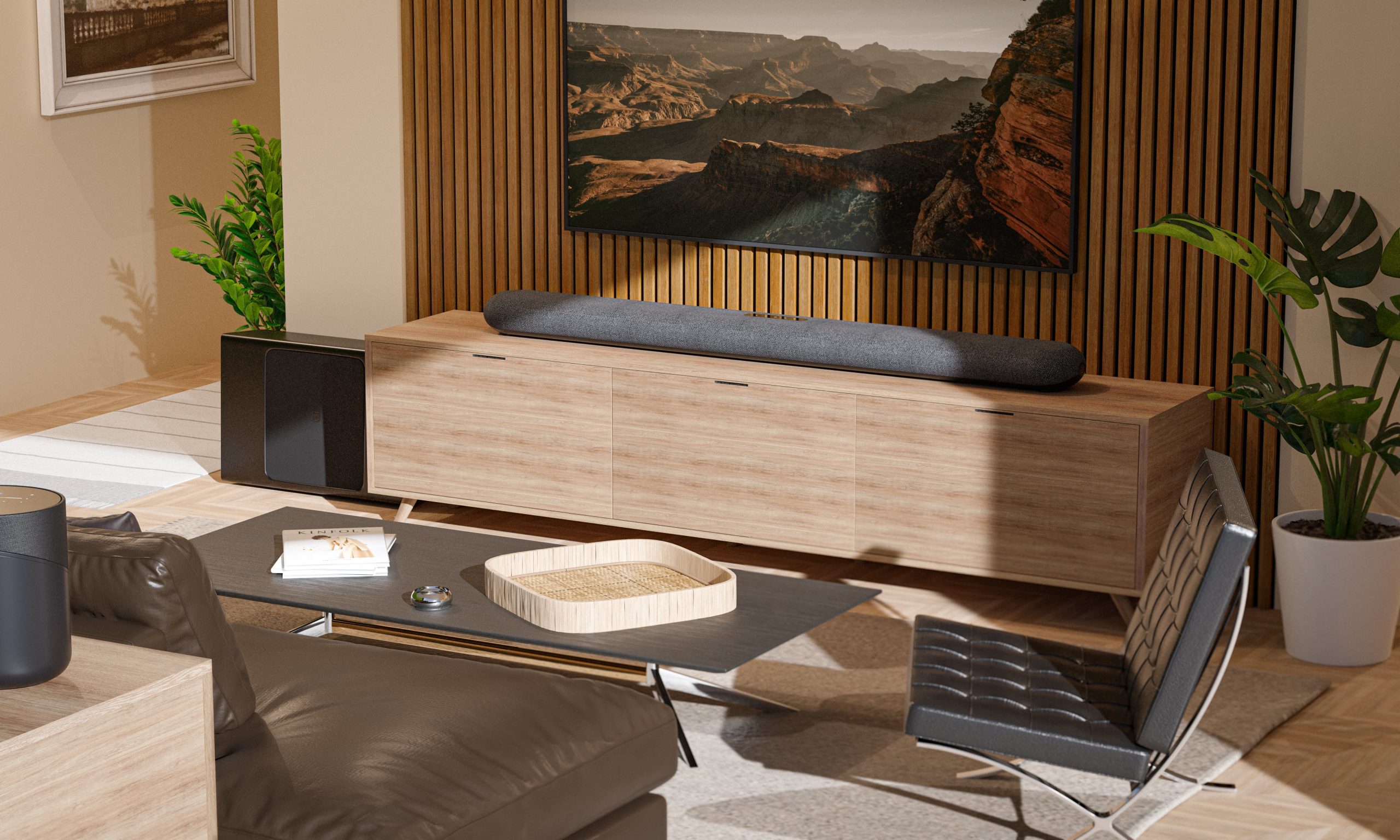
Quick note: I’ve included some stock pictures of the Pulse Cinema (courtesy of Bluesound) in this review to complement my own, as my living room is not the most cooperative for this.
Key Specifications
- Product Page: https://www.bluesound.com/products/pulse-cinema
- MSRP: $1499 USD, $1899 CAD
- Operating System: BluOS
- Processor: Quad Core ARM Cortex A53, 1.8GHz per core
- Configuration: 3.2.2
- Speaker Type: Soundbar
- Drivers:
- 16 total drivers
- Passive Radiator (102mm) x 4
- Woofer (102mm) x 2
- Midrange (44mm x 75mm) x5
- Tweeter (21mm) x 5
- Power Output:
- 500W total system power
- 65W woofer x2
- 38W midrange x5
- 38W tweeter x5
- Connectivity:
- RCA analog input
- Subwoofer output
- Wireless to PULSE SUB+
- HDMI eARC
- TOSLINK Optical input
- Ethernet RJ45, Gigabit 1000Mbps
- 2x WiFi 5 (802.11ac), dual-band
- Bluetooth 5.2 (SBC, AAC, aptX, aptX Adaptive)
- USB-A input
- Supported Sample Rates and Formats:
- Up to 24bit 192kHz PCM
- DSD256
- MP3, AAC, WMA, WMA-L, OGG, OPUS, FLAC, MQA, ALAC, WAV, AIFF, MPEG-4 SLS
- Dolby Digital, Dolby Atmos, Dolby Digital Plus, Dolby TrueHD, LPCM
- Features:
- BluOS App support
- AirPlay 2, Spotify Connect, Tidal Connect, Roon Ready
- Dimensions: 1200 x 74 x 140mm, 47.12 x 2.91 x 5.51 inches
- Weight: 6.69kg / 14.75lbs
In the Box

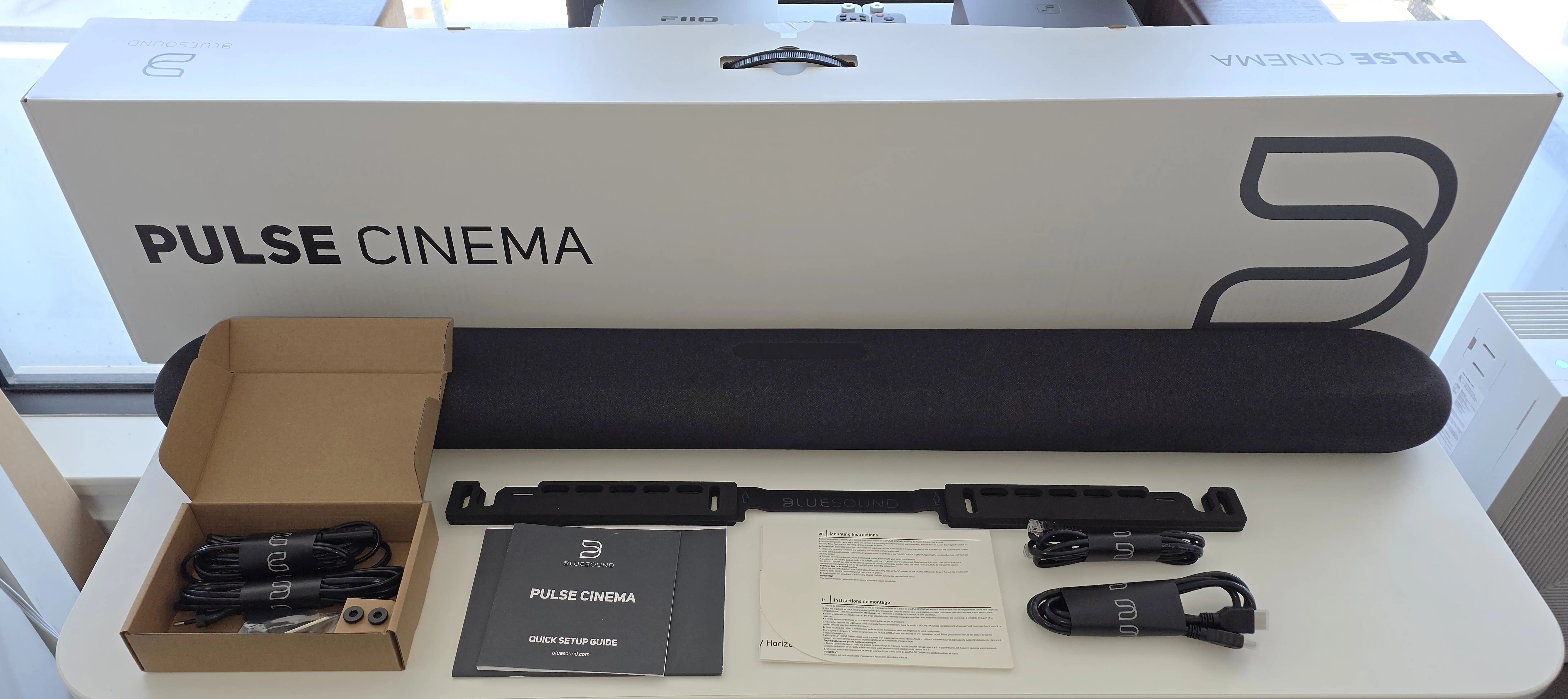
- Bluesound Pulse Cinema
- 120V AC Power Cord
- 230V AC Power Cord
- Ethernet Cable
- HDMI Cable
- Wall Mount Bracket
- Wall Mount Template
- Wall Mount M6 Bolt x2
- Wall Mount Hex Tool
- Quick Setup Guide
Design & Build Quality
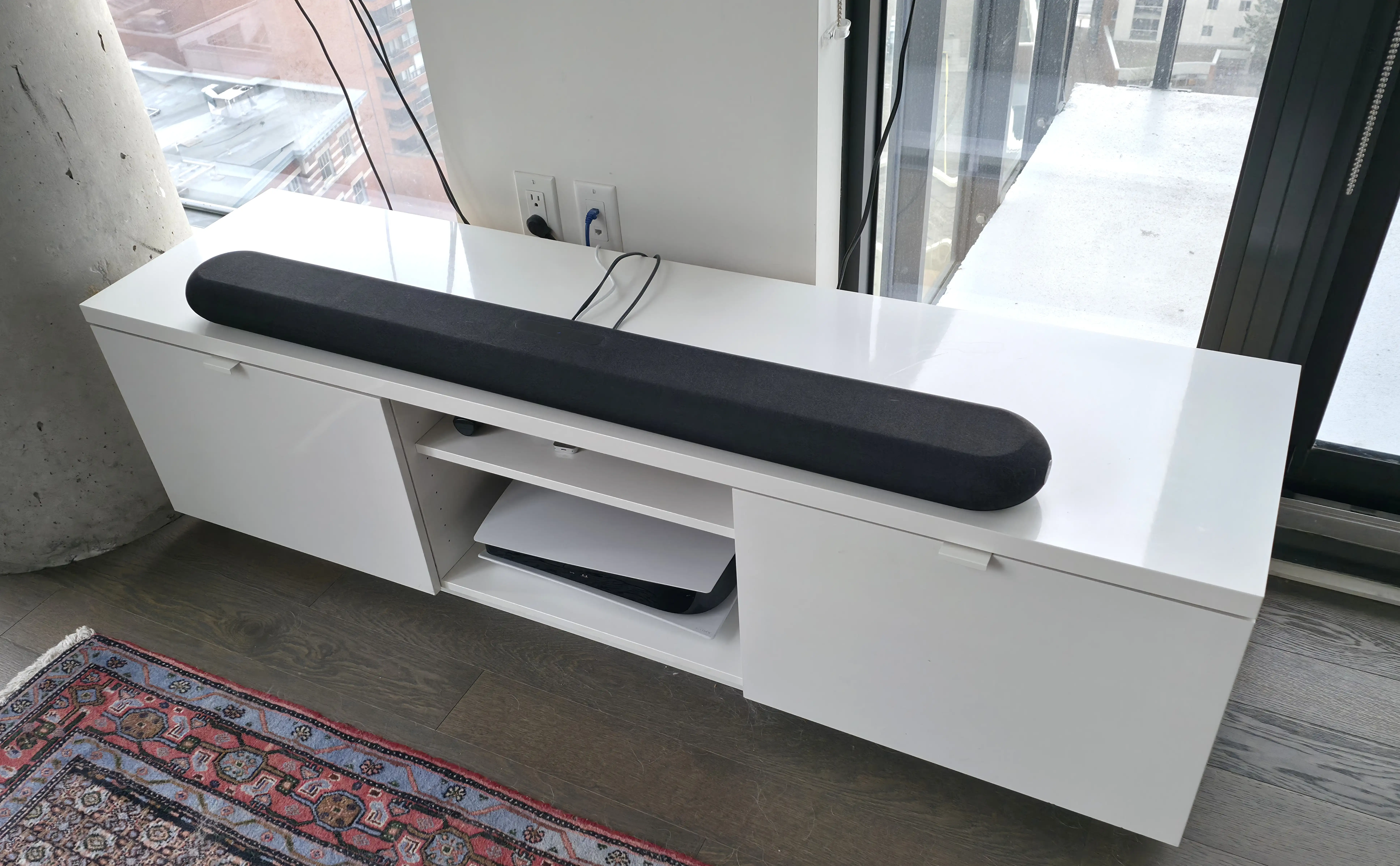

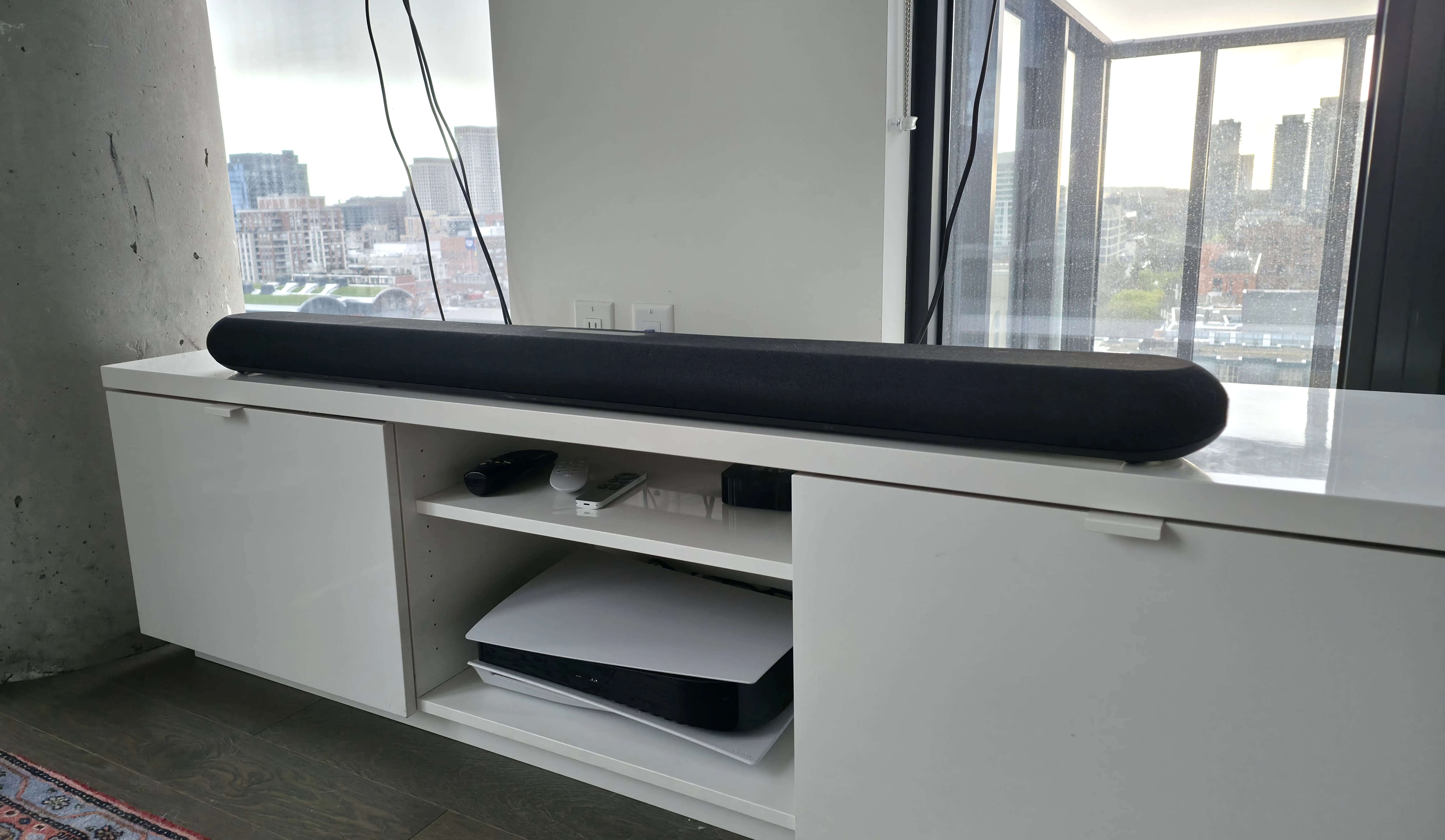
The Pulse Cinema has a very clean and mature design. It does not look flashy, overly techy, or visually aggressive. Instead, it follows the same general direction as a lot of Bluesound products, with a minimalist black finish, fabric grille, aluminum body, and low-profile form factor.

Even the control panel on the top of the soundbar blends in fairly seamlessly with the rest of the device. The panel has a proximity sensor that will light up when you get close, a nice touch to ensure minimal light distractions when in a dark room. The panel itself consists of four capacitive buttons and one LED indicator light in the middle. The two buttons to the left of the indicator light are used to increase and decrease volume, with the two to the right being used as programmable presets that can be configured in the BluOS app.

At 47.12 inches wide, this is a fairly large soundbar, and it will visually pair best with larger TVs (my TV is a 55” LG CX, for reference). Bluesound positions the Pulse Cinema more as a flagship living-room soundbar than a compact bedroom solution, and that makes sense.
The build quality is a strong point here. The Pulse Cinema feels premium and well-constructed, and the design is one of the areas where Bluesound has clearly tried to make this feel more like a piece of home audio equipment than a generic TV accessory. It connivingly matches its asking price.
Bluesound also includes a wall-mount bracket in the box, and the soundbar has automatic orientation sensing, so it can adjust based on whether it is placed on a table or mounted to a wall. That is a useful touch, especially for non-technical users.
The only downside is that the Pulse Cinema is still a large, premium soundbar that needs the right space. If you have a smaller TV stand, a compact TV, or a more minimal setup, the Pulse Cinema Mini may make more practical sense. But for a main living-room system, the Pulse Cinema has the right physical presence.
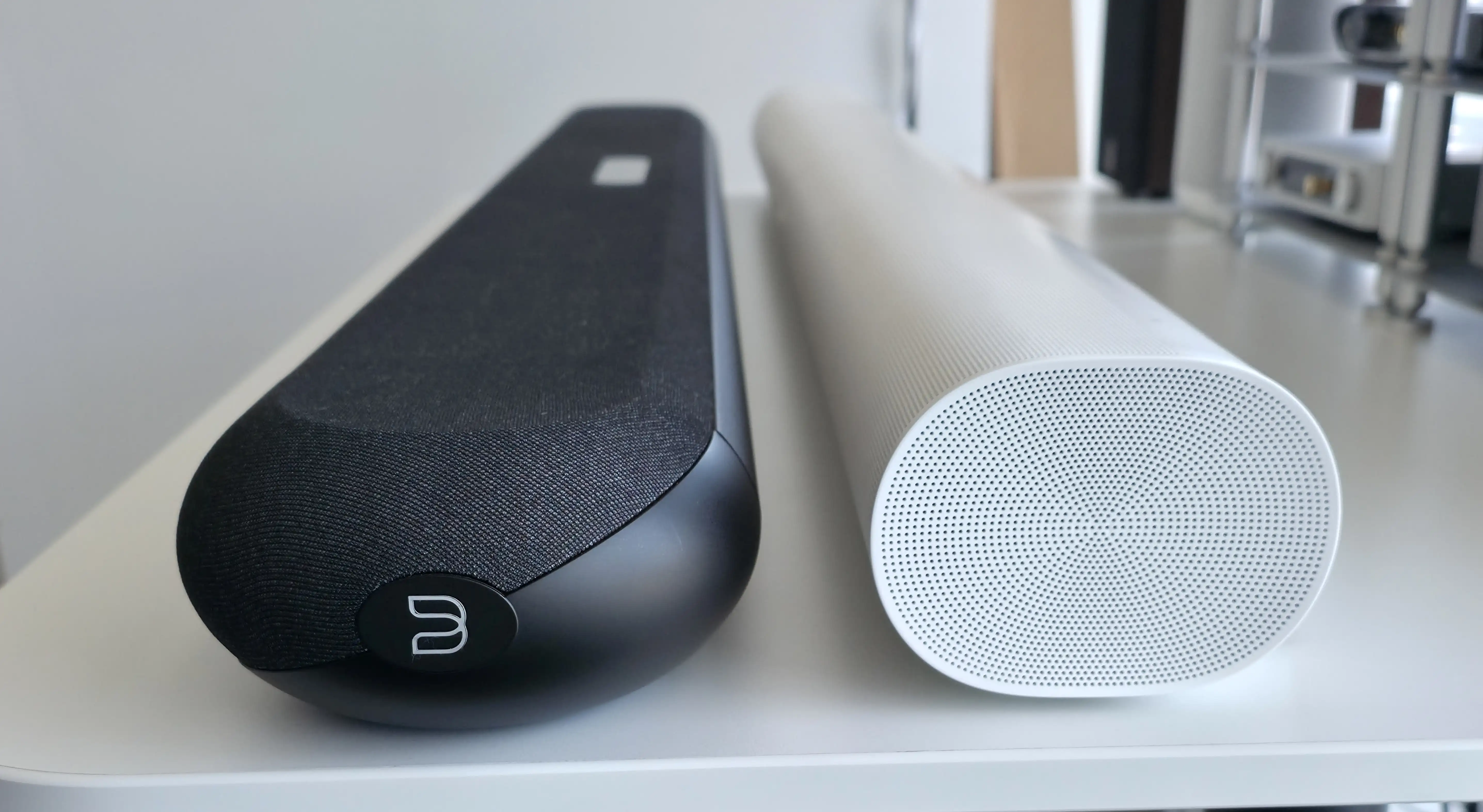
For those interested, here are a few pictures compared to the Sonos Arc (which has a very similar profile to the Sonos Arc Ultra):


Setup & Connectivity

One of the biggest advantages of the Pulse Cinema is its connectivity. Many soundbars have become increasingly minimal, sometimes to the point of frustration. Bluesound takes a more flexible approach.
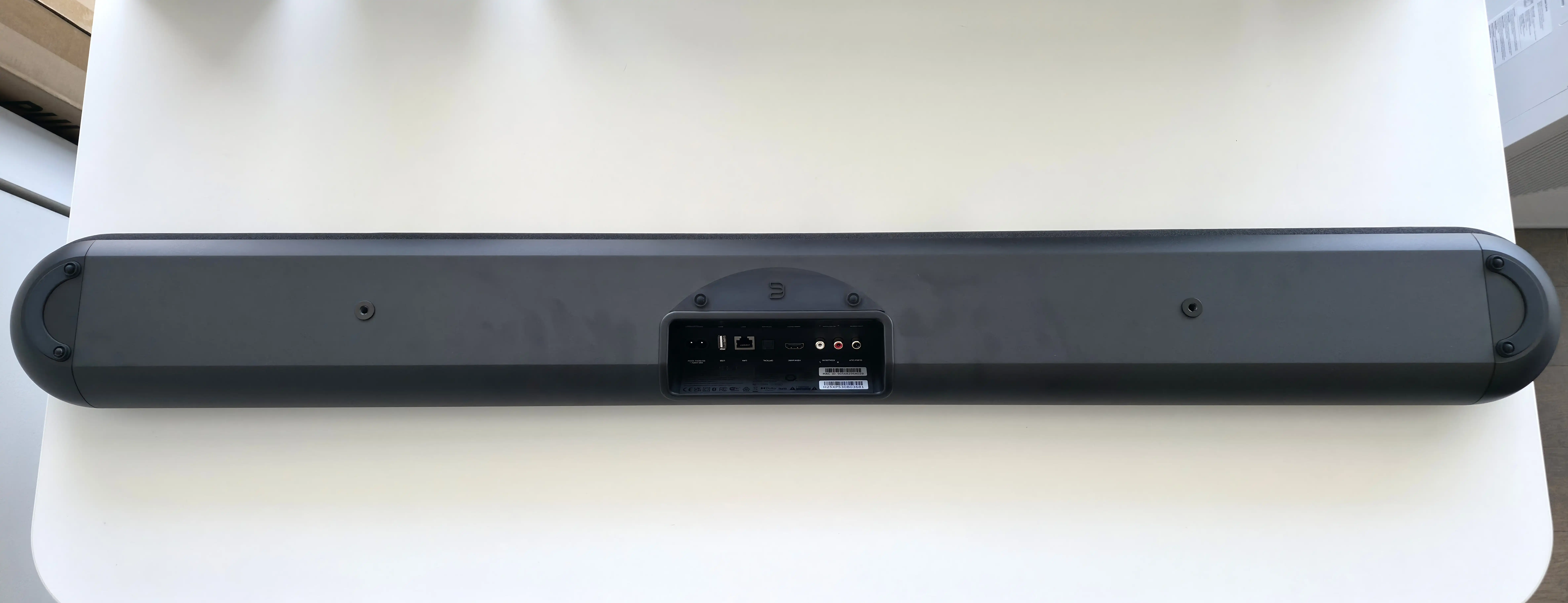
You get HDMI eARC for TV use, optical input, RCA analog input, Ethernet, Wi-Fi, USB-A for external storage, Bluetooth 5.2, and a wired subwoofer connection. That gives the Pulse Cinema more input flexibility than many lifestyle-focused competitors.

HDMI eARC will be the main connection for most people, and the one I used for my setup. This allows the soundbar to receive Dolby Atmos from compatible TVs and streaming devices, while also keeping volume control simple through the TV remote. The inclusion of optical and analog inputs is also appreciated, especially for anyone with older TVs, CD players, streamers, or other sources they may want to integrate.
The BluOS app and platform make the setup extremely simple. If you already use Bluesound or NAD streaming products, the Pulse Cinema slots naturally into that ecosystem. You can group it with other BluOS speakers, stream from a large number of services, access local network libraries, use AirPlay 2, and control everything through the BluOS app. This is done by using either a wired gigabit Ethernet connection or by connecting it to your WiFi network (WiFi 5, 802.11ac).
The Pulse Cinema also features Bluetooth 5.2, with support for SBC, AAC, aptX, and AptX Adaptive codecs. Including the aptX Adaptive codec is an interesting and appreciated choice, as it gives you better audio quality than AAC and regular aptX, but also great low-latency support. This codec support is also handy as the Pulse Cinema can transmit Bluetooth to TWS earbuds or Bluetooth headphones for a more private audio experience. The connection is stable, and I had no issues when using it.
After you’ve set up and plugged in the Pulse Cinema, you simply open the BluOS app, let it find the soundbar (which it does pretty quickly), and that’s it. Straightforward and simple, just how it should be.
The BluOS app is also required to apply software updates. During my time with the Pulse Cinema, it received a few software updates, with one notably adding the ability to modify the Treble and Bass levels (and thus delaying my review so I could spend some more time testing it).
BluOS App & Everyday Use
BluOS remains one of the better streaming platforms for people who care about music quality. It supports a wide range of services and has long been one of the stronger ecosystems for hi-res multi-room audio. For the Pulse Cinema, this gives it a clear advantage over soundbars that are more TV-first and music-second.
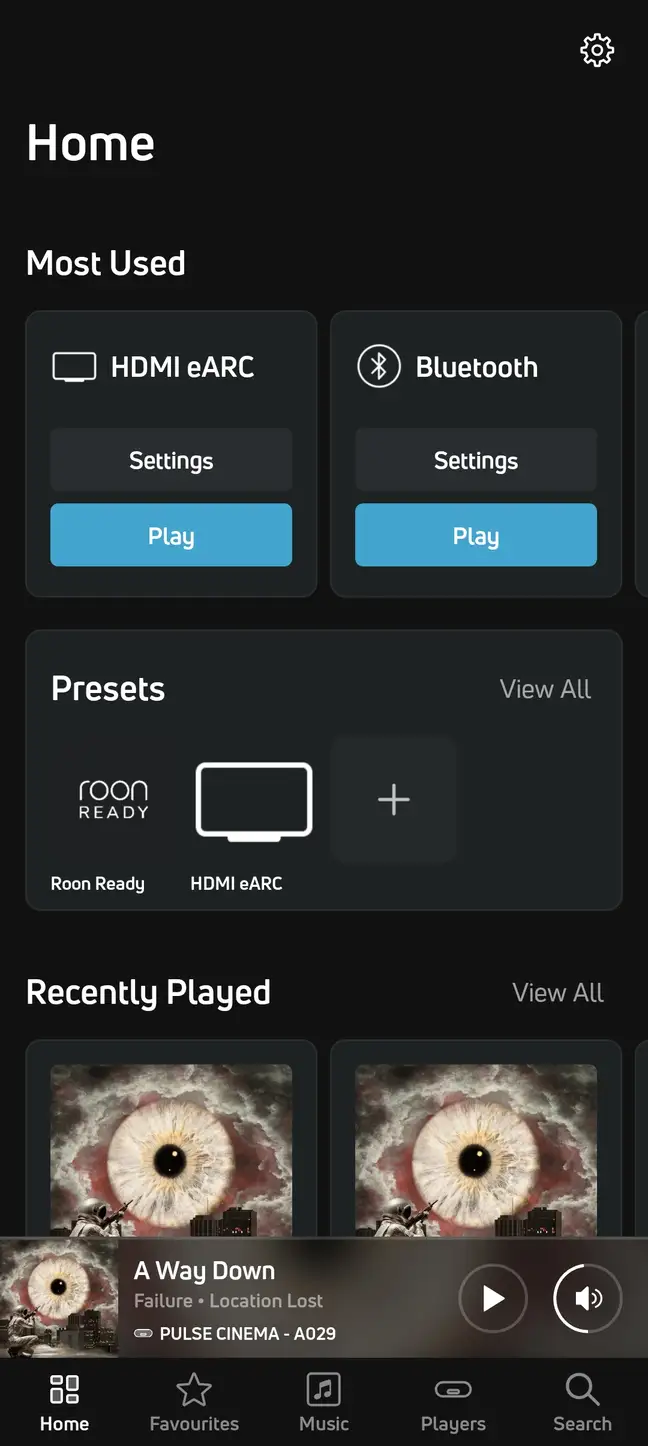
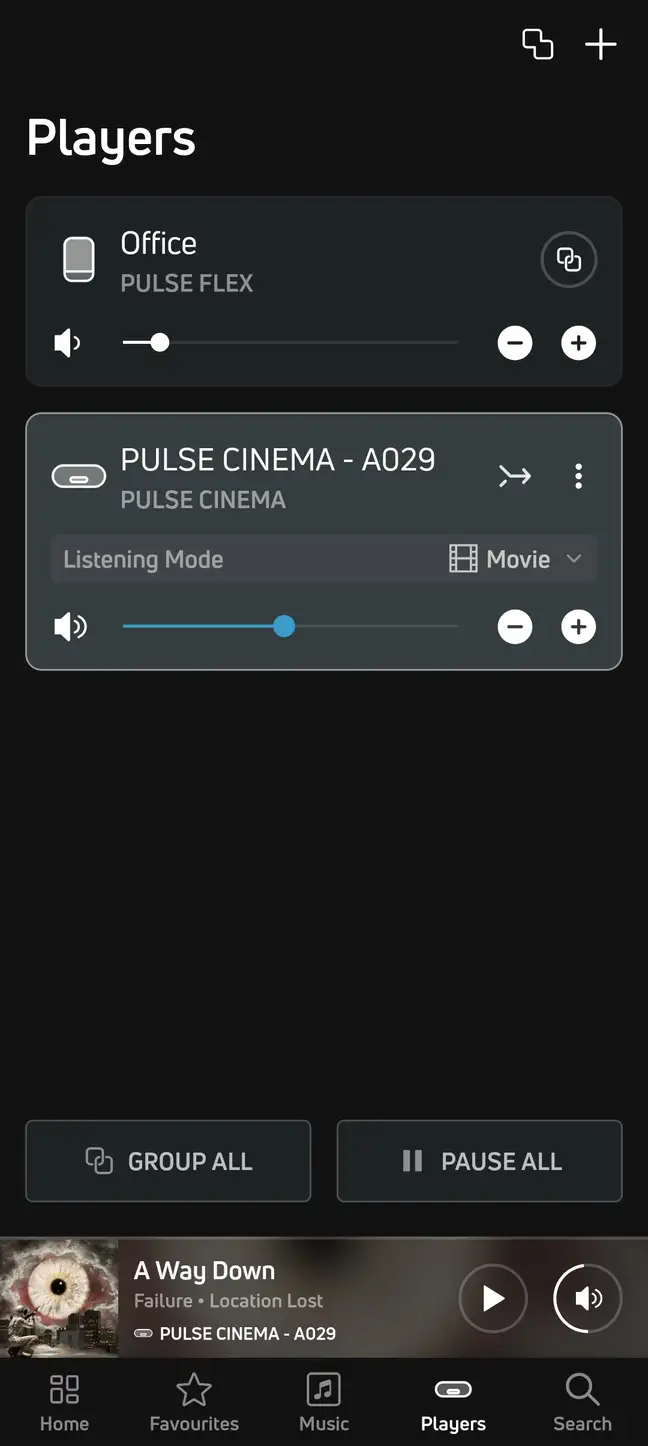
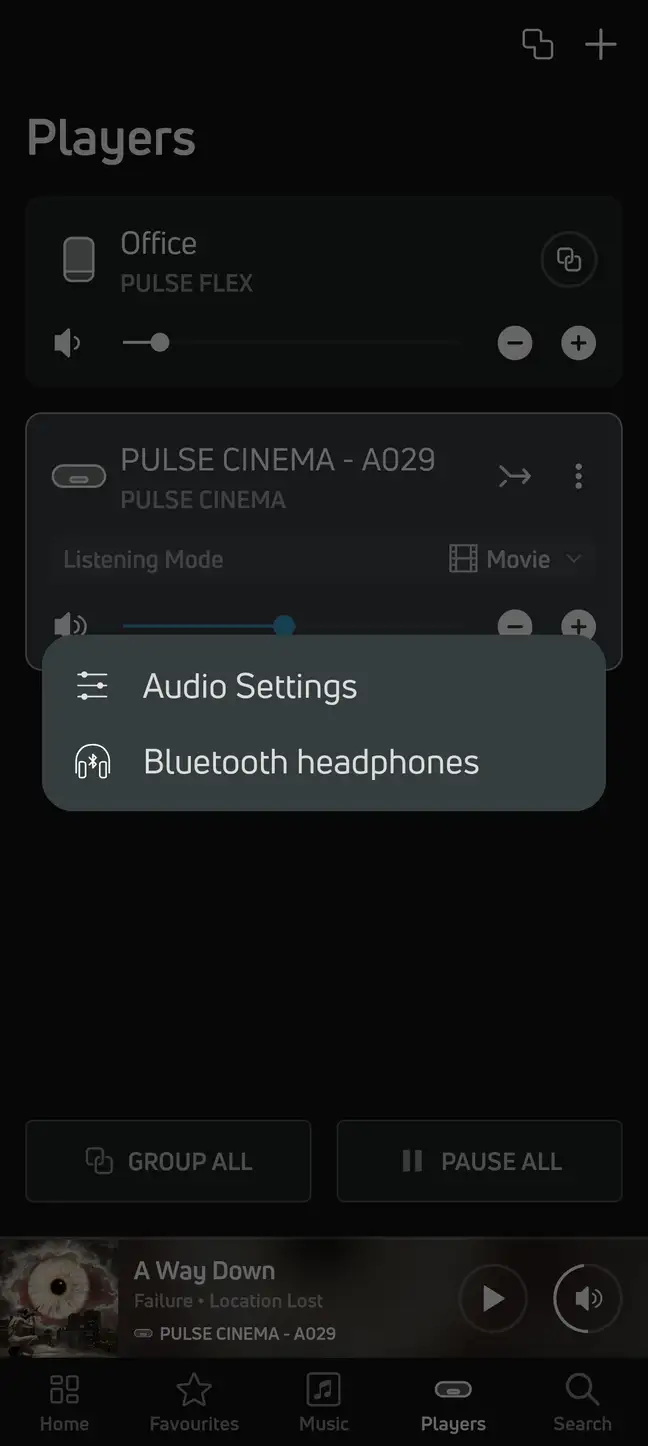
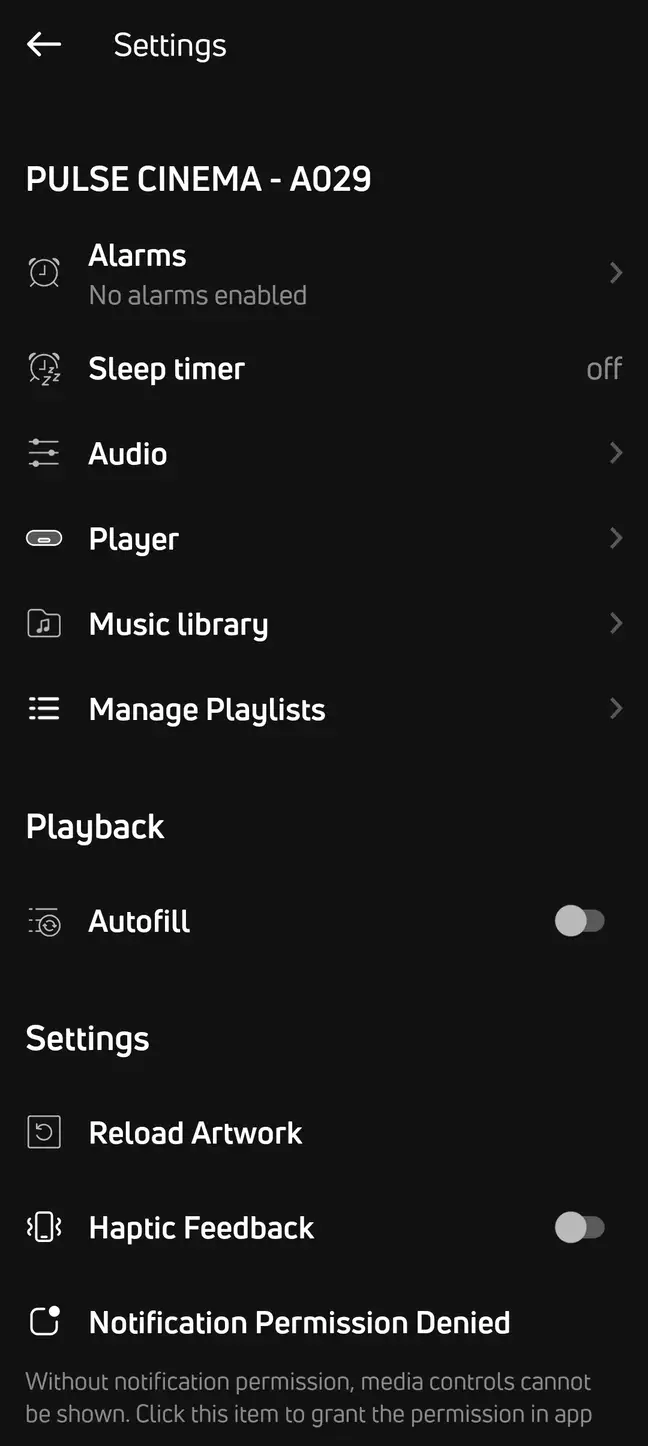


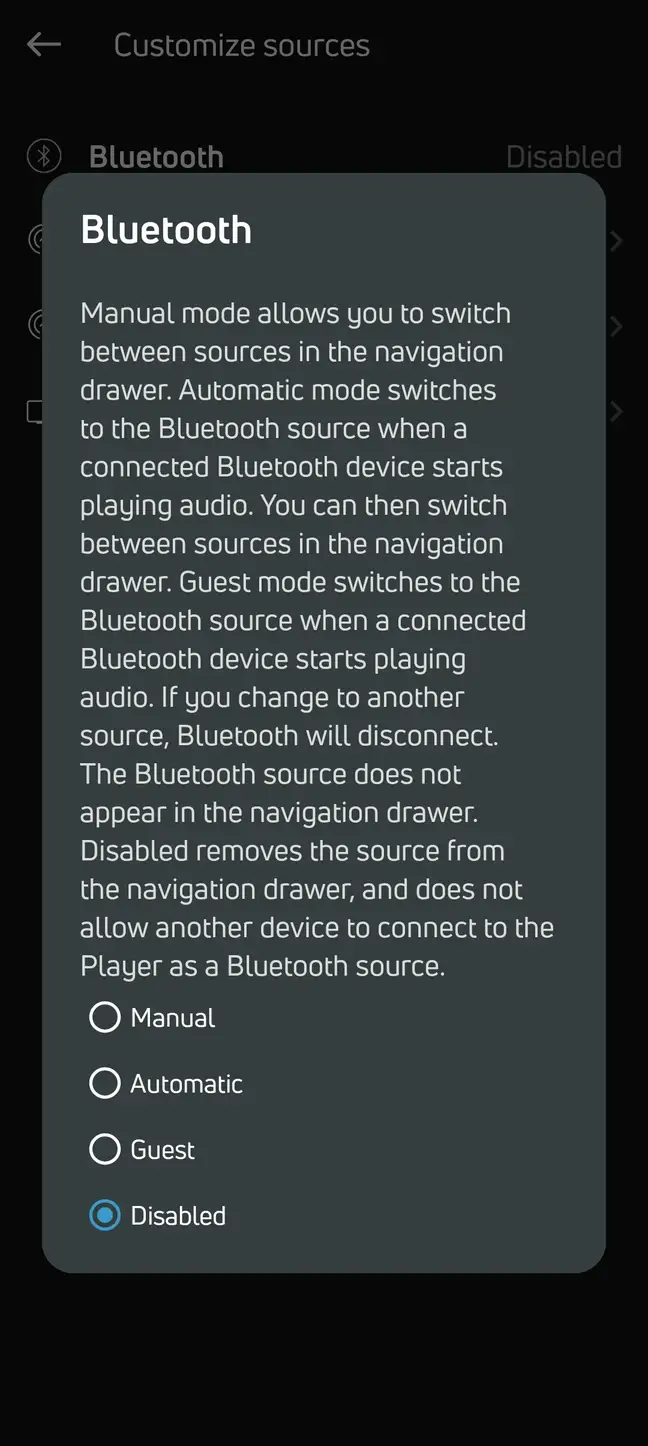
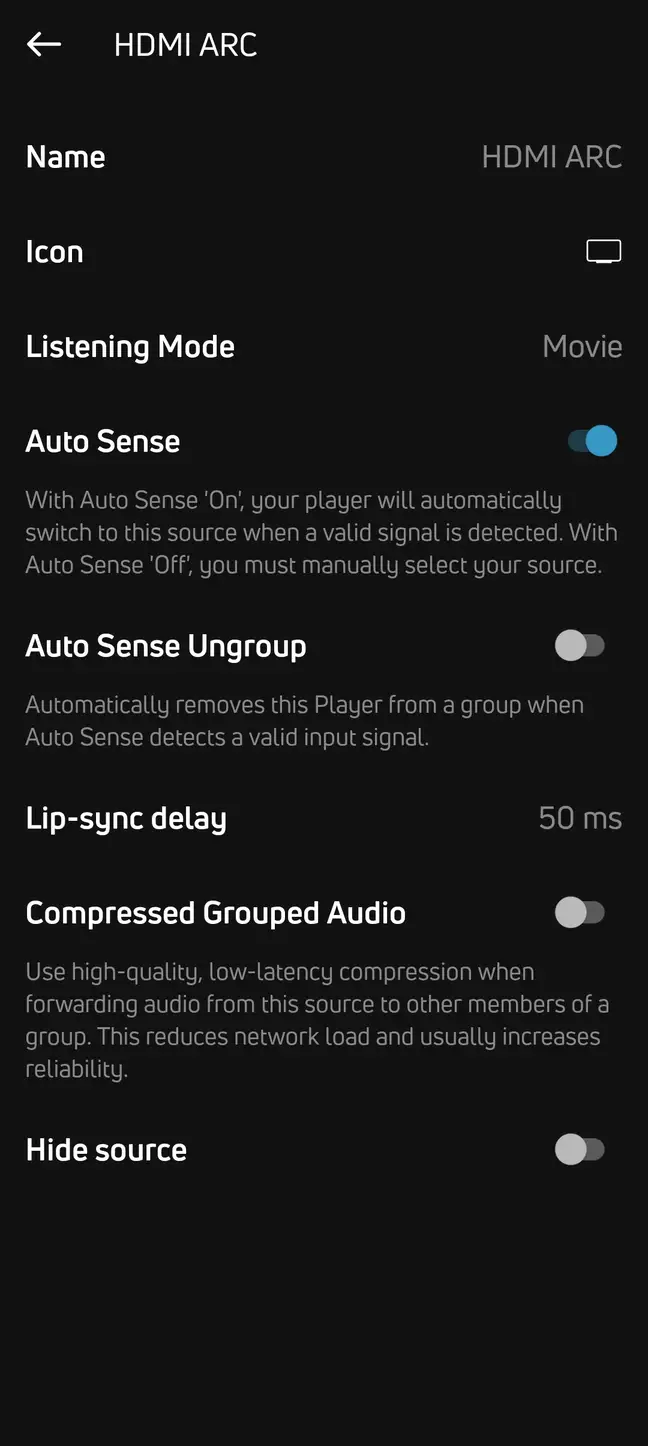
In day-to-day use, the Pulse Cinema should work well as a central living room audio hub. It can handle TV sound through HDMI eARC, music streaming through BluOS, Bluetooth playback from a phone, AirPlay 2 from Apple devices, and Roon playback for users with more advanced local libraries. It can also automatically switch between sources as it detects when audio playback starts and stops.
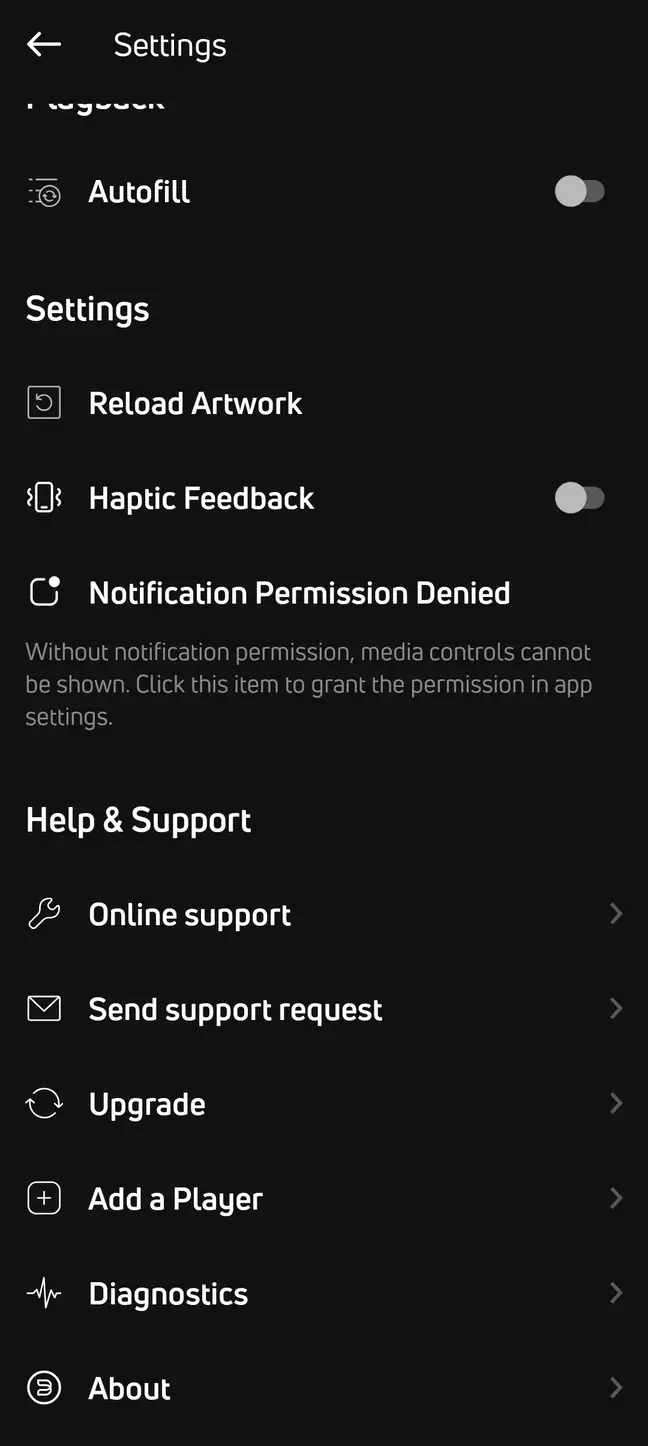
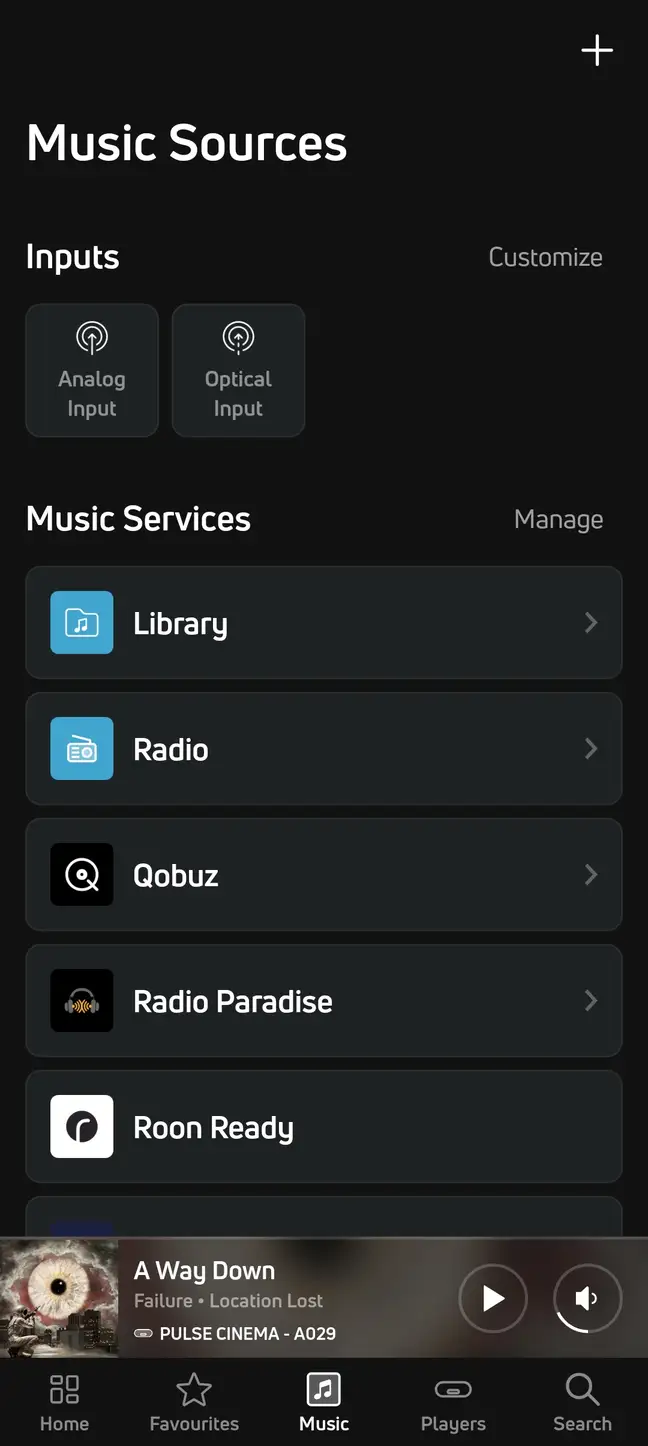
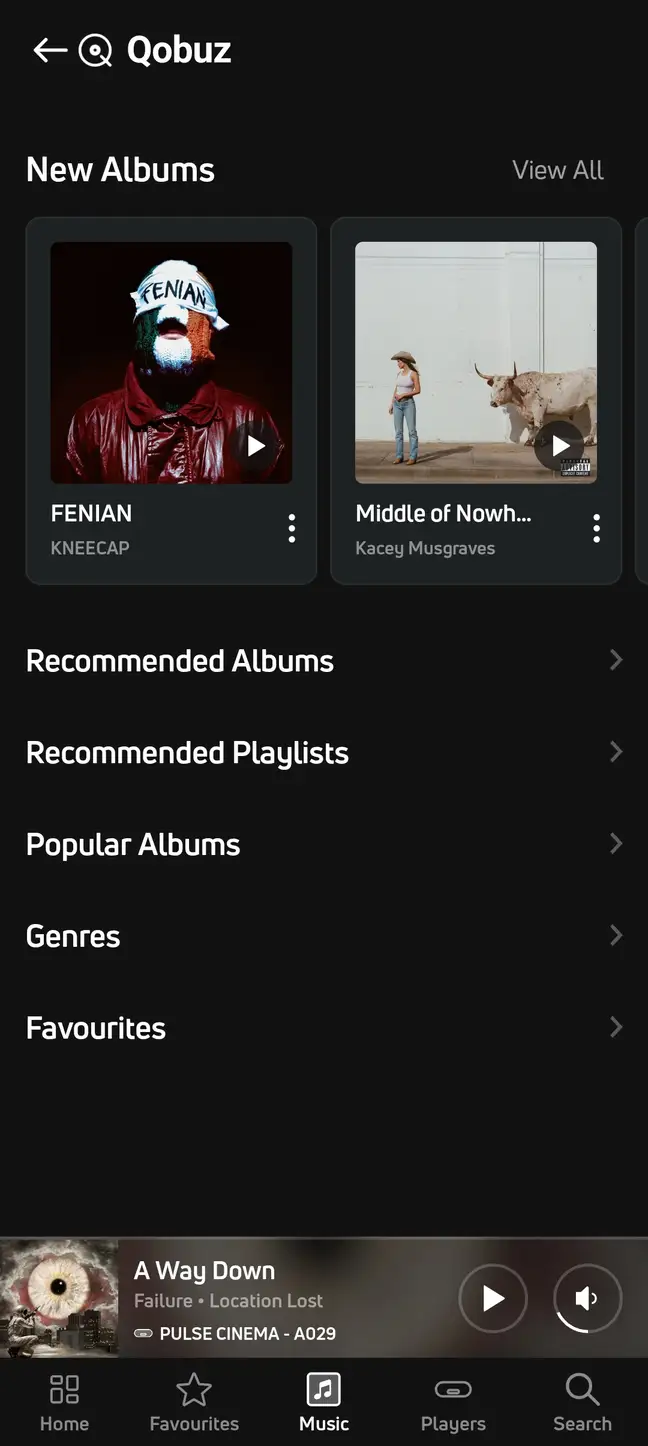
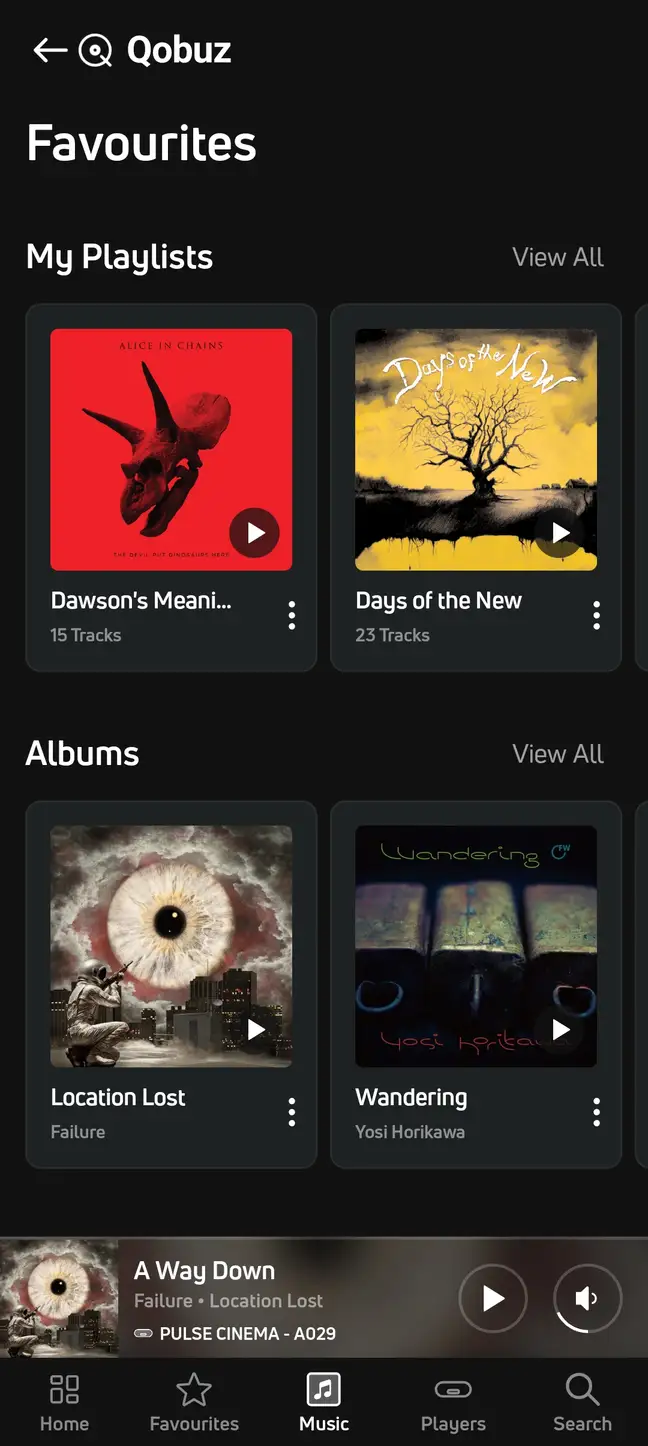



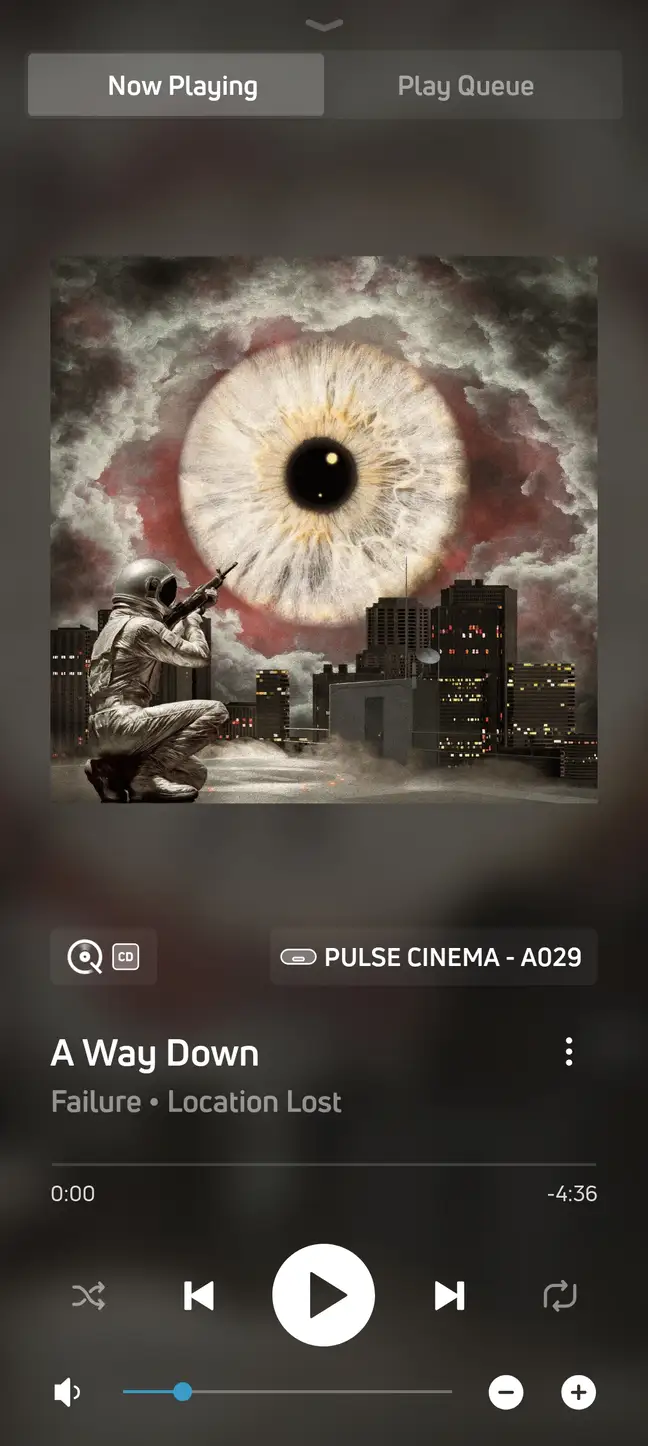
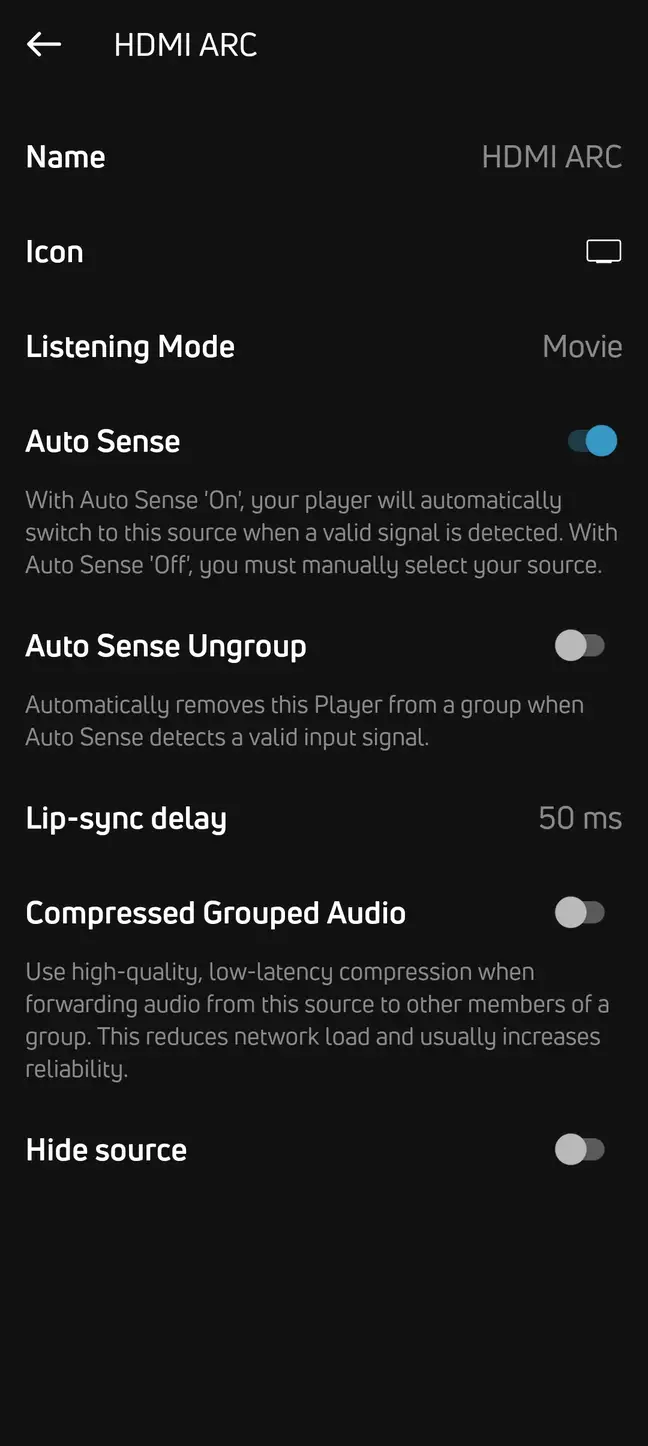


This flexibility is one of the main reasons to consider it. This is not just a Dolby Atmos soundbar. It is also a network streamer, a wireless speaker, a multi-room audio endpoint, and potentially the front end of a larger Bluesound surround system, as you can add two Pulse Flex speakers as rear surrounds.
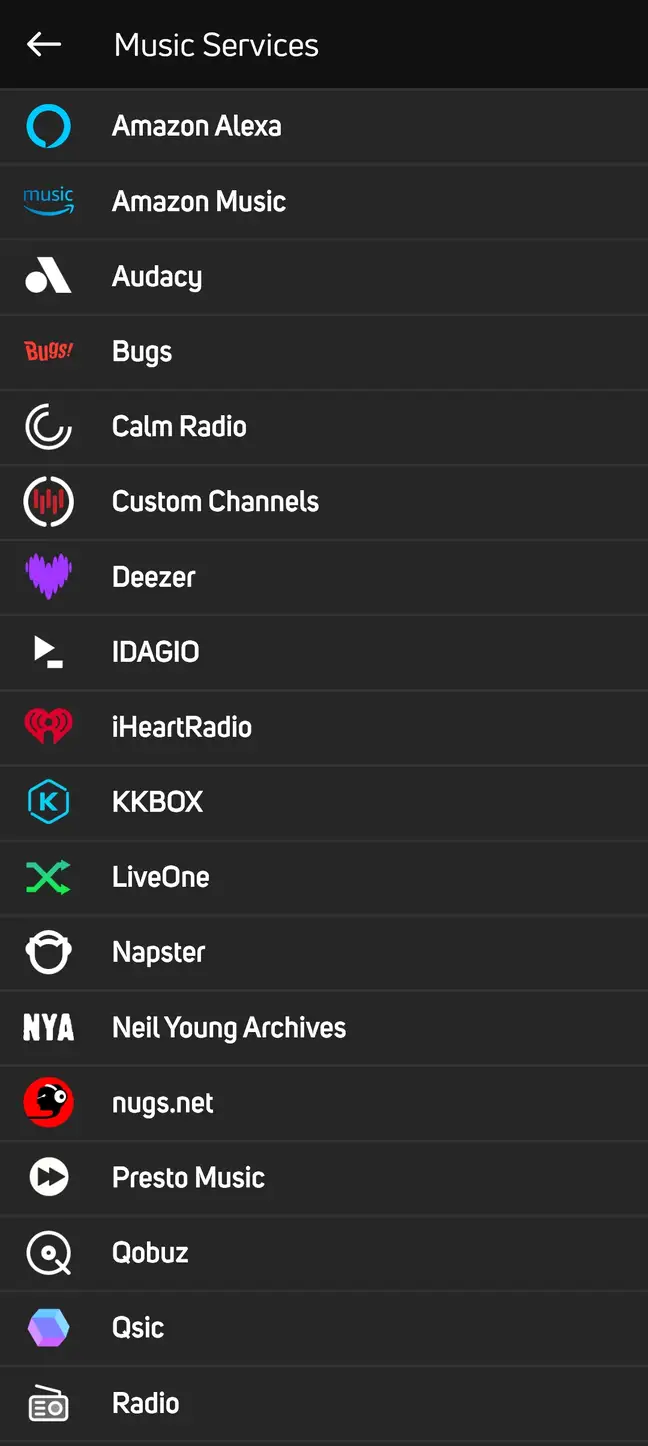
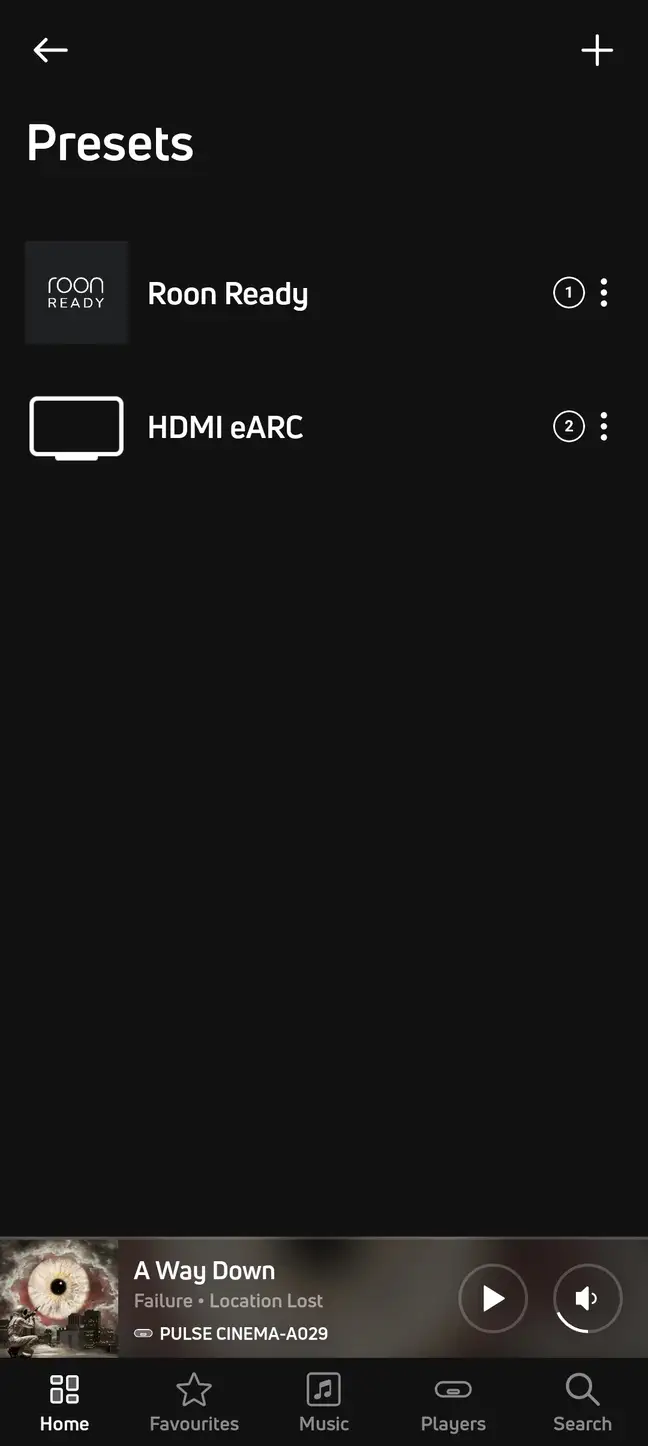
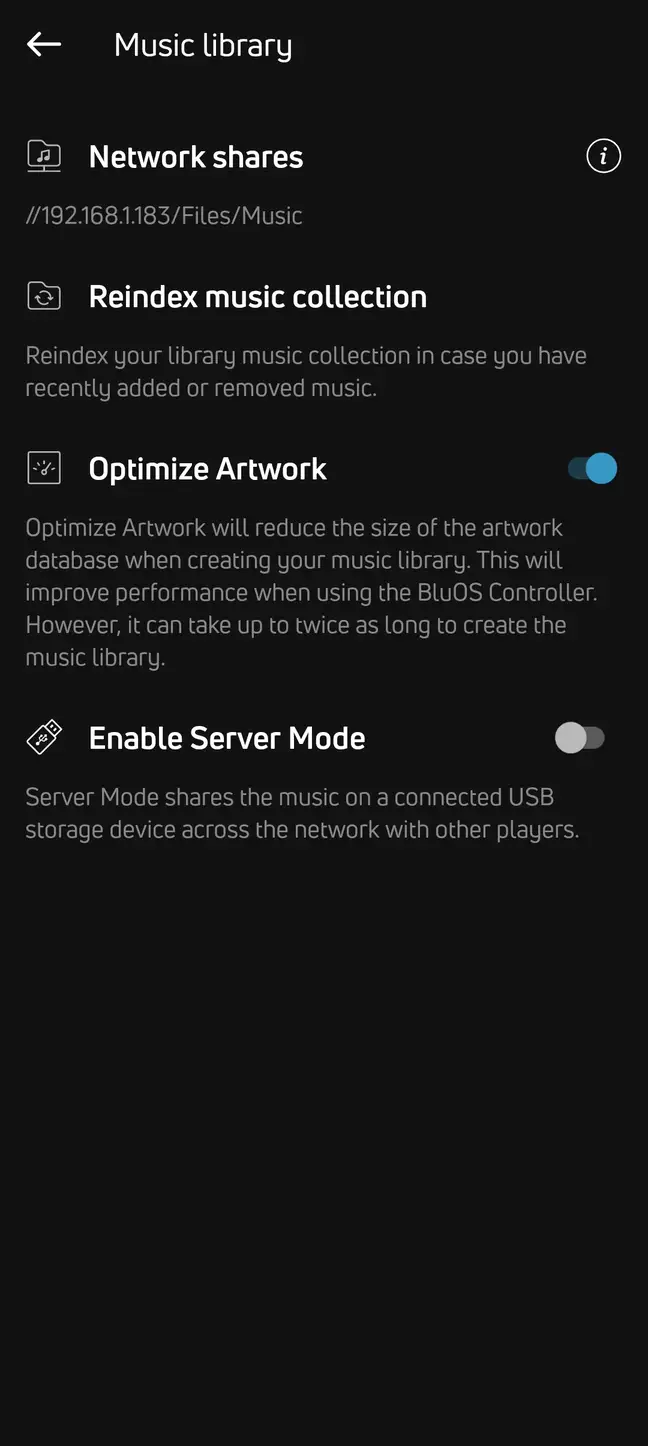


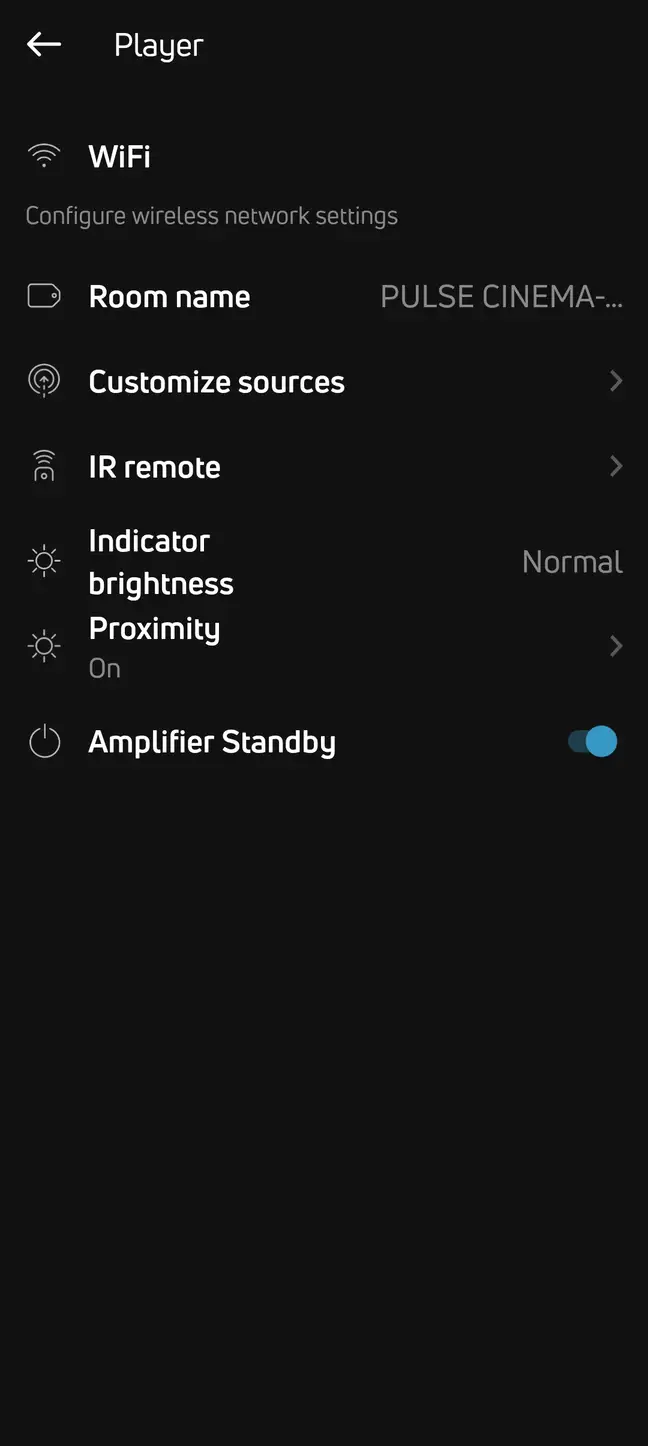
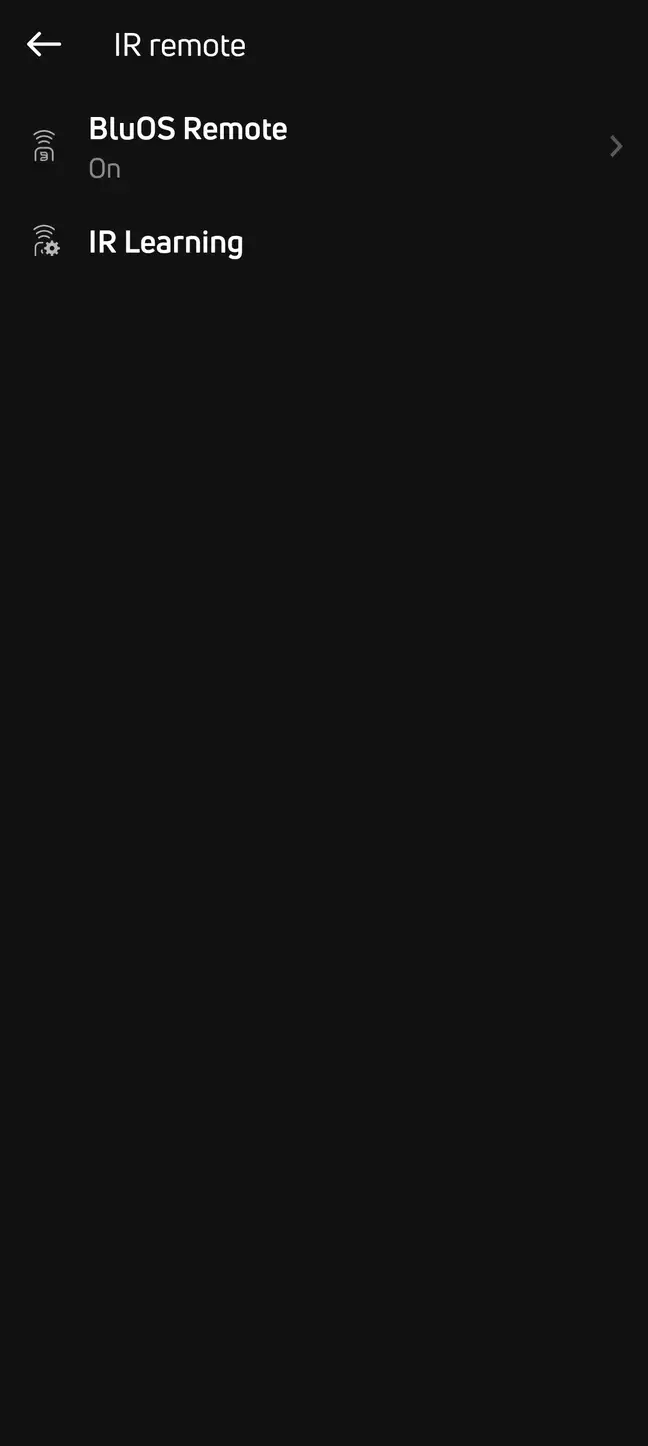
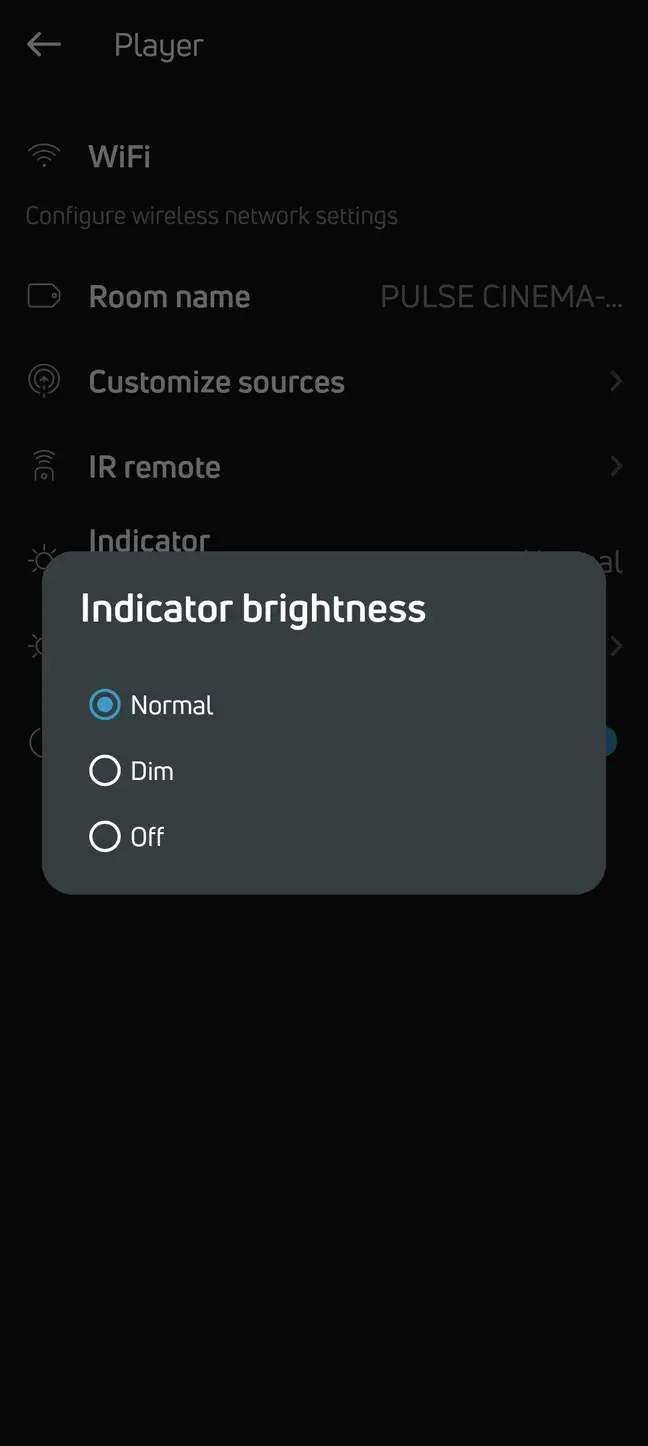
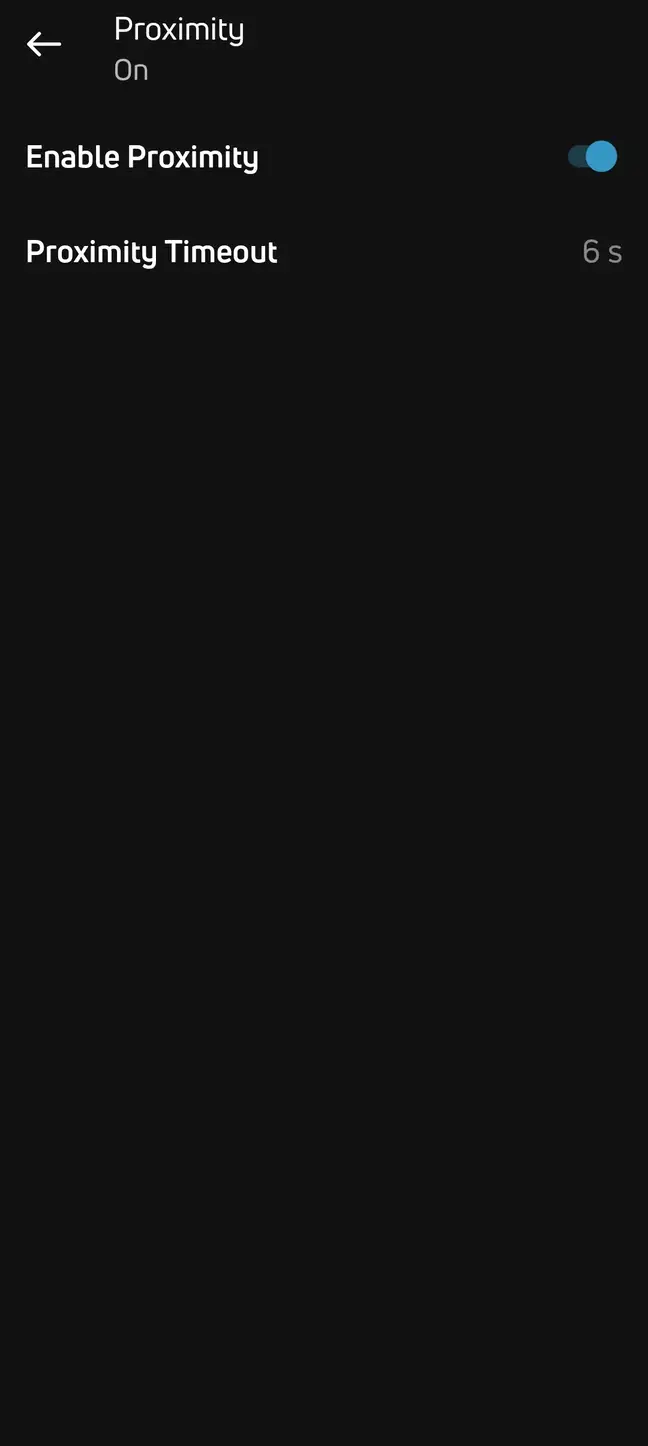


Still, BluOS may not be for everyone. It is powerful, but it is not quite as immediately intuitive as Sonos for casual users (even with the app issues that Sonos has). There is also no native Google Cast support, which I’m always reminded of when my wife uses AirPlay to cast music to the Pulse Cinema from Apple Music on her iPhone. Since I use an Android smartphone (Samsung Galaxy Fold 7) I need to either connect via Bluetooth or use one of the available integrated services, like Roon, to play music.
Listening Modes
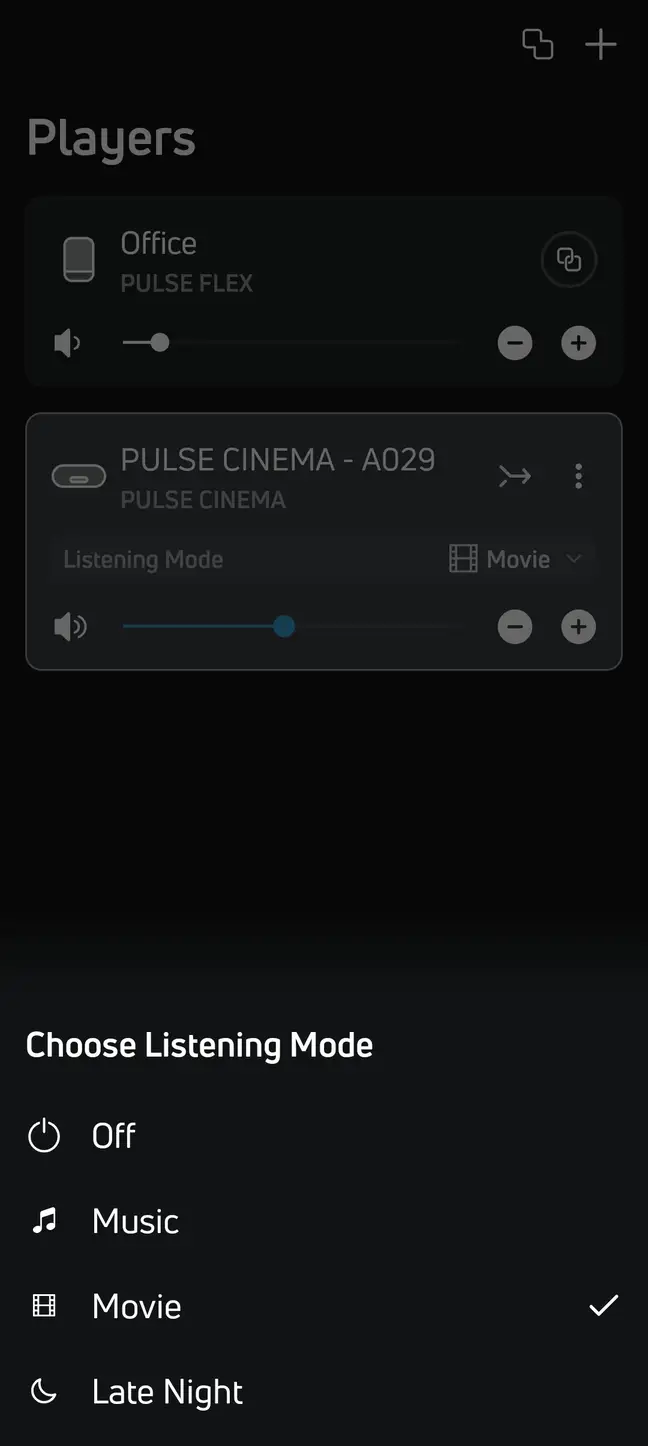



There are three listening modes you can choose from for playback:
- Music
- Movie
- Late Night
They all do exactly as their name suggests. The only differences between the Movie and Music modes that I could observe is slightly better stereo performance with the Music mode. Late Night mode decreases the dynamic range, making quiet sounds louder and louder sounds slightly quieter. It does a great job of this and is ideal for when you don’t want to disturb others with large or sudden sounds when watching content.
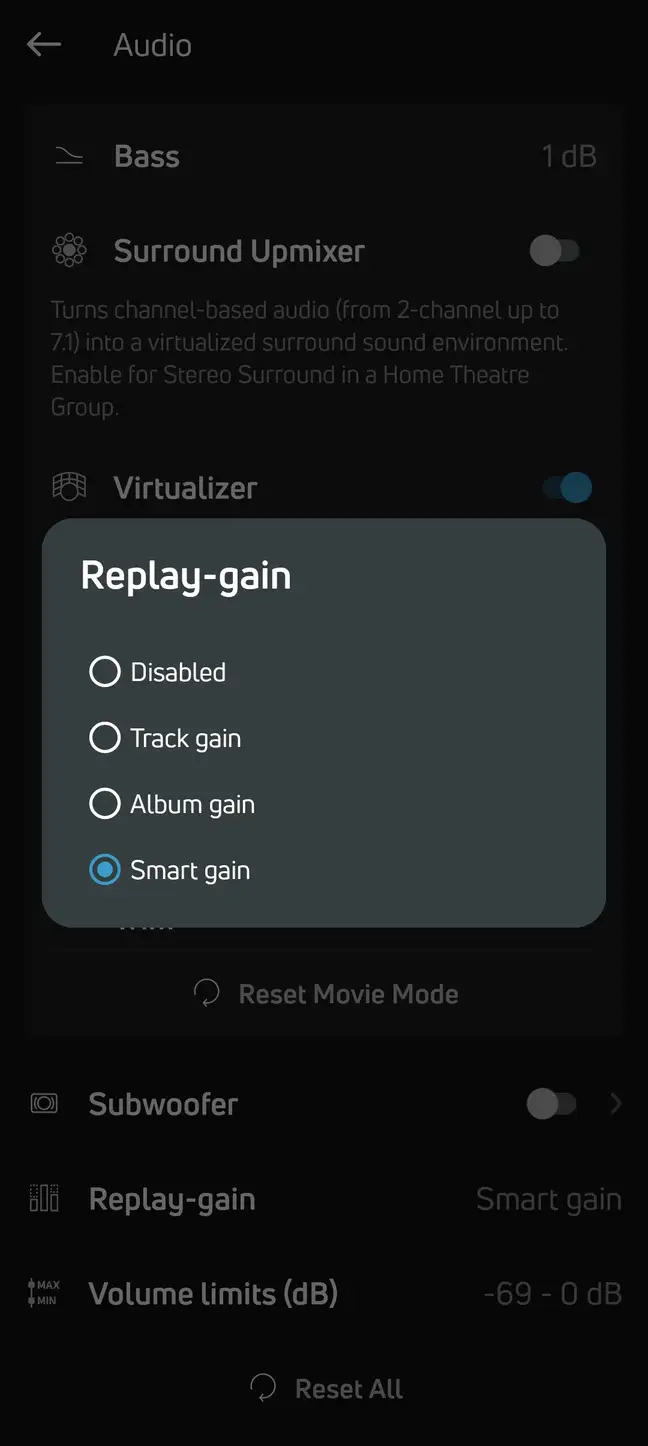
Each mode also allows you to independently customize various audio settings, such as the Treble, Bass, Surround Upmixer, Virtualizer, etc. This is appreciated as it means you are not locked into specific settings when switching between modes.
Sound Quality
Main sources used for this review:
- Apple TV 4K (HDMI eARC)
- Shanling EC Zero AKM (RCA)
- Sony PlayStation 5 (HDMI eARC)
Links to my music playlist used for the majority of testing:
Spotify: https://open.spotify.com/playlist/6QSIhuCBDAUyoWGcyxPeN8?si=c0a4eb6bd3e3421e
Apple Music: https://music.apple.com/ca/playlist/hifi-oasis-audio-testing/pl.u-lKWlcjy04xp
Qobuz: https://open.qobuz.com/playlist/39521747
Tidal: https://tidal.com/playlist/503485c7-7f3d-43f0-b904-4b9a89c33875
The Pulse Cinema uses a 3.2.2 speaker configuration: dedicated left, center, and right channels, plus left and right height channels. The upfiring speakers bounce sound off your ceiling to create overhead effects, a technique that requires reasonably flat ceilings for optimal results. The “.2” designation refers to those two height channels, not dual subwoofers, though Bluesound does include built-in woofers and passive radiators for bass response.
This design philosophy prioritizes spatial audio without requiring rear speakers from day one. The dedicated center channel handles dialog clarity, while the upfiring speakers manage height effects for Dolby Atmos content. It’s a practical approach that acknowledges most users want immersive audio without running speaker cables throughout their room.
Bluesound engineered the Pulse Cinema around 16 drivers: five 0.75-inch tweeters, five 1.5-inch x 3-inch mid-range drivers, two 4-inch woofers, and four 4-inch passive radiators. Each tweeter receives 38 watts of amplification, matching the power allocation for each mid-range driver, while the woofers get 65 watts each. This totals roughly 500W of system power.
The passive radiator implementation works with the active woofers to extend bass response without increasing cabinet volume. This design choice allows the soundbar to maintain a low profile while delivering fuller bass with fewer drivers. It’s an engineering trade-off that prioritizes both aesthetics and performance.

Movie Performance
For movies, the Pulse Cinema delivers exactly what you would expect from a premium soundbar: a clean, powerful, detailed, and articulate presentation.
The 3.2.2-channel configuration gives it dedicated left, center, right, bass, and height information, while the 500W amplifier section gives it enough headroom to sound dynamic in a typical living room. The whole audio profile has superb detail clarity, excellent dialogue reproduction, and a broad, room-filling presentation.
Dialogue is one of the most important parts of any soundbar, and this is one of the Pulse Cinema’s strengths. The dedicated center channel helps voices come through clearly, and is easy to follow even during busy action scenes with many layered effects and music.
This matters because a lot of soundbars try to impress with bass and surround processing first, while leaving voices sounding recessed, thin, or overly processed. The Pulse Cinema seems to take the more audiophile-friendly approach: clarity first, spectacle second. This is truly a highlight for me.
Action scenes still have plenty of energy. The dual woofers and passive radiators give the soundbar more low-end body than a thin TV speaker or entry-level bar, and the overall presentation is reasonably powerful and engaging. I never felt like I wanted more energy or engagement.
One thing to note here is that the Pulse Cinema is not compatible with DTS, DTS-HD, and DTS:X. The omission of this is very disappointing, especially at this price point. You can still get lossless multichannel PCM audio, but this feels like a missed opportunity.
I bring this up as one of the movies I used to test the Pulse Cinema is the 4K Blu-ray of Dunkirk. The main audio track is encoded using DTS-HD Master Audio, which in this scenario gets converted to PCM multichannel audio. It still sounds fantastic, but audio purists may be offended (and I partly am).
Dolby Atmos Performance
The Pulse Cinema’s biggest technical upgrade over Bluesound’s older soundbar designs is its move to a true 3.2.2 Dolby Atmos layout with dedicated up-firing drivers. This matters because the previous Pulse Soundbar+ relied more heavily on virtualized Atmos processing, while the Pulse Cinema has physical height channels built in.
In practice, the Atmos effect sounds great, perhaps even class-leading. The Pulse Cinema creates a convincing sense of height and space with the right content, though it does not always produce the most dramatic overhead effects compared with larger, dedicated multi-speaker systems (obviously). Still, overall Atmos performance is much better than the Sonos Arc I’ve been using for ages, which tends to overprocess the effect at times.
I would look at the Atmos performance as the cherry on top rather than the entire reason to buy this soundbar. It adds height, scale, and immersion, but Pulse Cinema’s real strength is its tonal balance, clarity, and musicality. That is very Bluesound. This soundbar does not exaggerate effects just to impress in a showroom. Rather, it prioritizes a cleaner, more controlled presentation.

Music Performance
Music is where the Pulse Cinema really separates itself from other premium soundbars. Most soundbars are designed primarily for movies and TV, with music playback treated as a bonus feature. The Pulse Cinema is different. Bluesound’s background is in wireless hi-fi, and that shows in the performance of music playback. Music playback has impressive clarity, separation, and overall refinement for a soundbar. That tracks with what I would expect from Bluesound. The company tends to tune its products with more attention to tonal balance, detail retrieval, and stereo imaging.
For music streaming, the support for Spotify Connect, Tidal Connect, Qobuz Connect, AirPlay 2, and Roon Ready playback makes it extremely versatile. For more serious listening, support for up to 24-bit / 192kHz playback, MQA, FLAC, ALAC, WAV, AIFF, and DSD256 gives it more audiophile credibility than most soundbars.
Of course, it is still a soundbar. It will not replace a good pair of dedicated bookshelf speakers in terms of imaging depth, stereo separation, or natural soundstage scale. But as a one-box living-room music system, the Pulse Cinema performs extremely admirably.
Surround Expansion
One of the more appealing parts of the Pulse Cinema is that it does not have to remain a single-box system. It can be expanded with Bluesound’s Pulse M or Pulse Flex speakers for surround channels, and with the Pulse SUB+ for wireless bass extension.
This gives the Pulse Cinema a clearer upgrade path. You can start with the soundbar, then add a subwoofer later, then add wireless surrounds if you want a more complete Dolby Atmos setup.
That is similar in concept to Sonos, but Bluesound’s approach may appeal more to hi-fi users who already use BluOS or NAD gear. It also gives you wired subwoofer flexibility, which is something many lifestyle soundbar systems do not offer.
The downside is cost. Once you add a Pulse SUB+ and a pair of rear speakers, this becomes a very expensive system. At that point, buyers may also start comparing it against traditional AVR-based speaker systems. The advantage of Bluesound is convenience, wireless integration, and a cleaner living room setup. The disadvantage is that you are paying a premium for that simplicity.
Gaming Performance
The Pulse Cinema is not marketed as a gaming soundbar first, but it works well with modern consoles and TVs through HDMI eARC. In my setup, my PlayStation 5 integrated perfectly.
The strong dialogue, clarity, and wide presentation helped with cinematic games, RPGs, open-world titles, and story-focused experiences. You also get Dolby Atmos support and can even utilize Sony’s Tempest 3D Audio. I don’t have much else to say here about the overall gaming experience, which may be a good thing, as it performs exactly as you’d expect it to. Flawlessly.
Final Thoughts

The Bluesound Pulse Cinema is a premium soundbar that makes the most sense for people who care about both movies and music. It is not just a TV speaker. It is a Dolby Atmos soundbar, a BluOS streaming endpoint, a hi-res music system, a Roon Ready endpoint, and the foundation for a larger wireless surround setup. That makes it more versatile than many competitors, especially for users who already live in the Bluesound or NAD ecosystem.
Its biggest strengths are overall clarity, dialogue intelligibility, musicality, build quality, and connectivity. It has the kind of clean, controlled, full-bodied sound that will appeal to listeners who find some mainstream soundbars too processed or too focused on exaggerated effects.
The trade-off is that the Pulse Cinema does not have any DTS or DTS:X support, no built-in room correction tools, and no Google Cast support. Depending on your use case, this may very well be fine and not at all a deal breaker.
Bluesound has created something compelling here. The Pulse Cinema is not the obvious choice for everyone, but for the right listener, it could be one of the most satisfying soundbars available: a clean, powerful, music-first Dolby Atmos system that fits into a modern living room without needing a receiver, speaker wire, or a complicated setup.
If your priority is maximum surround spectacle, there are other soundbar systems that may deliver a more enveloping movie experience out of the box. But if you want a premium soundbar that treats music as seriously as movies, the Bluesound Pulse Cinema deserves your serious consideration.

Buy from Amazon: https://amzn.to/4tZmYZT
Best Buy USA: https://bestbuycreators.7tiv.net/2RdaQ7
Check Other Stores: https://geni.us/07A4heJ
Buy directly from Bluesound: https://www.bluesound.com/products/pulse-cinema
The above links may be affiliate links. All commission earned through them goes directly to maintaining this site and bringing you more audio reviews.
I’m not always able to cover all the details of a product, both hardware and software, in our reviews. If you have any specific questions about this product, please feel free to leave a comment or contact me directly.
Be sure to check out our excellent Buyer’s Guides, as well as our other Reviews.
HiFi Oasis Verdict
HiFi Oasis Verdict-
Design & Build Quality9/10 Amazing
-
Sound9/10 Amazing
-
Features/Accessories8/10 Very good
-
Value8/10 Very good
Pros
- Detailed, controlled, and full-bodied sound
- Excellent dialogue clarity from the dedicated center channel
- Strong Dolby Atmos performance with convincing height effects
- Better music playback than most soundbars
- Clean, premium design and solid build quality
- Very flexible connectivity, including HDMI eARC, optical, RCA, Ethernet, USB-A, Bluetooth, and wired sub out
- BluOS support with AirPlay 2, Spotify Connect, Tidal Connect, Qobuz Connect, and Roon Ready
- Expandable with wireless surrounds and a subwoofer
- Useful listening modes and adjustable audio settings
- Stable Bluetooth with aptX Adaptive support
Cons
- No DTS, DTS-HD, or DTS:X support
- No Google Cast support
- No built-in room correction
- Full surround expansion gets very expensive



Great Great article.
Was fun and informative to read!!
Also good structured.
Merci pour ce test detaillé, c est tout a fait le genre de barre que je recherche , je parle en connaissance de cause , pssedant une dali katch one qui edt exellente en musique mais qui peche un peu dans les dialogues en mode cinma