



Disclosure: I’d like to thank Shanling for sending me the EC Zero T for this review. All thoughts and opinions are my own, and Shanling had no say or input on the contents of this review.
It seems CDs are becoming an attractive option for more and more people these days. The idea that you actually own the music you’re listening to is very enticing, especially given the monthly cost of music streaming services, and the fact that sometimes that music simply disappears from those streaming services due to licensing agreements. With a CD, you can listen to it wherever and whenever you want, as well as rip it to FLAC files to be played back elsewhere. So, when Shanling asked me if I’d like to take a look at their newest portable CD player, the EC Zero T, I excitedly agreed. I reviewed the FiiO DM13 back in November of 2024, and it re-energized my interest in CDs. Shanling has a long history when it comes to making CD players, so my expectations are pretty high.
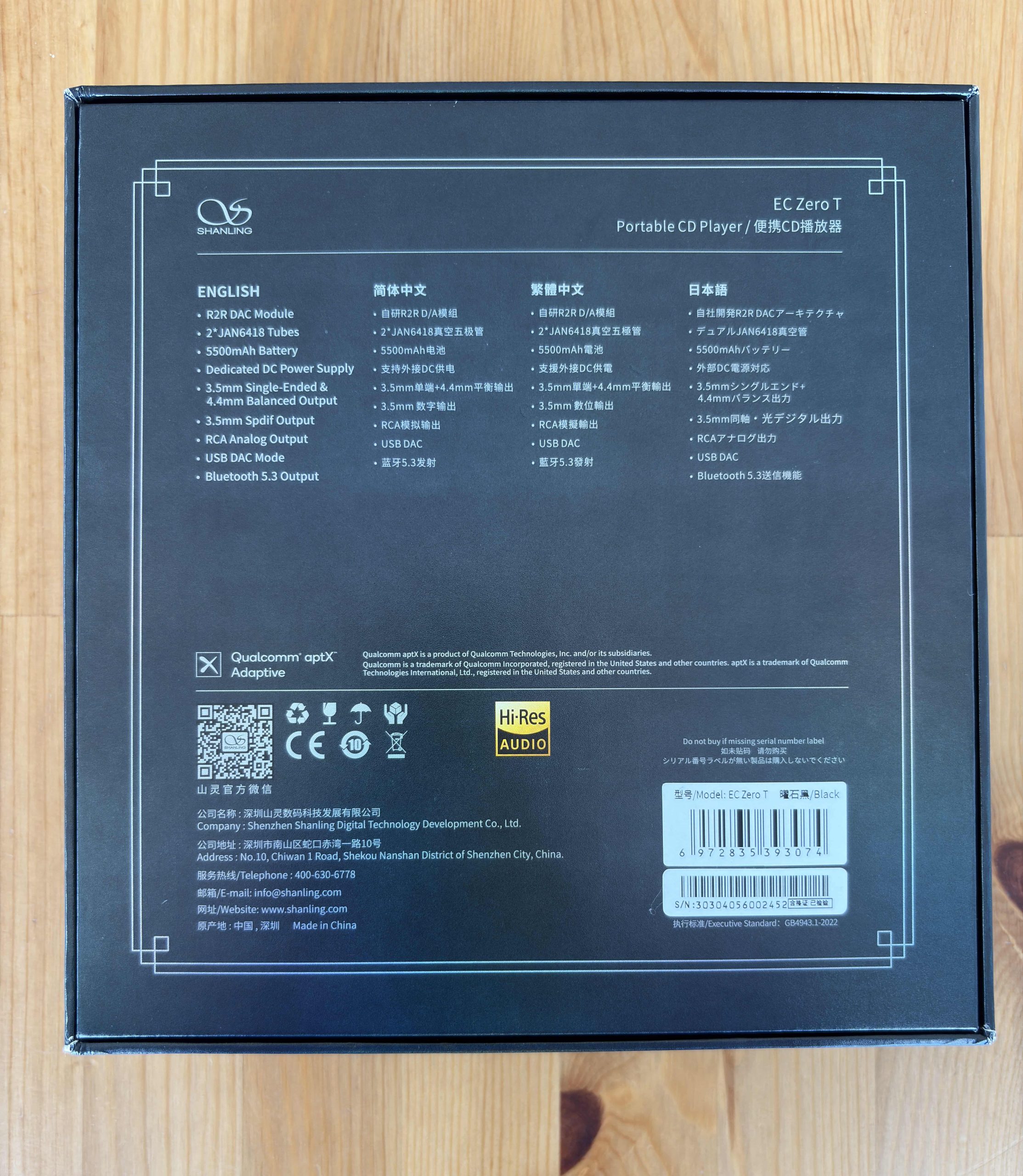
The Shanling EC Zero T is a portable CD player with an R2R DAC and tubes that you can switch between. It’s also a USB DAC. It has a powerful amplifier, 3.5mm SE and 4.4mm balanced headphone outputs, 3.5mm and 4.4mm Line Outs, Optical/coax out, and Bluetooth output connectivity. It seems it’s much more than just a portable CD player, then, and considering it is selling for $589 USD, the paper specs would lead you to believe that the EC Zero T can offer a lot of value for the price. I’ll be going through all of the above features, including how they work, and if they work well, to help you decide if this is the right portable CD player for you. Alright, let’s get into it.
Key Specifications
- Product Page: https://en.shanling.com/product/475
- MSRP: $589 USD
- DAC and Amp Components: Custom 24bit R2R DAC, 2x JAN6418 tubes, 2x TPA6120A2 Op-Amps
- Connectivity:
- 3.5mm headphone output
- Transistor
Low Gain: 57mW@32Ω
High Gain: 158mW@32Ω
High Gain: 330mW@32Ω (DC power) - Tube
Low Gain: 47mW@32Ω
High Gain: 158mW@32Ω
High Gain: 268mW@32Ω (DC power)
- Transistor
- 4.4mm Balanced headphone output:
- Transistor
Low Gain: 195mW@32Ω
High Gain: 551mW@32Ω
High Gain: 1220mW@32Ω (DC power) - Tube
Low Gain: 195mW@32Ω
High Gain: 551mW@32Ω
High Gain: 1087mW@32Ω (DC power)
- Transistor
- 3.5mm Line Out
- 4.4mm Line Out
- 3.5mm SPDIF Coaxial/Optical output
- USB-C Power Input
- USB-C DAC Input
- Bluetooth 5.3 (SBC, aptX, aptX Adaptive)
- 3.5mm headphone output
- Battery Life:
- Up to 8 hours (5500 mAh Battery)
- Supported CD Formats:
- Redbook audio CDs
- HDCD
- CD player of SACDs
- CD-R data disc (WAV, MP3)
- CD-R audio disc
- USB DAC: 768kHz/32bit, DSD512
- Features:
- Gapless playback
- USB-DAC functionality
- CD ripping (direct to thumb drive)
- Electronic Shock Protection (ESP)
- Desktop Mode (battery bypass)
- Case and Dimensions:
- 158 x 150 x 28mm
- Weight: 669g
In the Box
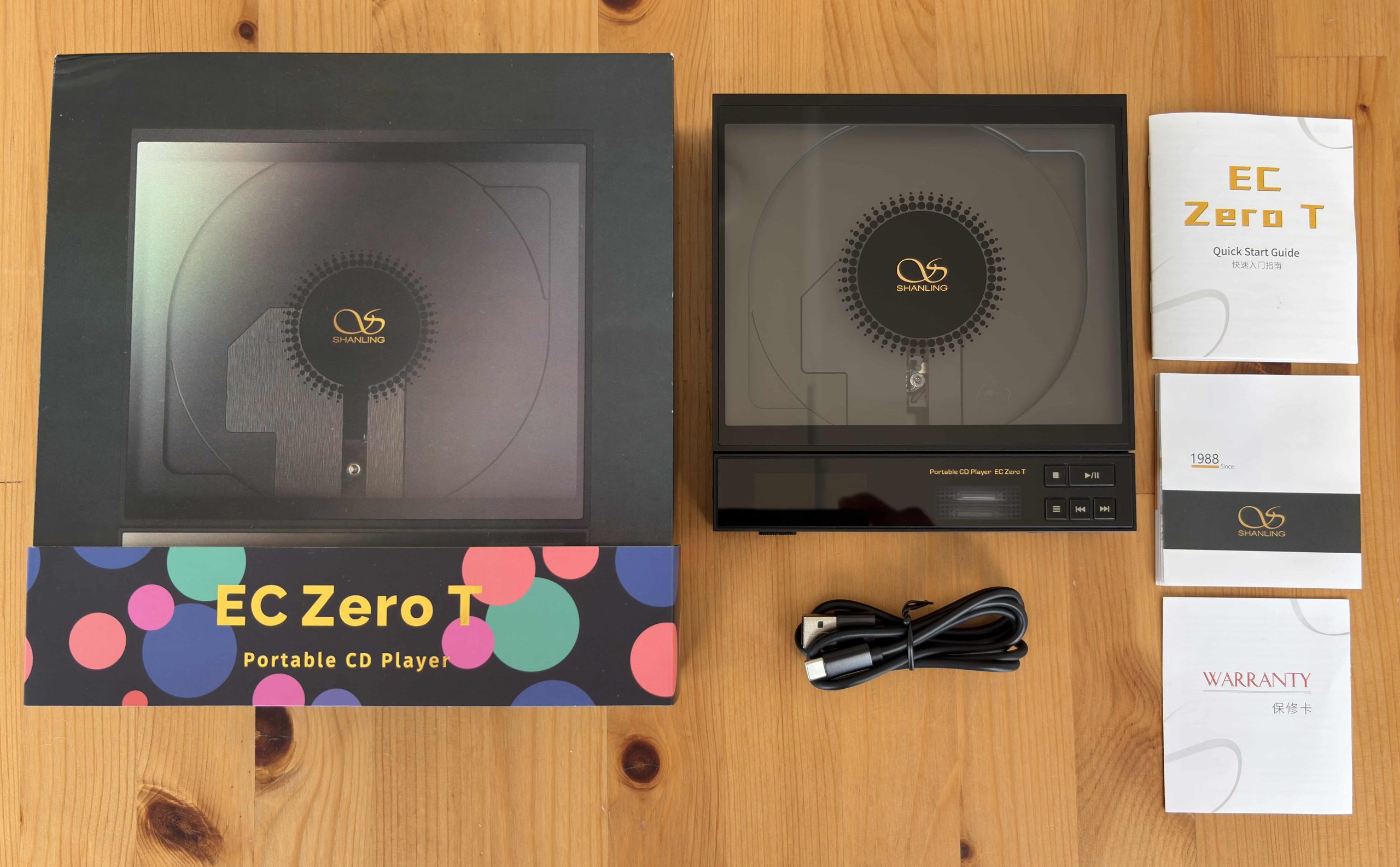
- Shanling EC Zero T
- USB-A to USB-C cable
- Manual and warranty information
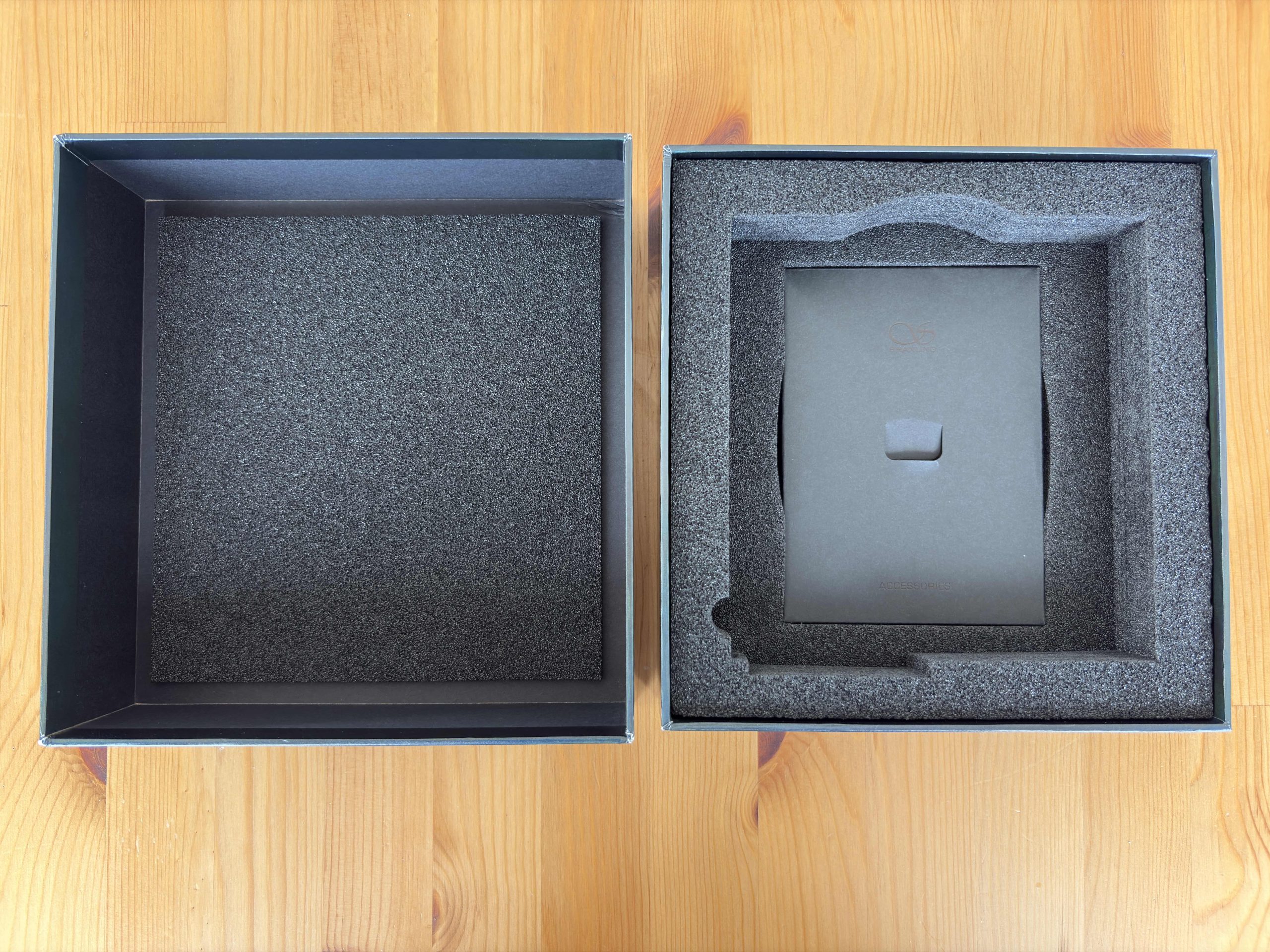
Design & Build Quality
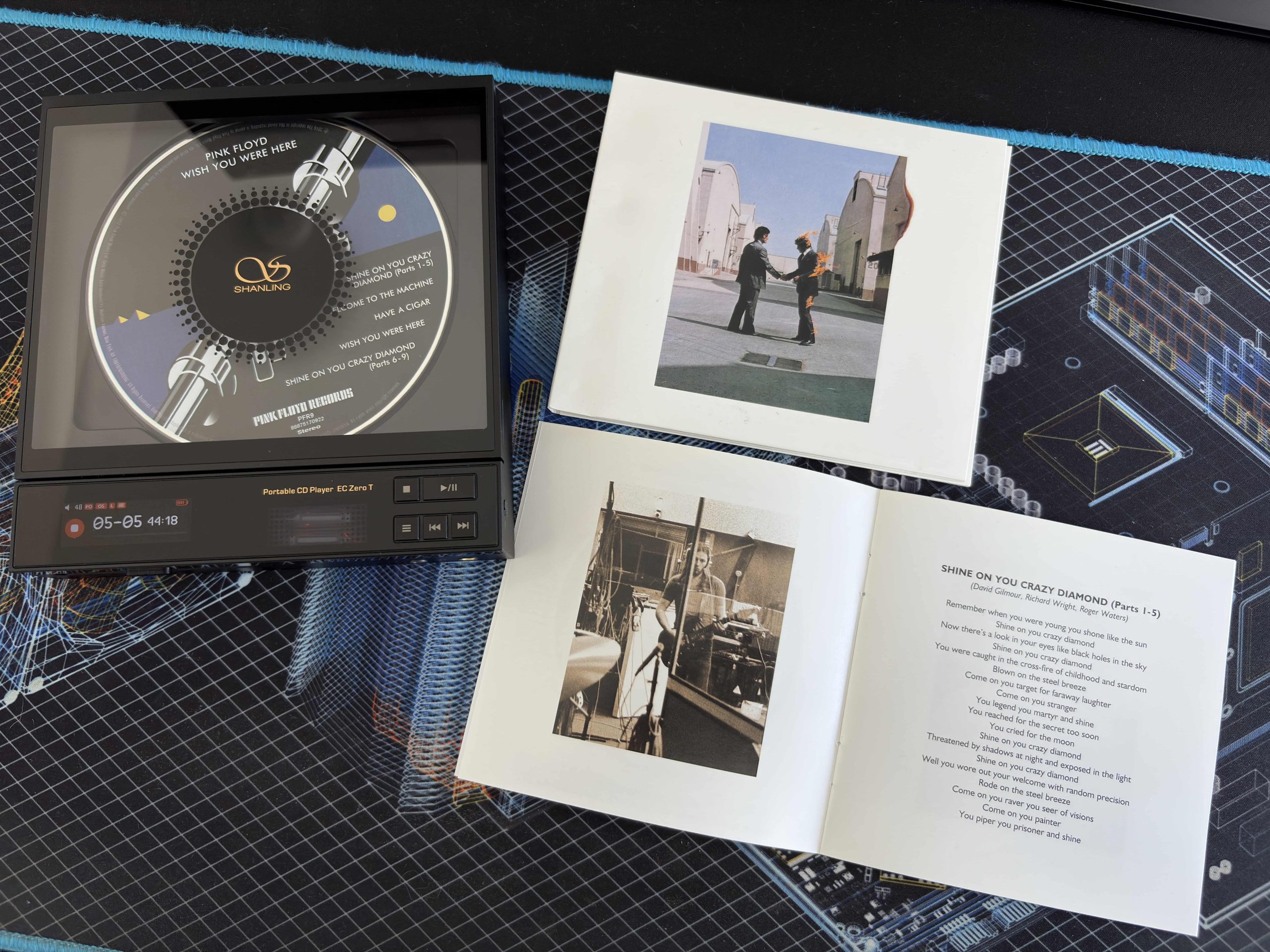
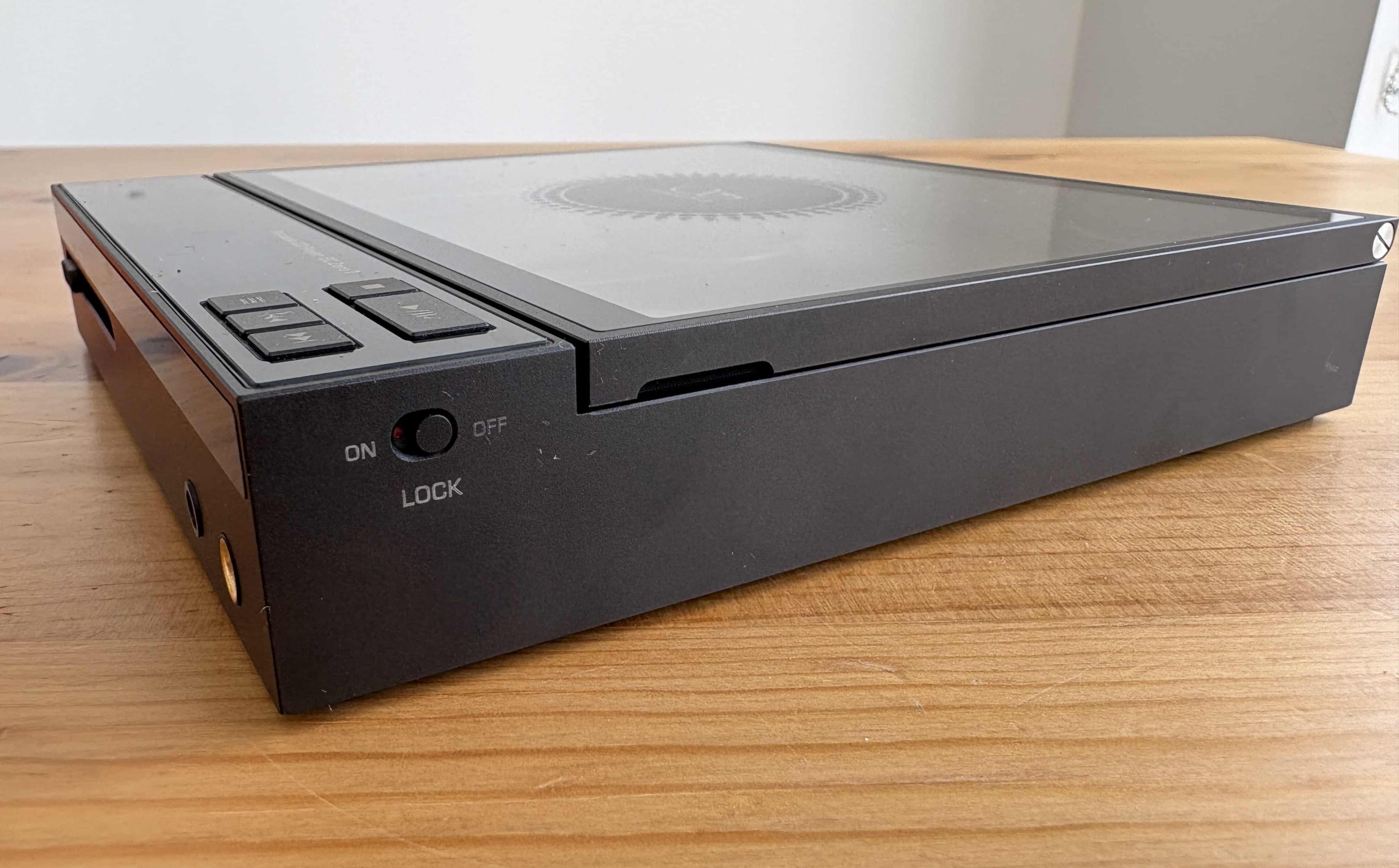
The Shanling EC Zero T has a design aesthetic that reminds me of CD players and home stereos that were available in the late 80s and early 90s. From the use of glass on the top and bottom, to the bronze colored accents and square buttons, it really gives a nostalgic classic feel (I’m 36, so maybe that’s why). The top and bottom of the player uses tempered glass, which looks fantastic but is an absolute fingerprint magnet. It’s a shame Shanling didn’t include a cloth with the player, as this thing looks stunning in person, until you start mucking it up by handling it. Even the piano black finish shows greasy fingerprint marks, but that is the sacrifice made in order to get this overall look. And yes, I will say it again, the EC Zero T looks stunning!


The player itself has impeccable build quality. It feels very solid and put together when you handle it. There are no sounds when shaking it, no button wobble or loose parts, and no chassis flex. It feels as premium as it looks. At 669 grams, it is not the lightest portable CD player out there, with FiiO’s DM13 being a bit lighter at 450 grams, and those old Sony Discmans that you might have seen or used being roughly 180-250 grams. Your definition of portable may vary, but I still find the EC Zero T portable enough to walk around with. It does have a certain heft to it, though.

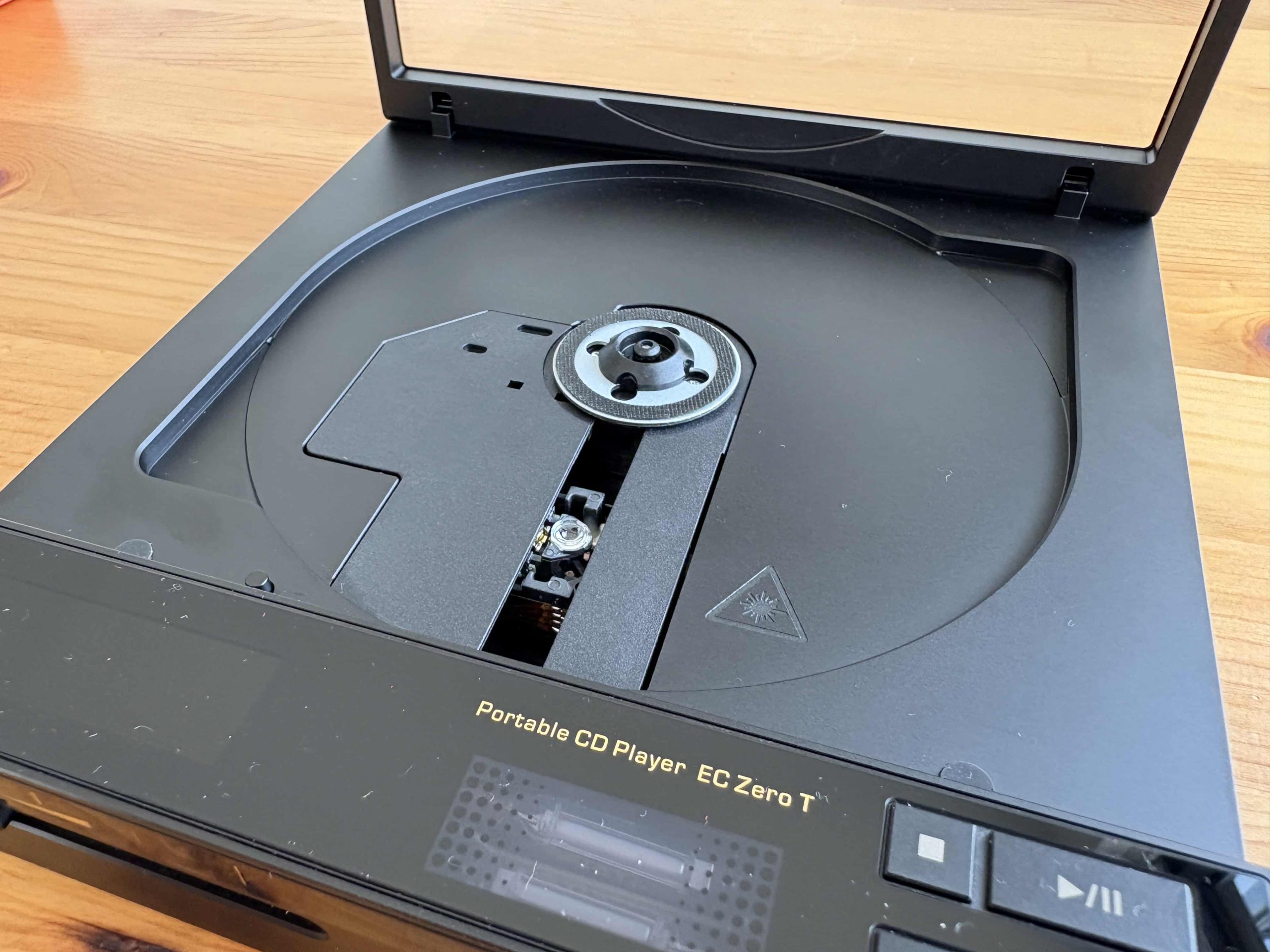
The transparent lid opens from the front and stops at about 90 degrees. It has a built-in spring when you open it about halfway, which prevents the lid from just falling back down. A subtle but nice touch. You have to be somewhat careful when closing the lid, as once you get below the spring threshold, it will just fall. The right and left sides of the lid have small indents to help with lifting the lid, which you can also use to gently close it. The lid itself is kept in place by strong magnets, and they are strong enough that you can flip the player upside down and shake it without the lid coming loose. There is no mechanism to lock the lid in place, so you need to be aware of that when transporting it. This is solved with the case accessory, which I will get to shortly.
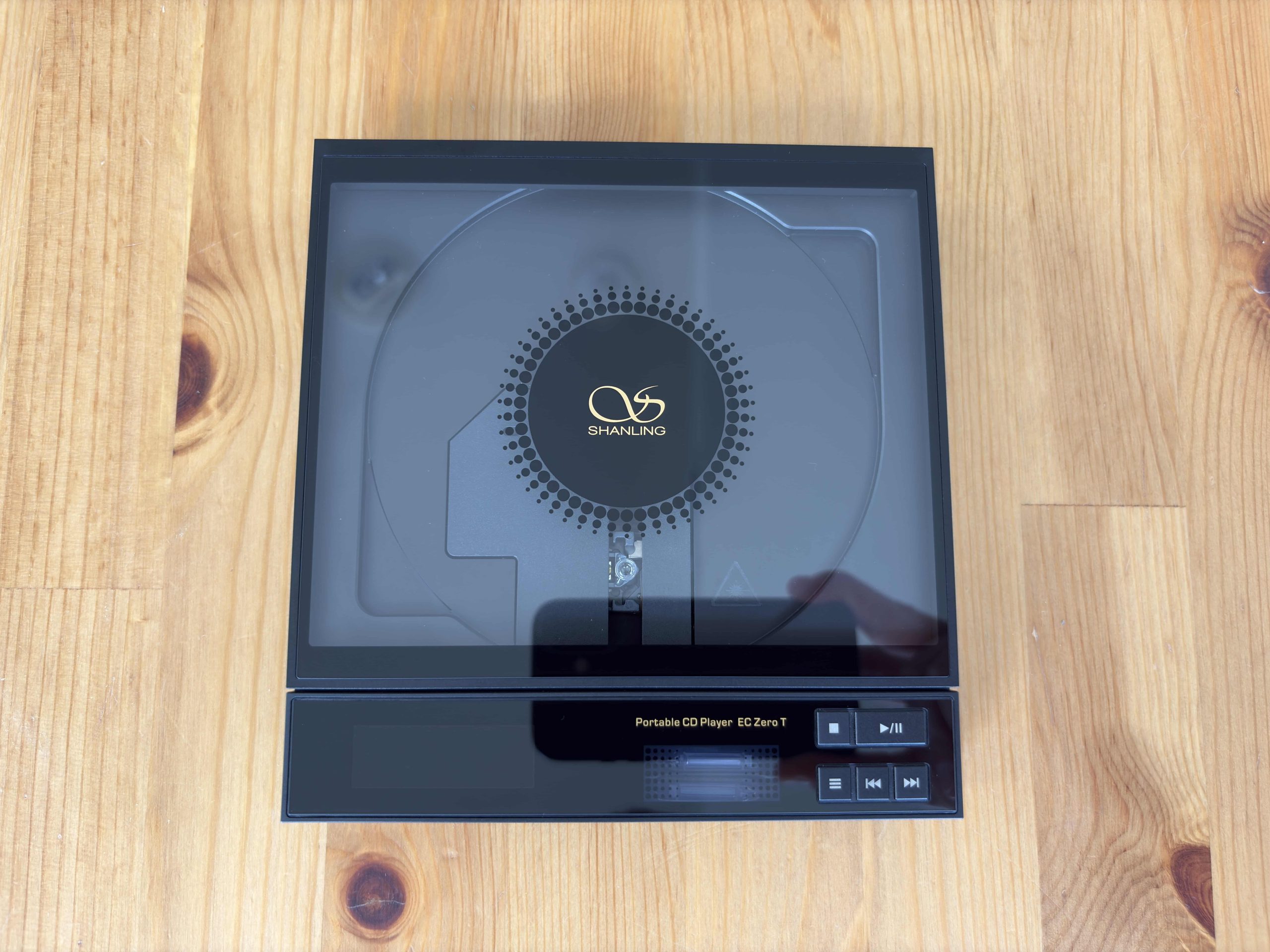
The Shanling logo is featured on the top of the lid, which helps hide the internal components underneath. Beneath the lid, the look and layout are very clean. There are two spaces, one in the bottom left and one in the top right, that have enough room to easily allow you to use your thumb and middle finger to remove the disc without scratching it.
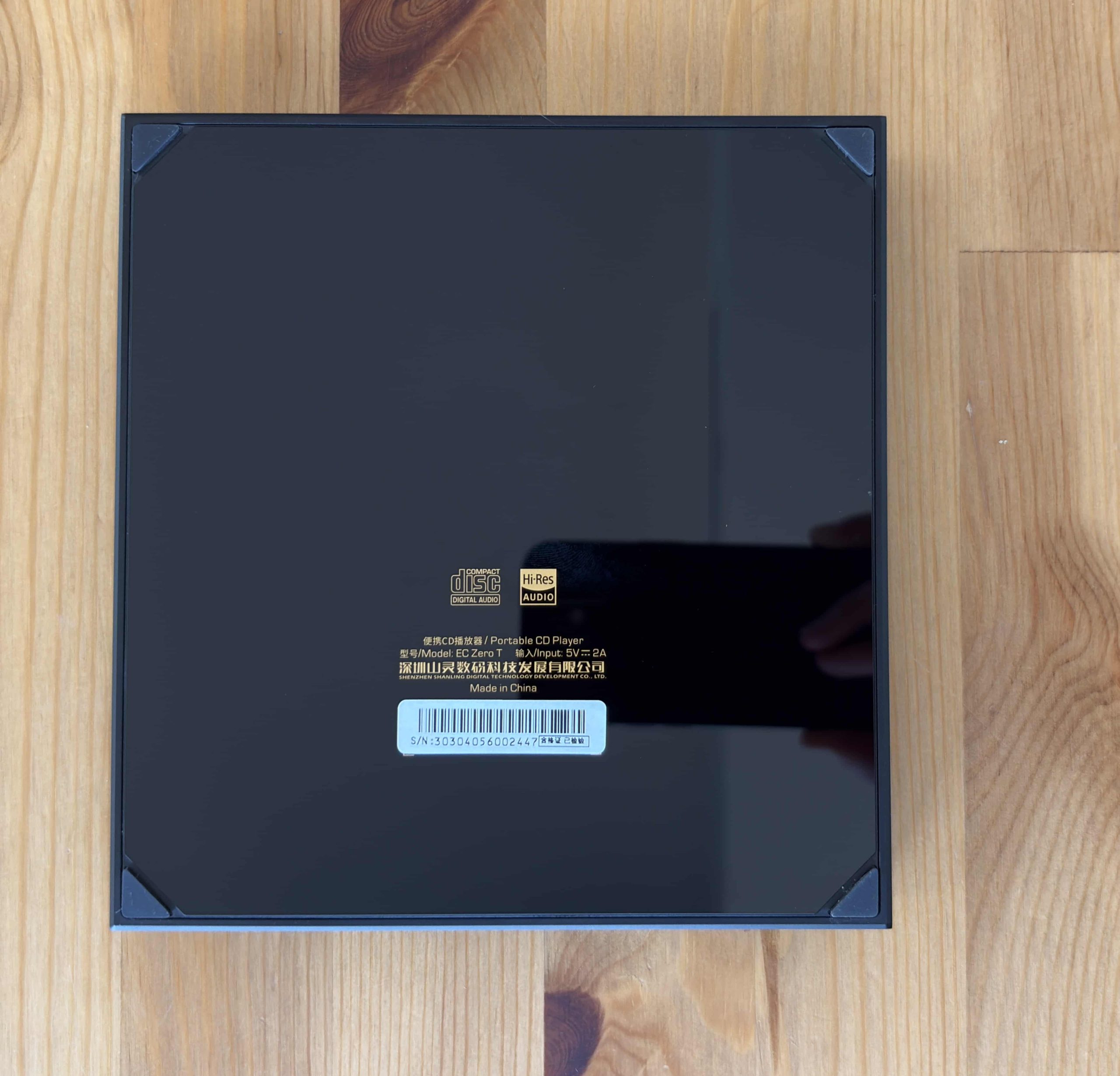
The bottom of the EC Zero T is also tempered glass, and each of the four corners of the device has a rubber foot, ensuring the device is stable and won’t easily move when placed on a surface. Here’s you’ll also find the usual Shanling and Hi-Res Audio logos, model number, and serial number.
The very front of the player has a rather nostalgic-looking volume slider on the very left side. It feels nice to use and isn’t too sensitive to move around, but I do wish it had a bit more resistance, not only to add to the premium feel, but to allow for more incremental volume changes. On the far right are the headphone outputs, both a 3.5mm SE and a 4.4mm balanced.
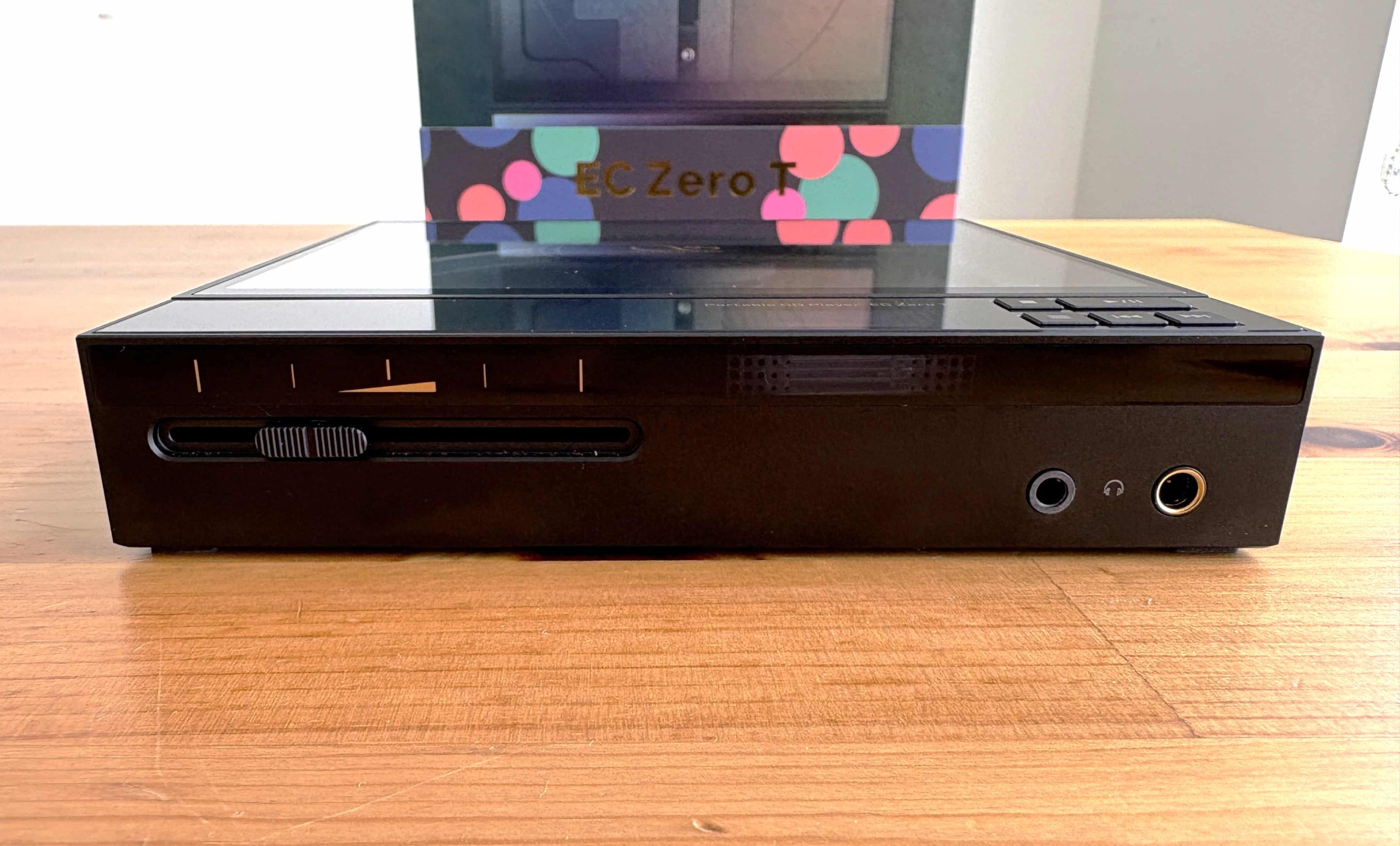
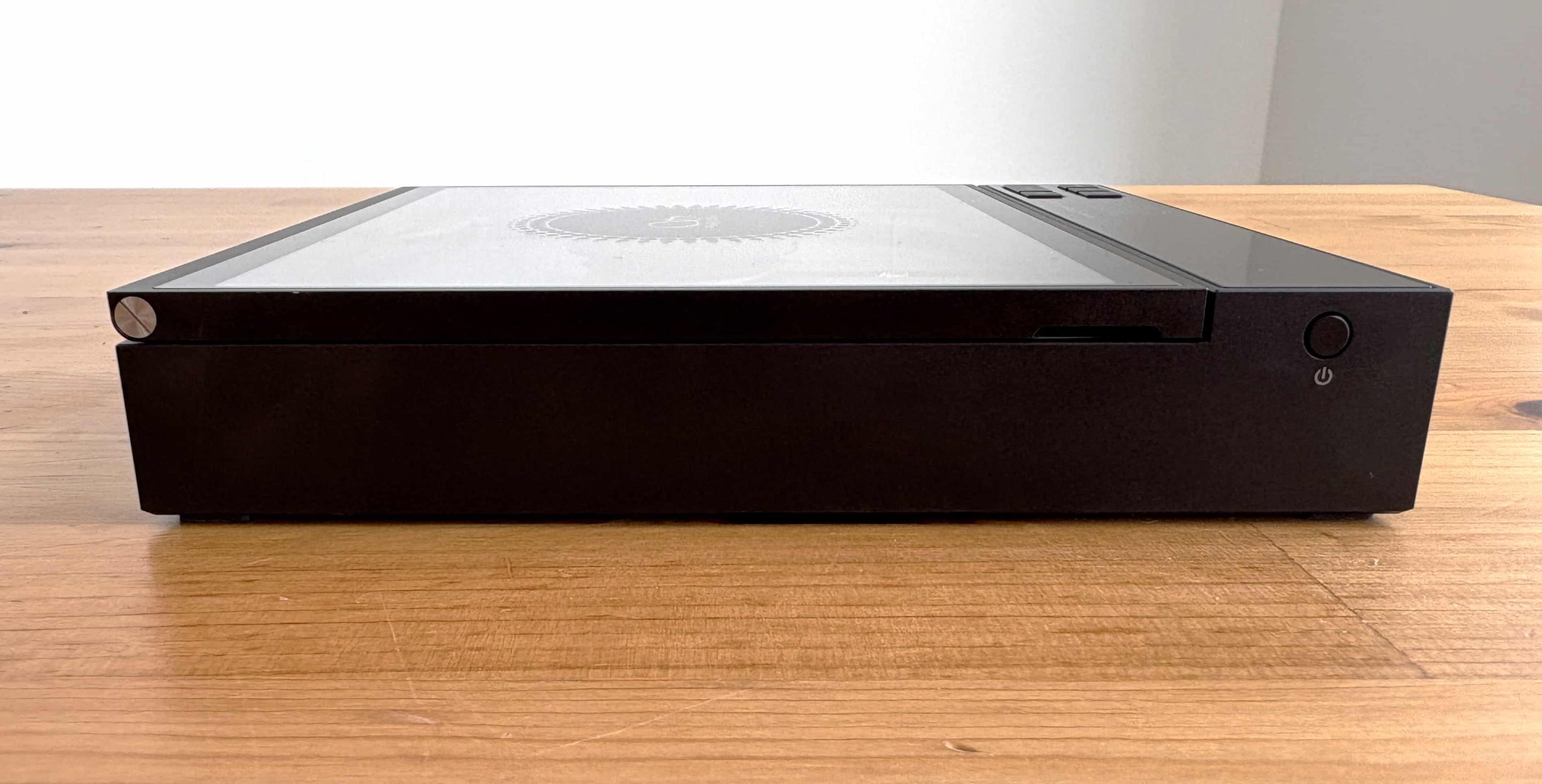
The top front of the player has a 1.68-inch LCD display on the very left, which gets decently bright, even in direct sunlight. To the right of the screen is a viewing window to the tubes, which lights up with a beautiful red glow when in use. On the very right side are the playback controls. In total, there are 5 buttons: Stop, Play/Pause, Function, Previous track, and Next Track. The left edge of the player has the power/screen off and on button, and the right edge of the player has a Lock toggle that locks the buttons from being used.

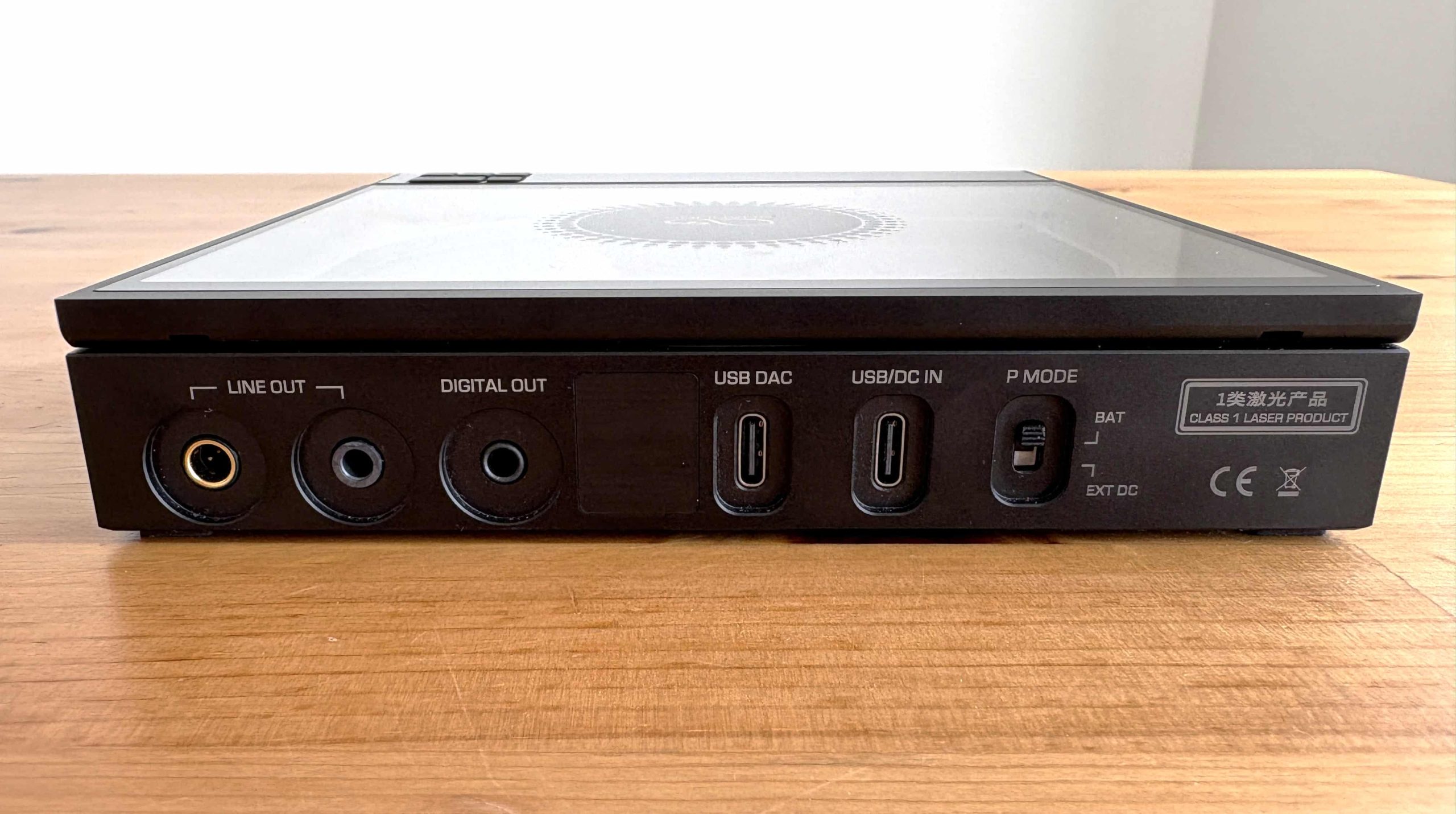
On the back, from left to right, are the 4.mm balanced and 3.5mm SE Line Out connections, the digital out (3.5mm SPDIF Coaxial/Optical), the Bluetooth antenna, USB-C DAC input, USB-C power input/CD ripping connection, and the switch for toggling Battery mode or external power.
Carrying Case
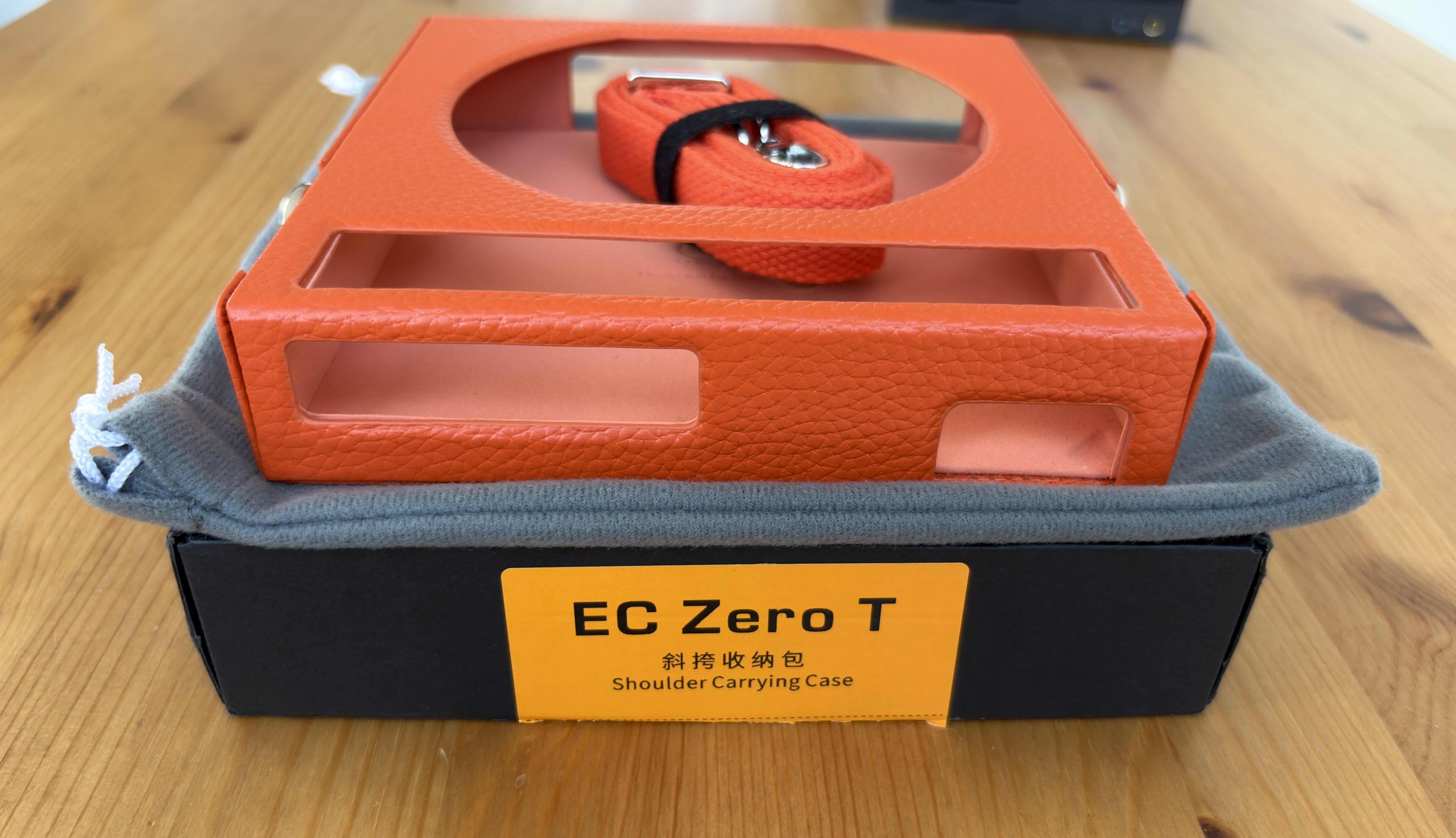
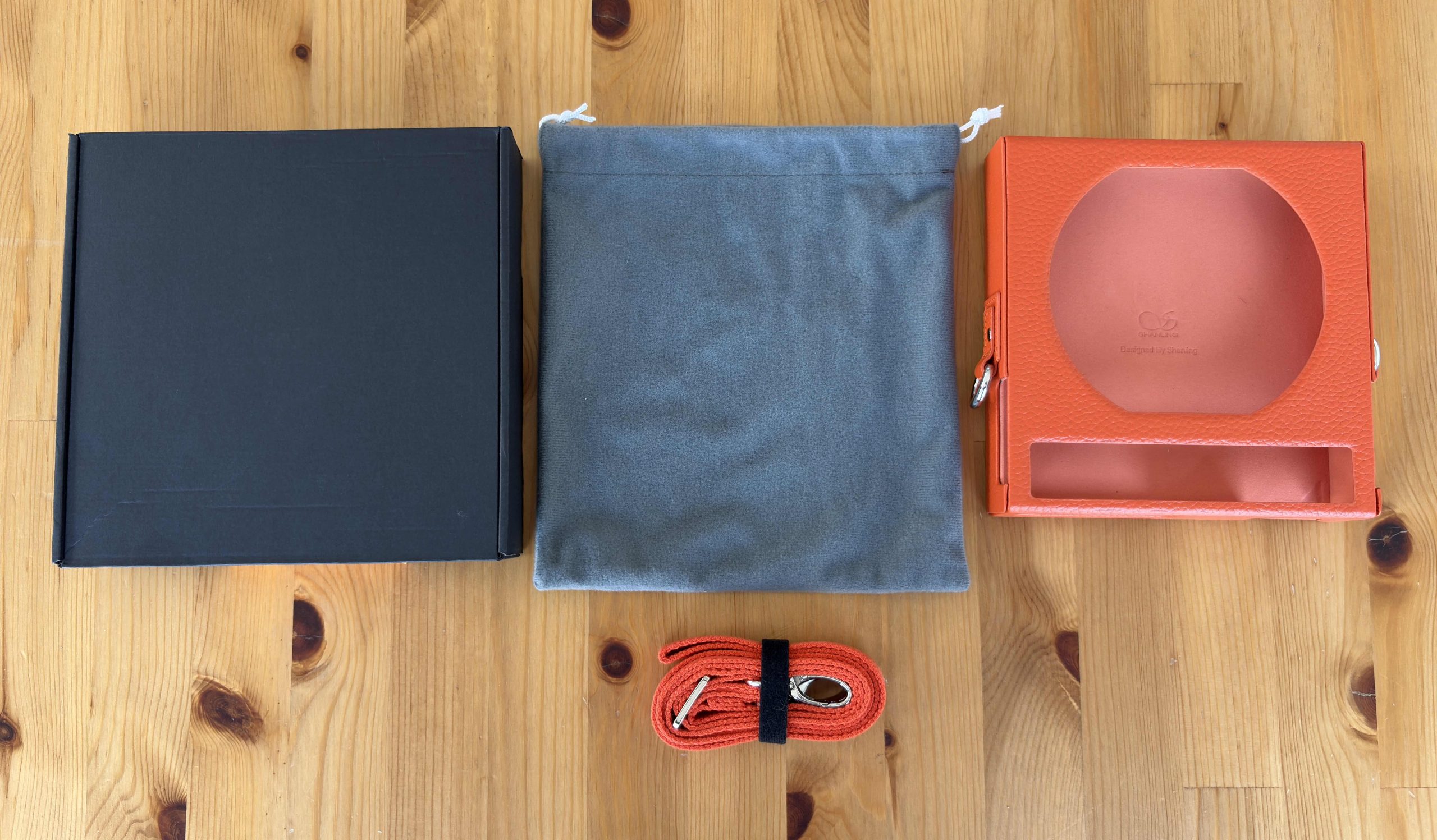
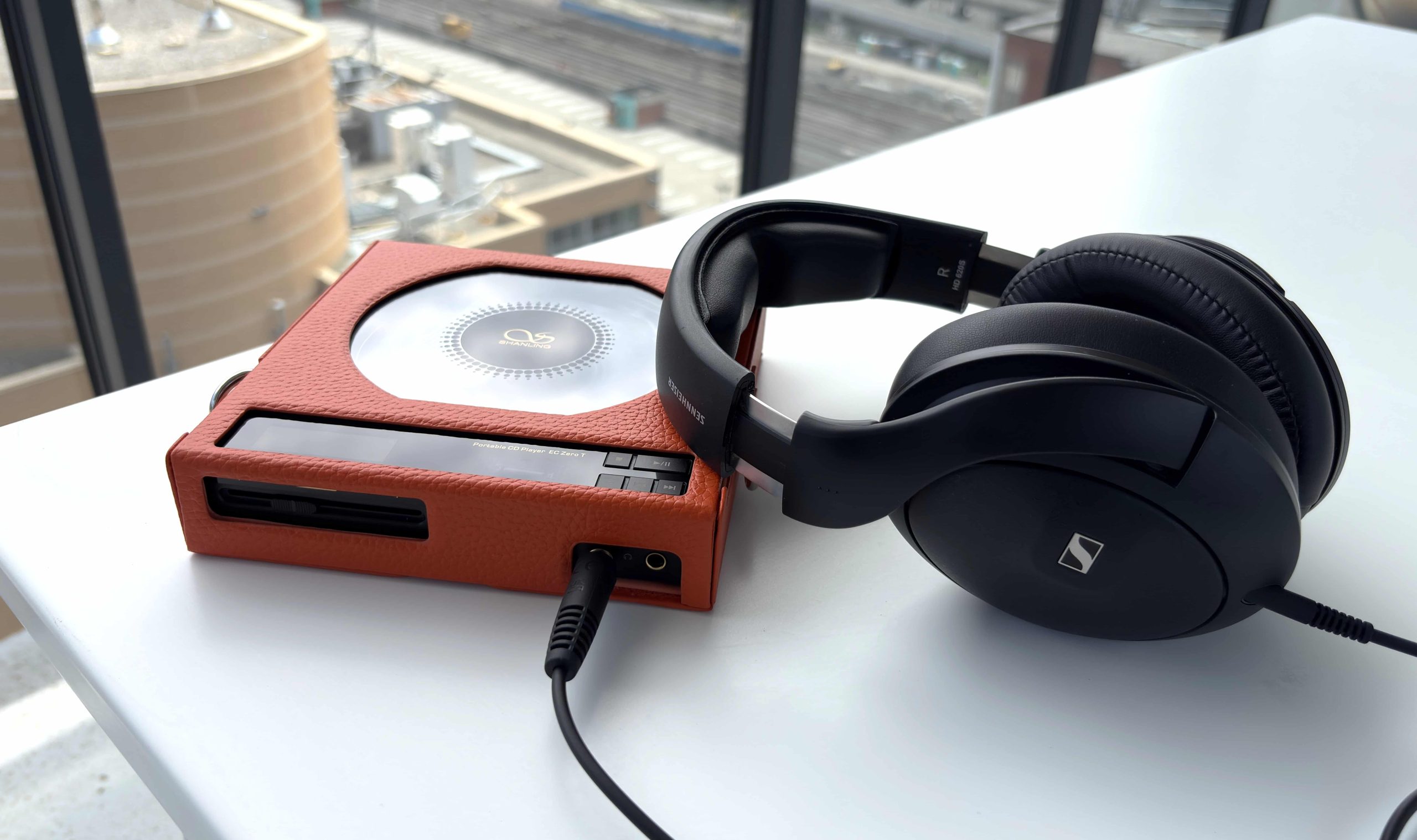
Shanling sells a carrying case for $99 USD. It comes in two colors: orange and grey. Each case has a fabric pouch to store the case and player, and a shoulder strap. I have the orange case and, to be honest, the color took some time to grow on me. In my mind, the piano black and orange seemed to clash. I did get used to it, though, and now I actually quite like it. I think the orange gives the player a unique look, and if you want to be flashy, this is definitely something that will stand out. The grey color will be more subtle in my opinion.

The case is made of Italian leather and has a smooth but textured finish, save for the bottom, which is a bit rougher to help keep it in place wherever it is set down. It opens from the front, and the entire top can be pulled back to allow access to the player’s lid. It is also kept in place by strong magnets, and I never once had an issue with it staying closed.
The case was thoughtfully designed, in the sense that the top opens up to give you access to the player’s lid, but it doesn’t interfere with any of the connections, so you don’t need to remove any connected headphones or IEMs to get at the lid. Once closed, the player fits nicely inside, with zero wiggle room.
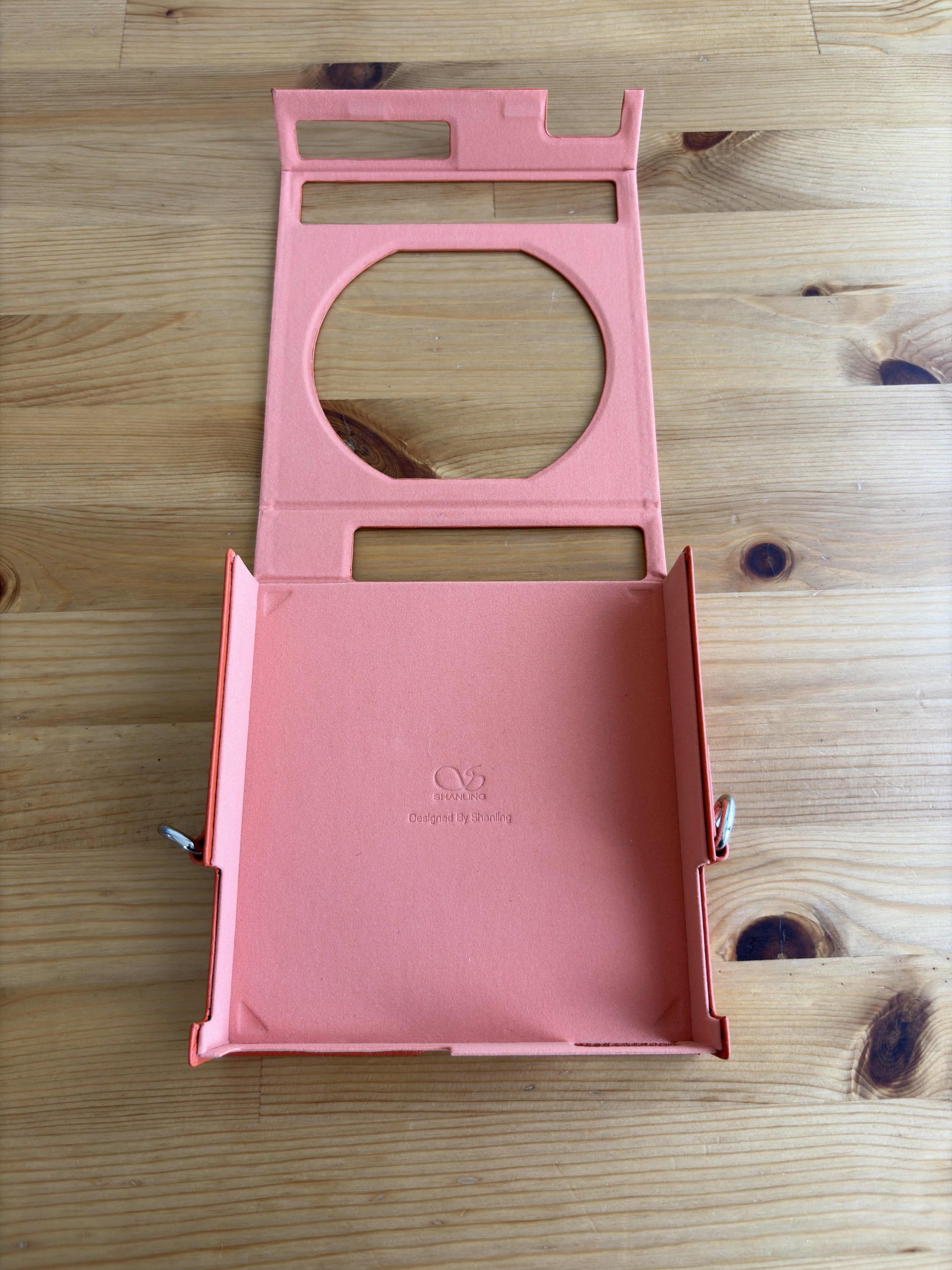


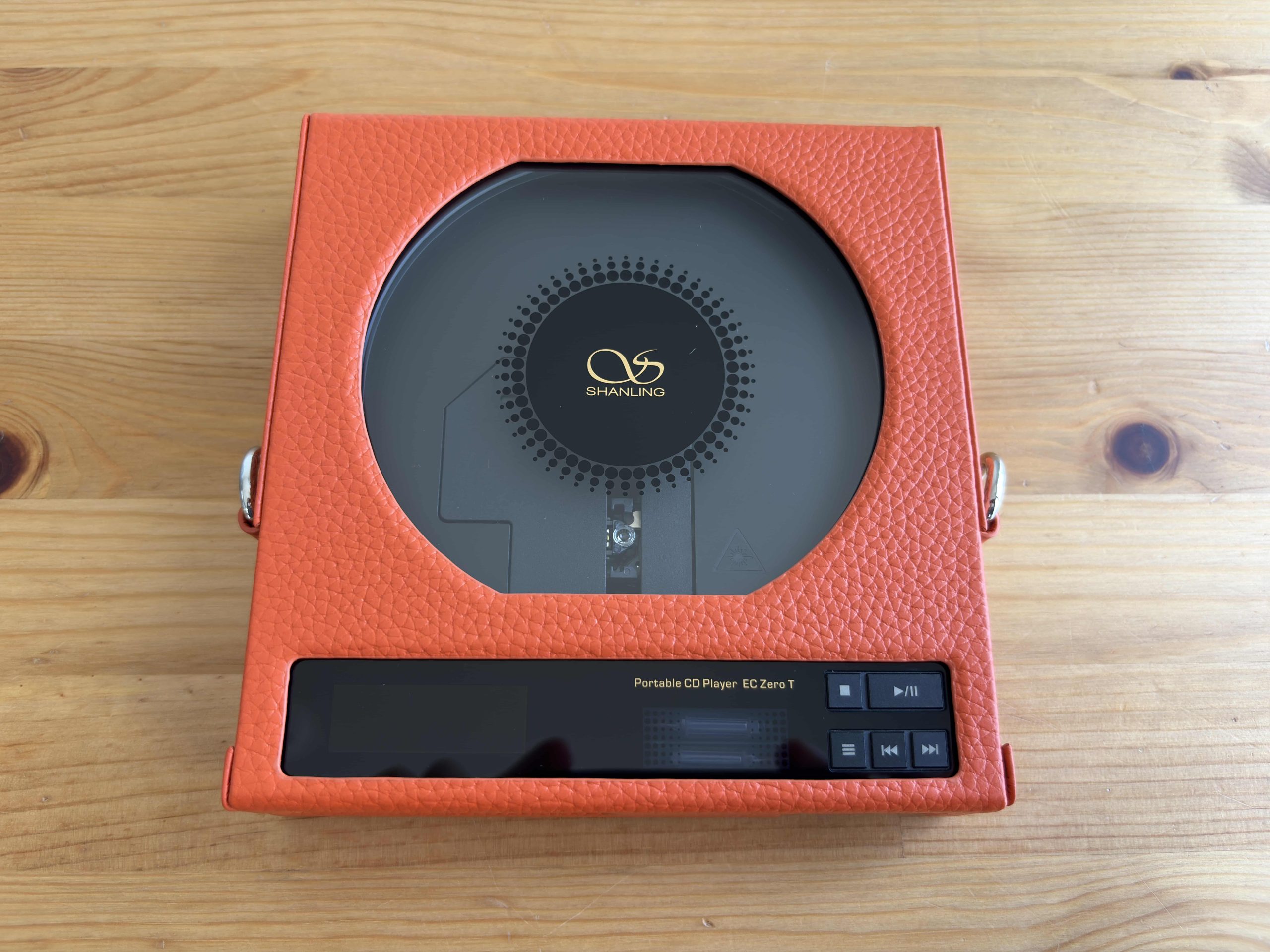
The shoulder strap is a nice thought here, too. It connects to rings on each side of the case, and you are able to then walk around with the player hanging from your shoulder like a bag. If you wanted to show people just how retro you are, this is definitely a way to do it. If you’re going to spend $589 on the EC Zero T, I think the extra $99 for the case is worth it, especially for the cloth bag it comes with to store it (which doubles as a cloth to wipe the player clear of fingerprints). I haven’t seen the case for sale anywhere except on Shanling’s website, so I’ll drop a link to it below.
Link to Shanling Store: https://store.shanling.com/EC-ZERO-T-pd541050058.html

Playing CDs and Usability
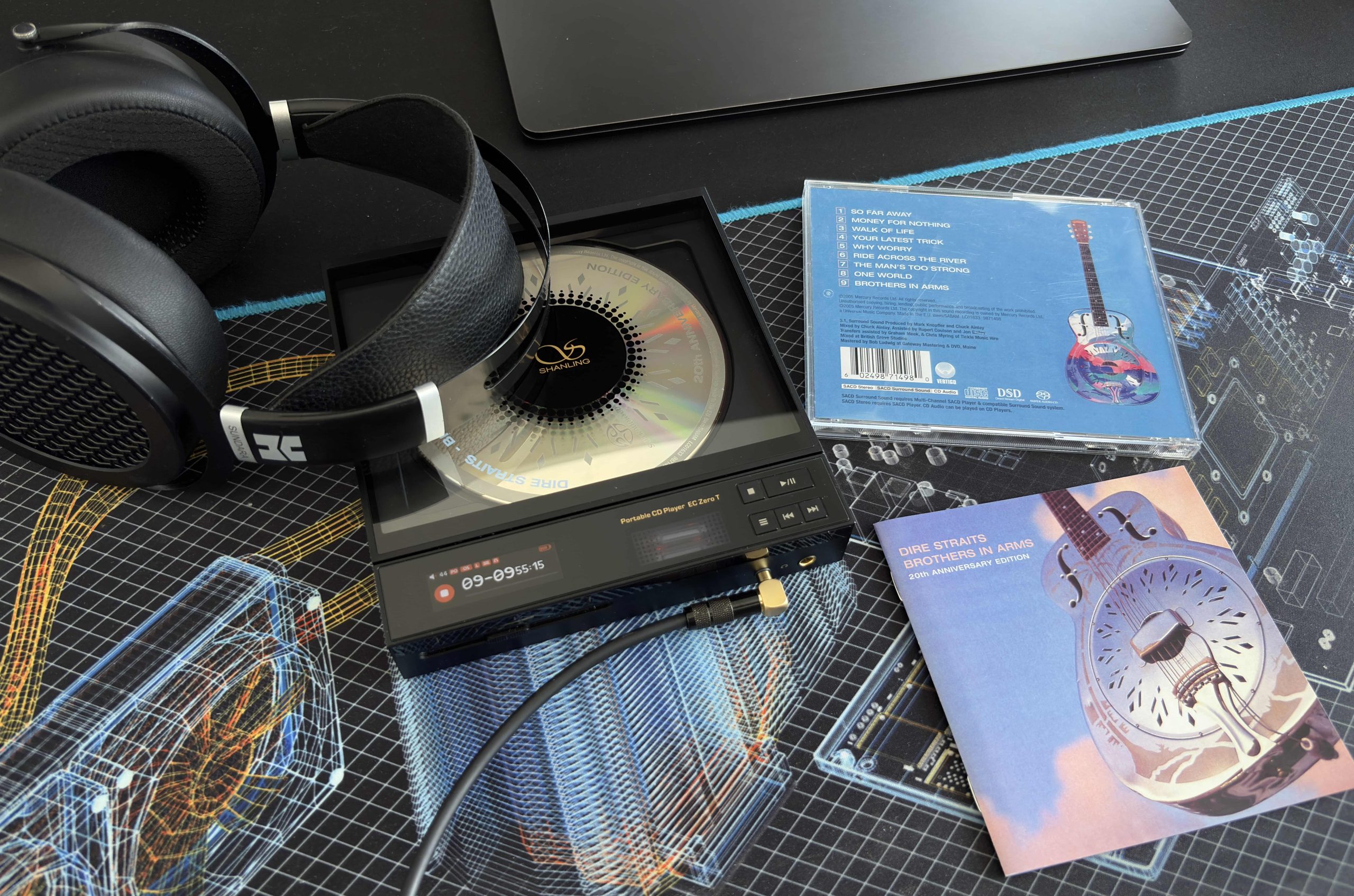
The main function of the Shanling EC Zero T is to play CDs, and if that’s all you want to do, it’s incredibly simple. Hold the power button located on the left side of the player for about a second, and it will power on, with a nice logo and animation showing on the LCD display. Open the lid and put your CD in. Once the lid is closed, the disc will spin, and the player takes a few seconds to read the disc, after which it will show the number of tracks and total playtime on the LCD screen. Plug your headphones in, hit play, and you’re now listening to your CD. It’s that simple.
The slider on the very front controls the volume, with the various buttons on the top used for playback control. There’s a toggle on the right side that will lock the buttons so that they cannot be pressed, which is a nice touch for when you go into portable mode and start walking around with the player. I even had the EC Zero T in my backpack with a CD playing, with the GO pod Air paired to it using aptX Adaptive. I walked 15 minutes from my apartment to a park and back with no issues, and thanks to the button lock, I never had to worry about playback being accidentally interrupted. The volume slider still works when the buttons are locked, though, so just be aware of that.

Since this player not only has an R2R DAC but also tubes, you are able to switch between them extremely easily by entering the menu and turning the Tubes Mode on or off. It’s a great way to hear the differences each mode gives you, and also adds another sound option depending on your preferences. The tubes also have a faint red glow to them, which looks fantastic in low lighting.
Lastly, the actual CD playback is quite smooth and consistent. The player itself is very quiet when the disc is spinning, with just a subtle whisper of noise. Using open-back headphones right beside the player, I never once heard any mechanical movement. The EC Zero T supports gapless playback, and I can confirm it works perfectly. Listening to any number of Pink Floyd’s albums, but specifically The Dark Side of the Moon, you’ll hear each song transition effortlessly to the next as you would expect.
Supported CD Formats
Shanling doesn’t mention specifically what types of CDs are supported, but all of my Redbook CDs, even those that are over 70 minutes of audio, played perfectly. Even some very scratched discs of mine had no issues with playback. I tried a number of Enhanced CDs, as well as those with that wretched Sony copy protection, which sometimes causes issues with players, and they all played just fine. The same goes for HDCDs and the CD layer of various SACDs that I have.
My collection of CD-R audio discs played perfectly as well. Typically, I create those with either MusicBee or Exact Audio Copy. As for data discs, I tested WAV, FLAC, and MP3, and the player was not able to play FLAC files. Otherwise, the experience with WAV and MP3 was perfectly fine.
One thing that may matter to some people is that pre-emphasis CDs are not supported (the player is unable to detect and apply de-emphasis). There’s only a small number of CDs that were released in this way, so it shouldn’t be a concern to most.
Battery and Charging

The EC Zero T is a portable CD player, which means it has a battery, so you’re not tied to a wall socket or computer. The battery icon is always displayed in the top right section of the LCD screen, so you can always tell where you’re at. A percentage indicator would have been nice, though. There’s a switch on the back of the player to toggle between external power and the battery. In practice, this switch is relevant when you are charging the device. If it’s in the “BAT” position, when you plug a charging cable in it will continue to use the battery while it’s charging. When in the “EXT DC” position, the player will switch to only using external power when being charged. When using the player with a charging cable plugged in and set to “EXT DC”, I did hear a bit of electrical interference in the background when I had headphones or IEMs plugged in. It seems to be affected by the type of charger you’re using, with higher power chargers being more likely to create this electrical noise. And yes, it is present when listening to audio.
As for battery life, Shanling states the EC Zero T can do up to 8 hours of playback. I found this to be true, as most of the time I was getting just under 8 hours of use, and sometimes even just over 8 hours. It will mostly depend on how hard your headphones are to drive. I was getting longer battery life with IEMs as the volume did not need to be very high. Using Bluetooth headphones and TWS earbuds, I am able to get upwards of 20 hours. Charging from empty to full takes about 1.5 hours.
Anti-Skip (ESP)
Another feature you would hope a portable CD player to have is ESP (electronic skip protection). And yes, the EC Zero T does have this, though Shanling simply calls it an “advanced anti-skip system”. How does it work? Shanling isn’t saying, but I can confirm it is not a compression buffer since it is stated that the anti-skip is lossless. In practice, the anti-skip works phenomenally well. With a disc playing, I have tried shaking the player, lightly dropping it (with the case on), walking and running around using the shoulder strap and case, and even standing it vertically. Nothing I did made the audio skip, so I would say Shanling did an excellent job here. This applies to both battery and external power uses. One thing that will cause playback issues is turning the player upside down. This is because of the way the disc sits in the tray. It does not snap in like most portable CD players, but rests on the spindle while being secured with a clamp built into the lid.
USB DAC Functionality

The EC Zero T has another function other than just being a CD player; it can be used as a USB DAC with any source device that supports USB output. This means you can connect your desktop PC, laptop, DAP, smartphone, or tablet to the EC Zero T and effectively use it as a DAC/Amp.

The process is very simple. Plug a USB-C cable into the “USB DAC” connector on the back of the device, press the function button to switch modes, which will be indicated when “USB DAC” is displayed on the screen, and that’s it. Once you start playing audio, the format and sample rate are displayed. On both my Windows 11 desktop and Windows 11 laptop, the EC Zero T played perfectly fine without having to install any drivers, and I was able to select up to 32-bit/384kHz sample rates.

Just as with the CD player mode, the USB DAC mode has access to both DAC modes (R2R and Tube Mode) and to all of the audio outputs. This means you can output to desktop speakers using one of the Line Outs on the back of the player, and to Bluetooth headphones and earbuds. This makes the EC Zero T incredibly powerful and versatile, adding a lot of value to a device that some may pick up purely to play CDs. The EC Zero T has actually replaced my trusted iFi ZEN DAC V2 as my daily driver on my desktop PC.
Sound Quality
Headphones used for this review:
- Sennheiser HD 620S (3.5mm SE)
- Sennheiser HD 660S2 (4.4mm Balanced)
- HIFIMAN Sundara (3.5mm SE, 4.4mm Balanced)
- Audeze LCD-2 (3.5mm SE)
- Meze 105 AER (3.5mm SE)
IEMs used for this Review:
- Simgot EA1000 (3.5mm SE)
- Simgot Supermix 4 (3.5mm SE)
- KBEAR Cepheus KB16 (3.5mm SE)
- 7Hz Timeless II (4.4mm Balanced)
- Juzear x Z Reviews Defiant (3.5mm SE)
Bluetooth headphones and earbuds used for this Review:
- Sonos Ace (aptX Adaptive)
- DALI IO-8 (aptX Adaptive)
- iFi GO pod Air (aptX Adaptive)
- Sennheiser Momentum True Wireless 4 (aptX Adaptive)
Links to my music playlist used for the majority of testing:
Spotify: https://open.spotify.com/playlist/6QSIhuCBDAUyoWGcyxPeN8?si=c0a4eb6bd3e3421e
Apple Music: https://music.apple.com/ca/playlist/hifi-oasis-audio-testing/pl.u-lKWlcjy04xp
Tidal: https://tidal.com/playlist/503485c7-7f3d-43f0-b904-4b9a89c33875
The Shanling EC Zero T is the second of Shanling’s devices to use their in-house designed 24-bit R2R DAC (the first being their EH2 Desktop DAC). Along with an R2R DAC, Shanling has also included a pair of JAN6418 tubes, which are supposed to last 5000 hours of playback time. The tubes are not user-replaceable, but Shanling is offering replacement service in the event that they need to be replaced. For amplification, the EC Zero T uses a pair of TPA6120 op-amp modules.
What I really appreciate is that the tubes can be used with any of the outputs, excluding the digital line out and Bluetooth.
Output Power
The EC Zero T has a ridiculous amount of output power for a portable CD player. You can switch between Low gain and High gain, and when in High gain with external power connected, you unlock extra output power. The majority of my testing was done in low-gain mode using the battery, because I never actually needed any more output power than that. Even when using my HIFIMAN Sundara, Sennheiser HD 660S2, and Audeze LCD-2, I still had a ton of volume headroom left. That being said, switching to high gain for the headphones I just mentioned did help to open them up a bit. Long story short, this player has plenty of output power.
R2R DAC
To me, the R2R DAC in the EC Zero T has a very clean and smooth sound profile. It sounds very natural with no sense of digital processing, and adds just a hint of warmth. It also sounds very spacious, especially in the upper midrange and treble. I found this paired well with my Sennheiser headphones, HD 620S and HD 660S2, which typically have a more intimate presentation. The R2R DAC in the EC Zero T opened them up a bit, almost like letting the music breathe. I wasn’t really expecting this DAC to have that kind of impact, but it’s a pleasant surprise.
This behaviour carries over to IEMs as well. The R2R DAC did not color the IEMs (or headphones) in any way, and there was no background hiss or noise. In fact, it’s a very dark background, perfect for immersing yourself in your music.
The only real noise issue I encountered, and this will apply to using the tubes as well, is one I already mentioned in the battery section. When the player is set to use external power and is plugged in, there is a slight but noticeable electrical noise sound in the background. This is removed when you switch to battery mode, or when plugging in a cable to the USB DAC port while it’s plugged into another device. I also noticed that the sound is more prominent when a more powerful charger is used. Maybe it’s a grounding issue, I’m not sure, but with music playing, it’s not really noticeable.
Tubes
The tubes give the EC Zero T a slightly warm yet natural sound. I sense a bit more space in the soundstage and a slightly more airy treble. If I could use one word to describe the sound signature here, it would be “gentle”. You get a sense of the music enveloping you in a soft cloud, enticing you to keep on listening. For me, the tubes are perfect for when I want to just chill and relax with a glass of Irish Whiskey.
PCM Filters – OS and NOS
There are two PCM filters to choose from, and to my ears, they have the following sound characteristics:
NOS (no oversampling)
This filter gives a warmer, richer, more forgiving sound. It has a looser presentation that I found works very well for live recordings, classic rock, jazz, and most classical music. Using the tubes plus the NOS filter really lets you feel the music as you’re listening to it, at least for me.
OS (oversampling)
The oversampling filter gives the sound a bit more detail and sharpness. I found that if I wanted to focus on the instrument layering and vocals of a track, the OS filter did a better job than the NOS filter. The OS filter is perfect for all genres, and I use it more when I want to do critical listening.
Playback Options and Functions
The menu system and the various functions can be accessed by holding the function button (the button with the hamburger menu on it) for about 2 seconds. After which, the menu appears on the LCD screen. The function and Stop buttons are used to cycle forward and back in the menu, with the previous track and next track used to select the option. Let’s quickly go through them.
Gain Level -Low or High
PCM Filter – NOS or OS
Tube Mode – Off or On
CD Play Mode – Normal, Repeat All, Repeat One, Random
Brightness – 0 to 10
Screen Off – Never, 10s, 20s, 30s, 40s, 50s, 60s
L/R Channel Balance
Audio Output – Headphone, Line Out, Digital, Bluetooth
Smart Volume – Off or On
The Smart Volume option, when turned on, slightly delays volume changes, which can be beneficial when using sensitive IEMs.
Here’s a short video showing the menu and options:
CD Ripping

The EC Zero T is able to rip discs to a USB thumb drive. This works in the same way as the FiiO DM13, where it rips the disc in real time, so if the disc is 50 minutes long, that’s how long it will take. You also aren’t able to listen to it while the disc is being ripped. This isn’t a very practical method of CD ripping, but if this is your only CD player, it does offer you a way to get the files from the disc. They are ripped into the WAV format, which you can convert to FLAC on your PC afterwards. I tested it using Pink Floyd’s Wish You Were Here album and had no issues.
Bluetooth

The Shanling EC Zero T comes with Bluetooth 5.3 support, which includes support for the following codecs: SBC, aptX, and aptX Adaptive. While the codec support isn’t extensive, it does offer a pretty solid way to connect Bluetooth headphones and earbuds. If you’re using something that only supports SBC and AAC, like Apple’s headphones and earbuds, then you’ll be stuck with the basic SBC codec. I was able to pair my AirPods 4 without issue.
The actual Bluetooth connection is very stable, and I had no stuttering or interference issues. Range is also very good, as I could walk about 10 meters away and still have a clear connection.
Final Thoughts

As I said at the beginning, I had high expectations going into this review. I’ve been listening to and collecting CDs since I was 8 years old, owning many different versions of the Sony Discman throughout the years until taking a hiatus from this audio medium with the advent of music streaming services. My collection of CDs is rather small compared to many others (currently 170 albums), but it is something I find myself constantly going back to, so it’s exciting to see more interest being put into this format that some have called long dead.
As a portable CD player, I think the Shanling EC Zero T largely succeeds. It isn’t as portable as the Sony Discman players were back in the day, but it also comes with so many more features, making it more versatile. Being able to drive virtually any IEM and headphone, as well as output via Bluetooth, are massive features. The R2R DAC and the ability to switch to using tubes are also unheard of in a portable CD player. The icing on the cake is being able to use this thing as a USB DAC. Looking at the price of $589 USD, some would say it’s a lot for a portable CD player. I would argue that some people will pay this much just for an R2R DAC/Amp. Ultimately, only you can decide whether the cost is worth it to you, but I don’t think the price is unreasonable for what it is. As a portable CD player, I highly recommend the Shanling EC Zero T.

Buy from Amazon: https://amzn.to/40kGHXk
Buy from AliExpress: https://s.click.aliexpress.com/e/_om1uk1O
Buy from HiFiGo: https://hifigo.com/products/shanling-ec-zero-t?rfsn=8743649.bf4c478&variant=46591558648047
Buy from Linsoul: https://www.linsoul.com/products/shanling-ec-zero-t?sca_ref=5236667.OhF52MYHpZ
The above links may be affiliate links. All commission earned through them goes directly to maintaining this site and bringing you more audio reviews.
I’m not always able to cover all the details of a product, both hardware and software, in our reviews. If you have any specific questions about this product, please feel free to leave a comment or contact me directly.
Be sure to check out our excellent Buyer’s Guides, as well as our other Reviews.
HiFi Oasis Verdict
HiFi Oasis Verdict-
Design & Build Quality9/10 Amazing
-
Sound9/10 Amazing
-
Features9/10 Amazing
-
Value8/10 Very good
Pros
- Build quality is impeccable
- Overall design is practical and looks stunning
- Plays CDs perfectly, including support for gapless playback
- Solid battery life
- R2R DAC sounds excellent, with a smooth and clean sound
- Tube mode has a warm and natural sound profile
- Can rip CDs to a USB stick
- Bluetooth works very well and reliably
- Multiple output connections
- Can be used as a USB DAC
- The optional carrying case is very well designed and high quality
Cons
- May be too bulky and heavy for some to be considered portable
- Audible electrical noise when set to use external power
- No cloth included
- CD ripping function not very practical