


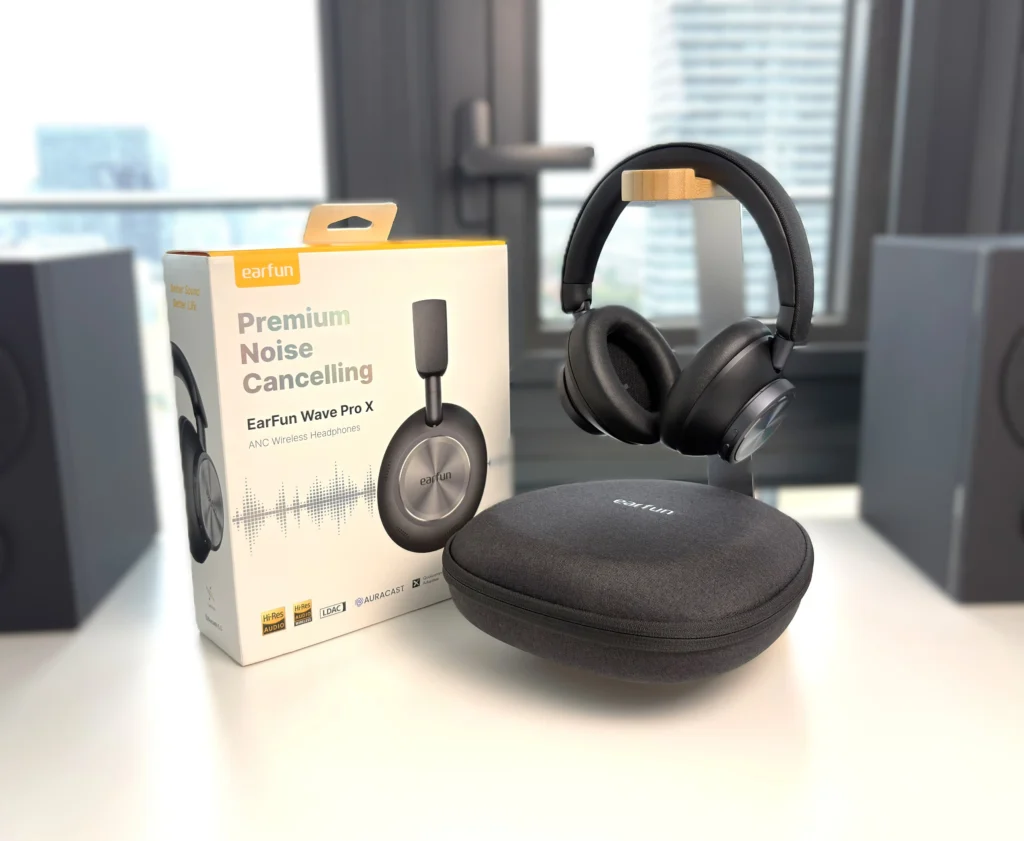



Disclosure: I’d like to thank EarFun for providing me with the Wave Pro X for this review. All thoughts and opinions are my own, and EarFun had no say or input on the contents of this review.
The new EarFun Wave Pro X is considerably ambitious. EarFun implemented what it calls DCAA, or Dual-Coaxial Acoustic Architecture, combining a 40mm DLC driver with a smaller 10mm LCP driver. The headphone also uses Qualcomm’s QCC3095 platform and supports Bluetooth 6.0, aptX Adaptive, aptX Lossless, LDAC, LC3, Auracast, USB audio, multipoint and an adaptive eight-microphone ANC system. Then there is the battery life, with up to 90 hours with ANC disabled or 50 hours with it enabled.
That is an almost suspiciously complete feature list for a headphone that costs $129.99 USD. EarFun even compares the Wave Pro X directly with products such as the Sony WH-1000XM6, Bose QuietComfort Ultra Headphones (2nd Gen), and Sennheiser MOMENTUM 5 Wireless.
Feature parity is not the same thing as performance parity, though. The Wave Pro X does not suddenly make every $400 flagship obsolete. Those products still have advantages in areas such as raw ANC performance, microphone consistency, and overall sonic refinement.
The more relevant question is how much of that premium experience EarFun can deliver for roughly one-third of the price.
As I’ve mentioned in previous reviews, I approach Bluetooth ANC headphones from the perspective of the “casual audiophile”: someone who cares about sound quality but also wants a headphone that fits easily into work, travel, and everyday life. The Wave Pro X makes a very strong case in that role, especially if you are willing to spend a little time adjusting its sound.
On that note, let’s get into the review and see what to make of the EarFun Wave Pro X.
Key Specifications
- Product Page: https://www.myearfun.com/headphones/earfun-wave-pro-x-hi-res-hybrid-anc-true-wireless-headphones-black
- MSRP: $129.99 USD
- Battery Life: Up to 90 hours with ANC off, 50 hours with ANC on
- Battery Capacity: 800mAh
- Type: Over-ear closed-back
- Driver Type: DCAA dual-coaxial dynamic drivers: 40mm DLC + 10mm LCP
- Weight: 259 grams
- Chipset: Qualcomm QCC3095 with Snapdragon Sound
- Connections: Bluetooth 6.0
- Codec support: SBC, AAC, aptX, aptX Adaptive, aptX Lossless, LDAC, LC3
- Microphone: Eight-microphone system for ANC and calls
- Active Noise Cancellation (ANC): Yes
- Charging Method: USB-C
- Weather/Dust Resistance: None
In the Box
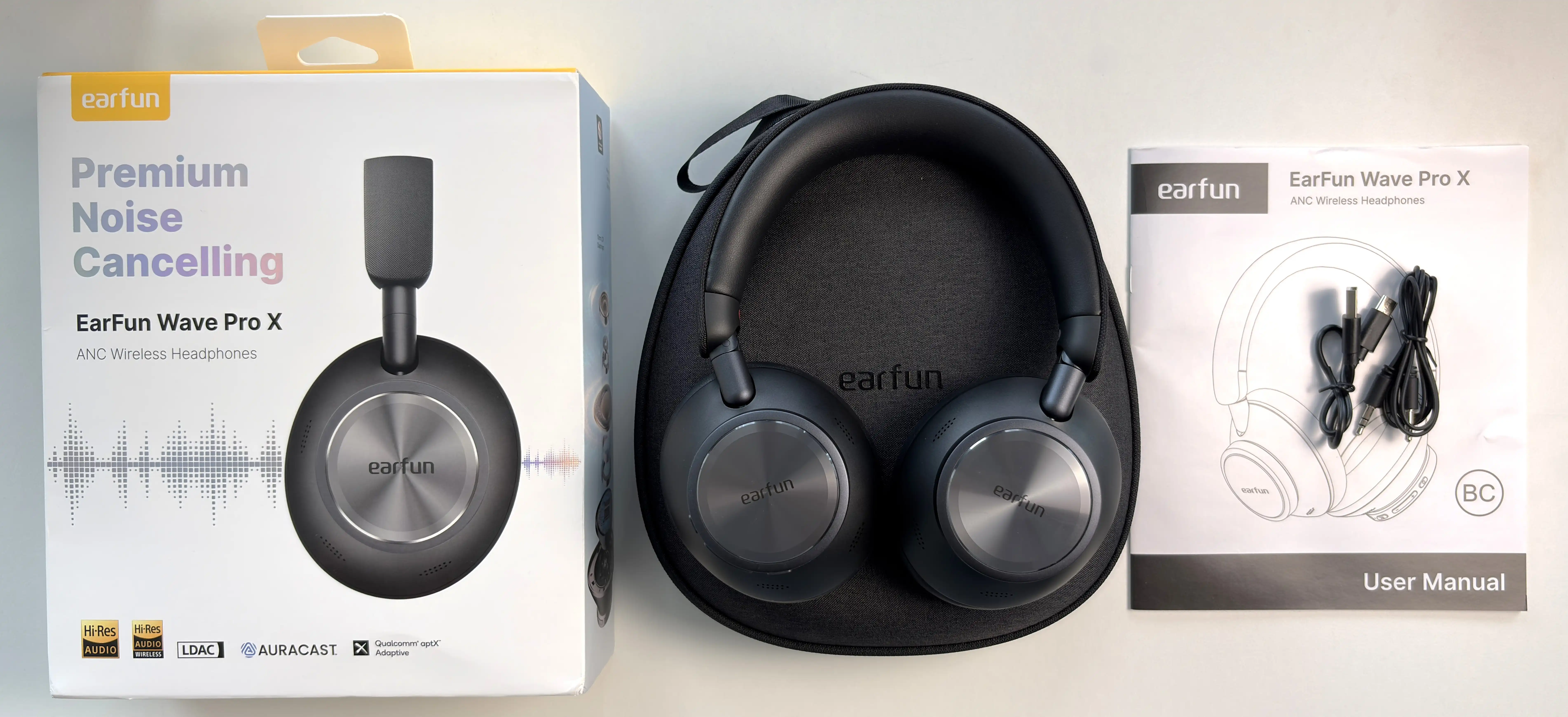
- EarFun Wave Pro X headphones
- Hard-shell carrying case
- USB-A to USB-C cable
- 3.5mm audio cable
- User manual



Design & Comfort
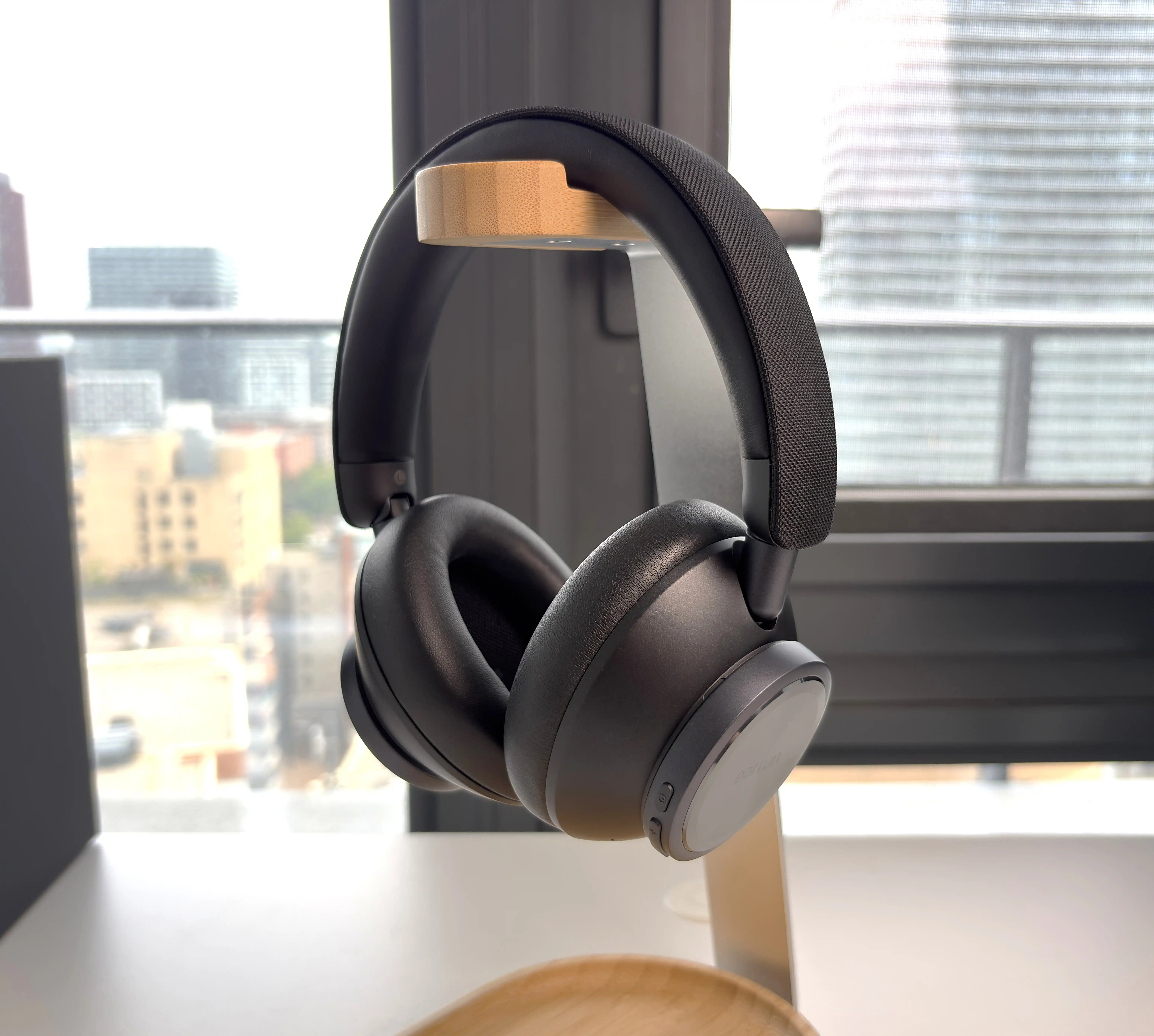
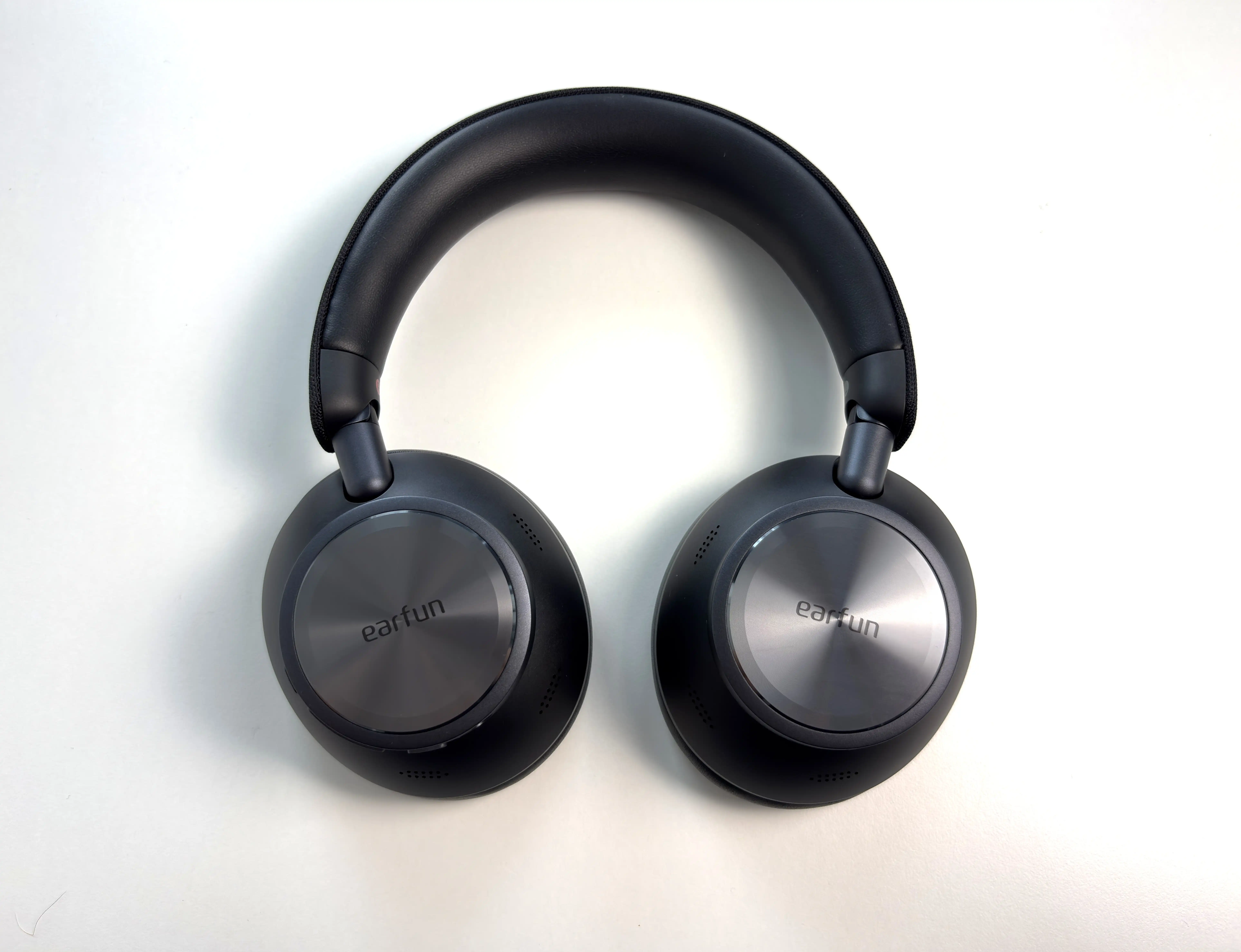
The Wave Pro X has a fairly understated consumer-headphone design, but the cleaner earcups, chamfered outer rings and visible metal elements make it feel more premium than one would think given the price. It looks modern without being overly flashy and should be easy to wear in an office, on public transit, or while travelling.
Much of the chassis remains plastic to keep the weight down, but the metal yokes and earcup accents give the structure a more substantial feel. The hinges rotate and fold smoothly, the headband has a useful amount of extension, and I did not find anything about the construction concerning. It is not built like an expensive wired audiophile headphone, but it feels appropriate for a portable wireless model.
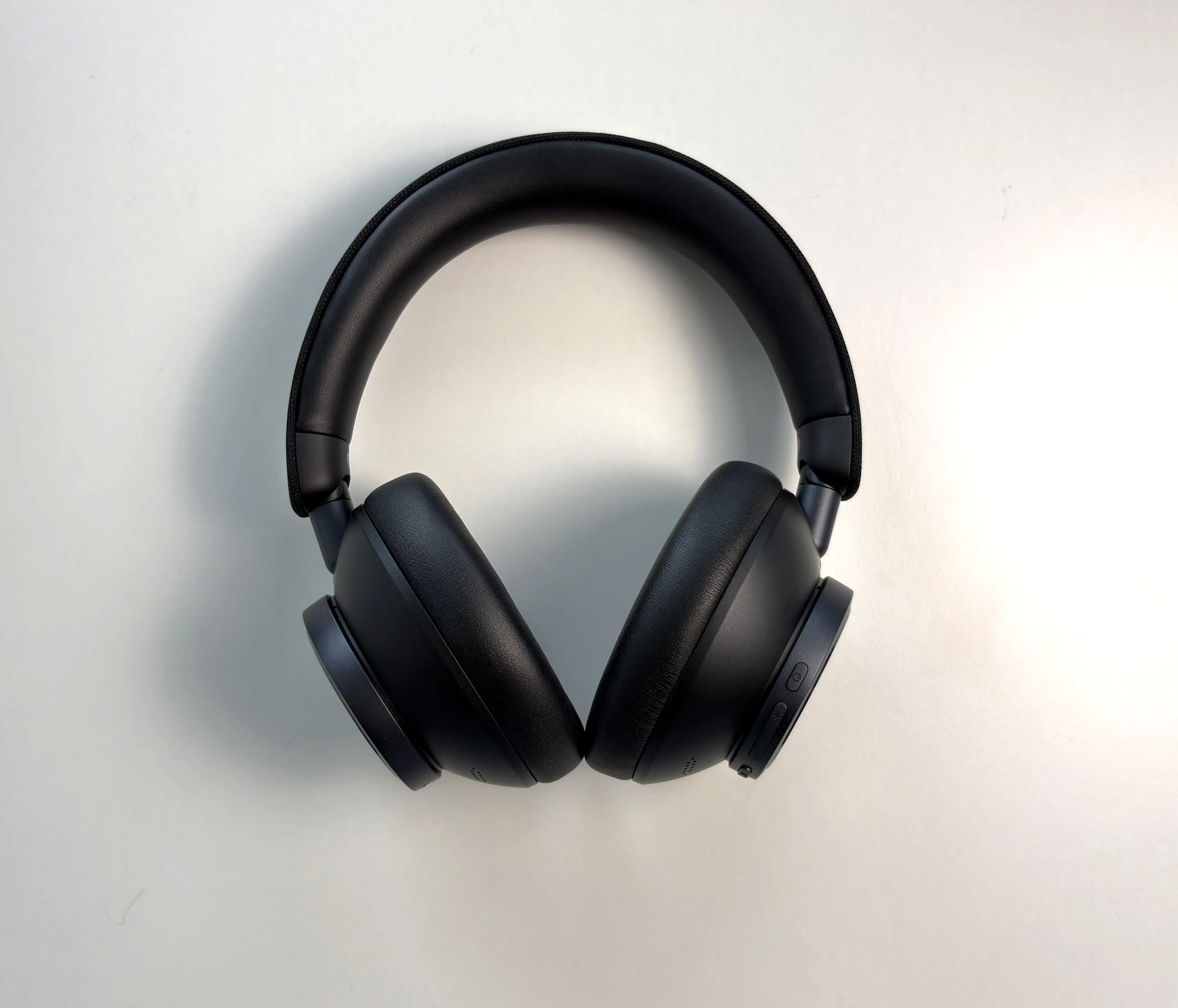
At 259 grams, the Wave Pro X is also relatively light, and noticeably lighter than many flagship ANC headphones. The headband distributes that weight well, while the moderate clamping force keeps the headphone secure without pressing too aggressively against the sides of my head.
The synthetic-leather earpads are soft, deep, and slightly angled. There is enough room for my ears without the driver constantly rubbing against them, and the generous headband padding prevents obvious pressure points during longer listening sessions.
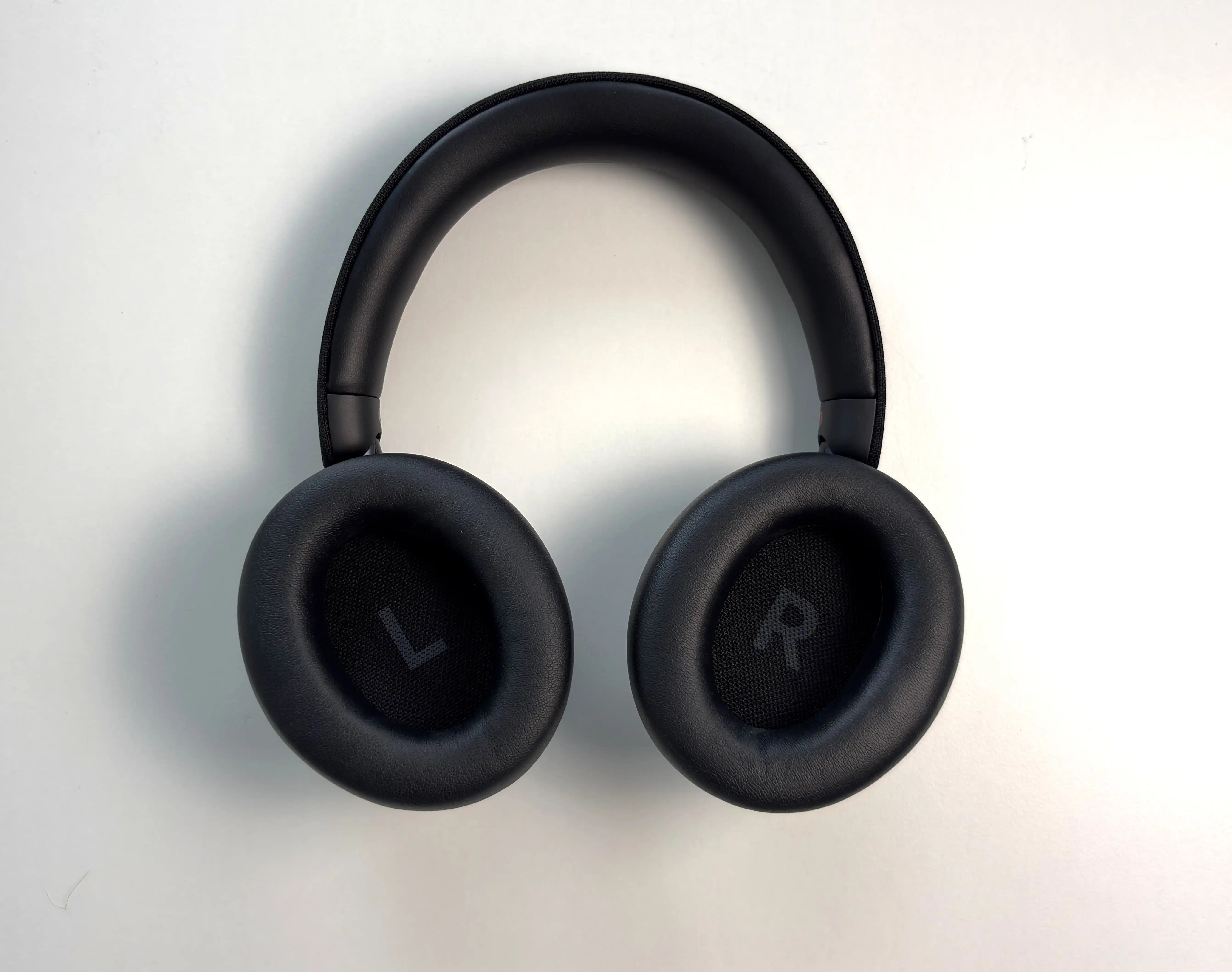


As someone who wears glasses, I am always critical of both clamp and seal. The Wave Pro X remains comfortable with glasses, although the arms can slightly compromise the seal depending on their thickness and how the headphone is positioned. That can reduce bass impact a little, which is common with ANC headphones that do not use a real-time seal correction.
There is some heat buildup over longer sessions, as expected from closed-back headphones with synthetic pads, but the Wave Pro X is still one of the more comfortable headphones I have used in this price range. The combination of low weight, moderate clamp, and deep pads makes it easy to wear through a work session or a long commute.

My biggest design-related complaint is the lack of wear detection. The music does not automatically pause when you take the headphones off, and there is no instant “cover the earcup” gesture for temporarily entering transparency mode. Neither omission is a deal-breaker at $129.99, but they are daily conveniences that help distinguish premium models.
Overall Usability
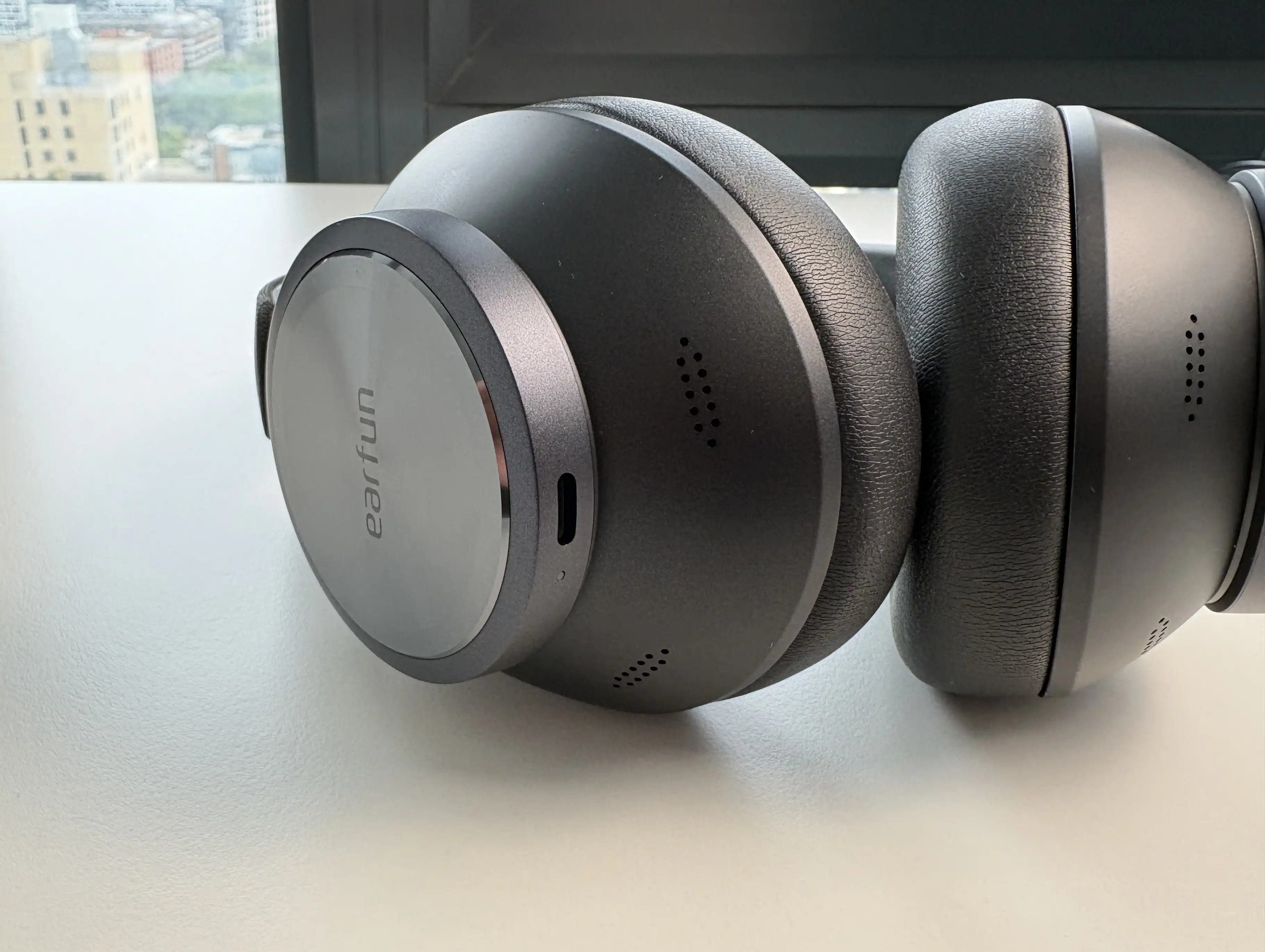
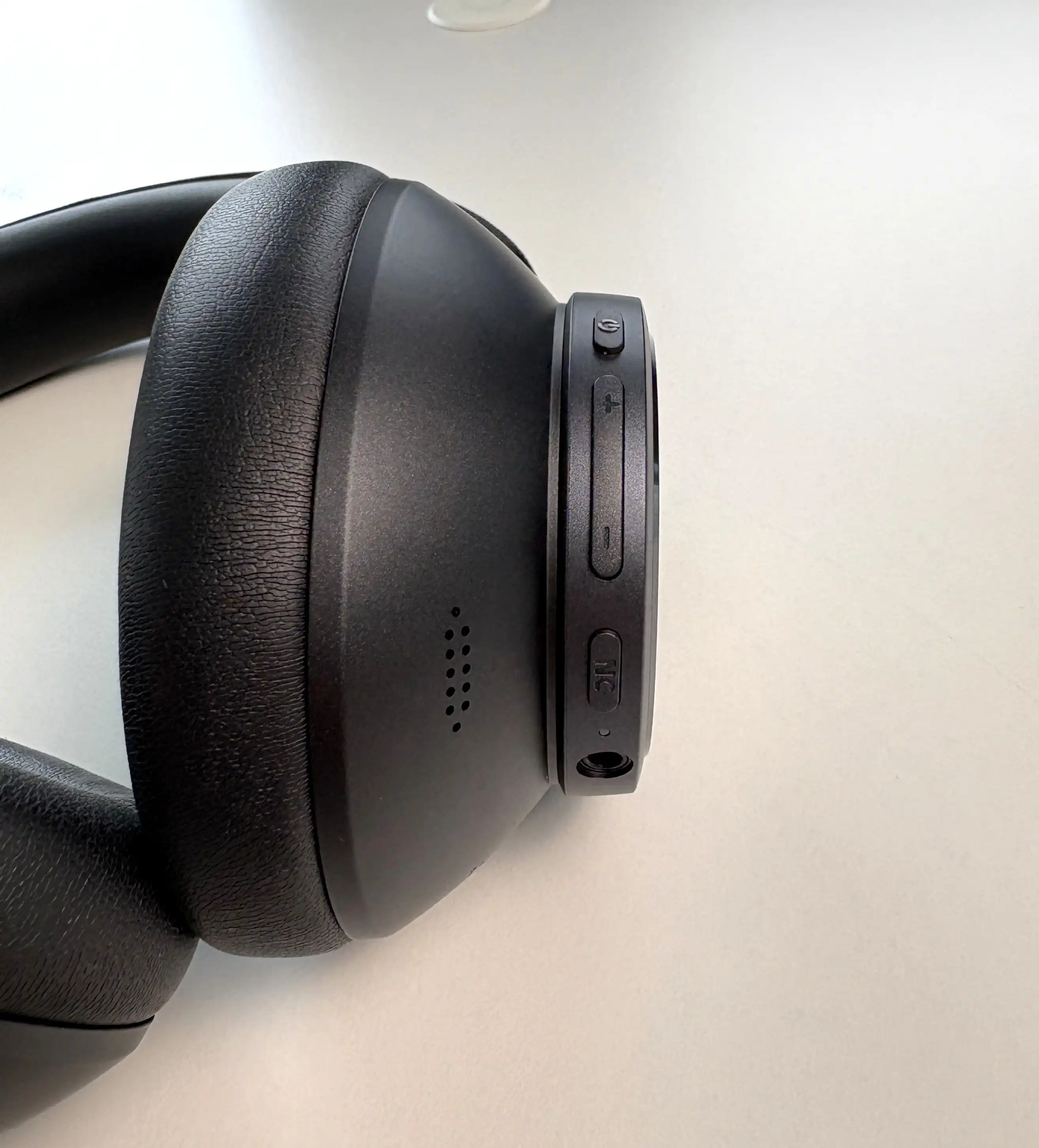


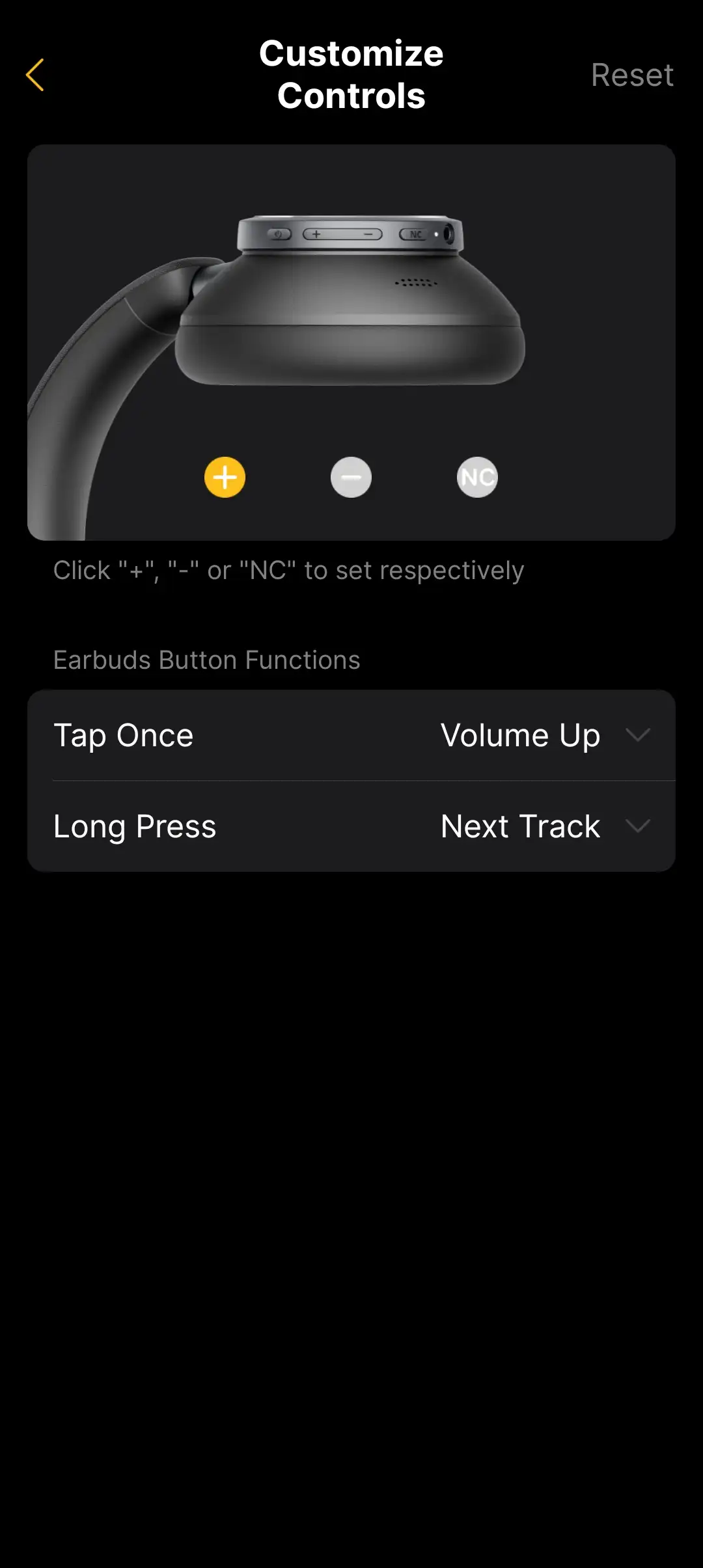
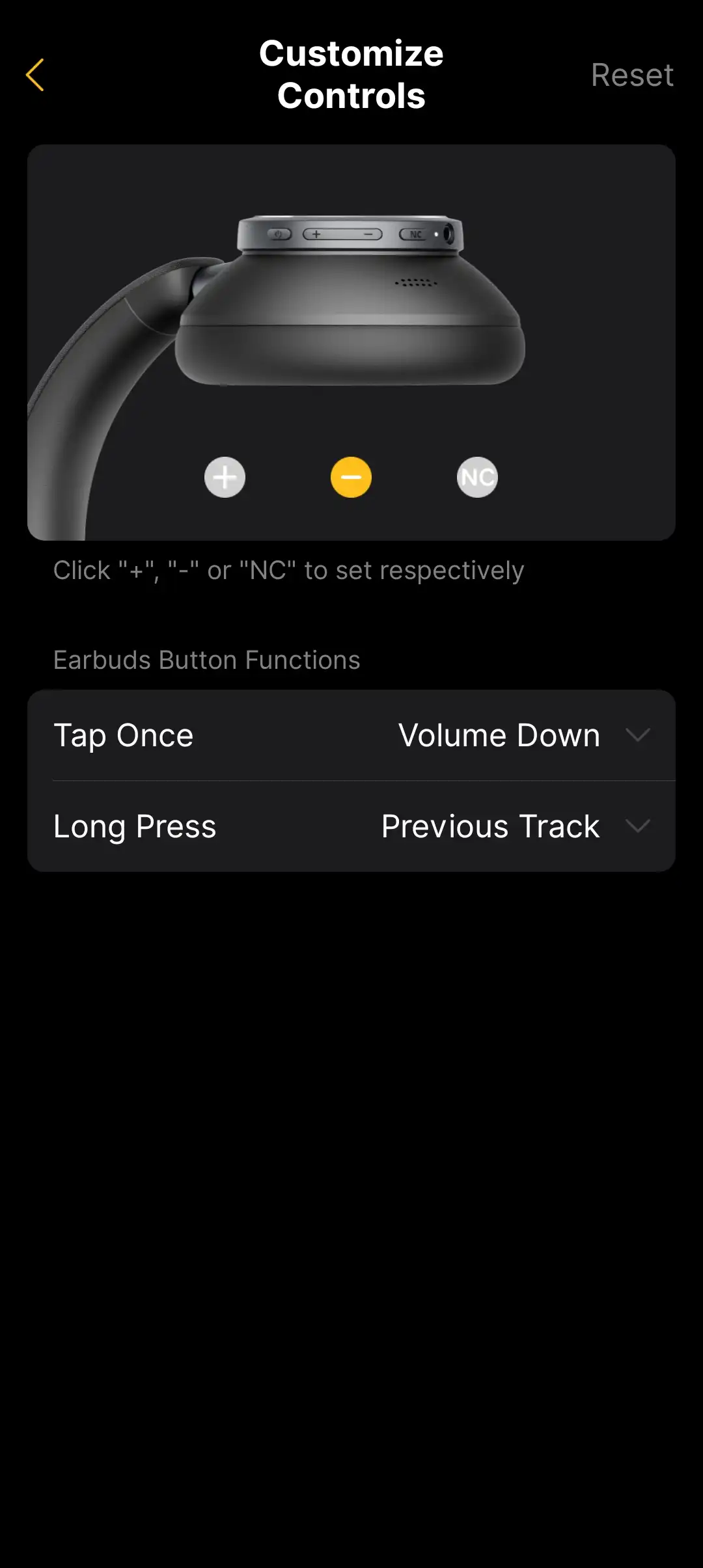
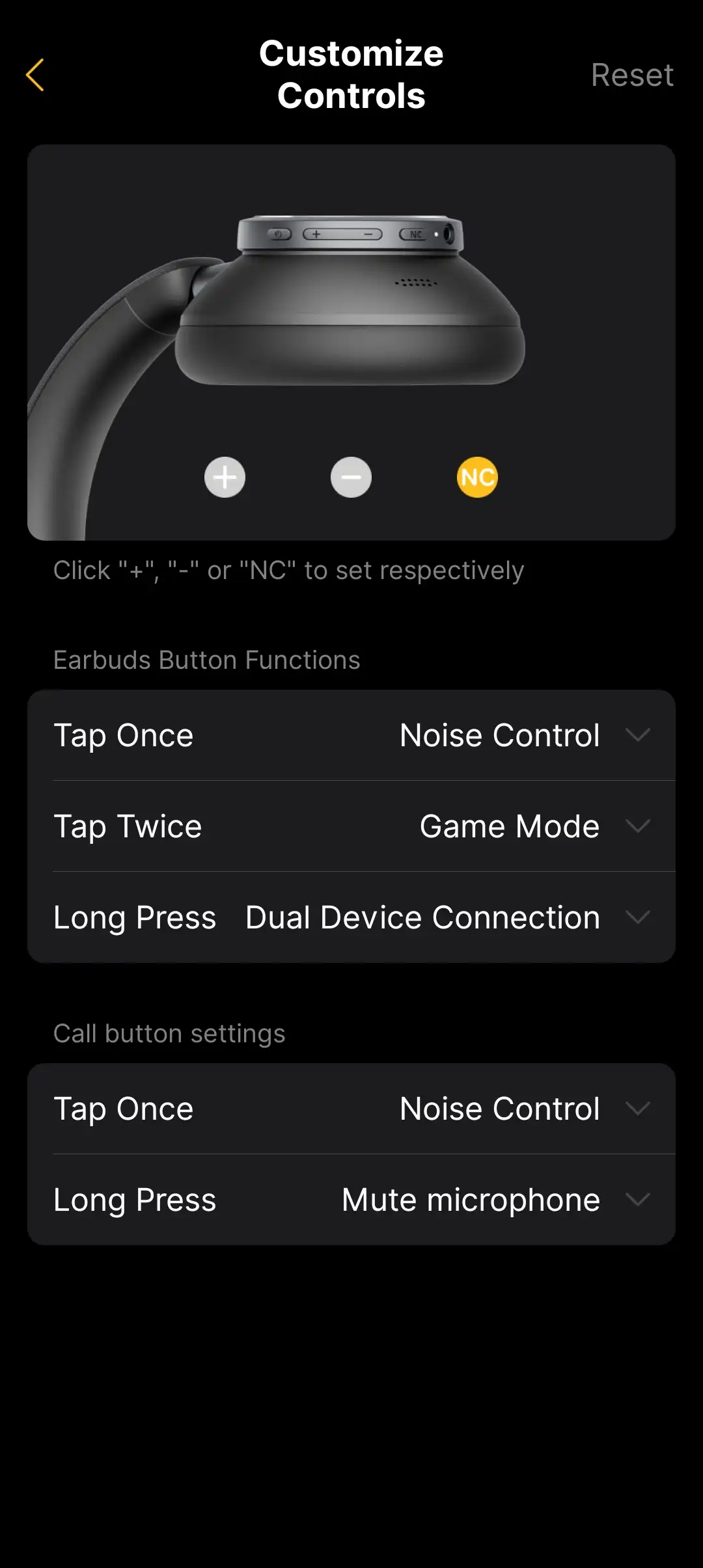
EarFun uses physical controls rather than touch-sensitive panels, and if you have any of my other Bluetooth headphone reviews, you will know that I prefer that to touch controls. The right earcup has a multifunction power button, volume controls, and a separate ANC button. The buttons provide clear tactile feedback, work reliably, and are much less likely to register an accidental command when you adjust the headphones.
The default layout is also easy to learn. A single press controls playback or volume, holding the volume buttons skips tracks, and the dedicated ANC button moves between Noise Cancelling, Ambient Sound and Normal modes. Many of the long-press and double-press functions can be reassigned in the EarFun Audio app (and I always appreciate this feature).
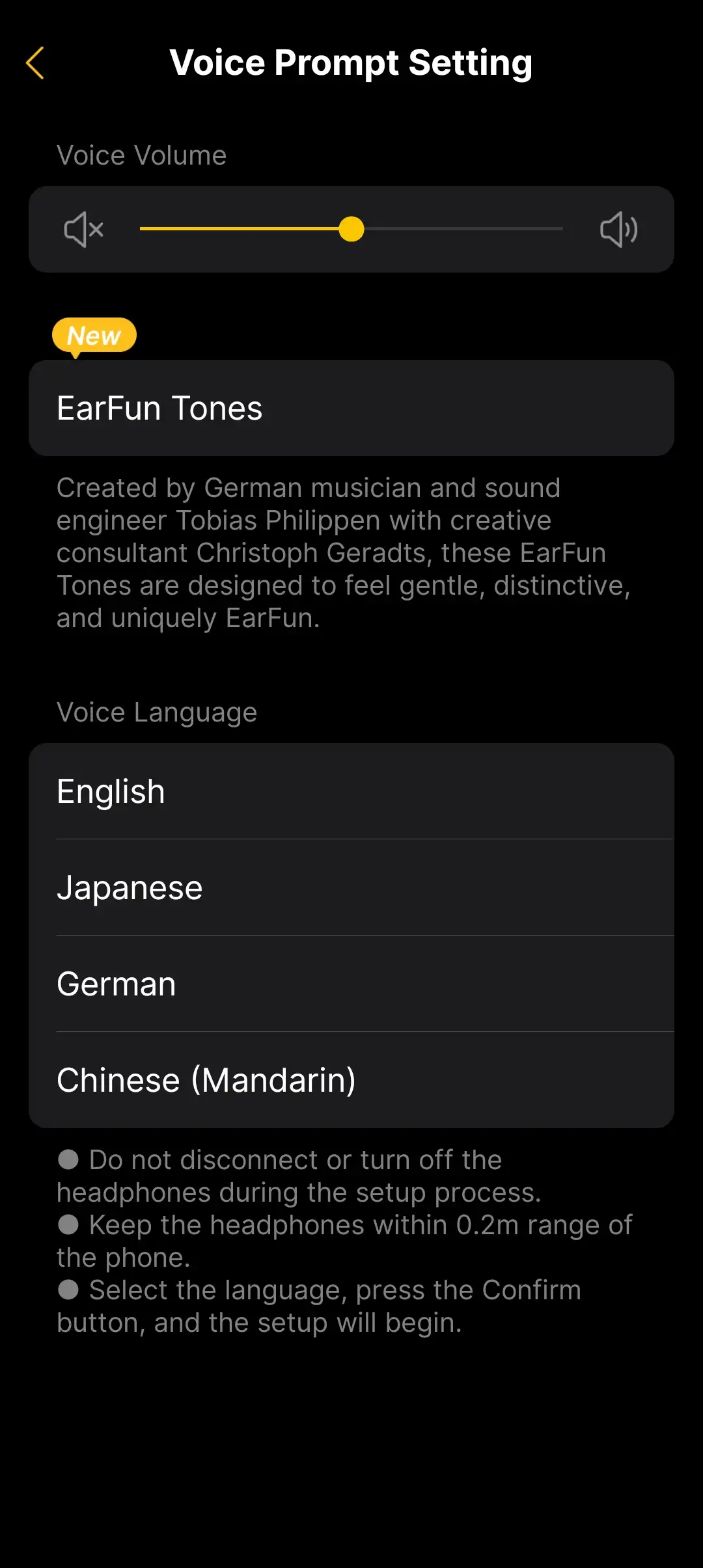
Voice prompts are clear (the volume of which can also be adjusted), the controls respond quickly, and the overall experience never feels unnecessarily complicated. EarFun has packed in a lot of functionality, but the headphone itself remains straightforward to operate.
ANC and Transparency
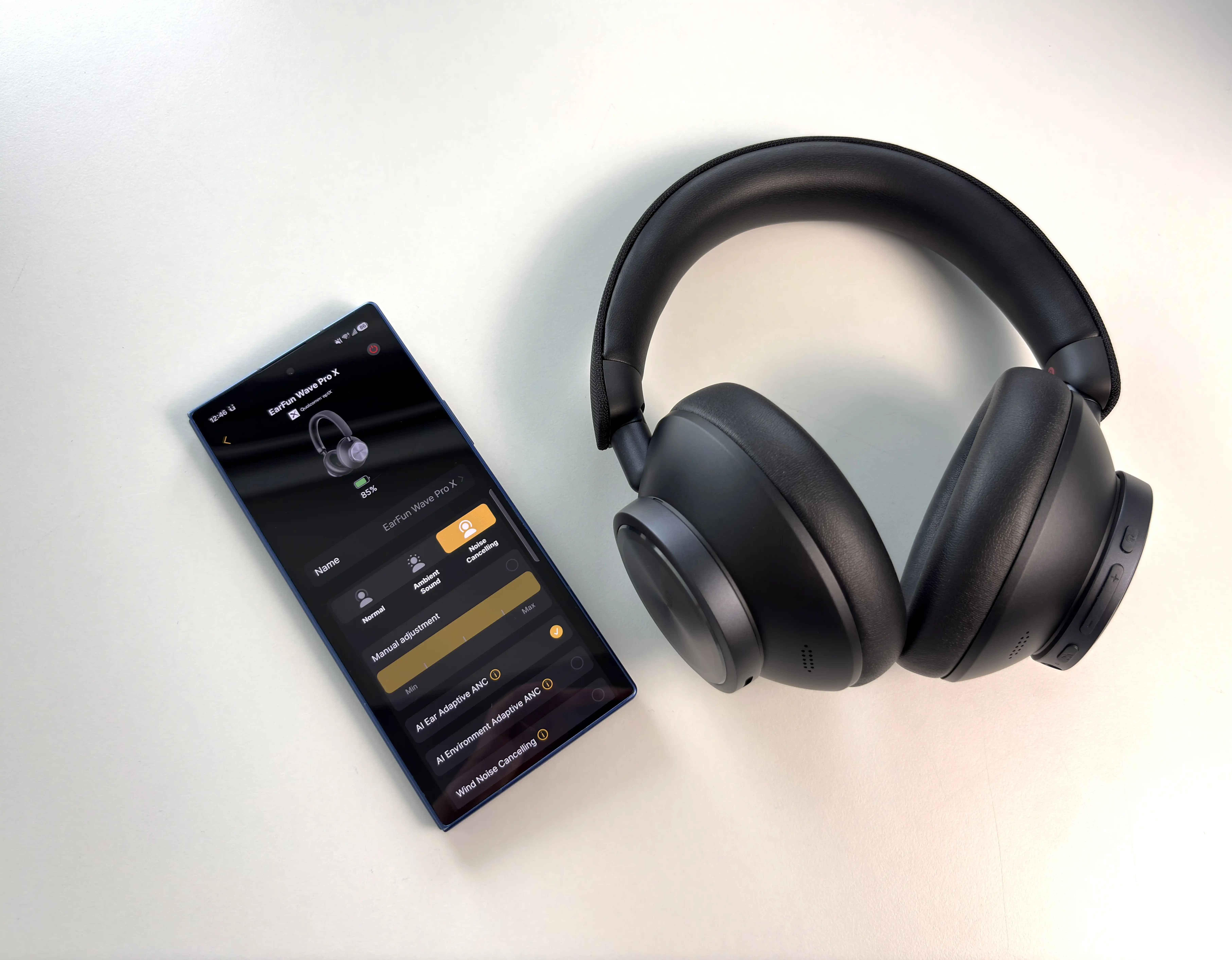
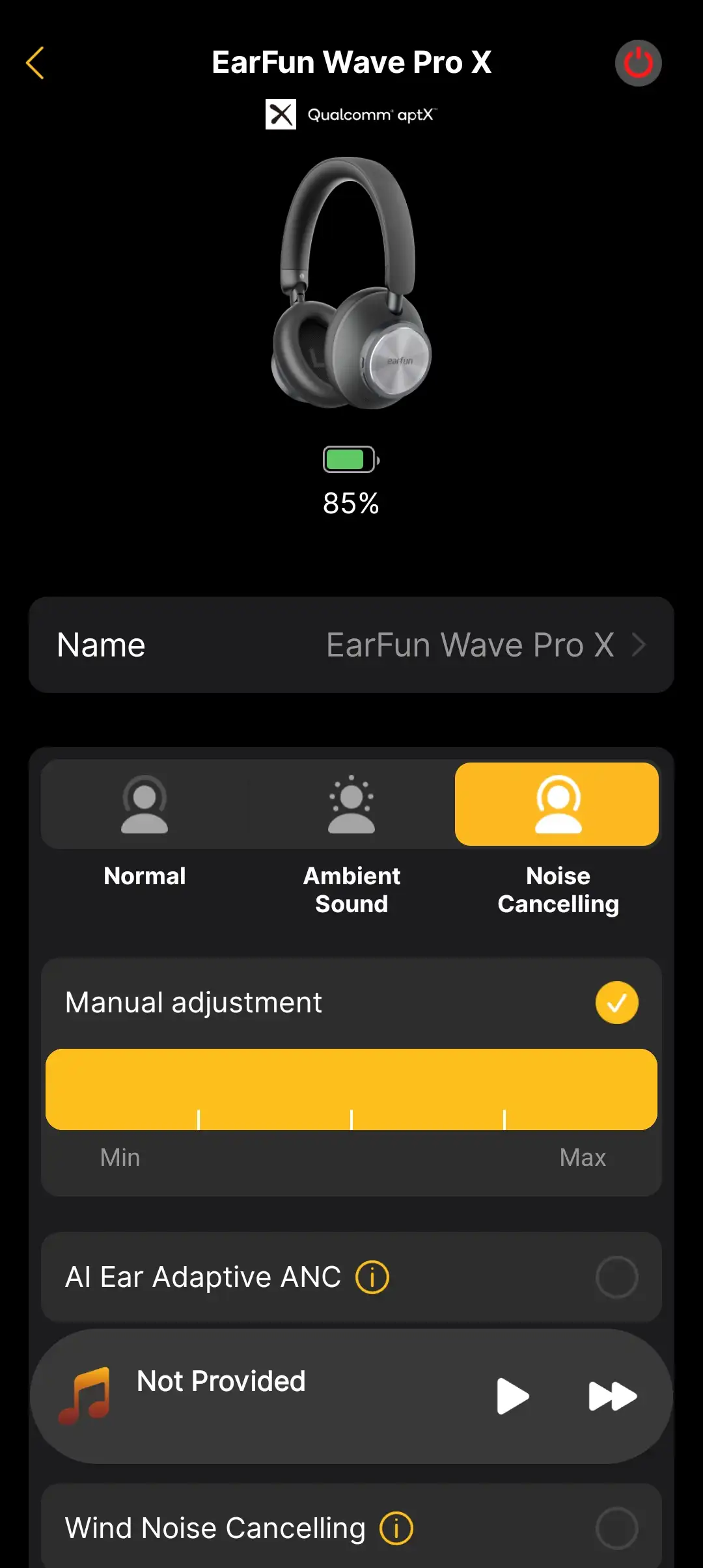
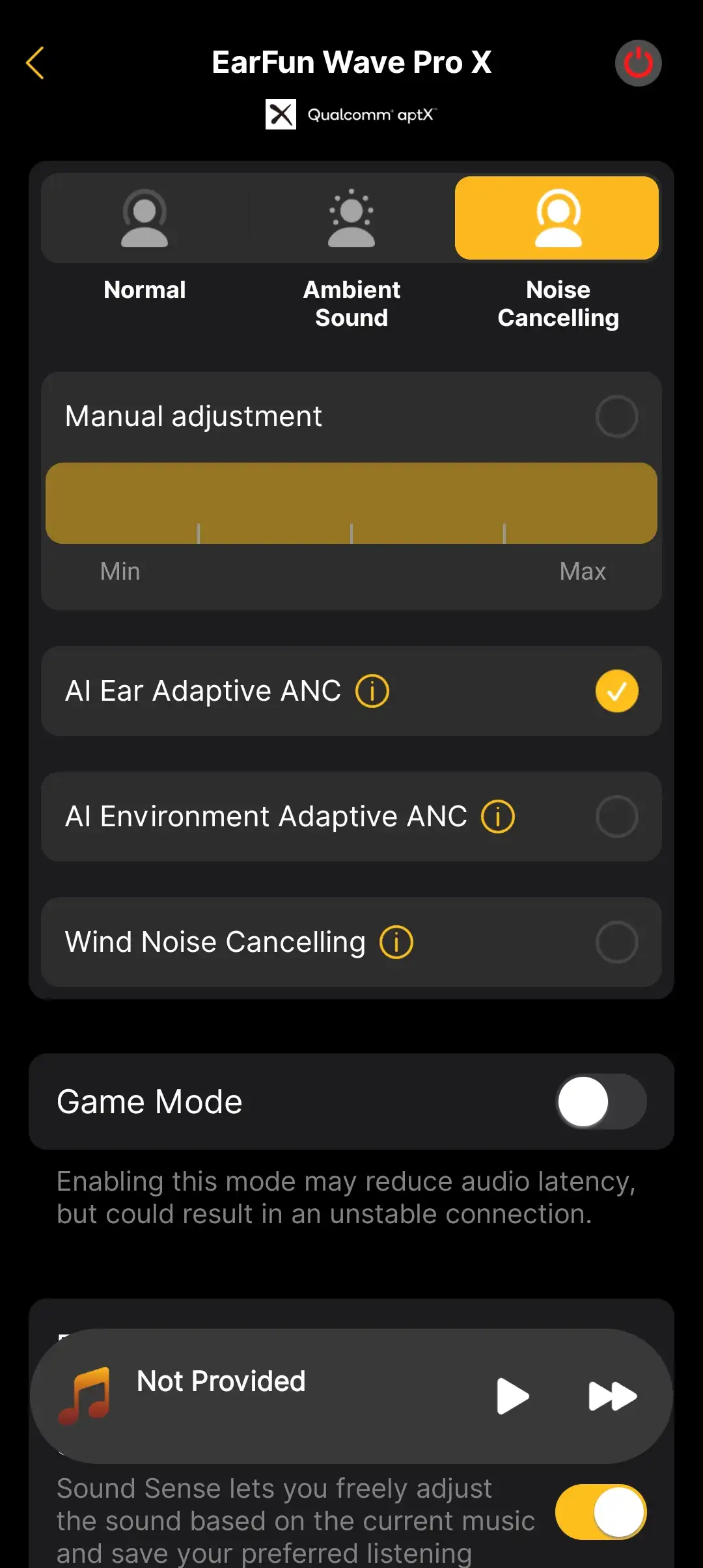
The Wave Pro X uses an eight-microphone system with Qualcomm’s QuietSmart 3.5 processing. The physical button cycles between Noise Cancelling, Ambient Sound, and Normal modes, while the app provides four manually adjustable ANC levels and an adaptive setting that changes the cancellation strength based on the surrounding environment.
For the price, the ANC performance is simply excellent. Constant low-frequency noise from AC systems, ambient traffic, and transit noise is reduced substantially, and the headphones also do a respectable job of drowning out nearby voices. Keyboard clicks and sharper higher-frequency sounds still can come through, but they are pushed far enough into the background that music can cover them at a reasonable volume.
The adaptive mode is useful because it changes gradually as opposed to abruptly. Some inexpensive adaptive ANC systems can audibly jump between levels as the environment changes. The Wave Pro X is better behaved and can generally be left in its adaptive setting without becoming distracting. I mainly used either the adaptive ANC setting or the manual setting on max ANC.
The wind-noise reduction when using the Wind Noise Cancellation mode works pretty well. It does not completely eliminate the wind effect outdoors, but it does a good enough job so that it is not distracting from listening to audio.
One of the Wave Pro X’s most useful features is that ANC remains available through both the USB-C and 3.5mm connections. That makes the headphone particularly practical for flights, desktop listening, and devices where Bluetooth is unavailable or undesirable.
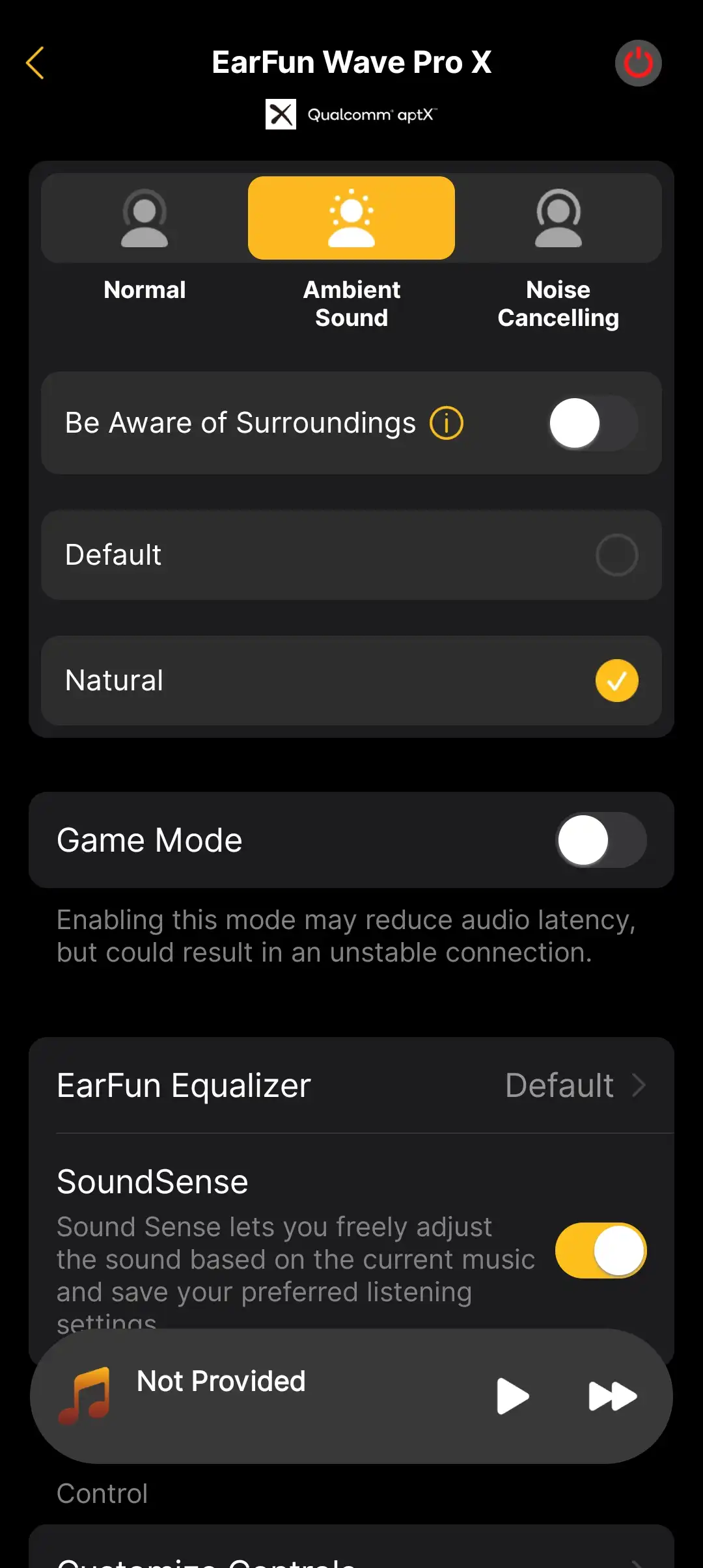
The transparency mode is another strong point. Voices sound clear and reasonably natural, and there is less obvious hiss or artificial processing than I typically hear from budget headphones. It is not quite as convincing as the very best transparency systems, but it is good enough for a quick conversation or for maintaining awareness while walking. The Natural mode is where I ended up leaving the Ambient Sound setting, as, in my opinion, it sounds the least processed.
There’s also an interesting “Be Aware of Surroundings” toggle that moves the currently playing audio to the background to let you hear your surroundings without pausing or stopping what you’re listening to. A very handy feature when you want to listen to the outside environment but still have your music playing.
Companion App
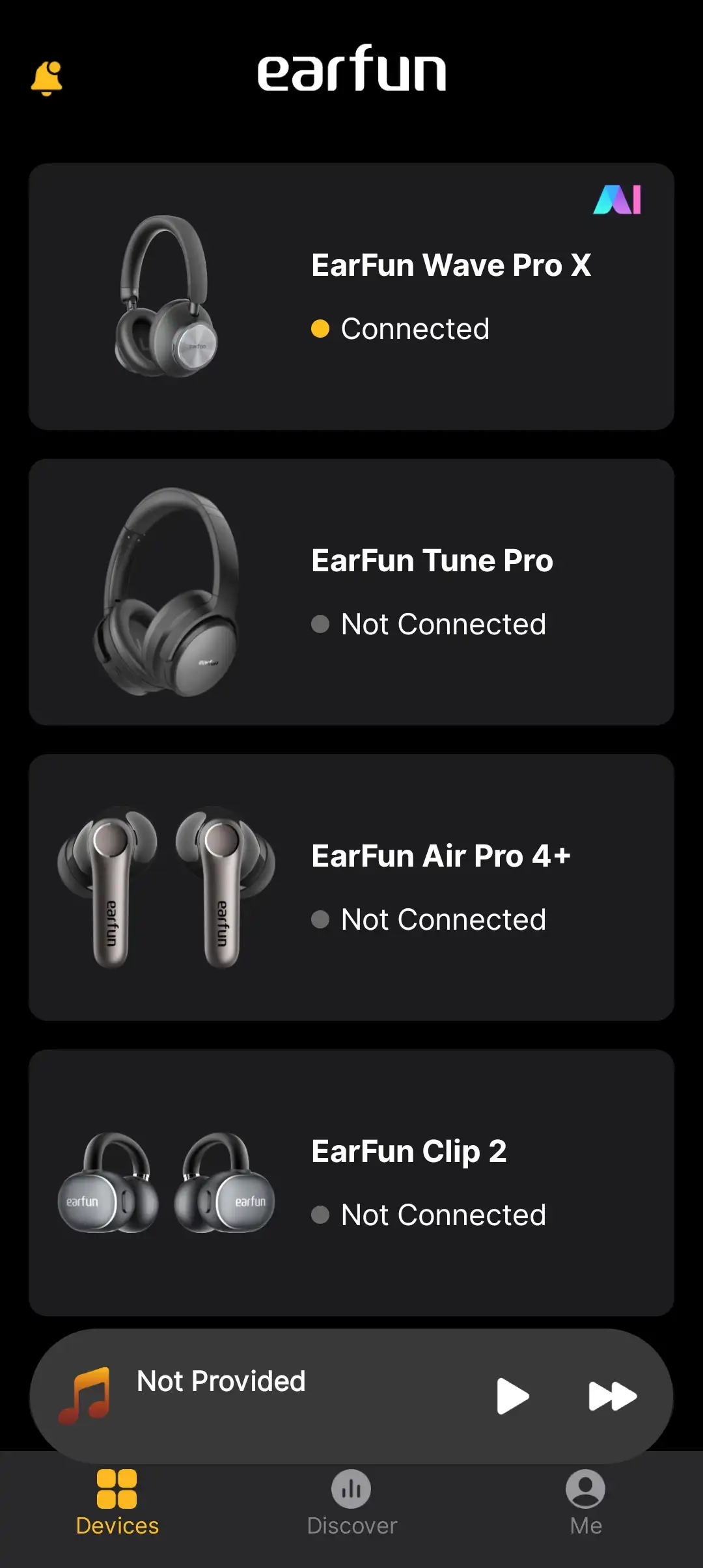
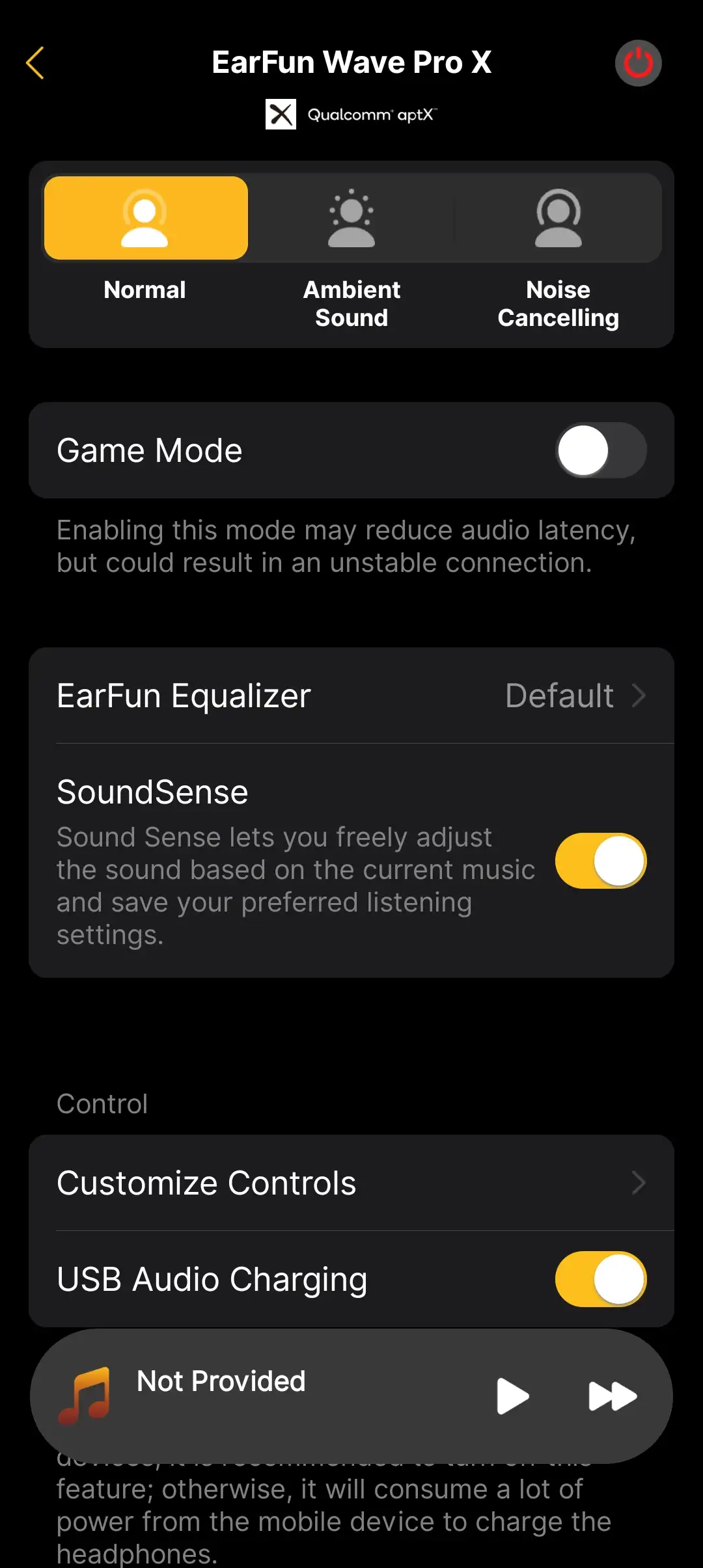
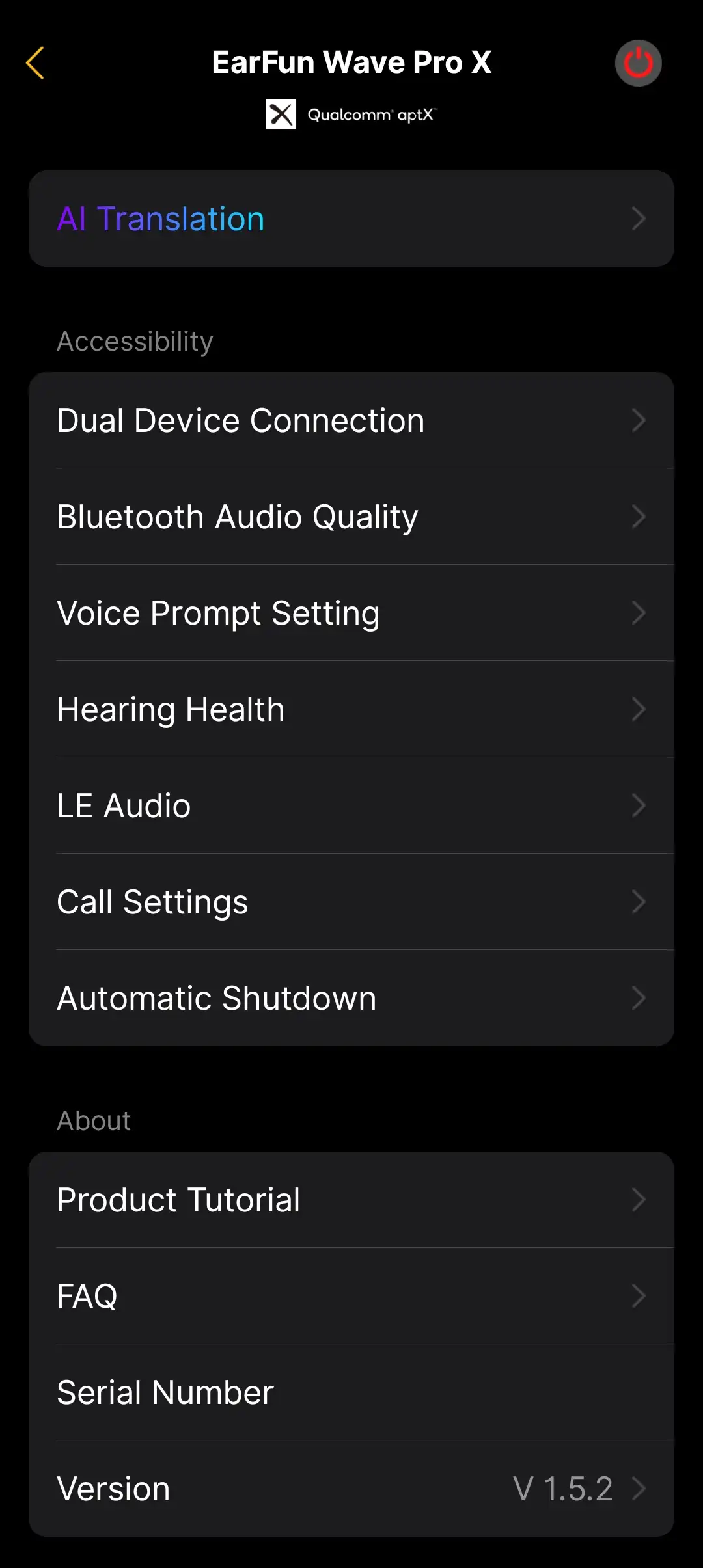
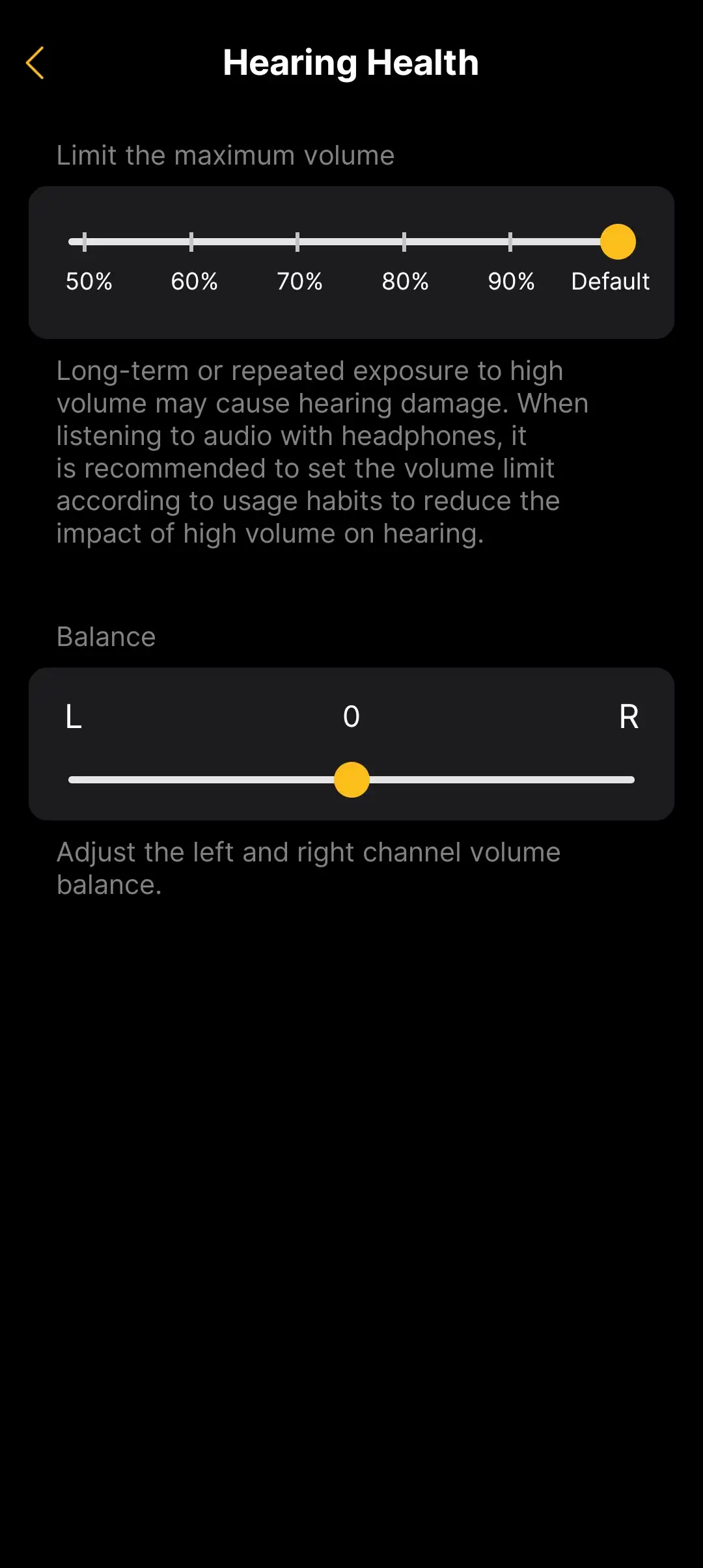
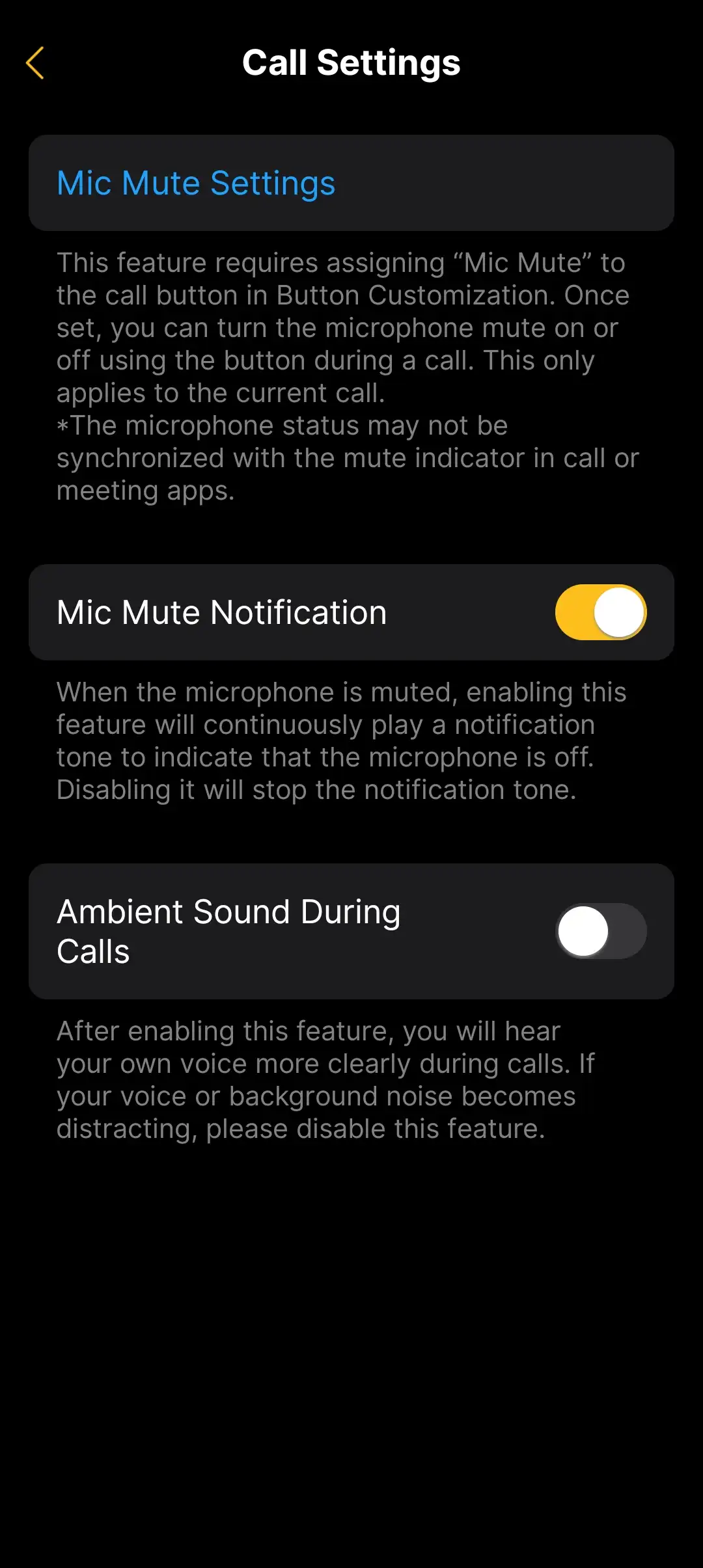
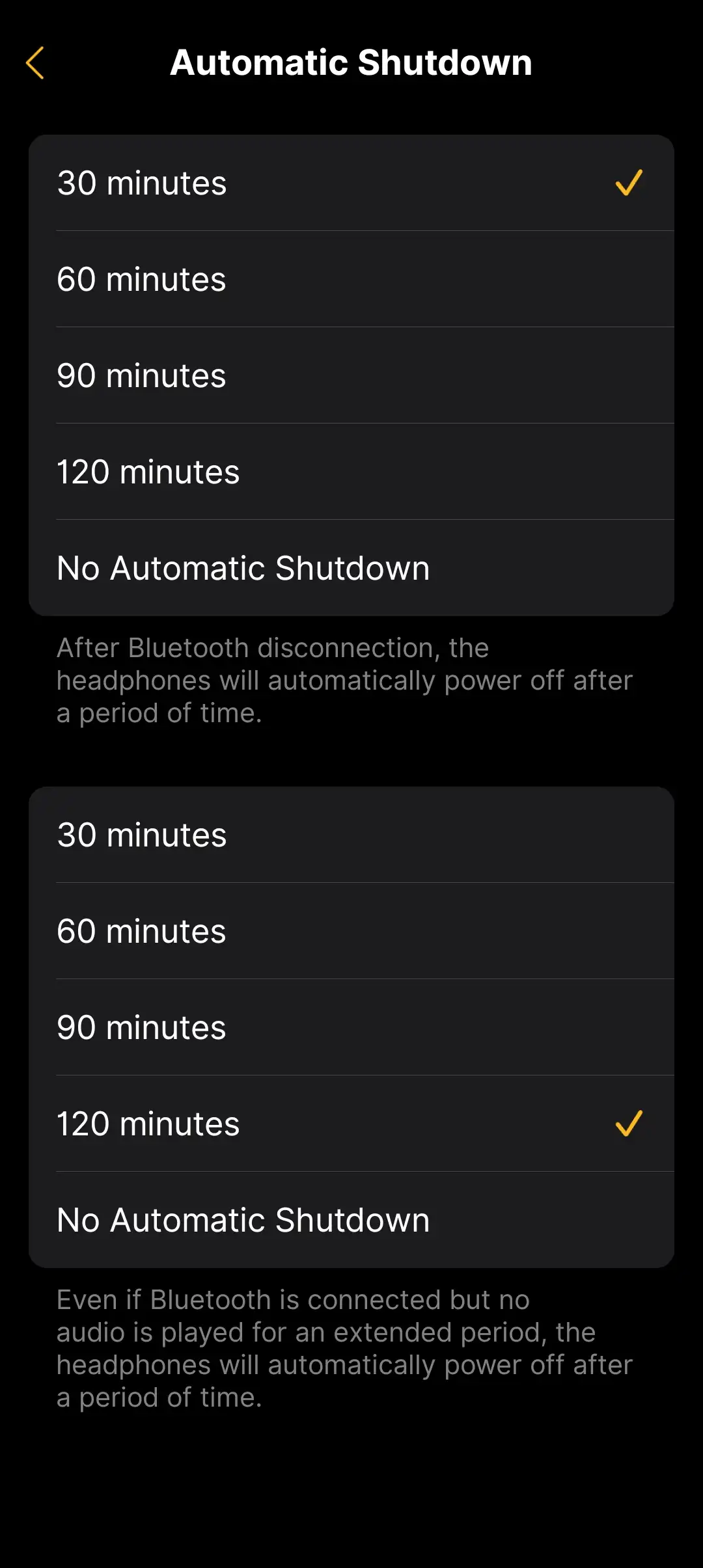
The EarFun Audio app is a major part of the Wave Pro X experience as it handles firmware updates, battery status, multipoint management, ANC settings, control customization, Game Mode, automatic shutdown timers, channel balance, a volume limiter, and several sound-adjustment options.
The interface is relatively clean, it does not require an account for basic headphone management, and important settings are not buried several menus deep. EarFun has been steadily improving this app, and the Wave Pro X takes advantage of the most complete version of it so far.
For sound customization, there are three main approaches. You can select one of EarFun’s presets, use the Personalized Sound process to choose between different sound profiles, or create your own tuning.
Personalized Sound is a preference-matching exercise rather than a hearing test. It plays a series of samples and asks which presentation you prefer, then generates a profile based on those choices. It is a friendly starting point for someone who does not want to think about frequency response or individual EQ bands.
For audiophiles, the recently added “Professional EQ” is much more interesting. EarFun has not simply added ten fixed sliders. This is a proper 10-band parametric equalizer with adjustable frequency, gain, Q value, filter type, and master gain. It gives the Wave Pro X a level of tuning control that is still uncommon on Bluetooth headphones at any price.
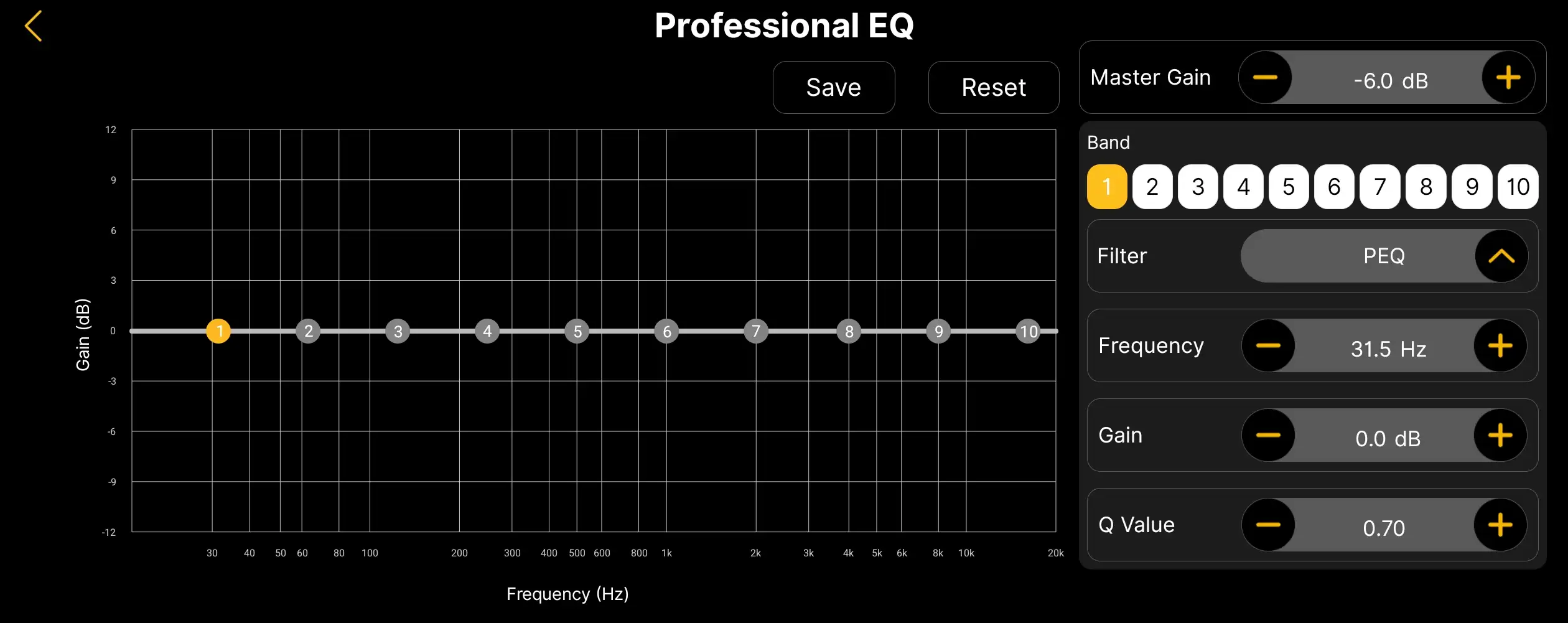
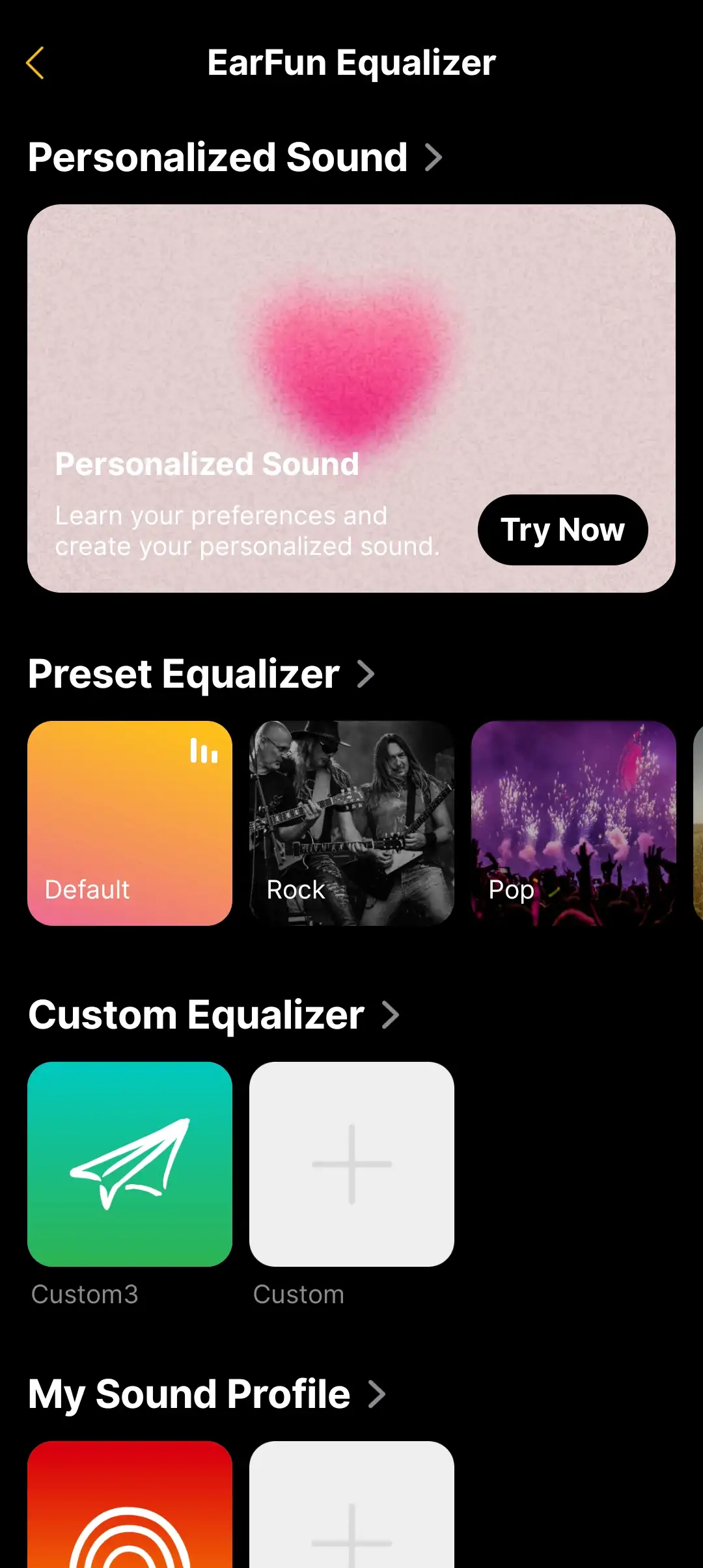
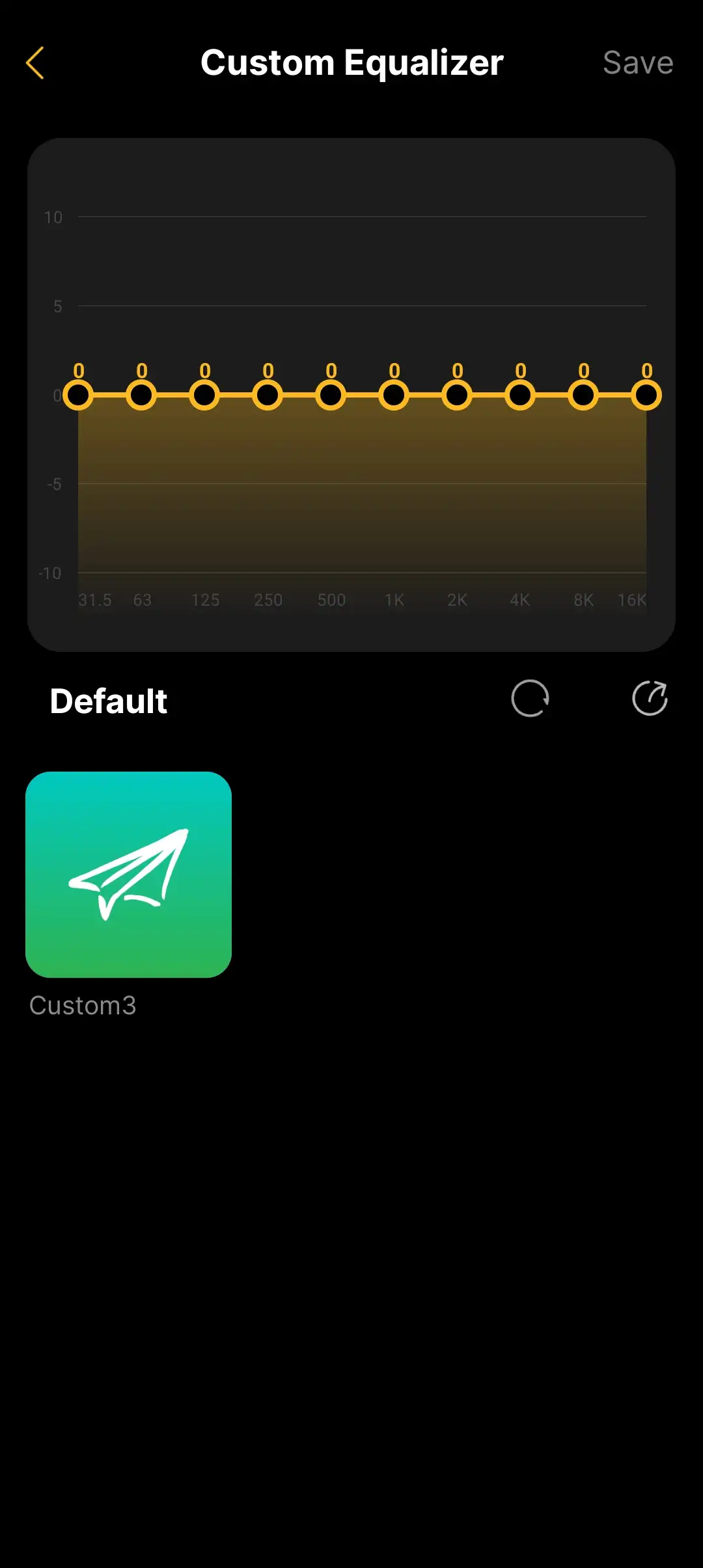


There are still some rough edges. Profiles cannot currently be exported, imported or shared, which feels like a missed opportunity on a headphone with such a capable EQ system. A profile that takes time to build is effectively trapped inside the app, and the only way to “save” is to sign into the app with a profile and have it synced. Even with those limitations, this is one of the best EQ implementations I have seen on a mainstream Bluetooth headphone.
The app also includes an AI translation feature. It is not something I consider central to the headphone and it did not affect my verdict, but it may be useful for buyers who already use that feature elsewhere in EarFun’s ecosystem.
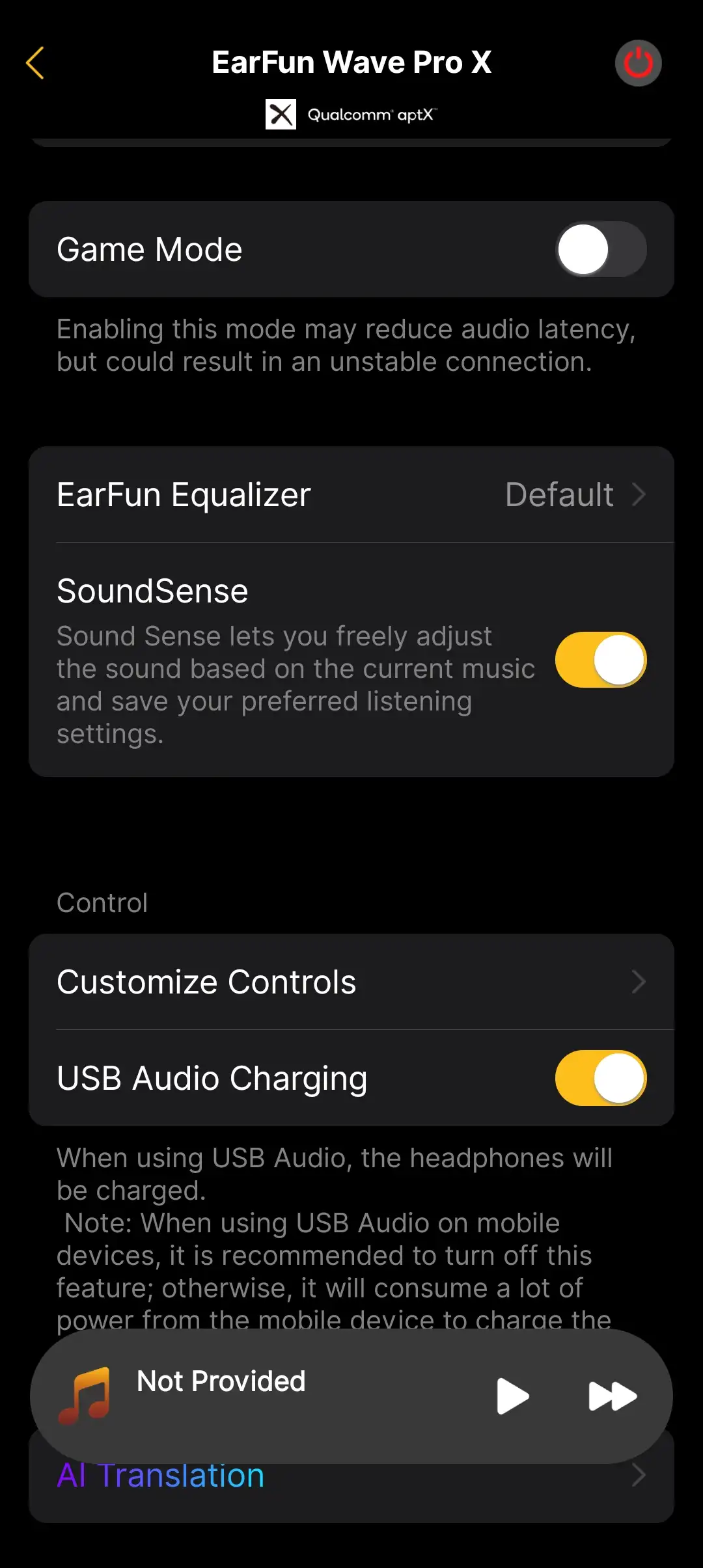
Here are some screenshots of the app experience:









Bluetooth Performance
Wireless connectivity is one of the Wave Pro X’s biggest strengths. The Qualcomm QCC3095 platform supports Bluetooth 6.0, Google Fast Pair, Snapdragon Sound, LE Audio, Auracast, and two-device multipoint.
Codec support is unusually complete. Alongside SBC and AAC, there is LDAC, aptX Adaptive, aptX Lossless, and even LC3 is available as part of the LE Audio platform. All this gives buyers a good-quality connection path across a much wider range of phones, computers, DAPs, and transmitters than most headphones at this price.
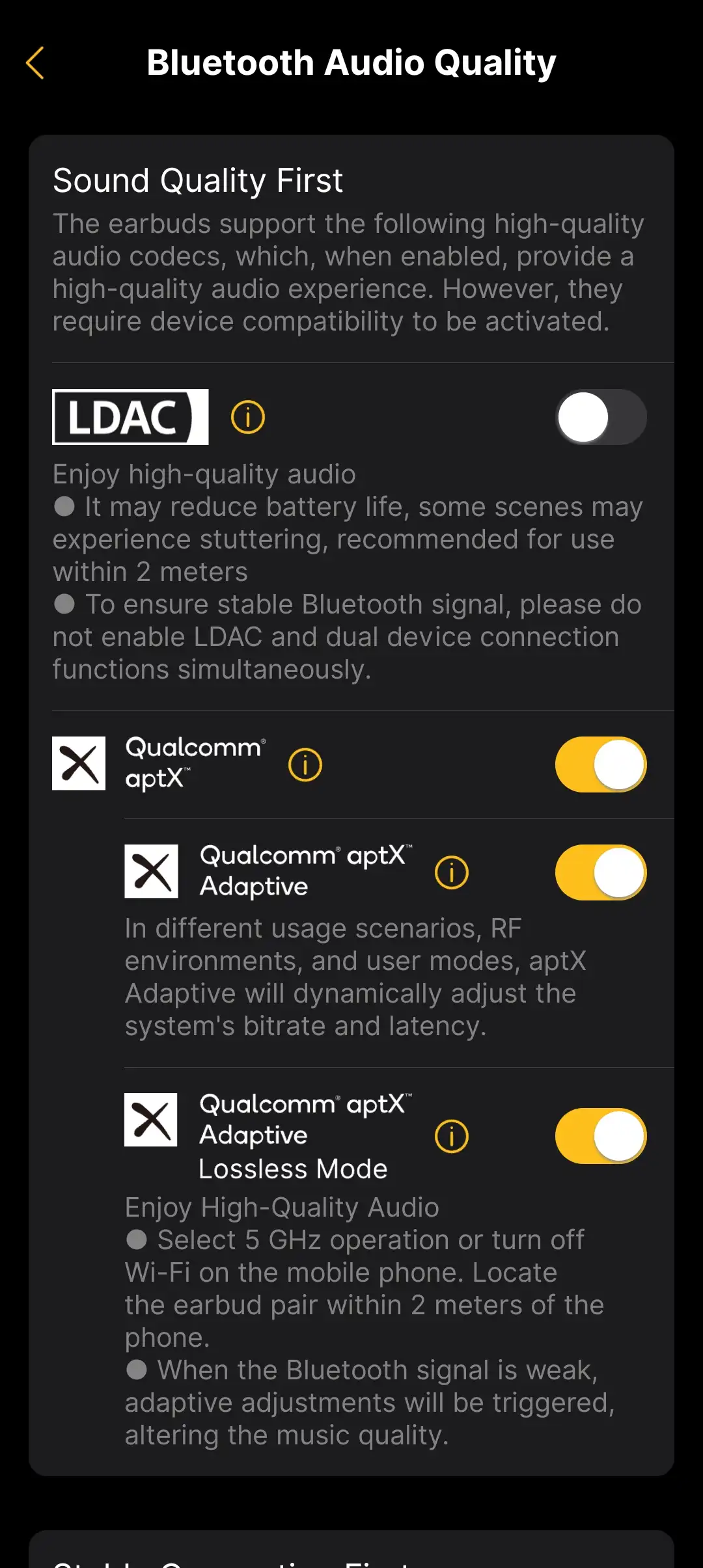
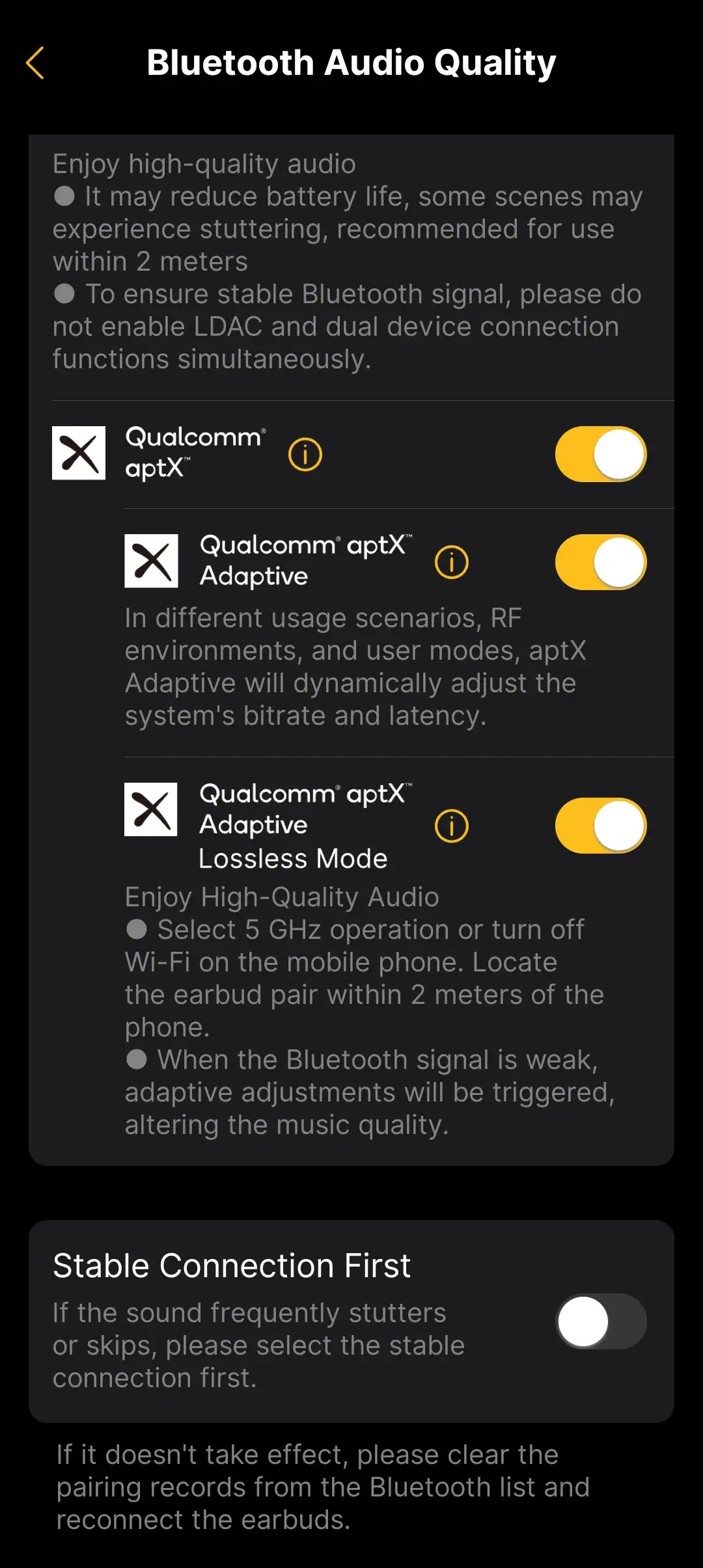
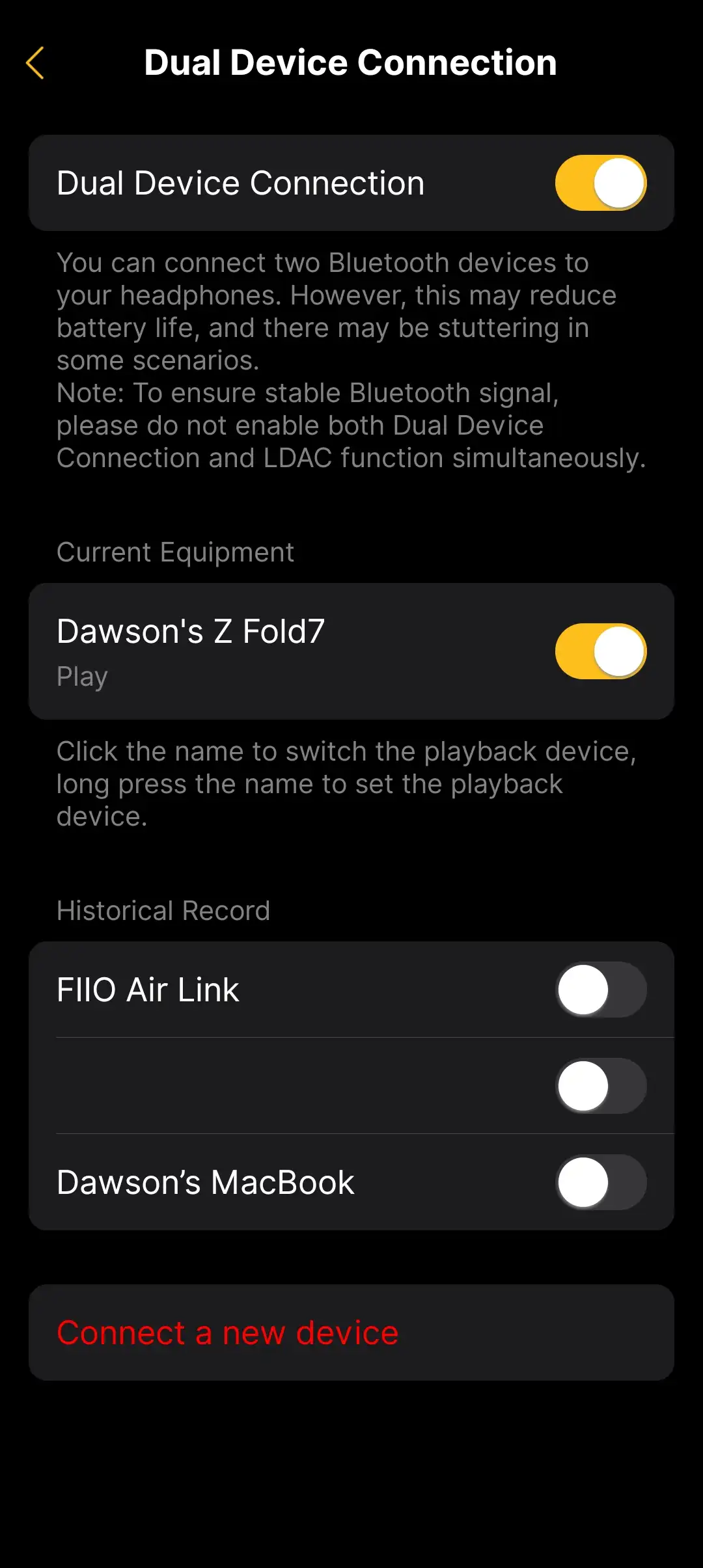
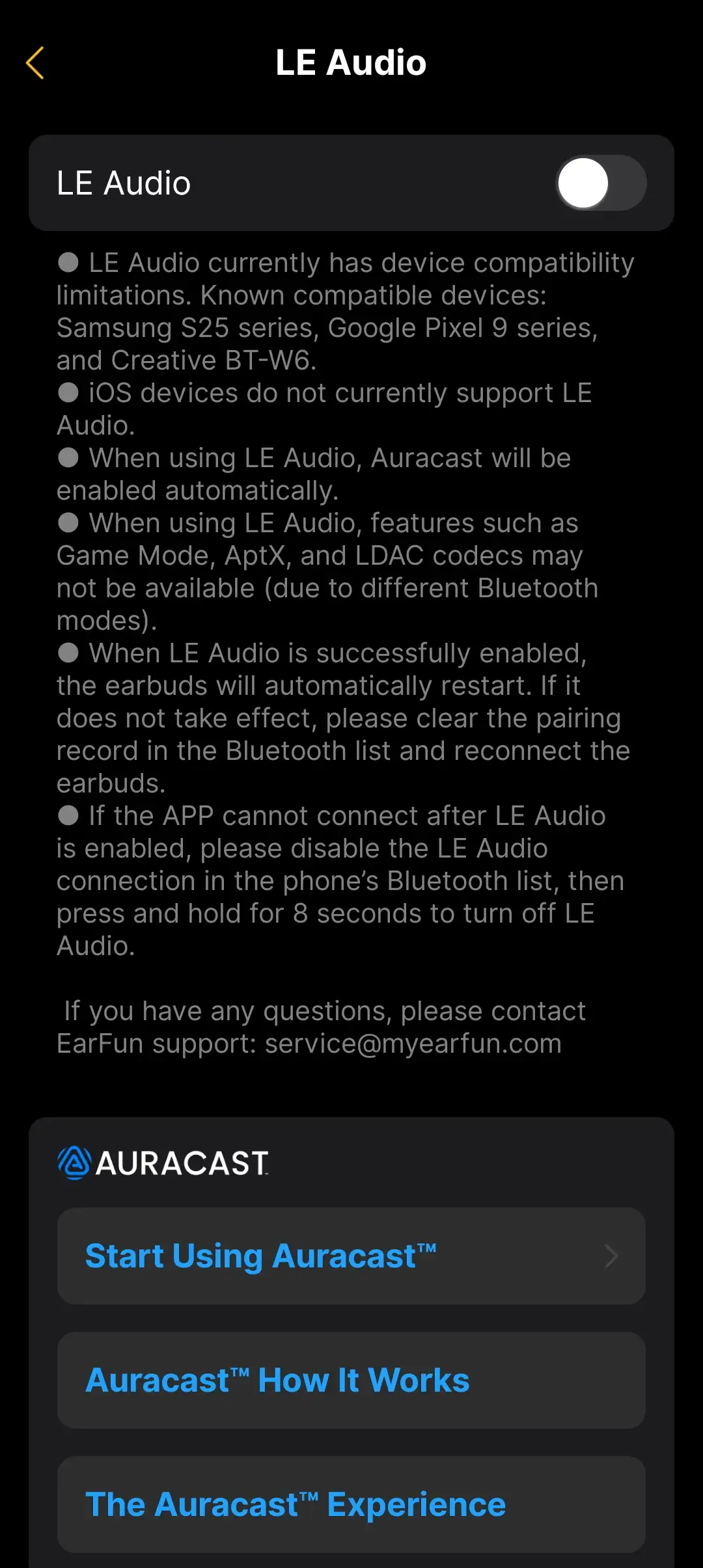


Google Fast Pair makes the initial Android setup quick, and multipoint lets a phone and computer remain connected at the same time. The app also includes a device list for managing those connections. Auracast is more of a forward-looking feature because compatible broadcasts are not yet everywhere, but it gives the Wave Pro X a useful path into shared and public LE Audio streams as adoption grows.
For video and casual gaming, the low-latency Game Mode keeps synchronization under control. It is a useful addition, although I would prefer to be able to assign it to a physical button rather than opening the app every time.
As far as the actual Bluetooth performance goes, for me, it was flawless. I tested every single codec across a range of devices and sources, and the Wave Pro X never dropped a connection or encountered any issues. The Bluetooth implementation here is solid.
Wired Connectivity
USB-C audio is the more meaningful extra for me as it provides a direct digital connection to a computer, phone, or tablet, and ANC remains active. The app can also disable charging during USB playback (a seriously awesome feature) so the headphones do not unnecessarily drain a connected phone. The microphone works over USB as well, which makes the Wave Pro X more useful for work calls and desktop use than many inexpensive wireless headphones.
There is also a 3.5mm analogue input, again with ANC available while the headphone is powered. Between Bluetooth, USB audio and analogue playback, the Wave Pro X is one of the most flexible travel and work headphones in its class.
Battery Performance
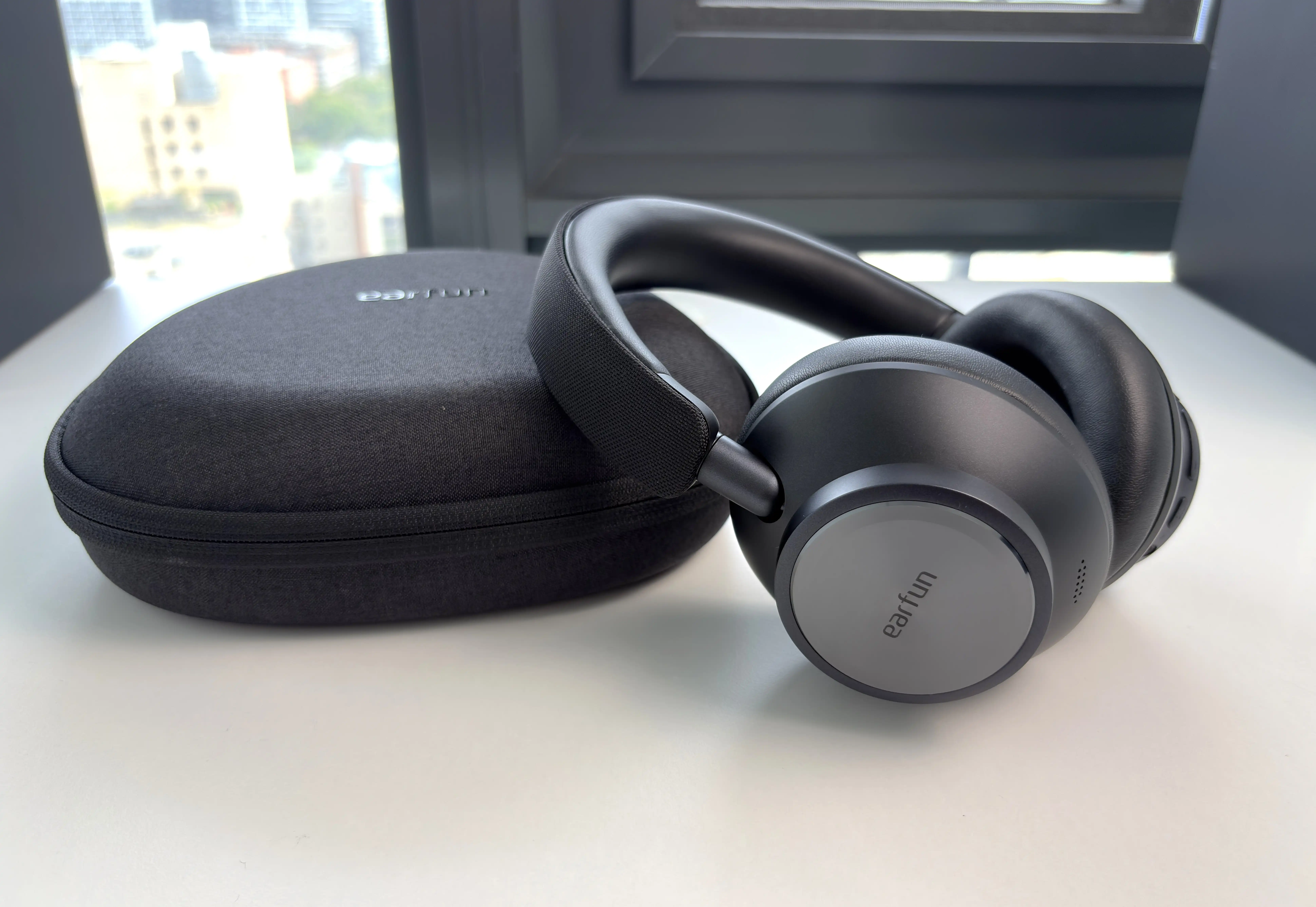
EarFun rates the Wave Pro X for up to 90 hours of playback with ANC disabled and up to 50 hours with it enabled. A full charge takes approximately two hours, while a 15-minute charge can provide up to ten additional hours.
Those numbers will vary with volume, codec and ANC use, but even the 50-hour figure is excellent. It is long enough that charging becomes an occasional task rather than part of the daily routine, and it compares favourably with considerably more expensive flagship ANC headphones.
I was not able to repeatedly exhaust the battery under controlled conditions during the review period as it truly lasts a long time, so I am treating the exact figures as EarFun’s claims. In normal mixed use, though, the battery drains slowly enough that the broader point is clear: endurance is one of the Wave Pro X’s strongest advantages.
Sound Quality
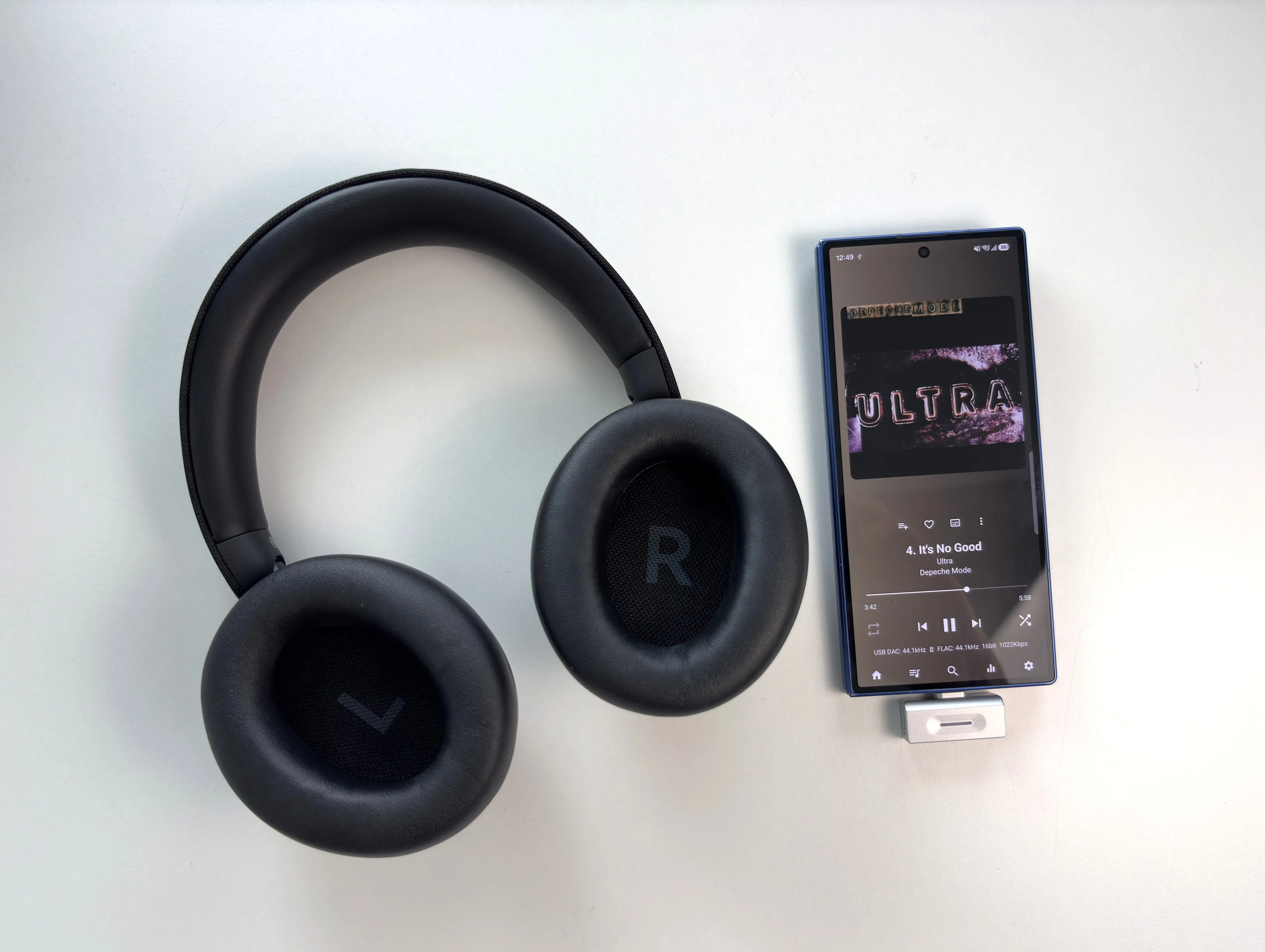
Main sources used for this review:
- FiiO Air Link (aptX Adaptive, aptX Lossless)
- iPhone 16 (AAC)
- Samsung Galaxy Fold 7 (aptX, LDAC)
- Sennheiser BTD700 (aptX Adaptive, aptX Lossless)
- Shanling M3 Plus Master (aptX, LDAC)
Links to my music playlist used for the majority of testing:
The Wave Pro X uses EarFun’s DCAA dual-coaxial driver system, with a 40mm DLC dynamic driver and a 10mm LCP dynamic driver aligned along the same acoustic axis. The idea is to divide the frequency range between two drivers without creating the timing and phase problems that can occur when they are positioned separately.
I would not buy the Wave Pro X simply because it has two drivers. A well-designed single dynamic driver can still sound excellent, and adding a crossover creates another engineering problem that has to be solved. What really matters here is that the two drivers sound cohesive. I do not hear an obvious discontinuity between them, and the system has enough control and headroom to respond very well to EQ adjustments.
With ANC enabled, the stock sound is balanced, relaxed, and more restrained than many mainstream ANC headphones. It has strong sub-bass extension, a convincing midrange and a generally smooth and pleasant treble.
The main weakness, in my opinion, is the recessed area through the lower treble. This can place vocals and some instruments slightly farther back in the arrangement than I prefer, though I am a mid-centric listener, so this may not bother everyone.
That combination creates an unusual first impression: the Wave Pro X sounds relaxed overall, but individual treble details can occasionally jump out. The Professional EQ is what turns this from a limitation into something exciting.
Before getting into the details, all of my impressions below are with the stock sound profile and ANC enabled. I won’t be doing any comparisons of having ANC disabled, as I do not think that is the purpose of this headphone.
Bass
Bass reaches fairly deep and has a satisfying weight, but it is fairly restrained by ANC-headphone standards. The emphasis is primarily in the sub-bass rather than the mid-bass, which helps prevent warmth from spilling into the lower midrange, or the bass from sounding overwhelming and boomy.
Kick drums have enough physical impact to sound engaging and natural, electronic bass lines reach low without becoming lost, and faster bass guitar passages retain decent separation from the rest of the mix. The low end is not as exaggerated as the Sony WH-1000XM series, and I think that makes the Wave Pro X easier to listen to across a wider range of music.
Texture and control are also overall good. The bass is not as nuanced as what I hear from the Sennheiser MOMENTUM 5, but it avoids the one-note, overly softened quality that still affects many inexpensive ANC headphones.
The seal does matter, too. Glasses, hair, or a slightly different earcup position can reduce bass response, and the Wave Pro X does not have the adaptive seal correction found on some premium competitors. Once the fit is consistent, though, the low end is one of the stock tuning’s strongest areas and needs very little EQ (in my opinion).
Midrange
The midrange is natural and well balanced. Male vocals have enough body, and guitars and pianos sound convincing. The lower midrange does not sound hollow or overly scooped either. Instrument separation is better than I expected at this price, even when tracks become busier.
Female vocals are clear without being excessively sharp, but there is a lower-treble dip that can make vocal presence feel slightly subdued and lacking finish. This is more noticeable on tracks where the vocals should sit decisively at the front of the mix. The fundamental tones are there, but the upper harmonics that create immediacy are simply pulled back.
Treble
Treble, I think, will be the most divisive part of the stock tuning. EarFun has avoided a generally bright or aggressive sound, and this makes the Wave Pro X easy to listen to for longer periods. The trade-off is that the lower treble lacks some presence and energy, while a couple of narrower peaks higher up can give cymbals and brighter recordings a slightly sharp edge.
This can also affect perceived detail. Some information sounds pushed back, while isolated transients can stand out more than expected. I would not describe the headphone as harsh overall, but it is not completely even through this region.
The exact location of upper-treble resonances will probably change depending on the listener and the headphone’s position, so blindly copying someone else’s narrow EQ filters is not an ideal solution. A gentle presence adjustment followed by smaller cuts wherever your own ears hear excessive sharpness is the safer approach.
Once adjusted, the Wave Pro X becomes much more convincing. The tonal balance opens up, vocals regain presence, and the high frequencies sound more continuous. This is why the Professional EQ exists.
Soundstage and Imaging
The soundstage is relatively intimate. Most of the presentation remains between the ears, and the recessed lower treble makes the stock tuning sound a little more closed-in than it otherwise would.
Imaging within that space is very good. The centre remains stable, instruments are placed clearly across the left and right channels, and there is enough separation to follow individual parts in denser tracks. Correcting the lower treble adds some openness and improves front-to-back depth, but this is still a closed-back ANC headphone rather than a spacious wired audiophile model.
Compared with the Sennheiser MOMENTUM 5, for example, the EarFun sounds smaller and a little less refined. Sennheiser has the advantage in layering, treble smoothness, and the natural space around instruments. The Wave Pro X gets surprisingly close in basic tonal quality, and the difference is nowhere near proportional to the difference in price.
Microphone Performance
Voice pickup is fairly clean and intelligible in a quiet room, with enough body that speech does not sound excessively thin or distant. The microphone also works through USB-C, which is helpful for computer calls.
In noisier environments, the processing becomes more aggressive. Background noise is reduced effectively, but voices can sound more compressed, and speaking too quietly may cause parts of a sentence to drop away. Wind can also challenge the active call microphones, even though performance remains usable if you speak clearly.
This is good microphone performance for the price, but it is not one of the areas where the Wave Pro X fully matches the best premium headphones. It is perfectly suitable for routine calls, meetings, and voice messages; I would just avoid promising broadcast-quality results from a busy street.
Final Thoughts
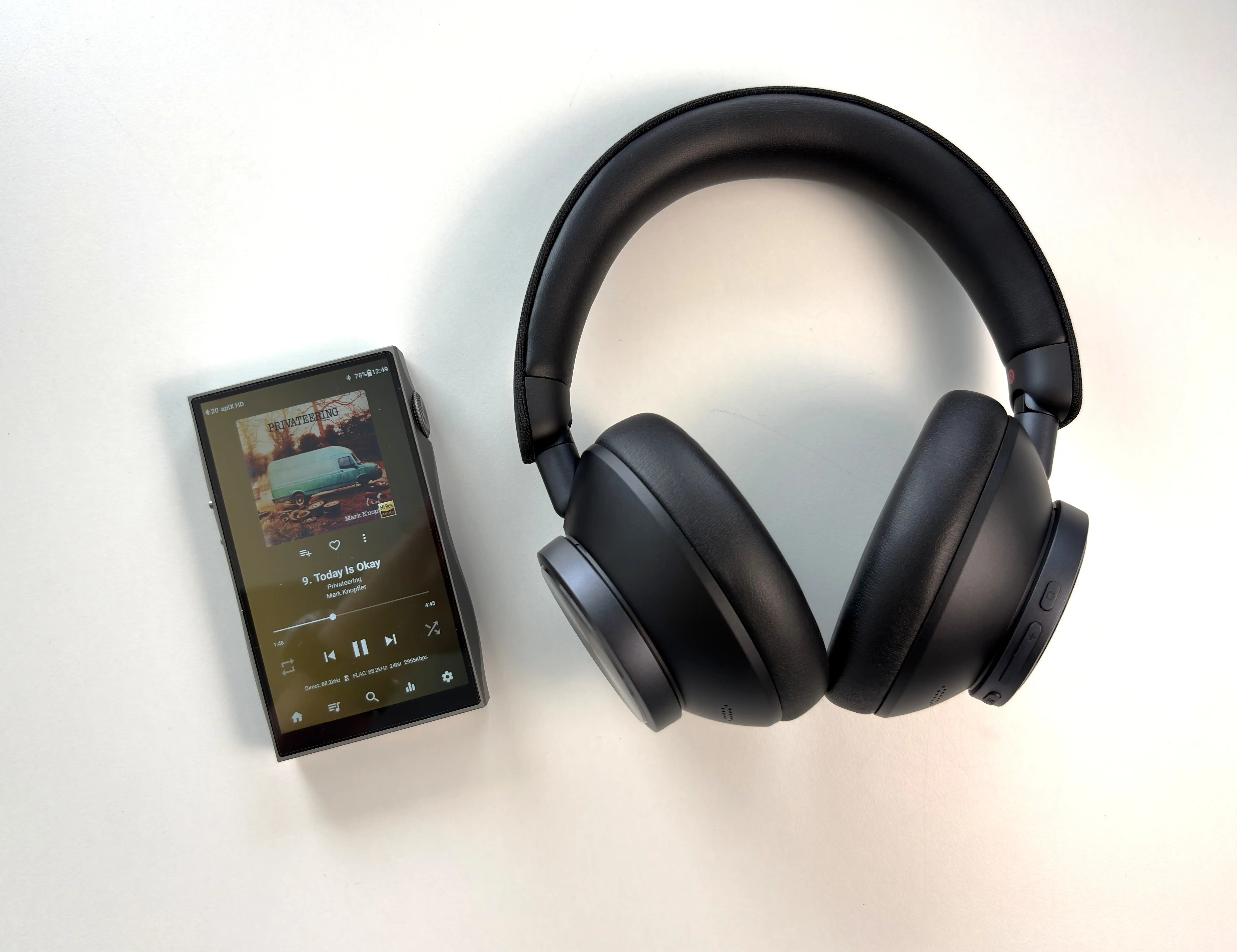
The EarFun Wave Pro X does not make the Sony WH-1000XM6, Bose QuietComfort Ultra, Apple AirPods Max, or Sennheiser MOMENTUM 5 obsolete. Those headphones still offer stronger raw noise cancellation, more polished convenience features, and, in several cases, a more refined sound.
What EarFun has done is make many of their feature lists look unnecessarily restricted. For $129.99 USD, the Wave Pro X includes Bluetooth 6.0, almost every important modern codec, multipoint, LE Audio, Auracast, and outstanding battery life. It is comfortable, the physical controls work well, and its ANC and transparency modes are far better than I expected.
The Professional EQ may be the most important feature of all, though. The stock tuning is enjoyable, with deep controlled bass and a natural midrange, but the lower-treble recession and some unevenness above it prevent the headphone from sounding fully refined. EarFun gives you the tools to correct much of that rather than forcing you to live with it. This feels like a Bluetooth headphone built for both casual listeners and audiophiles.
There are still some compromises. Wear detection is missing, and carefully created PEQ profiles cannot be exported or shared. The soundstage is also fairly intimate, and the microphone performance becomes less consistent in noisy or windy environments.
None of those shortcomings changes the value equation. This is not a $130 replacement for every flagship ANC headphone, but it may be the point where many people stop needing one. If you want excellent battery life, broad connectivity, strong ANC, and unusually deep control over the sound without spending $400 or more, the EarFun Wave Pro X is one of the easiest headphones to recommend.


Purchase Links
Buy from Amazon: https://link.amazon/B08r0uuVJ
Buy from EarFun: https://www.myearfun.com/headphones/earfun-wave-pro-x-hi-res-hybrid-anc-true-wireless-headphones-black
I’m not always able to cover all the details of a product, both hardware and software, in my reviews. If you have any specific questions about this product, please feel free to leave a comment or contact me directly.
Be sure to check out our excellent Buyer’s Guides, as well as our other Reviews.
HiFi Oasis Verdict
HiFi Oasis Verdict-
Design & Comfort9/10 Amazing
-
Sound8/10 Very good
-
Features/Accessories9/10 Amazing
-
Value9/10 Amazing
Pros
- Excellent ANC and natural-sounding transparency for the price
- Balanced sound with deep, controlled bass and a natural midrange
- Outstanding battery life
- Excellent 10-band parametric EQ and sound customization
- Comfortable, lightweight design with reliable physical controls
- Extremely broad codec and connectivity support
- Exceptional overall value at $129.99 USD
Cons
- Recessed lower treble and some upper-treble unevenness
- Relatively intimate soundstage
- No wear detection
- PEQ profiles cannot be exported, imported or shared
- Microphone performance becomes inconsistent in noisy or windy conditions


