-80x80.jpg)




-110x110.jpg)


Disclosure: I’d like to thank BASN for providing me with the PA60 for this review. All thoughts and opinions are my own, and BASN had no say or input on the contents of this review.
The BASN PA60 is a compact, phone-powered USB‑C dongle DAC/amp positioned as a “step-up” source for IEMs and portable headphones. BASN managed to pack an ES9039Q2M DAC chip into this tiny package, along with support for PCM up to 32-bit/768kHz and native DSD512 decoding. The 4.4mm balanced output pushes 240mW at 32 ohms, and there are even 8 selectable PCM filters for those who like to tweak their sound. The real question in my mind is how all this translates to actual listening experience, and does the PA60 justify its price ($99 USD) in an increasingly crowded portable DAC market?
I spent roughly a month with the BASN PA60 as my daily driver, and I can now share some thoughts on whether it delivers on its promises. Let’s dig into the build quality, features, sound performance, and whether this portable DAC/Amp deserves your consideration.
Key Specifications
- Product Page: https://www.basnaudio.com/products/basn-pa60-portable-usb-c-dac-headphone-amplifier-blue
- MSRP: $99 USD
- Internal Components: ESS ES9039Q2M DAC, CT7601PR Audio Bridge Controller (USB chip)
- Connectivity:
- Unbalanced output: 3.5mm (125mW @ 32Ω)
- Balanced output: 4.4mm (240mW @ 32Ω)
- Input: USB-C
- Supported Sample Rates and Formats:
- Up to 32bit/768kHz PCM
- DSD512
- Features:
- Low and High gain modes (with auto-impedance detection)
- 8 built-in digital filters
- Supports in-line controls and microphone
- UAC 1.0 and 2.0 modes
- Case and Dimensions:
- 53 x 20 x 15 mm
- ~17 grams
In the Box
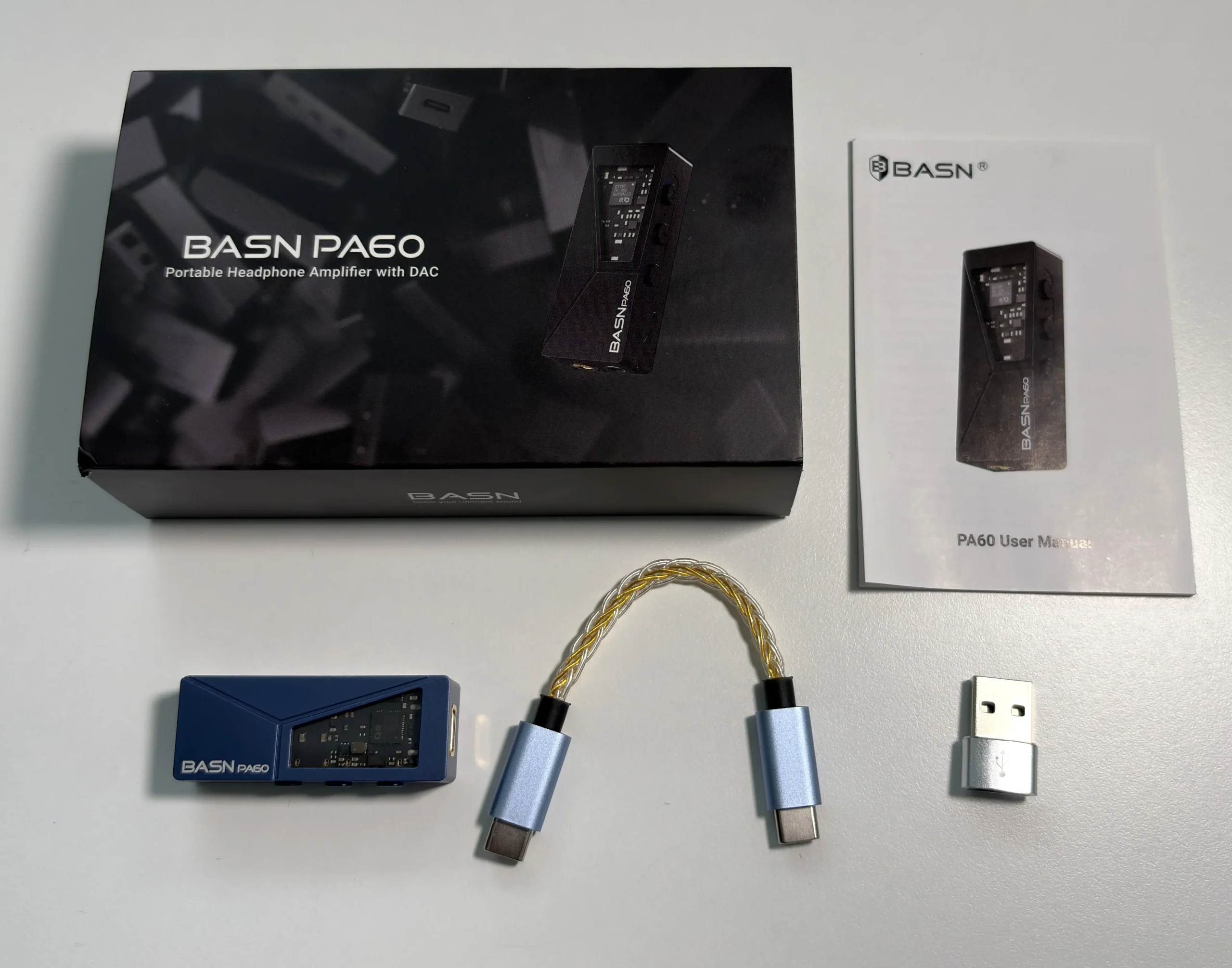
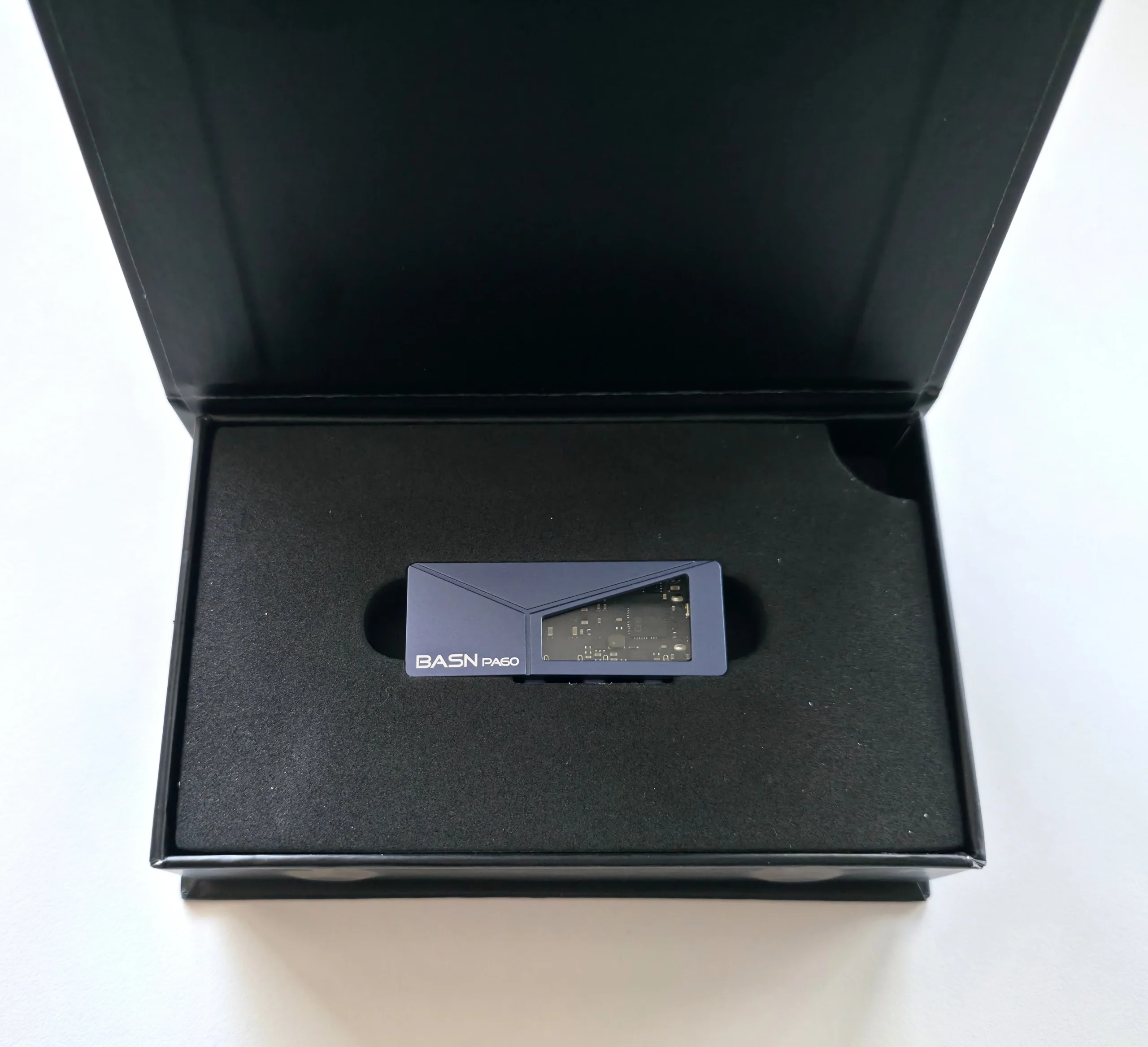
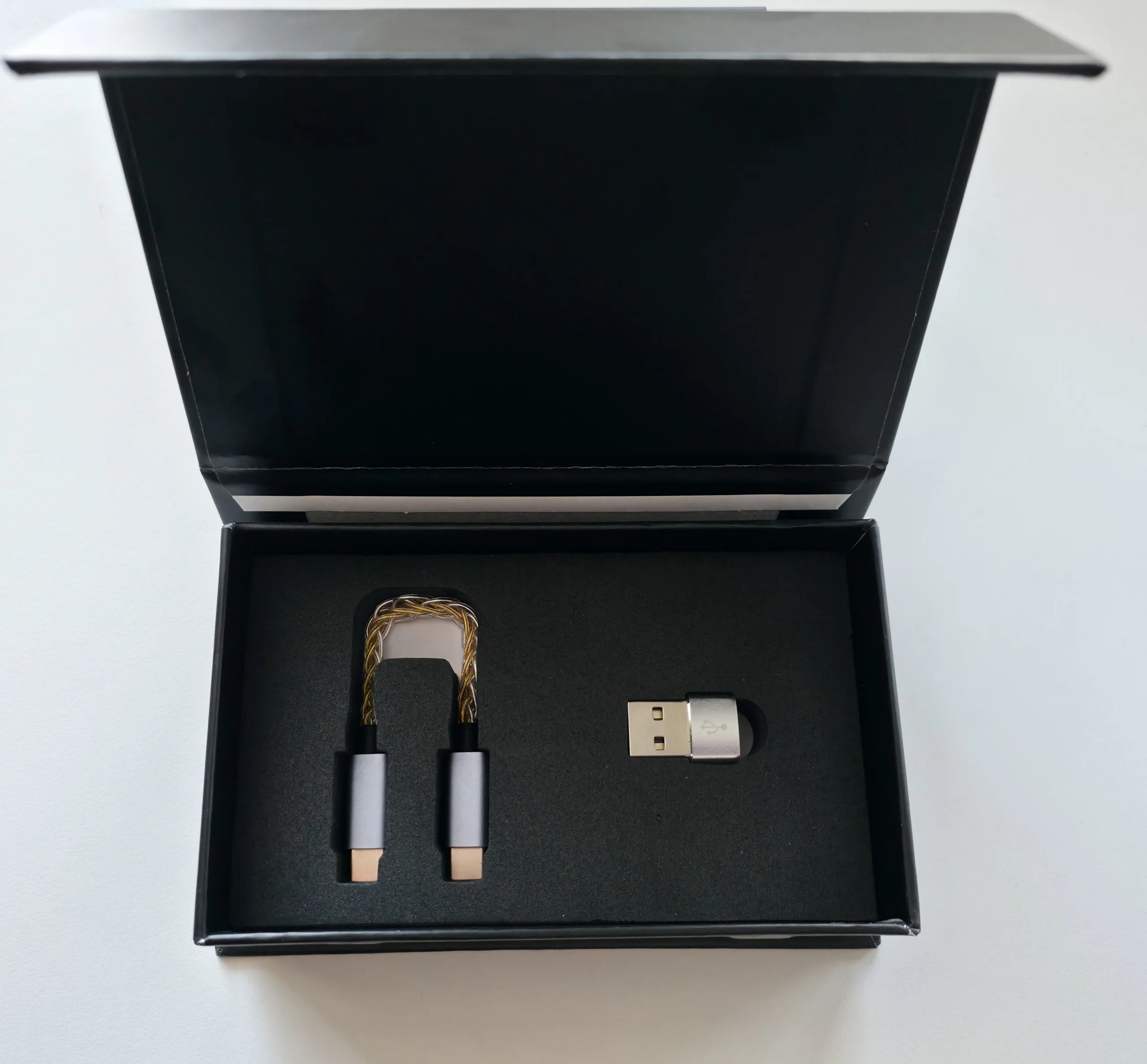


- BASN PA60
- USB-C to USB-C cable
- USB-C to USB-A adapter
- Manual
Design & Build Quality
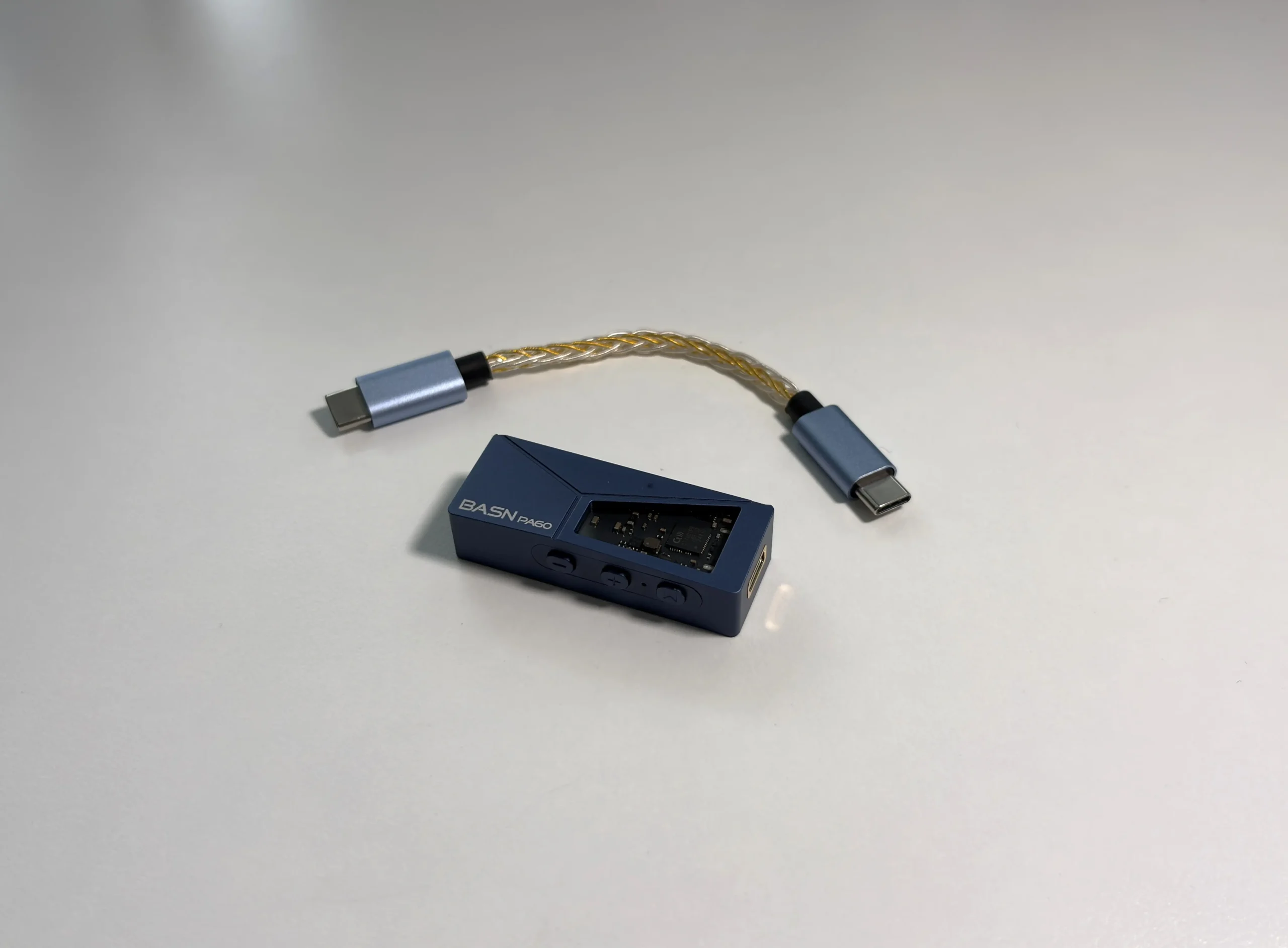
BASN built the PA60 entirely from CNC-machined aluminum alloy with an anodized finish. The machining quality shows in the clean edges and tight tolerances where the chassis meets the connectors. At 57mm x 23mm x 13mm, this thing truly fits in your pocket without adding any bulk. I’ve carried much larger dongle DACs that turned into pocket anchors, but the PA60 disappears until you need it. This is an important detail as the keyword in “portable DAC/Amp” is “portable”.
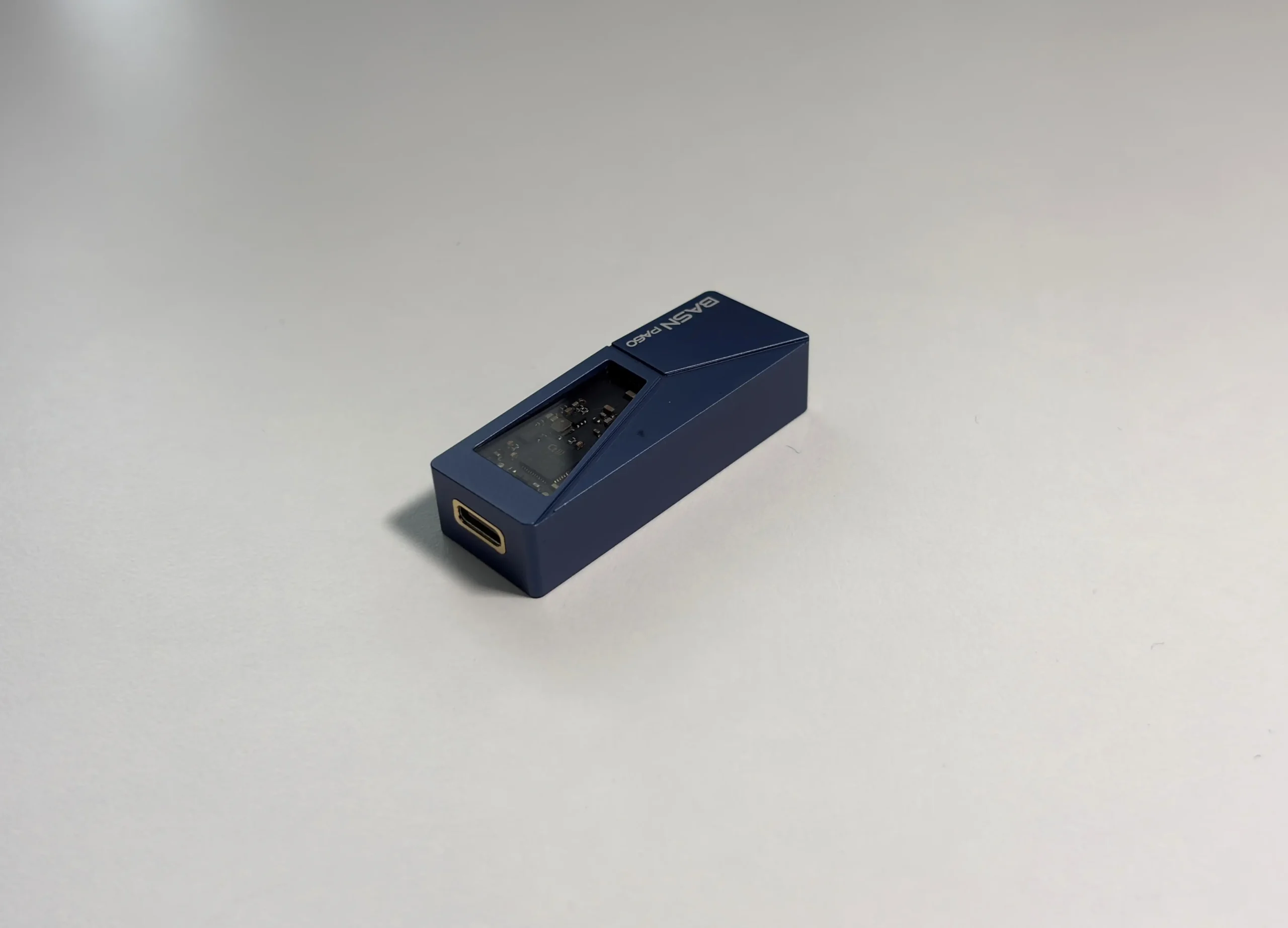
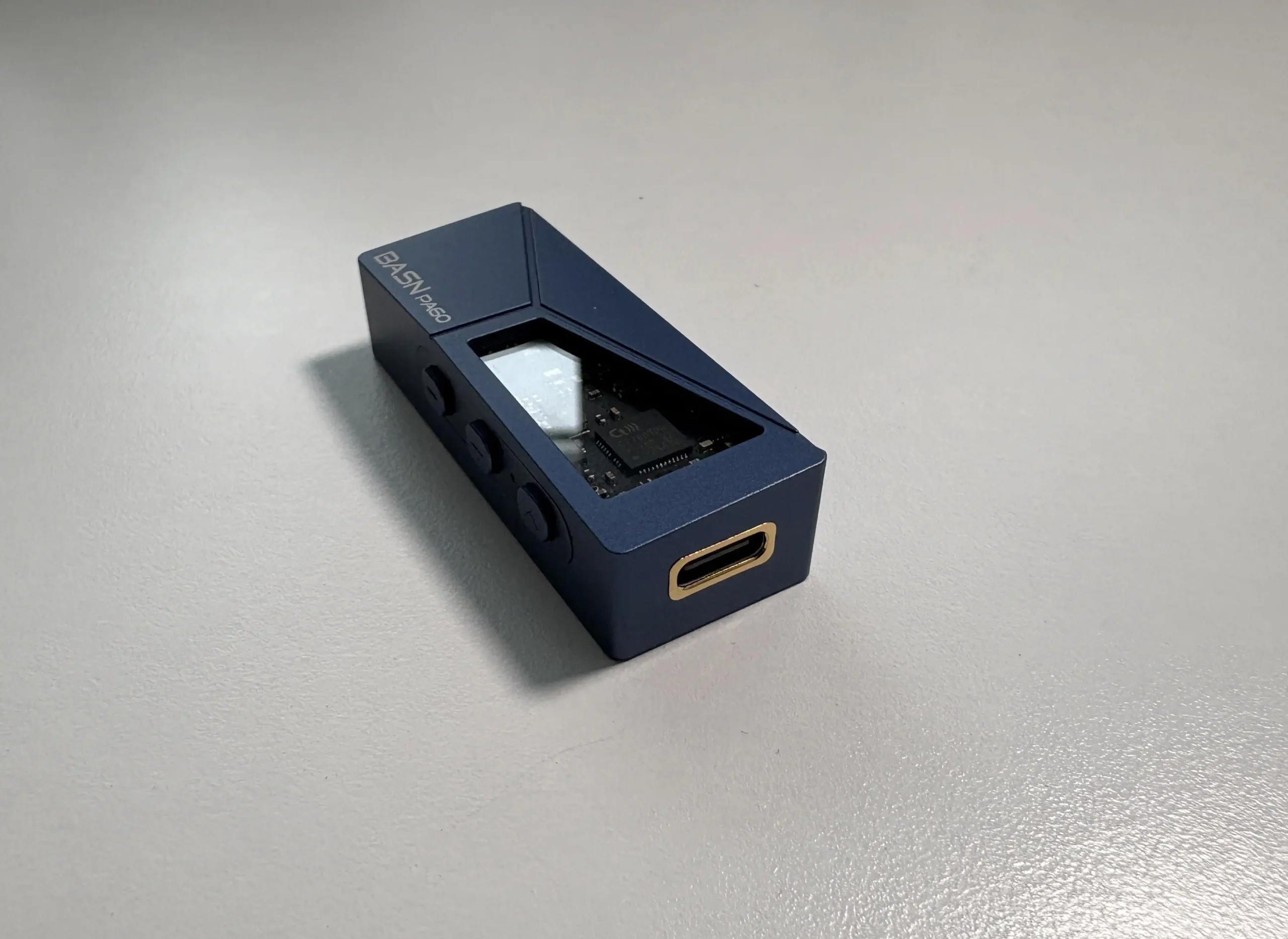


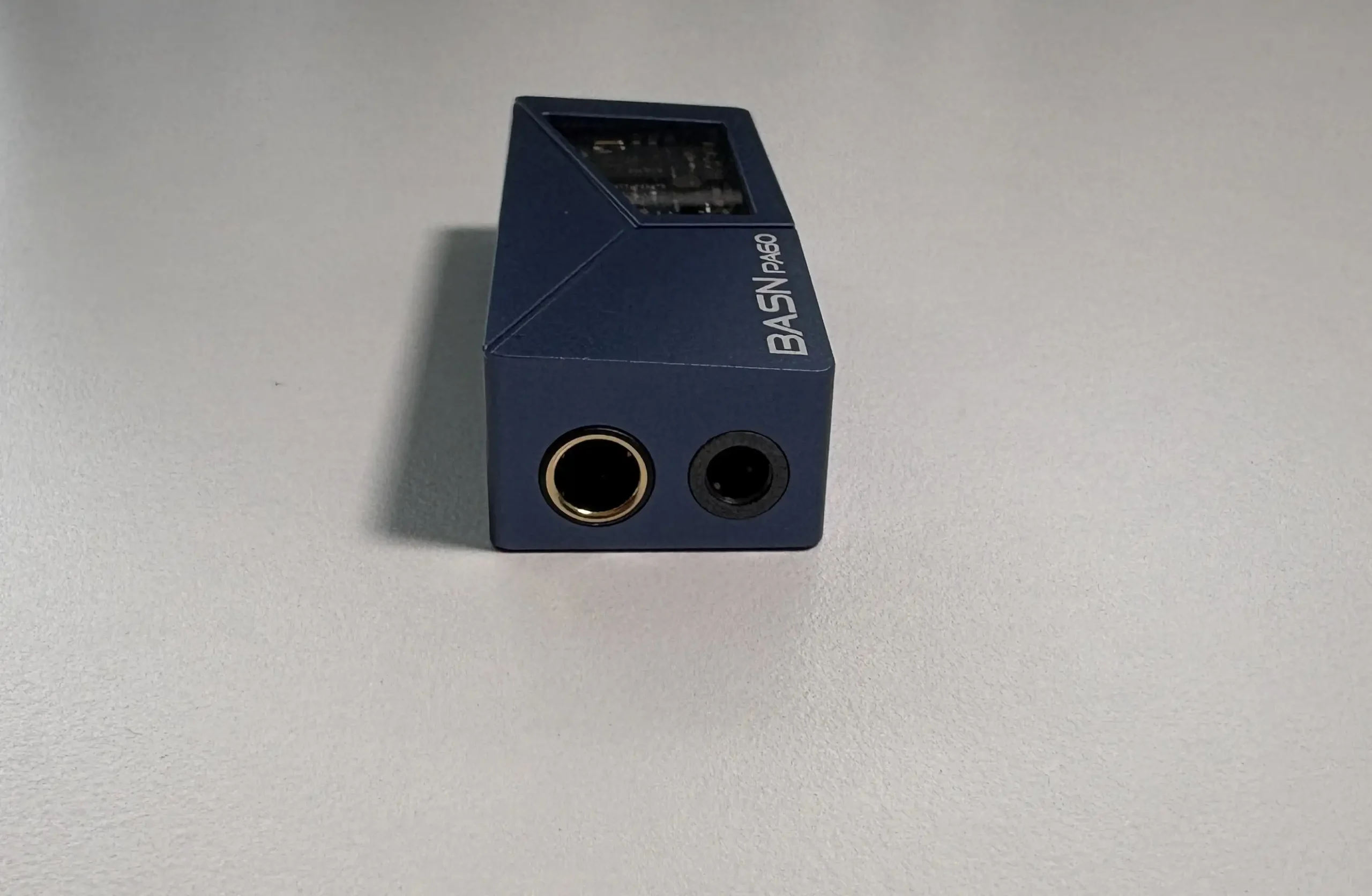
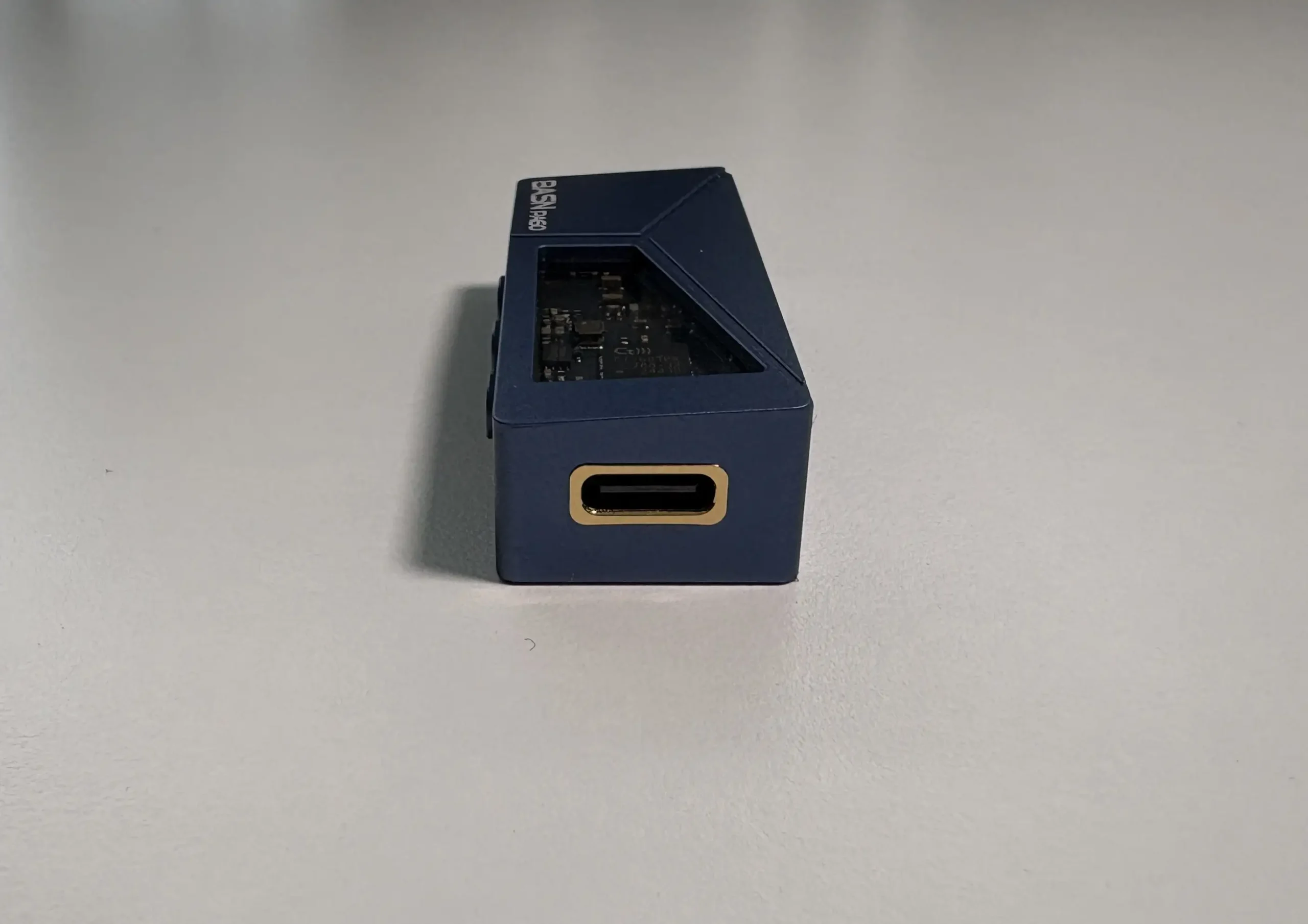
The aluminum construction serves a dual purpose here, too. It looks premium and actually helps with heat dissipation during longer listening sessions. After hours of use, the housing is only slightly warm rather than uncomfortably hot. Each side of the PA60 also includes a window that allows you to see inside, which, to me, is always a nice touch. The windows do rattle slightly when you shake the device, which is kind of annoying, but it’s not too loud.
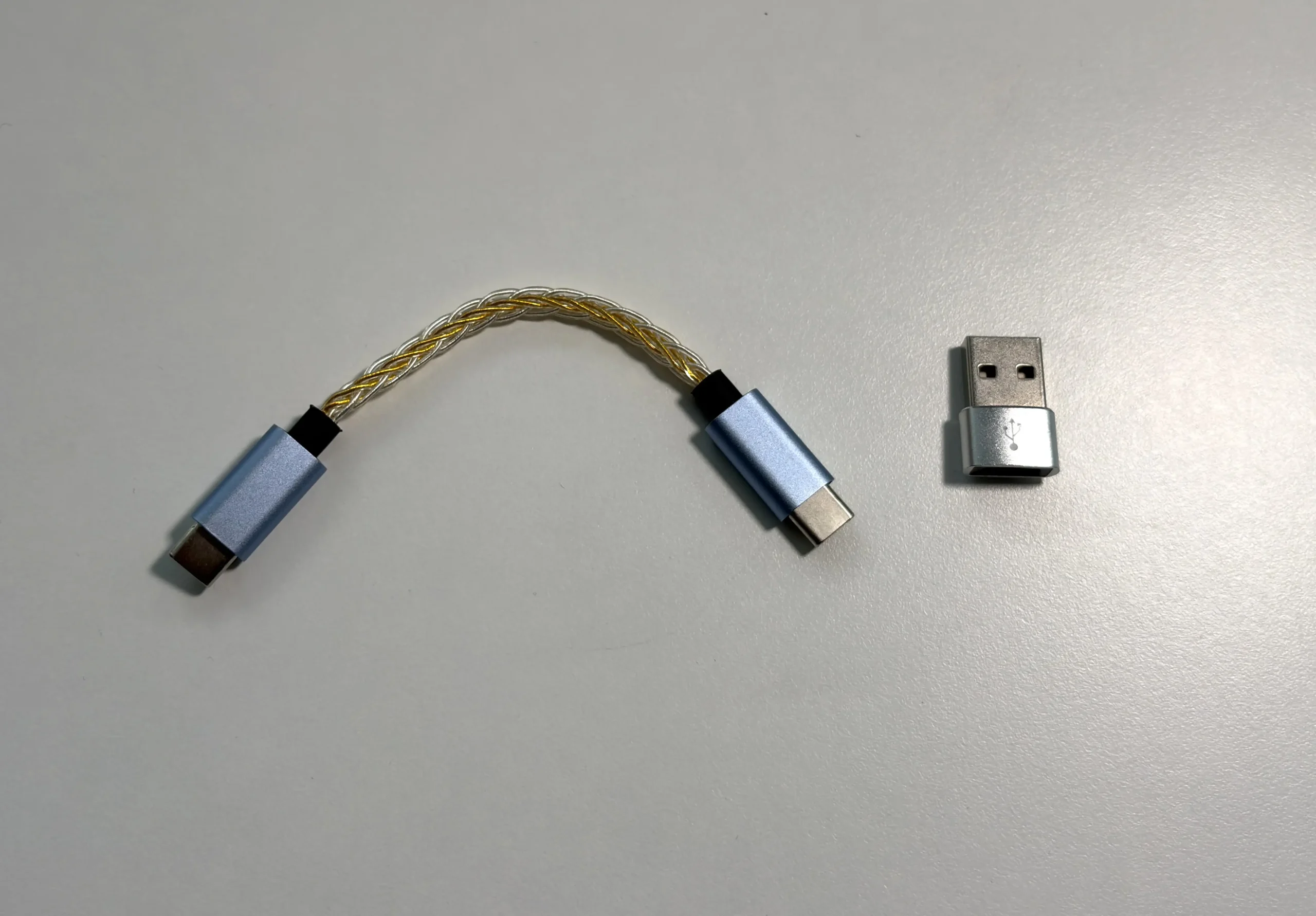
The included USB-C cable deserves specific mention as it defies the usual cheap, stiff, generic cables most manufacturers include in the box. This one features white and yellow braiding with color-matching connectors, feels genuinely pliable, and appears more durable than typical cables. BASN also included a USB-A adapter, which means compatibility with older laptops without hunting down additional dongles.
The PA60 lacks several features that some might expect in a portable DAC/Amp in 2026: no digital display, no companion app, no PEQ settings. The absence of a screen means no visual feedback when switching filters or volume, and no indication of which gain setting you are using unless you have memorized the color-coding of the LED indicator. What the PA60 does include, though, is an LED indicator that you can see through the bottom window. The LED color changes depending on sampling rate, gain level, and UAC mode. The LED is kind of bright, and if I’m honest, a little annoying when used in a dark room. Having the ability to turn it off would be nice.
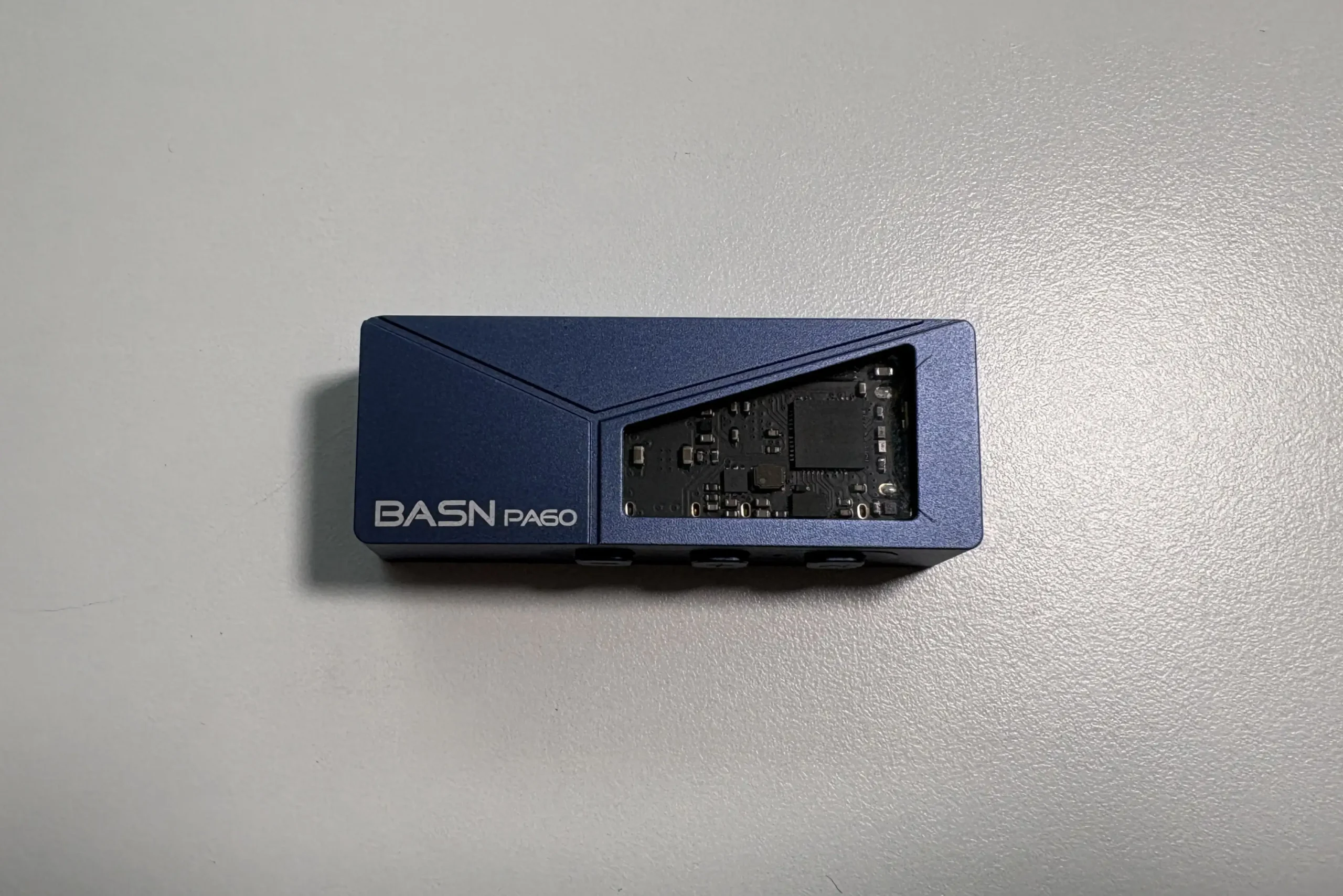
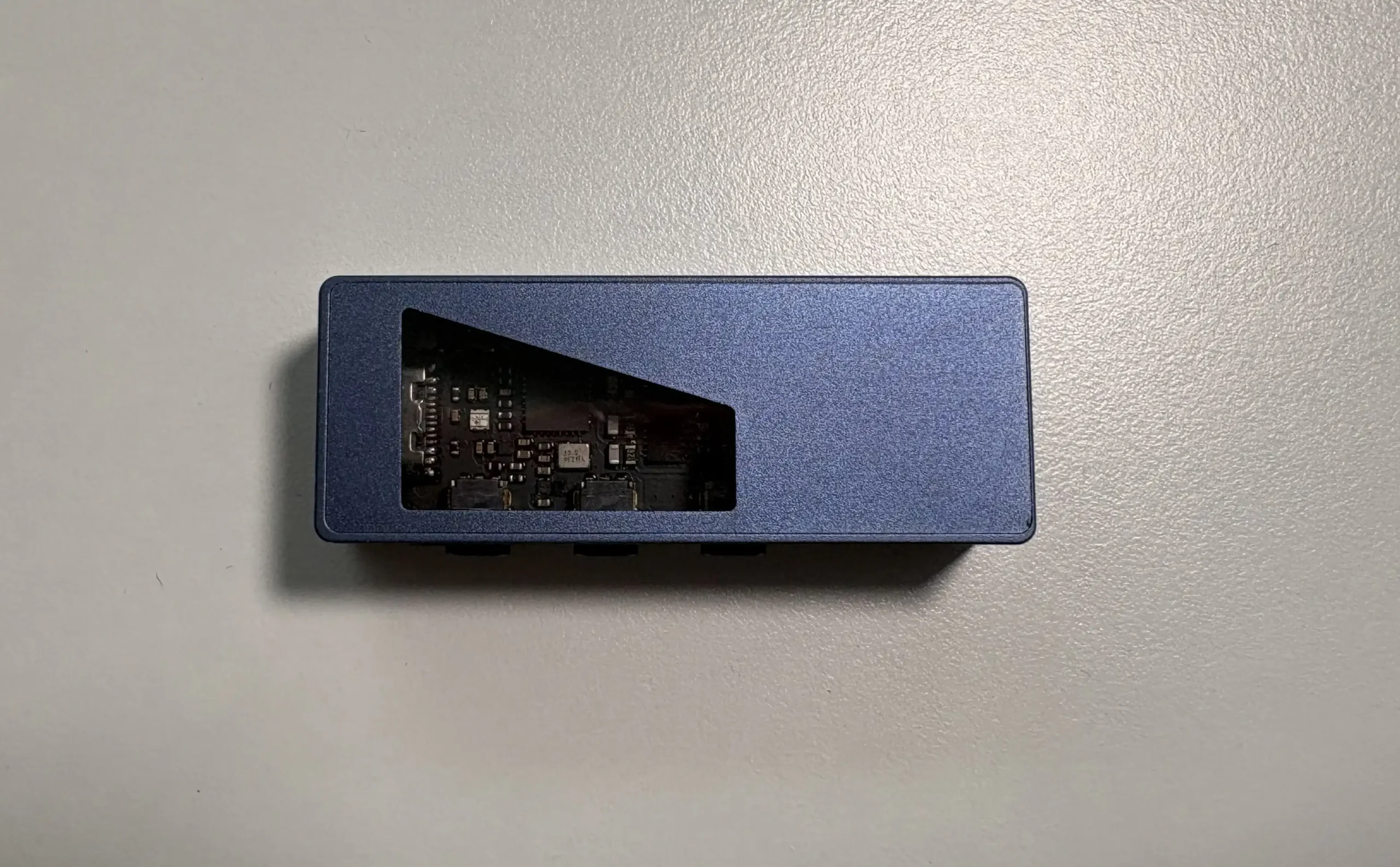


For me, the above missions don’t matter too much as I rarely look at DAC’s screen after initial setup anyway. The missing features keep both the price and form factor reasonable. If you need extensive customization options, you’ll want to look elsewhere, but the PA60’s approach works for straightforward, quality audio playback. For me, the only reason a companion app would need to exist would be to easily switch between the different digital filters, but even then, once I find one I like, I rarely care to change it.
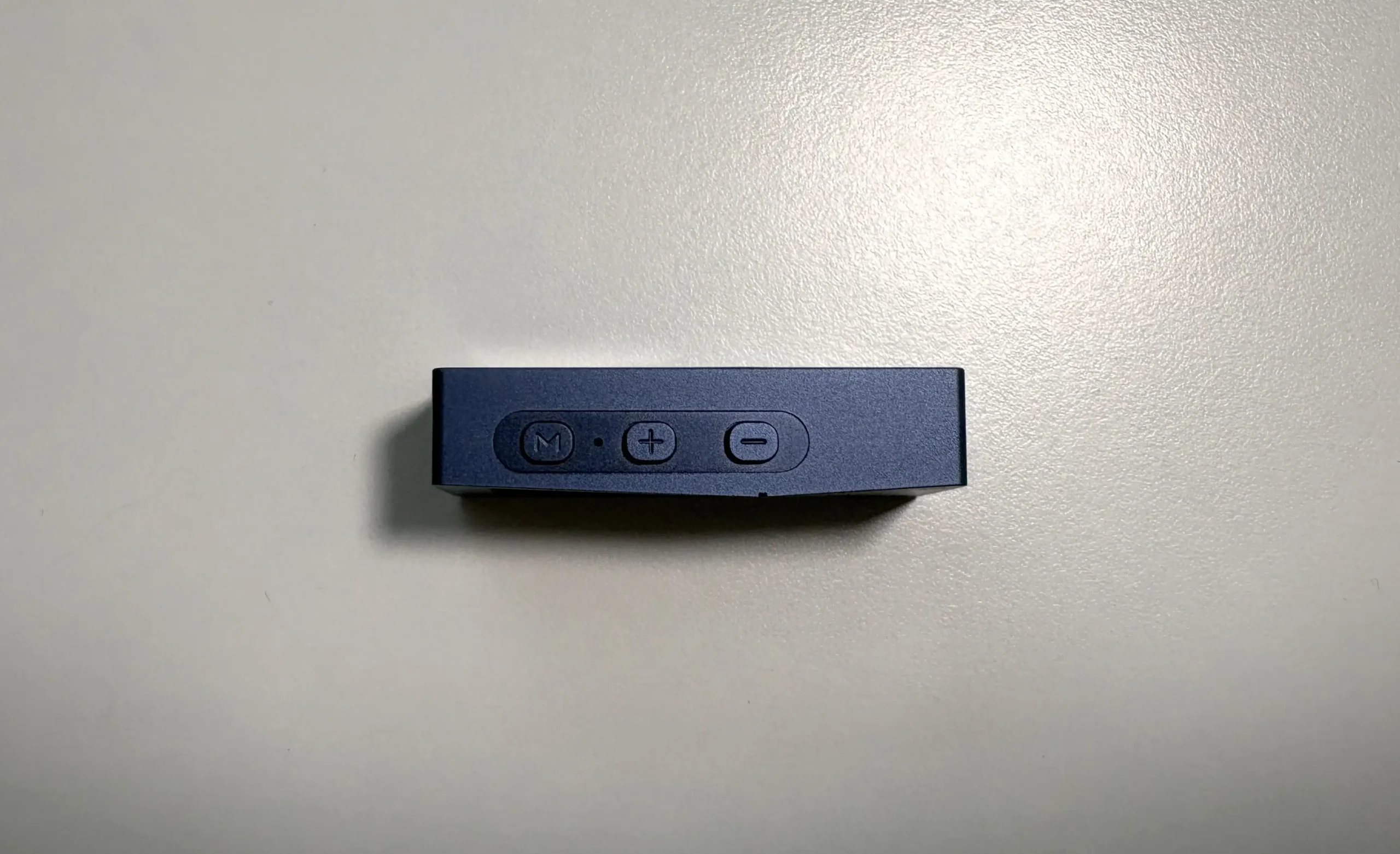
The PA60’s controls are all along one side. You have a volume up, volume down, and a multi-function button that is used to control playback (play/pause, next track, previous track), set the UAC mode between 1.0 and 2.0, and switch between low gain and high gain.
On one end of the device, you have the USB-C connection, which features a gold accent (very classy touch, visually), and on the other end are the 3.5mm SE and 4.4mm balanced outputs.


Power Output
The PA60 delivers 125mW at 32 ohms through the 3.5mm output and 240mW at 32 ohms via the 4.4mm balanced port. The 3.5mm pushes 2 Vrms while the 4.4mm can swing between 2-4 Vrms with automatic gain adjustment. Both outputs handle impedances from 16 to 600 ohms.
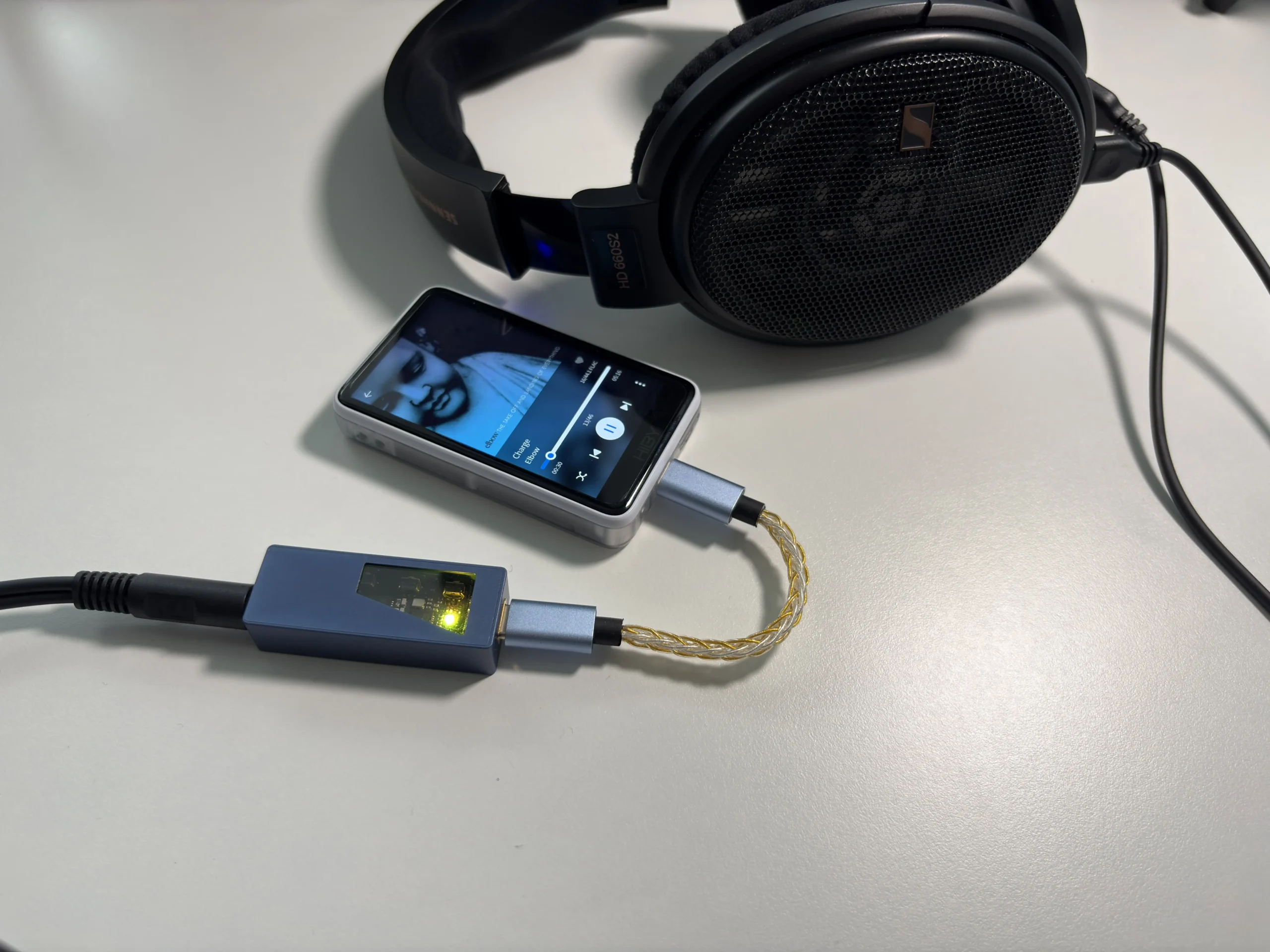
Honestly, the 240mW rating of the 4.4mm balanced output sits right in the middle of what I’d call acceptable for a modern dongle DAC. It’s been more than sufficient for any IEM I’ve thrown at it, though I wouldn’t expect miracles with higher-impedance headphones. It is able to drive my Sennheiser HD 660S2 (300 ohms) just fine, but it was only a few volume steps away from max volume, which is closer than I like to be when it comes to volume limits. Most headphones that aren’t higher-end planars should be just fine here, though.
One feature that I was initially skeptical about was the automatic impedance detection. I generally prefer manual control over my gear, but the PA60’s implementation has won me over. The system quietly switches between low and high gain based on what you’ve connected, keeping the noise floor appropriate without any fuss. You can still manually switch it if needed.
One last note, I did not detect any background noise when using sensitive IEMs, with either output. Usually, the Simgot EA1000 and Campfire Audio Iris are excellent at revealing noise floor issues, but the PA60 thankfully has a black background with no perceptible noise.
Power Consumption
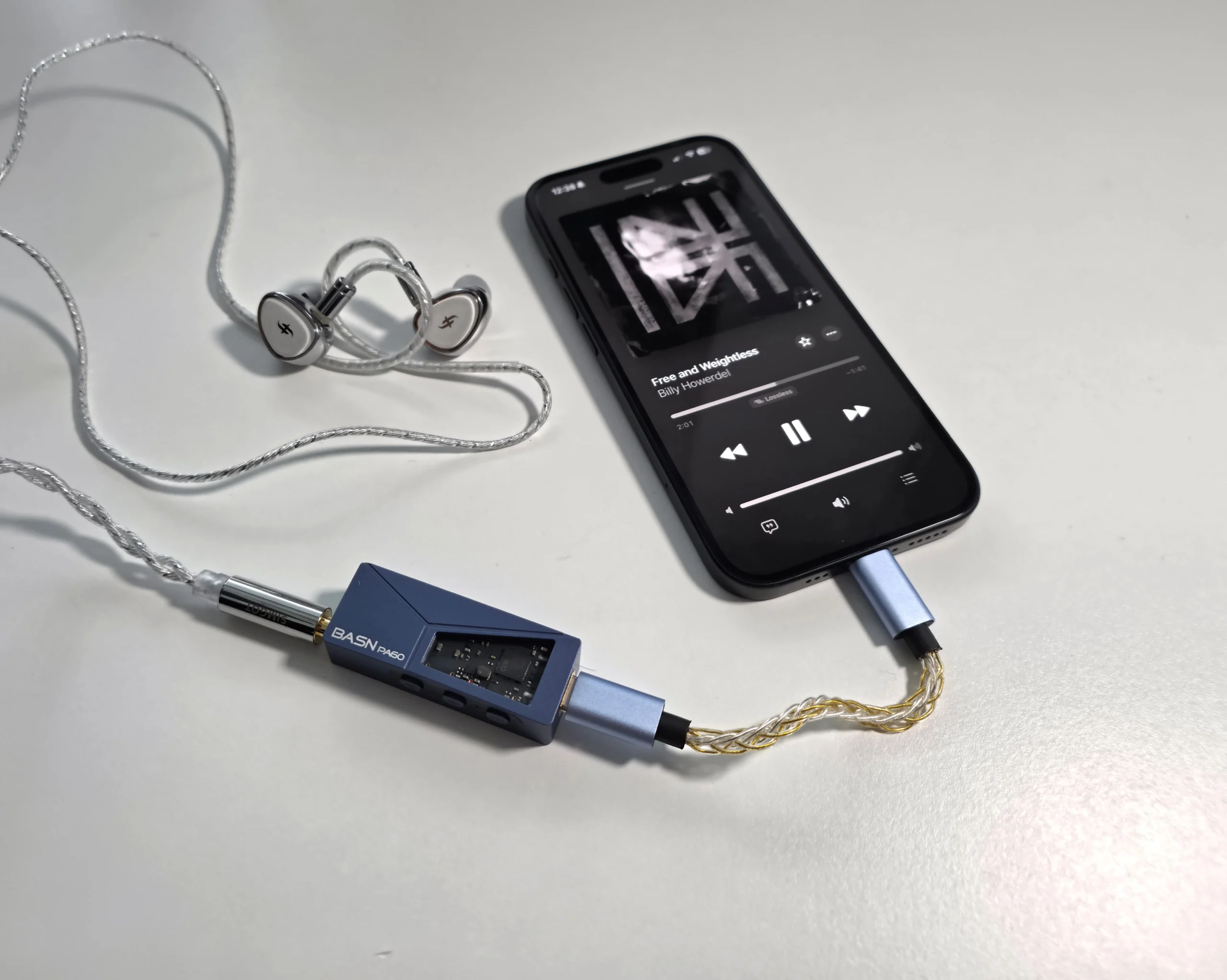
Because the PA60 is USB bus-powered, it draws power from the host device it’s connected to (phone/tablet/laptop, etc). In general, portable DACs’ current draw varies widely by output stage design, activity level, and how hard the dongle is driven. Whether I used the BASN PA60 with a DAP, smartphone, or laptop, power consumption appeared minimal. Obviously, the more volume you need, the more power it will use, but the PA60 does not appear to overly consume power and is rather efficient.
Sound Quality
Headphones and IEMs used for this review:
- BASN Bmaster5 (3.5mm)
- Campfire Audio Iris (3.5mm and 4.4mm)
- Meze 105 AER (3.5mm)
- Sennheiser HD 660S2 (4.4mm)
- Simgot EA1000 (3.5mm)
- ZiiGaat Horizon (3.5mm and 4.4mm)
Links to my music playlist used for the majority of testing:
Spotify: https://open.spotify.com/playlist/6QSIhuCBDAUyoWGcyxPeN8?si=c0a4eb6bd3e3421e
Apple Music: https://music.apple.com/ca/playlist/hifi-oasis-audio-testing/pl.u-lKWlcjy04xp
Qobuz: https://open.qobuz.com/playlist/39521747
Tidal: https://tidal.com/playlist/503485c7-7f3d-43f0-b904-4b9a89c33875
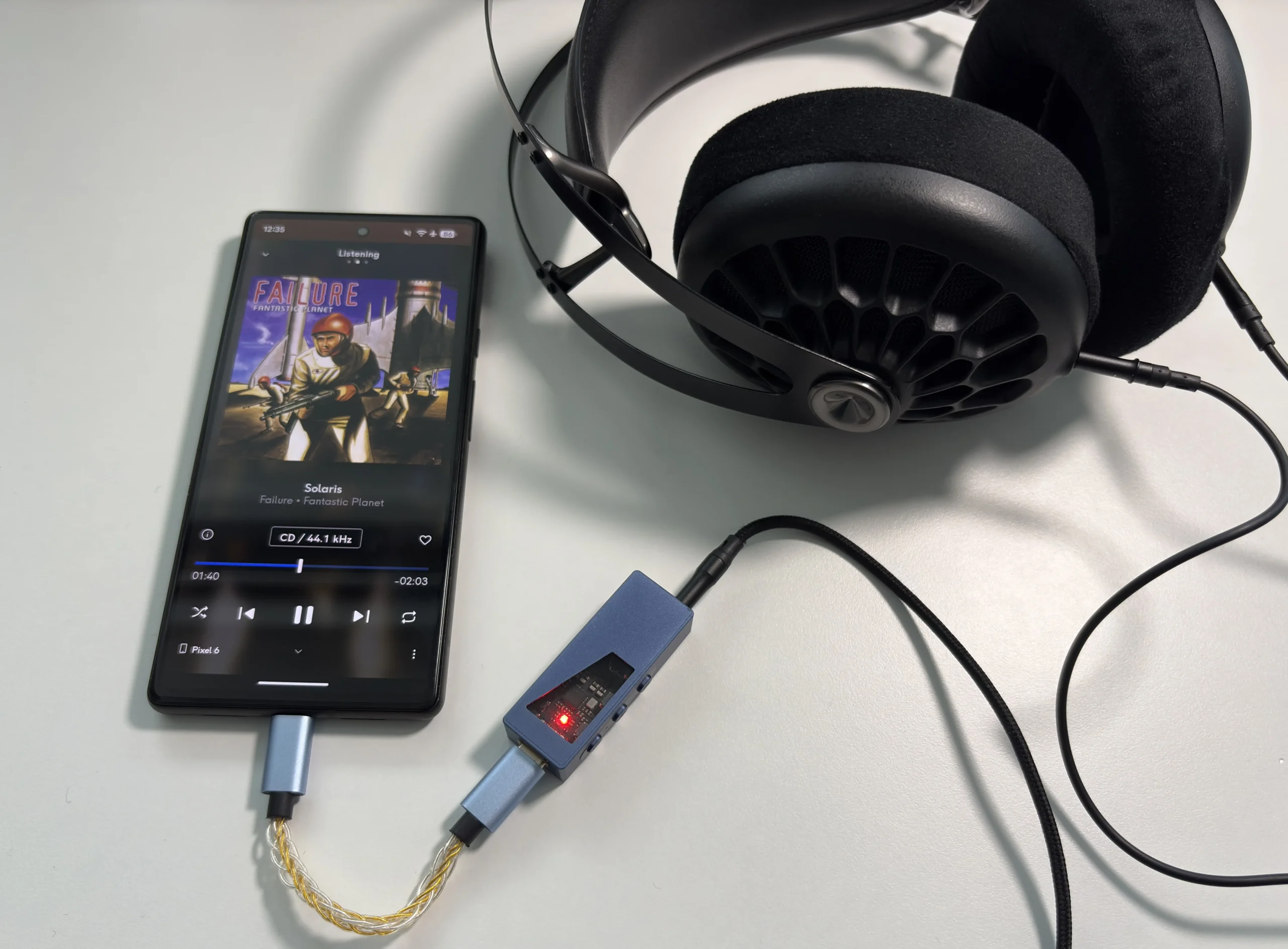
At the heart of the BASN PA60 sits the ES9039Q2M chip from ESS, paired with a CT7601PR USB controller. This represents the newer iteration of the widely used ES9038Q2M that I’ve encountered in countless other devices. The ES9039Q2M handles both channels independently, supports PCM up to 32-bit/768kHz, and processes native DSD up to DSD512.
The tuning of the PA60 leans toward a warm/neutral presentation rather than clinical neutrality. There’s a subtle organic warmth that adds musicality without sacrificing clarity. I tested it across multiple IEMs and headphones, and this musical approach worked exceptionally well with nearly everything I connected. It’s the kind of sound that makes you want to keep listening rather than analyzing. Add on top of this a black background with a clean presentation and no background noise, and you have yourself an excellent-sounding portable DAC/Amp.
PCM Filter Options
The ES9039Q2M includes eight selectable PCM filters:
- Minimum Phase (default)
- Linear Phase Fast Roll-Off Apodizing
- Linear Phase Fast Roll-Off
- Linear Phase Fast Roll-Off Ripple
- Linear Phase Slow Roll-Off
- Minimum Phase Fast Roll-Off
- Minimum Phase Slow Roll-Off
- Minimum Phase Slow Roll-Off Dispersion
To be honest, these filters make extremely subtle changes. They are nothing like EQ adjustments, so it is likely most people won’t notice significant differences between them, though I can detect minor variations in presentation with familiar tracks. It’s a nice touch for those who enjoy tweaking or have a favorite filter type. I usually use Linear Phase Fast Roll-Off when possible, and I did find that for the PA60, it sounded the best to my ears.
Final Thoughts
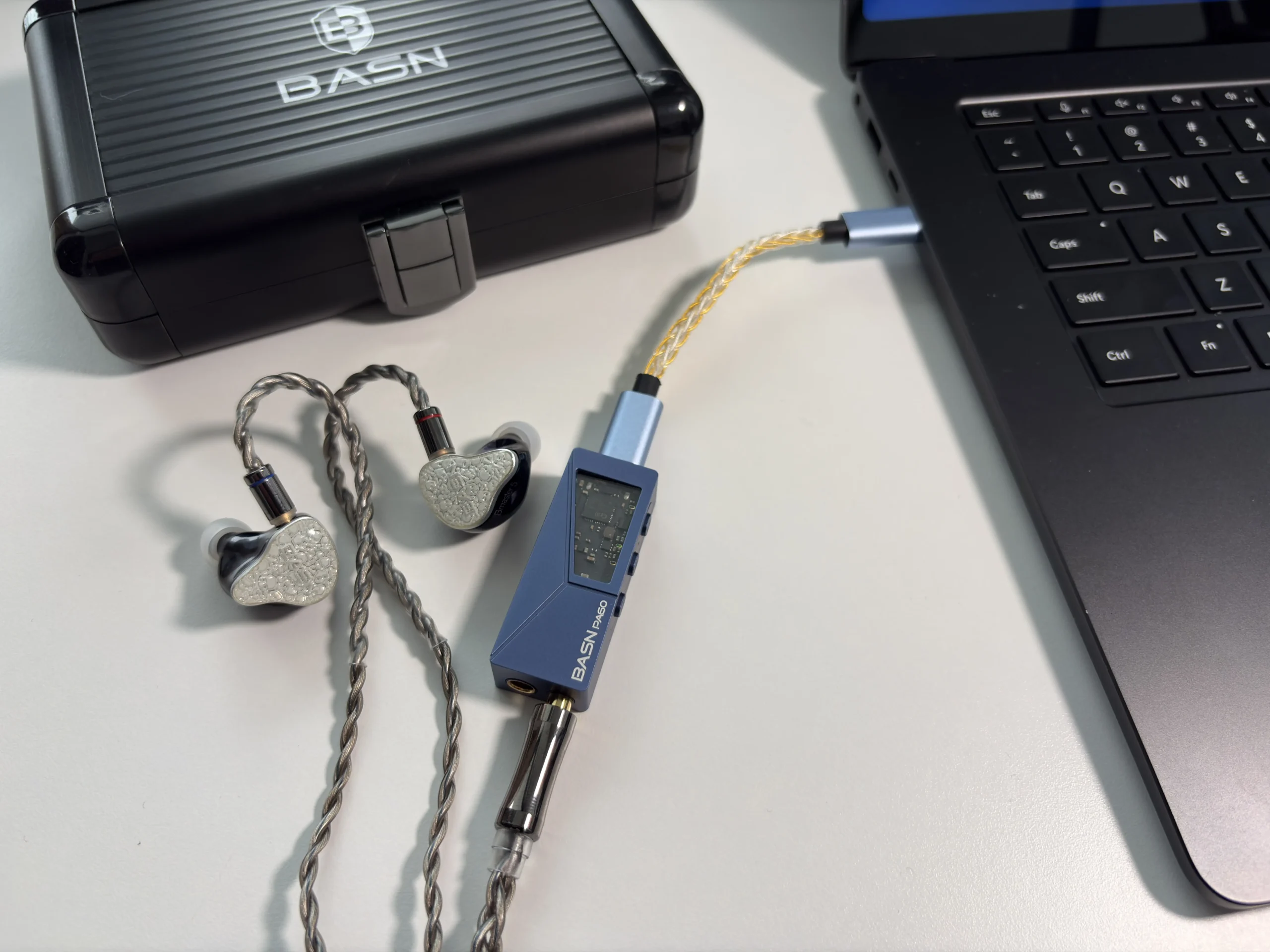
The BASN PA60 works best with IEMs and efficient portable headphones. The 240mW output of the 4.4mm balanced connection handles any IEM without strain, though you might find higher-impedance full-sized headphones pushing its limits. Given the 17-gram weight and minimal battery drain, it’s perfect for portable listening scenarios.
What I really like about the PA60 is the build quality and design. The aluminum construction feels premium, and the overall aesthetic is clean. The sound tuning of the PA60 delivers a warm/neutral musicality without sacrificing detail, and I can’t find any faults with the DAC implementation.
That said, the 240mW output is pretty average for modern portable DACs. You’re also missing features like a screen, companion app, and PEQ settings (if those matter to you). Then you get to the price: $99 USD. I feel that is a little much for what is offered here. There’s a lot of competition in this price bracket, and the PA60 doesn’t offer anything unique to differentiate itself from competitors like the NICEHCK Octave ($89) and iFi GO Link Max ($79).
The PA60 is an excellent portable DAC/Amp, and as long as you aren’t driving higher-end headphones, it will power pretty much everything you throw at it. It’s excellent for IEMs (even sensitive ones), and the overall simplicity of it is a welcome change (at least for me). Again, the price is the only thing holding it back from being truly great.

Buy directly from BASN: https://www.basnaudio.com/products/basn-pa60-portable-usb-c-dac-headphone-amplifier-blue?ref=lnhwymcn
Buy from Amazon: https://amzn.to/4sd5YP0
The above links may be affiliate links. All commission earned through them goes directly to maintaining this site and bringing you more audio reviews.
I’m not always able to cover all the details of a product, both hardware and software, in our reviews. If you have any specific questions about this product, please feel free to leave a comment or contact me directly.
Be sure to check out our excellent Buyer’s Guides, as well as our other Reviews.
HiFi Oasis Verdict
HiFi Oasis Verdict-
Design & Build Quality8/10 Very good
-
Sound8/10 Very good
-
Features/Accessories7/10 Good
-
Value7/10 Good
Pros
- Warm, musical sound with excellent clarity
- ESS ES9039Q2M DAC with high-resolution PCM and DSD support
- Silent background even with sensitive IEMs
- Premium CNC aluminum construction
- Compact, lightweight, and highly portable
- Efficient power consumption from host devices
- Includes quality braided USB-C cable
- Eight selectable PCM filters
- Automatic impedance detection
Cons
- Output power is average compared to competing portable DACs
- Limited volume headroom for high-impedance headphones
- No screen, companion app, or PEQ features
- Bright LED indicator cannot be disabled
- Price feels slightly high given strong competition