

Disclosure: I’d like to thank HiFiGo for providing me with the MuseHiFi U3 for this review. All thoughts and opinions are my own, and HiFiGo had no say or input on the contents of this review.
Portable DAC/amps have become increasingly capable, but adding one to your phone can still make an otherwise simple listening setup feel unnecessarily complicated. There is another cable to manage, another device sitting in your pocket, and sometimes a companion app to navigate before everything works the way you want it to.
The MuseHiFi U3 takes a fairly straightforward approach to this as it plugs directly into your phone’s USB-C port and provides both a 3.5mm and 4.4mm balanced output. At its current $29.99 USD price, it also includes dual SGM8262 amplifiers with decent output power, and hardware parametric EQ via the WalkPlay app. That is a useful amount of features for something this inexpensive.
What interests me most is how well that approach suits everyday IEM listening. A small DAC does not need an elaborate interface or enormous power figures to be useful. It needs to connect reliably, provide enough volume without background noise or distortion, and make listening convenient. The U3 makes a promising case, so let’s see how it holds up.
Key Specifications
- Product Page: https://hifigo.com/products/musehifi-u3
- MSRP: $29.99 USD
- DAC: KT02H20P
- Amp: 2x SGM8262 Op-Amps
- Connectivity:
- 3.5mm SE (105mW @ 32Ω)
- 4.4mm Balanced (125mW @ 32Ω)
- USB-C
- Supported Sample Rates and Formats:
- 32bit/384kHz PCM, DSD128
- Features:
- Hardware parametric EQ through WalkPlay app
- Case and Dimensions:
- 35 x 29 x 12 mm
- 18.8 grams
In the Box
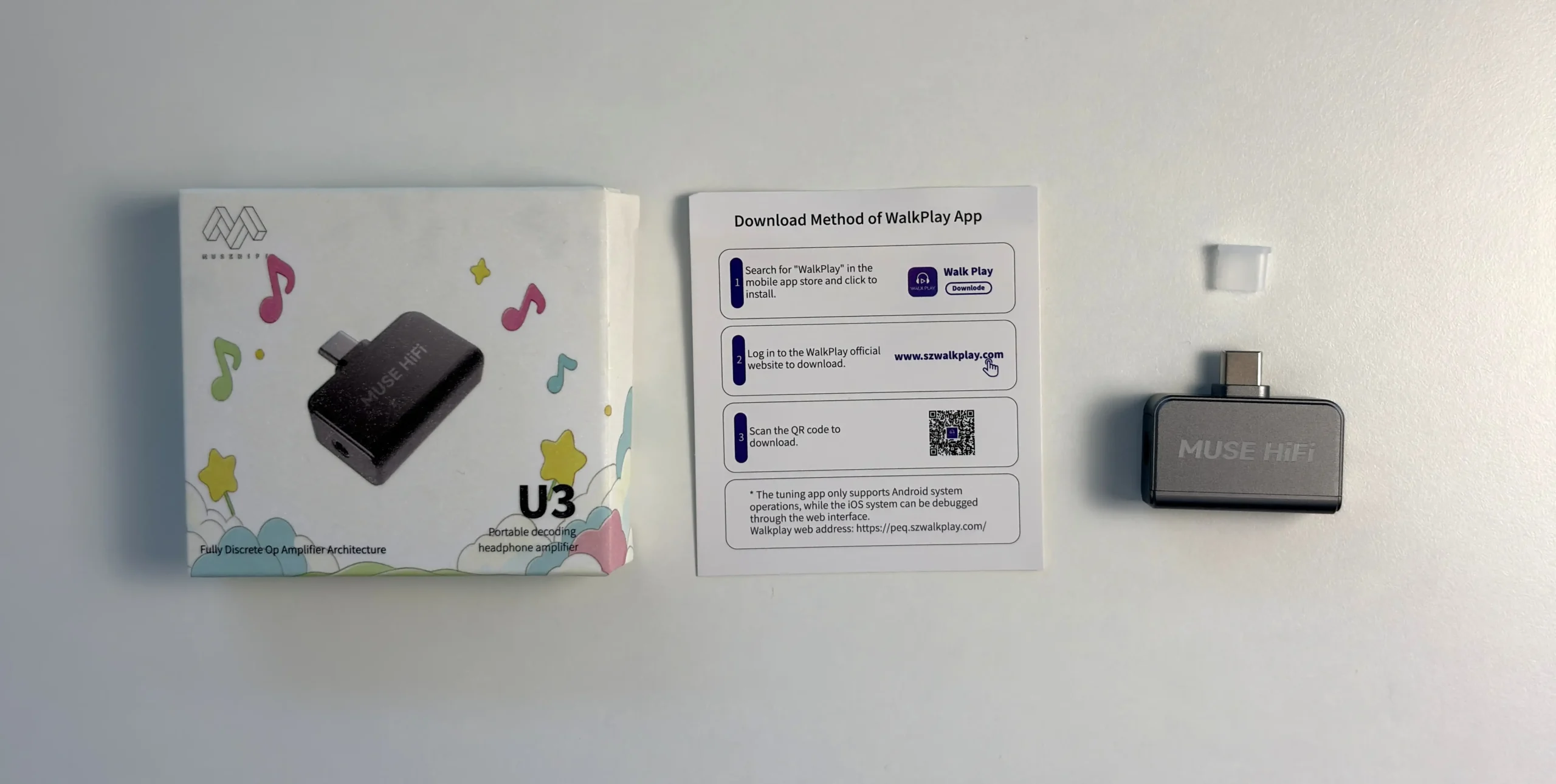
- MuseHiFi U3
- Quick-start/app information card
The packaging is basic, which seems entirely reasonable at this price. There is no separate USB cable because the connector is built into the device, and the included card points you toward the software. Anyone planning to connect it to a USB-A port will need an appropriate adapter.
Design & Build Quality

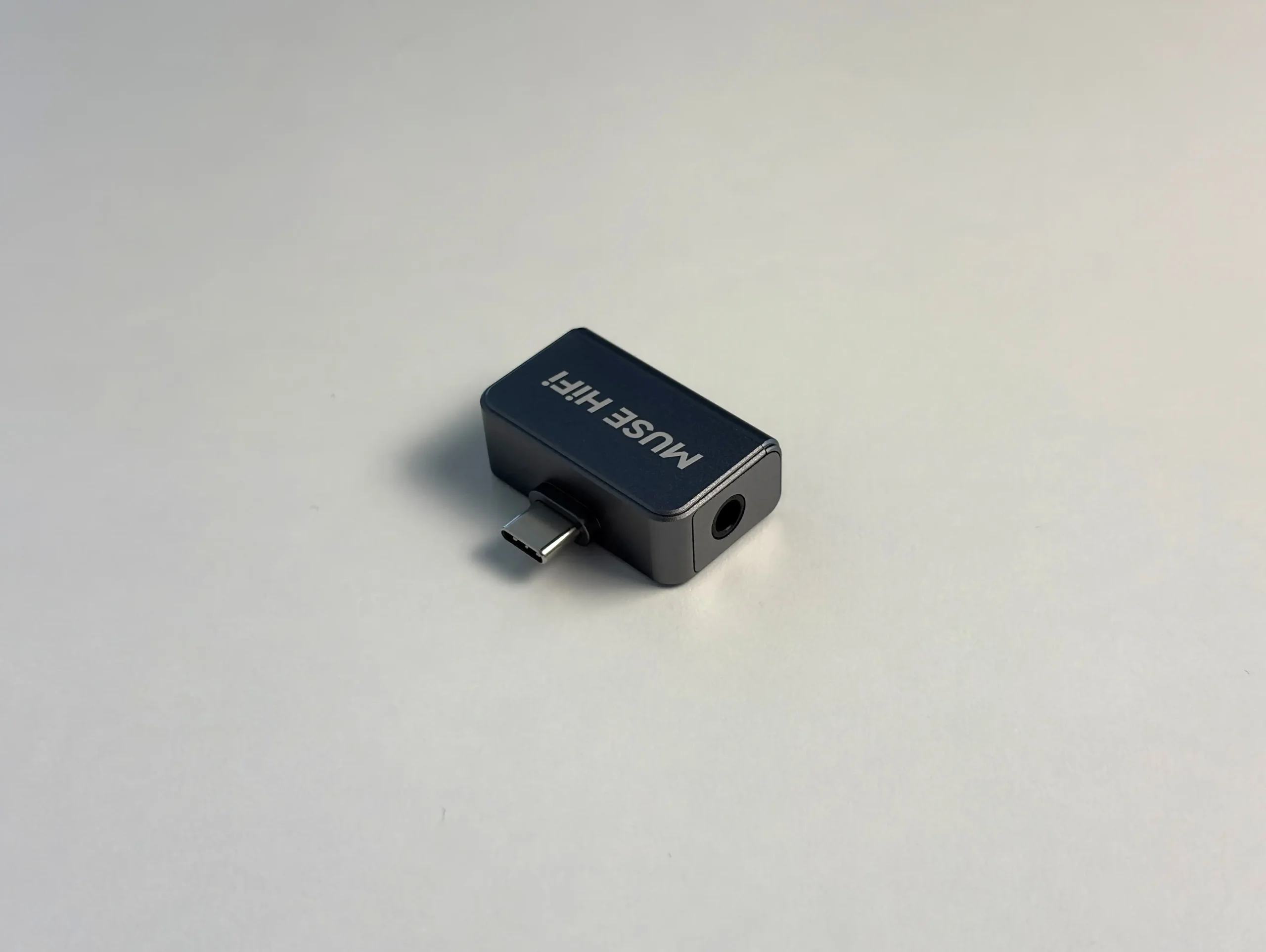
The MuseHiFi U3 uses a metal housing with a simple grey finish and restrained branding. It feels like a solid, well-assembled device. Visually, it is on the plainer side, but that suits its purpose in my opinion.
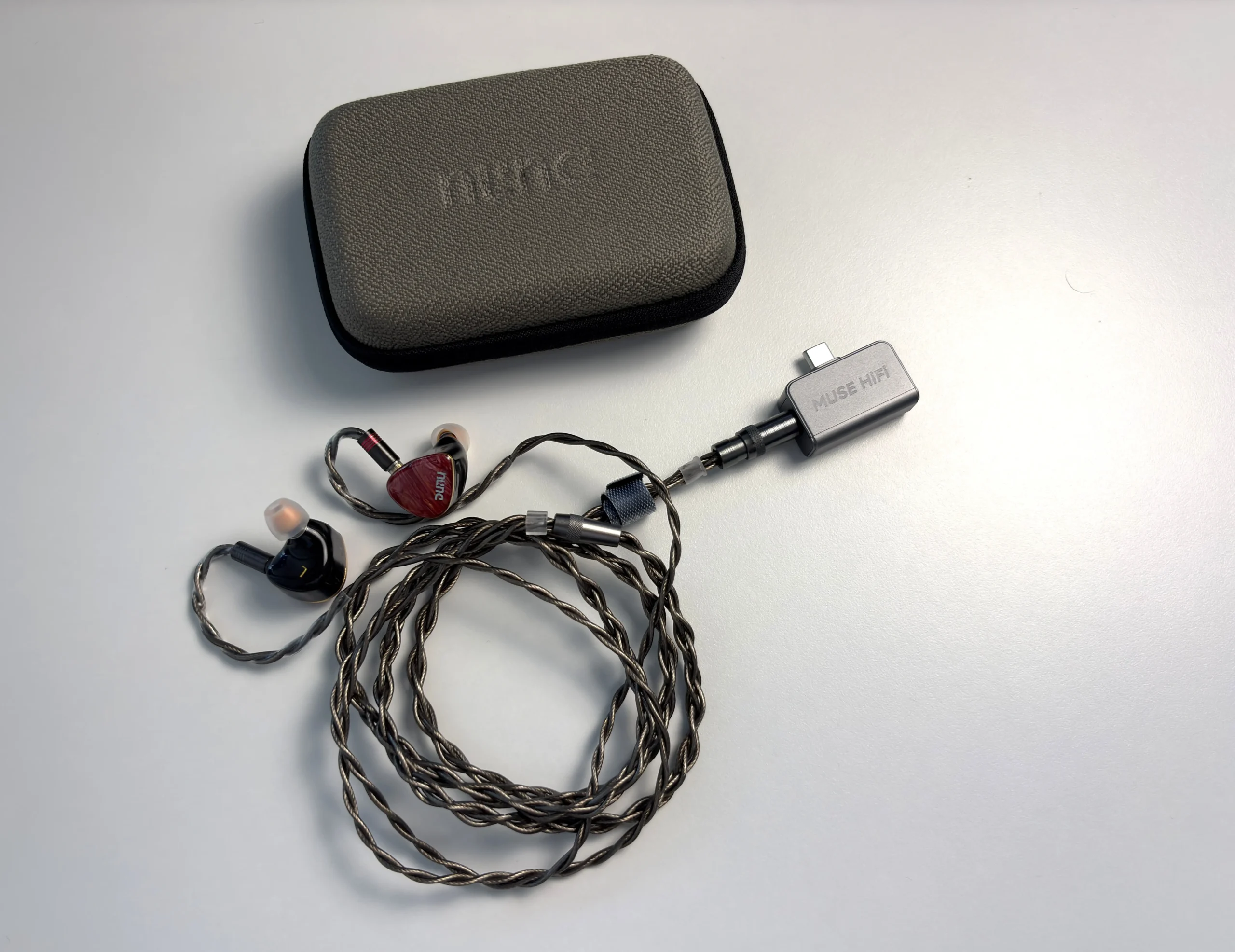
It uses a T-shaped layout that places the headphone sockets at opposite ends of the body. Once connected, the DAC sits across the bottom of your phone, keeping the electronics close to the device. The USB-C connector is also offset through the thickness of the housing, which can help the assembly sit more neatly against a phone or laptop.
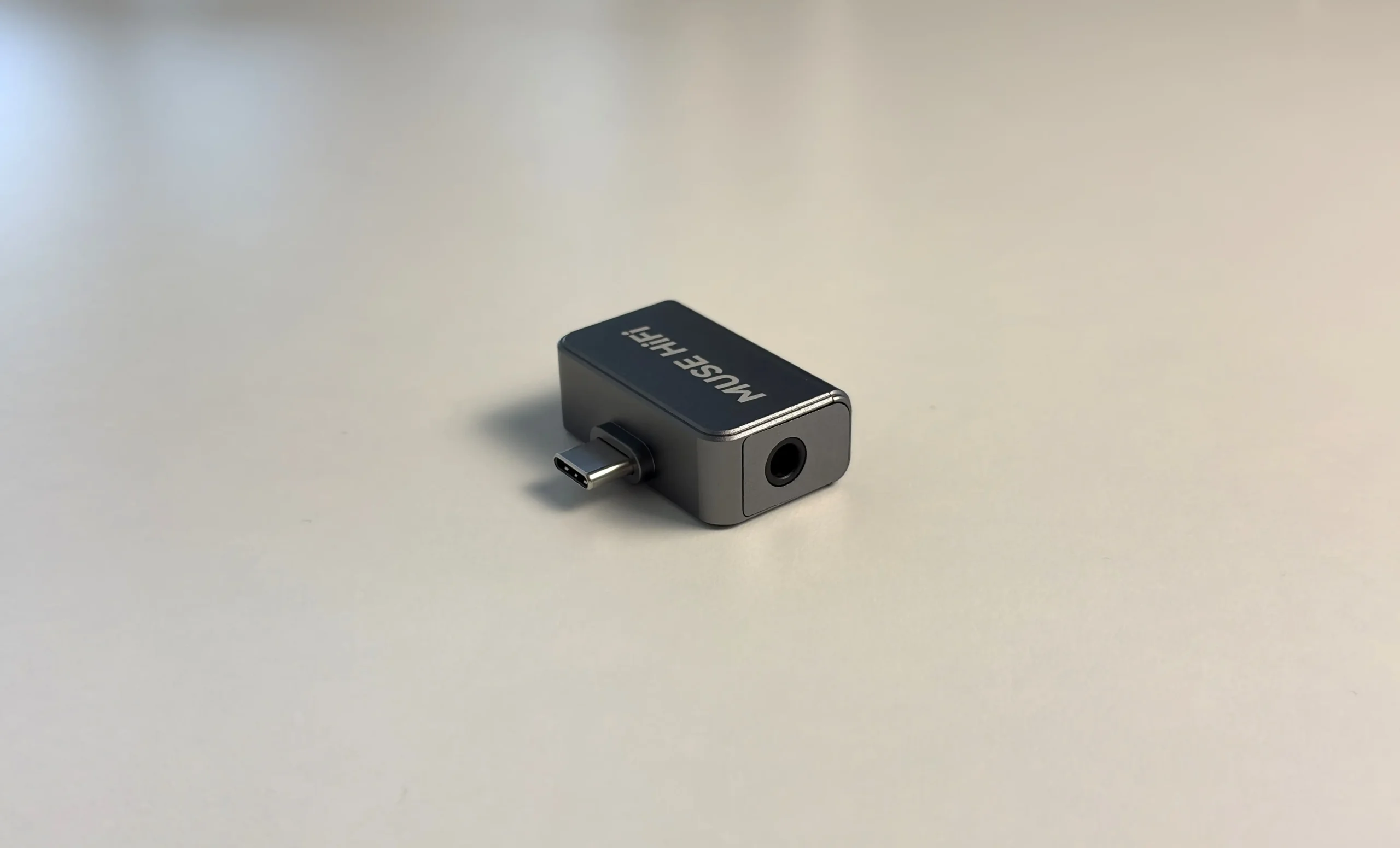
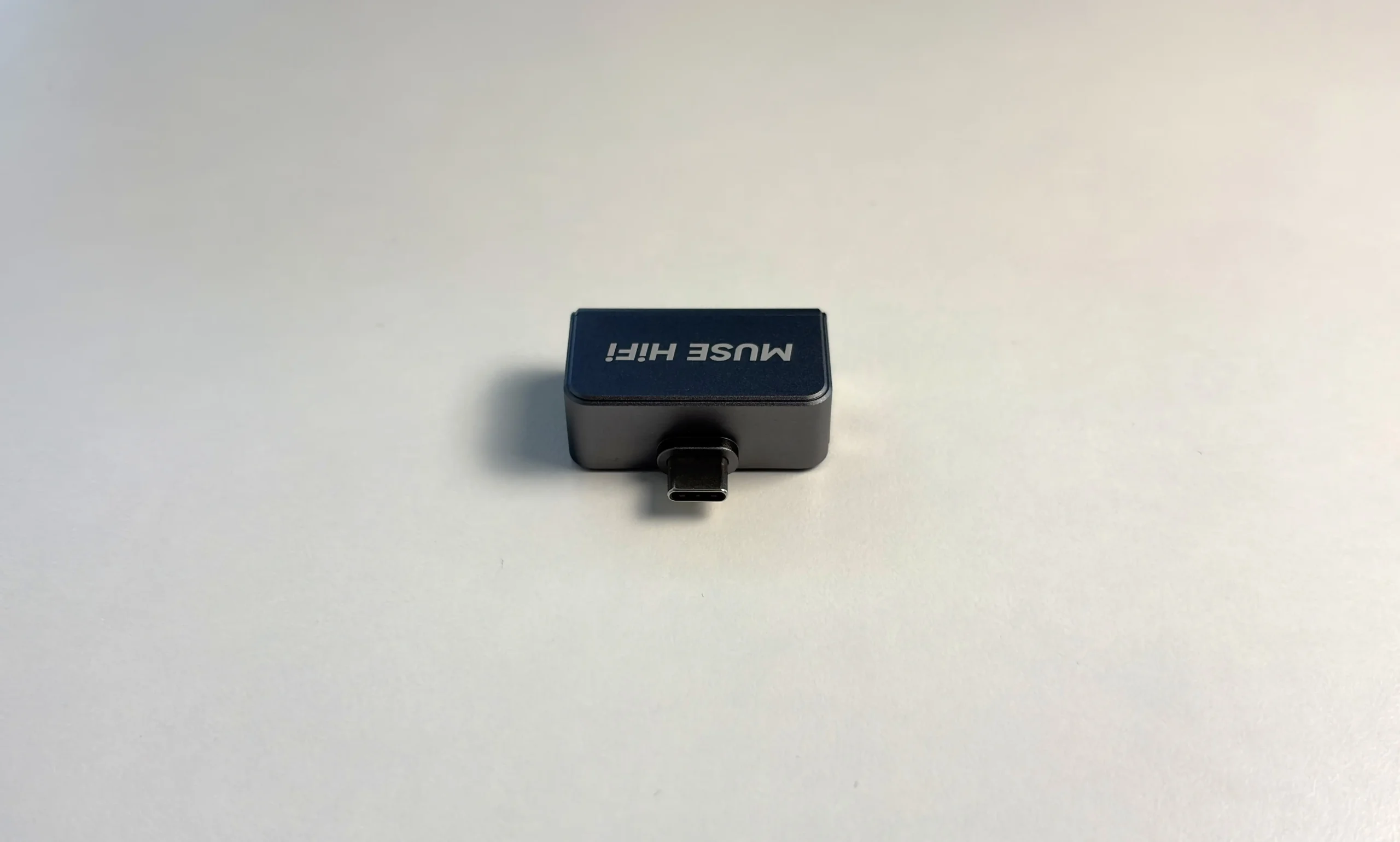
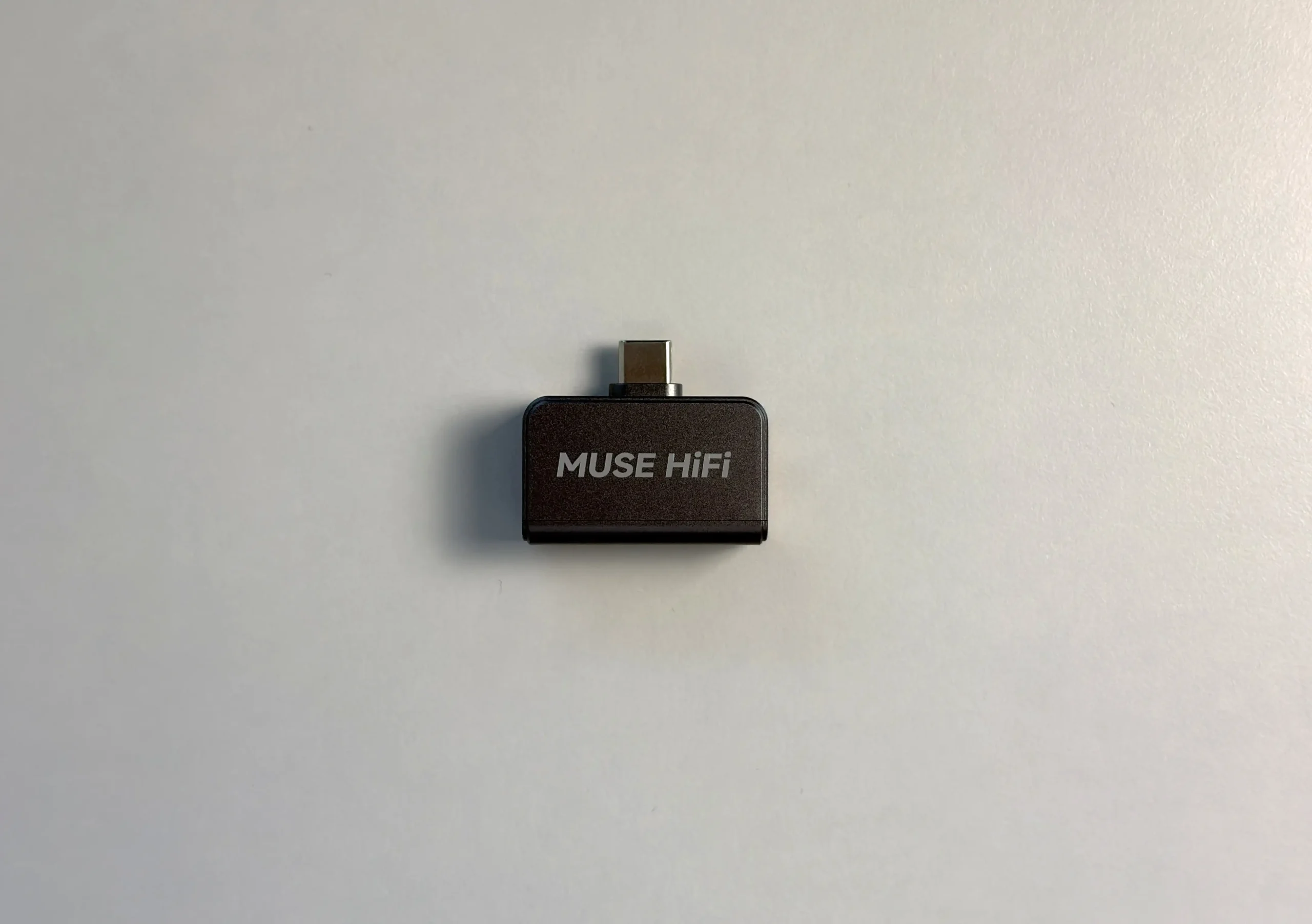


I like the simplicity of this arrangement, particularly for a small set of IEMs. There is less loose hardware to organize when putting your phone away. The fit will still depend on your phone and case, though.
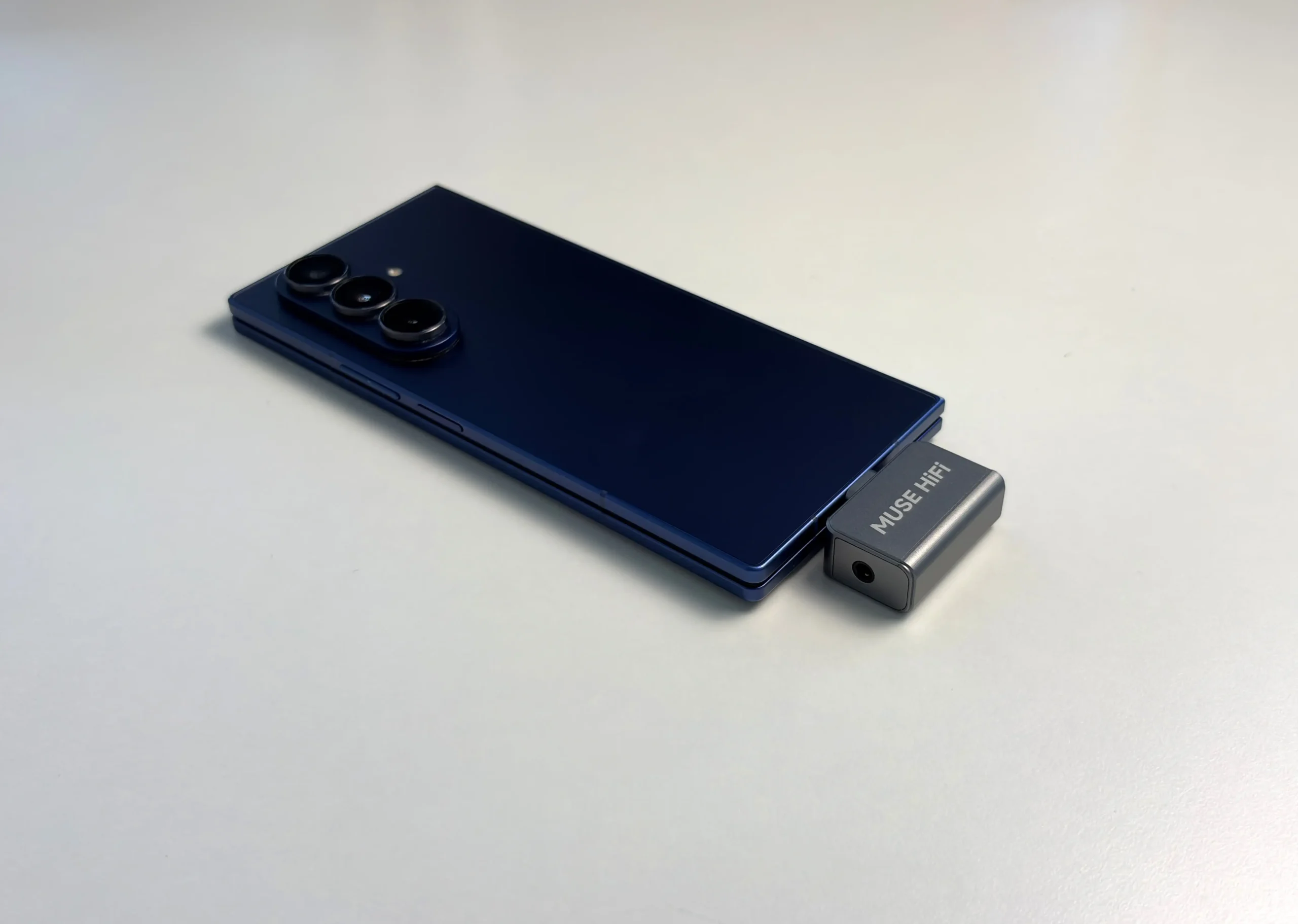
Having both 3.5mm and 4.4mm sockets is one of the U3’s most useful features, as it allows you to connect an existing IEM cable without making the connector type the deciding factor in your purchase, and gives you considerable flexibility.
Software/App
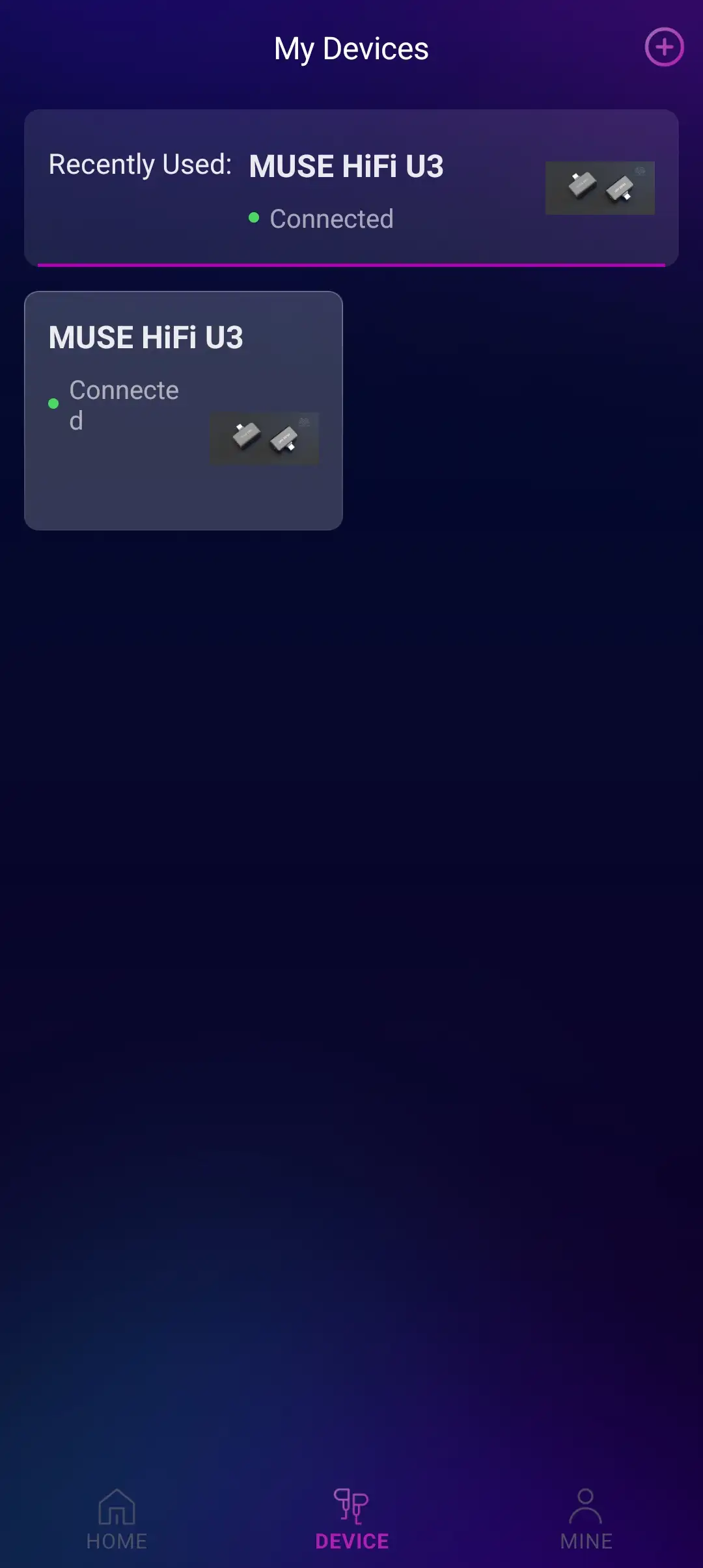
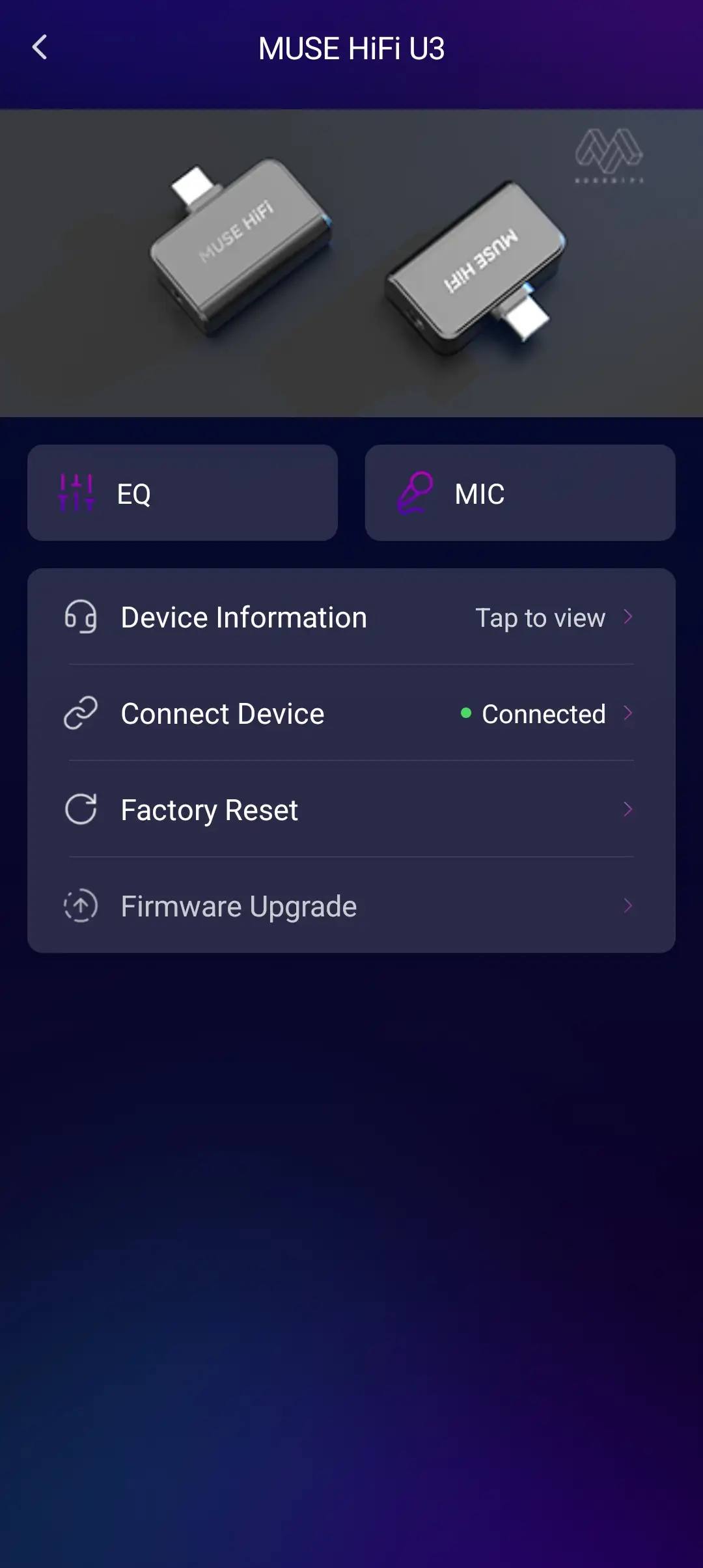
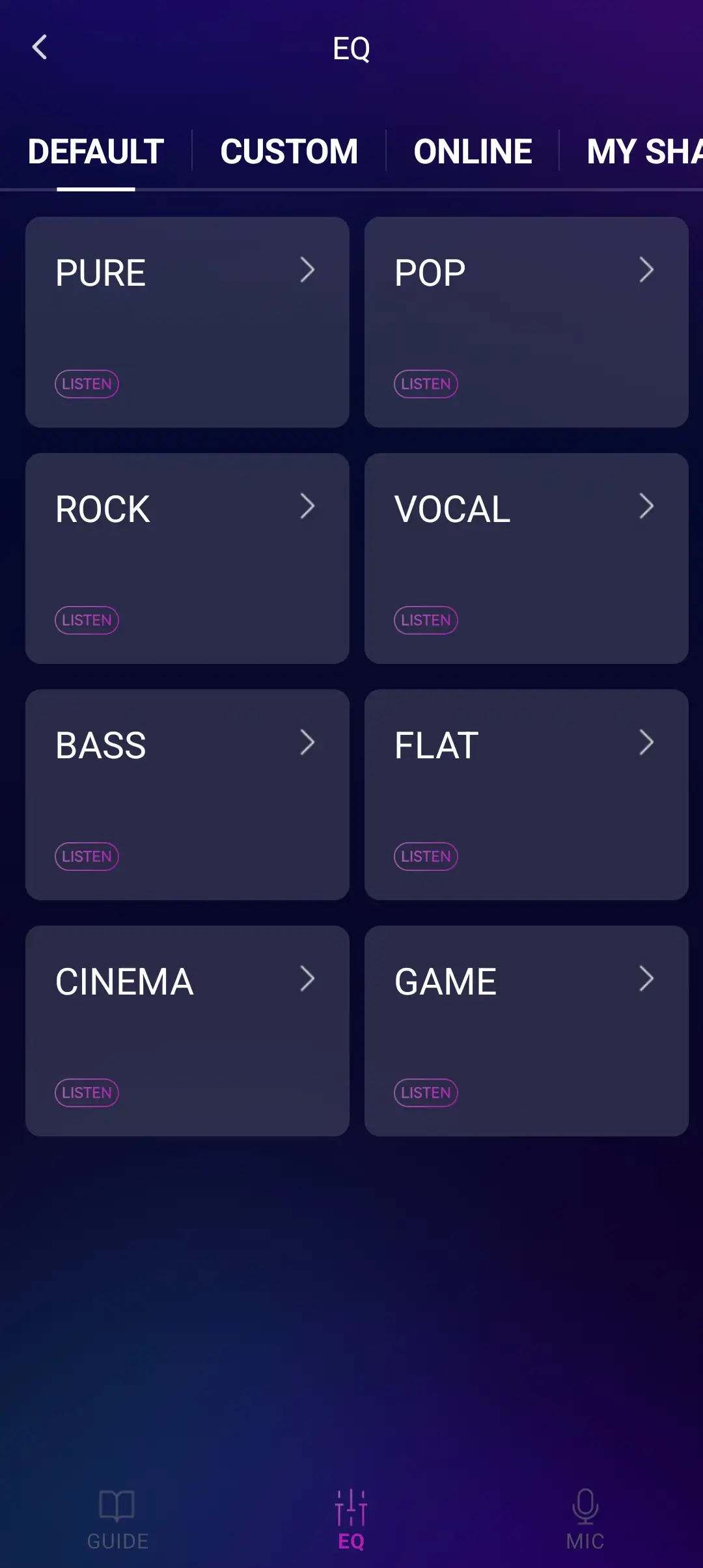
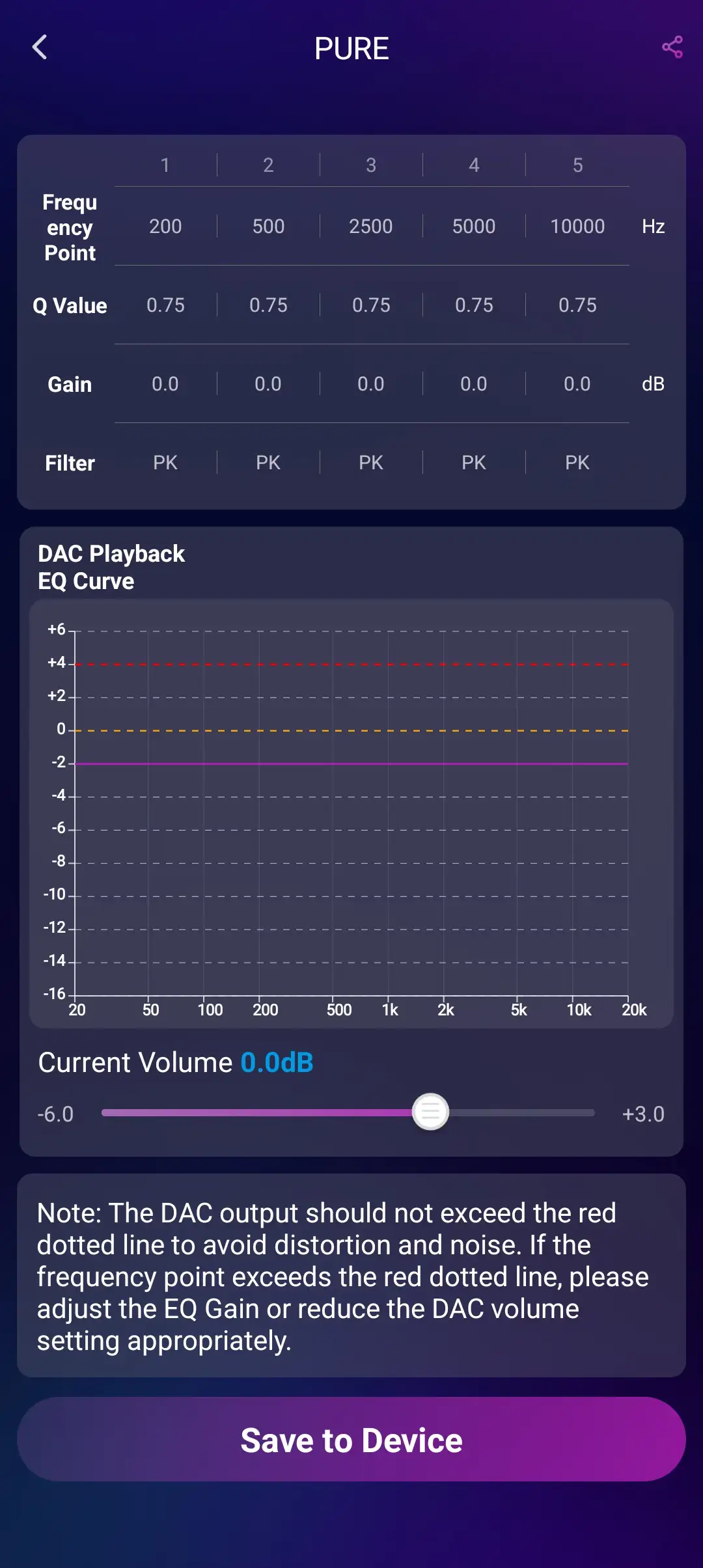
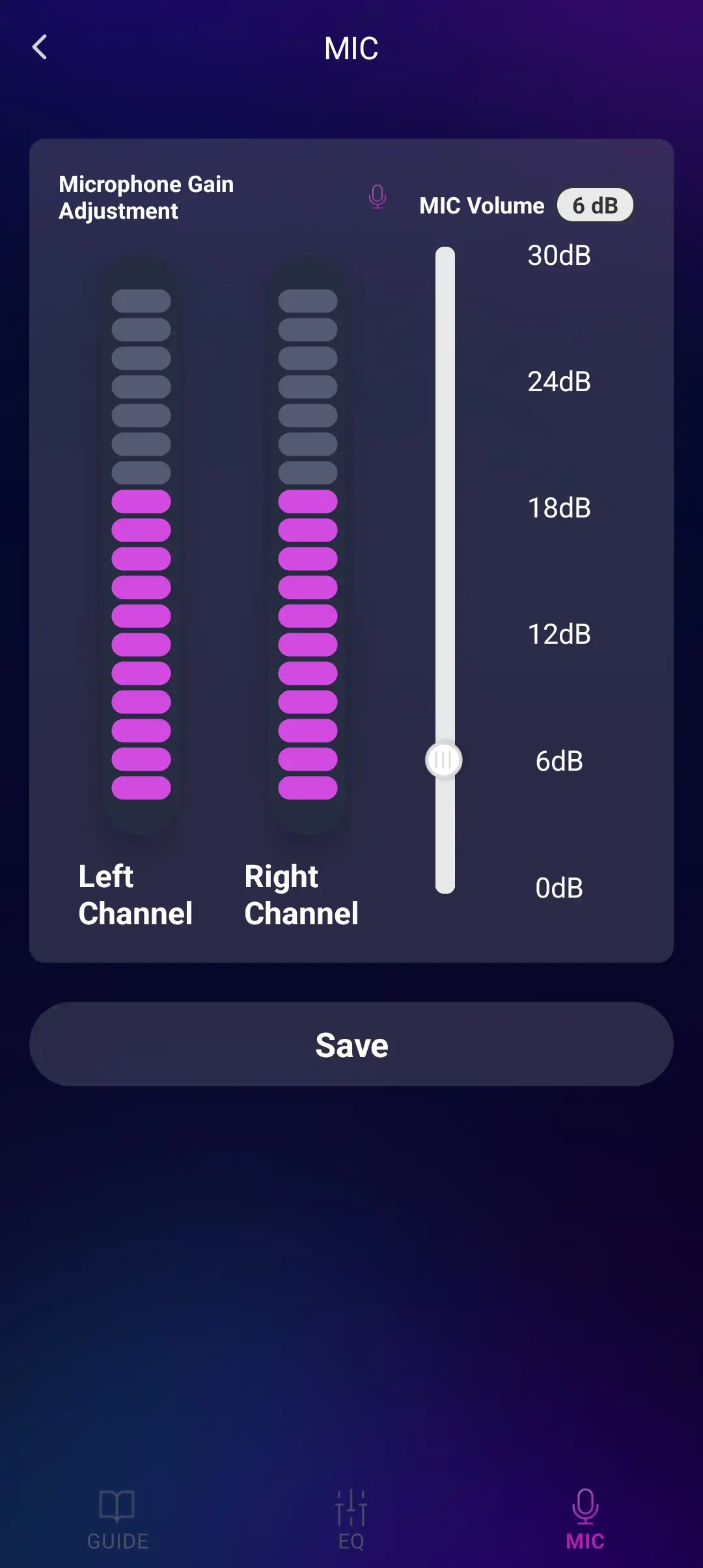
The U3 is supported by WalkPlay, with an Android app and a browser interface (https://peq.szwalkplay.com/) for configuration. The software provides parametric EQ controls, including frequency, gain, Q, and filter type, along with presets and profile sharing. There is an account requirement, which I detest needing when all you want to do is change settings. Otherwise, the app looks and performs just fine. iOS is not supported, but Apple users can use the browser interface to access these settings.
For me, EQ is a meaningful addition at this price. It gives you a direct way to adjust an IEM you already enjoy, whether that means reducing excessive bass or making a narrow correction to an uncomfortable part of the treble.
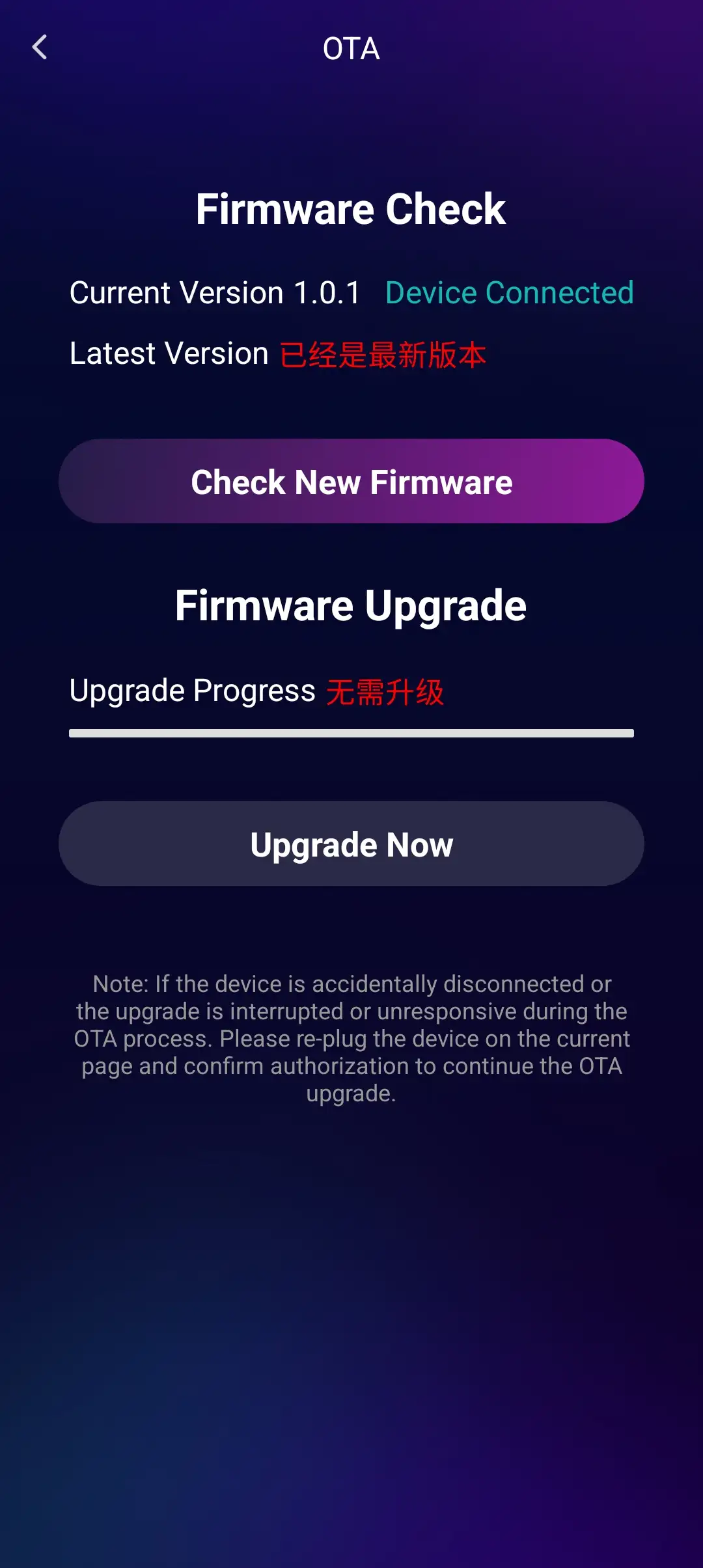
Here are some screenshots of the app from my Samsung Galaxy Fold 7:




Output Power and Noise Floor
The rated power output of the U3 is 105mW through the 3.5mm connection, and 125mW through the 4.4mm balanced connection, at 32Ω. The difference is only 20mW at that load, so the balanced connection offers a modest increase in available power.
The U3 works well with a broad selection of IEMs and efficient headphones. More demanding headphones expose its limits, though. For example, I was able to get enough loudness for both the Sennheiser HD 550 and HD 505, but at about 50-60% volume. I wouldn’t use anything that is harder to drive than this.
At the opposite end, highly sensitive IEMs may leave relatively little usable adjustment near the bottom of the volume range. My Simgot EA1000 Fermat and 64 Audio Solo were just able to get enough volume at just a few volume steps, so anything more sensitive may have issues with being too loud at even one volume step.
Lastly, there was no background hiss that I could hear, which is a good thing.
Power Consumption
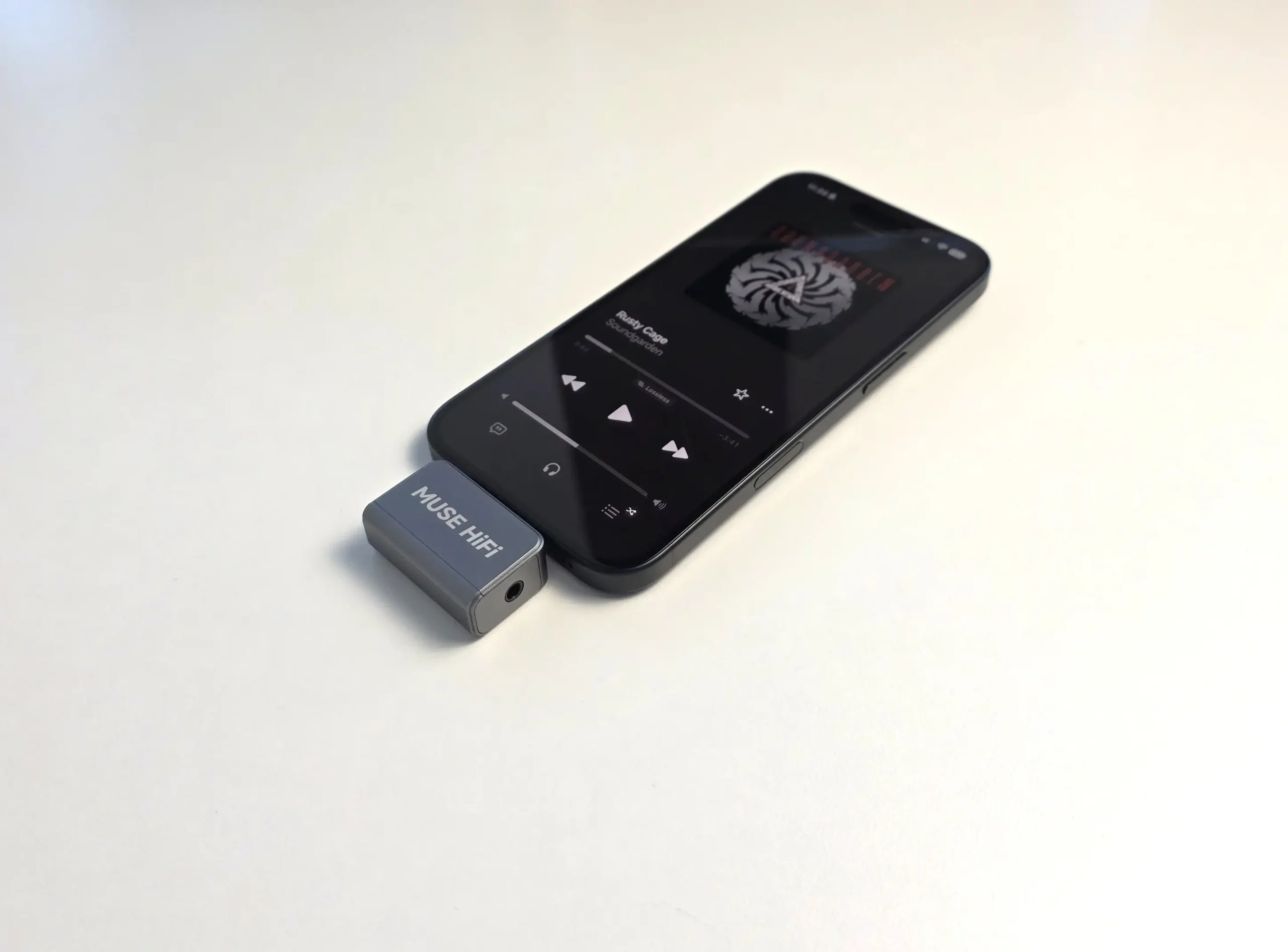
The MuseHiFi U3 draws power from its source device. I would describe the battery drain as modest, with very little heat during normal use, which is encouraging for something intended to stay attached to a phone.
Sound Quality
Main sources used for this review:
- Apple iPhone 16
- Samsung Galaxy Fold 7
Main IEMs/headphones used for this review:
- 64 Audio Solo (3.5mm)
- DUNU DN242 (4.4mm)
- Sennheiser HD 550 (3.5mm)
- Simgot EA1000 Fermat (3.5mm)
Links to my music playlist used for the majority of testing:
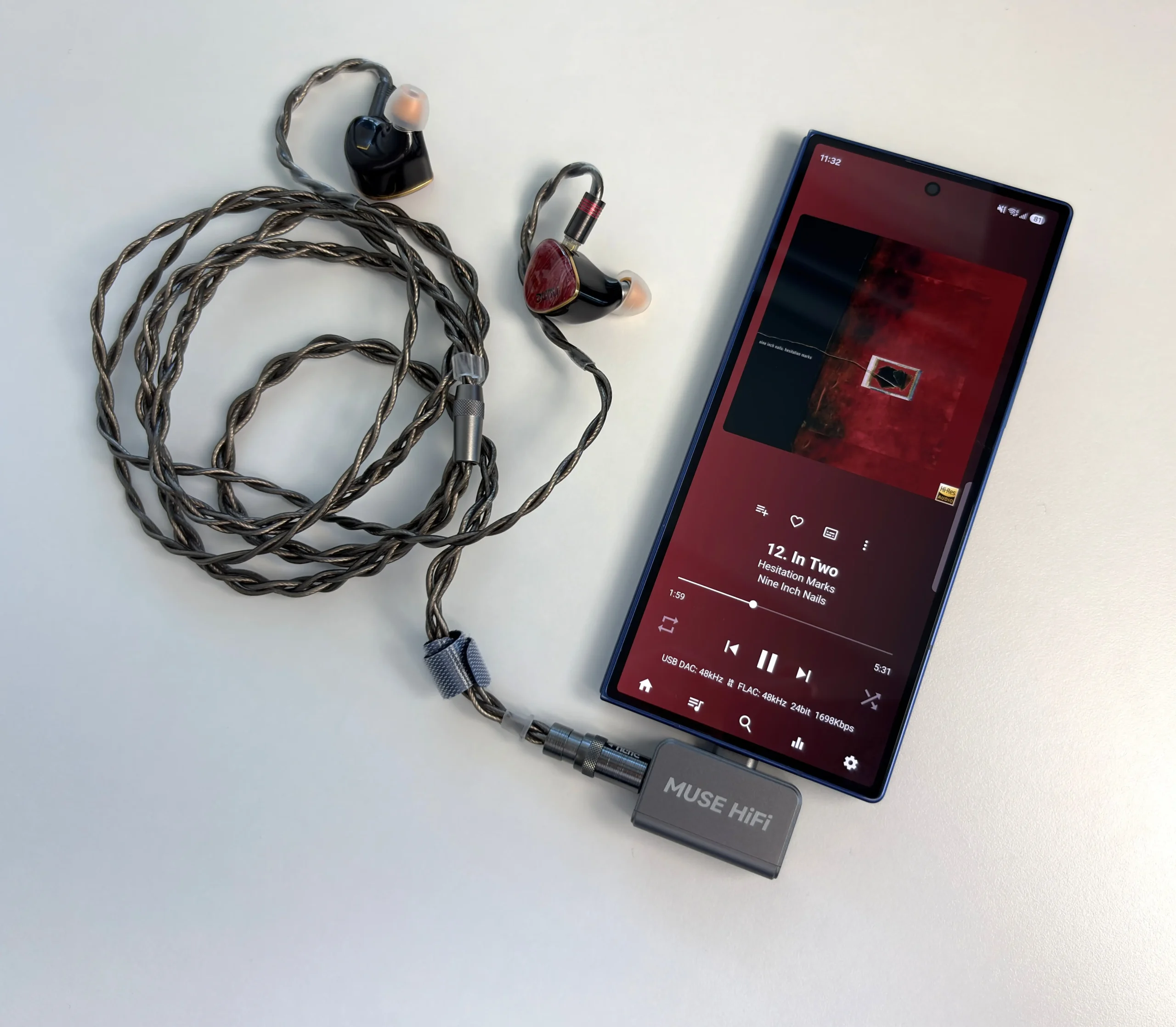
The MuseHiFi U3 has a clean presentation that largely preserves the character of the connected IEM or headphone. Subjectively, I hear a mild warmth and a softer presentation. So, for the overall sound profile, I would say it is neutral with some smoothness added to it.
Bass is controlled, with good extension and enough definition to follow individual notes. The U3 preserves satisfying low-end impact without imposing a thick mid-bass character on it.
The midrange follows a similar pattern. Vocal clarity and separation are strengths in my opinion, with no heavy warmth obscuring the presentation. There is good vocal presence and a clean upper midrange.
The treble has restrained brightness while retaining cymbal detail and generally has an easygoing presentation. This is great as it’s comfortable for everyday listening.
Technical performance is also good for the price. There is clear left and right separation, with expected (in a good way) detail performance.
Final Thoughts
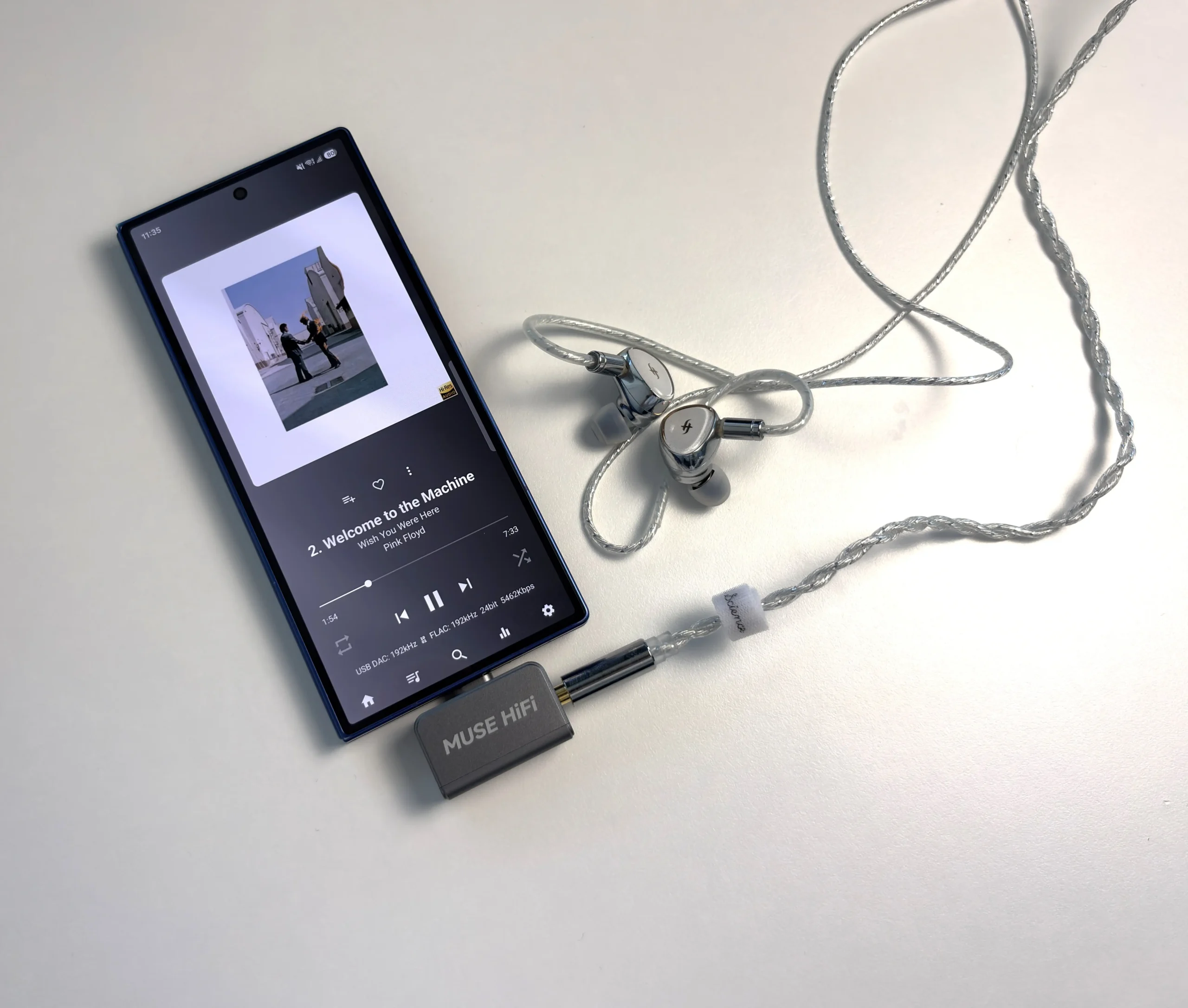
The MuseHiFi U3 makes the most sense as an inexpensive companion for everyday IEM listening. Its appeal comes from the combination of a compact design, dual output connections, and adjustable sound through PEQ.
What I appreciate about that combination is how directly it addresses ordinary listening needs. You can keep using your preferred cable, make tonal adjustments when necessary, and carry a relatively small amount of extra hardware.
The compromises are few. There are no physical controls, which to me is fine, the app experience is mostly ok (aside from the sign-in requirement), but really, the biggest downside is the output power. This is always a trade-off for something that is powered by your phone, but for the price, I think the output power performance is acceptable.
The U3 deserves consideration if you want a small, affordable DAC for your IEMs or efficient headphones. The sound is clean and controlled, and the useful EQ features give it a clear purpose beyond simply restoring a headphone socket. Overall, job well done here.

Purchase Links
Buy from HiFiGo: https://hifigo.com/products/musehifi-u3?rfsn=8743649.bf4c478
Buy from Amazon: https://link.amazon/B016fGUHn
Buy from AliExpress: https://s.click.aliexpress.com/e/_c3oRlUYT
I’m not always able to cover all the details of a product, both hardware and software, in my reviews. If you have any specific questions about this product, please feel free to leave a comment or contact me directly.
Be sure to check out our excellent Buyer’s Guides, as well as our other Reviews.
HiFi Oasis Verdict
HiFi Oasis Verdict-
Design & Build Quality8/10 Very good
-
Sound Quality8/10 Very good
-
Features/Accessories7/10 Good
-
Value9/10 Amazing
Pros
- Compact metal build with a convenient, cable-free USB-C connection
- Both 3.5mm and 4.4mm balanced outputs
- Useful hardware parametric EQ through WalkPlay
- No audible background hiss with IEMs
- Clean, smooth sound with good vocal clarity
- Modest battery drain
- Very little heat during use
Cons
- Limited power for demanding headphones
- Sensitive IEMs leave little room for low-volume adjustment
- WalkPlay requires an account to access settings
- Balanced output provides only a modest power increase